Bangladesh
Ex-MP Habib, former DMP chief among 26 indicted over killing of Mugdha, 10 others in Uttara
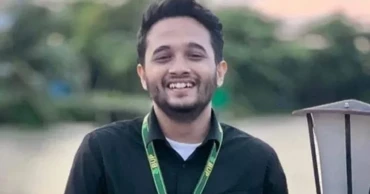
The International Crimes Tribunal (ICT) on Sunday framed charges against 26 people, including former Dhaka-18 lawmaker Mohammad Habib Hasan and former Dhaka Metropolitan Police (DMP) Commissioner Habibur Rahman, in a case filed over the killing of BUP student Mir Mahfuzur Rahman Mugdha and 10 other people during the anti-discrimination student movement in Uttara in 2024.
The three-member ICT-2, chaired by Justice Nozrul Islam Chowdhury, passed the order, paving the way for the formal trial.
The tribunal had initially scheduled September 16 to deliver its order on charge framing but deferred it to September 23. The order was postponed again to October 11.
The accused include police personnel and local leaders and activists of the Awami League and its affiliated organisations. Of them, eight are in jail, while the remaining 18 are absconding.
Those in custody include former DMP Additional Deputy Commissioner (Uttara Division) Mirza Salahuddin, former Officer-in-Charge of Uttara East Police Station Mujibur Rahman, former constable of Azampur Police Outpost Hossain Ali, Uttara East unit Awami League President Monowar Islam Chowdhury Robin and unit Jubo League President Delwar Hossain Rubel.
The fugitive accused include former Dhaka-18 MP Habib Hasan, ex-DMP chief Habibur and former DC (Uttara Division) Kazi Ashraful Azim.
According to the case statement, Mugdha, an MBA student at Bangladesh University of Professionals (BUP), was helping transport injured people to hospitals and distributing water and biscuits among participants in the anti-discrimination student movement in Sector 3 of Uttara on July 18, 2024, when he was shot.
Other protesters took him to Uttara Crescent Hospital, where doctors declared him dead.
The prosecution alleges that indiscriminate firing on protesters in Uttara on July 18 and 19, 2024, resulted in the deaths of Mugdha and 10 others. The accused faced two charges of crimes against humanity.
The first charge was brought for indiscriminate shooting at protesters along the Dhaka-Mymensingh highway and surrounding areas in Uttara on July 18, which killed seven people, including Mugdha.
The prosecution also said that Uber driver Mokhlesur Rahman, also known as Durjoy, was run over by an armoured personnel carrier (APC) operated by police.
His body was subsequently thrown into the Turag River to conceal the crime, according to the charge.
The same charge includes allegations that five people, including Mehedi Hasan, were shot and seriously injured with the intention of killing them.
The second charge relates to indiscriminate firing on protesters in the same area on July 19, which killed four people, including Ridwan Sharif Riyad Joyce.
Raisul Rahman Ratul was also shot and seriously injured in an attempt to kill him.
The prosecution contends that the killings and attempted killings on the two days were not isolated incidents but part of a planned, widespread and systematic attack constituting crimes against humanity.
4 hours ago
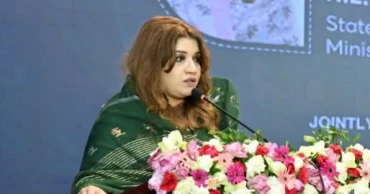
2 Bangladeshis killed in Riyadh airport attack,4 in ICU: Shama Obaed
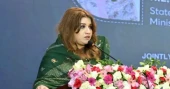
State Minister for Foreign Affairs Shama Obaed Islam on Sunday said two Bangladeshis were killed and four others are receiving treatment in the intensive care unit (ICU) of a hospital following an attack at King Khalid International Airport in Riyadh.
The State Minister said the government is working to identify the deceased, determine their districts of origin and collect information about their families so that they could be contacted without delay.
“Our mission is working closely with the Saudi government to identify those killed and injured, as nationals of many countries have been affected amid the conflict situation,” she told reporters at the Ministry of Foreign Affairs.
Shama said the identities of the four Bangladeshis undergoing treatment in the ICU at King Khalid Hospital are being verified, a process that could take time.
She said Bangladesh's missions in Riyadh and Jeddah are maintaining close contact with Saudi authorities and relevant ministries to ensure the safety of Bangladeshi nationals.
The missions are also in touch with other Bangladeshis in Saudi Arabia, monitoring their conditions and providing necessary safety guidelines, she added.
Expressing concern over the loss of lives of Bangladeshis, the State Minister said it is particularly painful that people who went abroad in search of livelihoods and worked hard to support their families had become victims of the conflict.
“These are our remittance warriors who leave their families behind, work hard and send money home,” she said hoping that the war and attacks would stop and no further casualties would be reported.
Shama said they have already lost 14 Bangladeshis in recent days due to this Middle East conflict. "Naturally, this is a matter of profound sorrow,” she said, expressing deep condolences over the deaths.
She reiterated that the safety, security and well-being of expatriate Bangladeshis has been the government's top priority since it assumed office.
Regarding the repatriation of the deceased, Shama Obaed said the Ministry of Foreign Affairs and the Ministry of Expatriates' Welfare and Overseas Employment are working jointly to provide all necessary support to the affected families.
She said the government routinely bears the expenses of repatriating the remains of Bangladeshi citizens who die abroad, and the same arrangement would apply in this case.
The State Minister also said flights to and from Riyadh have been suspended following the incident as a precautionary measure.
However, she said the government has received no information indicating that any specific Bangladeshi airline or flight has been damaged or directly affected by the attack.
The suspension was likely imposed immediately after news of the attack emerged to ensure passenger safety, she added.
Bangladesh, earlier, strongly and unequivocally condemned the deadly Houthi attack on King Khalid International Airport in Riyadh on 10 October 2026, which resulted in casualties, including the tragic loss of two Bangladeshi nationals, and left numerous others injured, many of them critically.
Bangladesh mission in Riyadh is in contact with the Saudi authorities to obtain details of the deceased and injured Bangladeshis and to facilitate necessary assistance to those affected.
Bangladesh extended its deepest condolences and heartfelt sympathies to the bereaved families, including the families of the Bangladeshi victims, and prays for the swift and full recovery of all those injured.
"Attacks endangering civilian lives and targeting civilian infrastructure are unacceptable and must cease immediately," said the Ministry of Foreign Affairs in a statement.
Bangladesh reiterated its firm solidarity with the government and the brotherly people of the Kingdom of Saudi Arabia in the face of this attack.
Bangladesh called for an immediate cessation of hostilities, the protection of civilians and civilian infrastructure, and a peaceful resolution of the ongoing crisis through dialogue and diplomacy, in the interest of regional peace, security and stability.
4 hours ago
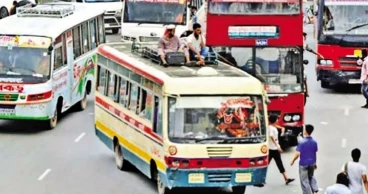
Dhaka’s city buses expose women, children, elderly to safety risks: NCPSRR, SCRF
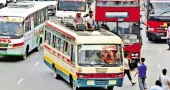
City buses in Dhaka are failing to ensure the safety and comfort of women, children, persons with disabilities and older people, with widespread violations of reserved-seat rules, a lack of helpers and unsafe boarding and alighting practices.
National Committee to Protect Shipping, Roads and Railways (NCPSRR) and Shipping and Communication Reporters Forum (SCRF) came up with the observation inspecting more than 50 buses operating on different routes across the capital in September.
The findings were disclosed in a joint press release issued by the two organisations on Sunday.
The observation found that none of the buses inspected complied with government directives requiring nine seats on each bus to be reserved for women, children, persons with disabilities, freedom fighters and older people.
Although some buses displayed notices referring to the directive, most did not, according to the findings.
During inspections of crowded local buses, the observers found men occupying designated reserved seats while women, children, persons with disabilities and older passengers were often forced to stand, causing them considerable discomfort and hardship.
Besides, around 80 percent of the buses inspected had no helper to assist with passenger management and other operational tasks, the observation found.
According to the findings, drivers often rent buses from owners under daily arrangements and hire conductors to operate the services.
At the end of the day, they pay the agreed rental amount to the owners and share the remaining earnings.
To reduce operating costs, drivers and conductors avoid employing helpers, the observation noted.
The findings also highlighted unsafe practices involving bus stops and passenger movement.
Conductors frequently stop buses at designated stops as well as unauthorised locations along roads, allowing passengers to board and get off hurriedly.
Minor accidents occur almost daily, it added.
Four recommendations
To improve passenger safety and ensure compliance with transport regulations, the NCPSRR and SCRF recommended ensuring nine reserved seats on every city bus in accordance with government directives.
They also called for appointing a helper on every bus in addition to the driver and conductor, ending daily contractual arrangements under which buses are rented to drivers or conductors, and strictly preventing buses from stopping between designated stops established by city corporations.
The organisations further recommended prohibiting passengers from boarding or alighting at unauthorised locations.
Ashis Kumar Dey, general secretary of NCPSRR, said local buses in Dhaka are operating with little regard for rules and regulations.
He said bus owners appeared more concerned about maximising profits than ensuring quality passenger services.
Calling for immediate action, he urged the authorities to deploy mobile courts to curb irregularities and enforce transport regulations.
Lion Mohd Jahangir Alam, general secretary of SCRF, described the findings as a glimpse of the long-standing disorder in Dhaka’s public transport system.
“We are trying to bring these problems to the attention of the government in a manner that leaves no room for them to overlook the situation,” he said.
“As part of this ongoing effort, we have undertaken this month-long monitoring initiative. Our efforts in this regard will continue throughout the year,” he added.
4 hours ago
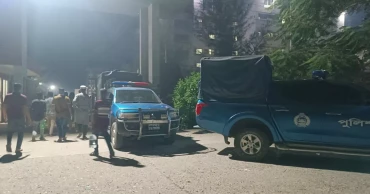
Kushtia medical students ‘beat’ two siblings over Facebook posts
Two siblings have allegedly been beaten by students of Kushtia Medical College over Facebook posts protesting a patient’s death at hospital.
The incident took place at Kushtia Medical College Hospital on Saturday evening, when a mobile phone and a motorcycle were allegedly taken away from the victims.
The victims were identified as Sohag and Sohel, sons of Rahmat Ali of the Harishankarpur area of Kushtia town.
Family sources said Sohel’s son had been receiving treatment for about a week at the hospital for pneumonia.
They alleged that 25-30 medical college students beat Sohel, leaving him seriously injured. When his younger brother Sohag tried to intervene, they also assaulted him.
One of the injured was sent to Rajshahi for advanced treatment, while his family removed the baby receiving treatment at the hospital due to security concerns.
They also alleged that the students took Sohag’s mobile phone and motorcycle.
The phone was later recovered with police intervention, but the motorcycle remained missing, according to the family.
Family members said the incident was linked to Facebook posts made by the two brothers protesting a previous incident at the hospital on September 25.
They alleged that a patient who had suffered a heart attack died at the hospital around 11:00pm that day, triggering a scuffle and clash between doctors and the patient’s relatives.
According to the family, medical students detained three people, including the deceased’s son, and handed them over to police.
Police later sent the detainees to court. Sohag and Sohel subsequently posted on Facebook protesting the incident.
The family alleged that when the brothers entered the hospital on Saturday evening, a group of students shouted “brokers” at them and attacked them over the posts.
After the alleged assault, Sohag called the national emergency service at 999 seeking police assistance.
Officer-in-Charge of Kushtia Model Police Station Zakir Hossain said police went to the scene and brought the situation under control around 10:30pm.
4 hours ago
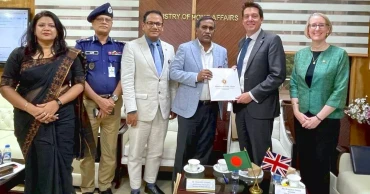
Dhaka, London agree to strengthen cooperation against immigration crime
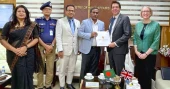
Bangladesh and the United Kingdom (UK) have agreed a new framework to strengthen cooperation in tackling organised immigration crime and protecting citizens from criminal networks that exploit vulnerable people through fraudulent migration schemes.
The framework establishes a mechanism for cooperation between the UK and Bangladesh, said the British High Commission in Dhaka on Sunday.
It will support closer collaboration on identifying, disrupting and addressing organised immigration crime, including document and visa fraud and other forms of criminal activity linked to irregular migration.
The new partnership reflects the longstanding and close relationship between Bangladesh and the United Kingdom and their shared commitment to protecting Bangladeshi citizens from exploitation by criminal networks that profit from unsafe and irregular migration routes.
Under the agreement, both countries will enhance information sharing and operational cooperation, hold regular engagements to review progress, and discuss cases of mutual interest.
British High Commissioner to Bangladesh Sarah Cooke said Bangladesh and the United Kingdom enjoy a strong and enduring partnership built on mutual respect and close people-to-people ties.
“This agreement demonstrates our shared determination to protect citizens from organised criminal groups that seek to exploit migration for financial gain,” she said.
The High Commissioner said through closer cooperation, both countries will work together to address organised immigration crime, support lawful migration, and strengthen efforts to protect individuals and families from fraud, exploitation and trafficking.
4 hours ago
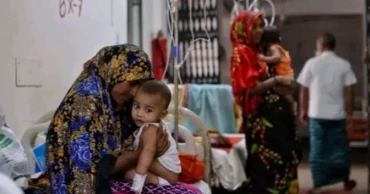
7 children die with measles-like symptoms in 24 hours
Seven children died with measles-like symptoms in the 24 hours until 8:00am on Sunday, bringing the country’s combined tally of confirmed and suspected measles-related deaths to 1,162 this year.
The Directorate General of Health Services (DGHS) classified all seven latest fatalities as suspected measles deaths, reporting no confirmed deaths from the highly contagious airborne disease during the period.
With this, the total number of suspected measles deaths has reached 1,058, while confirmed deaths from measles have remained the same at 104.
A total of 1,180 new suspected measles cases were reported during the 24-hour period, taking the cumulative number of suspected cases nationwide to 205,028.
Meanwhile, 93 new confirmed measles cases were recorded, pushing laboratory-confirmed infections to 22,421.
Since March 15 this year, a total of 182,047 patients with suspected measles have been hospitalised across the country, of whom 174,469 have recovered, according to the DGHS.
5 hours ago
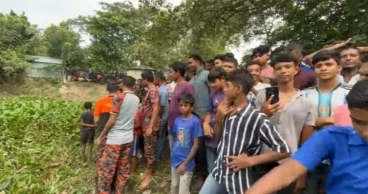
Man lynched over suspected theft in Jashore, another missing
A man was killed in a lynch-mob attack over an alleged theft of an engine-powered vehicle, locally known as a Nasimon, in Chandutia village of Jashore Sadar upazila early Sunday.
The deceased was identified as Mizanur Rahman, hailed from Ramkrishnapur village in Jhikargachha upazila.
Another man, Billal Hossain, went missing after jumping into a canal, while a third person, Moniruzzaman, was seriously injured in the incident.
Police said Moniruzzaman, Mizanur and Billal tried to flee after stealing a Nasimon from Chandutia village around 3.00am.
Local people chased them as they attempted to escape towards the Chandutia sluice canal.
At one stage, Billal jumped into the canal but locals caught Moniruzzaman and Mizanur and beat them up.
Police later rescued the two and took them to a hospital where the attending doctor declared Mizanur dead. Moniruzzaman is undergoing treatment at Jashore General Hospital.
Billal has remained missing since jumping into the canal. Fire Service personnel are searching the canal to locate him.
Officer-in-Charge of Jashore Kotwali Model Police Station Kabir Hossain said it was not yet clear whether Billal managed to escape elsewhere, adding that the search is continuing.
Legal action in connection with the incident is underway, the OC added.
5 hours ago
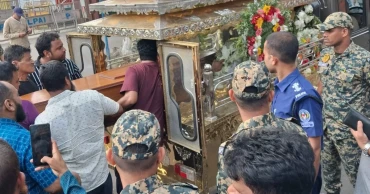
Ex-BCL leader Roton’s body brought home through Benapole
The body of Mahfuzul Haider Chowdhury Roton, former general secretary of banned Chhatra League’s central committee, was handed over to his family through Benapole checkpost on Sunday under tight security.
His body arrived at the checkpost from Kolkata, India, around 11am.
After completing immigration and customs formalities, his elder brother, Nasimul Haider Chowdhury Milton, received the body.
Senior police officials, Border Guard Bangladesh (BGB) and the administration were present during the handover.
Security was tightened at Benapole checkpost and along the border from the morning to prevent any untoward incident.
Benapole Immigration Police Officer-in-Charge Saifur Rahman said Roton had been suffering from lung cancer for a long time.
As his condition deteriorated recently he was admitted to Ruby General Hospital in Kolkata, where he died on Saturday.
Roton entered India through Haridaspur land port in West Bengal’s North 24 Parganas district on August 19, 2024 and had been staying in Kolkata for treatment.
Roton served as general secretary of the central executive committee of banned Bangladesh Chhatra League from 2006 to 2011.
6 hours ago
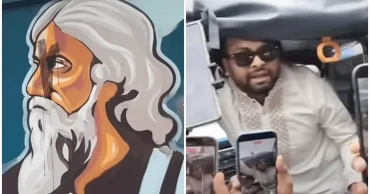
Bid to deface Tagore’s graffiti: Ayash, 3 others shown arrested
Four people including ANM Ayash, member secretary of Rashtra Sanglap Forum, have been sown arrested in a case over the attempt to deface a graffiti of Rabindranath Tagore on a wall in front of Bangladesh Shilpakala Academy in the capital’s Segunbagicha area.
Officer-in-Charge of Shahbagh Police Station Moniruzzaman said police filed the case under the Penal Code on Sunday morning and showed four arrestees as accused in the case.
They will be produced before a court in the afternoon, he said.
The three other arrestees are Rashtra Sanglap Forum’s member Md Sakibul Hasan, 19; Md Sujon Mia, 18; and Marzia Khandaker Rimi, 27.
They were detained by police around 12:30pm on Saturday amid a commotion in the Shilpakala Academy area.
Several activists of the forum went to the Shilpakala Academy premises around 11am on Saturday and tried to cover the graffiti of Tagore with ink, triggering tension in the area.
A verbal altercation subsequently took place between Ayash and people present there.
As the situation escalated, police reached the spot and detained the four.
Later, the Detective Branch of Dhaka Metropolitan Police took them into custody for questioning.
Police said further legal proceedings in the case are underway.
At the scene, a woman was also seen applying ink to Tagore’s portrait before a police officer stepped in to stop her.
The woman said the group had gathered to protest against “Indian aggression”.
On October 5, Dhaka South City Corporation removed illegal establishments from a footpath in Segunbagicha.
Following the clearance, portraits of 10 prominent personalities from the fields of art, literature and culture were painted on a wall along the footpath.
The figures included Zainul Abedin, Satyajit Ray, Rabindranath Tagore, Ishwar Chandra Vidyasagar and Kazi Nazrul Islam.
6 hours ago
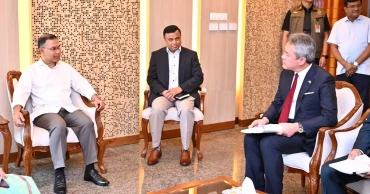
PM seeks Marubeni investment in AI data centre, 2nd KAFCO plant
Prime Minister Tarique Rahman on Sunday sought expanded investment from Japan’s Marubeni Corporation in Bangladesh’s IT, fertiliser and energy sectors, including a 2nd KAFCO plant and a planned AI-based data centre.
He made the call when a high-level delegation of Marubeni Corporation, led by its President and CEO Masayuki Omoto, met him at his office in the Secretariat, said PM’s Deputy Press Secretary Shahadat Hossain Shadhin.
During the meeting, the Prime Minister said the government is working to create a favourable investment climate to harness the country’s economic potential and generate new employment opportunities.
He welcomed Marubeni’s investment in Bangladesh’s IT, fertiliser and energy sectors and stressed the need to expand the company’s long-standing business ties with Bangladesh, particularly in jute products, into new areas of cooperation.
7 hours ago