special
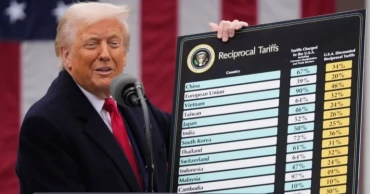
Trump's tariff sets alarm bells ringing for exporters
Uncertainty has mounted in Bangladesh’s manufacturing sector as the United States has officially imposed a 35 percent tariff on all goods imported from Bangladesh, effective August 1, 2025.
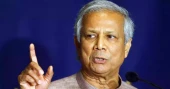
The decision, outlined in a letter from US President Donald Trump to Dr. Muhammad Yunus, Chief Adviser of Bangladesh's interim government, marks a significant escalation in trade tensions and is expected to have a severe impact on Bangladesh's robust export sector, particularly the vital ready-made garment (RMG) industry.
This new tariff, a slight reduction from an earlier proposed 37 percent but still substantially higher than the previous average rate of 15 percent, places Bangladesh at a significant disadvantage compared to regional competitors like Vietnam, which reportedly faces a lower 20 percent tariff.
US President Donald Trump's letter to Chief Adviser Muhammad Yunus announcing the new rate also said it would be "separate from all sectoral tariffs", which means RMG could face an effective rate of 50% for entry into the US market.
Bangladesh's RMG industry, which accounts for over 80 percent of its total exports and nearly 8 percent of its GDP, is projected to be the most severely impacted. With the US being Bangladesh's single largest export destination, importing around $8 billion worth of Bangladeshi goods annually (over $6 billion of which is garments), the increased tariff will dramatically raise the cost of Bangladeshi textiles in the US market.
Experts warn this could lead to a significant decline in demand, factory slowdowns, and widespread job losses for the estimated 4 million people employed in the sector.
"This will be devastating," stated Katrina Ell, Director and Head of Asia-Pacific Economics at Moody's Analytics, highlighting that around 20% of Bangladesh's garment exports are shipped to the US.
Trump administration limits Mexican flights, threatens Delta-Aeromexico alliance amid trade dispute
In response, the Bangladeshi government is engaged in a diplomatic push, with Commerce Adviser Sheikh Bashiruddin leading negotiations with the United States Trade Representative in Washington, D.C. Bangladesh has offered several concessions, including boosting duty-free imports of American goods such as wheat, cotton, LNG, and soybeans, to narrow the more than $6 billion trade surplus it enjoys with the US.
The Bangladesh Garment Manufacturers and Exporters Association (BGMEA) is hiring US lobbyists to address potential US tariff hikes on Bangladeshi garment exports. This decision reflects the industry's concern about the government's progress on the issue.
BGMEA President Mahmud Hasan Khan said that the US is a very lucrative market for Bangladesh, so the government has to make a concerted effort to reduce tariffs to a reasonable level.
The BGMEA aims to influence US trade policy and protect the interests of Bangladeshi garment manufacturers in the US market.
The lobbyist appointment is a lengthy process which needs some time. The government has already sent some lucrative proposals for the US including bonded warehouse for US cotton exporters, he said.
“Tariff reduction or extension of time for imposing new tariffs for Bangladesh, all the matters are depending on the US president. So we do more while the tariff will be reduced, otherwise an alternative way would be a better option,” said BGMEA President.
Zahid Hussain, former lead economist, World Bank Dhaka office, told UNB that Bangladesh will be ahead of some countries while behind some countries in apparel tariffs imposed to access the US market.
“As the issue under discussion between US and Bangladesh, the tariff is not fixed yet for some other countries, so, in plus-minus what our position will be, it will take some more time to know,” he pointed out.
“If Bangladesh faces a 35 percent tariff while India, Pakistan and Sri Lanka face lower tariffs, then we (Bangladesh) may lose upto 20 percent of our existing export volume in the US market,” he opined.
Mustafa K. Mujeri, former Chief Economist of Bangladesh Bank (BB), said that Bangladesh has to give priority to increasing its adaptation in the manufacturing sector, which is more important than allowing duty-free entry of US products in the domestic market.
He said that US’s present trade policy is not stable as it is continuously violating trade rules set by the World Trade Organization (WTO).
Khondkar Golam Moazzem, Research Director at the Centre for Policy Dialogue (CPD) told UNB that Bangladesh needs to influence US buyers who build their billion dollar businesses based on the country’s (Bangladesh) apparel sector.
He opposed excessive and unnecessary import from US, which will be economically very costly. Rather US buyers and farmers could work in favour of Bangladesh as their products (cotton) is used in the apparel sector.
The immediate outlook for Bangladesh's export economy remains uncertain. While some top exporters believe the 35 percent figure is a negotiating tactic and will eventually be reduced, economists caution that the outcome depends on the corresponding tariffs levied on other major garment exporters like China, India, and Pakistan.
Trump sues Wall Street Journal and Rupert Murdoch over Epstein coverage
For Bangladesh, the tariffs serve as an urgent wake-up call to diversify its export markets beyond the US and to explore new opportunities in regions like the EU, UK, Canada, and Australia. Industry experts are also calling for a shift towards producing more value-added products, strengthening trade relations through robust government-to-government diplomacy, and ensuring internal political stability to attract and retain international buyers.
The focus is now on strategic choices to navigate this complex global trade landscape.
1 year ago
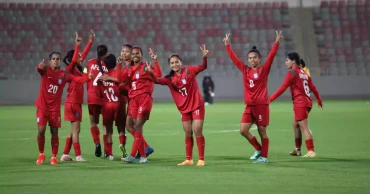
Women footballers continue to bring Bangladesh sporting glory
As Bangladesh’s women footballers continue to capture hearts at home and abroad, experts and players alike are calling for a stronger professional pipeline to ensure their success turns into a lasting legacy.
Despite limited resources, their growing success proves that women's football is no longer an afterthought—it's a national movement taking center stage.
From humble beginnings in the early 2000s, women’s football in Bangladesh has grown into a dynamic force. Tournaments, leagues, and school-level programs have opened doors for thousands of young girls, many from remote and rural areas, to dream beyond social norms and shine on the international stage.
The movement gained traction with the Inter-district Women’s Football Tournament (2006–2007)-the first of its kind in Bangladesh. Eight district teams made history, setting a foundation for what would become a broader sporting revolution.
Momentum continued with the National Women’s Championship (2009–2016), which welcomed teams from districts and government institutions. The championship’s inaugural sponsor, Citycell, signaled a crucial shift—corporate Bangladesh had begun to notice.
Crucial grassroots initiatives soon followed. The Dhaka Metropolis Women’s School Football Championship (2008–2010) introduced structured competition among schoolgirls. Another game-changing moment came with the launch of the Bangamata Primary School Gold Cup in 2011. Initiated by the Ministry of Primary and Mass Education, the tournament saw over one million female students from more than 60,000 schools participate in its first edition.
“When I first saw my daughter play in the Bangamata Gold Cup, I realized football could change her life. She’s more confident now,” said Arifur Rahman, a proud parent.
Sagorika's hat-trick powers Bangladesh to retain SAFF U-20 Women’s crown
At the club level, the Bangladesh Women’s Football League (2011–present) remains the country’s only domestic competition for women. Though interrupted by funding gaps and management challenges, the league still acts as the primary pathway for women to move from grassroots to the national team.
Despite progress, significant hurdles remain—poor infrastructure, limited investment, and persistent social stigma. Yet, the will to overcome is undeniable.
“We didn’t have a girls’ team in our school before 2010. Now, we practice regularly and even won a local tournament. Football gave us a new identity,” said Shahana Begum, a parent from Rajshahi.
“People used to laugh at the idea of girls playing football. But now they cheer for us in the stands. Times are changing,”* added Ruma Akter, a school player from Dhaka.
“There is no shortage of talent in rural Bangladesh. What we need is consistent support, training, and visibility,” emphasized Munira Sultana, a grassroots coach in Khulna.
“These girls are not just playing football—they’re breaking stereotypes,” said Tahmid Hossain, a local sports journalist.
Recent years have seen a golden era for Bangladesh’s women footballers showing their strength on the international platforms.
Ritu Porna Chakma, a standout from the Hill Tracts, became a national sensation after scoring the winning goal in the 2024 SAFF Women’s Championship final and earning MVP honors. She followed that up by netting both goals in a historic 2–1 victory over Myanmar during the 2025 AFC qualifiers, securing Bangladesh’s first-ever spot in the AFC Women’s Asian Cup.
Following the win, celebrations erupted in Yangon and Dhaka’s Hatirjheel, with fans dubbing her “Bangladesh’s own Messi.”
SAFF U-20 Women's: Holders Bangladesh to face Nepal on Monday in hopes of retaining title
The entire SAFF Championship-winning squad including stars like Sanjida Akhter and the dynamic Shamsunnahar Sr. & Jr., were awarded the Ekushey Padak 2025—the country’s second-highest civilian honor. This was an unprecedented moment for a sports team in Bangladesh.
Afeida Khandaker, the newly appointed national captain, has been praised for her leadership in guiding the team to Asian Cup qualification, while Sabina Khatun, the country’s all-time top scorer (38 international and 333 club goals), continues to inspire as a living legend of Bangladeshi football.
“Our women’s team is our pride. They’ve shown that with dedication and the right support, Bangladesh can shine globally,” said Ahmed Rahman, a fan from Chattogram.
“My experience as a player helps me shape others. As I train to become a coach, I want to combine skill with experience to build the next generation,” said national star Sanjida Akhter who has begun formal coaching training.
At a recent celebration at Hatirjheel Amphitheater, BFF President Tabith Awal pledged full institutional support for the women’s team.
“You have accomplished two things: you are making history, and you are taking us forward in changing our society’s mindset,” he said.
Public rallies, packed stadiums, and vibrant social media campaigns have propelled women’s football into the spotlight. Groups like the Bangladesh Mahila Parishad have also rallied behind the team, calling their journey a triumph of both sport and gender justice.
SAFF U-20 Champs:Shanti Mardi's hattrick helps Bangladesh to maintain all-win run beating Bhutan 4-1
With continued investment, institutional backing, and grassroots nurturing, Bangladesh’s women footballers are not just changing the game—they're rewriting the future.
1 year ago
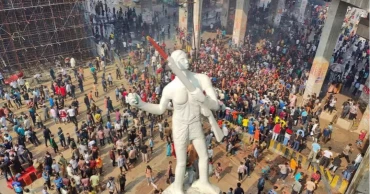
Inheritance disputes delay distribution of govt assistance among July Uprising martyrs: Officials
Dispute among family members of the July Uprising martyrs over right to benefits is hampering the government's assistance distribution programme, according to officials.
Disagreements between wives and parents of the martyrs have led to administrative delays and complications, said officials of the the Ministry of Liberation War Affairs and the July Uprising Directorate.
They said the authorities are struggling to disburse both one-time financial assistance and monthly allowances due to these internal conflicts.
"Who gets how much — that’s now the biggest issue," said Liberation War Affairs Adviser Faruk-e-Azam.
"Some complain the wife is getting more, others say the parents are. The martyr’s parents argue that a wife may remarry, but they’ve lost their child forever. Meanwhile, the widows claim they too lost everything with the death of their husbands," he said.
According to officials, the family feud has escalated to the point where separate WhatsApp and Facebook groups have formed — one supporting the parents, the other backing the widows.
These groups often arrive at the ministry en masse lodging complaints against each other, they said.
The ministry follows the Muslim Family Law Ordinance, 1961 for Muslim families and the Hindu Succession Act, 1956 for Hindu families to determine the rightful recipients of the aid.
However, many family members are opposing to the legal framework being applied, officials said.
“Even when we calculate based on religious laws, many are not satisfied. So we’re having to go case by case which is wasting both time and manpower,” Faruk-e-Azam told UNB.
“When money becomes the focus, people tend to forget the martyrdom and sacrifice. But the government’s goal is to honour and preserve the spirit of their ultimate sacrifice,” he added.
The government is providing each martyr’s family a total of Tk 30 lakh in savings certificates — Tk 10 lakh was disbursed last fiscal year, and Tk 20 lakh is scheduled for this fiscal (2025-26).
Besides, each family is entitled to a monthly allowance of Tk 20,000.
So far, the government has officially recognised 844 martyrs.
Among them, 774 families have received the first Tk 10 lakh installment. The remaining 70 families are yet to receive the initial installment due to unresolved inheritance issues which has also stalled the second phase of disbursement.
“We are distributing funds according to established rules but these internal disputes force us into daily negotiations,” said Md Mashiur Rahman, Director General of the July Uprising Directorate.
He noted that just last Thursday, 59 widows came to the ministry together to press their claims while parents of martyrs had previously done the same.
“Each martyr has multiple heirs. Determining who gets what share is time-consuming, and this is slowing down the entire process,” he said.
Meanwhile, the government has also initiated assistance programmes for the injured victims of the July Uprising.
As per official classification:
Category A (critically injured): 493 individuals will receive a one-time grant of Tk 5 lakh and a monthly allowance of Tk 20,000. Of this, Tk 2 lakh has already been disbursed, with the remaining Tk 3 lakh to be provided this fiscal year.Category B (seriously injured): 908 individuals will get a one-time grant of Tk 3lakh and Tk 15,000 monthly. Tk 1 lakh has been paid in advance.Category C (moderately injured): 10,642 individuals will receive Tk 1 lakh one-time and Tk 10,000 monthly.All injured individuals, regardless of category are entitled to lifetime free medical care, opportunities for treatment abroad, and guaranteed rehabilitation support.
Eligible members of the martyrs' families will also be given priority for employment in government or semi-government sectors.
Liberation War Affairs Secretary Israt Chowdhury said, “Once we complete the aid disbursement we will move on to the rehabilitation phase. Our goal is to directly transfer funds to beneficiaries’ accounts through Sonali Bank.”
She added, “We are hoping to begin disbursing monthly allowances in at least one division by next week. The quicker families provide the necessary information the faster we can proceed.”
Regarding reclassification of injury categories, the secretary said, “If someone wishes to move from Category C to Category A that assessment will be made by the Ministry of Health.”
1 year ago
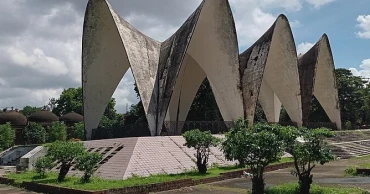
Where heroes rest, dealers roam as drug trade overtakes Mausoleum at DU
What was once a revered national landmark honouring three of Bengal’s most influential political figures has now become a sanctuary for drug dealers, addicts and the homeless.
The Mausoleum of the three leaders -- dedicated to AK Fazlul Huq, Huseyn Shaheed Suhrawardy and Khwaja Nazimuddin -- stands in quiet neglect beside Dhaka University, its symbolic gravitas now lost amid open drug trade and structural decay.
Built in 1985 to commemorate these stalwarts of pre-independence Bengal, the mausoleum was meant to serve as a site of reflection and national pride. Today, it tells a different story -- one of administrative indifference, lawlessness and societal failures.
Security Lapses
The collapse of order around the mausoleum worsened following the murder of Dhaka University student Shammo on May 13.
In a subsequent crackdown, police launched raids to clear vagrants and drug users from the adjacent Suhrawardy Udyan. That campaign, however, merely displaced the problem: many of the evicted people moved straight into the nearby mausoleum grounds.
A recent on-site inspection revealed a complete absence of security or maintenance staff. A large section of the front boundary wall is missing and several portions lack iron fencing, allowing unrestricted entry. The entire wall facing Dhaka Gate has disappeared.
Locals blame scrap thieves for the damage. “Street kids and vagrants have been removing the iron bars to sell them,” said a nearby footpath vendor, requesting anonymity out of fear.
Shelter for the Homeless, Hub for Drugs
Throughout the day, people can be seen loitering or sleeping on the main platform and around the graves. Some are visibly under the influence, others are openly using drugs. When asked, a man in his fifties who was seated on a grave responded bluntly, “Where else can we go? We live here now.”
Multiple sources said the majority of people occupying the site are involved in drug use or distribution.
Flourishing Open Drug Market
With Suhrawardy Udyan now off-limits, the mausoleum has become a new hub for narcotics. Witnesses said drugs are sold openly near the Dhaka Gate, beneath metro rail pillars and along surrounding roads. Consumers often use the mausoleum grounds immediately after purchasing drugs.
Karwan Bazar Railway: The go-to place for illegal drugs in Dhaka
Although the Public Works Department officially oversees the site, no permanent security or caretaking staff are posted. On Thursday (July 17), a team from Shahbagh Police Station carried out a brief raid around 5:30pm.
Several people were detained and addicts removed—but within minutes, the dealers were back and business resumed as usual.
A teenage drug peddler, looked to be around 14 or 15, told UNB, “We used to sell in the park. After getting kicked out, we now sell here.”
Asked where he lives, he pointed directly to the mausoleum platform. He named his supplier as a man called ‘Nabi’.
Murder Linked to Drug Network
On June 15, an 18-year-old named Mobarak was stabbed to death near Shishu Park in Shahbagh. His cousin, Rabiul, said the killing stemmed from a drug-related dispute with Nabi, the same person allegedly operating in the mausoleum area.
Police Admit Challenges
Officer-in-charge (OC) of Shahbagh Police Station Khalid Mansur told UNB, “We are conducting daily raids and mobile court operations. Just last night (Thursday), we detained three drug dealers and seized over 1 kg of cannabis. One of them has been arrested under the Narcotics Control Act.”
He mentioned the limitations of police action alone: “But without a coordinated initiative, this drug trade cannot be stopped. We are planning a joint operation soon with the Department of Narcotics Control and RAB. We've also notified the Public Works Department to repair the boundary wall around the mausoleum. We’re doing our part, and we've repeatedly urged them to step up as well.”
Public Works Department Silent
Despite several attempts, UNB was unable to reach Abul Kalam Azad, the designated official from the Public Works Department, for comment on the site’s restoration or security fencing.
Court destroys large haul of seized drugs in Brahmanbaria
A Heritage Site in Peril
More than just a burial ground, the Mausoleum of the three leaders was meant to serve as a lasting tribute to the vision and contributions of three key architects of Bengal’s political past.
Today, its symbolic power is being eroded -- both literally and figuratively -- by systemic neglect, criminal infiltration, and a lack of institutional accountability.
Unless urgent, coordinated efforts are undertaken, this national monument may soon be remembered not for its historical significance, but for how it was allowed to fall apart.
1 year ago
Bangladesh to double wheat imports amid global supply challenges
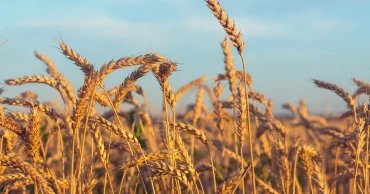
The interim government has decided to nearly double wheat imports in the current fiscal year (2025–26) in a bid to bridge the widening gap between local production and rising consumption.
Wheat is fast becoming a dietary staple in urban and semi-urban areas in the country with demand surging for wheat-based products such as bread, noodles, and biscuits.
However, domestic production remains limited—only around 1.1 million tonnes—compared to a national requirement of over 7 million tonnes.
According to a Food Planning and Monitoring Committee document, the government has planned to import around 8 lakh (800,000) metric tonnes of wheat this fiscal year—almost double the previous year's government procurement of 4.66 lakh metric tonnes.
The document notes that wheat has not been available for domestic procurement in recent years, prompting the need for increased imports.
52,500 mt wheat imported from Ukraine reaches Chattogram
It said the import plan will be re-determined in coordination with the possible distribution target and safety stock of wheat in the current fiscal year.
“Tenders have already been invited for the import of one lakh metic tonnes of wheat and the process of importing 2.20 lakh metric tonnes of wheat from the United States is underway,” according to the document .
The wheat import through government initiative in 2024-25 fiscal was 4.66 lakh metric tonnes while it was 7.84 lakh metic tonnes, 6.86 lakh metic tonnes, 5.46 lakh metic tonnes and 4.79 lakh metic tonnes in 2023-24 fiscal, 2022-23 fiscal, 2021-22 fiscal and 2020-21 fiscal years respectively.
Bangladesh on Sunday signed a Memorandum of Understanding (MoU) with the US under which the country will import 700,000 metric tonnes (MTs) of high-quality wheat annually from the US over the next five years at competitive prices.
Historically, Bangladesh imported wheat from Russia, Ukraine, Canada, Australia, and India.
Shipments from Ukraine have decreased since the war with Russia began in 2022, forcing local traders to diversify sources often at higher costs.
Currently, Russia and India are Bangladesh’s primary wheat suppliers. India has intermittently imposed export restrictions, affecting supply stability and prompting Bangladesh to explore deals with alternative markets.
Bangladesh Bank data shows that the country imported approximately $635.8 million worth of wheat in FY24.
The government has taken steps to stabilise the wheat market including lowering import duties to encourage private sector imports and ensuring food security amid fluctuating prices.
The state-run Trading Corporation of Bangladesh has also increased its procurement to strengthen public stockpiles.
Despite the import surge, Bangladesh faces risks from global price hikes, shipping disruptions, and currency fluctuations.
Bangladesh is seeking to expand wheat imports from the United States as part of its broader trade strategy.
Officials say deals are being negotiated for bulk shipments of high-quality US wheat varieties like Hard Red Winter and Soft Red Winter.
The move also aims to offset the impact of the Trump administration’s recent imposition of a 35% tariff on Bangladeshi products.
The government is also considering reducing import tariffs to encourage private sector participation in sourcing wheat from the US.
1 year ago
An unfinished bridge in Kaunia over 'Dead Teesta' leaves Char villages stranded for years
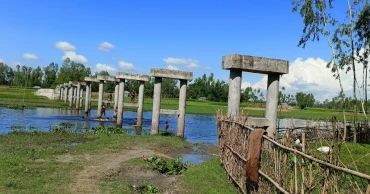
The stalled construction of a bridge over the 'Dead Teesta River' in Kaunia upazila of Rangpur has left the residents of five remote char villages facing severe hardship, cut off from key services and facilities for years.
Despite the completion of its pillar work four years ago, no further progress has been made on the 76-metre bridge at Masterpara in Dakkhin Thakurdas area, as the funding issues continue to cripple the project.
Locals from Char Chatura, Mayar Char, Char Uttar Thakurdas, Char Pallimari and Char Najirdah villages rely on this route to access Banglabazar, the upazila headquarters and Haragachh municipality.
With the bridge remained incomplete, their daily lives remain disrupted.
The Haragachh municipality initiated the construction under the government’s development budget with plans to complete it in phases.
In 2019, Messrs Mamun Construction was awarded the first contract, worth Tk 36 lakh, to build part of the bridge.
The contractor managed to finish approximately 80 percent of the assigned work before suspending construction in 2020.
Later that year, in November, another contractor, Nur Islam Enterprise, was tasked with completing the slabs, beams and railings under a second tender valued at Tk 29 lakh.
But, the firm halted its operations after finishing only about half the work in 2021, again citing funding issues.
“There was no structural design for the bridge and the allocated funds didn’t match the actual estimated cost.
Panic grips Shariatpur residents as erosion resumes near Padma Bridge
Besides, the municipality created significant difficulties in releasing payments,” said Nur Alam Lablu, owner of Nur Islam Enterprise.
“That’s why we suspended work after completing half the project,” he said.
When the UNB correspondent visited the site, the bridge’s pillars stood abandoned in the dry riverbed.
Locals confirmed that work has remained suspended for the past four years.
During the monsoon, residents are forced to cross the river using banana rafts or small boats, while in the dry season, they trudge through knee-deep mud—posing risks and inconvenience.
Kajal Ahmed, a resident of Thakurdas, said, “People from the char areas have long demanded a bridge over the 'Dead Teesta.' Though construction started, it was never finished. Students now cross the river using rafts or small boats, risking their lives.”
Transporting agricultural goods has also become a pressing challenge.
“If someone falls sick, it becomes nearly impossible to take them to the hospital on time,” said Mahabul Islam of Shankharipara village on the north side of the river.
Sumaiya Akhter, a fourth-grader at Shankharipara Government Primary School, shared her struggles, “Sometimes we cross the river on banana rafts. If we fall into the water, our books and clothes get soaked and we can’t go to school that day.”
Assistant Engineer of Haragachh Municipality, Md Hamidur Rahman, said the bridge is being constructed in phases using funds from the development budget.
“So far, the pillars, pier caps and abutments have been completed," he said.
He estimated that completing the bridge would require an additional Tk 1.2 crore to cover 10 more slabs, railings and around 120 metres of approach road on both sides.
Eight villages cut off as bamboo bridge lies broken for a month in Kurigram
“We have approached the authorities in Dhaka for funding. Once allocated, the remaining work will be completed through new tenders,” he said.
Upazila Nirbahi Officer and Haragachh Municipality Administrator Md Mohidul Haque said, “I have just taken charge. I will look into the issue of the bridge construction and share details once I gather more information.”
As the bridge continues to remain in limbo, the people of these char villages can only hope for swift intervention to bring an end to years of isolation and struggle.
About 'Dead Teesta'
On July 26 in 2021, after almost two hundred years the ‘Dead Teesta River,’ a distributary of the main ‘Teesta River,’ has emerged and it had no existence a little while ago. Over time, the river had transformed into fertile land in some places, grazing land in others, and in some areas, it had taken the form of ponds.
The river has been connected to the main channels of the Chikli and Jamuneswari rivers. After the revival, this river has been filled with water during the current monsoon season.
1 year ago
Bangladesh govt plans fivefold fine for withholding information
The government is set to amend the Right to Information (RTI) Act, 2009, introducing tougher penalties and revising key provisions to enhance transparency and strengthen citizens’ access to information.
Under the proposed changes, any attempt to withhold official information will attract a fine five times higher than the current amount.
Four crucial sections of the existing law are set to be revised to facilitate smoother information flow, enhance administrative transparency, uphold citizens’ rights, and curb corruption.
According to sources at the Ministry of Information and Broadcasting, the amended law will stipulate a fine of Tk 250 per day for withholding information, up from the current Tk 50, capped at a maximum of Tk 25,000 instead of Tk 5,000.
The draft also specifies that if information is withheld with the intent to conceal corruption or wrongdoing, the imposition of the fine will be mandatory.
Sections Proposed for Amendments
The proposed amendments will affect Sections 5, 6, 7, and 27 of the RTI Act, in line with the recommendations of the Public Administration Reform Commission (PARC).
The Commission submitted its report to Chief Adviser Dr Muhammad Yunus on February 5.
The report emphasised the need for reviewing and amending the Act to ensure that citizens can freely and easily access information related to public services.
Interim govt plans large-scale promotion drive to boost bureaucracy
Mandatory Preservation and Digitalisation of Information
The revised Section 5 will require every public body to prepare a catalogue and index of all information and preserve it using computers or suitable technology.
These records, including files, manuscripts, microfilms, images, audio or any form of digital data, must be connected to a nationwide e-network for easy access.
Mandatory Publication and Dissemination
Section 6, as amended, will obligate each authority to publish and disseminate information about adopted, ongoing, and proposed activities.
This will include proposed budgets, actual income and expenditure, procurement decisions, tender outcomes, contracts and audit reports, project expenses, and reports on the use of public funds.
The aim is to ensure that these details are regularly made public to guarantee citizens' right to information.
Exceptions in Public Interest
While the current law allows certain information to be withheld, the revised Section 7 will introduce clearer and stricter guidelines.
Two new sub-sections will be added, defining under which circumstances and how information may be withheld, based on transparent standards.
Bangladesh govt urges all to avoid misleading narratives, uphold public harmony
Increase in Fine
Currently, officials found guilty of withholding information are fined Tk 50 per day up to a maximum of Tk 5,000. The revised Section 27 increases this to Tk 250 per day, capped at Tk 25,000.
Besides, if it is proven that the information was withheld to cover up corruption or criminal acts, the fine will be compulsory.
Khadiza Tahera Boby, Deputy Secretary at the Ministry of Information and Broadcasting, told UNB, “The law is being reviewed following the recommendations of the Public Administration Reform Commission. An inter-ministerial meeting has already been held, and opinions on the draft are currently being collected.”
She said public opinion will be accepted until July 31, after which the process will be finalised and the revised law placed before Parliament.
1 year ago

Bangladesh plans big drive to tackle violence against women and children
As Bangladesh sees sharp rise in violence against women and children, the government has taken a move to address the issue through a coordinated, community-based response mechanism involving government departments, agencies and non-government organizations.
It also aimed at strengthening integrated service activities and ensuring necessary emergency services to survivors through the activities of Quick Response Teams.
The Tk 309.39 crore project titled, ‘Strengthening integrated services to prevent and remedy violence against women and children and activities of the Quick Response Team’ will be implemented from July 2025 to December 2029 with the government funding.
Ministry of Women and Children Affairs will implement the project through the Department of Women Affairs.
According to an official document, the initiative aims to reinforce collaboration between various government agencies, private sector entities, and civil society to curb violence against women and children.
Besides, through the Quick Response Teams, survivors will receive prompt emergency services, ensuring better protection and support.
Violence against women in first half of 2025 shows sharp increase over previous 2 years
Key activities of the project include outsourcing services for survivor support, organising research, seminars, workshops, and community meetings, procuring hygiene materials, ensuring transportation facilities, managing internet and short-code systems, promoting awareness campaigns, and providing technological equipment like computers.
The background of the project traces back to the “Multi-Sectoral Programme on Violence Against Women,” first launched as a pilot initiative in May 2000.
Since then, the programme has been implemented in phases, continuing until June, 2024.
The initiative has established 14 One-Stop Crisis Centres (OCCs), the National Forensic DNA Profiling Laboratory, 8 divisional DNA screening labs, and 67 One-Stop Crisis Cells across the country.
The new project seeks to continue and expand these services, incorporating local administrations, NGOs, civil society organizations, students, and teachers to build a community-based response mechanism.
The Planning Commission, as per the document, thinks through the project women's empowerment, child protection will be ensured and of child marriage, child abuse will be stopped in Bangladesh that will consolidate national social security.
Through this project, a system for preventing violence against women and children will be established at the local and national levels with the participation and leadership of local administration and non-governmental organizations, CSOs, students, and teachers, especially through the formation of quick response teams to provide emergency services to prevent violence against women and children, it added.
Despite years of activism and policy reforms, violence against women and children in Bangladesh remains a critical human rights concern.
Reports from various human rights organizations and government agencies continue to highlight a alarming rise in incidents of domestic abuse, sexual violence, child marriage, and trafficking.
According to Ain o Salish Kendra (ASK), over 1,200 women faced rape in 2024, while many others were subjected to physical torture, dowry-related violence, and harassment.
Children, especially girls, are also increasingly becoming targets of abuse.
Child marriage, though legally prohibited, persists at alarming rates, particularly in rural areas.
A UNICEF report states that Bangladesh has one of the highest rates of child marriage globally, with nearly 51% of girls married before the age of 18.
Can technology offer a hope against soaring sexual violence in Bangladesh?
Societal stigma, fear of retaliation, and lack of trust in the legal system often discourage survivors from seeking justice.The government has implemented various initiatives, including special tribunals, helplines, and the establishment of One-Stop Crisis Centres (OCCs) in major hospitals.
However, rights groups argue that enforcement remains weak and perpetrators frequently enjoy impunity.
Activists call for comprehensive reforms to ensure swift justice, better protection services, and widespread community education to change entrenched patriarchal attitudes.
1 year ago
International journalists expect a landmark election in Bangladesh under Prof Yunus
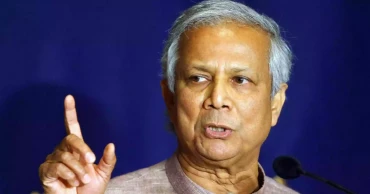
International journalists have expressed strong optimism about the upcoming parliamentary elections in Bangladesh, expected to take place in the second week of February 2026 under the interim government led by Professor Muhammad Yunus.
Renowned for his commitment to social change and integrity, Professor Yunus is expected to oversee a voting process that prioritises fairness and transparency.
As reporters from various countries highlight the significance of this election, many believe that Yunus’ leadership could restore faith in the democratic process, marking a crucial moment not only for Bangladesh but also for observers around the world.
In recent discussions, journalists noted that the involvement of Professor Yunus could usher in much-needed reforms in the electoral system.
Foreign journalists laud Prof Yunus for leading Bangladesh interim govt successfully
His global reputation as a Nobel Peace Prize laureate and pioneer of economic and social development has earned admiration both at home and abroad.
His past efforts to promote social responsibility and democracy lend further credibility to hopes that the elections will be conducted in a free and credible manner.
Kisho Kumari, a journalist from Malaysia, said, “If Yunus leads the process, I believe the election will be fair and transparent. His reputation for honesty gives confidence to many observers.”
Kenyan journalist Brian Ngugi remarked that Bangladesh has an opportunity to hold a credible election that reflects the will of its people. “Yunus’ leadership can make a big difference,” Brian added.
Nik Mohammad Nikmal, Editor-in-Chief of The Kabul Times Daily, said he closely observes and sincerely admires the courage and democratic resolve of the people of Bangladesh as they prepare for free, fair, and transparent elections under the leadership of Prof Yunus.
“This election stands as a historic opportunity for the citizens of Bangladesh to raise their voices and decide the future of their nation,” he added.
“I believe this process will serve as a remarkable example of democracy, transparency, and unity, offering the people of Bangladesh a chance to express their will and shape their destiny. It will demonstrate that courageous nations can come together, embrace change, and take control of their future through peaceful and fair means.”
He also extended heartfelt wishes for peace, success, and a brighter future to the people of Bangladesh.
Bangladesh Election Commission seeks to regain authority to cancel entire constituency polls
International media outlets have been closely following developments in Bangladesh and have reported growing support for Professor Yunus.
Comments from journalists point to the high level of public anticipation for an election that truly reflects the people’s will.
They emphasise the importance of ensuring that all citizens can participate freely, without fear or intimidation.
Shahrokh Saei, a journalist from Iran, said, as Bangladesh prepares for its national elections next year, the nation stands at a pivotal moment in its democratic journey.
The interim government, led by the esteemed Nobel laureate and economist Prof Muhammad Yunus, has instilled a renewed sense of hope among the people.
With his unwavering commitment to democratic principles, Prof Yunus has assured the nation that the upcoming polls will be free, fair, and transparent, a testament to Bangladesh’s growing political maturity, he added.
Saei noted that Prof Yunus, a globally revered figure, has long been recognised for his visionary leadership and dedication to social justice. His recent role as Chief Adviser of the caretaker government has further solidified his reputation as a unifying force capable of steering Bangladesh through this critical transition.
Ensure financial security, protection of journalists to achieve media freedom: Speakers
His ability to connect with people from all walks of life, coupled with his strong international credibility, makes him uniquely qualified to oversee an election that meets the highest democratic standards. Under his stewardship, Bangladesh is not only poised to conduct a credible election but also to strengthen its institutions and reinforce public trust in governance, Saei said.
Rajaram Gautam, a Nepalese journalist, said that Bangladesh is currently in a political transition under interim leader Muhammad Yunus, following protests against Sheikh Hasina in July 2024.
“The main challenge is to restore stability and hold free, fair and transparent elections as soon as possible. Despite government commitments and mounting pressure to schedule elections, ensuring a credible electoral process amid ongoing political uncertainty remains difficult,” he said.
“Yunus, a respected international figure without a political background, faces a crucial test to lead Bangladesh through this transition and establish a legitimate government through democratic elections. And I hope Yunus will be able to conduct elections that are free, fair, and transparent to legitimise the country's democratic process,” Gautam added.
The international community has already expressed confidence in Professor Yunus’ leadership, recognising his integrity and impartiality.
As Bangladesh moves towards this historic election, there is a palpable optimism that Professor Yunus’s interim government will set a new benchmark for electoral integrity in the country.
In a world where democratic processes are often marred by controversy, Bangladesh has a golden opportunity to showcase its commitment to democracy under Professor Yunus’ guidance.
His leadership promises not only a smooth electoral process but also a brighter, more inclusive future for the nation.
The people of Bangladesh, along with the global community, eagerly await an election that reflects their aspirations—one conducted with transparency, fairness, and the spirit of progress that Professor Yunus embodies.
Bangladesh Election: EC forms five committees to accelerate preparations
As the country gears up for this crucial event, the eyes of the world will be on Bangladesh.
Journalists are keen to witness how Professor Muhammad Yunus can influence positive change in the political landscape, creating a benchmark for future elections in the region.
Regardless of the outcomes, this election is seen as a critical step forward for democracy in Bangladesh and may serve as a model for other nations facing similar challenges.
1 year ago
Interim govt plans large-scale promotion drive to boost bureaucracy
The government has initiated the long-awaited promotion process for officials to the ranks of deputy secretary and additional secretary, with the move now at the final stage, sources at the Ministry of Public Administration said.
The ministry is expected to issue promotion orders by the last week of July for eligible senior assistant secretaries to become deputy secretaries, followed by the promotion of joint secretaries to additional secretaries next month, they added.
According to officials familiar with the matter, the Superior Selection Board (SSB), chaired by Cabinet Secretary Dr Sheikh Abdur Rashid, has already held several meetings to assess the service records, discipline, integrity and family background of eligible officers.
A few more meetings are likely before the final list is approved. More than 700 officers are currently being reviewed for promotion by the SSB.
The deputy secretary level promotions are likely to be implemented within this month while promotions to additional secretary are expected in August, said a senior official.
The last SSB meeting was held on July 8.
30th BCS Officers
Officers from the 30th BCS batch, who joined government service on June 3, 2012, became eligible for promotion to deputy secretary on June 3, 2022.
Due to various reasons, including political changes and formation of an interim government led by Prof Muhammad Yunus in August 2024 the promotions were deferred.
In January this year, the Ministry of Public Administration invited information for promotions.
764 deprived officials under AL get merit-based promotions
Since then, the SSB has reviewed the profiles of 319 officers from the 30th BCS (including 277 from administration cadre) and 223 officers from other cadres who applied through the DS Pool.
Based on evaluations, 250 to 280 officers are likely to be promoted in the first phase.
20th BCS Officers
Meanwhile, officers from the 20th BCS batch are under consideration for promotion to additional secretary.
Although they became eligible in 2019 they were promoted to joint secretary in 2021, making them eligible for further promotion in 2023. Now, after a delay, that promotion appears imminent.
Over 300 officers, including 244 from the administration cadre, are being considered for the higher post.
Sources said 43 officers from the same batch who served as Deputy Commissioners (DCs) under the previous government may not be included in the list.
According to the officials concerned, the number of officials currently holding the rank of additional secretary stands at 370, against 212 approved posts.
Besides, there are 1,034 joint secretaries against 502 sanctioned positions.
Lobbying intensifies as govt prepares for 'Special Cadre' promotions
In the case of deputy secretaries, 1,402 officers are serving in 1,420 approved posts (including supernumerary positions), indicating that promotions may not lead to new postings but rather elevation in rank while continuing in existing roles.
As per the promotion rules, officials become eligible for promotion to deputy secretary after five years as senior assistant secretary and at least 10 years of government service.
The 30th BCS batch officers fulfilled those criteria three years ago but their promotions have remained pending until now.
1 year ago