US Defense Secretary
Hegseth to face tough questions in Congress over Iran war, defense spending
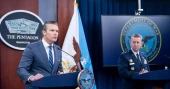
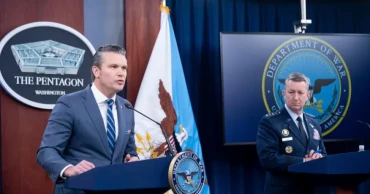
US Defense Secretary Pete Hegseth is set to testify before Congress on Wednesday for the first time since the Trump administration launched its war against Iran, a move strongly criticised by Democrats as an expensive conflict carried out without congressional approval.
The hearing, organised by the House Armed Services Committee, will mainly focus on the administration’s proposed 2027 military budget, which seeks to raise defense spending to a record $1.5 trillion. Hegseth and Joint Chiefs Chairman Gen. Dan Caine are expected to underline the need for increased investment in drones, missile defence systems and naval forces.
However, Democratic lawmakers are expected to shift attention to the growing cost of the Iran war, the depletion of key US weapons stockpiles and reports of civilian casualties, including children killed in a school bombing. Questions may also be raised about the military’s readiness to counter Iranian drone attacks, some of which reportedly breached US defenses and caused American casualties.
Although a ceasefire is now in place, the US and Israel launched the conflict on Feb 28 without formal approval from Congress. Efforts by Democrats to pass resolutions requiring President Donald Trump to halt the war until authorised by lawmakers have so far failed.
Republicans, while largely backing Trump’s leadership during the conflict, have also expressed concern about its duration. They cite Iran’s nuclear ambitions and the risks of withdrawing too soon, but some within the party are looking ahead to possible votes that could test support for the president if the war continues.
Tensions have also affected global energy markets. Iran’s move to shut down the Strait of Hormuz has driven up fuel prices, adding political pressure on Republicans ahead of upcoming elections. In response, the US has imposed a naval blockade on Iranian shipping and increased its military presence in the region, deploying three aircraft carriers to the Middle East for the first time in over two decades.
Despite ongoing tensions, both sides remain at an impasse. Trump is unlikely to accept Tehran’s proposal to reopen the strait in exchange for ending the war, lifting the blockade and delaying nuclear negotiations.
Hegseth has so far avoided direct questioning from lawmakers, though he and Caine have held televised Pentagon briefings. His appearance before Congress this week, including another session with the Senate Armed Services Committee on Thursday, is expected to be more challenging.
Lawmakers are also likely to question recent leadership changes within the military. Hegseth has removed several senior officials, including Army chief Gen. Randy George, along with other top generals and defence figures.
Republican Sen. Thom Tillis said the dismissals raised serious concerns, noting the importance of stability in key military positions during wartime. He admitted the developments have made him reconsider his earlier support for Hegseth.
Meanwhile, Rep. Austin Scott also criticised the removal of Gen. George, calling it a reckless decision that undermined the US Army.
5 months ago
US defense secy in Japan to support alliance as Osprey aircraft safety causes concern
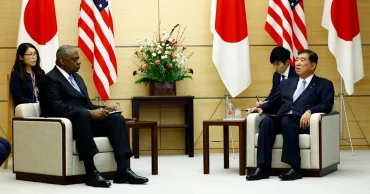
US Defense Secretary Lloyd Austin met with officials in Japan on Tuesday to reaffirm the importance of their alliance and Washington's commitment to regional security as threats rise from China and North Korea.
Austin’s visit also came amid growing concerns over the safety of Osprey military aircraft, which have been grounded in the United States following a near crash at Cannon Air Force Base in New Mexico last month. The incident, caused by weakened metal components, was similar to a fatal crash off southwestern Japan last year.
The US measure prompted Japan to also ground its Ospreys. After confirming details with the US military, Japan's Ground Self-Defense Force has suspended operations of its 17 Ospreys, except for possible disaster relief and other missions, beginning Tuesday to prioritize safety, Chief Cabinet Secretary Yoshimasa Hayashi told reporters.
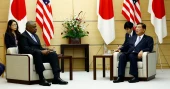
During their meeting, Austin and Japanese Prime Minister Shigeru Ishiba noted the collapse of the Syrian government and praised the strength of the Japan-US alliance at a time of rapid global political change.
“The world can change drastically in a week,” Ishiba told Austin. “No one could predict the collapse of the Assad regime in that way.”
The US defense chief, whose term ends in January when President-elect Donald Trump takes office, told Ishiba that he appreciated the steady alliance with Japan during “very dynamic times” and that he was proud of the modernization of alliance command and control, strengthening of force posture and deterrence capabilities over the past several years.
Austin was also scheduled to hold talks with Japanese counterpart Gen Nakatani.
Nakatani told reporters that cooperation between Japan and the US, as well as with South Korea and other partners, is important as tensions escalate in the region.
The trilateral partnership between Japan, the US and South Korea has significantly strengthened under President Joe Biden’s administration, but faces new uncertainty amid ongoing political unrest in South Korea, which already led to the cancellation of Austin's planned trip to that country.
Americans realising Trump's Canada tariffs increase costs: Trudeau
On Monday, Austin greeted crew members of the USS George Washington, a nuclear-powered flagship aircraft carrier docked at the US Navy base in Yokosuka, near Tokyo.
Austin stressed the importance of US cooperation with allies and partners in the region as he singled out China as the only country in the world with the intent and capability to change the rules-based international order in the Indo-Pacific, according to the US Defense Department.
“We want to see this region remain open to freedom of navigation and the ability to fly the skies in international airways,” Austin was quoted as saying on the Defense Department's website.
“We will work with allies and partners to ensure we can do just that," he added.
The U. carrier, which is under maintenance in Yokosuka, will carry the advanced F-35C stealth combat aircraft squadron currently based in the Marine Corps Air Station Iwakuni in the southwestern Japanese prefecture of Yamaguchi.Source: With inputs from wires
1 year ago

China, North Korea loom as Blinken, Austin head to Asia
Threats from China and North Korea will loom large over the Biden administration’s first Cabinet-level trip abroad, part of a larger effort to bolster U.S. influence and calm concerns about America’s role in Asia.
5 years ago