world

“Ancient Buddhist Site of Sarnath” inscribed in UNESCO World Heritage list
In a remarkable decision taken at the 48th Session of the World Heritage Committee being held at Busan, South Korea, India’s official nomination for 2025-26 cycle, “Ancient Buddhist Site of Sarnath” got inscribed on the UNESCO World Heritage List, becoming India’s 45th property to receive this recognition.
This global accolade celebrates India’s enduring cultural legacy, showcasing its diverse traditions of architectural brilliance, regional identity, and historical continuity.
Indian Prime Minister Narendra Modi, Union Minister of Culture Gajendra Singh Shekhawat along with Chief Minister of Uttar Pradesh Yogi Adityanath lauded the historic milestone and congratulated the people of India for this achievement, said the Press Information Bureau of India on Saturday.
With this global recognition, India affirms its commitment to protect Sarnath's Outstanding Universal Value by Manage tourism sustainably and prevent unplanned development in the buffer zone in order to preserve authenticity and integrity of the property.
The inscribed serial property comprises two component parts – Chaukhandi Stupa and the Archaeological Remains of Sarnath (Dhamekh Stupa, Dharmrajika Stupa, Mulagandgakuti Vihara, Ashokan Pillar, etc.) – located within Varanasi in Uttar Pradesh.
Together these two components preserve the architectural and archaeological remains of the ancient site of Sarnath, known in the Buddhist tradition under different names – Rishipatana, Ishipatana, Mrigadava.
They all refer to a sacred geography, where the Buddha visited in the 6th century BCE and delivered his first sermon known as the “Turning of the Wheel of the Law” (Dharmachakra pravartana).
This event marked the inception of the Buddhist sangha and the establishment of the principles of the Noble Eightfold Path.
Indicated by the Buddha himself to be one of the four key sites of Buddhist pilgrimage, Sarnath developed over centuries through royal, monastic and lay patronage.
9 days ago
France, Spain battle wildfires as over 250,000 people forced to evacuate
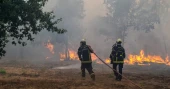
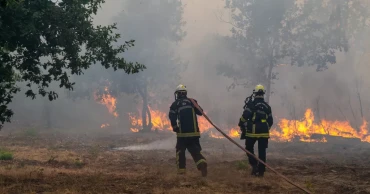
France and Spain are battling massive wildfires that have forced more than 250,000 people to leave their homes, with authorities deploying thousands of firefighters and emergency personnel as extreme heat and dry conditions fuel the blazes.
In France, authorities shortened the final stage of the Tour de France on Saturday to free up security personnel for wildfire response efforts in the southwestern Gironde region, where tens of thousands of people have been evacuated, including residents from areas near the wine-producing city of Bordeaux.
A specially modified A400M military transport aircraft was deployed to drop fire retardants on a major blaze in Gironde. The Paris police department said Sunday's final stage of the race would be reduced by one-third, with riders now set to complete an 89-kilometre route inside Paris instead of the planned 133-kilometre course.
Part of the race's security force will be reassigned to support firefighting operations in affected areas, officials said.
French Interior Minister Laurent Nunez said the A400M aircraft would join 18 other firefighting planes and helicopters in what he described as a "long and very difficult" battle against the flames.
Authorities warned that shifting winds could push the fire closer to Bordeaux. Firefighters were digging containment trenches, using retardants and taking other measures to slow the spread of the blaze, which was about 30 kilometres west of the city.
The French government has mobilized soldiers and sent 1.5 million protective masks to help residents and emergency workers cope with heavy smoke. Evacuation orders were issued for areas between the fire and Bordeaux, including parts of western suburbs and nearby towns.
Prime Minister Sébastien Lecornu described the fires as unprecedented, saying the Gironde blaze had become so intense that it began creating its own wind patterns.
"Protecting human lives is our clear priority," he said, urging people to follow evacuation orders without delay.
In Spain, around 70,000 people have been evacuated as wildfires spread across several regions. The country deployed 2,600 firefighters, police officers and emergency personnel to tackle two major fires west of Madrid, supported by 19 aircraft and helicopters.
Residents described the speed and intensity of the fires as unprecedented. Javier Organista, a resident of El Tiemblo west of Madrid, said flames surrounded the area so quickly that residents had almost no escape route.
The wildfires, worsened by unusually early heat waves and the long-term effects of climate change, have overwhelmed firefighting efforts in parts of southern Europe.
Spain has recorded around 130,000 hectares of forest burned this year, exceeding the decade-long annual average of 100,000 hectares, Prime Minister Pedro Sánchez said during a visit to a fire command center.
He said improved weather conditions had created an opportunity for firefighters to contain the blazes. Several European countries, including Italy, Greece, Portugal, Croatia, the Netherlands, the Czech Republic and Slovakia, have provided or are preparing to provide firefighting aircraft and helicopters.
The Gironde fire began Wednesday near France's Atlantic coast and has grown to an "unprecedented magnitude," according to local authorities. Thousands of evacuees have been provided shelter and assistance in Bordeaux, where officials said facilities could accommodate up to 10,000 people if needed.
Authorities used emergency mobile alerts to instruct residents to leave affected areas, urging people to move quickly to safety.
9 days ago
India's 'Cockroach' movement ends protests after education minister resigns
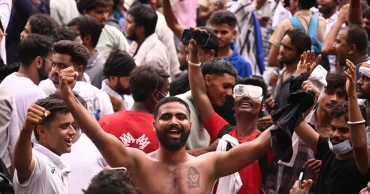
India's "Cockroach" movement on Saturday announced an end to its weeks-long nationwide protests after the government accepted its key demands, including the resignation of Education Minister Dharmendra Pradhan over alleged examination paper leaks and irregularities in the country's education system.
Pradhan confirmed his resignation in a post on X, delivering a major victory to the youth-led movement that organized demonstrations, sit-ins and hunger strikes across India. The resignation marks one of the most significant concessions made by Prime Minister Narendra Modi's government in response to sustained public protests during his more than 12 years in office.
The movement began over a month ago following allegations of paper leaks in several major entrance examinations. Initially focused on education reforms, it soon expanded into a broader campaign demanding greater government accountability, more employment opportunities and improved economic prospects. Students, professionals, parents and activists participated in protests in New Delhi and several other cities.
Following the minister's resignation, organizers said the government had also agreed to implement wider education reforms, compensate the families of students who died by suicide in connection with the exam leak controversy, and refrain from taking legal action against those who took part in the demonstrations.
"We urge everyone to peacefully withdraw from protest sites," Ashutosh Ranka, spokesperson for the Cockroach Janta Party, which launched the movement, told reporters in New Delhi.
9 days ago
Houthis fire missiles at Saudi Arabia in response to airstrikes in Yemen
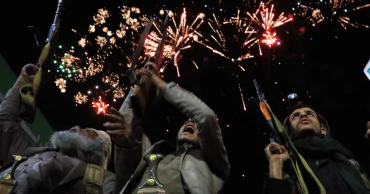
Yemen’s Iran-backed Houthi rebels said Saturday that they fired missiles and drones at Saudi Arabia in response to Saudi airstrikes on the strategic Red Sea city of Hodeida, in an escalation over vital shipping routes in the Middle East while the United States and Iran vie for control of the Strait of Hormuz.
Brig. Gen. Yahya Saree, the Houthis’ military spokesperson, said in a prerecorded statement that the attack targeted facilities in the Red Sea cities of Yanbu and Jizan that belong to Aramco, the world’s largest oil company.
Saudi Arabia’s civil defense said alerts sounded multiple times early Saturday in both cities, but the kingdom didn’t comment further.
There were no reported strikes overnight in Iran, in an apparent break from nearly two weeks of consecutive nights of U.S. attacks, though tension remains high following an escalation over the Strait of Hormuz.
Red Sea escalation further threatens global shipping
The Houthis have said they would close the Bab el-Mandeb Strait to Saudi-linked shipping in retaliation for the kingdom’s blockade on Yemen and a recent attack on the international airport in Yemen’s rebel-held capital, Sanaa.
“Nothing short of ending the aggression and lifting the blockade, otherwise, it’s all illusion and mirage,” Mahdi al-Mashat, head of the Houthi-led Supreme Political Council governing rebel-controlled territories in Yemen, said of what it would take for the Houthis to not blockade the Bab-El-Mandeb.
The Bab el-Mandeb, at the southern tip of the Arabian Peninsula, is a vital shipping chokepoint connecting the Red Sea to the Gulf of Aden. Around 12% of the world’s trade, including a quarter of its container traffic, passes through the narrows.
The Houthis targeted two Saudi oil tankers in the Red Sea this week. In response, Saudi Arabia struck Hodeida, the Saudi-led coalition opposing the rebels said Saturday. The strikes late Friday hit the port and the state-run telecommunications corporation, injuring two people, said Anees al-Asbahi, a spokesperson for the Houthi-run health ministry.
The Saudi-led coalition said it didn’t hit the port but struck “legitimate military targets” in Hodeida province that “were linked to threats to commercial vessels in the Red Sea.”
Iran’s foreign minister, Abbas Araghchi, called for “diplomacy and dialogue” to solve the Yemen conflict without “military confrontations” in an interview published Saturday by the state-run newspaper called Iran.
No new strikes overnight in Iran
“Iran had a peaceful night,” Hossein Kermanpour, a spokesperson for Iran’s Health Ministry, posted on X.
U.S. Central Command didn’t immediately respond to a request for comment. Unlike the previous 13 nights, it didn’t announce new strikes.
Israeli Prime Minister Benjamin Netanyahu plans to travel to the United States next week and meet with President Donald Trump in Washington on Tuesday, his office said Friday. They last met in Washington in February, weeks before they launched the war.
A tenuous ceasefire that halted major operations for weeks has seemed to unravel this month. The U.S. accused Iran of striking three ships in the Strait of Hormuz and responded by striking dozens of targets in Iran, which retaliated by firing at U.S.-allied Gulf Arab states.
The U.S. military has renewed its blockade of Iran’s ports. Iran’s Revolutionary Guard has advised residents of neighboring countries to stay away from bases with U.S. troops.
The war has killed more than 3,400 people in Iran, according to its Health Ministry. Eighteen U.S. service members, 24 civilians in Israel and smaller numbers of civilians including foreign workers and mariners have been reportedly killed across the region.
In Lebanon, more than 4,000 people have been killed since Iran-backed Hezbollah militants fired at Israel in support of the Islamic Republic two days after the war began and Israel responded with strikes and ground forces. Thirty-eight Israeli troops have also died.
9 days ago
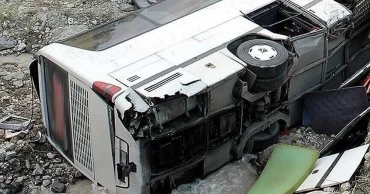
At least 35 people killed after buses collide in Syria
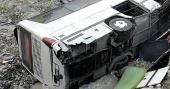
At least 35 people were killed and around 30 others injured after two buses collided on a highway connecting the Syrian capital, Damascus, with the eastern province of Deir el-Zour on Saturday, according to Syrian state media.
The crash involved a civilian passenger bus and a bus belonging to the Interior Ministry on the desert highway, the state-run SANA news agency reported, citing a Health Ministry official.
Emergency responders rushed to the scene, with Syrian military helicopters reportedly taking part in the rescue operation.
Authorities have not yet determined the cause of the collision, and an investigation is expected to determine the circumstances surrounding the deadly crash.
9 days ago
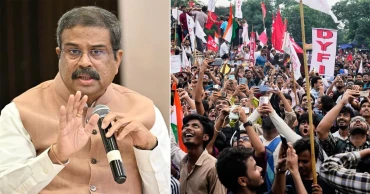
Indian Education Minister resigns following weeks of student demonstrations
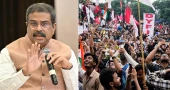
India’s Education Minister Dharmendra Pradhan stepped down on Saturday following weeks of intense nationwide protests demanding his removal over alleged paper leaks in key competitive entrance examinations and wider irregularities in the country's education system.
The minister’s departure represents the first major concession by Prime Minister Narendra Modi’s government in the face of persistent demonstrations, sit-ins, and hunger strikes spearheaded by the youth-led "Cockroach movement".
Humour and memes fuel India's 'Cockroach' protest movement against Modi government
9 days ago
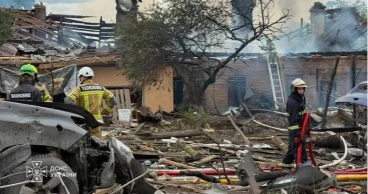
Russian missile strike near Kyiv kills 10 after Zelenskyy meets Patriot maker Raytheon
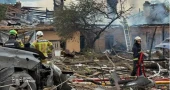
A Russian ballistic missile strike near Kyiv on Friday killed at least 10 people and injured nearly 100 others after hitting a site hosting a defence industry event, Ukrainian officials said.
The attack came a day after Ukrainian President Volodymyr Zelenskyy met in Kyiv with senior representatives of US defence company Raytheon, which manufactures Patriot air defence systems that Ukraine says are essential to counter Russia's ballistic missile attacks.
Raytheon did not immediately comment on whether any of its employees were present at the event.
"Missiles for Patriot systems are the number one priority," Zelenskyy wrote on social media while confirming the attack.
According to acting regional military administration head Ruslan Oliinyk, the missile struck the grounds of a privately operated military training facility in Bucha district, about 20 to 30 kilometres from central Kyiv. The site was hosting a defence-related gathering when it was hit.
Emergency teams rushed to the scene, where 27 houses and 44 vehicles were also damaged, officials said.
The Ukrainian Defence Industry Council, the country's largest association of private defence manufacturers, confirmed that industry representatives were attending the event, but did not disclose further details.
Prosecutor General Ruslan Kravchenko said authorities had launched a war crimes investigation into the Russian strike, along with a separate probe into possible negligence over the organisation of the event. Investigators will examine who approved the venue, timing and format of the gathering and whether sufficient safety measures had been taken.
The Ukrainian government later imposed restrictions on reporting details of the attack.
Meanwhile, Ukrainian officials said a separate strike on a military facility in Russia killed six people and injured 26 others, according to the regional governor.
Zelenskyy pushes for Patriot co-productionThe meeting between Zelenskyy and Raytheon representatives took place less than three weeks after US President Donald Trump pledged to allow Ukraine to produce Patriot systems under licence.
Zelenskyy said the company was ready to work with Ukraine on the joint production of Patriot interceptor missiles, adding that government officials and private-sector representatives would continue discussions on the project.
Ukraine has repeatedly urged its Western allies to provide more Patriot systems, which are considered one of the few effective defences against Russian ballistic missiles. While Ukraine has developed its own air defence technologies, officials say expanding domestic production remains critical, though experts caution that establishing local manufacturing could take years.
The meeting also reflected improving ties between Kyiv and Washington. Laura Loomer, a prominent Trump ally, also visited Kyiv on Thursday and criticised Russian President Vladimir Putin over missile attacks on Ukraine.
Ukraine expands drone strikes inside RussiaUkraine has continued stepping up long-range drone attacks inside Russia, targeting military and logistical infrastructure as it seeks to disrupt Moscow's war effort.
On Friday, Zelenskyy said Ukrainian forces had struck an oil facility about 1,350 kilometres from the Ukrainian border, along with a military plant in Russia's Kirov region that produces aircraft and missile components.
Regional Governor Alexander Sokolov said six people were killed and 26 injured in the attack on the military facility. Russian outlet Astra identified the site as the Avitec plant, which manufactures air defence missiles and aircraft components.
Ukraine also targeted several logistics centres belonging to Wildberries, Russia's largest online retailer. Company founder Tatyana Kim said warehouses in St. Petersburg, the neighbouring Leningrad region and Simferopol in Russian-annexed Crimea came under attack. Russian media published images showing thick smoke rising over St. Petersburg.
Ukrainian forces had struck four other Wildberries facilities earlier this week, causing major fires.
Kyiv says its campaign aims to disrupt Russia's military logistics and bring the impact of the war closer to ordinary Russians.
Russia's Defence Ministry said its air defence systems shot down 571 Ukrainian drones overnight.
9 days ago
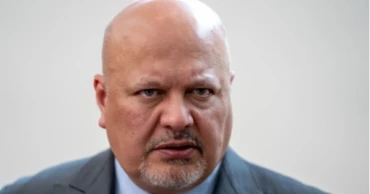
ICC removes chief prosecutor Karim Khan over sexual misconduct allegations
The International Criminal Court (ICC) on Friday voted to remove its chief prosecutor, Karim Khan, from office over sexual misconduct allegations, nearly two years after the claims first surfaced.
The ICC's 125 member states approved the decision by a large majority, citing "serious misconduct and serious breach of duty," according to the court's oversight body, the Assembly of States Parties.
Khan, a 56-year-old British lawyer, has denied allegations that he engaged in sexual misconduct involving a female aide. According to documents reviewed by The Associated Press, he had a sexual relationship with the woman and allegedly tried to stop her from pursuing the accusations.
Human Rights Watch welcomed the decision, saying the ICC must uphold the highest standards of accountability and ensure a safe workplace with effective systems for addressing abuse, including sexual harassment.
The Assembly of States Parties will now begin the process of electing a new chief prosecutor. The successor is expected to inherit major challenges, including sanctions imposed by the Trump administration against the court.
Khan's legal team criticised the process that led to his removal, arguing he was not given a fair chance to defend himself. His lawyer, Tayab Ali, said Khan was prevented from addressing Friday's session and claimed the rules had been changed to disadvantage him. He said the decision would be challenged through all available legal avenues.
The leadership change comes as the ICC faces mounting pressure from the United States.
Last week, US Secretary of State Marco Rubio announced what he described as a broad campaign to weaken the ICC, saying Washington would encourage member states to leave the court, sanction organisations cooperating with it and restrict travel to the United States for court staff. He also urged countries benefiting from US security support to reject the court's jurisdiction over American citizens.
Hours after the vote, Venezuela announced it was withdrawing from the ICC. Foreign Minister Félix Plasencia accused the court of showing geographical bias by focusing disproportionately on African and Latin American countries.
Earlier this year, ICC prosecutors ended an investigation into whether US sanctions on Venezuela amounted to crimes against humanity, citing insufficient evidence. However, a separate investigation into alleged crimes committed by Venezuelan security forces under former President Nicolás Maduro remains ongoing.
The Trump administration has already imposed sanctions on Khan and 12 other ICC staff members in response to arrest warrants issued against senior Israeli officials, including Prime Minister Benjamin Netanyahu and former Defence Minister Yoav Gallant, over the Gaza war, as well as investigations involving US personnel in Afghanistan.
Experts say the allegations against Khan became intertwined with the court's Gaza-related investigations, particularly because they involved arrest warrants against officials from a close US ally.
Khan's removal will not affect the arrest warrants issued in 2024 against Netanyahu and Gallant, as only ICC judges have the authority to withdraw them.
Assembly President Päivi Kaukoranta urged the international community to respect the dignity and privacy of everyone involved in the case and thanked member states for handling the matter with unity while safeguarding the court's integrity.
9 days ago
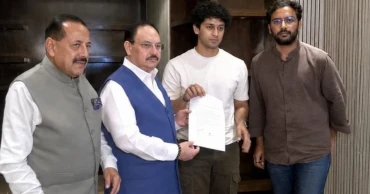
Education minister's resignation remains key hurdle ahead of fresh Centre-CJP talks
The Cockroach Janta Party (CJP) has hardened its position ahead of the third round of talks with the Indian government, saying there is no point in continuing discussions unless Education Minister Dharmendra Pradhan resigns.
CJP spokesperson Ashutosh Ranka said on Saturday that the minister's resignation is "non-negotiable."
"Dharmendra Pradhan's resignation is non-negotiable. If it's a no from the government, there's no point in further discussion," Ranka wrote on X.
The third round of talks is scheduled for Saturday afternoon after Union Ministers JP Nadda and Jitendra Singh held nearly two hours of discussions with CJP representatives on Friday at the Constitution Club.
According to the protesters, the CJP has placed three key demands before the government: the resignation of the education minister, assurance that no legal action will be taken against protesting students, and Rs 1 crore in compensation for the families of students who died by suicide following the alleged NEET examination paper leak.
Government representatives reportedly agreed in principle to the demands for no legal action against protesters and compensation. However, Pradhan's resignation remains the main point of disagreement.
After Friday's meeting, Nadda said the government would review the demands internally before responding in the next round of talks.
"The meeting lasted for almost two hours. They raised three main demands and suggested five reforms for the examination system. We will meet them again on Saturday and share the government's position," he said.
Government sources said the Centre is not considering the education minister's resignation and continues to support him.
According to the sources, the government believes stepping down would be the easiest option but is not justified. They said the government intends to fulfil its responsibilities under the mandate it received from the public.
Meanwhile, the Centre has announced several measures to address examination paper leaks. Prime Minister Narendra Modi has said fast-track courts will be set up to handle such cases, while the government is preparing amendments to strengthen penalties and fines for those involved in paper leak crimes.
The government has also replaced the education secretary, removed 47 officials from the National Testing Agency (NTA), and promised a comprehensive overhaul of the examination body.
Reacting to the dismissal of the NTA officials, Ranka said the move alone was insufficient.
He argued that the education minister must take responsibility for the repeated paper leaks and the deaths of students linked to the NEET controversy, insisting that Pradhan's resignation remains essential.
Source: NDTV
9 days ago
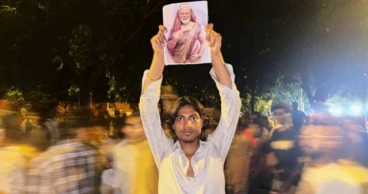
Humour and memes fuel India's 'Cockroach' protest movement against Modi government
Young protesters in India are using humour, memes and parody videos to amplify their demonstrations, turning social media into a key battleground as they press the government for education reforms and greater accountability.
As thousands continue protesting in New Delhi, many are sharing jokes, satirical videos and viral content online, targeting Prime Minister Narendra Modi's government, police actions and pro-government television coverage.
Observers say the online campaign has helped expand the movement beyond street protests, reaching a wider audience and increasing pressure on the government.
The movement, led by the satirical Cockroach Janta Party (CJP), has embraced humour as a form of protest.
Videos of demonstrators running from police have been edited to resemble the popular mobile game Subway Surfers, while others joked about maintaining their fitness app records during clashes with security forces.
Some women protesters have also adopted social media trends by posting "get ready with me" videos before joining marches and showcasing homemade protective gear such as helmets and goggles.
Participants have also created parody videos mocking television anchors who have labelled the protesters as "anti-national" or accused them of being backed by foreign interests.
Several protesters interviewed by The Associated Press said humour helps them cope with the stress of the demonstrations and connects with younger audiences.
One 25-year-old protester said her generation is less willing to tolerate problems than previous generations and uses social media to express its frustration.
The protests began about a month ago following allegations of irregularities in several competitive examinations, including the leak of entrance exams for India's national medical programme.
Protesters have demanded the resignation of Education Minister Dharmendra Pradhan, accusing the government of failing to protect the integrity of the examination system.
Since then, the demonstrations have grown into a broader movement calling for greater government accountability and have spread to several cities.
At protest sites in New Delhi, many demonstrators carry humorous placards, wear costumes such as Spider-Man or Batman, and use pop culture references to communicate their message.
One sign asked, "When will AI take his job?" while another declared, "Every joke is a (tiny) revolution."
Some slogans have also used stronger language, reflecting the informal style common on social media.
A 23-year-old student said younger people prefer short, direct messages over lengthy speeches.
"We are the summary generation. We consume information quickly, so we use the same style to spread our message," the student said.
The movement has also increasingly targeted Prime Minister Modi personally.
Known for building his political image through social media, Modi has rarely been the subject of widespread public mockery. However, protesters have recently turned his speeches, gestures and public appearances into parody videos and memes.
After Modi released a selfie-style video on Thursday promising strict action against those responsible for examination paper leaks, social media users responded with edited versions featuring humorous voice-overs and references to previous promises they claimed had not been fulfilled.
One widely shared parody video edited Modi's opening greeting to protesters before cutting to three young women replying, "No, we are not."
A 21-year-old student said using social media was the most effective way to challenge the prime minister.
"We're just answering him in his own language," the student said.
9 days ago