Cinema
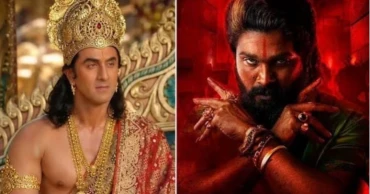
Ramayana needs just Rs 7 crore to surpass Pushpa 2's lifetime collection
Ranbir Kapoor and Sai Pallavi-starrer ‘Ramayana’ continues its strong run at the box office as it approaches the completion of 21 days in theatres. According to Sacnilk, the film has earned Rs 1,735.15 crore worldwide, closing in on ‘Pushpa 2’ (2024), which recorded a lifetime global collection of Rs 1,742 crore.
With a difference of just Rs 7 crore, ‘Ramayana’ is on the verge of overtaking ‘Pushpa 2’ and climbing higher in the list of the highest-grossing films of all time. Once it crosses that milestone, only ‘Dangal’ and ‘Dhurandhar 2’ will remain ahead of it on the chart.
After 20 days, the film's domestic net collection reached Rs 972.95 crore, while its domestic gross earnings stood at Rs 1,162.15 crore.
Day 20 Box Office Performance
On its 20th day, ‘Ramayana’ collected Rs 17.50 crore net from 15,817 screenings, according to Sacnilk. The film received a boost from a discounted ticket offer, with prices reduced to Rs 99 on Tuesday (November 24).
Its overseas earnings have so far reached Rs 573 crore, taking the worldwide gross collection to Rs 1,735.15 crore.
The Hindi version contributed the largest share on day 20, earning Rs 14.25 crore from 13,547 shows.
The remaining collections came from Kannada (Rs 90 lakh), Tamil (Rs 70 lakh), Malayalam (Rs 1.25 crore) and Telugu (Rs 40 lakh).
Taran Adarsh's Box Office Prediction
Trade analyst Taran Adarsh, who has been tracking the film's Hindi collections, had anticipated a boost from the reduced ticket prices on Tuesday.
In a post, he noted that ‘Ramayana’ had failed to achieve double-digit earnings for the first time in 19 days but was expected to regain that momentum on Tuesday.
He said the Guru Nanak Jayanti holiday, combined with discounted ticket prices, was likely to significantly improve collections, adding that advance bookings had already indicated a strong response.
Following ‘Dhurandhar 2’, ‘Ramayana’ became the fastest Hindi film to cross the Rs 700 crore net collection mark.
A Series of Box Office Records
Attention is now focused on when ‘Ramayana’ will cross Rs 1,000 crore in domestic net earnings and how long it will take to reach the milestone.
Despite an uneven opening, positive word-of-mouth and the festive-season boost helped the film gain momentum. Within just 20 days of its release, it climbed to become the fourth highest-grossing film of all time.
About the Film
Made on an estimated budget of Rs 4,000 crore, ‘Ramayana’ is being described as one of the most ambitious projects in Indian cinema.
The film received extensive international promotion, including a special screening organised by its makers in Los Angeles on October 27.
Directed by Nitesh Tiwari, the film features an ensemble cast led by Ranbir Kapoor and Sai Pallavi, alongside Yash, Sunny Deol, Ravi Dubey, Lara Dutta and others.
Source: NDTV
15 hours ago

New film adaptation of Hindu epic Ramayana sparks debate over authenticity
A new film adaptation of the Hindu epic Ramayana has sparked debate among audiences and scholars over its portrayal of one of Hinduism's most revered religious texts and its faithfulness to traditional versions of the story.
Titled “Ramayana: Rise of a Legend”, the film was released earlier this month to coincide with Diwali. Directed by Nitesh Tiwari, it is the most expensive Indian film ever made, bringing together Bollywood stars, two Oscar-winning music composers and Hollywood visual effects in an ambitious effort to introduce the ancient epic to a global audience.
The film, whose second instalment is scheduled for release next year, depicts Lord Rama's battle against demon king Ravana to rescue his wife Sita.
However, its modern interpretation and creative changes have divided viewers, particularly in India, over how the sacred story, originally composed by poet Valmiki, should be presented to contemporary audiences.
For some, the film's impressive production and visual effects have brought the epic to life on an unprecedented scale. Others believe certain changes have distorted a religious narrative preserved through generations.
Ashish Agarwal, a 29-year-old IT professional from New Delhi, said he watched the film twice and was particularly impressed by its production quality and visual effects, which he compared to those of Marvel movies.
He said the film's presentation of Indian culture on the big screen was encouraging, adding that it could help younger Indians connect with their heritage while introducing international audiences to Indian culture.
However, Shweta Gehlot, a 46-year-old schoolteacher, said she noticed several significant departures from the traditional scripture.
She particularly objected to the portrayal of Ravana as a just ruler, saying traditional accounts describe him as an evil, arrogant and lustful demon who persecuted sages.
“The filmmakers should have remained more true to the source material,” she said.
Although the criticism has yet to develop into a major controversy in India, a Hindu organisation has called for a boycott of the film and threatened nationwide protests if similar alleged distortions appear in its second instalment, expected around the same time next year.
The debate has also revived memories of Ramanand Sagar's popular television adaptation, “Ramayan”, which captivated millions of viewers in the 1980s. Its weekly Sunday morning broadcasts became a shared cultural experience, with streets and shops falling quiet and even some churches adjusting their service schedules so people could watch it.
US audiences respond to modern interpretation
The film has also attracted considerable attention in the United States, where it became the highest-grossing Indian production ever at the box office by its third weekend, earning $28 million.
Mallika Iyer, a 31-year-old Indian American living in New Hampshire, said she first became familiar with the Ramayana through Amar Chitra Katha comics, which retell Indian mythology, history, folklore and biographies.
Having watched the film twice, she described it as entertaining and engaging, appreciating its more balanced portrayal of Ravana and his sister rather than presenting them as entirely evil characters.
However, she acknowledged that the extensive use of computer-generated imagery could make some viewers feel that the film had compromised the religious significance of the epic.
She said the lengthy battle sequences were entertaining but understood why some audiences might feel that the emphasis on action scenes had overshadowed the story's spiritual elements.
Some US-based academics and researchers familiar with the Ramayana, however, said such modern interpretations were neither unusual nor inconsistent with the epic's long history of adaptations.
Shubha Pathak, an associate professor of philosophy and religion at American University, welcomed the film's portrayal of Sita as a woman with martial arts abilities and greater independence.
She said the character was given more agency rather than being portrayed simply as someone waiting for her husband to rescue her.
Pathak said such changes, along with advanced visual effects, could make the epic more accessible to younger and new audiences.
She described the film as an attempt to create a new visual interpretation of the characters and adapt the story to contemporary times, arguing that the epic should not be expected to remain unchanged.
Ramayana has a long tradition of reinterpretation
Sohini Sarah Pillai, an assistant professor of religion and director of film and media studies at Kalamazoo College in Michigan, said the Ramayana, although rooted in Hinduism, has also become part of wider cultural traditions beyond the Hindu community.
Over centuries, the epic has been retold across South and Southeast Asia through different religious, linguistic and cultural perspectives.
These include Buddhist versions emphasising compassion, Jain interpretations promoting non-violence and Muslim and Sufi adaptations exploring devotion to the divine.
Indigenous Adivasi and Dalit communities have also developed versions that place their own heroes at the centre of the narrative, challenging established social and political hierarchies.
In India's Parsi community, theatrical adaptations of the Ramayana emerged in the late 19th and 20th centuries, combining European stage techniques with Urdu poetry to appeal to urban audiences.
Pillai said the new film was part of this long tradition of reinterpretation.
She pointed to the portrayal of Ravana's sister, Surpanakha, as a beautiful widow attracted to Rama, a depiction that has drawn criticism from some viewers.
Although the character differs from Valmiki's portrayal, Pillai said other versions of the epic had presented her with greater psychological complexity. She cited 12th-century Tamil poet Kamban, whose account gave Surpanakha greater emotional depth and tragic complexity.
However, Pillai criticised the film's tagline, “Our truth. Our history”, saying it could give audiences the impression that there was only one authentic version of the Ramayana.
She stressed the importance of recognising the many different versions of the epic across South Asia.
Robert Goldman, the lead translator of an authoritative seven-volume edition of the Valmiki Ramayana, said the text should not be viewed merely as an adventure story featuring supernatural characters and spectacular battles.
He said the Ramayana is also regarded as a religious and philosophical text that provides guidance on moral and ethical conduct.
However, Goldman acknowledged that the film was designed to appeal to younger audiences, adding that generating their interest in the epic could itself be valuable.
1 day ago

Khairul Basar-Sarika Sabah pair up for Hoichoi film 'Selfie'
Actors Khairul Basar and Sarika Sabah are set to appear together on screen for the first time in 'Selfie', a Hoichoi original film directed by Mushfika Masud, which will premiere on the streaming platform on December 10.
The poster of the film was released on Hoichoi's social media platforms on Saturday. The one-hour film promises a different cinematic experience, combining storytelling, performances and distinctive filmmaking.
Acclamed filmmaker Amitabh Reza Chowdhury served as the creative producer of 'Selfie'.
For Khairul Basar, who has acted in several Hoichoi series, 'Selfie' marks his debut in a Hoichoi original film. Sharing his experience of working on the project, he said the story and character both appealed to him.
“Both director Mushfika Masud and co-actor Sarika were new collaborators for me. Overall, it was a wonderful experience. Now it is time for our work to reach the audience,” he said.
For Sarika Sabah, the film marks her first collaboration with Hoichoi, Basar and director Mushfika. Describing her experience, she said the journey of 'Selfie' had been beautiful from beginning to end.
“The biggest reason was that I felt deeply connected to the story. When I first heard it, I felt I wanted to be a part of it. Mushfika's sincerity towards the story and her honesty in telling it inspired me greatly,” she said.
Mushfika said she originally wrote the story of 'Selfie' as a short horror film while studying at film school in New York.
“Later, I shared several stories with Hoichoi, and everyone liked 'Selfie'. That confidence gave me tremendous courage. Drawing from that, I tried to tell a story of genuine relationships and human connection, blending horror, romance and thriller,” she said.
The director said working with Basar, Sarika and Fazlur Rahman Babu was a joyful experience, adding that their performances brought the story to life.
Mushfika also said she had previously worked alongside her fellow filmmaker Amitabh Reza Chowdhury, but 'Selfie', being her own idea and story, allowed her to take the lead independently, with Amitabh serving as creative director.
She expressed gratitude to the entire Hoichoi team, as well as Half Stop Down and producer Mahjabin Reza Chowdhury, while saying she was now waiting for the audience's response to the film.
Hoichoi Bangladesh Country Director Shakib R Khan said the platform always strives to bring diverse and quality Bengali content to audiences.
“The film, 'Selfie', is one such production featuring a new pairing and an attempt at telling a story in a different way. We believe the film, directed by Mushfika Masud, will appeal to audiences,” he said.
3 days ago

Sariful Razz to star in Bangladesh’s first space film ‘Limbo’
National Film Award-winning actor Sariful Razz is set to play the lead role in ‘Limbo’, an upcoming space drama and cosmic romance directed by Taneem Rahman Angshu, marking what is being described as Bangladesh’s first film in the genre.
The announcement came on Wednesday, Razz’s birthday, as the director and actor shared the film’s poster on social media, confirming their collaboration.
Sharing the poster, Angshu described ‘Limbo’ as an endless journey into space that would offer a unique experience for both the audience and the filmmaker. Razz also shared the same message, expressing his excitement about joining the project.
Angshu, known for directing the National Film Award-winning film ‘No Dorai’, said he chose Razz for his natural acting ability and the maturity he has developed over the past five to six years.
“Razz has been a very good actor since the time we worked on ‘No Dorai’. He is a very natural actor. His acting has improved significantly over the last five to six years. He has also become much more mature as a person, and that maturity is reflected in his performances,” the director said.
He added that he had wanted to work with Razz again soon after ‘No Dorai’ and that they had discussed several projects over the years.
“Considering the story of ‘Limbo’ and the acting skills required to portray the character Razz will be playing, I felt he was the best option. That is why I chose him,” Angshu said.
Razz, who previously worked with Angshu in ‘No Dorai’, said he was delighted to reunite with the director after a gap of around four to five years.
“Without a doubt, he is a creative filmmaker. My previous experience working with him was wonderful. I am very happy to be part of the vision he has for this film,” the actor said.
The film has been scripted by Biplab Goswami, the Indian writer and screenwriter known for ‘Laapataa Ladies’.
Describing the project as different from conventional film narratives, Razz said he was particularly excited about Angshu’s vision and Goswami’s involvement in the screenplay.
“I am extremely excited about this film. It is also a great pleasure to have someone like Biplab Goswami writing the screenplay. I am looking forward to becoming involved in the project both mentally and physically. I would like to talk more about it after the shooting is completed,” he said.
The filmmakers are planning to shoot the film in three different countries to achieve an international production standard. The project is also expected to be submitted to international film festivals ahead of its planned theatrical release in 2027.
Alongside the poster, Angshu also unveiled a teaser featuring a mysterious woman waving a red scarf as a spacecraft moves away from Earth into space.
In the teaser's caption, the director posed a question hinting at the film's central theme: “In this limitless journey, who is leaving their loved one behind?”
The visuals and caption suggest a narrative blending romance, separation and an enigmatic journey into space.
‘Limbo’ will mark Angshu’s return to feature filmmaking after an extended break following ‘No Dorai’, which earned him recognition for its distinctive storytelling and direction.
7 days ago

Godzilla returns with spectacular effects and anti-war message in latest film
Japan's iconic monster Godzilla has returned to the big screen in “Godzilla Minus Zero”, bringing spectacular fire-breathing action and destruction while delivering its familiar warning about nuclear weapons, war and human folly.
“Godzilla is not just any old monster but a metaphor for war and nuclear weapons, reflecting all the uncertainties of this world that still exist everywhere, in people's hearts,” said Takashi Yamazaki, the film's director, writer and special-effects supervisor.
The movie has already made a strong impression at the box office, earning more than $31.6 million during its opening weekend and setting a record debut for a foreign-language live-action film in North America.
Yamazaki also directed “Godzilla Minus One”, released three years ago, which won an Oscar for best visual effects. The latest instalment continues the story from 1947 to 1949, bringing back familiar characters, including a pilot played by Ryunosuke Kamiki and his sweetheart, portrayed by Minami Hamabe.
The film also introduces new characters, including a Hiroshima atomic bombing survivor turned scientist, played by veteran actor and dancer Min Tanaka.
Godzilla first appeared in Ishiro Honda's 1954 classic and has since featured in more than 30 films, mostly produced by Japan's Toho studio.
Yamazaki said his version remained faithful to the original creature, particularly its distinctive dorsal spikes.
Although the human drama takes time to unfold, Godzilla's eventual appearance, accompanied by its thunderous roar and glowing blue spikes, delivers the spectacle audiences expect.
The film also features a battle between Godzilla and the golden-winged dragon Ghidorah, with the storyline designed to make audiences cheer for the giant monster.
For the first time in the franchise, the production used IMAX technology, offering audiences an immersive viewing experience with sharper images and powerful sound.
Composer Naoki Sato also retained the iconic original Godzilla theme by Akira Ifukube in key scenes.
Yamazaki said he was open to continuing the franchise but is currently working on a Hollywood film featuring English-speaking actors, expected to be released in 2028.
12 days ago

Siam Ahmed, Nazifa Tushi to pair up in Shankha Dasgupta’s ‘Abar Dekha Hole’
Director Shankha Dasgupta is set to bring his new film ‘Abar Dekha Hole’ to theatres during the upcoming Eid-ul-Fitr 2027, featuring Siam Ahmed and Nazifa Tushi in their first on-screen pairing.
The film will see the two popular actors share the screen for the first time, with National Film Award-winning actor Chanchal Chowdhury also playing a key role.
The cast further includes Deepa Khandakar, Azizul Hakim, Bijori Barkatullah and Rezwan Pervez.
‘Abar Dekha Hole’ marks Shankha Dasgupta’s second theatrical feature after the acclaimed ‘Priyo Maloti’. He also directed the OTT film ‘Cha Gorom’, which received widespread appreciation.
Describing the project as a family drama, the director said the film would be suitable for audiences of all ages to enjoy together in theatres.
“The story revolves around the middle class, exploring emotions, family values and the dynamics of family life, alongside conflicts and drama drawn from everyday experiences. But that does not mean it will be an overly serious film. There is also plenty of humour surrounding its central emotions," Shankha said.
"The presence of actors loved by audiences, along with their performances, is another major strength of my story,” he added.
Explaining the central theme, he said the film was essentially about rediscovering oneself.
“It is primarily a story about finding oneself again. There is so much within this journey that it is difficult to explain everything one by one. It may be easier if viewers think about themselves."
"The story has been developed around the emotions and situations one experiences when trying to revisit the past, search for lost moments, ask questions or understand the reasons behind things,” the filmmaker said, adding that he believes the audiences would be able to relate the story to their own lives.
The film explores these emotions through different time periods, taking viewers on a journey through memories. The director also sees the background score and songs as important elements in conveying the emotional depth of the narrative.
Chorki Chief Executive Officer Redoan Rony, explaining the platform's involvement, said the company believed in the importance of stories that evoke different emotions.
“Chorki believes that stories with diverse emotions are important, and audiences can understand this by watching our films. ‘Abar Dekha Hole’ is a story about family and rediscovering oneself. We believe audiences will experience some wonderful emotions and moments with their families in theatres,” he said.
The screenplay of the film has been written by Md Saifullah Riad.
Presented by home appliances brand 'Singer | Beko', the film is produced by Filmy Features, with popular streaming platform Chorki joining as co-producer and official digital partner, in association with MIB Studios.
13 days ago
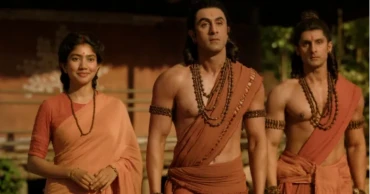
Ranbir Kapoor-starrer Ramayana crosses Rs 663 crore worldwide in five days
Nitesh Tiwari's epic film Ramayana, starring Ranbir Kapoor, Sai Pallavi and Yash, has crossed Rs 663 crore in worldwide gross collections within five days of its release, recording a strong performance at the box office.
The film has earned Rs 413.90 crore in gross collections and Rs 346.35 crore in net collections in India, while its overseas gross earnings have reached Rs 250 crore.
On Monday, the film collected Rs 107.50 crore in India across 23,911 shows, marking its first Rs 100 crore-plus day since its release.
The Hindi version contributed the largest share, earning Rs 87.25 crore from 19,786 shows. The Kannada version collected Rs 7.50 crore from 908 shows, followed by Telugu at Rs 6 crore from 1,606 shows.
The Tamil version earned Rs 4 crore from 826 shows, while the Malayalam version contributed Rs 2.75 crore from 785 shows.
Ramayana opened with Rs 64.85 crore in India, followed by Rs 48.05 crore on Friday and Rs 69.80 crore on Saturday. Its collections declined to Rs 56.15 crore on Sunday across 21,770 shows.
Trade analyst Taran Adarsh had earlier predicted that the film's business would receive a major boost from Monday with the beginning of Diwali festivities.
In an Instagram post on Sunday, he said Saturday was the best-performing day of the extended weekend, while Sunday's collections slowed due to Lakshmi Puja and Diwali celebrations.
He expressed optimism about the film's prospects, citing strong advance bookings, positive audience feedback and the expected improvement in collections from mass-market circuits during the festivities.
In comparison, Prabhas-starrer Adipurush (2023) opened with Rs 86.75 crore in India, outperforming Ramayana on its opening day.
However, Ramayana recorded slightly higher collections than Adipurush on the third day. On its fifth day, Adipurush earned Rs 10 crore in net collections, while Ramayana crossed the Rs 100 crore mark.
Made on an estimated budget of Rs 4,000 crore, Ramayana is being described as one of the most ambitious projects in Indian cinema.
Directed by Nitesh Tiwari, the film also features Sunny Deol, Ravi Dubey and Lara Dutta, among others.
The film received extensive international promotion, including a special screening in Los Angeles on October 27. Source: NDTV
15 days ago

Chorki to release nine-episode ‘Feu Complete Saga’ on November 12
Chorki’s acclaimed series ‘Feu’ is returning in a complete format as ‘Feu Complete Saga’, bringing its full story to the streaming platform on November 12.
Inspired by the tragic Marichjhapi massacre, the fictional series explores heroism, survival and political intrigue against the backdrop of the Sundarbans.
The story follows the mysterious figure Marshall, a representative of ordinary people, while young Daniel becomes embroiled in a bloody confrontation with foreign agents.
Written by Sukorno Shahed Dhiman and Romel Rahman, the screenplay was developed by Dhiman and Siddiq Ahamed.
Several questions remained unanswered after the first season: Is Sunil still alive or a victim of political conspiracy? Will Marshall (Mostafizur Noor Imran), who transformed from a honey collector into a pirate leader, succeed in securing his people's rights? Will the people of Dumurjhapi find shelter?
Director Dhiman said the new release would answer these questions and clarify the geopolitics surrounding the community.
The nine-episode series will premiere on Chorki at 12 am on November 12. Its teaser was released on November 3.
Dhiman clarified that ‘Feu Complete Saga’ is not simply a second season but combines portions of the first season with the remaining story to present the complete narrative.
He said viewers who had not watched the first season would also be able to understand the entire story, describing the new release as the real and complete version of ‘Feu’.
Filming took place between 2023 and 2024 in Chalna, Batiaghata, Bajua, Mongla, Khulna and Satkhira, highlighting the heroism and culture of southern Bangladesh.
Chanchal Chowdhury plays Sunil, while Mostafizur Noor Imran portrays Marshall. The cast also includes Tariq Anam Khan, Tanvir Apurbo, Hossain Zibon, Tahmina Authoi, Rizvi Rizu and others. More than a hundred artistes from Khulna, Bagerhat and Batiaghata took part in the production.
Imran described Marshall as the reflection of a true fighter, saying the character's appearance, clothing, body language and behaviour carried considerable depth.
Chorki CEO Redoan Rony said the first season's story, locations and visuals had generated discussion among viewers. He expressed hope that the series' visuals and performances would make its portrayal of history and struggle more engaging.
The title ‘Feu’ refers to a jackal whose calls alert others to a tiger's presence. According to Dhiman, the word also reflects the fear and anxiety that become part of everyday life, making it relevant to the series' political narrative.
The story draws on the 1979 Marichjhapi massacre in West Bengal's South 24 Parganas district, where lower-caste Hindu refugees, including members of the Namasudra community, were evicted from an island settlement. While official records put the death toll at two, various estimates suggest more than a thousand people were killed.
21 days ago

Ranbir Kapoor's Ramayana crosses Rs 73 cr in advance bookings ahead of release
Nitesh Tiwari's Ramayana: Part One is witnessing a strong response in advance ticket sales ahead of its theatrical release on November 5, gaining momentum both in India and overseas markets.
According to a report by Sacnilk, the film has generated Rs 73.40 crore through advance bookings across India for five show dates. Of this amount, Rs 58.57 crore has come from bookings excluding block seats.
The premiere day is leading the advance sales with Rs 32.41 crore in collections. The film has so far sold 18.67 lakh tickets across 60,124 shows.
Among Indian states, Karnataka leads the first-day advance booking collections with Rs 5.90 crore, followed by Maharashtra at Rs 5.59 crore. Delhi ranks third with Rs 4.34 crore, while Telangana occupies fourth place with Rs 2.59 crore.
The Hindi version accounts for the largest share of first-day advance sales, generating Rs 25.41 crore, or around 78 percent of the total collection.
The Kannada version ranks second with Rs 3.62 crore, followed by Telugu at Rs 2.45 crore. The Tamil and Malayalam versions have contributed Rs 70.57 lakh and Rs 22.04 lakh, respectively, to the premiere-day collections.
The Hindi 3D version alone has generated Rs 14.47 crore from 7,973 shows, accounting for nearly 45 percent of the first-day gross collection.
Meanwhile, premium formats, including IMAX, 4DX, Dolby, ICE and EPIQ, have collectively earned Rs 5.32 crore, representing 16 percent of the first-day gross revenue.
The film has also recorded strong advance sales in the overseas market. According to a November 2 report by Sacnilk, Ramayana has sold more than 51,000 tickets for its paid preview screenings scheduled for November 4 in overseas markets.
With these sales, the film has surpassed the estimated US premiere ticket sales of several major Indian releases, including Animal, Jawan, Pushpa 2, RRR, Baahubali 2 and Kalki 2898 AD.
In North America, the film has sold more than 1.40 lakh tickets for its opening period from November 4 to November 8.
Based on the current advance booking trends, Ramayana: Part One is projected to earn around $13 million to $14 million (approximately Rs 123.09 crore to Rs 132.56 crore) during its first five days in the North American market. #From NDTV
22 days ago
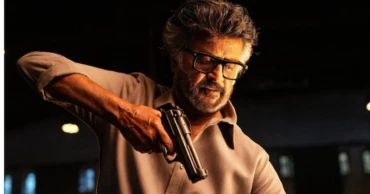
Rajinikanth's film jumps 70%, worldwide earnings near Rs 791 crore
Rajinikanth-starrer Jailer 2 continued its impressive box office performance on Saturday, October 31, recording a 70% increase in domestic earnings compared with the previous day. The film collected Rs 9.35 crore net in India on its 17th day, up from Rs 5.50 crore on Friday.
With the latest earnings, its total domestic net collection reached Rs 444.75 crore, while its India gross collection climbed to Rs 520.35 crore.
Worldwide Collection Approaches Rs 791 Crore
The film also maintained a strong performance in overseas markets, earning Rs 3 crore on Saturday. Its cumulative overseas gross collection has reached Rs 270.50 crore.
According to Sacnilk, the film's worldwide gross collection now stands at Rs 790.85 crore.
On Day 17, Jailer 2 recorded 8,738 screenings across India, with an estimated 6,92,764 tickets sold. Its total theatrical ticket sales have crossed three crore, reaching 3,00,11,397.
The Tamil version remained the largest contributor, earning Rs 6.70 crore from 4,199 shows. The Hindi version collected Rs 1.45 crore from 3,549 screenings, while the Telugu version added Rs 90 lakh from 801 shows. The Kannada version contributed Rs 30 lakh through 189 screenings.
Despite entering its third week in theatres, the film has maintained a strong domestic box office presence.
During its first eight days, Jailer 2 collected Rs 334.35 crore net and Rs 391.55 crore gross in India. Its second week added another Rs 95.55 crore net and Rs 111.50 crore gross, representing a 71.4% decline compared with the opening period.
In the first two days of its third week, the film earned Rs 14.85 crore net and Rs 17.30 crore gross domestically. Its overall India gross collection has now crossed Rs 500 crore.
Jailer 2 Outperforms Coolie
A comparison with Rajinikanth's previous release, Coolie, shows the difference in the box office performance of the two films.
At the same stage of its theatrical run, Coolie had earned Rs 276 crore net and Rs 322.40 crore gross in India. Its worldwide gross collection stood at Rs 499.40 crore, including Rs 177 crore from overseas markets.
On its 17th day, Coolie collected Rs 2.80 crore net from 3,998 screenings across India.
The Tamil version contributed Rs 1.95 crore from 1,790 shows, while the Telugu version earned Rs 45 lakh from 918 screenings. The Hindi version added Rs 36 lakh from 1,209 shows, and the Kannada version collected Rs 4 lakh from 81 screenings.
Its overseas earnings on that day stood at Rs 50 lakh, with an average collection of Rs 7,004 per show. By comparison, Jailer 2 has recorded substantially higher domestic and worldwide earnings at the corresponding stage.
Tamil Version Records Highest Occupancy
Among the four language versions, the Tamil release recorded the highest overall theatre occupancy on Saturday at 30.37%.
Its morning shows registered 17.46% occupancy, followed by 29.92% in the afternoon and 31.54% in the evening. Night screenings recorded the highest occupancy at 42.54%.
The Hindi version registered an overall occupancy of 15.28%, with morning, afternoon, evening and night shows recording 11.42%, 11.33%, 13.92% and 23.08%, respectively.
Meanwhile, the Telugu version recorded an overall occupancy of 23.28%, with night screenings reaching 29.90%.
Tamil Nadu Leads State-Wise Collections
Tamil Nadu remained the biggest contributor to Jailer 2's domestic box office earnings on Saturday.
The state generated Rs 5.25 crore in gross collections, accounting for 48.2% of the tracked domestic gross of Rs 10.90 crore.
Karnataka contributed Rs 2 crore, while Andhra Pradesh and Telangana together added Rs 1 crore. Kerala also recorded Rs 1 crore in earnings, with the remaining domestic markets contributing Rs 1.65 crore.
Source: NDTV
24 days ago