Bangladesh

Youth shot dead by miscreants in Jatrabari
A youth was shot dead by miscreants near City Goli in the Dhalpur area of Jatrabari in the capital on Tuesday evening.
The deceased was identified as Maruf Hossain Dukhu, 17, son of late Abdur Rashid of Dhalpur.
The incident took place around 7pm. He was rescued in a bullet-hit condition and taken to the emergency department of Dhaka Medical College Hospital (DMCH), where doctors declared him dead.
Maruf’s wife Mim said her husband worked at a pot factory in a lane beside Malancha Centre in Sayedabad. He was shot by miscreants at a field in City Palli near their home after returning from work in the evening.
“We cannot understand who shot and killed my husband or why. He was a good person and never had disputes or trouble with anyone,” she said, breaking down in tears.
Md Habibur Rahman, in charge of the DMCH police camp, said the body was kept in the hospital’s emergency department morgue and Jatrabari Police Station had been informed.
6 hours ago
Barber killed for refusing to cut hair on credit in Mymensingh
A salon owner was allegedly stabbed to death by a man for refusing to cut his hair on credit in Bhaluka upazila of Mymensingh on Tuesday evening.
The deceased was identified as Rabendra Rishi, 43, son of Ranjit Rishi of Uttarpara area in Dhobaura upazila. He lived in a rented house in the Tariff Munshi Mor area of Jamirdia and ran a salon at a local market.
The accused, Saddam Hossain, son of Babul Mia, was arrested by police from the National Polymer area of Habirbari following the incident.
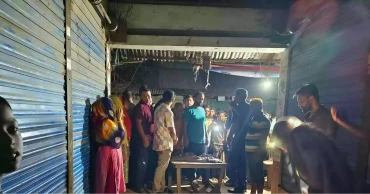
According to locals, Saddam entered Rabendra’s salon with a sharp knife and stabbed him. In an attempt to save his life, the bloodied victim ran to a nearby shop owned by Saddam’s father, but the attacker followed him and stabbed him repeatedly.
Rabendra then tried to take shelter in the courtyard of a nearby house, where Saddam allegedly knocked him to the ground and stabbed him several more times. He died at the scene from excessive blood loss.
The victim’s wife, Suchitra, alleged that Saddam frequently extorted money from her husband to buy drugs and regularly received haircuts and beard trims without paying. When Rabendra demanded payment, arguments would break out.
She claimed her husband was killed after refusing to provide another haircut on credit. Saddam had allegedly threatened to kill him several times, including before Durga Puja, when he told her, “You will receive your husband’s body after Puja.”
Officer-in-Charge of Bhaluka Model Police Station Md Zahidul Islam said police recovered the body and sent it to the Mymensingh Medical College Hospital morgue for autopsy.
He said Saddam had been arrested and police were investigating the circumstances surrounding the murder.
6 hours ago
US ambassador calls for diplomacy "at the speed of relevance"
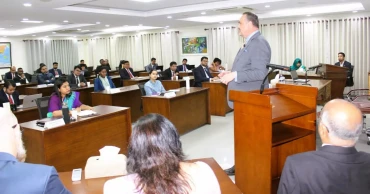
Reflecting on the changing nature of diplomacy, US Ambassador to Bangladesh Brent T Christensen has underscored the importance of keeping diplomatic engagement “at the speed of relevance”—responsive to emerging challenges, attentive to evolving national priorities, and focused on delivering meaningful outcomes.
The Foreign Service Academy hosted Ambassador Christensen for an interactive session with the trainee officers of the 32nd Specialized Diplomatic Training Course (SDTC) and the 4th Professional Master’s in International Relations and Diplomacy (PMIRD).
The discussion offered valuable insights into the priorities guiding U.S. engagement with Bangladesh, particularly in the areas of commercial diplomacy, trade facilitation, energy and defence cooperation, humanitarian assistance to the Rohingya, and cooperation in the health sector.
6 hours ago
Bullet Bairagi murder case: Charge sheet filed against five accused
Police have submitted a charge sheet against five accused in the murder case of customs official Bullet Baishnagi in Cumilla.
Officer-in-Charge of Cumilla District Detective Branch (DB) Police and the case’s investigating officer, Md Samsul Alam, confirmed the development on Tuesday night.
The accused are Md Sohel, 34, Ismail Hossain Jony, 28, Emran Hossain alias Hridoy, 34, Rahat Hossain Jewel, 27, and Md Sujon, 32. All five are currently in Cumilla Central Jail.
Samsul Alam said the charge sheet was submitted after a lengthy investigation. The court accepted it and sent the case to the Cumilla District and Sessions Judge’s Court for trial.
He said investigators could not establish the permanent addresses of Jony, Jewel and Sujon, so they were listed as having no fixed address in the charge sheet.
Bullet Bairagi was a 41st BCS non-cadre officer serving as an assistant revenue officer at the Bibir Bazar land port in Cumilla. His hometown was Dumuria village in Tungipara of Gopalganj. He lived with his family in the Panpatti area of Rajganj in Cumilla city.
According to the case statement, Bairagi left Chattogram for Cumilla on April 24 after completing the 44th basic training course at the Customs, Excise and VAT Training Academy in Chattogram.
On April 25, police recovered the body of Bullet Bairagi from the Kotbari area of the Dhaka-Chattogram highway under Cumilla’s Sadar South Police Station.
The complaint alleged that miscreants killed him on his way back from Chattogram and looted the cash he was carrying.
His mother, Lilima Bairagi, filed a murder case against unidentified assailants with Cumilla Sadar South Model Police Station that day.
Lilima said police had informed her about the submission of the charge sheet. She expressed hope that those responsible for her son’s murder would receive exemplary punishment.
6 hours ago
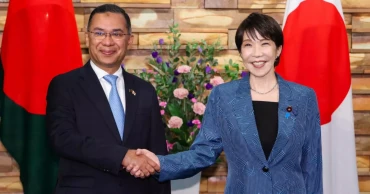
Tarique discusses ¥50b Japanese assistance to boost Bangladesh’s energy security
Prime Minister Tarique Rahman has said Bangladesh and Japan discussed emergency financial assistance of 50 billion yen, equivalent to around US$320 million, to strengthen Bangladesh’s energy security.
In a post made on his Facebook page in the early hours of Wednesday (Japan time) following his bilateral summit with Japanese Prime Minister Sanae Takaichi in Tokyo on Tuesday, Tarique said the assistance was explored under Japan’s Partnership for Power Asia initiative.
“We explored emergency financial assistance of JPY 50 billion (approximately USD 320 million) under Japan’s Partnership for Power Asia initiative to strengthen Bangladesh’s energy security,” he said.
The Prime Minister described his visit to Japan as an important step towards strengthening the long-standing friendship and strategic partnership between the two countries.
He said the two leaders reaffirmed their shared commitment to democracy, the rule of law, economic development and a peaceful, stable and prosperous Indo-Pacific.
Tarique also said the two countries held encouraging discussions on the potential for up to 1 trillion yen, or around US$6.34 billion, in Japanese private-sector investment in Bangladesh over the next five years.
The investment could create around 200,000 jobs, he added.
7 hours ago

'We are here to stay,' says visiting German vice minister; reaffirms commitment to long-term partnership with Bangladesh
German Vice Minister for Economic Cooperation and Development (BMZ) Dr Bärbel Kofler has stressed the need for closer cooperation with Bangladesh and European partners to address global challenges, including climate change, rising prices, energy security and economic reforms.
“We are here to stay,” the visiting vice minister said, reaffirming Germany’s commitment to maintaining a reliable and long-term partnership with Bangladesh.
She expressed appreciation for the partnership with Bangladesh and said Germany would continue to work with the country to address shared challenges.
Dr. Kofler joined the celebration of German Reunification Day at the Franco-German Embassy in Dhaka, commemorating the reunification of East and West Germany in 1990, following decades of division during the Cold War.
Environment, Forest and Climate Change Minister Abdul Awal Mintoo spoke as the chief guest at the reception hosted by Ambassador of the Federal Republic of Germany Dr. Rüdiger Lotz and Ivana Lotz.
The event brought together senior government leaders, civil society representatives, members of the diplomatic community, and prominent cultural and media figures both from Bangladesh and Germany.
The vice minister said global challenges could be overcome only through unity, solidarity and cooperation among countries sharing common goals.
She said Germany wants to work with Bangladesh and its European partners not only to recognise the challenges facing the country but also to find practical ways to address them.
Referring to Bangladesh’s upcoming graduation from the Least Developed Country (LDC) category, the vice minister congratulated the country and stressed the importance of reforms in the economic, financial, social and environmental sectors.
She said discussions on a possible free trade agreement with the European Union would require sustained engagement and reforms to strengthen Bangladesh’s economic foundations.
The vice minister acknowledged that rising prices were putting pressure on households and businesses in Bangladesh and beyond, noting that Germany is also facing similar challenges.
She said climate change, rapid technological transformation, digitalisation and artificial intelligence are creating new challenges, while countries also needed to generate decent employment opportunities for young people and provide them with better prospects.
The visiting official highlighted the 55-year partnership between Germany and Bangladesh, saying German development cooperation had worked closely with the country across different sectors of society, including government, the private sector and civil society.
She said the two countries had achieved significant progress through their cooperation, despite an increasingly challenging global political and economic environment.
Referring to climate change, she highlighted joint efforts on climate adaptation and energy issues, stressing the importance of international cooperation in helping countries manage climate-related risks.
The vice minister also emphasised the need for a sustainable development path that balances environmental protection, economic growth and social progress.
She said energy security has become increasingly important amid global conflicts and disruptions to supply chains, citing the impacts of the wars on energy supplies, prices and food security.
The vice minister said closer cooperation among Bangladesh, Germany and European partners could help advance a more sustainable and resilient future.
The vice minister, who is visiting Bangladesh for the third time, said she had met representatives of civil society and trade unions on the first day of her visit, engaged with business leaders the following day, and held meetings with government officials, ministers and political representatives.
She said the engagements had given her an opportunity to gain a broader understanding of Bangladesh, its people and their aspirations for the future.
The vice minister said German Unity Day represented peaceful engagement, solidarity and the overcoming of divisions, values that remained important for international cooperation.
As Bangladesh stands on the threshold of a crucial economic transformation, Germany is looking to reaffirm its long-standing partnership with the country through high-level talks on development cooperation.
As Bangladesh takes its next steps onto the global economic stage, Dr. Kofler’s visit underscored Germany’s continued commitment to standing alongside the country as a strategic partner in sustainable progress.
The discussions in Dhaka looked beyond traditional aid frameworks to focus on long-term resilience, economic adaptability and sustainable growth.
The three-day official visit marked an important moment in bilateral relations, with government-to-government (G2G) negotiations aimed at shaping the future of Bangladesh-German development cooperation.
The visit came at a significant juncture as Bangladesh navigates economic transformation and prepares for its graduation from Least Developed Country (LDC) status.
Germany has long been one of Bangladesh’s most steadfast development partners.
Yet, as Bangladesh moves beyond the safety net of LDC status, the nature of international cooperation must also evolve, Germany said.
7 hours ago
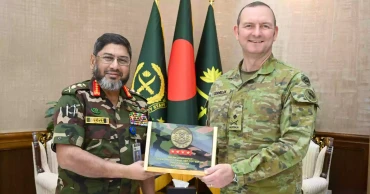
Bangladesh, US military delegations hold 10th Land Forces talks in Dhaka
The 10th Bangladesh–United States Land Forces Talks (LFT)–2026 concluded on Tuesday at Dhaka Cantonment, with both sides discussing key areas of mutual interest and ways to strengthen bilateral military cooperation.
The two-day talks, held on October 26-27, brought together military representatives from the Bangladesh Army and the United States Army, according to the Inter-Services Public Relations (ISPR).
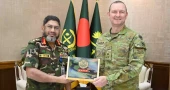
Earlier, head of the US delegation Major General Giles J. S. Cornelia, Deputy Commanding General for Strategy and Plans, United States Army Pacific (USARPAC) paid a courtesy call on with the Chief of Army Staff General Waker-Uz-Zaman, at Army Headquarters on Monday.
The Bangladesh delegation was led by Brigadier General Syed Ashiqur Rahman, Director of Military Training Directorate, Bangladesh Army.
7 hours ago
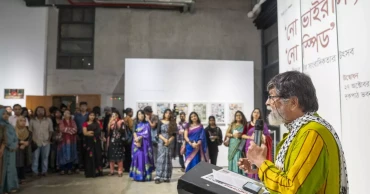
‘No Viral, No Speed’ exhibition by Drik celebrates 'slow journalism'
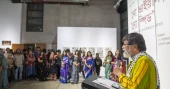
A special exhibition titled 'No Viral, No Speed: A Festival of Slow Journalism by Students' began Tuesday evening at the DrikPath Bhaban in the capital, aiming to highlight the importance of investigative, evidence-based, and responsible journalism.
The exhibition spans the second and eighth levels of the DrikPath Bhaban and features works by 30 students from the journalism departments of Khulna University, Central Women’s University, and the University of Liberal Arts Bangladesh (ULAB).
Prominent figures attended the inaugural event, including Drik Managing Director and photographer Dr Shahidul Alam, Central Women’s University Vice Chancellor Dr Parveen Hasan, and lecturer Kazi Nafia Rahman. Other notable guests included Prof Dr Deen M Sumon Rahman, Dean of the ULAB School of Social Science, Associate Professor Dr Sarkar Barbaq Quarmal, Khulna University Associate Professor Sara Monami Hossain, and Assistant Professor Md Shamim Hossain. Drik researcher Samia Rahman Preema moderated the ceremony.
8 hours ago
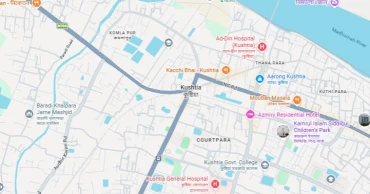
Panic in Kushtia as rival gangs' fight for control of Padma waterways descends into gun battle
A prolonged gun battle between the local 'Kakon' and 'Kalu' gangs for control over the waterways of the Padma River triggered panic among fishermen and residents in Kushtia on Tuesday.
The exchange of gunfire began around 2pm near the confluence of the Padma and Garai rivers and Digri Char in Ishwardi, Pabna, and continued intermittently for several hours till evening.
Locals claimed they easily heard over 100 gunshots during the daylong clashes.
According to locals, members of the Kakon gang took positions with speedboats and boats at Digri Char, across the Padma from the Mahanagar Tack area of Haripur in Kushtia Sadar upazila. Members of the Kalu gang were positioned in the Kalabagan area of Digri Char, in Ishwardi of Pabna.
Local boatman Nayan said members of the Kakon gang arrived on a trawler and opened fire. Two more boats joined them around 4pm, Nayan said, adding that gunshots were heard intermittently from 2pm until evening.
Another witness, Shabuj, said gunfire was heard intermittently, and that the Kakon gang in particular seemed more prolific, although there was no telling whether either side was doing any damage with its firepower.
Sub-Inspector Shafiuddin of the River Police said an intelligence team was investigating the sequence of events to determine who had opened fire. They still had no information as to whether anyone had been abducted.
There were no reports of casualties at all, till the filing of this report at 9.30pm.
Rajshahi River Police Superintendent Mohammad Billal Hossain said they had received reports of the gunfight and sent personnel to the area along with a team from Ishwardi Police Station.
He added that the River Police and district police personnel had taken positions as far as Kalabagan during the exchange of fire, but had not heard any further gunshots.
As evening fell, the exact locations of the two groups remained unclear.
8 hours ago
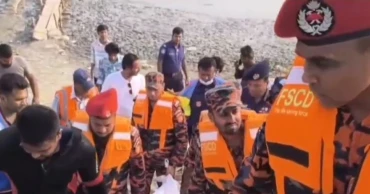
Body of one of two men missing in Padma after company outing found
Fire Service and Civil Defence divers recovered the body of one of the two employees of a real estate company who went missing while bathing in the Padma River beneath the Padma Bridge in Louhajang upazila of Munshiganj on Monday.
Md Shafiqul Islam, deputy assistant director of Munshiganj Fire Service and Civil Defence, said the body of Md Maruf, 40, was recovered around 2pm on Tuesday near the spot where the two men went missing.
However, the search for the other missing man, Maruf's colleague Md Russel, 35, was continuing for the second consecutive day, he said.
Maruf was from Khilgaon in Dhaka, while Russel was from Patuakhali. Both worked for Dhaka-based real estate company Sharif Landmarks Ltd.
Shafiqul said eight employees of the company went to Mawa on Monday for an outing.
They went to bathe in the river near pillar No. 4 at the Mawa end of the Padma Bridge at around 2:20pm.
At one stage, two of them were swept away by the strong current, while the other six managed to swim to safety.
On receiving the information, divers from the local fire service station rushed to the spot and launched a rescue operation.
9 hours ago