RMG
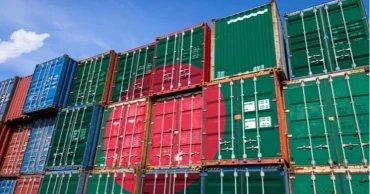
Bangladesh RMG exports rise over 6% y-on-y in Q1 of fiscal
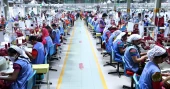
Bangladesh's ready-made garment (RMG) export earnings grew by 6.10 percent year-on-year to reach US $10.58 billion during the first quarter (July–September) of the fiscal year 2026–27, according to data released by the Export Promotion Bureau (EPB).
During the July–September period, the European Union (EU) remained the single largest export destination for Bangladeshi apparel, accounting for 46.36 percent of total RMG exports. Earnings from the EU market stood at $4.90 billion, registering a positive year-on-year growth of 3.33 percent.
The United States retained its position as the second-largest individual market for Bangladesh's RMG products. Exports to the USA amounted to $2.22 billion, representing 20.99 percent of total apparel shipments and a strong 10.40 percent year-on-year increase.
Meanwhile, exports to the United Kingdom reached $1.29 billion, capturing a 12.21 percent market share with a 5.94 percent growth rate. Canada accounted for $349.65 million (3.31 percent share), posting a 3.85 percent increase compared to the same period of the previous fiscal year.
Exports to non-traditional markets demonstrated robust momentum, surging to $1.81 billion. Non-traditional destinations now account for 17.13 percent of total RMG shipments, reflecting a 9.40 percent year-on-year growth.
In terms of product categories within the apparel basket, the knitwear sector performed strongly with a 6.88 percent growth, while the woven segment posted a 5.11 percent increase during the July–September quarter.
The EPB data analysis by Mohiuddin Rubel, CEO of Apparel Voice, a think tank on RMG market analysis. He said that despite different global and domestic challenges, Bangladesh’s export increased in a positive trend.
4 days ago
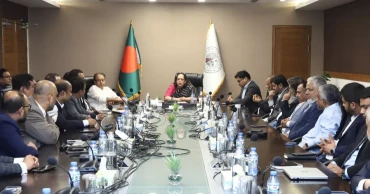
DSE, Swisscontact host workshop to explore capital market financing for RMG sector
The Dhaka Stock Exchange (DSE) PLC and Swisscontact jointly organized a workshop titled “Expanding RMG’s Financing Horizons: Opportunities in the Capital Market” at the DSE Training Academy on Wednesday to explore long-term capital market financing for the ready-made garment (RMG) sector.
The event brought together senior officials from leading member institutions of the Bangladesh Knitwear Manufacturers and Exporters Association (BKMEA), along with key capital market stakeholders.
Delivering the opening remarks, DSE Managing Director Nuzhat Anwar emphasized that the capital market serves as a vital source of long-term financing for economic growth and private sector expansion. She stressed the need to expand beyond initial public offerings (IPOs) and equity markets into bond markets, calling for effective measures to bridge the gap between private sector financing demands and capital market capacity.
She added that DSE is actively working to build a transparent, business-friendly market by identifying regulatory constraints and addressing entrepreneur needs.
Farzana Amin, Team Leader of Swisscontact’s PROGRESS project, stated that Swisscontact plans to provide end-to-end support to RMG companies interested in entering the capital market, with a goal to develop several role-model firms over the next year to encourage wider participation.
BKMEA Deputy Secretary Md. Harunur Rashid noted that Bangladeshi industrial enterprises remain heavily dependent on bank loans, which restricts expansion. He highlighted the capital market as an effective alternative for long-term financing that can accelerate growth and job creation, provided listed companies maintain sustainable business practices to retain investor confidence.
Iftekhar Alam, President of the Bangladesh Merchant Bankers Association (BMBA) and CEO of LankaBangla Investments, presented on listing processes, equity capital raising, valuation, and qualification criteria for both Main Board IPOs and SME Board Qualified Investor Offers (QIO).
Additionally, Sayeed Mahmud Zubaer, General Manager of DSE's Market Development Division, delivered a presentation on capital market structures, DSE infrastructure, bond markets, direct listing opportunities, and corporate governance benefits.
During the closing session, DSE Chief Technology Officer Dr. Md. Asifur Rahman stated that DSE is offering one-to-one counseling and advisory services to guide entrepreneurs through the listing process. Bidowra Tahmin Khan, Team Leader of Swisscontact’s INSPIRE project, added that Swisscontact will coordinate with DSE, the Bangladesh Securities and Exchange Commission (BSEC), and other stakeholders to offer technical and advisory support to promising RMG and textile companies.
The workshop was also attended by Swisscontact Bangladesh Deputy Country Director Syeda Ishrat Fatima, alongside senior representatives from DSE and partner organizations.
29 days ago
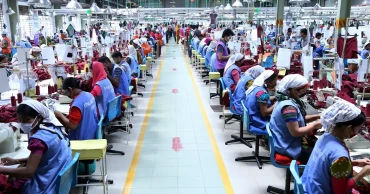
RMG exports grow 5.12% to $7.5bn in July-August
Bangladesh's ready-made garment (RMG) exports grew 5.12 percent year-on-year to around $7.5 billion in the first two months of fiscal year 2026-27, according to data from the Export Promotion Bureau (EPB).
Exports stood at $7.13 billion during the corresponding period of the previous fiscal year.
According to Export Promotion Bureau (EPB) data compiled by Bangladesh Apparel Voice, knitwear exports grew at a faster pace than woven garments.
Knitwear shipments rose by 6.17 percent to $4.19 billion, while woven garment exports increased by 3.81 percent to $3.3 billion.
The United States led growth among major single-country destinations, with exports rising 11.42 percent to $1.612 billion. Its share of Bangladesh's total garment exports increased to 21.52 percent from 20.30 percent.
Non-traditional markets grew almost as rapidly, rising by 6.48 percent to $1.22 billion and expanding their total export share.
Among non-traditional destinations, Turkey registered the fastest growth in the dataset as exports nearly doubled, surging 94.68 percent to $99.98 million. Brazil and the United Arab Emirates also recorded strong gains, increasing by 34.37 percent and 24.21 percent, respectively.
Conversely, exports declined sharply to Russia (-33.95 percent), China (-16.04 percent), and India (-7.64 percent).
The EU remained Bangladesh's largest single destination bloc, but grew by just 2.46 percent to $3.49 billion, causing its market share to slip from 47.82 percent to 46.61 percent.
Within the EU, Germany was the largest buyer at $804.74 million, remaining essentially flat with a 0.88 percent growth. The Netherlands (+8.47 percent) and Spain (+11.61 percent) posted solid gains, whereas France (-5.39 percent) and Portugal (-18.93 percent) experienced notable declines.
Among other traditional destinations, exports to the United Kingdom rose by 3.74 percent, while shipments to Canada grew by 3.37 percent, with both countries roughly maintaining their market shares.
1 month ago

Companies Act to be updated in line with global best practices: Muktadir
Commerce Minister Khandakar Abdul Muktadir on Monday said the Companies Act 1994 needs to be amended and updated in line with the changing times, as the legal framework has seen only minor changes since its enactment.
Speaking as the chief guest at a stakeholder consultation on the draft amendments to the Companies Act, 1994 at the FBCCI boardroom in the city, he said good examples could be drawn from countries where business rules and regulations are being implemented effectively to simplify trade practices in Bangladesh.
The dialogue was organised by the Federation of Bangladesh Chambers of Commerce and Industry (FBCCI).
The minister said the Companies Act has undergone only two minor reforms since it was enacted in 1994, and stressed the need to make the law more effective and business-friendly in line with the changing times.
There is no need to spend excessive time devising an entirely new model, he said, noting that many countries, including Singapore, already have effective laws and regulations governing company operations and business, whose experiences could be reviewed to adopt a suitable framework for Bangladesh.
Muktadir told business representatives that before amending the Companies Act, a thorough review of how similar laws function in other countries is necessary, following which amendment proposals should be made based on the opinions and experiences of businesspeople.
Noting that businesspeople have sought 30 days to give their opinions on the draft amendments, he said if more time is needed, it could be extended to 60 days.
However, the minister said formulating a good and realistic proposal is more important than the time it takes.
He said there is no need to rush the amendment process. “Proposed and existing laws of different countries need to be compared, following which a framework should be built with advice from businesspeople to make doing business in the country easier and improve the investment climate.”
Muktadir further said the government has set a number of targets for implementation over the next three years, keeping in mind Bangladesh's graduation from the group of least developed countries (LDCs).
There are various challenges in achieving these targets, he said, adding that the Companies Act amendment is only a part of that larger action plan.
Highlighting the importance of the private sector in the country's economy, the minister said the private sector is the main driving force of the economy, and creating a suitable environment for entrepreneurs to conduct business smoothly is essential in keeping pace with the times.
He also noted that the government did not inherit substantial foreign currency reserves, a significant revenue surplus, or adequate budget allocations when it took office, while private sector entrepreneurs are also going through various challenges.
"This is a time of change for all of us. We have to get through this period with a calm mind and good planning. We need to build a realistic platform and develop an effective framework for the future," Muktadir said.
He also said discussions on reforms with businesspeople will continue, adding that the business community will be consulted before any major changes are introduced in the future.
At the event, FBCCI Director Barrister Nihad Kabi presented various proposals, including one to make it mandatory for companies with annual income exceeding Tk 50 crore to appoint a company secretary.
She also proposed that professionals such as chartered accountants, cost and management accountants, and company secretaries should not be allowed to represent companies.
Proposals for changes to the Annual General Meetings (AGMs) of companies were also placed, suggesting that shareholders be notified at least 21 days before the AGM date is announced.
A proposal was also made to allow flexibility in appointing independent directors in public limited companies other than listed ones.
A businessperson present at the event proposed reducing the AGM notice period from 21 days to 14 days, a proposal supported by Mohammad Hatem, president of the Bangladesh Knitwear Manufacturers and Exporters Association (BKMEA).
FBCCI Administrator Md Fazlul Hoque presided over the event, which was attended by representatives from various business organisations, regulatory bodies, stock exchanges, and audit firms.
1 month ago
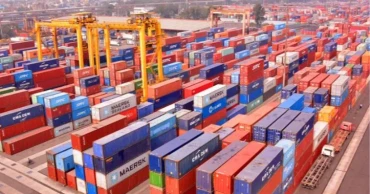
Bangladesh exports grow 13.14% in Aug as RMG, non-RMG sectors post strong gains
Bangladesh's merchandise exports rose 13.14 percent year-on-year to US$4.43 billion in August, up from $3.92 billion in the same month last year, according to data from the Export Promotion Bureau (EPB).
Exports during the first two months of fiscal year 2026-27 also increased by 5.43 percent to $9.16 billion from $8.69 billion in the corresponding period of the previous fiscal year.
The ready-made garment (RMG) sector remained the main driver of export growth, with earnings rising 13.92 percent year-on-year to $3.89 billion in August. RMG exports during July-August grew 5.12 percent to $7.50 billion.
Both major apparel segments posted strong growth in August. Knitwear exports increased 14.88 percent, taking cumulative growth for July-August to 6.17 percent, while woven garment exports rose 12.70 percent, pushing cumulative growth to 3.81 percent.
Several non-RMG sectors also recorded double-digit growth in August, supporting efforts to diversify the country's export base.
Jute and jute goods exports grew 37.09 percent in August and 22.26 percent during July-August. Pharmaceuticals surged 28.52 percent in August and 38.94 percent cumulatively.
Leather and leather goods exports increased 24.85 percent in August, while printed materials grew 24.83 percent, with cumulative growth reaching 41.89 percent.
Engineering products rose 23.88 percent, while other footwear exports increased 15.29 percent, with cumulative growth of 27.32 percent.
The United States remained Bangladesh's largest export market, with exports to the country growing 26.09 percent in August and 11.90 percent during July-August.
The United Kingdom regained its position as the second-largest export destination, followed by Germany, Spain and the Netherlands.
Among emerging markets, exports to Türkiye rose 141.03 percent, while those to the Republic of Korea and Saudi Arabia increased 42.37 percent and 42.09 percent, respectively.
The growth in export earnings was attributed to stronger demand in key international markets, improved buyer confidence, expanded production capacity, higher shipments of value-added products and efforts to diversify export destinations.
1 month ago
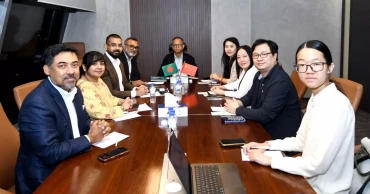
BGMEA, OCAIB launch initiative to attract Chinese investment, joint ventures in RMG sector
The Bangladesh Garment Manufacturers and Exporters Association (BGMEA) and the Overseas Chinese Association in Bangladesh (OCAIB) have launched a joint initiative to strengthen the upper supply chain and backward linkages of the country’s ready-made garment (RMG) sector by attracting foreign investment and modern technology.
The decision was taken during a bilateral meeting between BGMEA leaders and a high-level OCAIB delegation at the BGMEA Complex in Uttara on Tuesday.
The discussions focused on boosting Chinese investment in the apparel sector, introducing new capital and advanced technology into operational or closed factories, and facilitating strategic joint ventures.
BGMEA President Mahmud Hasan Khan led the association’s delegation, accompanied by Vice President (Finance) Mizanur Rahman, and Directors Shah Rayeed Chowdhury, Joarder Md Hosne Qumer Alam, and Samiha Asim.
The OCAIB delegation included Vice President Lisa Lou, Vice President and Secretary General Vivian Huang, Executive Director Steven Zhang, and Secretary Tina Hu.
During the meeting, Chinese representatives highlighted that foreign investment is crucial for strengthening and modernizing Bangladesh’s upper supply chain. They noted that while many Chinese companies are keenly interested in setting up factories, transferring technology, and expanding operations in Bangladesh, a lack of reliable, central information often delays decision-making. They sought active coordination and information support from BGMEA.
In response, BGMEA President Mahmud Hasan Khan assured the delegation that BGMEA will collect detailed data from its member factories via email. Local factory owners who are seeking Chinese capital, modern technology, or full ownership/share transfers through joint venture partners will be asked to submit key information, including-Factory name and general details, Factory space and floor area, Description and quantity of machinery, Current operational status of the factory, Preferred type of partnership
BGMEA will analyze the capabilities and profile of these factories before sharing the vetted data with OCAIB.
Through this one-stop mechanism, BGMEA and OCAIB aim to build a direct business match-making link between prospective Chinese investors and local factory owners. The initiative is expected to revive closed or struggling factories while accelerating foreign direct investment in backward linkages and high-value garment manufacturing.
BGMEA has requested interested factory owners and potential investors to submit their detailed proposals, according to a press release.
2 months ago
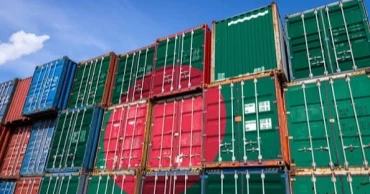
RMG exports rebound to $3.88 billion in July despite YoY dip
Bangladesh's ready-made garment (RMG) exports began fiscal year 2026-27 with a strong month-on-month rebound, rising 14.73 percent to US$3.88 billion in July from $3.38 billion in June, although earnings were slightly lower than a year earlier, according to the latest data from the Export Promotion Bureau (EPB).
The July export earnings were 1.92 percent lower than the $3.96 billion recorded in July 2025, reflecting softer year-on-year performance despite the strong sequential recovery.
RMG exports slip 0.63% to $19.34b in H1 2026: EPB
A product-wise analysis reveals that knitwear continued to hold the lion's share of total apparel exports during the opening month of the fiscal year, generating $ 2.15 billion, accounting for over 55 percent of total RMG export earnings, while woven garments brought in $ 1.72 billion.
Analysing the EPB performance figures, Mohiuddin Rubel, founder and chief executive officer of Bangladesh Apparel Voice and former director of the Bangladesh Garment Manufacturers and Exporters Association (BGMEA), noted that the strong sequential rebound from June demonstrates the sector's underlying resilience amid shifting global trade dynamics and demand fluctuations.
Industry experts emphasise that maintaining operational efficiency and navigating tariff structures across primary Western markets will be crucial to sustaining momentum through the remainder of FY27.
2 months ago
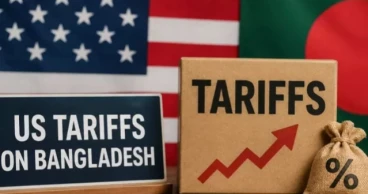
New US tariff regime gives Bangladesh 2.5 percentage point edge over RMG rivals
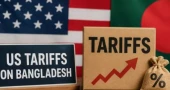
Bangladesh has been placed in the lower 10 percent tariff tier under the newly finalized U.S. Section 301 regime that took effect on July 24, granting local ready-made garment (RMG) exporters a 2.5 percentage point advantage over major global competitors like China, Vietnam, and Thailand.
According to an analysis by Mohiuddin Rubel, Founder and CEO of Bangladesh Apparel Voice, the new tariff structure formalizes temporary measures into a permanent legal framework. Following the U.S. Supreme Court’s February 2026 ruling that struck down "reciprocal" tariffs, the U.S. administration utilized Section 122 authority to impose a temporary 10 percent universal tariff for up to 150 days. The Section 301 forced-labor investigation was scheduled to seamlessly replace the expiring Section 122 tariffs on July 24 without any gap in coverage.
Covering 60 economies, the U.S. Trade Representative's (USTR) forced-labor action placed Bangladesh among 17 economies in the lower 10 percent tier, while China, Vietnam, Thailand, and 35 other nations were assigned a higher 12.5 percent rate. Bangladesh secured the lower rate due to its February 2026 Agreement on Reciprocal Trade (ART) with the U.S., which committed the nation to a forced-labor import ban. By contrast, economies like India, Sri Lanka, and Trinidad and Tobago entered the lower tier by adopting forced-labor bans between June and July, whereas Cambodia held both an ART commitment and adopted an interim ban.
Under the new rules, the USTR has been directed to establish two three-year Tariff Rate Quotas (TRQs)—one for general U.S. textile imports and another specifically for U.S. cotton—when feasible. These TRQs will allow a defined volume of Bangladesh's textile and apparel exports to enter the U.S. duty-free.
Only four economies—Bangladesh, Cambodia, Indonesia, and Malaysia—qualify for these TRQs, while key competitors such as Vietnam, China, and India have been excluded. However, the TRQ mechanism is not yet operational, as USTR has not set an activation date, keeping the flat 10 percent rate applicable to all shipments in the interim.
While Bangladesh holds a tangible tariff edge and an exclusive TRQ opportunity over key rivals, Rubel emphasized that tariff changes alone will not lower overall costs in the U.S. market. To fully capitalize on this positioning amidst intense global competition, Bangladesh must focus on improving productivity, diversifying its product basket, increasing value addition, and investing in innovation.
2 months ago
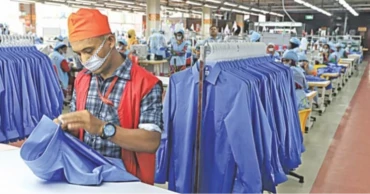
Bangladesh apparel exports to EU slump 19% in Jan-May
Bangladesh’s apparel exports to the European Union (EU) slumped by 18.89 percent year-on-year to €7.28 billion ($8.33 billion) in the first five months of 2026 (January-May), marking the steepest decline among the region's major global suppliers.
According to Eurostat data analysed by Mohiuddin Rubel, founder and CEO of Bangladesh Apparel Voice, the country is facing a critical "dual weakness," losing ground on both shipment volume and unit price simultaneously.
During the period, Bangladesh's apparel export volume to the EU fell by 10.46 percent, while its unit price dropped by 9.41 percent. Both figures are roughly double the global average decline.
Overall EU Demand Shrinks
The downturn reflects a broader contraction in the EU apparel market. Total EU apparel imports from the world fell by 9.96 percent year-on-year to €33.84 billion ($38.71 billion), down from €37.58 billion ($43.00 billion) in the same period last year.
The global decline was driven by a 6.46 percent drop in volume and a 3.74 percent decline in unit prices, suggesting that weaker consumer demand and softer pricing contributed almost equally to the market contraction.
However, Bangladesh’s performance in May alone showed worsening vulnerability, with export value sliding by 17.12 percent, volume down by 13.55 percent, and unit prices dropping by 4.13 percent.
Mixed Performance Among Competitors
While Bangladesh struggled on both fronts, its global competitors showed mixed resilience by adopting different market strategies.
China – the leading supplier – recorded the smallest value decline of 4.20 percent. It was the only major exporter to grow its shipment volume, which rose by 1.96 percent, defending its market share through a 6.05 percent price cut.
Vietnam emerged as the most resilient exporter, with its export value dipping just 1.51 percent. Despite a sharp 12.27 percent drop in volume, it defended its value through premium positioning, pushing its unit price up by 12.26 percent.
Pakistan’s export value fell by 17.01 percent despite a 3 percent increase in volume, suffering from a major unit price collapse of 19.43 percent.
India experienced a milder version of Bangladesh's dual weakness, with its export value declining by 13.33 percent.
Turkey and Cambodia faced volume-led declines of 17.17 percent and 15.13 percent, respectively, though their unit prices saw upward adjustments.
Indonesia experienced the sharpest volume contraction among all suppliers, plunging 23.76 percent.
Sustained Structural Concerns
Highlighting the gravity of the data, Mohiuddin Rubel noted that Bangladesh is currently the only major apparel supplier losing on both volume and price at this scale – contrasting sharply with Vietnam’s price-resilience and China’s volume-resilience.
He warned that because this dual weakness has persisted from April into May, it points to a sustained structural problem within Bangladesh's apparel sector rather than a temporary, one-month blip.
2 months ago
BGMEA urges govt to ease compliance regulations for RMG sector
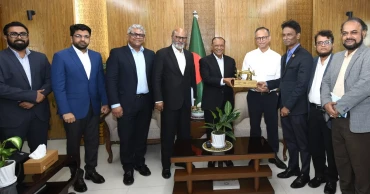
A delegation from the Bangladesh Garment Manufacturers and Exporters Association (BGMEA) on Wednesday held a meeting with Environment, Forest and Climate Change Minister Abdul Awal Mintoo to advocate for pragmatic, science-based environmental compliance in the ready-made garment (RMG) and textile sectors.
Led by BGMEA President Mahmud Hasan Khan, the delegation met the Minister at the Bangladesh Secretariat to discuss mitigating technical and regulatory bottlenecks to ensure the industry's sustainable growth and global competitiveness.
The BGMEA team included former BTMEA President A. Matin Chowdhury, BGMEA Director Nafis-Ud-Doula, and Kingsley CEO Md. Ashikur Rahman.
During the discussion, the apparel leaders reaffirmed their commitment to ecological sustainability but drew attention to serious technical hurdles arising from the "Environment Conservation Rules, 2023."
The delegation pointed out that the current effluent treatment plant (ETP) color parameters are technically difficult to achieve with the country's existing industrial infrastructure. They urged the ministry to revise and establish a more realistic, science-based benchmark.
Regarding Zero Liquid Discharge (ZLD) implementation, the BGMEA proposed replacing the current mandatory commitment required for Environmental Clearance Certificate (ECC) renewals with a phased, performance-based roadmap.
To support factories transitioning to ZLD, the business leaders demanded specific sustainable water-saving guidelines, fiscal incentives such as VAT and duty exemptions on ZLD machinery, and the creation of a specialized "ZLD Window" under Bangladesh Bank’s Green Transformation Fund.
To enhance administrative transparency, the delegation suggested introducing a mirror testing mechanism for environmental sampling.
They also proposed a risk-based, long-term ECC renewal framework for factories with a consistent history of regulatory compliance.
Furthermore, the BGMEA urged the government to swiftly formulate necessary rules under the "Forest Ordinance (2026)" to eliminate ongoing uncertainties surrounding industrial land-use permissions.
They also emphasized the need for a balanced air quality assessment framework that factors in external pollution sources and accounts for environmental parameter fluctuations caused by extreme weather conditions.
Environment Minister Abdul Awal Mintoo acknowledged the RMG sector's critical contribution to the national economy and received the proposals positively.
He assured the leaders that the ministry would address these concerns through a rational and pragmatic framework that balances industrial viability with environmental conservation goals.
3 months ago