BNP
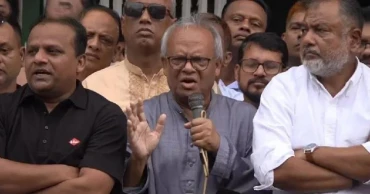
‘Covert forces’ supporting Sheikh Hasina’s conspiracy: Rizvi
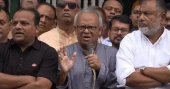
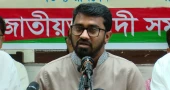
BNP acting Secretary General Ruhul Kabir Rizvi on Wednesday alleged that “covert forces” inside the country are supporting what he described as former Prime Minister Sheikh Hasina’s conspiracy to destabilise Bangladesh.
“The fugitive fascist is trying to destabilise the country by pulling the strings from India, while the covert and dormant forces inside the country are fanning the flames,” he said.
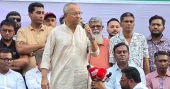
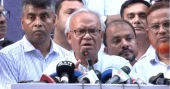
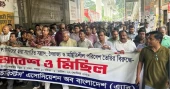
Rizvi made the remarks at a protest rally and procession organised by Jatiyatabadi Swechchhasebak Dal in front of the BNP central office at Nayapaltan in the afternoon.
The programme was organised against what the organisers described as planned violence and arson in the country. Swechchhasebak Dal President SM Jilani presided over the rally.
Rizvi said the BNP’s struggle for democracy over the past 17 years was led by Khaleda Zia and current Prime Minister Tarique Rahman.
Describing the BNP as a party of the people, he said it can take to the streets against injustice, oppression, irregularities, violence and attempts to destabilise the country, and demonstrate that its strength lies with the people.
Referring to protests over rising fuel and gas prices, Rizvi questioned how the opposition will ensure adequate supplies of gas and fuel.
He questioned whether opposition leaders who are making “big statements”, spreading propaganda and making what he called false allegations against BNP leaders and the government are following international developments and research.
“If fuel and gas are not available in any way, the government is managing with whatever we can produce and whatever can be obtained from the eastern countries,” Rizvi said.
“But you are saying, ‘everything is gone, everything is finished, the BNP government can do nothing’,” he said.
Rizvi said the Asian Development Bank (ADB) has indicated that the economy under the Tarique Rahman government is showing signs of improvement.
Referring to Prime Minister Tarique Rahman’s visit to New York for 5-6 days to attend the UN General Assembly with a 35-member delegation, Rizvi said the brief visit demonstrated the government’s efforts to manage the crisis and protect the economy. “Does not this make you realise how sincerely this government is working to deal with the crisis, how it is handling the crisis and how it is saving money to protect the country’s economy?” he said.
The BNP leader said the BNP government, led by Tarique Rahman, is seeking to increase the country’s resources and capabilities.
He urged people to remain alert to those allegedly involved in planned acts of violence, including arson attacks on vehicles at Madhya Badda, Kafrul, Uttara, Mirpur and Shahbagh in the capital.
Rizvi said the people of Bangladesh have always foiled conspiracies and helped tear apart the web of conspiracies to bring out the light of truth.
BNP Vice Chairman and Barkat Ullah Bulu, MP, Joint Secretary General Abdus Salam Azad, Assistant Economic Affairs Secretary Mahmudur Rahman Sumon, Swechchhasebak Dal General Secretary Rajib Ahsan, Vice President Fakhrul Islam Robin, central leaders Dr Zahid, Rafiqul Islam, Nazmul Hasan, Masum Billah, Zahir Uddin Tuhin and Sheikh Farid, among others, were present at the procession.
Leaders and activists of the Dhaka North and South city units of Swechchhasebak Dal also took part in the protest procession.
13 hours ago
Jubo Dal leader dies during Barishal protest procession; Rizvi mourns the death
A local Jatiyatabadi Jubo Dal leader died after falling ill during a protest procession in Barishal city on Tuesday, organised as part of a BNP programme against what the party described as attempts to destabilise the country through planned violence.
The deceased was identified as GM Monir, 55, a resident of the Jor Mosque area of Bhatikhana in the city. He was a joint general secretary of Barishal city Jubo Dal.
Monir complained of chest pain fell ill while taking part in the procession and later died while undergoing treatment at Barishal General Hospital in the afternoon.
Meanwhile, BNP acting Secretary General Ruhul Kabir Rizvi expressed deep shock and sorrow at his sudden death.
In a condolence message, he prayed for the eternal peace of the departed soul and conveyed sympathy to the bereaved family.
1 day ago
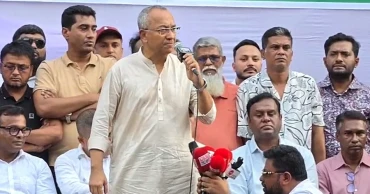
Jubo Dal chief demands Nasiruddin, Ammar’s arrest
Jatiyatabadi Jubo Dal President Abdul Monayem Munna on Tuesday demanded the immediate arrest of National Citizen Party (NCP) Chief Coordinator Nasiruddin Patwary, accusing him of being the “main perpetrator” behind crude bomb explosions across the capital.
Citing Nasiruddin’s remark that there would be no crude bomb blasts if the 11-party alliance’s demands were met, he said, “His statement means they are carrying out the crude bomb explosions. I demand his arrest as soon as possible.”
Munna made the demand at a rally organised ahead of a protest procession by Dhaka South City Jubo Dal in front of the BNP central office at Nayapaltan in the afternoon.
The programme was organised to protest against what the party alleged a planned attempt to destabilise the country through acts of violence.
After the rally, Jubo Dal leaders and activists brought out a procession from Nayapaltan. The procession passed through Kakrail and the Nightingale intersection.
Munna also blamed Rajshahi University Central Students’ Union (RUCSU) General Secretary Salahuddin Ammar for the arson incident at Rajshahi Railway Station and demanded his arrest.
Recent reports said RU students set fire to railway tracks and vandalised the station following the alleged assault of a university student, with Ammar leading the students’ protest.
The Jubo Dal chief also accused Bangladesh Jamaat-e-Islami of secretly colluding with the Awami League, as it allegedly did in the past, and attempting to repeat what he called the party’s “Munafiqi” of 1996.
He also demanded a proper investigation into the recovery of the body of the second wife of lawmaker Gazi Nazrul Islam, an expelled Jamaat leader.
1 day ago
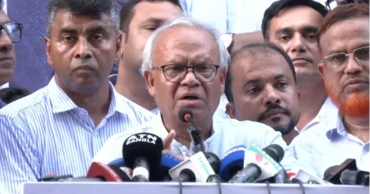
Rizvi accuses opposition of echoing Sheikh Hasina’s politics
BNP Acting Secretary General Ruhul Kabir Rizvi on Tuesday said the rhetoric coming from some opposition parties now echoes the voice of ousted Prime Minister Sheikh Hasina and the Awami League, which he described as the “voice of fascism.”
“The echo and voice that we are hearing in the opposition’s statements are Sheikh Hasina’s voice. It is the voice of fascism. It is the voice of the Awami League. There is no tune of democracy, peace or coexistence in that voice,” he said, referring to a leader’s remarks about Prime Minister Tarique Rahman.
Rizvi was speaking as the chief guest at a protest rally and procession organised by Dhaka North City BNP against what it described as planned acts of violence aimed at destabilising the country.
The rally was held in front of Polwell Market adjacent to Uttara Abdullahpur, followed by a procession that ended at Jashimuddin intersection in Uttara.
“For some reason, it seems to me that the germ of fascism, the Awami fascism that had entered their blood, is now present in some opposition parties in our country,” he said reffering to opposition.
Rizvi alleged that some opposition forces now wanted to come to power immediately.
“What has happened that you have to come to power right now?” he asked.
Referring to the 11-party alliance, he said one of its young leaders, who is now involved in opposition politics in parliament, had said that BNP Chairman Tarique Rahman would have to decide how to leave power.
“Is Tarique Rahman clinging to power like Sheikh Hasina? Did Tarique Rahman come to power by force through a rigged police force and other law enforcement agencies in the Feb 12 election?” Rizvi asked.
He said the leader concerned had been a young student leader and had participated in the movement, but added that his present rhetoric sounded like Sheikh Hasina’s.
He questioned the opposition’s demands over fuel prices, extortion and rising commodity prices.
“You are talking about the increase in fuel prices. Then give an alternative proposal. You are saying there is extortion and prices of essential commodities are rising. Then give a proposal on how these should be controlled,” he said.
Rizvi said that while different programmes and long marches are being organised, cocktail explosions and arson attacks are taking place in different parts of Dhaka.
“Whom are you inviting?” he asked.
Rizvi warned that if what he called Sheikh Hasina’s “Pharaoh-like rule” returned, those currently carrying out such activities would not be spared either.
“If Sheikh Hasina’s Pharaoh-like rule returns again, will you be spared? None of you will be spared. Through the activities you are carrying out, you are again seeking the resurgence of Lady Pharaoh Sheikh Hasina,” he said.
He accused the opposition of spreading falsehood and propaganda against the prime minister and government in the name of political programmes.
“You are saying false things, using dirty language and spreading propaganda against the prime minister and the government. You are telling such lies that it is not the language of democracy. It is never the language of a civilised society,” he said.
Rizvi said democracy is the rule and politics of civilised people.
“If that politics becomes ugly, filled with lies, propaganda and defamatory statements, it can never be a fitting condition for democracy,” he said.
At the programme, Dhaka North City BNP Member Secretary Mostafa Zaman was present as the chief speaker.
The programme was presided over by SM Jahangir Hossain, MP for Dhaka-18 constituency and joint convener of Dhaka North City BNP.
1 day ago
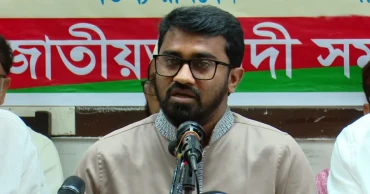
Rashed Khan seeks arrest, remand of Nasiruddin over bomb, arson attacks
Prime Minister’s Political Assistant Rashed Khan on Tuesday demanded that National Citizen Party (NCP) Chief Coordinator Nasiruddin Patwary be arrested and put on remand to determine who is behind the recent arson attacks on buses and trains and crude bomb blasts.
He made the demand at a discussion titled “Role of the Government and Opposition in Establishing a Democratic State” organised by the Jatiyatabadi Samomona Jote at the Jatiya Press Club.
Referring to a recent comment by Nasiruddin, Rashed said the NCP leader had claimed that there would be no more crude bomb blasts if their demands were met.
“He made the statement. If he is arrested and taken on remand for questioning, the truth will come out about who is involved in these crude bomb explosions and the arson attacks on buses and trains,” he said.
Criticising the role of opposition parties, the PM’s political assistant alleged that they are acting together with the aim of destabilising the country.
He said photos and videos are being made and posted on Facebook in what he described as a “picnic-style” long march against a government that has been in office for seven months.
“On the one hand, Jamaat and NCP are announcing long march programmes, while on the other hand Awami League is taking to the streets and creating anarchy,” Rashed said.
He also said the current BNP government is dealing simultaneously with two opposing political forces, describing one as “reckless” and the other as “fascist.”
While addressing a procession organised by the NCP on Monday night in protest against the hike in fuel prices, Nasiruddin reportedly said if the government accepted their three main demands, there would be no more crude bomb explosions in Dhaka city.
1 day ago
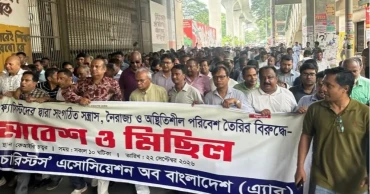
BNP stages protest against ‘planned anarchy'
BNP on Tuesday staged a protest procession in the capital’s Farmgate area against what it described as a plot to destabilise the country through planned acts of anarchy.
The procession was led by BNP acting Secretary General Ruhul Kabir Rizvi.
Organised by the Agriculturalists Association of Bangladesh (AAB), the procession began from the Krishibid Institution Bangladesh and ended in front of the Farmgate Police Box.
Several hundred agriculturists, including AAB Convener Krishibid Dr Kamruzzaman Kaiser and Member Secretary Shahadat Hossain Biplob, took part in the procession.
The protesters chanted various slogans during the procession.
The protesters chanted various slogans, voicing their opposition to what they described as a conspiracy to destabilise the country and carry out planned acts of anarchy.
1 day ago
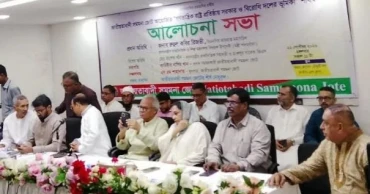
Opposition involved in ‘self-confessed extremist activities’: Rizvi
BNP Acting Secretary General Ruhul Kabir Rizvi on Tuesday alleged that the political party now playing the role of the opposition is involved in “self-confessed violent activities” and that threats are coming from within the party.
“We are now seeing fires and crude bomb explosions at different places in Dhaka. Are all of them by associates of fallen autocrat? Now statements about self-admitted extremism are coming from the political party that is now playing the role of the opposition. They are involved in self-admitted violent activities, and the threats are certainly coming from among them,” he said.
You know who I am referring to, but I may not want to say it,” he added.
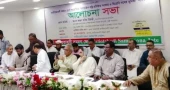
Rizvi was speaking as the chief guest at a discussion titled “Role of the Government and Opposition in Establishing a Democratic State” organised by Jatiyatabadi Samomona Jote at the Jatiya Press Club’s Zahir Hossain Chowdhury Hall.
He said buses were set on fire in Madhya Badda, Uttara, Mirpur and Kafrul, while fires were reported on trains.
“We have seen crude bomb explosions in front of the High Court and in front of the Dhaka University’s main gate. Who are they?” he asked.
Rizvi questioned the use of fuel by the Jamaat-led 11-party alliance during its recent long march to Rangpur, saying the alliance itself acknowledged taking around 1,000 vehicles while toll records showed 450 vehicles crossed the Jamuna Bridge.
“Today, our gas supply to the national grid is low and our electricity supply is also low. At a time of fuel crisis, even saving some fuel would have been useful. Why did you allow the fuel of 450 vehicles to be burned when they travelled such a long distance from Dhaka to the northern region?” he asked.
Rizvi also said that some of the vehicles did not pay tolls.
“They themselves admitted that they took 1,000 vehicles. Then you understand how many vehicles went. Some vehicles did not pay tolls either. Those were not included in the count,” he said.
He said toll collectors at some of the five toll plazas might have refrained from collecting money out of fear because of the large number of people and vehicles.
Rizvi also referred to an incident at Rajshahi Railway Station late at night two days earlier, alleging that the student wing of opposition what he described as “Covert” carried out unprecedented vandalism and destructive activities there.
“Who will take responsibility for this?” he asked.
Rizvi challenged the political parties organising long marches over rising commodity prices, extortion and corruption to organise a similar march or protest against what he described as planned acts of violence.
“You are organising long marches against rising prices, extortion and corruption. Then organise a long march against this planned terrorism. Hold a protest meeting or procession against it and let us see,” he said.
He accused the political parties following “two policies”, making what he described as false statements while encouraging their “golden” and “silver” youths to carry out destructive activities.
He questioned the group’s political ethics, saying it claims to practise politics in the name of Islam, while Islam gives importance to morality and ethics.
Referring to the Islamic concept of hypocrisy, he said, “As much as I know about Islam, I understand that a hypocrite is considered worse than a disbeliever.”
Rizvi said legitimate government activities could not be obstructed through propaganda.
“Gradually, our financial sector and banking activities are finding their footing again,” he said.
He said the increase in reserves has enabled Bangladesh to buy gas and fuel from abroad and regain purchasing capacity.
“Once the global barriers are removed, our kitchen stoves will burn, our mills and factories will become vibrant and normal activities will resume,” he said.
1 day ago
Jubo Dal announces partial committees in 7 districts, Sylhet city
The Jatiyatabadi Jubo Dal, an associate organisation of the ruling BNP, has announced partial committees in seven districts and one metropolitan unit as part of its ongoing process of forming new committees in expired district and metropolitan units across the country.
The new committees are for Khulna, Kushtia, Sherpur, Shariatpur, Munshiganj, Satkhira and Sylhet districts, and Sylhet metropolitan unit.
Jubo Dal President Abdul Monayem Munna and General Secretary Mohammad Nurul Islam Nayon, approved the committees.
According to a press release, a five-member partial committee has been formed for Sylhet metropolitan Jubo Dal, with Mirza Mohammad Samrat as president and Delwar Hossain Dinar as general secretary.
The other members are Senior Vice-President Emdadul Haque Swapan, First Joint General Secretary Tahsin Mehdi Prince and Organising Secretary Hossain Ahmed.
A six-member partial committee has been formed for Sylhet district Jubo Dal, with Mohammad Maksud Ahmed as president and Abdus Salam Tipu as general secretary.
The other members are Senior Vice-President Koyes Ahmed, Vice-President Maksudul Karim Nuhel, First Joint General Secretary Masrur Russell and Organising Secretary Habibul Bashar Habib.
A five-member committee has been formed for Khulna district Jubo Dal, with Sheikh Nadimuzzaman Johnny as president and Golam Mostafa Tuhin as general secretary.
The other members are Senior Vice-President Jabir Ali, First Joint General Secretary Masum Billah and Organising Secretary Gazi Shahidul Islam.
A seven-member partial committee has been approved for Kushtia district Jubo Dal, with Fuhad Reza Fahim as president and Zillur Rahman Johnny as general secretary.
The other members are Senior Vice-President Mostafizur Rahman Suman, Vice-President Zakaria Milan, First Joint General Secretary Rashedul Islam Rashed, Joint General Secretary Jabbar Milan and Organising Secretary Mozaqqir Rahman Rabbi.
A five-member committee has been formed for Satkhira district Jubo Dal, with Hafizur Rahman Mukul as president and Shafiqul Alam Babu as general secretary.
The other members are Senior Vice-President Sheikh Moniruzzaman Prince, First Joint General Secretary Momtazul Islam Chandan and Organising Secretary Masud Rana Sabuj.
A five-member committee has been formed for Shariatpur district Jubo Dal, with Jamal Uddin Bidyut as president and Nazrul Islam Mridha as general secretary.
The other members are Senior Vice-President Liaquat Hossain, First Joint General Secretary Nazmul Haque Badal and Organising Secretary Atikul Islam.
A two-member committee has been formed for Munshiganj district Jubo Dal, with Mohammad Sohel Rana as president and Mozammel Haque Munna as general secretary.
A five-member committee has been formed for Sherpur district Jubo Dal, with Md Atharul Islam Ata as president and Md lShawkat Hossain as general secretary.
The other members are Senior Vice-President Mobinuzzaman Milton, Vice-President Maksudul Karim Nuhel and Organising Secretary Hashem Ahmed Siddiqui.
The Jubo Dal high command has instructed all the newly announced district and metropolitan units to form full-fledged 101-member committees within the next 30 days and submit them to the central office.
2 days ago
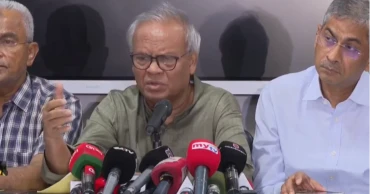
Opposition “living in fool's paradise” with one-point warning: Rizvi
BNP Acting Secretary General and Prime Minister’s Political Adviser Ruhul Kabir Rizvi on Monday said the BNP will not sit idle if the opposition issues a “one-point warning”, saying those making such statements are “living in a fool’s paradise”.
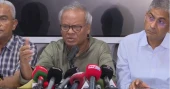
“They are saying these things as if they are living in a fool’s paradise. A mass-based party has been elected through a free and fair election and you think it will happen simply because you say so? Will we sit back with our hands folded? No, we will not,” he said while briefing reporters after a joint meeting with leaders of BNP’s affiliated, associate and professional organisations.
Rizvi said the BNP will continue its political activities through democratic programmes involving people.
“The people are the main judges. No planned or conspiratorial programme can stop the course of a party that enjoys public support,” he said.
Asked about the opposition’s long march despite 34 MPs travelling abroad and its renewed talk of a one-point movement, Rizvi said such statements were intended to create confusion.
He said those making such statements are themselves engaging in a conspiracy and said their activities have no connection with people and would not receive public support.
Rizvi said the government and the BNP are currently focusing on issues including social protection, development and progress while the party’s election manifesto includes a pledge to plant 25 crore trees.
He said that efforts are being made to divert public attention from govt's public-interest measures and destabilise the country.
“There may be the fallen autocrat there, and various indications suggest that perhaps new accomplices are also joining hands with them in some underground secret chamber,” he said.
Rizvi said people, BNP activists and leaders, nationalist forces and conscious citizens are alert to the situation.
"They want to talk about various issues today. But what is the solution? We have repeatedly asked them: how will you solve the problems?” he said, referring to the fuel, gas and electricity crises.
He said the government has increased fuel prices by Tk 20, while the loss had previously been around Tk 22,875 crore, with monthly losses amounting to around Tk 3,813 crore during that period.
Rizvi said Bangladesh consumes around 7 million metric tonnes of fuel annually, including approximately 4.5 million tonnes of diesel.
He said diesel had been priced at Tk 115 per litre in Bangladesh until recently, compared with around Tk 134 in India, raising concerns about fuel smuggling.
He said Bangladesh has to purchase diesel at around Tk 250 per litre, resulting in a substantial loss for the government.
“When the price was Tk 115, we had to bear a loss of around Tk 90 per litre. Even after the Tk 20 price adjustment, we still have to bear a loss of around Tk 70 per litre,” he said.
He said the loss effectively has to be covered through subsidies.
Rizvi said fuel prices in Bangladesh remained relatively low compared to many other countries.
“The language they used against the government, including against the top BNP leader, cannot be the language of civilised people in a democratic society,” he said.
Asked about Prime Minister Tarique Rahman’s visit to the United States to attend the 81st session of the UN General Assembly, Rizvi said the prime minister is travelling with a 35-member delegation, which he described as the smallest delegation in the country’s history for such a visit.
“Many are there, including journalists and political leaders. There are 30 to 35 people. This itself proves that the BNP government and its head want to sustain and further strengthen the country’s economy through austerity,” he said.
Rizvi said the delegation size was another example and proof of the government’s commitment to austerity.
He alleged that during the previous government, when its head travelled to the United States or other countries, receptions were arranged at a cost of crores of taka.
“This time, Tarique Rahman has prohibited any such reception,” he said.
Rizvi alleged that such receptions were arranged by embassies or high commissions using public money, although it was sometimes claimed that party leaders and activists abroad had financed them.
2 days ago
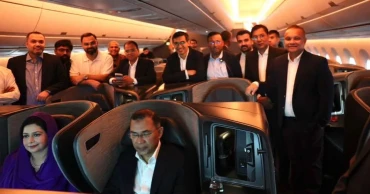
PM’s US visit focused on Bangladesh’s interests, not ceremonial pomp: Mahdi Amin
Prime Minister Tarique Rahman’s visit to US to attend the 81st session of the United Nations General Assembly (UNGA) is focused on advancing Bangladesh’s interests and working for its people, rather than ceremonial pomp or a display of power, Prime Minister’s Adviser and his office spokesperson Mahdi Amin said Monday.
“Not ceremonial pomp; work for people. Not a display of power; protecting Bangladesh’s interests,” Mahdi Amin said describing the visit as a special moment in world’s history as well.
In a post on his verified Facebook page, Mahdi Amin said the prime minister’s visit to the United States would comprise one day for travel to the US, one day for the return journey and only four days in between.
“Without wasting a moment, these four days will be packed with one bilateral and multilateral meeting after another, high-level programmes of the United Nations and diplomatic engagements in Bangladesh’s interests,” he said.
The entire visit will last only six days, with 35 people accompanying the prime minister officially, he said.
Of the 35, 15 are ministers, state ministers, advisers and special assistants, while the rest are essential personnel responsible for security, media and personal duties, according to the post.
Prime Minister Tarique Rahman left Dhaka for New York on Monday morning to attend the 81st session of the United Nations General Assembly (UNGA).
Mahdi Amin said in his Facebook post that after Shaheed president Ziaur Rahman, former prime minister Begum Khaleda Zia and their son Prime Minister Tarique Rahman would now stand on the world stage of the United Nations.
“As the third representative of the same family, he will speak about the people of Bangladesh, the country’s interests, the government’s policies and future plans,” he said.
Pointing to another unique aspect of the visit, the prime minister’s Office spokesperson said that while Tarique Rahman represents Bangladesh at the world stage, the president of the same UN General Assembly will be his government’s foreign minister.
“With a huge mandate, Prime Minister Tarique Rahman is taking the voice of the people of Bangladesh to the world,” he said.
“This is not just a foreign visit. It is not just about presenting Bangladesh at the United Nations. It is the international representation of the aspirations of people. It is a legacy of emotion, feelings and ideals. It is the beginning of a new history on the world stage concerning Bangladesh’s interests, dignity and future,” Mahdi Amin said.
2 days ago