President
President calls for political consensus, ending culture of confrontation
President Mirza Fakhrul Islam Alamgir on Thursday called for an end to the culture of confrontation and political vendetta and urged all concerned to create an environment of political consensus and coordination.
“Without political consensus, a country cannot move forward properly,” he said.
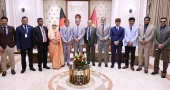
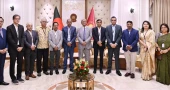
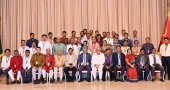
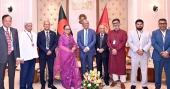
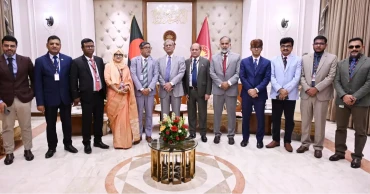
The President made the remarks when a delegation of the MBA Association of Bangladesh (MAB) paid a courtesy call on him at Bangabhaban.
President's Press Secretary Md Sarwar Alam briefed reporters after the meeting.
Praising the organisation, the President said its members have been demonstrating their competence in various fields and making significant contributions to the country’s development and progress.
He said the organisation had played an important role in making people aware and contributing to the country’s democratic transition by providing research-based factual information in response to what he described as misinformation by the fascist government.
The President said the country must move away from a political culture of blaming one another, harming political opponents and harassing them through cases and everyone should work together in the national interest.
Referring to Nelson Mandela’s role in South Africa’s political transition, he said a peaceful environment was created there through political consensus after ending years of conflict and bloodshed.
He said a country could be taken forward through political foresight, tolerance and mutual understanding.
The President said professional organisations like MAB could contribute to national development by providing opinions and constructive advice on various important issues.
He also highlighted the possibility of involving MAB’s qualified and skilled members in various important institutions and development activities according to their experience and expertise.
Members of the MAB delegation congratulated the President and praised his long political and professional experience, wisdom and leadership.
They recalled the President’s past cooperation and encouragement for various activities of the organisation and sought his advice and support in the future as well.
The President assured them of his cooperation.
MAB President Syed Alamgir, Secretary General Dr Md Shamsuzzaman, Vice-Presidents Engineer Md Nazrul Islam, Prof Dr Muhammad Farid Uddin and Farida Ahmed Niku, Joint Secretaries General Md Shahidur Rahman and Adnan Sabir, Organising Secretary Md Ataur Rahman Sarker, Treasurer SM Sultan Kabir and Research Secretary Dr Monirul Hasan Masum were present.
The President’s Secretary, Press Secretary and Assistant Military Secretary were also present.
10 hours ago
President urges journalists to uphold professionalism, public trust
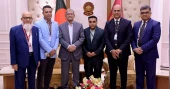
President Mirza Fakhrul Islam Alamgir on Thursday urged television journalists to perform their duties with professionalism after maintaining public trust, contribute to nation-building and protect the public interest from their respective positions.
He made the call when a delegation of the Broadcast Journalists Center (BJC) paid a courtesy call on him at Bangabhaban in the afternoon.
During the meeting, they discussed the current state of broadcast journalism and the media in Bangladesh, the professional development of journalists and the responsible role of the media.
Recalling the media’s active role during the long struggle for restoration of democracy, Mirza Fakhrul sought their cooperation in institutionalising democracy in the country.
He expressed gratitude to journalists for standing beside the people during difficult times in the struggle.
Recalling his interactions with journalists, the President said, “I have received your companionship, support and love.”
Referring to the repression and persecution of media professionals during the fascist rule, he said, “I stood by you and I will always stand by you.”
Mirza Fakhrul said Bangladesh could have progressed like developed countries if political vendetta had been replaced by democratic practices and political and economic stability had been ensured.
He urged all concerned to avoid narrow political interests to realise the golden opportunity created to build a new Bangladesh after a prolonged struggle and bloodshed.
Turning to television channels, the President said simply increasing their number will not be enough. “Their quality must also be maintained.”
He stressed the need to address the problems facing the media through the Media Reform Commission.
Mirza Fakhrul also urged policymakers to look at problems from a broader perspective, with a long-term vision and foresight, and take appropriate measures to resolve them.
He emphasised collective efforts to make television channels sustainable through digitalisation and self-reliance.
The BJC leaders said their organisation primarily works for the welfare of journalists. It provides training to improve the professional standards of broadcast journalists and offers various facilities, including healthcare and insurance.
The President assured them of his cooperation in their welfare activities and suggested that they undertake programmes aimed at increasing their income.
The BJC delegation included Fahim Ahmed, Ilias Hossain, Talat Mamun, Mahmud Hasan, Shariful Islam Khan, Shah Azizur Rahman Kiran, Zamanul Ferdous Manu, Belayet Hossain, Naila Parvin Pia and Saiful Shakil.
The President’s secretary, press secretary and assistant military secretary were also present.
10 hours ago
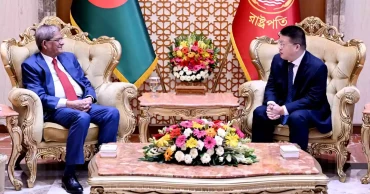
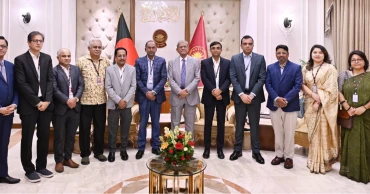
President seeks greater Chinese investment, stronger support for Rohingya repatriation
President Mirza Fakhrul Islam Alamgir on Wednesday called on China to increase investment in Bangladesh and step up cooperation to create conditions for the safe, dignified and sustainable repatriation of Rohingyas to Myanmar.
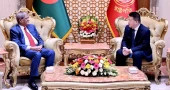
The President made the call when outgoing Chinese Ambassador to Bangladesh Yao Wen paid a farewell courtesy call on him at Bangabhaban.
President's Press Secretary Md Sarwar Alam briefed reporters after the meeting.
Appreciating China's constructive role in addressing the Rohingya crisis, the President said China's initiatives would contribute to resolving the crisis and facilitating sustainable repatriation.
He also urged China to enhance cooperation and investment in various sectors, including readymade garments, electric vehicles, light engineering, high-tech electronics, semiconductors and solar power.
Welcoming initiatives for enhanced regional connectivity including the Kunming-Chattogram corridor and China-Myanmar-Bangladesh Economic Corridor, the President said Bangladesh is ready to work with China and other partners in areas of mutual interest.
He described the modernisation and expansion of Mongla Port and the establishment of the China Economic and Industrial Zone as important initiatives for improving connectivity, promoting industrialisation and accelerating economic development.
The President also urged China to continue its technical and financial assistance for the Teesta River Comprehensive Management and Restoration Project and requested that discussions on implementation of the project be taken forward.
Praising Ambassador Yao's contribution to strengthening Bangladesh-China relations, Mirza Fakhrul described China as a trusted friend and strategic partner of Bangladesh.
Recalling the 1977 and 1980 visits to China by late President Ziaur Rahman, as well as his own visit to China in April, 2026 along with senior and young leaders and students from Bangladesh, the President said such visits and exchanges have further deepened and strengthened bilateral ties.
He expressed hope that Bangladesh-China relations would become stronger and more consolidated in the days ahead.
The President expressed gratitude to China for financing and constructing the 1,000-bed Bangladesh-China Friendship General Hospital.
He also sought Chinese expertise and technological assistance for treating complex blood cancer patients at the Combined Military Hospital (CMH), which is open to the public.
The Chinese Ambassador assured him of cooperation in this regard.
The President wished Ambassador Yao continued success in his future endeavours, saying Bangladesh would remember with gratitude his contribution to strengthening Bangladesh-China relations.
The Ambassador thanked President Alamgir for his longstanding care and support for Bangladesh-China relations and for the support extended to him in performing his duties.
He said under the guidance of the leaders of the two countries, Bangladesh-China relations have advanced rapidly and have been elevated to the China-Bangladesh community with a shared future in the new era, said the Chinese Embassy in Dhaka.
The outgoing Ambassador said China will always be a trustworthy good friend, good neighbor, and good partner of Bangladesh, and stands ready to work hand in hand with Bangladesh to bring greater benefit to the two countries and the two peoples.
President Alamgir spoke highly of Ambassador Yao’s work during his tenure and his contributions to Bangladesh-China friendship.
He stated that Bangladesh attaches great importance to developing relations with China, firmly adheres to the one-China principle, and looks forward to conducting more practical cooperation with China so as to bring Bangladesh-China friendly relations to a new level.
The President's Military Secretary, Secretary, Press Secretary and an Additional Secretary of the Ministry of Foreign Affairs were present at the meeting.
Deputy Chief of Mission Dr Li Yuyin accompanied Ambassador Yao Wen.
1 day ago
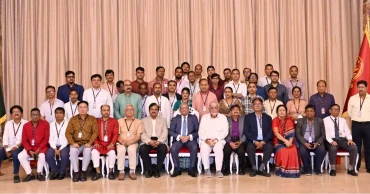
President calls for unified efforts to build country based on equal rights, communal harmony
President Mirza Fakhrul Islam Alamgir on Monday called for united efforts to ensure the rights and dignity of people from all religious and ethnic communities and build a Bangladesh based on equal rights and communal harmony.
He made the call when a delegation of the Bangladesh Hindu-Buddhist-Christian Welfare Front paid a courtesy call on him at Bangabhaban in the afternoon.
During the meeting, the president said people of all communities enjoy equal rights in Bangladesh, where Hindus, Buddhists, Christians, Muslims and people of other faiths and communities have been living together.
“Everyone’s equal rights, dignity and opportunities must be ensured to build a harmonious Bangladesh,” he said.
The president said all concerned must work together to overcome the crises created by the previous government and put the country on the right track.
He said he was aware of the problems, sufferings and expectations of ethnic minorities as well as Hindu, Buddhist and Christian communities.
The president gratefully recalled the important participation and cooperation of the Hindu, Buddhist and Christian communities in making the 13th parliamentary election a success.
Referring to the nomination of more candidates from the Hindu, Buddhist and Christian communities for reserved women’s seats, he said the government was firmly committed to ensuring equal participation of people from all communities in the country’s development and progress.
President Mirza Fakhrul Islam Alamgir called for forming a national committee comprising representatives of the Hindu, Buddhist and Christian communities.
He said such a committee could play an effective role in coordinating with the government and properly presenting various issues concerning the communities.
“Everyone’s representation and participation must be ensured in the country’s development. No single group can move forward alone,” he said.
During the meeting, the delegation invited the president to visit the Durga Puja celebrations at Dhakeshwari Temple and Ramna Kali Temple in Dhaka.
The president accepted the invitation and assured them of his presence at the celebrations.
The delegation also placed various demands before the president. In response, he stressed the need for collective efforts to help those who had been deprived in the past and assured the delegation that the issues raised by them would be considered with due importance.
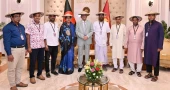
The delegation included Sh Ching Prue Jerry, minister for Chittagong Hill Tracts Affairs; Bijon Kanti Sarker, special assistant to the prime minister and chairman of the Hindu-Buddhist-Christian Welfare Foundation; Tapan Chandra Majumder, adviser to the Hindu Religious Welfare Trust; Advocate John Gomes, religious affairs assistant secretary and member of the BNP National Executive Committee; Sushil Chandra Barua, member of the BNP National Executive Committee and adviser to the Hindu-Buddhist-Christian Welfare Front; and representatives of the Hindu, Buddhist and Christian communities.
The president’s military secretary, secretary and press secretary were also present.
3 days ago
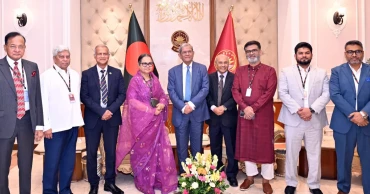
President urges businesses to explore Saudi Arabia’s emerging opportunities
President Mirza Fakhrul Islam Alamgir on Monday urged Bangladeshi businesses and entrepreneurs to tap the vast opportunities in Saudi Arabia, particularly in skilled manpower export, healthcare, education and infrastructure development.
The president made the call when a 7-member delegation of Saudi Arabia-Bangladesh Chamber of Commerce and Industry, led by its President Ashraful Haque Chowdhury, paid a courtesy call on him at Bangabhaban on Monday afternoon.
The delegation briefed the president on the opportunities for Bangladeshi businesses and entrepreneurs arising from Saudi Arabia’s Vision 2030, as well as the development activities, economic activities, infrastructure construction and growing demand for skilled manpower linked to the World Expo and the FIFA World Cup 2034.
The president advised the delegation to make effective use of the huge opportunities and potential and assured them of his full cooperation.
The delegation said its businesspeople and entrepreneurs are working to promote Bangladeshi products, services and promising sectors in five major Saudi cities by engaging skilled manpower trained in technical and technological education.
They are also working to project a positive image of Bangladesh and establish the country’s brand in Saudi Arabia, it said.
The delegation also invited the president to attend as chief guest the inaugural ceremony of an upcoming international seminar in Dhaka which will bring together prominent Saudi investors, entrepreneurs and businesspeople.
President Fakhrul assured the delegation that he would attend the event.
Chamber Vice-President Sheikh Nasir Uddin and directors Priti Chakraborty, Md Jannatul Ferdous, ABM Siddiq, Md Sajjad-Un-Newaz, Zahirul Mahmud Mamun and Shamsul Alam Liton were present.
The president’s Military Secretary, Secretary and Press Secretary were also present.
3 days ago
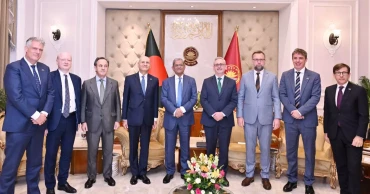
European envoys pledge closer cooperation with Bangladesh government
The European envoys on Monday reaffirmed their commitment to working closely with the present government to further strengthen mutual trust, friendship and partnership during a meeting with President Mirza Fakhrul Islam Alamgir.
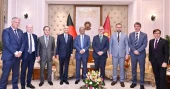
EU Ambassador and Head of Delegation to Bangladesh Michael Miller and Ambassadors of Denmark, France, Germany, Italy, the Netherlands, Spain and Sweden paid a courtesy call on the President at Bangabhaban.
During the meeting, the envoys congratulated Mirza Fakhrul on assuming office as the President.
The President thanked them for their congratulatory messages.
The President expressed satisfaction over the steady progress in relations between Bangladesh and European countries and the EU, saying the partnership has now taken a multifaceted shape.
He expressed gratitude for the continued cooperation and contribution of the EU and its member states to Bangladesh’s development and democratic transition, and said new opportunities have emerged to further deepen the longstanding relations based on mutual respect.
Highlighting the investment opportunities available in the current democratic environment, the President called for increased European investment in Bangladesh.
On migration, the President reiterated Bangladesh’s commitment to preventing irregular migration and human trafficking.
He also called for expanding legal migration pathways for skilled workers and urged more EU member states to join the Talent Partnership initiative.
They stressed the need to enhance cooperation in various areas, including trade, good governance, climate action and sustainable development.
The envoys also underscored the importance of creating a level playing field to increase trade and investment between Bangladesh and EU countries.
They reiterated their continued engagement and cooperation in Bangladesh’s constitutional, judicial and other key reform initiatives.
The President outlined the government’s commitment in this regard and assured that cooperation would continue.
On the Rohingya crisis, the President sought continued and increased EU humanitarian assistance for the Rohingya community in Cox’s Bazar.
He also urged the European countries to play a stronger role in creating conditions for their safe, voluntary and dignified return to Myanmar.
The ambassadors reaffirmed their support and cooperation in addressing the crisis.
The meeting also discussed regional and global developments, renewable energy, green transition, migration management, education, maritime affairs and technology transfer.
Both sides reaffirmed their commitment to upholding shared values, including democracy, human rights, multilateralism, international law and the rules-based international order, and to working together in multilateral forums.
The EU ambassadors thanked the President and reiterated the EU’s commitment to further deepening its partnership with Bangladesh.
Danish Ambassador Christian Brix Moller, French Ambassador Jean-Marc Séré-Charlet, German Ambassador Rüdiger Lotz, Italian Ambassador Antonio Alessandro, Dutch Ambassador Eurich van Boesel, Spanish Ambassador Gabriel María Sistiaga Ochoa de Chinchetru and Swedish Ambassador Nicolas Weeks attended the meeting.
The President’s Military Secretary, Secretary, Press Secretary and a Director General of the Ministry of Foreign Affairs were also present.
3 days ago
Stronger marketing system needed to ensure fair prices for farmers: President
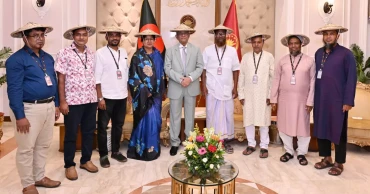
President Mirza Fakhrul Islam Alamgir on Sunday described farmers as the “true and finest people” of the country and stressed the need for an effective marketing system to ensure fair prices for agricultural products and better returns for farmers.
“They are the warriors who build the nation,” he said when an eight-member delegation of Bangladesh Farmers’ Association, led by its president Md Siddiqur Rahman, paid a courtesy call on him at Bangabhaban this afternoon.
He also urged farmers to become more proactive, aware and vigilant in protecting their interests.
The other members of the delegation were Md Abdul Jalil (Litchi Kitab), Md Hasan Ali (Dragon Hasan), Beli Begum (Vegetable Beli), Md Abu Taleb Zowardar (Fish Taleb), Md Hafizur Rahman Mukul, Toffazzal Hossain (Polti) and Shawkat Alam.
During the meeting, President Mirza Fakhrul stressed the need for a central national organisation representing farmers, irrespective of political affiliation, ideology or viewpoint, to safeguard their overall interests and promote their development.
He assured the farmers of all-out cooperation and advised them to establish communication with the agriculture and commerce ministers as well as the highest levels of the government.
He said an initiative would be taken to introduce the President’s Agriculture Award to honour and encourage farmers for their innovations and outstanding contributions to the agricultural sector.
He also urged them to turn their interests and demands into a nationwide movement.
“The agricultural sector is the most positive sector of the country,” the President said attributing the manifold increase in crop production to farmers’ hard work, sweat, development of new high-yielding varieties and innovations, and proper use of agricultural technologies.
He said farmers do not engage in corruption but instead contribute to the progress of society and the state.
The President said the current government has introduced a new scheme for ensuring fair prices of agricultural products and improving farmers’ livelihoods, with Tk 3,000 crore already allocated for the scheme.
He said, like former Prime Minister Begum Khaleda Zia, the incumbent government has also waived agricultural loans of up to Tk 10,000, including interest, for farmers.
Mentioning various government measures, including providing agricultural loans on easy terms and at lower interest rates, he expressed hope that farmers would soon benefit from these initiatives.
The delegation placed a number of demands before the President, including ensuring fair prices for agricultural products, providing interest-free loans, observing a Farmers’ Day, introducing national awards to recognise farmers, launching crop insurance, ensuring farmers’ representation on district and upazila law-and-order committees, protecting farmers from lightning strikes and snakebites, and ensuring affordable supplies of agricultural inputs.
The President said fruits, agricultural products and processed food produced in Bangladesh have significant demand and enormous potential in international markets.
He urged members of the association to come forward to export agricultural and processed products by using modern technologies.
He also stressed the need for initiatives to establish agro-processing industries and modern cold-storage facilities, as well as the use of modern solar panels on farms.
The President also assured the delegation that steps would be taken to consider reducing interest rates on agricultural loans, particularly loans taken from NGOs.
During the meeting, the president of the Farmers’ Association informed the President about an initiative to honour farmers aged over 70 for their contributions to agriculture in Ishwardi and to organise a fair showcasing modern agricultural products and promoting their commercialisation.
He invited the President to attend the event as the chief guest. The President expressed his interest in attending the fair.
The President’s secretaries were present at the meeting.
4 days ago
President congratulates PM on UNGA address
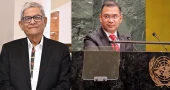
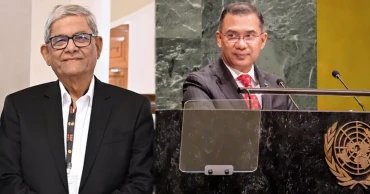
President Mirza Fakhrul Islam Alamgir on Friday congratulated Prime Minister Tarique Rahman on his “visionary, resolute and direction-setting” address to the 81st session of the United Nations General Assembly.
In a congratulatory message, the President said the Prime Minister's speech clearly highlighted Bangladesh’s national interests, aspirations of its people and the country’s positions on major global issues.
He expressed hope that the speech will further enhance Bangladesh’s dignity and position in the international arena.
Mirza Fakhrul said the speech reflected Bangladesh’s journey towards democracy following the end of “fascist rule” and its commitment to establishing democracy, human rights, good governance and accountability.
It also reflected the government’s resolve to build a prosperous, self-reliant and welfare-oriented democratic state, he said.
The President noted that the Prime Minister outlined the “3-R” strategy — Recovery, Restoration and Reconstruction — for rebuilding the country.
He said Tarique Rahman highlighted Bangladesh’s democratic progress and its positions and priorities on global peace, multilateralism, Palestine, the Rohingya crisis, climate change, the economy, employment, empowerment of women and youth, education, health and technology.
Mirza Fakhrul also said the speech presented an accurate picture of the severe pressure on the global economy caused by wars and conflicts, the energy security crisis, disruptions to global energy supply chains and worsening economic conditions amid rising inflation.
Praising the Prime Minister’s vision of the United Nations as “the centrepiece for establishing a consensual global community,” he said the call for achieving peace through dialogue, diplomacy and mutual cooperation is particularly significant in a conflict-ridden world.
Referring to Prime Minister Tarique Rahman’s pledge of “Bangladesh First: Bangladesh for All,” the President said it reflected the aspirations of the people for political and economic empowerment and for building a safe, peaceful and prosperous Bangladesh.
He described Prime Minister Tarique Rahman’s address to the UN General Assembly as a “glorious event for the nation,” noting that he was the third member of the same family to address the UNGA after late President Ziaur Rahman and former Prime Minister Begum Khaleda Zia.
Mirza Fakhrul wished Prime Minister Tarique Rahman good health and a safe and successful visit.
Prime Minister Tarique Rahman delivered the speech in Bangla at the UNGA in New York on Thursday.
6 days ago
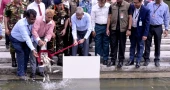
President releases fish fry into Bangabhaban pond
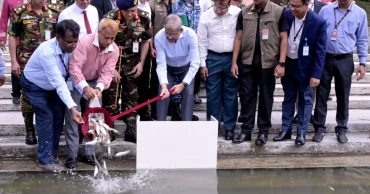
President Mirza Fakhrul Islam Alamgir on Thursday morning released 400 kg of carp fry into the Singha Pond at Bangabhaban.
The programme was organised by the Department of Fisheries under the Ministry of Fisheries and Livestock with the theme “A self-reliant country through silver fish, Bangladesh first.”
The president released 160 kg of rohu, 120 kg of catla, 80 kg of mrigal and 40 kg of kalibaus fry into the pond.
The president’s Military Secretary, Secretary of the Public Division, Press Secretary, Secretary of the Ministry of Fisheries and Livestock, Director General of the Department of Fisheries and senior officials of Bangabhaban and the ministry were present on the occasion.
After the release of the fish fry, the Pesh Imam of Bangabhaban Jame Mosque led a munajat, seeking the development, prosperity and welfare of the country and its people.
7 days ago
President stresses tech skills, research to prepare graduates for 4IR
President Mirza Fakhrul Islam Alamgir on Thursday stressed the need for universities to equip students with technological skills, creativity and research capabilities to prepare them for the challenges of the Fourth Industrial Revolution.
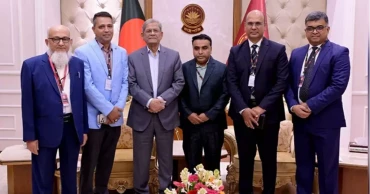
He made the remarks when a delegation of Central University of Science and Technology (CUST), led by its Board of Trustees Chairman Md Zahidul Islam, paid a courtesy call on him at Bangabhaban.
President's Press Secretary Md Sarwar Alam briefed reporters after the meeting.
The President called on public and private universities to take effective initiatives to provide innovative, international-standard education and research while developing skilled human resources.
“Science- and technology-based higher education is a driving force for sustainable development,” he said.
Mirza Fakhrul emphasised strengthening students’ practical and technological competencies so that higher education can contribute more effectively to employment, innovation and national development.
During the meeting, CUST Board of Trustees Chairman Md Zahidul Islam briefed the President on the university’s career-oriented programmes, including artificial intelligence, digital marketing and nursing, as well as its infrastructure development and future plans.
The delegation expressed gratitude to the President for his guidance and cooperation.
The President’s Military Secretary and Secretary, along with the university’s Vice-Chancellor, Registrar, Treasurer and members of its Board of Trustees, were present.
7 days ago