Others
11- party alliance marches on parliament, submits memorandum demanding law on enforced disappearance
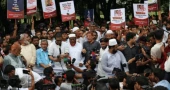
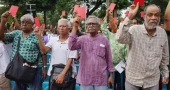
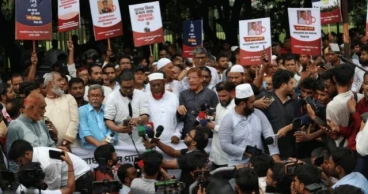
Leaders and activists of Jamaat-e-Islami led 11-party alliance in coalition with the National Committee for Observing the International Day of the Victims of Enforced Disappearance marched towards the National Parliament and staged a sit-in program in front of it on Sunday to submit a 14-point memorandum to the Speaker of the Parliament demanding law on enforced disappearance.
The coalition began its march from the capital’s Banglamotor area in the afternoon before converging on the parliament premises.
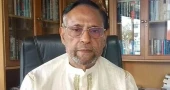
As part of their scheduled program, a delegation team led by Brigadier General (Brevet) Hasinur Rahman (Retd.) a victim of enforced disappearance during the Awami regime and alliance leaders submitted a memorandum to the Speaker of the Parliament from the sit-in location.
The 14-point memorandum outlines several key demands, including the enactment of a victim centric law aligned with international standards, incorporating key protections from the 2025 Enforced Disappearance Prevention and Remedy Ordinance, and establishing an independent investigation commission free from security agency control.
It also demanded a specific deadline for implementing the recommendations of the Commission of Inquiry on Enforced Disappearances.
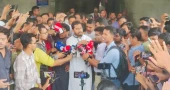
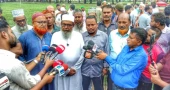
Following the alliance’s meeting with the speaker at a concluding press brief Hasinur Rahman said, “We went to the speaker with a lot of hope, we presented all of our points and he didn’t disagree with us.”
The march and later the sit-in program saw the participation of top leaders from the 11-party coalition, including Jamaat-e-Islami Secretary General and former MP Mia Golam Parwar, Jamaat Assistant Secretary General and alliance coordinator Hamidur Rahman Azad, Bangladesh Khelafat Majlish Secretary General Jalaluddin Ahmed, and Jatiya Ganatantric Party (JAGPA) spokesperson Rashed Prodhan.
Leaders and activists from the Amar Bangladesh Party (AB Party) and National Citizens' Party (NCP) also took part in the program.
24 days ago

Maritime ports asked to keep hoisted cautionary signal No 3
The maritime ports of Chattogram, Cox’s Bazar, Mongla and Payra have been advised to keep hoisted local cautionary signal No. 3 as the low pressure area over Northwest Bay and adjoining coastal area moved northwestwards.
It now lies over Gangetic West Bengal and adjoining areas of North Odisha & Northwest Bay, said a special bulletin of Met office.
Under its influence, squally weather may affect the Maritime Ports, North Bay and adjoining Coastal areas of Bangladesh.
All fishing boats and trawlers over North Bay have been advised to remain close to the coast and proceed with caution till further notice.
30 days ago
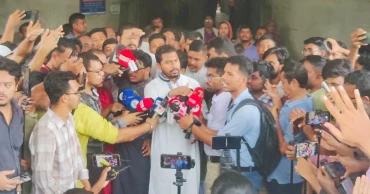
Nur calls on Jamaat to drop ‘Islam’ from its name
State Minister for Expatriates' Welfare and Overseas Employment Nurul Haque Nur on Thursday called on Bangladesh Jamaat-e-Islami to drop the word “Islam” from its name, alleging that the party has caused significant harm to Islam by using its name.
He made the remarks while speaking to reporters after visiting Sohanur Rahman Sohan, president of the Kushtia Government College unit of Chhatra Odhikar Parishad, who was injured in a clash between Jamaat-Shibir and the Gono Odhikar Parishad in Kushtia, Dhaka Medical College Hospital (DMCH) in the afternoon.
Sohan is receiving treatment at a cabin in the old building of the DMCH.
“Jamaat-e-Islami should drop the word ‘Islam’ from its name. If Jamaat gets an opportunity, it will become an even bigger fascist force than the Awami League,” said Nur, also president of Gono Odhikar Parishad.
He alleged that Jamaat has caused the greatest harm to Islam by using its name and said the party has suffered a decline in moral standards.
Referring to Jamaat lawmakers Amir Hamza of Kushtia and Gazi Nazrul Islam of Satkhira, Nur said their alleged conduct was an example of the party's moral decline.
He also alleged that Jamaat has been seeking to come to power and has started making “irritating” remarks against the government only six months into its tenure.
The Gono Odhikar Parishad chief further accused Amir Hamza of making obscene and derogatory remarks about lawmakers, including Rubina Farhana and Farzana Putul, as well as making offensive comments about late Arafat Rahman Koko, the younger son of former Prime Minister Khaleda Zia.
“Jamaat is supporting such filthy and hypocritical remarks,” he alleged.
Referring to the conduct of Satkhira MP Nazrul Islam, Nur said if Jamaat continues to claim itself as an Islamic party, that will be contradictory to the principles of Islam. “I would urge them to drop the word ‘Islam’ from Jamaat-e-Islami because they are causing the greatest harm to Islam by using the name of Islam as a guise.”
1 month ago
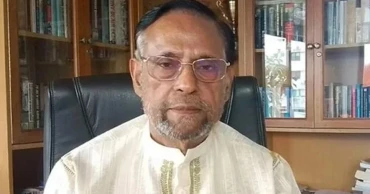
Presidential election: 11-party alliance picks Oli Ahmad as its candidate
The 11-party alliance, led by Bangladesh Jamaat-e-Islami, has chosen Liberal Democratic Party (LDP) Chairman Col (retd) Oli Ahmad as its candidate for the presidential election.
Opposition Chip Whip and National Citizen Party (NCP) Convener Nahid Islam made the announcement following a meeting of the alliance at the official residence of Leader of the Opposition Dr Shafiqur Rahman at Minto Road in the capital on Sunday.
Meanwhile, the ruling BNP on Sunday collected two nomination forms for the upcoming presidential election.
BNP Senior Joint Secretary General Ruhul Kabir Rizvi and Chief Whip Nurul Islam Moni collected the forms from the Returning Officer’s office in the Nirbachan Bhaban in Agargaon.
Earlier on August 6, the EC announced the schedule for the presidential election, setting August 20 as the voting date, following the resignation of Shahabuddin as President on July 24.
1 month ago
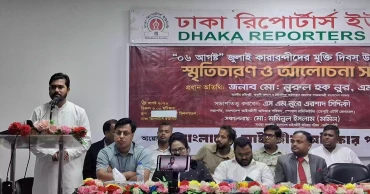
Remain vigilant against 'conspiracies' of Jamaat-NCP alliance: Nur
State Minister for Expatriates’ Welfare and Overseas Employment Nurul Haque Nur has called upon the people to remain vigilant against what he described as conspiracies by the Jamaat-NCP led opposition alliance.
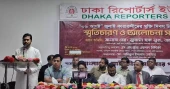
Speaking at an event organized by the Lawyer’s Rights Council at the Dhaka Reporters Unity, in the capital the state minister alleged that the recent sit-in protest staged by the Jamaat-NCP alliance in front of the Bangladesh Secretariat was a deliberate attempt to destabilize the country.
“They should've announced a long march towards the Indian embassy. Instead, they chose the Bangladesh Secretariat. It is a direct attempt to disrupt the country's stability,” Nur said.
Asserting that "Awami fascism" has met its political demise, Nur remarked that no amount of wishful thinking from across the border can bring the fallen regime back to life.
He claimed that the National Citizen Party (NCP) is strategically dominated by Jamaat-e-Islami members occupying various district and upazila posts, comparing it to past political tactics where hidden affiliates infiltrated multiple political parties, including the BNP and Gono Adhikar Parishad.
Recalling the backdrop of the 2024 July mass uprising, Nur noted that the movement was built upon years of struggle, dating back to the quota reform movement launched in 2018 under his leadership.
He urged citizens to stay united in upholding the spirit of the July uprising and opposing the return of autocratic forces.
The discussion meeting was arranged by the Lawyer’s Rights Council, a platform of lawyers associated with Gono Adhikar Parishad, to mark the jail release of their leaders following the ouster of former Prime Minister Sheikh Hasina.
Presided over by Lawyer's Rights Council President Nure Ershad Siddiki, the event was also addressed by Prime Minister's Political Assistant Rashed Khan, alongside leaders, activists and members of the Gono Adhikar Parishad and the Lawyer's Rights Council.
1 month ago
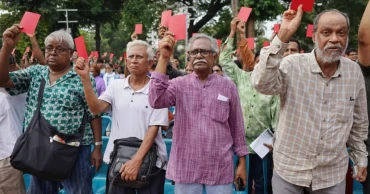
Ganatantrik Odhikar Committee demands implementation of July Uprising aspirations
Ganatantrik Odhikar Committee held a mass rally at the Central Shaheed Minar on Friday, demanding the implementation of the aspirations of the July uprising.
2 months ago

BMD forecasts heavy to very heavy rain, warns of landslides
The Bangladesh Meteorological Department (BMD) on Friday forecast heavy to very heavy rainfall in parts of the country over the next 24 hours, warning that the downpour could trigger landslides in the hilly areas of Chattogram division and cause temporary waterlogging in Dhaka and Chattogram metropolitan areas.
In a heavy rainfall warning issued in the morning, it said the rain is likely to affect parts of Rangpur, Rajshahi, Mymensingh, Dhaka, Khulna, Barishal, Chattogram and Sylhet divisions during the 24 hours commencing at 10:00am on Friday under the influence of an active monsoon.
According to the BMD, heavy rainfall refers to precipitation between 44 mm and 88 mm, while very heavy rainfall means more than 88 mm within the forecast period.
The country's highest rainfall in the 24 hours till 6:00am on Friday was recorded in Chattogram at 211 mm.
Day and night temperatures may remain nearly unchanged across the country, the BMD said.
The monsoon trough extends through Punjab, Haryana, the centre of the low-pressure area, Bihar, West Bengal and Assam, passing across central Bangladesh.
One of its associated troughs extends up to the North Bay.
The monsoon is active over Bangladesh and strong over the North Bay, the BMD added.
2 months ago
11-party alliance's Rangpur divisional rally Saturday
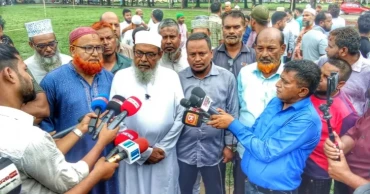
The 11-party alliance, led by Bangladesh Jamaat-e-Islami, will hold its Rangpur divisional rally on Saturday as part of its planned programme demanding implementation of the referendum verdict, effective measures for the Teesta Master Plan, an end to border killings and push-ins, and steps to reduce public suffering.
The rally will begin at 2:30pm at Rangpur District School Ground, said Dr AHM Hamidur Rahman Azad, coordinator of the 11-party alliance, in a statement issued on Friday.
Bangladesh Jamaat-e-Islami Ameer Dr Shafiqur Rahman will address the rally as the chief guest.
Leaders of the alliance components will also speak at the really with Opposition Chief Whip and National Citizen Party (NCP) Convener Nahid Islam in the chair.
2 months ago
JAGPA removes Zakir Hossain Riaz as secretary-general over 'anti-party activities'
The Jatiya Ganatantrik Party (JAGPA) on Friday relieved its Secretary General Zakir Hossain Riaz of his duties, citing anti-party activities.
The decision was taken at an emergency meeting of the party's National Executive Council, chaired by JAGPA President and freedom fighter Khandaker Lutfor Rahman.
According to a party press release, those present at the meeting included Vice Presidents MA Wahab, Dr Awlad Hossain Shilpi and Advocate Shahidul Islam; Joint Secretary General Dewan Mohammad Rokon Uddin Hazari; Organising Secretaries Mohammad Hossain Mobarak and Abul Hossain; Publicity Secretary Kamrul Hasan; and Finance Secretary Md Mahfuzar, among other leaders.
The meeting appointed Joint Secretary General Dewan Mohammad Rokon Uddin Hazari as acting secretary general.
The party also instructed its leaders and activists not to maintain contact with Zakir Hossain Riaz.
It decided to convene an extended meeting within the next month to fix the date for the party's next council.
The meeting further decided that JAGPA's organisational activities would resume on July 10 with a visit to the shrine of Hazrat Shahjalal (R) in Sylhet.
It also resolved that JAGPA would stand alongside Prime Minister Tarique Rahman in building the future of Bangladesh.
At the end of the meeting, special prayers were offered for the speedy recovery of BNP Standing Committee member and Prime Minister's Political Adviser Nazrul Islam Khan.
2 months ago
Implement referendum verdict or face a united movement, 11-party alliance leaders warn BNP
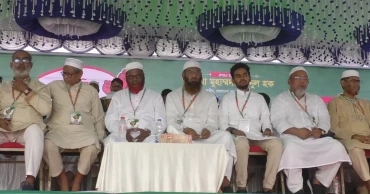
Leaders of the 11-party opposition alliance on Saturday warned that a united street movement would continue if the referendum verdict is not implemented.
Speaking at a divisional rally in Mymensingh, they also urged the government to implement the referendum verdict and take steps to ease public suffering.
Addressing the BNP, several speakers claimed that people had voted for the party based on commitments made in the July Charter.
They also alleged that the BNP was ignoring the referendum verdict, including the July Charter, and accused it of adopting "fascist" practices.
Speaking as the chief guest, Bangladesh Khelafat Majlis Ameer Muhammad Mamunul Haque said they wanted the peaceful implementation of what he described as the will of "70 percent of the people".
He warned that if the government failed to implement the referendum verdict and if the BNP deprived people of their voting rights "like Sheikh Hasina", the party would face the same political consequences.
Jamaat-e-Islami Secretary General Mia Golam Porwar alleged that the BNP, with the support of the interim government, had manipulated the election.
He said his party accepted the election results in the interest of political stability and building a "new Bangladesh" free from political conflict, corruption and inequality.
Porwar warned that if the referendum verdict was not implemented, a united street movement would continue.
He also alleged that if the BNP attempted to undermine the voting rights of what he described as "70 percent of the people", its leadership would face the same fate as Sheikh Hasina.
NCP leader Asif Mahmud Sajeeb Bhuiyan alleged that the BNP had repeatedly failed to run the country effectively.
He also claimed that the government had not taken effective action over ‘July Massacre’, the crackdown on protesters by the then Awami League government during the July Uprising of 2024.
He said the government had increased the prices of fuel, electricity and other essential commodities, and had failed to explain the outcomes of the Prime Minister's recent visits to China and Malaysia.
Among others, acting Ameer of the Nizam-e-Islam Party Maulana Abdul Qayyum Sobhani, Bangladesh Labour Party Chairman Dr Mostafizur Rahman Iran, and local leaders of the 11-party alliance were present at the rally.
2 months ago