Education
Nurturing patriotism and moral values crucial for future generations: Education Minister
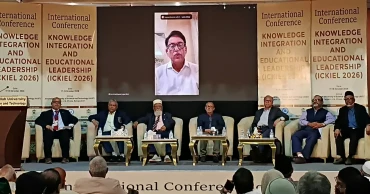
Stressing the urgent need to restore the principles and ethics of the current education system, Education Minister Dr. ANM Ehsanul Hoque Milan has emphasized that building a prosperous Bangladesh requires nurturing the younger generation on the foundation of patriotism and moral values.
"We are drifting far away from our core moral foundation, which requires deep reflection. To build a prosperous Bangladesh, the new generation must be raised on patriotism and ethical values," he said.
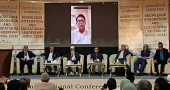
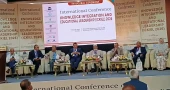
The minister was addressing as the chief guest at the closing session of the three-day "International Conference on Knowledge Integration and Educational Leadership (ICKIEL-2026)" held at Ahsanullah University of Science and Technology (AUST) on Monday.
He joined the program virtually from China, where he is attending the World Vocational and Technical Education Development Conference 2026.
Highlighting his experience in China, the minister shared that Bangladesh signed a Memorandum of Understanding (MoU) with China—alongside 100 participating countries—to enhance Bangladesh's technical education. Under the agreement, strategic educational integration will be undertaken across six priority initiatives to elevate the country's technical education to international standards.
The three-day international conference was jointly organized by the Bangladesh Institute of Islamic Thought (BIIT) and AUST to foster global integration of knowledge and advance international educational leadership. Researchers, academics, policymakers, and university vice-chancellors from around 15 countries—including Bangladesh, the United States, the United Kingdom, Australia, Malaysia, Indonesia, Turkey, Nigeria, India, and Pakistan—participated in the event.
Chaired by BIIT Director General and Organizing Committee Chairman Prof. Abdul Aziz at the university's Prof. Dr. MH Khan Auditorium, the session was attended by former Dhaka University Vice-Chancellor Prof. Dr. Niaz Ahmed Khan and AUST Board of Trustees Chairman Prof. Dr. M. Ghulam Rahman as special guests.
Addressing the gathering, former DU Vice-Chancellor Prof. Dr. Niaz Ahmed Khan highlighted structural mismatches in the education sector. "We are failing to integrate moral education with worldly knowledge. On the other hand, our graduates lack the skills demanded by society. While the general unemployment rate in the country stands at around 3.5 percent, the unemployment rate among university graduates is 13.9 percent—which is alarming and represents a national failure," he observed, calling for alignment between spiritual and academic learning and societal needs.
Welcome addresses were delivered by Prof. Dr. Mohammad Sarwar Morshed, Director of Extension Services Center at AUST and Vice-Chairman of the Organizing Committee; Associate Prof. Dr. Mohd Rushdan Mohd Jailani, Dean of the Faculty of Leadership and Management at co-host institution University Sains Islam Malaysia (USIM); and Prof. Dr. Md. Ashraful Hoque, Vice-Chancellor of AUST.
Throughout the conference, scholars and researchers from home and abroad underscored the necessity of bridging knowledge with ethics in modern education systems. Prof. Dr. Mohd Yusof Othman of USIM delivered the vote of thanks at the conclusion of the event.
19 hours ago
Academics urge education reforms integrating technology at AUST conference
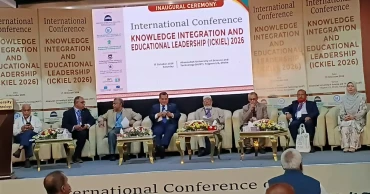
Prominent academics and educational experts from home and abroad on Saturday called for sweeping reforms in Bangladesh's education system to prepare skilled human resources equipped with science, artificial intelligence (AI), and moral values to address emerging global challenges.
They made the remarks during the inauguration of a three-day international conference titled "International Conference on Knowledge Integration and Educational Leadership (ICKIEL-2026)" at the Professor Dr. MH Khan Auditorium of Ahsanullah University of Science and Technology (AUST) in the capital on Saturday morning.
The conference is jointly organized by AUST, University Sains Islam Malaysia (USIM), and the Bangladesh Institute of Islamic Thought (BIIT).
Speaking at the event as chief guest, USIM Vice-Chancellor Professor Dato' Ts. Dr. Sharifudin bin Md Shaarani noted that Bangladesh is one of the most resource-rich countries in the Muslim world in terms of human potential.
"To transform this population into true human capital, an integrated education blending science, advanced technology, and moral values must be imparted," he said, emphasizing that producing graduates skilled in AI alongside foundational knowledge is key to building a balanced workforce.
Dhaka University Vice-Chancellor Professor Dr. ABM Obaidul Islam and Bangladesh Accreditation Council Chairman Professor Dr. Md. Akhtar Hossain Khan attended the opening session as special guests.
Professor Dr. Omar Hasan K. Kasule Sr., Chief Executive of the International Institute of Islamic Thought (IIIT), USA, and a Harvard scholar, delivered the keynote paper on "Knowledge Integration and the Fourth Industrial Revolution."
Former IUT and AUST Vice-Chancellor and Distinguished Fellow of BIIT, Professor Dr. Muhammad Fazli Ilahi, presided over the opening session. AUST Extension Services Center Director Professor Dr. Mohammad Sarwar Morshed delivered the welcome address, while BIIT Director General Professor Abdul Aziz presented the opening remarks.
Co-organizers and strategic partners—including AUST Vice-Chancellor Professor Dr. Md. Ashraful Haque, International Islamic University Chittagong (IIUC) Vice-Chancellor Professor Dr. Mohammad Ali Azadi, and USIM Deputy Vice-Chancellor Professor Dato' Dr. Nik Salida Suhaila binti Nik Saleh—also spoke at the event.
Speakers underscored that amidst the rapid strides of the Fourth Industrial Revolution, AI, and cybersecurity globally, Bangladesh must overcome historical setbacks by fostering practical, future-oriented education, innovative research, and dynamic educational leadership.
Organizers informed that researchers, scholars, policymakers, and university vice-chancellors from at least 15 countries-including Bangladesh, the USA, the UK, Australia, Malaysia, Indonesia, Turkey, Nigeria, India, and Pakistan—are participating in the conference. Around 100 research papers will be presented, alongside deliberations on global education models such as Malaysia's 'Integrated Education,' Turkey's 'Maarifi Model,' and Indonesia's 'Merdeka Curriculum.'
Education Minister Dr. A.N.M. Ehsanul Hoque Milan, MP, is scheduled to attend the closing ceremony as the chief guest on Monday (October 19).
2 days ago
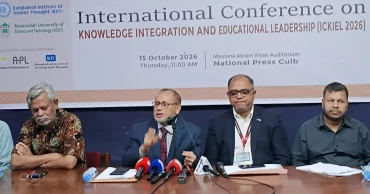
3-day international conference on skill-based education begins Saturday
A three-day international conference focused on aligning Bangladesh’s education system with global standards and developing a skilled, ethically driven workforce will kick off on Saturday at the Ahsanullah University of Science and Technology (AUST) main auditorium in the capital.
The event, titled "International Conference on Knowledge Integration and Educational Leadership," will bring together prominent academics, researchers, policymakers, and educational leaders from around 15 countries—including the United States, the United Kingdom, Australia, Malaysia, Indonesia, Turkey, Nigeria, India, and Pakistan.
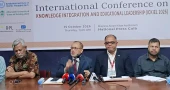
Organizers shared details of the event during a pre-conference press briefing held at the Jatiya Press Club on Thursday.
The conference is jointly organised by Universiti Sains Islam Malaysia (USIM), the Bangladesh Institute of Islamic Thought (BIIT), and AUST.
Chairperson of the organising committee, Professor Dr. Mohammad Abdul Aziz, emphasised that integrating practical skills, academic knowledge, and ethical values is essential to preparing citizens for modern employment and bringing national education up to international standards.
Education Minister ANM Ehsanul Hoque Milon will attend the closing ceremony as the chief guest.
Bangladesh Accreditation Council (BAC) Chairman Professor Dr. Md. Akhtar Hossain Khan and Dhaka University Vice-Chancellor Professor Dr. ABM Obaidul Islam will be present as special guests.
The keynote speakers include Prof. Dr. Omar Hasan Kasule Sr., Secretary General and CEO of the International Institute of Islamic Thought (IIIT), USA; Prof. Ts. Dr. Sharifuddin Md Shaarani, Vice-Chancellor of USIM; and Prof. Dr. Muhammad Fazli Ilahi, former Vice-Chancellor of IUT and professor at AUST.
Speakers noted that nearly 100 research papers will be presented during the three-day conference, alongside discussions on international education frameworks such as Malaysia's 'Integrated Education,' Turkey's 'Century of Turkey Maarif Model,' and Indonesia's 'Merdeka Curriculum,' aimed at offering actionable insights for educational reforms in Bangladesh.
AUST Conference Co-Chair Professor Mohammad Sarwar Morshed and Coordinator Dr. Syed Shahid Ahmad also addressed the press conference.
4 days ago
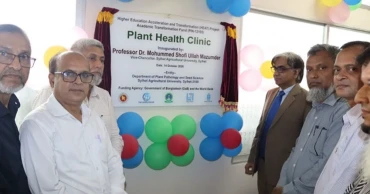
Plant Health Clinic launched at Sylhet Agricultural University
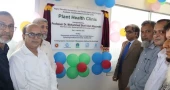
A Plant Health Clinic has been inaugurated at Sylhet Agricultural University (SAU) to help diagnose plant diseases and provide appropriate solutions to farmers.
SAU Vice-Chancellor Professor Dr Mohummed Shofi Ullah Mazumder inaugurated the clinic on Wednesday afternoon on the fourth floor of the Faculty of Agriculture building.
The clinic was established under the Higher Education Acceleration and Transformation (HEAT) project through a sub-project titled “Enhancing the Plant Health Clinic in the Department of Plant Pathology and Seed Science for Cutting-edge Research, Quality Education, and Strengthened Outreach Activities”.
The vice-chancellor said the initiative would achieve true success when its research findings benefited farmers in the region.
He also thanked the initiators and members of the project team for successfully implementing the initiative to establish the facility.
University officials said the clinic would address a wide range of plant-related problems, including disease diagnosis and treatment, and provide appropriate solutions.
5 days ago
DU hands over seven colleges’ student records to Dhaka Central University
Dhaka University (DU) on Wednesday formally handed over all student data and records of the seven government colleges to Dhaka Central University (DCU), paving the way for the new university to accelerate its academic activities.
DU Vice-Chancellor Professor Dr A B M Obaidul Islam handed over the records to DCU Vice-Chancellor Professor Md Lutfor Rahaman at a ceremony held at the DU Vice-Chancellor’s conference room in the morning.
Speaking at the event, the DU Vice-Chancellor wished the students of DCU success in their academic pursuits.
He said the formal transfer of student data would help speed up the academic activities of the newly established university.
He also assured that DU’s cooperation in developing DCU and ensuring the overall welfare of its students would continue in the future.
DCU Vice-Chancellor Prof Md Lutfor Rahaman thanked the DU authorities for quick transferring the student records.
He said various initiatives had been taken to ensure the overall welfare of DCU students and strengthen academic activities. He also sought the cooperation of all concerned in implementing the initiatives.
DU Pro-Vice-Chancellor (Academic) Professor Dr Abdus Salam, Pro-Vice-Chancellor (Administration) Professor Dr. Mohammed Almujaddade Alfasane, Treasurer Professor Dr M Jahangir Alam Chowdhury, deans of different faculties and other officials were present at the ceremony.
5 days ago

Togumogu Autumn Fair begins Thursday in Uttara
The three-day Togumogu Autumn Fair will begin on Thursday at Togumogu Parenting Hub in the capital’s Uttara, featuring shopping stalls, food, entertainment and activities for children and families.
The fair will remain open from 11am to 10pm daily from October 15 to 17.
Visitors will be able to shop for jewellery, cosmetics, clothing, home décor, toys and electronics, alongside a variety of food items.
The event will also feature puppet shows and magic shows for children, as well as crafting workshops open to both children and adults.
Families will also be able to enjoy free movie screenings during the fair.
Organisers said the initiative aims to create a family-friendly space where parents and children can spend quality time together while enjoying shopping, entertainment and creative activities.
The fair will be held at Togumogu Parenting Hub, House 09, Sonargaon Janapath Road, Sector 12, Uttara, Dhaka.
5 days ago
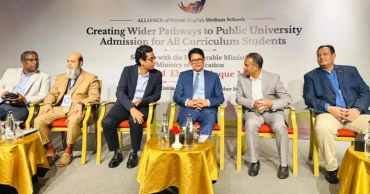
Govt 'determined' to align English-medium education with national system: Minister
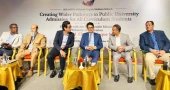
Education Minister ANM Ehsanul Hoque Milon Sunday said the government is determined to bring English-medium O Level and A Level education, and its students, into the mainstream.
"I wanted to bring English-medium education under a regulation before, but for some reason it could not be done," Milon said at a seminar at a city hotel at Karwan Bazar.
The seminar was themed on expanding public university admission opportunities for students of national and international curricula and ensuring a fair and inclusive environment in higher education.
The minister criticised the lack of interest among English-medium students in Bangladesh's public universities as well as the limited scope for their admission.
Sharing a recent experience, he said only two of nearly 1,000 students at a Jahangirnagar University orientation were from English-medium backgrounds.
"This can hardly be good news," he said.
Holding universities and the University Grants Commission (UGC) equally responsible for the low admission rate, the minister said neither could shirk accountability.
Noting that many English-medium graduates once rose to important positions in the country and proved their merit, the minister said, “That is not seen now. We have to find out why English-medium students are failing to contribute to the country."
Participants at the seminar discussed policy, structural and procedural barriers facing students of international curricula in entering higher education.
Key issues included eligibility for public university admission, equivalence of international qualifications such as O Level and A Level, application procedures, and the alignment of admission test structures with the academic preparation of students from different curricula.
Speakers emphasised ensuring fair opportunities for students of all curricula while maintaining merit-based selection and academic standards.
They also explored ways to make the admission system more transparent, easier to follow and inclusive, taking into account differences in content and assessment between national and international curricula.
The seminar also touched on the entry of international curriculum students into medical colleges, engineering universities and other higher education institutions.
8 days ago
Dhaka University to hold its 54th convocation on January 26
The 54th convocation of the University of Dhaka (DU) will be held on January 26 next year.
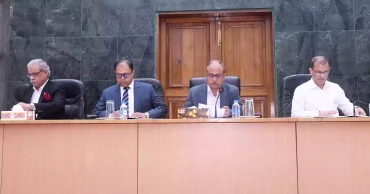
A meeting was held at the auditorium of Nawab Ali Chowdhury Senate Bhaban of the university on Sunday to finalise preparations for holding the convocation in a smooth, orderly and festive atmosphere.
President Mirza Fakhrul Islam Alamgir is set to preside over the ceremony while Prime Minister Tarique Rahman has consented to attend as the guest of honour, according to a press release of the university.
Professor Dr Atsushi Sunami, president of Japan’s Sasakawa Peace Foundation (SPF), will attend as the convocation speaker and receive an honorary Doctor of Laws degree.
Professor Dr Muhammad Harunur Rashid, a major donor to one of the university’s trust funds, will also receive an honorary Doctor of Science degree.
DU Vice-Chancellor Professor Dr A B M Obaidul Islam chaired the meeting.
Graduates and medal recipients who obtained their results between November 20, 2022, and November 30, 2026, will be eligible to participate in the convocation.
Applications for participation will be accepted from November 1 to November 30, 2026.
An executive committee, a management committee and several sub-committees were formed to ensure the smooth conduct of the ceremony.
Pro-Vice-Chancellor (Academic) Professor Dr Abdus Salam, Treasurer Professor Dr M. Jahangir Alam Chowdhury, Senate members Md Amanullah Aman MP, Khairul Kabir Khokon MP and A K M Fazlul Haque Milon MP attended the meeting.
Deans of various faculties, provosts of residential halls, departmental chairpersons, institute directors and heads of administrative offices were also present.
VC Prof Obaidul Islam sought the cooperation of all concerned to ensure a smooth, peaceful and festive celebration of the convocation.
He urged the sub-committees to begin work immediately to ensure the event’s success.
He also called for collective efforts to advance education and research, maintain a conducive academic environment and enhance the university’s international reputation.
8 days ago
BAEC scientist Dr M Khalid Hossain named among world’s top 2% researchers
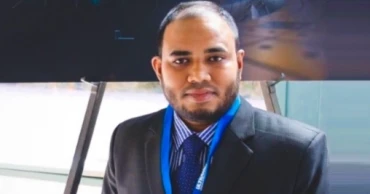
Dr M Khalid Hossain, Senior Scientific Officer at the Institute of Electronics under the Bangladesh Atomic Energy Commission (BAEC), has been named among the world’s top 2 percent of scientists for the fourth consecutive year.
Stanford University and research publisher Elsevier jointly published the prestigious global list for 2026 on October 8. The ranking evaluates researchers worldwide across 20 scientific fields and 174 sub-fields based on Scopus-indexed research publications, categorizing them by career-long impact and single-year research impact.
Dr Hossain secured a place in both categories on the 2026 list. In the career-long impact category, he ranked 55th among 105 Bangladeshi researchers included so far. Meanwhile, in the single-year impact category, he ranked fifth nationally among 347 Bangladeshi scientists.
Reflecting on his recurring global recognition, Dr Hossain shared that his decision to return to Bangladesh after completing higher studies in Japan was rooted in a commitment to advance domestic scientific research.
"It is my duty to contribute to scientific research in my country by using my knowledge and experience. That is why I returned to Bangladesh instead of taking a job or remaining in Japan after completing my degree. I believe I have been able to give something back to my country, even if only to some extent, and I consider this a major achievement for me," he said.
Dr Hossain earned his BSc and MSc degrees with first-class honors from the Department of Applied Physics, Electronics and Communication Engineering (currently Electrical and Electronic Engineering) at Islamic University. He joined BAEC as a scientific officer in 2012. In 2021, he completed his PhD in Nuclear Energy Materials from Kyushu University in Japan under the Japanese government’s MEXT Scholarship program.
A prolific researcher, Dr Hossain has authored 11 science books and published over 350 peer-reviewed articles in internationally recognized journals. His scholarly work has garnered more than 20,000 citations, with a reported h-index of 75. His core research interests span nuclear energy materials, solar cells, fuel cells, nanomaterials, ceramics, hydrogen energy materials, electrochemical devices, and proton-conducting oxides.
9 days ago
Match professor's expertise to student's research to win MEXT, says Japan Embassy
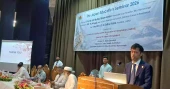
Matching a student's research field with that of the supervising professor improves the chances of securing the Monbukagakusho (MEXT) scholarship, Japan Embassy official Yu Aoyagi has said.
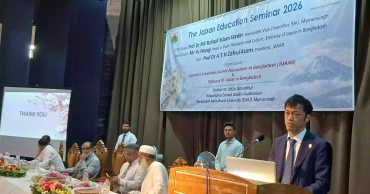
Mr. Aoyagi, head of the Public Relations and Culture Section at the Embassy of Japan in Bangladesh, made the remarks as a special guest at the "The Japan Education Seminar 2026" on Saturday morning.
He said seats for embassy recommendation are very few, usually around ten, making the opportunity extremely limited.
All students of the last three years were asked what the biggest factor behind their success in securing the MEXT scholarship was, he said. Most replied that their research topic matched the research field of their supervising professor.
"So we advise all students to find out which professor's research field matches their research topic," he said.
He added that "Navi Japan" can help in this regard. It will also help students understand which universities offer English-medium programmes and which universities they wish to apply to, he said.
The seminar was held at the Shilpacharya Zainul Abedin Auditorium of Bangladesh Agricultural University (BAU). It was jointly organised by the Japanese Universities Alumni Association in Bangladesh (JUAAB) and the Embassy of Japan in Bangladesh.
BAU Vice-Chancellor Prof. Dr. Md. Rafiqul Islam Sarder attended as chief guest, while JUAAB President Prof. Dr. ATM Zafrul Azam presided over the programme. Convener of the organising committee Prof Dr M Zulfikar Rahman was also present.
Prof. Azam said competition has increased as the quota for government scholarships in Japan has been somewhat reduced. However, opportunities for private scholarships and research funds are also growing, he said.
Under agreements with various universities, students are getting tuition fee waivers of 80 to 90 percent, he added.
Prof. Dr. Sarder said opportunities for higher education and research in Japan are expanding day by day. Institutional memorandums of understanding (MoUs) with various Japanese universities and a strengthening network of alumni of Japanese universities are making the path to higher education easier for Bangladeshi students, he said.
The vice-chancellor also said Japan offers diverse opportunities for higher education and research, including scholarships, at the master's, PhD and postdoctoral levels. Advanced research infrastructure, modern facilities and cultural similarities have made the country a promising destination for Bangladeshi students, he added.
He also said students should make use of opportunities to learn the Japanese language under the University Grants Commission's (UGC) third language policy. They should also increase communication with relevant teachers at Japanese universities, which will make it easier to avail higher education and research opportunities, he said.
Dr. Md. Imdadul Haque, Senior Scientific Officer of the Plant Breeding Division at the Bangladesh Institute of Nuclear Agriculture (BINA), and Dr. Md. Masud Rana, Associate Professor of the Department of Agricultural Extension Education at BAU, shared their experiences of higher education and research in Japan.
Admission requirements at different Japanese universities, the MEXT scholarship application process, preparation of research proposals, selection of supervisors, and post-study employment opportunities were discussed at the event.
Later, the speakers answered students' various queries in a question-answer session.
9 days ago