Election
Thakurgaon-1 by election to gain acclamation as well: CEC
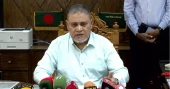
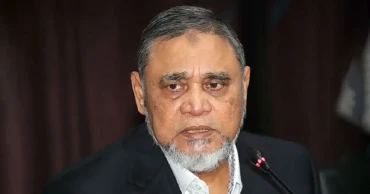
Chief Election Commissioner AMM Nasir Uddin on Sunday said the upcoming Thakurgaon-1 parliamentary by-election will be held in a praiseworthy manner, like the February-12 national election.
“Insha'Allah, I can guarantee that just as we conducted the 13th parliamentary election— which earned acclamation both at home and abroad— you will similarly appreciate the way this one (by-election) is held,” he said.
The CEC made the remarks while talking to reporters after visiting the monitoring cell set up at Nirbachan Bhaban to monitor the Thakurgaon-1 by-election in real time from the capital.
He said all necessary measures have been taken to arrange Thakurgaon-1 by-polls in a fair manner, which is scheduled to be held on November 29 next.
Nasir Uddin said an adequate number of law enforcement personnel will be deployed to maintain law and order in the parliamentary by-election.
He said the monitoring cell will work for the Thakurgaon-1 by-election in exactly the same way as it did during the 13th parliamentary election. “We will monitor it centrally so that we can intervene in the right manner at the right time,” he added.
The CEC said the overall environment in the election field is currently very good.
According to the election schedule announced by the EC, the deadline for submission of nomination papers expired on Sunday afternoon (5pm) in the by-election.
The nomination papers will be scrutinised on Sept 29, while the last date for withdrawal of candidature is Oct 7, and voting will be held on Oct 29 from 8am to 4pm.
Meanwhile, the EC held a meeting with representatives of law enforcement agencies at Nirbachan Bhaban on Sunday afternoon ahead of the by-election.
Other election commissioners attended the meeting chaired by CEC AMM Nasir Uddin.
Asked about the meeting, the CEC said an adequate number of law enforcement personnel would remain deployed in the field to keep the law and order situation fully under control during the election.
2 days ago
MPO-listed teachers’ eligibility for local polls rests with EC: Shahe Alam
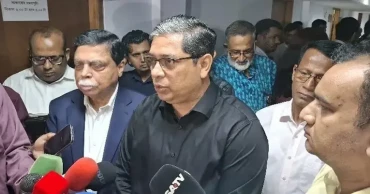
The Election Commission (EC) will decide whether teachers of private educational institutions under the Monthly Pay Order (MPO) facilities will be allowed to contest local government elections, State Minister for Local Government, Rural Development (LGRD) and Co-operatives Mir Shahe Alam said on Sunday.
“The Election Commission formulates the election rules and determines the eligibility and ineligibility of candidates. Now the Election Commission will consider our laws and the policies of the Ministry of Education and decide whether MPO-listed teachers can participate in the elections,” he said.
The state minister made the remarks while speaking to reporters after a courtesy meeting between Swiss Ambassador to Bangladesh Reto Renggli and LGRD and Co-operatives Minister Dr Abdul Moyeen Khan at the Secretariat.
He also said there is no age restriction for candidates in local government elections.
The remarks came against the backdrop of the EC’s recommendations for amendments to local government laws, including provisions aimed at barring MPO-listed teachers from contesting local government elections.
The proposed restrictions have drawn criticism from opposition parties.
Bangladesh Jamaat-e-Islami recently demanded that the EC withdraw the proposed provision barring MPO-listed teachers from contesting local government elections.
17 days ago
Presidential election: Vote counting begins
Vote counting in the presidential election has started as the balloting ended at 5:00pm, with members of Parliament (MPs) casting their votes through an open ballot to elect the country’s 23rd President.
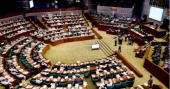
Voting was held from 2:10pm to 5:00pm in the session chamber of the Jatiya Sangsad.
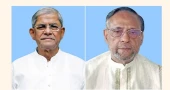
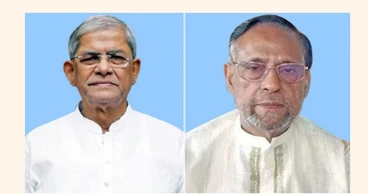
BNP candidate Mirza Fakhrul Islam Alamgir and opposition Jamaat-led 11-party alliance contender Col (retd) Oli Ahmad are contesting the election.
At the beginning of the balloting, Acting President Hafiz Uddin Ahmad and Acting Speaker Barrister Kayser Kamal cast their votes at 2:10 pm, while Prime Minister Tarique Rahman and Mirza Fakhrul Islam Alamgir at 2:11pm.
Just before the balloting, Chief Election Commissioner (CEC) AMM Nasir Uddin, who is also the election returning officer, announced the names of the two candidates for president.
He explained the voting procedure for Members of Parliament.
He also explained how the ballot papers should be placed in the ballot box.
With BNP holding an absolute majority in Parliament, Mirza Fakhrul Islam Alamgir is widely expected to be elected as the country’s 23rd President.
Under Article 70 of the Constitution, lawmakers, elected as candidates of political parties, will lose their seats if they vote for any candidate in this presidential election, going against their respective party’s decision.
The last contested presidential election was held on October 8, 1991, when BNP candidate Abdur Rahman Biswas defeated Awami League candidate Badrul Haider Chowdhury to become the country’s 11th President.
Abdur Rahman Biswas secured 172 votes, while Badrul Haider Chowdhury received 92.
Since then, no voting was required in the successive presidential elections as a single candidate was elected uncontested in each election.
CEC Nasir Uddin will announce the election result immediately after the vote count in Parliament.
Then the Election Commission will publish the election result in an official gazette on Thursday.
On the other hand, Bangabhaban is making preparations to arrange the oath-taking ceremony for the newly elected President on Friday evening.
Since the Chattogram-4 parliamentary seat remains vacant, the number of voters is 349.
The voters include 247 BNP lawmakers, 77 Jamaat MPs, eight NCP lawmakers, eight independent MPs, three Bangladesh Khilafat Majlis MPs, and one each from Bangladesh Jatiya Party-BJP, Gono Odhikar Parishad, Ganosamhati Andolon, Khilafat Majlis, Islami Andolan Bangladesh and Jatiya Ganatantrik Party.
BJP, Gono Odhikar Parishad and Ganosamhati Andolon are allies of the ruling BNP. The ruling camp has 250 lawmakers who are expected to vote for Mirza Fakhrul Islam Alamgir in this presidential election.
On the other hand, Jamaat, NCP, Bangladesh Khilafat Majlis, Khilafat Majlis and Jatiya Ganatantrik Party are components of the 11-party opposition alliance. The opposition camp has 90 lawmakers in Parliament, who are expected to vote for Oli Ahmad.
On July 24 last, Mohammed Shahabuddin resigned as President and Speaker Hafiz Uddin Ahmad took charge as the acting President.
According to Article 123(2) of the Constitution, an election to fill the vacant office of the President must be held within 90 days of the post becoming vacant due to resignation.
1 month ago
MPs to elect President today after 35 years
Voting in the presidential election is set to be held on Thursday after 35 years, with Members of Parliament to elect the country’s 23rd President through an open ballot.
The balloting will be held in the session chamber of the Jatiya Sangsad from 2pm to 5pm. A total of 349 MPs are eligible to cast their votes.
Bangabhaban is making preparations to arrange the oath-taking ceremony for the newly elected President on Friday evening.
BNP candidate Mirza Fakhrul Islam Alamgir and opposition Jamaat-led 11-party alliance contender Col (retd) Oli Ahmad are contesting the election.
With BNP holding an absolute majority in Parliament, Mirza Fakhrul Islam Alamgir is widely expected to be elected as the country’s 23rd President.
Under Article 70 of the Constitution, lawmakers, elected as candidates of political parties, will lose their seats if they vote for any candidate in this presidential election, going against their respective party’s decision.
The last contested presidential election was held on October 8, 1991, when BNP candidate Abdur Rahman Biswas defeated Awami League candidate Badrul Haider Chowdhury to become the country’s 11th President.
Abdur Rahman Biswas secured 172 votes, while Badrul Haider Chowdhury received 92.
Since then, no voting was required in the successive presidential elections as a single candidate was elected uncontested in each election.
Addressing a pre-election press conference in the city’s Nirbachan Bhaban on Wednesday, Chief Election Commissioner AMM Nasir Uddin, expressed optimism that they will be able to conduct the polls in a nice manner. “We don't have any sort of deficit in our preparation,” he said.
The CEC said the election result will be published in the official gazette on Thursday, hours after the balloting.
Chief Whip Nurul Islam Moni on Wednesday also said Bangladesh is going to witness a historic moment with the voting in the presidential election on Thursday afternoon.
“We will vote in the presidential election on Thursday after 35 years, Inshallah. Voting will begin at 2pm and continue until 5pm,” he said.
He also said the oath-taking ceremony of the newly elected President is scheduled for Friday evening at Bangabhaban.
The Chief Whip came up with the announcement at a briefing after a meeting of the ruling BNP’s parliamentary party at the Jatiya Sangsad Bhaban on Wednesday afternoon.
BNP presidential candidate Mirza Fakhrul Islam Alamgir was also present at the meeting.
The Chief Whip said there will be live telecasts of parts of the voting process as per a joint decision taken by the Election Commission and Parliament.
He said a live telecast will begin five minutes before the start of voting, showing the President, the Speaker, the Prime Minister, the Leader of the Opposition, and presidential candidate Mirza Fakhrul Islam Alamgir casting their votes.
The remaining proceedings will be recorded, while another live telecast will begin five minutes before the close of voting. The announcement of the election results will also be broadcast live.
“You will see a historic moment tomorrow. A new journey of democracy will begin,” Moni said.
He said the newly elected President will take the oath of office at Bangabhaban at 7:30pm on Friday.
Speaking about the upcoming election, the Chief Whip said the country was entering a new democratic journey under the leadership of Tarique Rahman.
He said the presidential election would allow people to witness once again how voting takes place in the country.
The Election Commission on August 6 announced the schedule for the presidential election, fixing August 20 for voting.
Just before the balloting in Parliament on Thursday afternoon, the CEC will brief the lawmakers, the electors on the voting procedure.
Each ballot paper will have two parts — a counterfoil and the ballot portion. The counterfoil will contain three pieces of information and a blank space: the serial number, the name of the MP and the divisional number (constituency number) provided by the Jatiya Sangsad Secretariat.
An MP will sign his or her full name in the designated space before receiving the ballot paper.
The names of the contesting candidates will be printed on the right-hand side of the ballot paper in alphabetical order in Bangla. There will be a designated space beside each candidate’s name where MPs will sign their full names and cast their votes.
The MPs will then deposit their ballots into the designated ballot box. Ballots will be accepted until 5:00pm, after which counting will begin.
A total of 349 MPs are voters in the presidential election as the Chattogram-4 parliamentary seat remains vacant.
The voters include 247 BNP lawmakers, 77 Jamaat MPs, eight NCP lawmakers, eight independent MPs, three Bangladesh Khilafat Majlis MPs, and one each from Bangladesh Jatiya Party-BJP, Gono Odhikar Parishad, Ganosamhati Andolon, Khilafat Majlis, Islami Andolan Bangladesh and Jatiya Ganatantrik Party.
BJP, Gono Odhikar Parishad and Ganosamhati Andolon are allies of the ruling BNP. The ruling camp has 250 lawmakers who are expected to vote for Mirza Fakhrul Islam Alamgir in this presidential election.
On the other hand, Jamaat, NCP, Bangladesh Khilafat Majlis, Khilafat Majlis and Jatiya Ganatantrik Party are components of the 11-party opposition alliance. The opposition camp has 90 lawmakers in Parliament, who are expected to vote for Oli Ahmad.
On July 24 last, Mohammed Shahabuddin resigned as President and Speaker Hafiz Uddin Ahmad took charge as the acting President.
According to Article 123(2) of the Constitution, an election to fill the vacant office of the President must be held within 90 days of the post becoming vacant due to resignation.
1 month ago
MPs to vote for new president Thursday
Voting in the presidential election in Parliament will be held on Thursday afternoon, while the oath-taking ceremony of the newly elected President is scheduled for Friday evening at Bangabhaban.
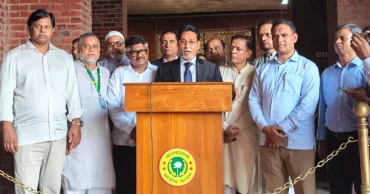
Chief Whip Nurul Islam Moni came up with the announcement at a briefing after a meeting of the ruling BNP’s parliamentary party at the Jatiya Sangsad Bhaban on Wednesday afternoon.
“We will vote in the presidential election on Thursday after 35 years, Inshallah. Voting will begin at 2pm and continue until 5pm,” he said.
The Chief Whip said it was jointly decided by the Election Commission and Parliament that live telecasts of parts of the voting process would be arranged.
He said a live telecast will begin five minutes before the start of voting, showing President, Speaker, Prime Minister, Leader of the Opposition and presidential candidate Mirza Fakhrul Islam Alamgir casting their votes.
The remaining proceedings will be recorded, while another live telecast will begin five minutes before the close of voting. The announcement of the election results will also be broadcast live.
“You will see a historic moment tomorrow. A new journey of democracy will begin,” Moni said.
He said the newly elected President will take the oath of office at Bangabhaban at 7:30pm on Friday.
The BNP parliamentary party meeting began at 4pm on the ninth floor of the Jatiya Sangsad Bhaban with Prime Minister and Leader of the House Tarique Rahman in the chair and ended at 4:40pm.
BNP presidential candidate Mirza Fakhrul Islam Alamgir was also present at the meeting.
Speaking about the upcoming election, the Chief Whip said the country was entering a new democratic journey under the leadership of Tarique Rahman.
“We fought and struggled for 17 years under the leadership of our leader Tarique Rahman. After that struggle, we were elected and came to power through a democratic process,” he said.
“We want to establish democracy and give it an institutional shape. The government and the opposition want to work inclusively to establish democracy in the country and continue its progress,” the Chief Whip added.
Moni said the presidential election would allow people to witness once again how voting takes place in the country.
Mirza Fakhrul, nominated by the BNP and like-minded parties, will contest against retired Colonel Oli Ahmed, the candidate of an 11-party alliance including Jamaat-e-Islami.
A total of 349 Members of Parliament are eligible to vote in the election.
The presidential election is set to feature more than one candidate for the first time in 35 years.
The last presidential election involving voting in Parliament was held on October 8, 1991, when BNP candidate Abdur Rahman Biswas defeated Awami League candidate Badrul Haider Chowdhury to become the country’s 11th President.
Abdur Rahman Biswas secured 172 votes, while Badrul Haider Chowdhury received 92.
Whips Ruhul Quddus Talukdar Dulu, Mia Nuruddin Ahmed Apu, ABM Ashraf Uddin Nizan and GK Gaus, along with MPs Amirul Islam Alim and Khandaker Abu Ashfaque and Prime Minister’s Deputy Press Secretary Jahidul Islam Rony, among others, were present at the briefing.
1 month ago
Voting in presidential election Thursday
Voting in the presidential election is set to be held on Thursday after 35 years, with Members of Parliament to elect the country’s 23rd President through an open ballot.
The balloting will be held in the session chamber of the Jatiya Sangsad from 2pm to 5pm. A total of 349 MPs are eligible to cast their votes.
Bangabhaban is making preparations to arrange the oath-taking ceremony for the newly elected President on Friday evening.
BNP candidate Mirza Fakhrul Islam Alamgir and opposition Jamaat-led 11-party alliance contender Col (retd) Oli Ahmad are contesting the election.
With BNP holding an absolute majority in Parliament, Mirza Fakhrul Islam Alamgir is widely expected to be elected as the country’s 23rd President.
Under Article 70 of the Constitution, lawmakers, elected as candidates of political parties, will lose their seats if they vote for any candidate in this presidential election, going against their respective party’s decision.
The last contested presidential election was held on October 8, 1991, when BNP candidate Abdur Rahman Biswas defeated Awami League candidate Badrul Haider Chowdhury to become the country’s 11th President.
Abdur Rahman Biswas secured 172 votes, while Badrul Haider Chowdhury received 92.
Since then, no voting was required in the successive presidential elections as a single candidate was elected uncontested in each election.
Chief Election Commissioner AMM Nasir Uddin, who is also the election officer for the presidential election, on Wednesday described the election as historic as it requires voting after 35 years since the competitive presidential polls in 1991.
Addressing a pre-election press conference in the city’s Nirbachan Bhaban, he also expressed optimism that they will be able to conduct the polls in a nice manner. “We don't have any sort of deficit in our preparation,” he said.
The CEC said the election result will be published in the official gazette on Thursday, hours after the balloting.
Chief Whip Nurul Islam Moni on Wednesday also said Bangladesh is going to witness a historic moment with the voting in the presidential election on Thursday afternoon.
“We will vote in the presidential election on Thursday after 35 years, Inshallah. Voting will begin at 2pm and continue until 5pm,” he said.
He also said the oath-taking ceremony of the newly elected President is scheduled for Friday evening at Bangabhaban.
The Chief Whip came up with the announcement at a briefing after a meeting of the ruling BNP’s parliamentary party at the Jatiya Sangsad Bhaban on Wednesday afternoon.
The BNP parliamentary party meeting began at 4pm on the ninth floor of the Jatiya Sangsad Bhaban with Prime Minister and Leader of the House Tarique Rahman in the chair and ended at 4:40pm.
BNP presidential candidate Mirza Fakhrul Islam Alamgir was also present at the meeting.
The Chief Whip said there will be live telecasts of parts of the voting process as per a joint decision taken by the Election Commission and Parliament.
He said a live telecast will begin five minutes before the start of voting, showing the President, the Speaker, the Prime Minister, the Leader of the Opposition, and presidential candidate Mirza Fakhrul Islam Alamgir casting their votes.
The remaining proceedings will be recorded, while another live telecast will begin five minutes before the close of voting. The announcement of the election results will also be broadcast live.
“You will see a historic moment tomorrow. A new journey of democracy will begin,” Moni said.
He said the newly elected President will take the oath of office at Bangabhaban at 7:30pm on Friday.
Speaking about the upcoming election, the Chief Whip said the country was entering a new democratic journey under the leadership of Tarique Rahman.
He said the presidential election would allow people to witness once again how voting takes place in the country.
The Election Commission on August 6 announced the schedule for the presidential election, fixing August 20 for voting.
Just before the balloting in Parliament on Thursday afternoon, the CEC will brief the lawmakers, the electors on the voting procedure.
Each ballot paper will have two parts — a counterfoil and the ballot portion. The counterfoil will contain three pieces of information and a blank space: the serial number, the name of the MP and the divisional number (constituency number) provided by the Jatiya Sangsad Secretariat.
An MP will sign his or her full name in the designated space before receiving the ballot paper.
The names of the contesting candidates will be printed on the right-hand side of the ballot paper in alphabetical order in Bangla. There will be a designated space beside each candidate’s name where MPs will sign their full names and cast their votes.
The MPs will then deposit their ballots into the designated ballot box. Ballots will be accepted until 5:00pm, after which counting will begin.
A total of 349 MPs are voters in the presidential election as the Chattogram-4 parliamentary seat remains vacant.
The voters include 247 BNP lawmakers, 77 Jamaat MPs, eight NCP lawmakers, eight independent MPs, three Bangladesh Khilafat Majlis MPs, and one each from Bangladesh Jatiya Party-BJP, Gono Odhikar Parishad, Ganosamhati Andolon, Khilafat Majlis, Islami Andolan Bangladesh and Jatiya Ganatantrik Party.
BJP, Gono Odhikar Parishad and Ganosamhati Andolon are allies of the ruling BNP. The ruling camp has 250 lawmakers who are expected to vote for Mirza Fakhrul Islam Alamgir in this presidential election.
On the other hand, Jamaat, NCP, Bangladesh Khilafat Majlis, Khilafat Majlis and Jatiya Ganatantrik Party are components of the 11-party opposition alliance. The opposition camp has 90 lawmakers in Parliament, who are expected to vote for Oli Ahmad.
On July 24 last, Mohammed Shahabuddin resigned as President and Speaker Hafiz Uddin Ahmad took charge as the acting President.
According to Article 123(2) of the Constitution, an election to fill the vacant office of the President must be held within 90 days of the post becoming vacant due to resignation.
1 month ago
No deficit in preparation for Thursday’s Presidential election: CEC
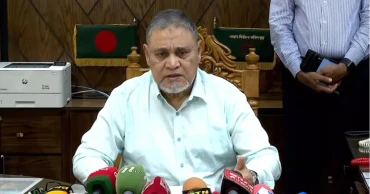
Describing the Presidential election as a historic one, Chief Election Commissioner AMM Nasir Uddin on Wednesday expressed optimism that they will be able to conduct the polls in a nice manner.
“We don't have any sort of deficit in our preparation,” he said at a press conference in the city's Nirbachan Bhaban, a day before the balloting scheduled to be held Thursday.
“We expect we will be able to conduct this historical election in a nice manner,” he said.
Nasir Uddin said the election result will be published in the official gazette on Thursday, hours after the balloting.
The voting will be held in the session chamber of the Jatiya Sangsad from 2pm to 5pm on Thursday.
BNP candidate Mirza Fakhrul Islam Alamgir and the opposition Jamaat-led 11-party alliance contender Col (retd) Oli Ahmad are running in the election.
A total of 249 Members of Parliament are eligible to cast their votes.
With BNP holding an absolute majority in parliament, Mirza Fakhrul Islam Alamgir is widely expected to be elected as the country’s 23rd President.
The voting is being required in the presidential election after nearly 35 years since 1991 in the country.
1 month ago
HC upholds Article 70, clears presidential election path
The High Court on Tuesday dismissed a writ petition challenging the validity of Article 70 of the Constitution, clearing the path for the presidential election scheduled for August 20.
The High Court bench of Justice Khizir Ahmed Choudhury and Justice AFM Saiful Karim passed the order.
Attorney General Md Ruhul Quddus Kazal and Deputy Attorney General Mamun Chowdhury represented the state, while Advocate Md Eunus Ali Akond appeared for the petitioner.
Talking to reporters, Mamun said the High Court dismissed the writ petition outright, meaning Article 70 remains in force and there is no legal bar to holding the presidential election on August 20.
He said the court also observed that a committee has already been formed to propose constitutional amendments and that the issue can be considered by Parliament.
Eunus filed the writ petition on August 13, challenging the validity of Article 70 and seeking suspension of the presidential election schedule announced by the Election Commission.
The hearing concluded on Monday, and the court dismissed the petition on Tuesday.
The Election Commission announced the schedule for the presidential election on August 6, fixing August 20 for voting.
Article 70 of the Constitution provides for the vacation of a lawmaker's seat if they resign from the political party that nominated them or vote against the party in Parliament.
The writ petition sought a rule asking why Article 70 should not be declared inconsistent with the Constitution and why the EC's August 6 election schedule should not be declared without legal authority.
It also sought a stay on the election schedule until disposal of the writ.
1 month ago
CEC convenes MPs’ meeting for presidential voting on Aug 20
Chief Election Commissioner (CEC) AMM Nasir Uddin has convened a meeting of the Members of Parliament (MPs) at the Jatiya Sangsad Bhaban for August 20 for voting in the presidential election.
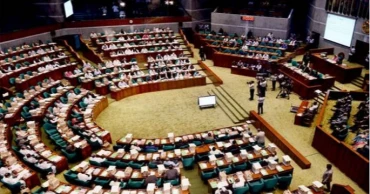
The voting will be held from 2:00pm to 5:00pm in the Parliament session chamber, according to a gazette notification issued by the Election Commission on Tuesday.
The CEC, exercising powers vested under the Presidential Election Act, 1991, and in consultation with the Speaker, has convened the meeting of MPs.
A total of 349 MPs are voters in the presidential election.
According to Article 5(3) of the Presidential Election Act, if Parliament is not in session, the CEC, in consultation with the Speaker, must convene a meeting of MPs at least seven days before the election.
According to the presidential schedule announced by the EC on August 6, the nomination papers can be submitted from 10:00am to 4:00pm on August 13.
Scrutiny of nomination papers will be held on August 16, while the last date for withdrawal of candidature is August 18.
The 11-party alliance, led by opposition Bangladesh Jamaat-e-Islami, has already nominated Liberal Democratic Party Chairman Col (retd) Oli Ahmad as its candidate for the presidential election.
However, the ruling Bangladesh Nationalist Party (BNP) has not yet announced its presidential candidate.
Both camps, meanwhile, collected nomination papers for their respective candidates.
This is going to be the first presidential election involving more than one candidate in 35 years.
1 month ago

Bangladesh’s total voter count rises to 12.86 crore
The total number of registered voters in Bangladesh has reached 128,632,555 as of July 31, said the Election Commission on Sunday.
“The number of voters has increased by 309,315 between May 14 and July 31,” EC Senior Secretary Akhtar Ahmed told reporters at the Election Commission building in Agargaon.
The EC last updated the voter list in May when the total number of registered voters stood at 128,323,240.
The latest update was carried out ahead of the local government elections, with the EC allowing voter registration until July 31.
Voters registered by that date will be eligible to cast their ballots in the upcoming local government elections.
Akhtar said that if the schedule for the local government elections is changed or the commission takes any further decision regarding voter registration, the changes would be incorporated through a supplementary voter list.
He also said the EC has sent draft electoral codes of conduct for the city corporation, district council, upazila council, municipality and union council elections to the Ministry of Law.
“The recommendations for amendments to the law have not yet been sent. The document is being processed, and once it is completed, it will also be sent,” he said.
Meanwhile, the distribution of nomination forms for the presidential election has begun.
According to the EC senior secretary, a delegation from the Bangladesh Nationalist Party (BNP) visited the commission on Sunday and collected two nomination forms.
“No other party has collected nomination forms from us so far,” he said.
1 month ago