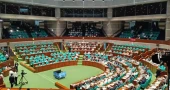
Parliament
JS body recommends authentic lists of martyred freedom fighters, freedom fighters
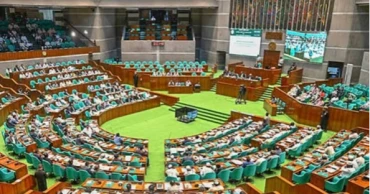
The parliamentary standing committee on the Ministry of Liberation War Affairs on Monday recommended that the ministry prepare authentic lists of the martyred freedom fighters and the freedom fighters.
It also recommended taking necessary measures to arrange treatment abroad, on a priority and phased basis, for injured July warriors.
The parliamentary standing committee on the Ministry of Liberation War Affairs made the recommendations at its second meeting, chaired by committee chairman Md Manirul Haque Chowdhury at the Jatiya Sangsad Bhaban, according to a press release issued by the Jatiya Sangsad Secretariat.
The committee confirmed the minutes of its previous meeting.
The meeting also held detailed discussions on important activities undertaken by the ministry over the past six months and progress in their implementation.
The committee recommended that the ministry prepare authentic lists of those who were martyred in the Liberation War and genuine freedom fighters and prepare reports on them.
It also recommended taking necessary measures to ensure that genuine freedom fighters receive necessary benefits and facilities on a priority basis through the Muktijoddha Kalyan Trust.
The committee advised taking necessary steps to keep the Muktijoddha Sangsad functional so that it can play an active role in national politics.
It advised taking appropriate measures to present the accurate history of the Liberation War and remain attentive to ensuring that freedom fighters and July warriors receive the respect they deserve.
Members of the committee and Minister for Liberation War Affairs Ahmed Aazam Khan, State Minister for Liberation War Affairs Ishraque Hossain, Md Abdul Hannan MP and Rokeya Begum MP, attended the meeting.
The secretary of the Ministry of Liberation War Affairs, senior officials of the Directorate of July Mass Uprising, the concerned ministry and the Jatiya Sangsad Secretariat were also present.
1 day ago
JS Standing Committee to recommend stopping banks from financing illegal brick kilns
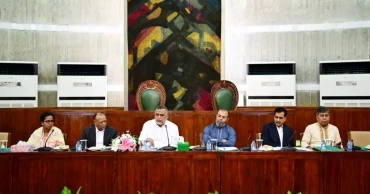
The Parliamentary Standing Committee on the Ministry of Environment, Forest and Climate Change has recommended stopping bank financing for illegal brick kilns to curb air pollution and environmental degradation.
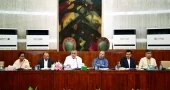
The recommendation was made at the first meeting of the committee of the 13th Jatiya Sangsad, held at the Cabinet Room of the Parliament complex on Saturday, with committee chairman and Whip G K Gouse presiding.
The committee decided to send a letter to Bangladesh Bank regarding the recommendation to stop financing illegal brick kilns.
The committee also instructed the Department of Environment to prepare a list of all legal and illegal brick kilns across the country.
It recommended using blocks instead of traditional bricks in government infrastructure projects under construction.
The meeting held a detailed discussion on measures to control environmental pollution and instructed the ministry to exercise caution so that its decisions do not cause environmental damage.
The committee asked the ministry to present detailed information on 101 projects being implemented under the Climate Change Trust at its next meeting.
It also sought information on how funds allocated to the ministry had been spent over the past 16 years.
The committee members called for coordinated efforts to implement the current government’s election manifesto.
The meeting also reviewed in detail the spending plan for the ministry’s budget allocation for the current fiscal year.
The acting secretary of the Ministry of Environment, Forest and Climate Change, additional secretary, senior officials of the Department of Environment and the Forest Department, and relevant senior officials of the Parliament Secretariat attended the meeting.
10 days ago

Parliamentary body concerned over indiscriminate use of pesticides on crops, soil
The Parliamentary Standing Committee on the Ministry of Agriculture on Wednesday expressed concern over the indiscriminate use of pesticides on soil and crops in the country.
The committee discussed the need to move away from the conventional use of fertilisers and pesticides, and increase the use of organic fertilisers instead of chemical fertilisers to maintain soil quality.
The issues were discussed at the maiden meeting of the committee held at the Jatiya Sangsad Bhaban with its Chairman Md Shahadat Hossain in the chair.
Agriculture Minister Mohammed Aminur Rashid attended the meeting at the invitation of the committee chairman.
In his remarks, the minister expressed optimism about reducing the country's dependence on imports of ginger, chillies, tomato, onion and various other agricultural and agro-based products by increasing domestic production and making the sector export-oriented.
He also said the current government is the first to start working to maintain soil quality.
Meanwhile, the Ministry of Agriculture informed the meeting that more fertiliser has been supplied to farmers at the field level this year compared to previous years.
The minister said efforts were made to bring greater transparency into the appointment of fertiliser dealers and, to this end, the Fertiliser Dealer Appointment and Fertiliser Distribution Guidelines 2026 were issued.
The meeting also discussed strengthening the monitoring system for fertiliser distribution, ensuring farmer-friendly fertiliser management, and establishing a flower research centre and a soil research centre at Godkhali in Jashore.
Other issues that came up for discussion included cotton production on abandoned land in hilly and plain areas, cultivation of maize, sweet potato and groundnut on char lands, use of solar power in agriculture, sending farmers abroad for advanced training when necessary, ensuring fair prices for jute at the farmer level, and exports of jute and jute products.
Committee Chairman Shahadat Hossain said many of the government’s successes depend on the activities of the Ministry of Agriculture.
He expressed hope that the ministry will work more dynamically and called upon all concerned to work together to build a sustainable and environment-friendly agricultural system and enhance the government's image.
Committee members Md Shohidul Islam, Md Mostafizur Rahman, Md Rokon Uddin Babul, Md Mujibur Rahman Choudhury, Sabira Sultana, Md Golam Rasul and Md Abdul Bari Sarder attended the meeting.
The agriculture secretary, heads of the ministry’s subordinate departments and agencies were present.
13 days ago
Shafiqur vows constructive opposition, says govt mistakes will face resistance
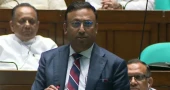
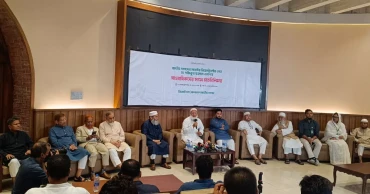
Leader of the Opposition Dr Shafiqur Rahman on Thursday said they want to play a positive and constructive role in Parliament and will not act as a conventional opposition.
“We want to play a positive role as a constructive opposition. We do not want to be a conventional opposition. If the government makes mistakes, we will not only protest but also forge resistance in some cases,” he said.
Shafiqur made the remarks while addressing a view-exchange meeting with reporters at the LD Hall of Jatiya Sangsad Bhaban following the prorogation of the third session of the 13th Parliament.
He said the government must implement the commitments made to the people regarding the reforms and the referendum.
“Two elections — the general election and the referendum — were held simultaneously on a single day. But they [the government] have backtracked on the promises they made before the nation,” the opposition leader said, adding that they will not leave this demand as long as we are in this Parliament.
He also questioned why the BNP is not accepting the demand despite the party having faced significant repression and torture in the past. “If these reform initiatives are implemented, no political party will be able to establish an authoritarian rule in the future,” he said.
Shafiqur said several laws were passed one after another during the session, but the opposition’s logical suggestions were not properly considered.
SRB is just a change of bottle
Commenting on the Special Response Battalion (SRB) Bill 2026 passed by Parliament on Thursday, the opposition leader said there is no fundamental difference between the proposed SRB and the existing Rapid Action Battalion (RAB).
“There is no difference between SRB and the existing RAB. It is just a change of bottle,” he said.
Shafiqur alleged that the government hurriedly passed the SRB Bill without adequately considering suggestions from the opposition. “The government did not accept any logical suggestion made by the opposition (about the bill),” he said.
He also criticised the passage of the Transfer of Property (Amendment) Bill, 2026, claiming that law goes against the Holy Quran and Sunnah.
Nahid criticises committee formation
Opposition Chief Whip Nahid Islam said the parliamentary standing committees were not formed in line with the July Charter.
He said committee chairmanships were not allocated to the opposition in proportion to its strength in Parliament.
Nahid also alleged that BNP women MPs have been assigned to oversee development activities in constituencies where opposition MPs were elected.
He said the opposition believes the government has failed to address the ongoing gas and power crisis as it could not provide immediate solutions to the problems.
19 days ago
Shafiqur calls for visible drive to eradicate drugs, illegal arms
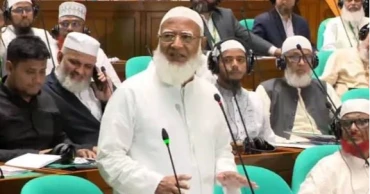
Leader of the Opposition Dr Shafiqur Rahman on Thursday called for a visible drive to eradicate drugs and illegal arms from the country, describing them as serious concerns for the nation.
“Drugs and illegal arms — we are very concerned about these two. We would call for their eradication, not merely control. The initiative to eradicate them should be visible,” he said.
The opposition leader made the remarks while speaking in the House ahead of the prorogation of the third session of the current 13th Parliament.
“There should not be any trace of them (drugs and arms). Those who are being ruined are our children. It is not only a problem for individuals and families; it is a problem for the entire nation,” he said.
Bangladesh will never accept subordination to any country
Referring to Bangladesh’s relations with neighbouring countries, Shafiqur, also Bangladesh Jamaat-e-Islami ameer, said Bangladesh wants a sincere relationship with its neighbours, but such a relationship requires goodwill from both sides. “If we truly want to be sincere neighbours, both sides must express their goodwill,” he said.
He said the people of Bangladesh no longer want to see bodies like Felani’s hanging from barbed-wire fences along the border, nor do they want Bangladeshi citizens to be picked up and killed indiscriminately at the border.
The opposition leader said Bangladesh could no longer tolerate the suffering of people in northern Bangladesh caused by the unresolved Teesta water-sharing issue.
He urged the government to pursue a strong and independent foreign policy in dealing with neighbouring countries, including over the renewal of water-sharing agreements.
“There will be discussions, there will be struggles, but they will be on an equal footing. Bangladesh will never accept subordination to anyone. That chapter is closed. It will not be reopened. We have to stand firm on this,” Shafiqur said.
Calls for implementation of referendum verdict
The opposition leader said the parliamentary elections and referendum were held simultaneously on February 12 this year, but the referendum result has yet to be implemented.
He claimed that 68.2 percent of voters voted “Yes” in the referendum and said the Prime Minister also supported a “Yes” vote during the election campaign.
“The reforms should be completed, as we all agreed that fascist rule cannot return to our country. I think time has not yet run out,” Shafiqur said.
He urged the government to respect the people’s verdict and implement their aspirations.
The Jamaat chief said people should be selected for appropriate positions based on merit, skills, commitment and integrity.
“We want to see it in this changed Bangladesh. The problem is visible everywhere,” he said.
He said the government has also announced that a merit-based society will be built, but such a society was not visible in many areas.
Corruption must be eradicated
Shafiqur said corruption has spread throughout society and warned that no development plan will succeed unless it is brought under control.
“People tell us, and surely tell you too, that the level of corruption has increased compared to before. If we cannot rein it in, no matter how many plans we make, none of them will ultimately see success,” he said.
The opposition leader said the industrial and agricultural sectors are facing threats due to the power and fertiliser crises, raising concern among the public.
He urged the government to prioritise measures to protect industries and agriculture, even if it requires reallocating funds from other areas.
Shafiqur also urged the government not to arrange designated sitting rooms for MPs at upazila parishads in their respective constituencies.
19 days ago
Speaker urges MPs to uphold parliamentary norms and decorum
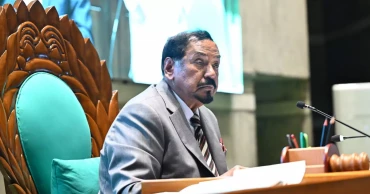
Speaker Hafiz Uddin Ahmad on Thursday urged all members of parliament to uphold parliamentary norms and traditions and avoid abusive language, stressing that differences of opinion are a normal feature of a democratic parliamentary system.
“Differences of opinion are a normal feature of a democratic parliamentary system. Alongside expressing different views, active participation in parliamentary proceedings and maintaining an environment of mutual respect and cordiality enrich democratic practices,” he said while closing the third session of the 13th Parliament.
The Speaker made the remarks shortly after Prime Minister and Leader of the House Tarique Rahman called on all sides to shun a culture of abusive language in parliament.
“I hope all honourable members will uphold parliamentary rules and traditions in the coming sessions,” Hafiz Uddin Ahmad said.
He urged MPs to play responsible roles by keeping the interests of the country above all else.
The third session of the 13th Parliament began on Aug 27 and held nine sittings, the Speaker said.
During the session, six bills were introduced and six bills were passed. Besides legislative business, 35 parliamentary committees were formed, while one special committee was reconstituted.
Members also submitted notices on various important issues under different rules of parliamentary procedure, and the notices were disposed of in accordance with the rules.
Some 144 questions were submitted for the Prime Minister, of which he answered 15.
A total of 2,676 questions were submitted for answers by ministers of different ministries, of which ministers answered 1,678 during the session, the Speaker said.
Hafiz Uddin Ahmad thanked the Prime Minister and Leader of the House, the Leader of the Opposition, cabinet members, chief whips and all MPs for their cooperation in conducting parliamentary proceedings.
He also expressed gratitude to Deputy Speaker Barrister Kayser Kamal and members of the panel of chairpersons for their wisdom, experience and cooperation in conducting the session smoothly.
The Speaker thanked officials and employees of the Parliament Secretariat, government ministries, divisions and offices, law enforcement agencies, doctors, Fire Service, Public Works Department, power and telephone service providers for their support.
He also thanked journalists and representatives of national dailies, news agencies, Bangladesh Betar, Sangsad Bangladesh Television and private television channels for covering parliamentary proceedings.
“Maintaining mutual respect, tolerance and cordiality, and respecting parliamentary rules and procedures, we will strive to reflect the hopes and aspirations of the people,” he said.
The Speaker then read out the order of President Mirza Fakhrul Islam Alamgir at about 8:23pm regarding the conclusion of the third session of the 13th Parliament.
19 days ago
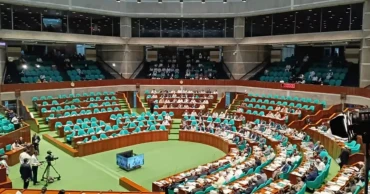
All 50 parliamentary committees formed
Four more parliamentary committees were constituted on Thursday, completing the formation of all 50 parliamentary committees of the current 13th Parliament.
The four newly constituted committees cover the Ministry of Defence, the Ministry of Power, Energy and Mineral Resources, the Ministry of Public Administration and Public Undertakings.
Chief Whip Nurul Islam Moni proposed the formation of the four committees and reconstitution of several existing ones. The House approved the proposals by voice vote.
All four newly formed committees are chaired by BNP lawmakers.
Md Ashraf Uddin (Narsingdi-5) was made chairman of the Parliamentary Standing Committee on the Ministry of Defence, while Miah Nuruddin Ahmad Apu (Shariatpur-3) chairman of the Parliamentary Standing Committee on the Ministry of Power, Energy and Mineral Resources.
Sayeed Ahmed (Shariatpur-1) was made chairman of the Parliamentary Standing Committee on the Ministry of Public Administration, while Chief Whip Nurul Islam Moni (Barguna-2) was made chairman of the Parliamentary Standing Committee on Public Undertakings.
Several existing parliamentary committees were also reconstituted without changing their chairmen.
The reconstituted committees are those on Private Members’ Bills and Resolutions, the Ministry of Chittagong Hill Tracts Affairs, the Ministry of Agriculture, the Ministry of Women and Children Affairs, the Ministry of Youth and Sports, the Ministry of Education, and the Ministry of Foreign Affairs.
There are 50 parliamentary committees in the Jatiya Sangsad, including 39 standing committees on ministries and 11 subject-based committees.
All the parliamentary committees except the Public Accounts Committee, headed by Syed Abdullah Mohammed Taher, are chaired by ruling party lawmakers.
19 days ago
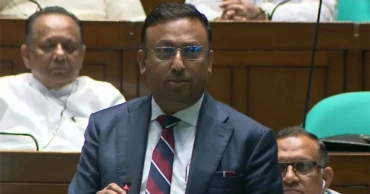
Rohingyas, push-ins dominate as Humaiun Kobir takes questions in JS
State Minister for Foreign Affairs Humaiun Kobir on Thursday accused the previous “fascist” government of limiting its diplomatic efforts for Rohingya repatriation to “showmanship” instead of taking effective initiatives, saying this prolonged and complicated the crisis.
He made the remarks in reply to a tabled question from reserved-seat MP Selina Sultana during question-answer session in Parliament.
The state minister said the government is committed to finding a sustainable solution to the Rohingya crisis and ensuring the safe, voluntary and sustainable return of the displaced Rohingyas to their homeland.
“The crisis was created by Myanmar and its sustainable solution also lies in Myanmar,” he said.
He said the government is working for an early and sustainable solution through strong diplomatic initiatives at bilateral, regional and international levels.
“Taking all parties along, we will further strengthen our diplomatic efforts towards this goal,” he said.
State Minister for Foreign Affairs Humaiun Kobir said Bangladesh is giving the Rohingya issue the highest priority at the United Nations and other international forums to bring the crisis to the centre of global attention.
High-level communications with friendly countries, donor states and international organisations are continuing, he said, adding that the government is also considering Track 1.5 and Track 2 diplomacy alongside conventional diplomacy.
He said a National Action Strategy Formulation Committee on Rohingya Affairs, headed by the Prime Minister, and a committee on peace, discipline and security in the camps, led by the Home Minister, have recently been formed.
The government is organising a high-level event on the Rohingya issue during the upcoming 81st session of the United Nations General Assembly, he said.
“We hope the Prime Minister will participate in the event as the keynote speaker. Through this, international support for resolving the Rohingya crisis and repatriation will be consolidated,” the state minister said.
Replying to a question from Satkhira-2 MP Muhammad Abdul Khaleque, Khalilur Rahman said the government is sincere about improving bilateral relations with India.
“However, it must be based on equal footing,” he said.
The government is working through discussions to ensure the safety and security of Bangladeshi people living along the border and to increase legal trade and commerce, he said.
Replying to a question from reserved-seat MP Nawaz Halima Arli on push-ins along the border, the state minister said the government takes any push-in or attempt to push people into Bangladesh very seriously.
The Foreign Ministry has conveyed Bangladesh’s deep concern to the Indian government and has lodged strong formal protests over such incidents, he said.
“Giving the highest priority to the country’s sovereignty, territorial integrity and national interests, our government is firmly taking all necessary measures to prevent push-ins along the border,” he said.
Replying to reserved-seat MP Nipun Roy Chowdhury, the state minister said Bangladesh missions abroad are working under specific economic roadmaps to attract foreign direct investment to special economic zones.
Under the government’s medium-term economic strategy, the target is to raise FDI to 2.7 percent of GDP and overall investment to 40 percent by fiscal 2030-31, he said.
Replying to a question from Jamalpur-3 MP Mostafizur Rahman Babul, State Minister for Foreign Affairs Humaiun Kobir said Bangladesh currently operates 86 diplomatic missions in 63 countries.
Responding to Kishoreganj-1 MP Mohammad Mazharul Islam, he said the activities of Bangladesh missions had been weak in many cases under the previous government.
“After the present government assumed office, the missions have been brought under an accountable framework of activities,” he said.
On nuclear power, replying to Kishoreganj-2 MP Md Jalal Uddin, the foreign minister said nuclear power technology is complex, costly and linked to strategic security issues.
He said Bangladesh is moving towards acquiring the capacity to generate nuclear power through the Rooppur Nuclear Power Plant being implemented with Russian assistance.
“Unit-1 is expected to begin operations in December this year,” he said.
He said the government is examining the possibility of installing Small Modular Reactor (SMR) technology for the peaceful use of nuclear energy and exploring opportunities to strengthen the country’s energy security.
Initial contacts are being made with potential partner countries, although discussions have not yet reached the final stage, he said.
Replying to a question from Jashore-5 MP Gazi Enamul Haque, Humaiun Kobir said information from Bangladesh missions showed that around 10,066 Bangladeshi nationals are currently imprisoned in different countries.
He said Bangladeshi nationals arrested and imprisoned abroad remain subject to the legal processes of the respective countries.
“Our diplomatic efforts have to continue while respecting the legal processes of the countries concerned,” he said.
19 days ago
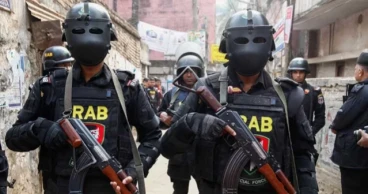
Parliament passes SRB Bill, paving way for abolition of RAB
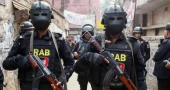
Parliament on Thursday passed the Special Response Battalion (SRB) Bill, 2026, paving the way for the abolition of the Rapid Action Battalion (RAB) and its replacement with a specialised police unit despite strong objections from opposition lawmakers.
The bill seeks to establish the SRB by removing the provisions relating to RAB from the Armed Police Battalions Ordinance, 2003, which provided the legal basis for the formation of RAB.
Bill proposing creation of SRB replacing RAB placed in parliament
RAB was formed in 2004 under the amended ordinance and has faced criticism over allegations of human rights violations and enforced disappearances.
The government is now repealing the ordinance and enacting separate laws for the SRB and the Armed Police Battalion (APBn).
The SRB Bill was placed in Parliament on September 3. Opposition lawmakers had then objected to its introduction, arguing that RAB was effectively being reconstituted under a new name.
They also submitted notes of dissent on eight issues during scrutiny of the bill by the parliamentary committee.
Home Minister Salahuddin Ahmed moved the bill for immediate consideration. Opposition members called for sending it to a select committee and for public opinion to be sought before its passage.
Leader of the Opposition Shafiqur Rahman, Jamaat-e-Islami lawmakers Md Ruhul Amin, Md Rashedul Islam Rashed, Nurul Islam and Muhammad Nazibur Rahman, and independent MP Sk Mozibur Rahman Iqbal took part in the discussion.
The bill provides for an SRB under the police force. The unit will be formed by deploying or appointing, on deputation, police personnel, members of law enforcement agencies and a specified number of officers, armed personnel or employees, according to government requirements.
The rank structure, recruitment procedures and service conditions of SRB personnel will be determined by rules. The unit will have its own flag, emblem and prescribed uniform.
The director general of the SRB will be a serving police officer holding a rank no lower than additional inspector general of police.
Under the bill, RAB’s manpower, orders, powers, authority, existing facilities, funds, cash and bank balances, liabilities, contracts, movable and immovable property, registers, records and other documents will be transferred to the SRB.
Until rules are framed under the new law, departmental disciplinary proceedings and court proceedings relating to RAB under the 2005 rules will remain in force.
The SRB will have powers to investigate criminal offences, conduct searches, make arrests and seize property. The bill also provides for detention facilities, stores and interrogation rooms under the unit.
It also provides for a complaint redress committee to deal with complaints from citizens and internal grievances of unit members. An additional director general of the unit will chair the committee.
Opposition lawmaker Nurul Islam said people remained fearful of RAB because of allegations of human rights violations and its alleged involvement in enforced disappearances.
He questioned the decision to pass the bill within only four working days without adequate consultation and called for discussions with stakeholders.
The opposition MP also questioned whether the proposed complaint redress committee will have sufficient authority to address allegations and proposed that it be headed by a former judge of the Supreme Court.
He also said the bill did not clearly specify where detained people will be kept and called for all SRB facilities and offices to be gazetted.
Nazibur Rahman referred to the seven murders in Narayanganj in 2014 and said former Prime Minister Khaleda Zia had called for RAB to be abolished after the incident.
He said she later described RAB as a “cancer” and that the BNP formally recommended its abolition in 2024.
Nazibur Rahman said the United Nations human rights mechanism, Human Rights Watch and the Commission of Inquiry into Enforced Disappearances also recommended the abolition of RAB.
He said transferring RAB’s manpower, offices, powers, documents, assets, contracts and liabilities to the SRB meant that “only the signboard is being changed”.
Shafiqur Rahman said the abolition of RAB had been a demand of various political parties and human rights organisations, but nobody had demanded the creation of another force of the same nature.
He said the proposed law appears to retain RAB’s personnel, facilities, logistics and manpower while changing only its name.
The opposition leader urged the government to withdraw the bill and first establish why a specialised force of this nature is necessary.
Replying to the opposition, Home Minister Salahuddin Ahmed said abolishing RAB was a BNP commitment and that delaying the bill will mean allowing RAB to continue to exist.
He said the bill was discussed by the parliamentary committee and has also been available on the ministry’s website for a long period for public feedback.
The minister said the complaint redress committee will deal with departmental complaints against members of the unit.
He said RAB will be abolished once the law is passed and a new battalion called the SRB will subsequently be established.
Salahuddin said the assets and equipment currently held by RAB have to be transferred somewhere because they are state property.
He said transferring them to the new organisation will avoid unnecessary fresh procurement.
APBN Bill also passed
After passing the SRB Bill, Parliament passed the Armed Police Battalions (APBn) Bill, 2026, repealing the Armed Police Battalions Ordinance.
The bill provides for APBn units under the police force, including the Special Security and Protection Battalion, hill battalions, airport battalions and any other battalions specified by the government.
The proposed law gives APBn powers to investigate criminal offences and, subject to the Code of Criminal Procedure and other applicable laws, to enter premises, conduct searches, seize property and make arrests.
The bill also bars APBn members from directly or indirectly publishing, or assisting in publishing, information or documents in electronic media or newspapers without prior approval from the competent authorities.
The APBn Bill was passed by voice vote after opposition proposals for sending it to a select committee and seeking public opinion were disposed of.
19 days ago
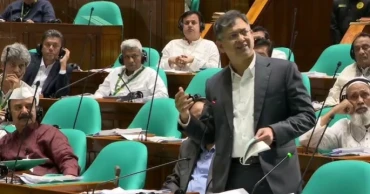
Project being redesigned to bring entire Dhaka city under CCTV monitoring system: Home Minister
Home Minister Salahuddin Ahmed on Thursday informed Parliament that the government is redesigning the Development Project Proposal (DPP) of a project aimed at bringing the entire Dhaka city under a CCTV monitoring system.
“Following the decisions of the scrutiny committee meeting, the DPP of the project is currently being restructured. If the project is approved by the Executive Committee of the National Economic Council (ECNEC), necessary initiatives can be taken to bring the entire Dhaka Metropolitan area under a CCTV monitoring system,” he said.
The minister made the remarks in reply to a tabled question from opposition Bangladesh Jamaat-e-Islami lawmaker Mohammed Kamal Hossain (Dhaka-5).
Earlier, Deputy Speaker Barrister Kayser Kamal tabled the question-and-answer session at the outset of Thursday’s sitting, which began at 3:00 pm.
The Home Minister said the project titled “Development of Smart Policing in DMP” remains included in the list of unapproved new projects under the Annual Development Programme (ADP), with the aim of bringing the entire Dhaka city under CCTV monitoring.
He said a scrutiny committee meeting on the preliminary DPP of the project was held on May 24, 2026, chaired by the Senior Secretary of the Ministry of Home Affairs.
Five new patrol vessels planned for Coast Guard:
In reply to another scripted question from independent lawmaker Sk. Mozibur Rahman Iqbal (Kishoreganj-5), Salahuddin Ahmed said the government has planned to build five new Inshore Patrol Vessel (IPV) ships at local dockyards using advanced technology to modernise the Bangladesh Coast Guard and enhance its operational capabilities.
“At the same time, activities are underway to establish the Coast Guard Research and Development Centre (CRDC) to enhance the force’s research and innovation capabilities,” he said.
He said activities are also underway to establish a Coastal Surveillance System (CSS) which would contribute to developing new technologies, addressing operational problems and enhancing technological capabilities.
BGB seizes 1.55cr yaba pills this year:
Responding to a scripted question from independent lawmaker Sultana Jesmin (Women’s Seat-49), the Home Minister said the Border Guard Bangladesh (BGB) has seized 1.55 crore yaba pills, 29 kilogrammes of crystal methamphetamine (ice), 9.5 kilogrammes of heroin, one kilogramme of opium, 14 bottles of LSD, 26,474 bottles of Phensedyl, 11,707 kilogrammes of cannabis and 57,469 bottles of foreign liquor and beer across the country during 2026.
He said 1,219 accused persons were also arrested during the drives in the current year.
“Activities are underway to seal the routes through which drugs enter the country along the India-Myanmar borders through modern surveillance using thermal cameras and drones,” Salahuddin said.
19 days ago