Health
Dengue death toll crosses 200 in Bangladesh this year
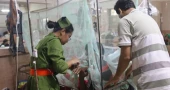
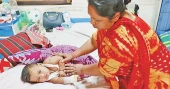
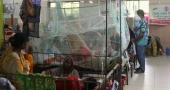
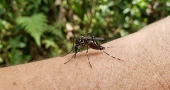
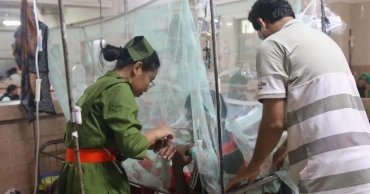
The dengue death toll in Bangladesh has reached 201, after six more people died of the viral disease in the 24 hours until 8:00am on Wednesday.
During the same period, 1,868 new dengue patients were hospitalised across the country, according to the Directorate General of Health Services (DGHS).
Of the six deaths, two each were reported in Chattogram division and Dhaka South City Corporation, while one each was reported in Barishal and Mymensingh divisions, it said.
Since January 1, a total of 67,367 dengue patients have been admitted to hospitals across the country, of whom 62,117 have recovered.
16 hours ago
11 more children die in 24 hrs with measles-like symptoms
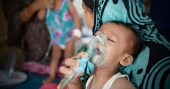
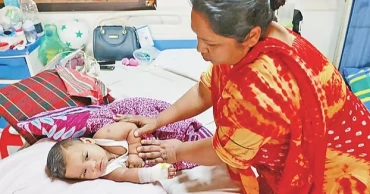
Eleven more children died with measles-like symptoms in 24 hours until 8:00am on Wednesday, bringing the country’s combined tally of confirmed and suspected measles-related deaths to 1076 this year.
The Directorate General of Health Services (DGHS) has classified all eleven latest fatalities as suspected measles deaths.
With these, the total number of suspected measles deaths has reached 975, while confirmed deaths from measles have remained the same at 101, it said.
A total of 1,157 new suspected measles cases were reported during the 24-hour period, bringing the cumulative number of suspected cases nationwide to 183,449.
Meanwhile, 113 new confirmed measles cases were recorded, bringing the total number of laboratory-confirmed infections to 20,851.
Since March 15 this year, a total of 162,048 patients with suspected measles have been hospitalised across the country, of whom 155,612 have recovered, according to DGHS data.
17 hours ago
Govt to reduce out-of-pocket healthcare costs: Zahid
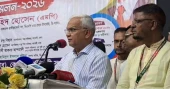
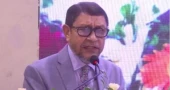
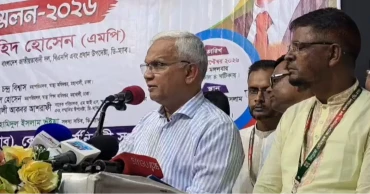
The government is working to reduce the financial burden of healthcare on ordinary people by strengthening public health services and ensuring adequate health workers at different levels, Social Welfare Minister Dr AZM Zahid Hossain said on Tuesday.
“If the government spends Tk 30 on healthcare, an ordinary person spends around Tk 70 from his or her own pocket,” he said, stressing the need to bring down such out-of-pocket expenditure.
The minister made these remarks at a discussion arranged by the Diploma Medical Association of Bangladesh (D-MAB) marking the platform's one year anniversary at the Jatiya Press Club in the capital.
He said the government allocated nearly Tk 69,000 crore for the health sector in the current budget but proper use of the allocation and sufficient manpower are both essential to improve healthcare access.
“If we want to reduce people's expenditure from their own pockets, we have to spend the money properly and also ensure that sufficient health workers are available at the village, union and upazila levels,” he said.
He also said strengthening primary and emergency healthcare would allow patients to receive timely treatment closer to home and potentially reduce the need for more expensive hospital-based care.
The minister said the government plans to expand healthcare capacity at the upazila level, including increasing the number of beds at upazila health complexes, which would require a large number of doctors, nurses, medical assistants, technologists and other health professionals.
Zahid also urged medical assistants to play a stronger role in disease prevention and public awareness particularly against dengue and measles.
“People should neither panic nor neglect dengue and they should not take unnecessary medicines,” Zahid said, urging health workers to provide proper guidance to patients.
He said the government also plans to recruit around one lakh health workers and assured D-MAB members that medical assistants would not be left out of the initiative.
Addressing the association's demands, Zahid said their calls for government recruitment, appropriate grading and career progression are legitimate and should be considered in line with their training and responsibilities.
He urged D-MAB to remain organised and combine its professional demands with greater responsibility toward public health.
1 day ago
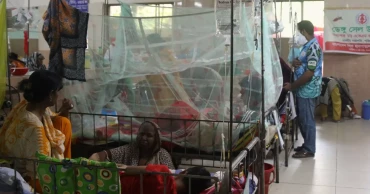
Dengue claims 5 more lives, 1,872 hospitalised in 24 hrs
Five more people died of dengue and 1,872 new patients were hospitalised across the country in the 24 hours until 8:00am on Tuesday.
With the latest fatalities, the dengue death toll has risen to 195 in the country this year, according to the Directorate General of Health Services (DGHS).
Among the deaths, two died in Rajshahi division while one each in Dhaka South and North City Corporation and Barishal division.
Since January 1 this year, a total of 65,499 dengue patients were admitted to hospitals across the country. Of them, 60,560 have recovered.
1 day ago
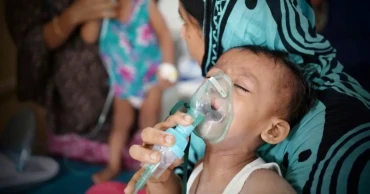
Measles: 6 more children die; death toll climbs to 1063
Six more children died with measles and measles-like symptoms in 24 hours until 8:00am on Monday, bringing the country’s combined tally of confirmed and suspected measles-related deaths to 1063 this year.
The Directorate General of Health Services (DGHS) has classified all six latest fatalities as suspected measles deaths.
With these, the total number of suspected measles deaths has reached 962, while confirmed deaths from measles have remained the same at 101, it said.
A total of 1,221 new suspected measles cases were reported during the 24-hour period, bringing the cumulative number of suspected cases nationwide to 181,035.
Meanwhile, 84 new confirmed measles cases were recorded, bringing the total number of laboratory-confirmed infections to 20,646.
Since March 15 this year, a total of 159,804 patients with suspected measles have been hospitalised across the country, of whom 153,448 have recovered, according to DGHS data.
Another special nationwide measles vaccination campaign targeting 34 lakh children aged six months to 59 months will begin on September 26 and continue until October 31, Health and Family Welfare Minister Sardar Md Sakhawat Husain said on Sunday.
The minister made the announcement at a press conference at Secretariat.
He said a measles vaccination campaign was conducted nationwide from April until May 20 with support from UNICEF, Gavi and the World Health Organisation, achieving 102-104 percent of the target of vaccinating 1.8 crore children.
A subsequent vitamin A campaign which covered 2.23 crore children, found that around 43 lakh children missed in the previous measles campaign.
Another 10 lakh children who turned six months old over the past three months have since become eligible, bringing the target for the new campaign to 34 lakh, said the minister.
2 days ago
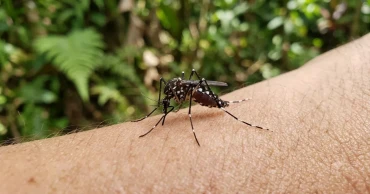
Dengue claims 6 more lives, 1,593 hospitalised in 24 hrs
Six more people died of dengue and 1,593 new patients were hospitalised across the country in the 24 hours until 8:00am on Sunday.
With the latest fatalities, the dengue death toll has risen to 184 in the country this year, according to the Directorate General of Health Services (DGHS).
Among the deaths, two each died in Chattogram and Khulna divisions while one each in Dhaka and Barishal divisions.
Since January 1 this year, a total of 61,972 dengue patients were admitted to hospitals across the country. Of them, 57,610 have recovered.
3 days ago
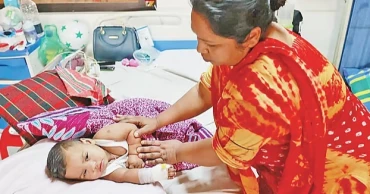
Bangladesh logs 4 more suspected measles deaths
Four more children died with measles-like symptoms in 24 hours until 8:00am on Sunday, bringing the country’s combined tally of confirmed and suspected measles deaths to 1,057 this year.
The Directorate General of Health Services (DGHS) has classified all four latest fatalities as suspected measles deaths.
With these, the total number of suspected measles deaths has reached 956, while confirmed deaths from measles have remained the same at 101.
A total of 1,148 new suspected measles cases were reported during the 24-hour period, bringing the cumulative number of suspected cases nationwide to179,814
Meanwhile, 88 new confirmed measles cases were recorded, bringing the total number of laboratory-confirmed infections to 20,562
Since March 15 this year, a total of 158,589 patients with measles-like symptoms have been hospitalised across the country, of whom 152,225 have recovered, according to DGHS data.
3 days ago
World’s latest medical technologies to be brought to Bangladesh: Minister
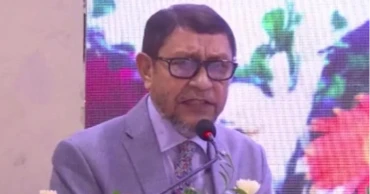
Health and Family Welfare Minister Sardar Md Sakhawat Husain on Sunday said the government will bring the latest medical technologies from around the world to Bangladesh to provide advanced treatment.
He said Prime Minister Tarique Rahman has also instructed the authorities to ensure world-class healthcare facilities at hospitals across the country.
The minister made the remarks while addressing a seminar at Dhaka Medical College in the morning, marking Polycystic Ovary Syndrome (PCOS) Awareness Week.
He said PCOS, a hormonal and metabolic disorder affecting women, is contributing to the rising rate of infertility in the country.
“In many countries around the world, modern medical treatment has created opportunities for women suffering from the condition to conceive,” Sakhawat said.
He said Bangladesh has already contacted technologically advanced countries, including China, to bring modern medical technologies to the country soon.
The minister also highlighted that 8-10 precent of women in Bangladesh suffer from the condition.
3 days ago
Bangladeshi experts visit Foshan, partnering with international oncology alliance to expand cross-border care cooperation
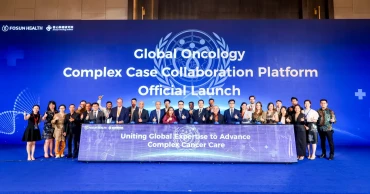
The first International Oncology Treatment Forum, hosted by Fosun Health, was held in Foshan, Guangdong Province, China.
Oncology experts, medical institution representatives, and international healthcare partners from multiple countries and regions participated in the exchanges, said a press release on Sunday.
Among them, representatives from Bangladesh attended the Forum and signed cooperation agreements with Fosun Health, further strengthening cooperation in international medical services, patient referral, and access to high-quality healthcare resources.
Focusing on frontier advances in cancer treatment and international medical collaboration, the Forum provided a new platform for oncology exchanges between China, Bangladesh, and other countries and regions.
Focusing on Frontier Cancer Treatment: Academic Exchanges Among Experts from Multiple Countries
The Forum featured exchanges on the development of international radiotherapy, comprehensive cancer treatment, and international medical collaboration, covering precision radiotherapy, cell therapy, clinical trials, and oncology diagnosis and treatment services.
Participating experts discussed the current state of cancer treatment and frontier technologies in different countries and regions, creating room for exchange in clinical practice and international medical cooperation.
Frontier technologies such as precision radiotherapy and cell therapy were a key part of the exchanges.
Precision radiotherapy technologies represented by CyberKnife improve the accuracy of radiotherapy targeting and dose delivery through robotic radiotherapy, image guidance, and real-time motion management, and can be applied in the treatment of a variety of solid tumors.
In the field of cell therapy, Forum exchanges covered innovative treatment modalities such as CAR-T.
3 days ago
Early detection, timely treatment key to fighting childhood cancer: Speakers
Speakers on Saturday called for coordinated efforts involving hospitals, medical colleges, physicians, educational institutions, the media and social organisations to raise awareness, ensure early detection and provide timely treatment for childhood cancer.
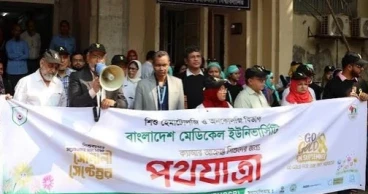
They made the call at a rally, human chain and press briefing organised by the Paediatric Haematology and Oncology Society of Bangladesh (PHOSB), said a press release.
PHOSB brought out a rally on the Bangladesh Medical University (BMU) campus and organised a human chain and press briefing at the National Press Club to raise awareness about childhood cancer, under the slogan, “No fear, awareness; no delay, timely treatment”.
The organisers said childhood cancer is a significant public health issue in Bangladesh. However, many children can recover if the disease is detected early and proper treatment is started in time.
They said many children fail to receive timely treatment due to a lack of awareness, delays in diagnosis and various barriers to accessing medical care.
PHOSB’s awareness campaign urged parents and caregivers not to ignore symptoms such as prolonged fever or cough, unusual paleness, unexplained bruising or bleeding, bone pain, extreme weakness or sudden changes in behaviour, and to seek medical advice promptly.
However, the presence of these symptoms does not necessarily mean that a child has cancer, as they can also be caused by other illnesses or health conditions. The organisation therefore stressed the importance of consulting a doctor and undergoing the necessary tests to determine the actual cause.
Dr Shamsul Haque Kibria, a PHOSB coordinator, said combating childhood cancer requires not only medical treatment but also greater public awareness, early detection and timely access to healthcare.
He said hospitals, medical colleges, physicians’ associations, businesses, the media and social organisations could work together to dispel misconceptions and reduce unnecessary fears about childhood cancer, as well as minimise delays in seeking treatment.
4 days ago