Local-Business

Gold prices cut again after two consecutive hikes
The Bangladesh Jewellers Association (BAJUS) has cut gold prices in the domestic market after two consecutive increases, reducing the price of 22-carat gold by Tk 1,691 per bhori to Tk 232,930, including VAT.
BAJUS announced the revised prices in a notice issued Saturday morning. The new rates came into effect at 10am the same day.
According to the notice, the price of pure gold, locally known as tezabi gold, has declined in the local market. Considering the overall market situation, BAJUS revised the prices of gold, including VAT.
Under the new rates, a bhori (11.664 grams) of 22-carat gold will cost Tk 232,930, while 21-carat gold will cost Tk 222,491 per bhori. The price of 18-carat gold has been set at Tk 191,056 per bhori, while traditional-method gold will cost Tk 156,064 per bhori.
BAJUS said the revised prices will remain effective at all jewellery shops until further notice. Labour charges will apply separately depending on the design of the jewellery.
As VAT is included in the selling prices of gold and silver jewellery, jewellers cannot collect VAT separately from customers.
The previous BAJUS rules will remain applicable to jewellery exchange and purchase after excluding applicable VAT, labour charges and stone costs.
BAJUS last adjusted gold prices on September 19, raising the price of 22-carat gold by Tk 1,691 per bhori to Tk 234,621, including VAT.
So far this year, BAJUS has adjusted gold prices 117 times. Of these, prices were raised on 58 occasions, reduced on 58 occasions and adjusted once for VAT.
Silver prices have also been reduced in the domestic market. The price of 22-carat silver has been cut by Tk 291 per bhori to Tk 4,841, including VAT.
The new price of 21-carat silver is Tk 4,607 per bhori, while 18-carat silver will cost Tk 3,966 and traditional-method silver Tk 3,033 per bhori.
BAJUS has adjusted silver prices 71 times so far this year, raising them on 36 occasions and reducing them on the remaining 35 occasions.
19 hours ago
Korean Mart Bangladesh evaded Tk3.20cr in VAT: NBR
National Board of Revenue (NBR) has found Tk3.20 crore in VAT evasion by online shopping platform Korean Mart Bangladesh, following an inspection and examination of its business records.
Officials of the Customs, Excise and VAT Commissionerate, Dhaka (West), conducted a preventive operation at the establishment on Sept 21 based on secret information, according to an NBR press release issued on Wednesday.
The operation was conducted under the direction of the commissioner of the Dhaka (West) commissionerate and supervision of Pallabi Divisional Office.
Korean Mart Bangladesh sells cosmetics and other products through online platforms.
During the operation, officials examined information stored on the company’s laptops and computers, its courier service records, proprietary software and other documents. The examination indicated possible VAT evasion.
The officials subsequently issued Mushak-12.3 and seized copies of data from the laptops, computers and other relevant documents by storing the information on a pen drive for further verification.
After examining the seized records, the VAT authorities found irregular sales transactions worth Tk46.74 crore.
The records showed that the company had failed to pay Tk3,19,57,490 in VAT against the sales, according to the NBR.
The authorities are taking steps to file a case against the company over the alleged VAT evasion.
3 days ago
BB Governor seeks greater Indian investment in key sectors
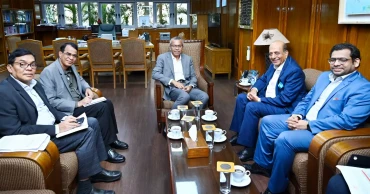
Bangladesh Bank Governor Md. Mostaqur Rahman on Tuesday called for greater Indian investment in Bangladesh’s technology-driven, export-oriented and manufacturing sectors.
He made the call when Indian High Commissioner to Bangladesh Dinesh Trivedi paid a courtesy call on the Governor at the central bank's head office in the capital.
During the meeting, both sides exchanged views on further strengthening bilateral economic, trade, and financial relations between Bangladesh and India.
To improve the trade balance between the two neighboring nations, the Governor urged India to import more goods from Bangladesh.
The Governor expressed interest in expanding the usage of 'Bangla QR', implementing cross-border digital payments, and seeking India's experience and potential technical cooperation in these areas.
Underlining the importance of further easing foreign investment, the Governor said Bangladesh Bank has already undertaken several investor-friendly policy initiatives.
These measures will allow foreign investors to easily repatriate their invested capital and profits to their home countries.
Indian Deputy High Commissioner Pawan Kumar Badhe and Second Secretary (Economic and Commerce) Gourab Kumar Agarwal accompanied the Indian High Commissioner during the meeting.
Deputy Governor Dr. Md. Habibur Rahman and Deputy Governor Md. Sarwar Hossain were present alongside the Governor on behalf of Bangladesh Bank.
4 days ago
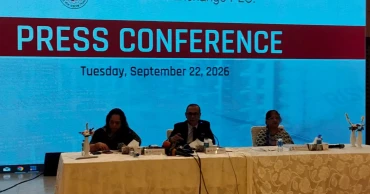
DSE to compensate 17,332 aggrieved investors of 5 defaulted brokerages
Dhaka Stock Exchange (DSE) is set to begin disbursing Tk 37.60 crore in compensation to 17,332 aggrieved investors of five defaulted brokerage houses from its Investor Protection Fund.
DSE Chairman Mominul Islam disclosed this at a press conference held at the DSE Tower in Dhaka's Nikunja on Tuesday.
The disbursement will commence on September 28.
The affected investors are clients of five brokerage firms: Mashiur Securities, Tamha Securities, Crest Securities, Shah Mohammad Sagir & Co. Ltd., and Banco Securities.
According to DSE data, the total amount of misappropriated funds exceed Tk 250 crore.
During the press conference, the DSE Chairman said each affected investor will receive a maximum of Tk 5 lakh against their verified claims.
Mominul Islam mentioned, "It will take slightly over two months to complete the entire fund distribution process."
Assuring market stakeholders, the DSE Chairman said that regulatory supervision and monitoring systems have been further strengthened to prevent any brokerage firm from defaulting in the future.
He further informed that four cases regarding the misappropriation of investors' funds by these brokerage firms are currently under investigation by the Anti-Corruption Commission (ACC), while one case is pending in court.
5 days ago

Four fuels' prices raised by Tk 20 per litre
The government has revised retail prices of diesel, octane, petrol and kerosene, with the new rates coming into effect from Monday (Sept 21).
According to a notification issued by the Energy and Mineral Resources Division on Sunday, diesel will be sold at Tk 135 per litre, octane at Tk 165, petrol at Tk 160 and kerosene at Tk 155.
The diesel price was Tk 115 per litre, octane Tk 145 per litre, petrol at Tk 140 per litre, and kerosene at Tk 135 per litre.
The revised prices replace those set through a notification issued on Aug 31, 2026.
The Energy and Mineral Resources Division said the revised prices have been approved by the competent authority and will be effective from Sept 21.
The detailed price structure has been attached to the notification as Annexure-A.
The ministry also said that for distances beyond the first 40 kilometres from a depot, the road transport charge for carrying petroleum products by tank lorries will be determined in accordance with the rates set by a notification issued on Sept 26, 2023.
The latest revision comes as the government continues to adjust domestic fuel prices under its pricing framework.
6 days ago
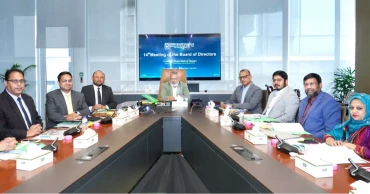
Sammilito Islami Bank holds 14th Board Meeting
The 14th meeting of the Board of Directors of state-owned Shariah-based Sammilito Islami Bank PLC held on Sunday (September 20), at the board room of the bank’s head office in Motijheel.
Quazi Shairul Hassan, Chairman of the Board of Directors, presided over the meeting.
The meeting was attended by board members Lt. Col. (Retd.) Md. Khan Sobayel Bin Rafiq PhD, Asma Akhter FCA, K M Zakaria, and Mohammed Ahsan Habib Chowdhury FCA. Managing Director Abedur Rahman Sikder and Company Secretary (Current Charge) Md. Monirul Islam were also present, according to a press release.
During the meeting, the board reviewed the bank's overall operational activities and approved various investment proposals.
The board also issued necessary directives to bank management to intensify investment recovery drives and expedite regular banking operations.
6 days ago
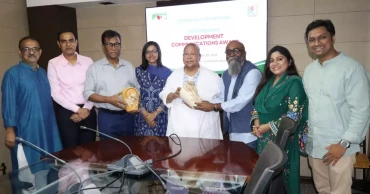
BCPS plans Devcom Award to recognise excellence in development communication
The Bangladesh Communications Professionals Society (BCPS) is planning to introduce a national-level recognition for outstanding development communication and creative content documenting life-changing stories, initiatives and social impact by NGOs, INGOs, development partners and government agencies.
The proposed Devcom Award was discussed at a consultation meeting between a BCPS delegation and Channel i Managing Director Faridur Reza Sagar, Head of Program Harun Or Rashid and Head of iScreen Mahbub Rahim Udoy at the Channel i conference room today.
The meeting also discussed possible cooperation in communication, media and creative work, including joint initiatives to develop quality communication content and create opportunities for communication professionals to share their work and experiences.
BCPS Chairperson Tony Michael Gomes led the delegation. BCPS Executive Committee members Sahos Mostafiz, Asad Rassel, Nusrat Akther and Maliha Tabassum were also present.
Faridur Reza Sagar said Channel i has been involved in various development initiatives and considers development communication an important part of its storytelling.
“Channel i is a pioneer in many development initiatives that have made significant contributions to the development sector.
Devcom is also a core value of our storytelling. We want to recognise good work and encourage the next generation to carry this legacy forward,” he said.
The proposed award is expected to recognise work across different areas of communication and creative practice. The name, categories and timing of the award are yet to be finalised.
Tony Michael Gomes said development communication content has received limited recognition in Bangladesh, despite the contribution of communication professionals working in the sector.
“Development content has not received adequate recognition in Bangladesh. As a result, creative professionals working in this sector have had limited opportunities to take their storytelling to a wider national audience,” he said.
He added that the communication landscape has changed considerably in recent years with the growth of digital media, new content formats and artificial intelligence.
“Communication work is changing rapidly, particularly with the growth of AI and digital media. BCPS is focusing on skills development for communication professionals and building closer cooperation with media organisations and development partners,” he said.
Established in 2018, BCPS brings together professionals working in development communication, media, advocacy, campaigns, public relations and knowledge management.
The organisation has arranged a number of professional development initiatives, including the Development Communications Conclave, Leadership Masterclass, Visual Storytelling Workshop and CV Writing Sessions.
The proposed award is part of BCPS’s broader effort to strengthen professional networks and create opportunities for collaboration among communication professionals, media organisations and development-sector stakeholders.
Photo Caption: BCPS delegation meets Channel i Managing Director Faridur Reza Sagar to discuss the proposed BCPS Award for development communication and creative work.
7 days ago
Asian stocks mostly rise ahead of Fed rate decision
Asian stocks were mostly higher Wednesday despite declines on Wall Street, as investors awaited the US Federal Reserve's decision on interest rates, with expectations high that it will raise rates.
US stock futures also edged higher. Markets widely expect the Fed to raise interest rates Wednesday for the first time in three years as US inflation remains elevated and above the central bank's target.
Japan's Nikkei 225 rose 0.7% to 63,923.00, despite official data showing the country recorded its fourth straight monthly trade deficit in August.
South Korea's Kospi gained 1.4% to 6,717.97, while Hong Kong's Hang Seng edged up 0.2% to 24,715.18. The Shanghai Composite Index advanced 0.7% to 3,891.60.
AI-related stocks remained volatile after US technology leaders called for slower development of artificial intelligence to improve safety.
SoftBank Group, a major investor in OpenAI, fell 1.5% after gaining 7.5% the previous day. Tokyo Electron, which makes chip manufacturing equipment, rose 2.1%, while Japanese memory chipmaker Kioxia Holdings declined 1.9%.
South Korea's SK Hynix gained 4.1%, while Samsung Electronics rose 2%.
Taiwan's Taiex advanced 0.7%, while TSMC, Taiwan's leading AI chipmaker, slipped 0.2%.
Australia's S&P/ASX 200 rose 0.3% to 8,696.50, while India's Sensex gained 0.5%.
Oil prices declined early Wednesday after rising the previous day, as tensions between the US and Iran continued and the closure of a key Saudi oil pipeline added to concerns over global supplies.
Brent crude, the international benchmark, fell 0.9% to $107.76 a barrel, although it remained well above the roughly $72 level recorded before the war began in late February.
US benchmark crude dropped 1.5% to $104.24 a barrel.
On Tuesday, Wall Street's S&P 500 fell 0.5%, while the Dow Jones Industrial Average declined 0.6%. The technology-heavy Nasdaq Composite lost 0.8%.
US AI stocks showed signs of stabilizing. Nvidia gained 0.6%, while Advanced Micro Devices rose 2.2%.
Rising US Treasury yields have also weighed on stocks. Bond yields have increased as the energy crisis caused by the Iran war has added to inflationary pressure, while the US national debt has continued to grow.
The yield on the 10-year Treasury note was close to 5% early Wednesday after briefly reaching 5.04% this week, its highest level in years.
In currency trading, the US dollar fell to 154.93 Japanese yen from 155.10 yen. The euro rose to $1.1554 from $1.1544.
11 days ago
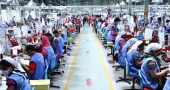
Bangladesh's RMG exports to US rise by 11.42% to $1.61bn in July-August
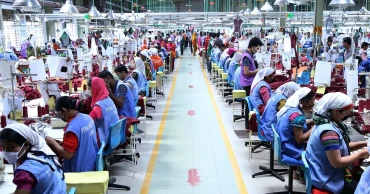
Bangladesh's ready-made garment (RMG) exports to the United States reached $1.612 billion during the first two months (July-August) of FY2026-27, marking an 11.42 percent growth compared to $1.447 billion recorded during the same period of the previous fiscal year.
According to Export Promotion Bureau (EPB) data, the July-August export earnings already account for 20.8 percent of last year's total full-year figure of $7.744 billion.
The monthly export average for the US market currently stands at $806.46 million in FY2026-27, running ahead of the flat monthly average benchmark of $645.38 million implied by FY2025-26's full-year performance.
However, this growth was driven almost entirely by a sharp 25.65 percent surge in August, following a slight contraction of 0.18 percent in July.
Analysis of the data indicates that if the current year-on-year growth pace of 11.42 percent holds throughout the remaining ten months of the fiscal year, total RMG exports to the US in FY2026-27 would reach approximately $8.629 billion up from $7.744 billion recorded in FY2025-26, said Mohiuddin Rubel, Founder and CEO of Bangladesh Apparel Voice, a think tank in apparel sector.
11 days ago
NBR detects Tk3.76cr VAT evasion by online clothing retailer
The Customs, Excise and VAT Commissionerate, Dhaka (West) has detected an estimated Tk3.76 crore in revenue evasion by J-Creation, an online clothing retailer, the National Board of Revenue (NBR) said Tuesday.
The commissionerate conducted a sudden raid on the premises of J-Creation in Mirpur on Sept 13 following a tip-off.
The business sells Punjabi outfits, sherwanis and other readymade garments through online platforms.
During the raid, officials found evidence of VAT evasion and seized a CPU and relevant documents, according to the NBR.
The authorities subsequently examined the company’s sales records and initially found evidence of revenue evasion amounting to around Tk3.76 crore.
The seized documents are now being examined further, and legal proceedings for filing a case are underway, the NBR said.
12 days ago