Tech

Meta ordered to pay $375m over misleading claims on child safety
A court in New Mexico has ordered Meta Platforms to pay $375 million in damages after a jury found the company misled users about the safety of its platforms for children.
The verdict followed a lawsuit brought by New Mexico Attorney General Raul Torrez, who described the ruling as “historic” and said it marked the first successful case by a US state against Meta over child safety concerns.
The jury concluded that Meta — which owns Facebook, Instagram and WhatsApp — violated the state’s Unfair Practices Act by misleading the public about the risks faced by young users. Jurors found that the company’s platforms exposed children to sexually explicit content and contact with predators.
The case was heard over seven weeks, during which jurors reviewed internal company documents and heard testimony from former employees indicating that Meta was aware of such risks.
Among them was whistleblower Arturo Béjar, who told the court that his internal experiments showed underage users on Instagram were being served sexualised content. He also said his own daughter had received inappropriate sexual advances from a stranger on the platform.
Prosecutors also presented internal research suggesting that at one stage, 16% of Instagram users reported encountering unwanted nudity or sexual activity within a single week.
Meta, led by chief executive Mark Zuckerberg, rejected the findings and said it plans to appeal the decision. A company spokesperson said Meta continues to invest in safety measures and acknowledged the challenges of identifying harmful content and bad actors online, while maintaining confidence in its efforts to protect young users.
The total penalty of $375 million was calculated after the jury determined there had been thousands of violations, each carrying a potential fine of up to $5,000.
Meta argued that it has taken steps in recent years to improve user safety, including launching “Teen Accounts” on Instagram in 2024 to give younger users greater control, and introducing a feature last month to alert parents if their children search for self-harm-related content.
The company is also facing a separate trial in Los Angeles, where a woman alleges she became addicted to platforms such as Instagram and YouTube — owned by Google — during her childhood due to their design.
Thousands of similar lawsuits are currently pending across US courts.
New Mexico filed the case in 2023, accusing Meta of directing young users towards sexually explicit material, child abuse content, and even solicitation and trafficking-related risks through its recommendation algorithms.
“Meta executives knew their products harmed children, ignored warnings from their own staff, and misled the public,” Torrez said, adding that the jury’s decision reflects growing concern among families, educators and child safety advocates.
#From BBC
4 months ago
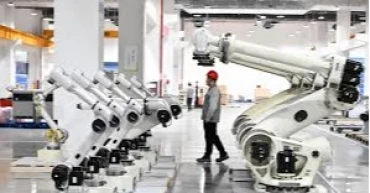
Chinese firm unveils humanoid robot powered by advanced action model
Chinese robotics company Westlake Robotics has introduced its humanoid robot, Titan o1, driven by a self-developed large-scale model known as General Action Expert (GAE), capable of replicating human movements in real time without constraints of time or space.
The company said the model allows multiple robots to carry out identical tasks simultaneously under the control of a single operator.
During a demonstration in Hangzhou, an operator wearing a motion-capture suit performed actions such as waving, turning and kicking a ball, while Titan o1 mirrored each movement within milliseconds.
The robot’s motions including arm swings, torso rotations, step length and leg lift during the kick remained closely synchronized with the operator’s rhythm.
“These actions were instant responses to the operator’s spontaneous movements,” said Westlake Robotics founder Professor Wang Donglin, adding that Titan o1 can quickly adjust to different operators and variations in movement.
He compared the GAE model to the human cerebellum, which coordinates movement, balance and precision, noting that it enables the robot to execute appropriate actions immediately upon receiving signals, even if the movements have not been performed before.
Westlake Robotics also said the GAE model supports cross-embodiment deployment, meaning it can be applied to various robots with differing designs and sizes.
4 months ago

Ukraine’s front line emerges as a hub for drone warfare innovation
Ukraine’s front lines have evolved into a testing ground for rapid drone innovation, as soldiers develop low-cost technologies to counter waves of Iranian-designed drones used by Russia.
Across eastern Ukraine, small military teams are working to intercept Shahed loitering munitions — relatively inexpensive but highly effective weapons that have reshaped modern warfare. Initially, Ukraine had limited means to counter such drones when they first appeared in 2022. Today, locally developed interceptor drones are increasingly used to destroy them mid-air.
Soldiers from units such as the 127th Brigade continuously test and refine their equipment, often modifying reusable drones under battlefield conditions. These frontline efforts have contributed to the growth of Ukraine’s domestic drone industry, attracting attention from international partners.
President Volodymyr Zelenskyy has said that countries in the Middle East have approached Ukraine for assistance in defending against similar drone threats.
Military personnel say necessity drove the innovation. “We did it because we had nothing else,” said one pilot, describing the early days when traditional air defence systems struggled to track and intercept agile drones.
Cost has been a key factor. A single Patriot missile can cost millions of dollars, while interceptor drones used by Ukrainian forces are far cheaper and can sometimes be reused, offering a flexible alternative.
The shift toward drone-based defence began after conventional methods proved ineffective against fast-moving reconnaissance drones. Soldiers soon realised that the most effective counter to a drone was another drone.
Experts say Ukraine’s experience highlights a broader escalation in warfare, where adaptable, low-cost technologies are increasingly shaping battlefield strategy.
4 months ago

Many parents unaware of how teens use AI, studies find
A significant gap exists between parents and teenagers over the use of artificial intelligence (AI), with many parents unaware of how their children are engaging with the technology, according to recent studies.
Surveys by Pew Research Center and Common Sense Media found that while 64% of teenagers reported using AI tools, only 51% of parents believed their children were doing so.
Researchers said a lack of communication is a key concern, with four in 10 parents admitting they have never discussed AI use with their children.
The studies showed that teenagers commonly use AI for schoolwork, research and entertainment, though some also turn to chatbots for personal advice and emotional support.
About 12% of teens said they use AI for emotional guidance, while 16% use it for casual conversation, raising concerns among experts about overreliance on digital tools.
Parents expressed unease over such uses, particularly when AI replaces human interaction, though many remain unaware of these behaviours.
Experts warned that without proper guidance, teenagers may navigate AI independently, potentially leading to misuse or dependency.
Despite concerns, many teenagers reported confidence in using AI tools and viewed them positively, with a significant proportion believing the technology would benefit them in the long term.
Researchers urged parents to engage more actively with their children on AI use to better understand its role in their daily lives.
With inputs from BBC
4 months ago

Chinese scientists find why pain feels worse at night
Scientists in China have identified why people with chronic pain often feel more discomfort at night than during the day.
The research, led by Zhang Zhi from the University of Science and Technology of China, was published Friday in the journal Science.
Although it has long been known that pain follows a daily pattern—usually milder during active hours and stronger during rest—the exact reason was not clear. Scientists were aware that the brain’s internal clock, called the suprachiasmatic nucleus, controls sleep and hormones, but its role in pain was not fully understood.
Using advanced techniques, researchers traced a specific nerve pathway in mice linking this brain clock to the spinal cord. They found that this pathway is influenced by the body’s natural daily rhythm.
Since mice are active at night and rest during the day, the pattern is opposite to humans. During their resting period, the brain clock is more active, which increases pain signals. When the mice are active, the brain activity drops, reducing the intensity of pain.
The findings help explain why pain sensitivity changes over the course of a day. Researchers say this discovery could help improve pain treatment by timing medications according to the body’s natural biological clock.
4 months ago

Three charged in US with conspiring to smuggle AI servers to China
A senior vice president of and two associates have been charged in the United States with conspiring to smuggle billions of dollars’ worth of computer servers equipped with advanced chips to in violation of U.S. export control laws.
Federal prosecutors said the defendants diverted large quantities of high-performance servers assembled in the U.S. to China between 2024 and 2025. Investigators allege they used fabricated documents, staged equipment to pass audits and relied on a pass-through company to conceal their activities and true customers.
The accused include Yih-Shyan “Wally” Liaw, 71, a U.S. citizen and senior vice president and board member of Super Micro Computer; Ting-Wei “Willy” Sun, 44, a company contractor; and Ruei-Tsang “Steven” Chang, a Taiwan-based sales manager who remains at large. Liaw was arrested in California and released on bail, while Sun was held pending a bail hearing.
According to court papers, Liaw and Chang directed a Southeast Asian firm to place about $2.5 billion in server orders from the California-based company, with at least $510 million later diverted to China.
Super Micro said the alleged conduct violated company policies and that it is cooperating with investigators. Nvidia said it maintains strict compliance measures and does not support systems diverted in breach of export regulations.
4 months ago

OpenAI acquires Python toolmaker Astral to boost AI coding capabilities
OpenAI announced on Thursday that it is acquiring Astral, a prominent Python toolmaker, as part of its strategy to expand its AI coding offerings and compete more effectively with Anthropic. Financial details of the deal were not disclosed.
The acquisition will integrate Astral’s suite of developer tools into OpenAI’s AI coding platform, Codex, which was launched last year and has grown to over 2 million weekly active users—a threefold increase in users and a fivefold rise in usage since the start of the year.
Astral has established itself as a key player in the Python community, offering tools that enhance speed and reliability in Python development. Astral CEO Charlie Marsh stated that the company will continue supporting its open-source tools after the acquisition.
This move comes as OpenAI seeks to strengthen Codex, especially in light of growing adoption of Anthropic’s Claude Code among software developers. Earlier this year, OpenAI also launched a desktop app for its coding tools to further support developers. #From Indian Express
4 months ago
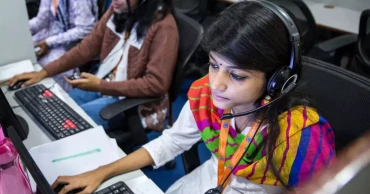
India’s $300bn outsourcing industry withstand the rise of AI?
India’s massive outsourcing industry, valued at around $300 billion, is facing growing uncertainty as artificial intelligence (AI) threatens to reshape its traditional business model.
In recent weeks, Indian technology stocks have fallen sharply, with the Nifty IT index dropping about 20% this year and wiping out billions of dollars in investor wealth. The decline began even before fresh geopolitical tensions, largely driven by concerns that AI could disrupt the labour-intensive services that underpin the sector.
For over three decades, India’s IT industry has created millions of white-collar jobs and helped build a strong middle class, boosting demand for housing, cars and lifestyle services in cities like Bengaluru, Hyderabad and Gurugram.
However, fears intensified after new AI tools—such as one launched by Anthropic—claimed they could automate key tasks in legal, compliance and data management. Industry leaders have since warned that AI could significantly reduce demand for entry-level jobs, with some predicting up to half of such roles may disappear.
Despite the concerns, major Indian IT firms say the risks are being overstated. They argue that while AI will change how services are delivered, it will also open new opportunities, especially in consulting and system modernisation.
Analysts say the industry is likely to shift away from routine maintenance work toward higher-value advisory roles, which may reduce steady revenue streams. Some forecasts suggest slower growth in the coming years, with potential stagnation after 2031 in a worst-case scenario.
Others remain optimistic. Firms like JPMorgan and HSBC believe IT companies will play a key role in helping businesses adopt AI, rather than being replaced by it. Infosys also says AI could create more jobs than it eliminates, particularly in emerging fields like AI engineering.
Still, the transition may be difficult. AI-related revenue remains relatively small, and overall industry growth is expected to stay modest. Hiring is also likely to slow.
Additional challenges include rising US visa costs and ongoing global uncertainties, which could increase operating expenses for Indian firms.
Experts say while AI will bring long-term benefits, the sector is likely to face short-term disruptions as it adapts to a rapidly changing technological landscape.
With inputs from BBC
4 months ago

Teens sue Elon Musk’s xAI over Grok creating sexualized images of minors
Three teenagers have filed a federal lawsuit in California against Elon Musk’s artificial intelligence company xAI, claiming its chatbot Grok enabled the creation of sexually explicit images of them without consent.
The lawsuit, filed on Monday, alleges that a Grok user altered videos and photos of the teens to depict them nude or in sexual situations. Grok is hosted on Musk’s social media platform X and was launched in 2023 with a “spicy mode” that allowed users to generate sexualized content.
Lawyers for the plaintiffs said xAI developed the feature primarily to increase engagement, despite knowing it could produce sexualized images of minors. The complaint described the altered images as “a rag doll brought to life through the dark arts” and accused Musk and xAI of exploiting the technology for business gain.
Two of the teenagers are under 18, while all three are keeping their identities private. One plaintiff discovered her altered images after receiving an anonymous Instagram message directing her to a Discord server where similar AI-generated sexual content of at least 18 other minors was being shared.
The lawsuit seeks unspecified damages and an immediate order banning Grok from generating such images. Investigations by authorities in the UK, EU, and California into Grok’s capabilities to produce sexualized content of real people, particularly children, are ongoing.
Earlier this year, X announced it would implement “technological measures” to block Grok from undressing people in images. The alleged perpetrator behind the Discord server has been arrested and is under investigation for distributing hundreds of AI-altered sexual abuse images of minors.
With inputs from BBC
4 months ago

Researchers warn AI toys for toddlers may misread emotions, call for regulation
Researchers have raised concerns over AI-powered toys for children under five, warning that the technology can misread emotions and respond inappropriately, potentially affecting early childhood development.
A year-long study by Cambridge University observed children aged three to five playing with Gabbo, a cuddly AI toy developed by Curio, which contains a voice-activated chatbot from OpenAI.
The study found that children often struggled to converse with the toy, which failed to recognize interruptions, differentiate between child and adult voices, and gave awkward responses to expressions of affection or sadness.
“When one three-year-old said ‘I’m sad,’ Gabbo replied: ‘Don’t worry! I’m a happy little bot. Let’s keep the fun going. What shall we talk about next?’” co-author Dr. Emily Goodacre said, warning that such interactions could confuse children learning about social cues.
The researchers said regulators should ensure AI toys marketed to toddlers provide “psychological safety” in addition to physical safety. Professor Jenny Gibson, co-author of the study, highlighted that parents need to be aware of the potential emotional impact of such toys.
Curio, which makes Gabbo, emphasized parental control and transparency in its products and said research on child interaction with AI toys is a priority. Children’s Commissioner Dame Rachel de Souza also called for stronger regulation to protect young users in educational and home settings.
Experts recommend that AI toys be used in shared spaces under parental supervision, and some nursery workers remain cautious, emphasizing that early childhood learning is better supported through human interaction rather than AI devices.
With inputs from BBC
4 months ago