Europe
European heat wave triggers health alerts across continent as temperatures continue to soar
Authorities across Europe issued fresh health warnings on Wednesday as an intense heat wave pushed temperatures to dangerous levels from Britain to Italy, with forecasters warning that conditions could worsen in the coming days.
Large parts of the United Kingdom were placed under a rare "red heat health" alert, only the second such warning ever issued by British authorities. The alert covers much of central and southern England and Wales and warns that the extreme temperatures pose a risk to life.
The UK Met Office forecast temperatures of up to 38 degrees Celsius (100.4 degrees Fahrenheit) in southern England, which could make it the hottest June day on record. Temperatures had already reached 34.6 degrees Celsius in Wisley, southwest of London, on Tuesday.
"Red warnings are reserved for the most severe events and we're expecting severe and significant impacts from this heat wave," said Mark Sidaway, deputy chief forecaster at the Met Office.
The extreme weather, driven by a "heat dome" over Western Europe, has disrupted daily life across the continent.
In Britain, some schools were closed and numerous train services were canceled, with passengers advised to avoid nonessential travel. Network Rail warned of significant disruptions due to the risk of heat-related damage to railway infrastructure, including buckled tracks and sagging overhead wires.
Eurostar also canceled four train services between London and Paris scheduled for Wednesday and Thursday because of the expected extreme weather.
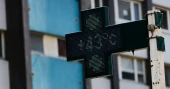
France recorded its hottest day on record on Tuesday, prompting authorities to limit visiting hours at major tourist attractions, including the Eiffel Tower and the Louvre Museum. Schools and public transport services were also disrupted.
The country's national thermal indicator, based on temperatures recorded at 30 weather stations, reached a record 29.8 degrees Celsius.
In Italy, the Health Ministry issued its highest-level "red alert" for 16 cities, including Rome, Milan, Florence and Turin, warning that the heat could affect even healthy adults.
Temperatures in Florence were forecast to reach 41 degrees Celsius (105.8 degrees Fahrenheit), while Milan could see highs of 38 degrees Celsius (100.4 degrees Fahrenheit).
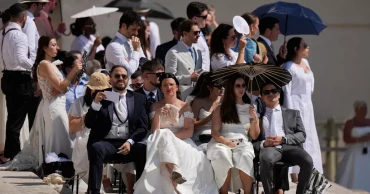
The prolonged heat has also affected Italy's fashion industry, with designers and guests at Milan's menswear shows resorting to hand-held fans, misters and umbrellas to cope with the soaring temperatures. One fashion show had to change venues at short notice because of an air-conditioning failure.
Spain and other parts of southern Europe also remained under heat warnings as temperatures continued to rise.
Britain's heat advisory is expected to remain in effect through Thursday, with unusually warm overnight temperatures offering little relief.
"If you think it's hot already, well, we ain't seen nothing yet," Met Office meteorologist Alex Burkill said.
1 month ago
12th "Primakov Readings" International Forum begins in Moscow
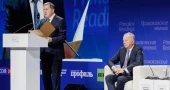
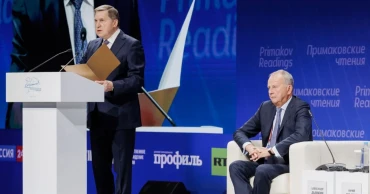
The two-day 12th international forum "Primakov Readings" began on Tuesday in Moscow, coinciding with the 70th anniversary of IMEMO.
The theme of the forum is “A World Without Rules: A Power Game?”
More than 400 leading international experts in the field of security, world politics and economy from 17 countries, including China, India, Iran, Turkey, Bulgaria, Qatar, the US, the UK, Switzerland, South Korea, Brazil, Azerbaijan, Armenia, Georgia, Kyrgyzstan, Uzbekistan and Russia, are attending the event.
The programme of the Forum is centred around the discussions on the consequences of regional conflicts, the situation in the Middle East, global order scenarios, and barriers to global trade and investment, international competition in the sphere of artificial intelligence.The participants are discussing the issues of Eurasian security in light of Russia’s CSTO chairmanship, the consequences of the New START Treaty termination, the risks of a further weakening of arms control, the impact of emerging military technologies on strategic stability, and the prospects for preventing conflict escalation in the context of an accelerating arms race.
During the two-day event, five working sessions are planned, as well as the traditional speech by the Russian Foreign Minister Sergey Lavrov scheduled on June 24.
The participants of the Forum were addressed with a welcoming speech by the Aide to the President of the Russian Federation, Chairman of the "Primakov Readings" Organising Committee Yuri Ushakov, Deputy Speaker of the Federation Council of the Federal Assembly of the Russian Federation Konstantin Kosachev, and the President of Primakov Institute of World Economy and International Relations of the Russian Academy of Sciences (IMEMO) Alexander Dynkin.
“The history of the last 200-plus years shows that every new world order is shaped by the winners of another major war. This was the case after the Napoleonic Wars, the First World War, and the Second World War. It was also the case after the Cold War, when a unipolar world emerged. The dramatic and structural break with the past is the presence of nuclear weapons. Therefore, the existential challenge today is to shape the contours of the future world order without passing the point of no return,” noted Alexander Dynkin.
1 month ago
Europe swelters under early heat wave as France records 40 drowning deaths
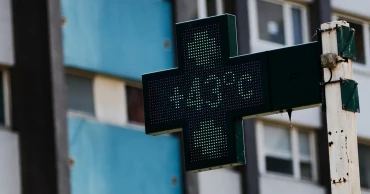
Millions of people across Europe faced extreme and exceptionally high temperatures on Tuesday as an early summer heat wave gripped the continent, with France reporting 40 drowning deaths over the past week as residents sought relief from the scorching weather.
France has been the hardest-hit European country so far, with temperatures expected to remain high day and night. The country's weather service, Meteo France, placed 54 departments, nearly half of the country, under a red heat wave alert.
Italy, Spain and Britain have also been affected by the heat.
Scientists say human-induced climate change is contributing to increasingly extreme weather events, while projections by the UN climate agency indicate that more heat records are likely to be broken over the next five years.
French Prime Minister Sébastien Lecornu said the 40 drowning victims recorded since last Thursday were mainly young people.
In a country where air conditioning is not widespread, the heat wave has disrupted schools, public transportation and sporting events. Extreme conditions are expected to continue at least until the end of the week, with daytime temperatures exceeding 40 degrees Celsius (104 degrees Fahrenheit) in many areas.
Meteo France warned that more record-breaking temperatures are expected, with some potentially surpassing all previous records regardless of the time of year.
The weather service described the heat wave as exceptionally intense and unusually early in the summer, though its duration remains uncertain. It has already drawn comparisons with the devastating August 2003 heat wave, which claimed an estimated 15,000 lives in France, many of them elderly people living in homes and care facilities without air conditioning.
According to the European Union's Copernicus Climate Change Service, Europe is the world's fastest-warming continent, with temperatures rising at twice the global average rate since the 1980s.
The World Health Organization's Europe office said earlier this month that more than 200,000 people across Europe had died from heat-related causes over the past four years and that most of those deaths were preventable.
Health experts warn that prolonged exposure to above-average temperatures can lead to heat exhaustion and potentially fatal heat stroke.
Across the English Channel, Britain also faced severe heat conditions. Several schools announced closures and train services were disrupted after the UK Met Office issued a red extreme heat warning for Wednesday and Thursday, with forecasts suggesting that June's all-time temperature record could be broken.
Temperatures of around 37 C (98.6 F) are forecast for southern England and up to 35 C (95 F) in southeast Wales, with highs potentially reaching at least 39 C (102.2 F) during the peak of the heat wave.
Several train operators canceled services to ensure safety, while National Rail urged people to travel only if absolutely necessary.
Meanwhile, Spain is experiencing a heat wave across several parts of the Iberian Peninsula.
Spain's national weather agency, Aemet, issued red alerts for temperatures of up to 44 C (111 F) in southern Andalusia and warned that temperatures could reach 40 C (104 F) in the usually temperate regions of Cantabria and the Basque Country.
Aemet meteorologist Rubén del Campo said Spain's increasingly intense summers are linked to climate change, with heat waves becoming more frequent, lasting longer and occurring outside the traditional summer months of July and August.
Of the 12 June heat waves recorded by Aemet since 1975, six have occurred since 2015, he noted.
According to Copernicus, both Europe and the world experienced their hottest year on record in 2024, while the continent saw its second-highest number of heat-stress days.
Scientists have warned that climate change is increasing the frequency and intensity of heat and drought, particularly in southeastern Europe, making the region more vulnerable to health risks and wildfires.
1 month ago
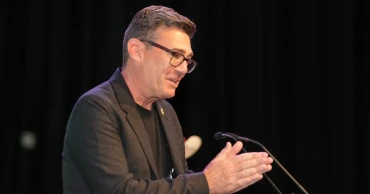
Burnham’s landslide win fuels speculation over Starmer’s future
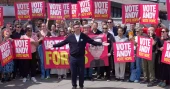
Andy Burnham’s commanding victory in a special parliamentary election has intensified speculation over the future of Prime Minister Keir Starmer and the leadership of the Labour Party.
Burnham, the former mayor of Greater Manchester, won the Makerfield seat in northwest England with nearly 55 percent of the vote, significantly increasing Labour’s vote share despite the party’s poor polling performance and losses in local elections last month. Reform UK had previously dominated the local seats in the constituency.
Labour’s Andy Burnham wins by-election, intensifying leadership pressure on UK PM Starmer
The 56-year-old’s return to Parliament after nearly a decade has positioned him as a potential challenger to Starmer, although he has not formally declared any leadership ambitions. Describing his victory as a “change moment,” Burnham said Britain needed renewed hope and a new direction.
Starmer, facing mounting criticism over policy setbacks and controversies, has rejected suggestions he could step down and vowed to contest any leadership challenge.
Under Labour rules, challengers must secure the support of at least 81 Labour MPs and additional backing from local party organizations or affiliates before a membership vote is held.
Should Starmer resign or lose a leadership contest, the winner would be invited by King Charles III to form a government. Any leadership race could take up to four months.
1 month ago
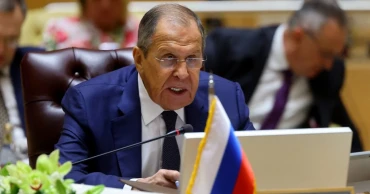
Russian FM Sergey Lavrov to speak at country’s top Foreign Policy Forum next week
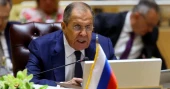
Sergey Lavrov, Minister of Foreign Affairs of the Russian Federation, will take part in country’s premier global politics and the world economy international forum "Primakov Readings" themed “A World Without Rules: A Power Game?” on June 24.
This was announced by the Russian foreign ministry spokeswoman Maria Zakharova at a press briefing on Thursday.
"Everyone sees how a group of countries that have imagined themselves to be the arbiters of the fate of all mankind, with passion and perseverance worthy of better cause, is literally trying to dawn the system of written and unwritten international norms and rules built over the past decade," Maria Zakharova said.
The Russian foreign ministry spokeswoman also noted: "What is the current phase of this process, what the actions of the West lead to, and what the constructive agenda of the global majority can be – all these questions will be deal with by the participants of the Forum."
The 12th International Scientific and Expert Forum "Primakov Readings" will take place in Moscow on June 23-24 at the Radisson Blu Leninsky Prospect Hotel.
The event will bring together around 50 experts from 20 countries, including China, Iran, India, Turkey, Qatar, the USA, the United Kingdom, Switzerland, South Korea, and the CIS countries. In total, more than 400 representatives of Russian and foreign scientific and expert community, government agencies, political and business circles are expected to participate in the forum.
A number of high-ranking officials will take part in the event, including Aide to the Russian president Yuri Ushakov, Deputy Speaker of the Federation Council Konstantin Kosachev, Deputy Head of the Presidential Administration of Russia, Press Secretary of the President Dmitry Peskov, and leading Russian and foreign experts in the fields of international security, world politics and global economy.
The program of the two-day event includes discussions on the consequences of regional conflicts, the situation in the Middle East, global order scenarios, and barriers to global trade and investment.
Experts will cover issues of Eurasian security in light of Russia’s CSTO chairmanship and competition in the sphere of artificial intelligence.
The program of the Forum is centered around the discussion of the consequences of the New START Treaty termination, the risks of a further weakening of arms control, the impact of emerging military technologies on strategic stability, and the prospects for preventing conflict escalation in the context of an accelerating arms race.
The organizers of the annual event are the Primakov National Research Institute of World Economy and International Relations of the Russian Academy of Sciences (IMEMO) and the Evgeny Primakov Center for International Cooperation.
This year edition of the Forum is coinciding with the 70th anniversary of IMEMO.The Primakov Readings — an International Scientific and Expert Forum — is an annual gathering of leading experts in the field of international relations and world economy.
First held in 2015, it was named after the renowned scholar and statesman Evgeny Maksimovich Primakov.
Since its establishment, the Forum has gained recognition as a respected international platform where experts discuss the scenarios of international relations development, challenges in international security, and new models of interaction among global political actors.
At the Forum, leading scientists, politicians and diplomats from around the world engage in an open dialogue about global and regional challenges and threats.
Since its founding, the event has attracted many prominent scientists and experts from major international research centers and think tanks, political and public figures.The International Scientific and Expert Forum Primakov Readings opens on June 23, 2026, at 10:00.
Addressing the participants will be Yuri Ushakov, Aide to the President of Russia; Konstantin Kosachev, Deputy Speaker of the Federation Council, and Alexander Dynkin, President of IMEMO, Academician.
1 month ago
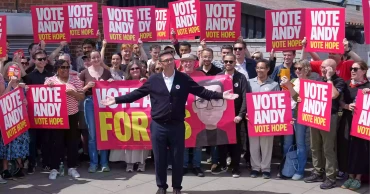
UK by-election could reshape Labour leadership as pressure mounts on Starmer
A closely watched by-election in northwest England could have major implications for British Prime Minister Keir Starmer’s political future, as Labour candidate Andy Burnham seeks a return to Parliament amid growing discontent within the governing party.
Voters in the Makerfield constituency are set to elect a new member of Parliament on Thursday, with Burnham — the current mayor of Greater Manchester and a prominent Labour figure — widely viewed as a potential challenger to Starmer’s leadership if elected.
Although Starmer is not directly involved in the contest, political observers see the vote as a significant test of confidence in his leadership. Labour’s popularity has declined sharply since its landslide general election victory in July 2024, with criticism mounting over the government’s handling of economic growth, public services and the cost-of-living crisis.
Burnham has campaigned on a promise to bring political change and expand his regional development model, often referred to as “Manchesterism,” across the country. He has argued that Britain has been poorly served by what he describes as London-focused politics and called for greater attention to regional development.
The by-election was triggered after Labour lawmaker Josh Simons resigned, creating an opportunity for Burnham to return to Westminster. If elected, Burnham is expected to emerge as a leading contender in any future Labour leadership contest.
Under Labour Party rules, a leadership challenge can be launched if a candidate secures support from at least one-fifth of Labour MPs. Growing dissatisfaction within the party has already fueled speculation about Starmer’s position, despite the prime minister insisting he has no intention of stepping down.
Speaking during the Group of Seven summit in France, Starmer said he would fight any leadership challenge and emphasized that he remains committed to delivering on Labour’s electoral mandate.
Some senior Labour figures have openly expressed concerns about the party’s direction. Former Health Secretary Wes Streeting, who resigned in May, recently suggested there was a lack of leadership vision within the government and indicated he could consider entering a leadership contest if one takes place.
Political analysts say a strong Burnham victory would significantly increase pressure on Starmer. However, the outcome is not guaranteed.
The anti-immigration Reform UK party has gained momentum in parts of northern England and is hoping to capitalize on voter concerns over immigration and economic issues. Reform candidate Rob Kenyon is seeking to challenge Labour’s long-standing dominance in Makerfield, a constituency that has elected Labour MPs for more than a century.
Analysts warn that a Reform UK victory would not only deepen Labour’s political difficulties but also undermine Burnham’s credentials as a potential successor to Starmer.
The result is expected early Friday and is being closely watched as an indicator of Labour’s internal dynamics and the broader political mood in Britain.
1 month ago
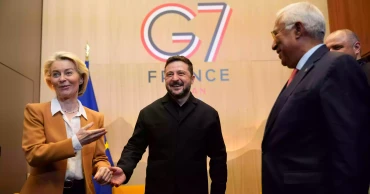
G7 leaders pledge more support for Ukraine: Zelenskyy
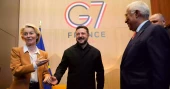
Ukrainian President Volodymyr Zelenskyy said Wednesday that Ukraine had secured important commitments from Group of Seven (G7) leaders for additional military, energy and economic support as the country continues to defend itself against Russia’s invasion.
Following the G7 summit in Evian-les-Bains, France, Zelenskyy said world leaders agreed to strengthen Ukraine’s air defence capabilities, support its energy resilience and impose further sanctions on Russia.
“The G7 Summit in France delivered important results for Ukraine. Most importantly, we agreed on additional strengthening of Ukraine’s air defense,” Zelenskyy wrote on X.
He said Ukraine’s partners had pledged continued support for the country’s defence sector and energy infrastructure while also increasing pressure on Moscow through new sanctions.
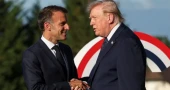
French President Emmanuel Macron said the summit demonstrated what he described as an “unprecedented convergence” among G7 leaders, including US President Donald Trump, on maintaining support for Ukraine.
The summit came as Zelenskyy continues efforts to rally international backing and diplomatically isolate Russian President Vladimir Putin amid the war, which began with Russia’s full-scale invasion in 2022 and is now in its fifth year.
Zelenskyy is expected to attend a European Union summit in Brussels on Thursday. Earlier this week, Ukraine officially launched negotiations for membership in the EU, beginning a process that could take years to complete.
The ongoing conflict involving Iran has diverted some international attention from efforts to resolve the war in Ukraine. Against that backdrop, Zelenskyy sought to engage with Trump during the G7 gathering, where several key European leaders were also present.
According to observers, Putin has sought to sideline both Kyiv and European partners by pursuing direct discussions with Washington regarding the future of the conflict.
1 month ago
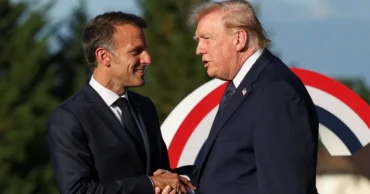
Trump pledges efforts to end Ukraine war after meeting Zelenskyy
US President Donald Trump said Tuesday he would continue efforts to help end the war in Ukraine and urged Russia to reach a peace agreement, following what he described as a “very good” meeting with Ukrainian President Volodymyr Zelenskyy on the sidelines of the G7 summit in France.
Speaking to reporters, Trump said too many young people were being killed in the conflict and stressed the need for a negotiated settlement.
“Russia should make a deal,” Trump said, adding that he would do whatever possible to help bring the war to an end.
Zelenskyy joined leaders of the Group of Seven nations — the United States, France, the United Kingdom, Canada, Germany, Italy and Japan — as well as European Union representatives for discussions focused on Ukraine and regional security.
The Ukrainian president also held talks with Trump and US Secretary of State Marco Rubio during the summit in Evian-les-Bains near the Swiss border.
Following the meeting, Zelenskyy said discussions centred on strengthening Ukraine’s air defence capabilities and advancing diplomatic efforts aimed at ending Russia’s invasion.
In a post on X, he said Ukraine had secured important commitments from G7 partners, including additional air defence missiles, licences for local production of defence systems, a winter support package and increased pressure on Russia.
Zelenskyy also said the United States had expressed readiness to provide support for those initiatives.
“It is key that everything discussed be implemented. Russia must understand that its war will never be normalised,” he said, thanking allies for their continued support.
European officials described the discussions as constructive.
European Commission President Ursula von der Leyen said Ukraine had demonstrated resilience on the battlefield and argued that international support should be strengthened further.
“The situation in 2026 is very different from 2025. Ukraine is bravely holding the frontline, while signs of Russian fatigue are becoming more visible,” she said.
The G7 leaders are expected to continue discussions on security assistance, economic support and diplomatic initiatives aimed at ending the conflict.
Source: Al Jazeera
1 month ago
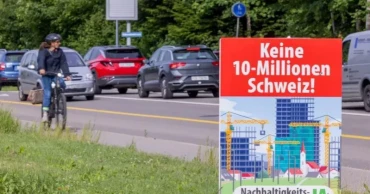
Switzerland holds referendum on population cap at 10 million
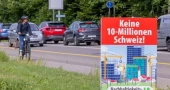
Swiss voters headed to the polls on Sunday to decide whether the country should impose a population cap of 10 million people by 2050, in a closely watched referendum that has sparked intense debate over immigration, economic growth and Switzerland’s future relationship with the European Union.
The proposal, backed by the right-wing Swiss People's Party, is being promoted as a “sustainability initiative” aimed at easing pressure on housing, public services, transportation and the environment. Critics, however, view it as the latest attempt to curb immigration in the Alpine nation.
Switzerland’s population has risen from about 7.3 million in 2002 to roughly 9.1 million today, with around 27 percent of residents born abroad. Under the proposal, authorities would be required to take action once the population reaches 9.5 million, ensuring it does not exceed 10 million before 2050.
Potential measures could include limiting asylum approvals, restricting family reunification rights for foreign workers and, if necessary, terminating international agreements such as the EU’s free movement of people.
The Swiss government, most political parties, trade unions and business groups oppose the initiative, arguing it could worsen labor shortages and damage relations with the European Union, Switzerland’s largest trading partner.
Opponents have labeled the proposal a “chaos initiative,” warning that sectors such as healthcare, hospitality and elderly care rely heavily on foreign workers. They also fear the measure could isolate Switzerland at a time of growing global economic and geopolitical uncertainty.
Recent opinion polls suggest a tight race. Surveys indicate that about 52 percent of voters oppose the proposal, while 45 percent support it, leaving a significant number of undecided voters likely to determine the outcome.
Supporters argue that rapid population growth has contributed to housing shortages, overcrowded public transport, rising healthcare costs and strained public services.
“We have lost control,” said Nils Fiechter, a young lawmaker from the Swiss People’s Party, arguing that immigration has placed excessive pressure on infrastructure and social services.
Opponents reject that view, saying structural policy failures rather than immigration are behind many of the country’s challenges.
“It is not migrants who determine rent levels or health insurance premiums,” said Helin Genis, a Social Democratic politician from Bern, arguing that blaming immigration risks deepening social divisions rather than solving problems.
Business leaders have also raised concerns that the population cap could undermine Switzerland’s economy. Employers warn that the country’s aging population increasingly depends on foreign workers, particularly in hospitals, care homes and hotels.
Economiesuisse, Switzerland’s leading business association, has cautioned that approving the proposal could complicate ties with Brussels and jeopardize access to the European labor market.
The referendum comes as Switzerland faces broader economic and geopolitical challenges, including rising defense spending, higher energy costs linked to global conflicts, and concerns about international trade relations.
Final results are expected later Sunday.
Source: BBC
1 month ago
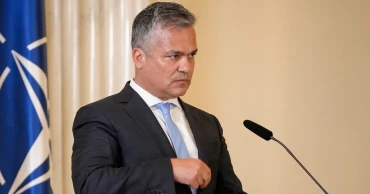
Romanian President nominates Adrian Vestea as PM after first pick withdraws
Romanian President Nicusor Dan on Sunday nominated former minister and local government leader Adrian Vestea as prime minister, seeking to end a prolonged political crisis after his previous nominee withdrew due to a lack of parliamentary backing.
Vestea, 53, a senior member of the National Liberal Party and a veteran politician from Brasov County, is Dan’s second choice for the post this month. The nomination came after former nominee Eugen Tomac stepped down from the mandate after failing to secure sufficient support and present a cabinet to Parliament within the required 10-day period.
Speaking at the presidential Cotroceni Palace in Bucharest, Dan said Vestea’s extensive experience in local and national administration made him well-suited for the role. He highlighted Vestea’s record as a mayor, county council president and development minister, as well as his success in attracting European Union funding.
The president also described Vestea as a strong supporter of Romania’s pro-Western orientation and someone with significant experience in managing public budgets.
The nomination must now be approved by Parliament before Vestea can formally take office.
Addressing reporters after the announcement, Vestea said he intends to form a political government committed to meaningful reforms and maintaining Romania’s pro-Western course.
He stressed the need to prioritize development, noting that Romania, the European Union’s sixth-largest country by population, must focus on long-term economic growth from the outset of the new administration.
Romania has faced political uncertainty since a no-confidence vote removed Prime Minister Ilie Bolojan in May. Although the next general election is not due until 2028, the country continues to grapple with one of the European Union’s highest budget deficits, persistent inflation and a technical recession.
The coalition government that took office in June 2025 had pledged to reduce the budget deficit and stabilize the economy, but Bolojan’s administration lasted less than a year amid mounting political and economic challenges.
1 month ago