Others

Bangladesh set to celebrate Victory Day on Tuesday
The nation is set to celebrate Victory Day, the most joyous occasion marking the birth of the country, on Tuesday with elaborate programmes in remembrance of the supreme sacrifice of the martyrs.
On this glorious day in 1971, Bangladesh emerged as an independent nation after the Pakistani occupation forces surrendered, bringing to an end a bloody nine-month-long war.
The government has taken extensive programmes to celebrate the day which will begin with a 31-gun salute in Dhaka.
The programmes include placing wreaths at the monuments to pay homage to martyrs, hoisting of the national flags, parachuting with the highest number of national flags, cultural events, arrangement of recitation, essay writing and painting competitions on the Liberation War for children and acrobatic show.
The President and the Chief Adviser are expected to pay tributes to the martyrs of the Liberation War by placing wreaths at the Savar National Martyrs' Memorial on the outskirts of the capital.
Besides, 54 paratroopers will perform a flag-bearing skydive to mark 54 years of the country's independence which is expected to set a Guinness World Record, according to a PID handout.
On Victory Day, the Bangladesh Army, Navy and Air Force will conduct separate fly-past exercises at the Old Airport in Tejgaon, Dhaka from 11 am.
Along with the government, different socio-political, educational and cultural institutions and organisations have chalked out a series of programmes to celebrate the day.
Bangladeshis will celebrate the day at home and abroad.
Families of the war heroes, wounded freedom fighters and other distinguished freedom fighters will also pay their tributes.
Foreign diplomats, political and social organisations as well as the general people will also lay wreaths in honour of the martyrs.
On this day, the national flag will be hoisted at all government, semi-government, autonomous, and private buildings, and important buildings.
The main streets and roundabouts in Dhaka and other cities will be adorned with national flags.
Newspapers will publish special supplements highlighting the significance of the day.
Bangladesh Shilpakala Academy, Bangla Academy, National Museum, Liberation War Museum, and Bangladesh Sishu Academy, will organise discussions, cultural programmes, drawing competitions, essay writing contests, sports events, and screenings of Liberation War-related documentaries.
Victory fairs showcasing local and indigenous crafts will be organised in all districts and upazilas throughout the country.
Bangladesh embassies abroad will also organise programmes to highlight the significance of the day.
The Bangladesh Postal Service will issue a commemorative postage stamp on this occasion.
Religious institutions will arrange special prayers and services for the peace and progress of the country.
Special meals will be served at orphanages, old age homes, hospitals, jails, government children's homes, and similar institutions.
All children's parks and museums in the country will be open to public without entry fees and Liberation War-based films will be screened at cinemas cost free.
On the eve of Victory Day, the President and the Chief Adviser have issued separate messages highlighting the significance of the day.
President Mohammed Shahabuddin said, “On this very day in 1971, we attained our long-cherished freedom and sovereignty through a nine-month-long, bloodied Liberation War.”
President Shahabuddin also paid his deepest respect to the valiant martyrs who sacrificed their lives in the war, the wounded freedom fighters, the mothers and sisters who lost their dignity, the families of the martyrs and all the courageous people who dedicated their efforts to the cause of independence.
“The aim of the Liberation War was not confined merely to political independence; one of its fundamental objectives was to establish economic emancipation and social justice. Yet even after five decades, our people have not achieved complete political and socio-economic freedom. In this context, the student-led mass uprising of 2024 has rekindled hope for building a just Bangladesh, free from discrimination and corruption,” President Shahabuddin said.
Chief Adviser Professor Muhammad Yunus said, “Through immense sacrifice and the bloodshed of countless martyrs, we secured our independent national identity and our red-and-green flag.”
He paid deepest respect to the brave martyrs who laid down their lives during the Liberation War and throughout the long struggle for independence.
“Through the July Uprising, we have once again gained the opportunity to establish a democratic system free from discrimination, corruption, and tyranny. The extensive reform initiatives undertaken by the interim government to build a well-governed and progressive Bangladesh are now advancing towards successful completion, with the collective participation of our citizens,” he added.
The Chief Adviser urged the people of the country to work together to build a safe, happy, and beautiful Bangladesh for the new generation, fulfilling the promise of the hard-earned independence.
On this occasion, he extended his warmest greetings to all Bangladeshis living at home and abroad.
7 months ago

Editors’ Council condemns case against Anis Alamgir
The Editors’ Council on Monday strongly condemned the filing of a case under the Anti-Terrorism Act against journalist Anis Alamgir, alleging that he was summoned to the Detective Branch (DB) office without any specific allegation.
In a statement, Editors’ Council President Nurul Kabir and General Secretary Dewan Hanif Mahmud said Anis Alamgir was called to the DB office on Sunday without any allegation, detained there, and shown arrested the following day after a case was filed against him under the Anti-Terrorism Act.
Such actions, the statement said, revive the memories of state repression against journalists during past authoritarian regimes.
The Editors’ Council mentioned that similar practices were seen during the tenure of the Awami League government, when false cases, harassment and arbitrary arrests of journalists were common, adding that the current incident appears to be a repetition of that regrettable reality.
Strongly condemning the incident, the council said that if there are specific allegations against any journalist, those must be dealt with strictly under the existing laws and due legal process.
“Summoning a journalist to the DB office without allegations, detaining him and later filing a case under the Anti-Terrorism Act to justify the arrest is unacceptable,” the statement said.
The Editors’ Council also said that since the fall of Hasina following the mass uprising on August 5, 2024, many journalists have been named in false murder cases, with several still in jail.
It recalled that the council had earlier demanded the withdrawal of such false cases. Although the government’s law adviser had promised action against false cases and harassment, no steps have yet been taken, the statement added.
Journalist Anis Alamgir shown arrested in anti-terrorism case
The Editors’ Council demanded the immediate withdrawal of all baseless cases.
Meanwhile, a Dhaka court placed journalist Anis Alamgir on a five-day remand in the case.
Dhaka Additional Chief Metropolitan Magistrate Jashita Islam passed the order after police produced him before the court with a seven-day remand prayer.
7 months ago

Bangladesh Polls: ROs asked to finalise panels of polling officers
The Election Commission (EC) has directed the returning officers (ROs) to finalise the panels of polling officers in line with the fixed guidelines by December 18 next for the upcoming national election and the referendum on July Charter, scheduled to be held simultaneously on February 12, 2026.
If there is a shortage of polling officers in any upazila, the Election Commission has given permission to appoint polling officials from neighbouring or nearby upazilas within the same district, in accordance with the prescribed guidelines.
The commission, in a letter signed by EC Deputy Secretary Mohammad Monir Hossain on Monday, issued the directives sent to all 69 returning officers – the Dhaka and Chattogram Divisional Commissioners, the Dhaka, Chattogram and Khulna Regional Election Officers and all district’s deputy commissioners.
Chief Election Commissioner AMM Nasir Uddin on December 11 announced the schedule for the 13th national parliamentary election and the referendum on the July National Charter (Constitutional Reform) Implementation Order 2025.
According to the election schedule, the deadline for the submission of nomination paper is December 29, while the scrutiny of nomination paper is on December 30-January 4 and the last date for the withdrawal of candidature is January 20. The election campaign will start on January 22 and continue till 48 hours before the balloting period (7:30am on February 10).
The last date for submission of appeal against the decisions of the returning officers is January 11 and the appeals would be disposed of on January 12-18. The returning officers will publish the final lists of candidates and allocate electoral symbols on January 21.
The balloting will be held from 7:30am to 4:30pm without any break on February 12.
Bangladesh Polls: Permission must for social, religious events before electioneering
According to the final voter list published on November 18 last, a total of 12.76 crore (127,695,183 –64,814,907 males, 62,879,042 females and 1,234 third-gender) voters will have the opportunity to vote in more than 42,000 polling stations under the country's 300 constituencies in the 2026 general election and referendum.
The national election along with a referendum is going to be held for the first time in the history of Bangladesh elections.
7 months ago

Onion import resumes through Benapole port after three months
Onion import from India through Beanpole land port resumed on Monday after a gap of three months.
The first consignment of onions under the 31st transshipment entered Benapol from Petrapole port in India around 2 pm.
The imported onions were brought in by Satkhira-based M/S HK A Enterprise and Jessore-based M/S Sabah Enterprise.
Rafiqul Islam Royal, owner of the clearing agency Royal Enterprise, said that the consignment included three trucks carrying a total of 90 metric tons of onions.
In September, only 60 metric tons were imported.
Shyamal Kumar Nath, Deputy Assistant Officer at Beanpole Plant Quarantine Center, said that the Ministry of Commerce has approved onion imports from India, but on a limited scale.
13,528 tonnes of rice imported from India thru Benapole
“Currently, 200 importers will receive IPs daily and each importer can bring in 30–60 tons of onions. We urge the government to open the IP system for more importers which would further reduce prices in the domestic market,” he added.
Shamim Hossain, Director of Beanpole Port, said that authorities have been instructed to ensure that imported onions are cleared quickly so that traders can receive them without delay.
7 months ago

Govt to procure 50,000 mt of non-basmati parboiled rice, 80,000 mt fertiliser
The government has decided to procure 50,000 metric tonnes of non-basmati parboiled rice and 80,000 metric tonnes of fertiliser.
The decision was taken at a meeting of Advisers Council Committee on Government Purchase on Monday (December 15, 2025) at the Secretariat with Finance Adviser Dr Salehuddin Ahmed in the chair.
The Ministry of Food will procure 50,000 metric tonnes of rice at a cost of Tk 214.70 crore. India-based M/S Bagadiya Brothers Private Ltd has been selected as the supplier.
Officials said the rice import would help maintain adequate public food stocks and contribute to stabilising prices in the domestic market.
Govt happy with macroeconomic stability despite sectoral challenges: Salehuddin
The purchase committee also recommended approval of two proposals placed by the Ministry of Industries to import a total of 80,000 metric tonnes of fertiliser from Saudi Arabia.
Under the proposals, 40,000 metric tonnes of fertiliser will be imported as the 12th lot and another 40,000 metric tonnes as the 13th lot from SABIC Agri-Nutrients Company at a unit price of US$413.46 per metric tonne.
The committee further recommended approval of a proposal to construct a fertiliser buffer warehouse in Naogaon with a capacity of 25,000 metric tonnes at an estimated cost of Tk 54.70 crore to improve storage and distribution.
Another proposal to construct a fertiliser buffer warehouse in Bogura with a capacity of 20,000 metric tonnes at an estimated cost of Tk 59.28 crore was also recommended for approval.
Officials said the fertiliser imports and storage facilities would help ensure uninterrupted supply during peak farming seasons.
Safe, quality shrimp production must be prioritised: Adviser Farida
In addition, the meeting recommended approval of several major infrastructure procurement proposals aimed at improving roads, bridges and local infrastructure across the country.
Among them is a World Bank-supported project under the Local Government Engineering Department (LGED), with a contract value of Tk 363 crore.
The committee also cleared multiple road development proposals under the Road Transport and Highways Division, including four-lane upgrading of regional highways in Cumilla, Lakshmipur and Noakhali, as well as the construction of the Rabnabad Bridge over the Rabnabad River in Patuakhali.
Officials said the approved projects would enhance connectivity, improve logistics and support regional economic growth.
Read more: Govt to procure 50,000 mt non-Basmati parboiled rice, 10,000 mt lentil
7 months ago

Traffic diversions in parts of Dhaka for Victory Day events
Traffic will be diverted on parts of Dhaka–Ashulia and Dhaka–Aricha highways from 3am to 9 am on December 16 in observance of Victory Day.
The diversions will be enforced at Gabtoli and Baipail points to facilitate Victory Day programmes and ensure smooth movement around the National Martyrs’ Memorial area in Savar.
“From 3 am to 9 am on December 16, traffic will be diverted at Gabtoli and Baipail points on Dhaka–Ashulia and Dhaka–Aricha highways. All drivers are requested to use alternative routes during this period,” said Superintendent of Police (SP) Dhaka Mizanur Rahman.
He also said the National Martyrs’ Memorial will be open to the public from 9 am for people to pay tribute to the martyrs of the Liberation War.
Police and traffic personnel will remain deployed in areas adjacent to memorial to manage traffic and assist commuters.
END/UNB/MJ/FH/1558 Hrs
7 months ago
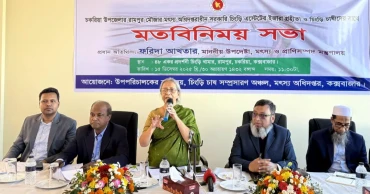
Safe, quality shrimp production must be prioritised: Adviser Farida
Fisheries and Livestock Adviser Farida Akhter on Monday stressed the need for ensuring safe and high-quality shrimp production alongside increasing output.
Speaking at a dialogue session with leaseholders and farmers at a 48-acre demonstration shrimp farm in Rampur Mouza, Badarkhali Union, Chakaria Upazila, she called for adherence to good aquaculture practices and antibiotic-free production to safeguard Bangladesh’s traditional Bagda shrimp in international markets.
“Bagda shrimp is a unique national identity. Preserving its reputation is a responsibility for all,” she said, highlighting the importance of integrating shrimp farming with mangrove and parabon conservation. She also assured coordination with relevant ministries to resolve safety, land management, and infrastructure issues.
Senior officials, including Md Zia Haider Chowdhury, Md Hemayet Hossain, Dr Abu Nayeem Muhammad Abdus Shobur, Dr Md Motaleb Hossain, Adhir Chandra Das, and Md Nazmul Huda, joined leaseholders, fish farmers and local residents at the dialogue.
The Chakaria Shrimp Estate spans 7,021.76 acres under the Department of Fisheries, developed in phases since 1978 with support from the IDA and ADB.
Currently, plots are leased to people and organisations on 20-year terms.
Earlier, the adviser visited Shikhi Podi School in South Magnama Para and held discussions with the local community.
7 months ago
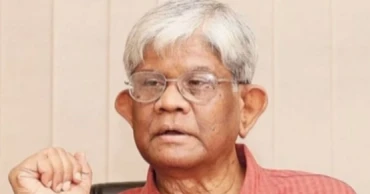
Govt happy with macroeconomic stability despite sectoral challenges: Salehuddin
-Finance Adviser Dr Salehuddin Ahmed on Monday said the government is broadly satisfied with the country’s overall macroeconomic condition though weaknesses remain at the micro level in some sectors.
“We are satisfied with the overall macroeconomic condition. It is not just my personal opinion; many say the same,” he said while talking to reporters after meetings of the Advisers Council Committee on Economic Affairs and the Advisers Council Committee on Government Purchase at the Secretariat.
He said this assessment is not his view alone but a consensus shared by many stakeholders.
The Finance Adviser acknowledged that the situation is ‘not entirely satisfactory’ in certain areas as some sectors facing challenges at the micro level.
He noted that it is unrealistic to expect all sectors of an economy to perform well at the same time in any country. “There is no country in the world where every sector runs very well simultaneously. That is simply not possible.”
Dr Salehuddin explained that economic performance depends largely on the effective use of capital and the performance of various stakeholders in sectors.
Ensuring proper monitoring and accountability of these stakeholders is a shared responsibility, he added.
The Finance Adviser said stressed the need for collective effort and coordinated performance in institutions and sectors to maintain economic stability and support growth.
7 months ago

Govt clears consultancy proposal for Dhaka’s water supply project
The Advisory Council Committee on Economic Affairs on Monday approved in principle a proposal to procure consultancy services for the ongoing Dhaka Environmentally Sustainable Water Supply (DESWS) project being implemented by Dhaka Water Supply and Sewerage Authority (DWASA).
The approval was given at a meeting of the comittee held at the Cabinet Division Conference Room of the Secretariat. Finance Adviser Dr Salehuddin Ahmed presided over the meeting.
The proposal was placed by the Local Government Division.
Under the approved proposal, German firm Fichtner GmbH & Co. KG will be appointed as the Management, Design and Supervision Consultant (MDSC) for the project.
The consultancy services will be secured through the Single Source Selection (SSS) method in accordance with the Public Procurement Rules (PPR) 2025.
The proposed consultancy period will run for 24 months from September 2025 to August 2027.
The DESWS project aims to strengthen Dhaka’s sustainable water supply infrastructure while ensuring environmental protection and long-term resilience.
7 months ago

Govt approves procurement of one cargo of LNG
The Advisory Council Committee on Government Purchase on Monday recommended the procurement of one cargo of liquefied natural gas (LNG) from the international spot market to meet the country’s growing energy demand.
The decision was taken at a meeting of the comittee held with Finance Adviser Dr Salehuddin Ahmed in the chair at the Secretariat.
The proposal was placed by the Energy and Mineral Resources Division following the Public Procurement Rules 2025.
Govt decides to buy 1 spot cargo of LNG from UK
Under the proposal, one LNG cargo will be procured for delivery during January 9–10, 2026 at a total cost of about Tk 420.09 crore. The unit price has been fixed at US$9.99 per MMBTU.
South Korea-based Posco International Corporation has been recommended as the supplier.
Officials said the LNG import would help ensure uninterrupted gas supply for power generation and industrial use amid rising demand during the winter season.
7 months ago