Bangladesh

35 labor federations demand Tk 37,125 as minimum monthly wage for garment workers
Thirty-five labor federations under four major alliances have demanded that the minimum monthly wage for ready-made garment (RMG) workers be fixed at Tk 37,125 (or $300).
The leaders also called for the formation of a new minimum wage board for the 2026–2029 terms, urging the inclusion of genuine worker representatives as members on the board.
The demands were raised during a joint press conference held on Monday morning at the Shafiqul Kabir Auditorium of the Dhaka Reporters Unity (DRU).
Shah Md. Abu Zafar, a frontline leader of the alliance and the Shromik-Karmaçhari Oikya Parishad (SKOP), former Member of Parliament, and valiant freedom fighter, presided over the event. The written statement was read out by alliance leader Khalequzzaman Lipon, with the conference conducted by Nahidul Islam Noyon and an introductory speech delivered by Abul Hossain.
Addressing journalists, labor leaders emphasized that national and international labor laws, Article 15 of the Constitution of Bangladesh, and Section 141 of the Bangladesh Labour Act outline clear statutory provisions for determining wages based on 11 distinct criteria, including cost of living, living standards, production costs, productivity, commodity prices, nature of work, risk factors, product market value, business capacity, and overall socio-economic conditions. They noted that the proposed Tk 37,125 minimum wage was formulated after carefully analyzing these benchmarks and current market realities.
Highlighting the backbone of the national economy, the speakers noted that the RMG sector earned $38.70 billion out of Bangladesh's total export earnings of $48 billion in the 2025–26 fiscal year, accounting for roughly 81 percent of total export revenue.
Comparing data from past fiscal years, leaders pointed out that during the 2014–15 fiscal year, total export earnings stood at $31.20 billion, of which $25.49 billion came from the apparel sector—marking an increase of $13.21 billion over the last decade. Despite a reduction in the number of active factories and workers over this period, export revenues have continued to grow, making it imperative that the wages of workers directly fueling this growth align with the surging cost of living.
Citing various research organizations, the leaders stated that considering per capita income, poverty line thresholds, and the actual cost of decent living, the monthly expenditure for a worker's family is significantly higher, potentially ranging between Tk 57,000 and Tk 70,000.
They argued that even if a primary earner covers 60 percent of a household's total expenses, a monthly income of Tk 37,000 to Tk 38,000 is necessary—notwithstanding additional costs like parental care, recreation, medical emergencies, festival expenses, and rural travel.
Furthermore, economic calculations factoring in equal proportions for food and non-food expenses dictate that a four-member family spending Tk 35,080 on food alone incurs a total monthly expenditure of nearly Tk 70,000. Under these economic pressures, setting a realistic wage is critical.
The labor leaders urged authorities to take government pay structures, the Bangladesh Bureau of Statistics' (BBS) 2025 special survey, prevailing market prices, cost of living indices, per capita income, productivity, value addition, minimum wages in competing apparel-exporting nations, and various research reports into active consideration.
They stressed that keeping employers' financial capacity and industry realities in mind, setting the entry-level minimum wage for assistant operators at Tk 37,125 is both justified and necessary, and urged the government to promptly establish the new wage board with authentic worker representation.
Prominent trade union leaders including Naimul Ahsan Jewel, Lovely Yasmin, Bachchu Mia, Rafiqul Islam Sujan, Asad Chowdhury, Saleha Islam Shantona, Sumaiya Islam, Shamima Akter, and Bappi Deb Bormon, alongside representatives from the four federations, were present at the press conference.
1 day ago
Artificial crisis of fertilisers resolved through effective intervention: JS body chief
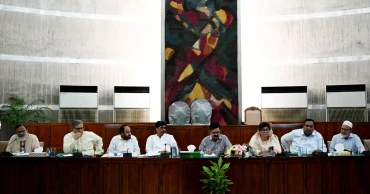
Chairman of the Parliamentary Standing Committee on Ministry of Agriculture Md. Shahadat Hossain on Monday said now there is no fertiliser crisis in the country, with sufficient stocks available to meet demand.
“The artificial crisis created around fertiliser distribution management has been resolved through prompt and effective intervention,” he said while chairing the second meeting of the committee at the Jatiya Sangsad Bhaban.
Shahadat Hossain said if fertiliser factories could continue production at full capacity, the country might be able to meet domestic demand and create opportunities to export surplus fertiliser in the future.
Agriculture Minister Mohammed Aminur Rashid attended the meeting on invitation of the committee Chairman.
Committee members Shohidul Islam, Mostafizur Rahman, Rokon Uddin Bablu, Mujibur Rahman Choudhury, Sabira Sultana and Golam Rasul attended the meeting.
During the meeting, the ministry officials presented a detailed update on the progress in implementing the decisions taken at the first meeting of the parliamentary committee.
The committee recommended taking necessary action over allegations of irregularities and inconsistencies in fertiliser dealer appointments in different areas.
It suggested that contracts for dealerships where agreements have not yet been signed should remain suspended until the allegations are resolved.
In cases where agreements have already been signed, the allegations should be properly investigated and necessary action taken, said the parliamentary body.
The committee particularly recommended that allegations relating to dealer appointments in Lalmonirhat, Barguna, Satkhira, Faridpur, Naogaon and Jashore districts be considered seriously and addressed accordingly.
Following a proposal by committee member Mostafizur Rahman, the committee formed a three-member body to conduct on-site inspections of fertiliser distribution, stockpiling and management to know whether there is any illegal stockpiling, marketing and other irregularities for identifying problems and formulating specific recommendations to address them.
Mostafizur Rahman was made convener of the body, with Rokon Uddin Bablu and Sabira Sultana as members.
Agriculture Secretary Salim Khan and chiefs of departments under the ministry were present.
1 day ago

Two employees of real estate company go missing in Padma
Two employees of a real estate company went missing while taking a bath in the Padma River beneath the Padma Bridge in Louhajang upazila of Munshiganj on Monday.
The missing people were identified as Md Maruf, 40, and Md Russel, 35, employees of Dhaka-based Sharif Landmarks Ltd. Maruf hailed from Khilgaon in Dhaka, while Russel was from Patuakhali.
Muhammad Shafiqul Islam, deputy assistant director of Munshiganj Fire Service and Civil Defence, said eight employees of the real estate company went to Mawa to spend time.
They went to the river to take a bath near pillar No. 4 at the Mawa end of the Padma Bridge around 2:20pm.
At one stage, two of them were swept away by the strong current, while the other six managed to swim ashore.
On receiving the information, divers from the local fire service station rushed to the spot and launched a rescue operation.
However, the missing people could not be traced till filing of this report at6:30pm.
1 day ago

TIB calls for withdrawal of IGP’s remarks, accountability
Transparency International Bangladesh (TIB) on Monday strongly condemned and expressed deep concern over the Inspector General of Police’s (IGP) remarks that the police would resort to crossfire, if necessary, to maintain law and order, provided the government gives its approval.
TIB called on the government to obtain a formal explanation of the IGP’s remarks, ensure their withdrawal along with an unconditional public apology, and hold him administratively accountable.
The organisation has also called for his removal from office until accountability is ensured.
According to TIB, the remarks send a dangerous message by presenting extrajudicial killings as an acceptable means of crime control, rather than addressing failures in maintaining law and order and institutional weaknesses.
Describing the remarks as an expression of utter disregard for the Constitution and the rule of law, TIB demanded their immediate withdrawal, accountability of the IGP, and accountability for making a declaration that contradicts the government’s stated position against extrajudicial killings.
TIB Executive Director Dr. Iftekharuzzaman said, “Is the police chief seeking to use the discredited practice of crossfire as a shield for the police’s failure to maintain law and order? Does seeking to legitimise extrajudicial killings by making them conditional on government approval amount to an admission of failure to combat crime through lawful means?”
He said the responsibility of the police is to conduct professional investigations, identify offenders and bring the accused to trial on the basis of admissible evidence.
“Presenting crossfire as an alternative cannot resolve institutional weaknesses; rather, it is an example of professional bankruptcy. In the same remarks, the IGP spoke of discharging duties in accordance with the law and the Constitution, while also saying that the police would resort to crossfire if the government approved it,” Iftekharuzzaman said.
He said these two positions are contradictory. “No government approval can legitimise an extrajudicial killing. The rights to legal protection and to life and personal liberty guaranteed under Articles 31 and 32 of the Constitution cannot be set aside by executive decisions. Regardless of the seriousness of an allegation, the police have no authority to kill anyone by bypassing due process.”
Recalling past experiences, the TIB Executive Director said the conviction of police officers in the Sinha murder case, along with allegations reported in connection with the verdict that crossfire was used to extort money, torture people and kill them, serves as a reminder of the horrific nature of this practice.
“The killing of Teknaf municipal councillor Ekramul Haque in a purported gunfight also raised serious questions, particularly following the release of an audio recording by his family and allegations of murder.”
He said the convictions of former RAB officials in the Narayanganj seven-murder case provide another judicially established example of the criminal abuse of power by law enforcement agencies.
“Despite thousands of such experiences, and amid public expectations for police reform and broader state reform, the police chief is once again raising the prospect of crossfire. He must answer the question of what lessons the police have learned from past crimes.”
Iftekharuzzaman said such reckless and ill-considered remarks by the police chief could be perceived as an implicit licence for unlawful use of force at the field level.
“When the person responsible for ensuring that the force operates within the law presents crossfire as an alternative, questions about his sense of responsibility and suitability for leadership inevitably arise,” he said.
“How can the public trust that, under his leadership, citizens’ lives and legal protections will be safeguarded? On the other hand, on 14 September, the Law Minister stated that the government would not resort to crossfire to combat terrorism and that existing laws were sufficient to tackle terrorism. Why, then, is the police chief raising the prospect of crossfire subject to government approval? The government must clearly explain this inconsistency and specify how accountability will be ensured for implementing its declared position,” he added.
TIB said that any use of force by the police must be lawful, necessary and proportionate. Under international standards, the intentional lethal use of firearms is permissible only when strictly unavoidable to protect life. There is no scope to portray this narrowly defined exception as authorisation for extrajudicial killings.
Regarding allegations that journalists criticise the police because they have not received money, TIB said that if there are specific allegations of criminal conduct against any journalist, lawful action must be taken on the basis of evidence.
Sweeping allegations undermine the role of a free media in oversight and accountability and risk discouraging independent journalism.
The need to ensure a conducive working environment and adequate capacity for the police cannot be used as a justification for evading legitimate criticism.
1 day ago
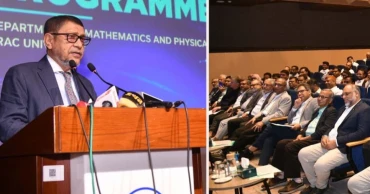
Radiotherapy machines to be installed at district level within 2 yrs: Health Minister
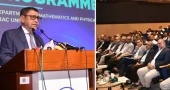
Radiotherapy machines will be installed at the district level hospitals within the next two years to bring cancer treatment services closer to people's doorsteps, Health and Family Welfare Minister Sardar Md Shakhawat Husain said on Monday.
“The government is working to expand cancer treatment beyond divisional cities and make the services accessible to people at the district level. The health sector is being reorganised to make it more people-oriented and meet public expectations. Work is progressing rapidly towards this goal,” the minister said.
He made the remarks while inaugurating a Medical Physics programme at the auditorium of BRAC University in Dhaka.
BRAC University Vice-Chancellor Prof Said Farhat Anwar chaired the programme, while Prof Dr Golam Abu Zakeria delivered the keynote address.
Praising the country's physicians, the minister described them as a valuable asset who stand by people during any crisis and work tirelessly for public welfare.
“Our doctors love their patients and are ready to make any sacrifice for the well-being of people,” he said.
The minister also said the supply of medicines has been increased and improvements have been made in hospital cleanliness and the quality of food provided to patients, contributing to greater patient satisfaction.
Bangladesh is not far behind in healthcare services, but there is still room for improvement in medical equipment and modern technology, he said.
The health sector suffered in the past due to irregularities and looting, the minister said, adding that the present government is working to rebuild it.
Necessary reforms and development initiatives would be undertaken gradually to ensure healthcare services that meet public expectations, he said.
2 days ago
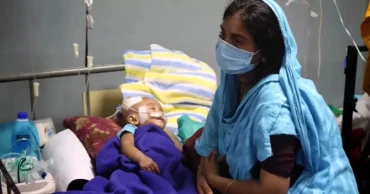
6 more children die with measles-like symptoms
Six children died with measles-like symptoms in the 24 hours ending at 8:00am on Monday, bringing the country’s combined tally of confirmed and suspected measles-related deaths to 1,233 this year.
The Directorate General of Health Services (DGHS) classified the latest fatalities as suspected measles deaths.
With this, the total number of suspected measles deaths has reached 1,129, while confirmed deaths have remained the same at 104.
A total of 1,388 new suspected measles cases were reported during the 24-hour period, taking the cumulative number of suspected cases nationwide to 222,552
Meanwhile, 78 new confirmed measles cases were recorded, pushing laboratory-confirmed infections to 23,478.
Since March 15 this year, a total of 197,999 patients with suspected measles have been hospitalised across the country, of whom 190,036 have recovered, according to the DGHS.
2 days ago
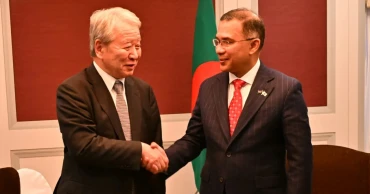
PM seeks Japan’s help to set up technological village, innovation city in Bangladesh
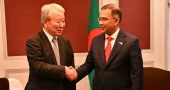
Prime Minister Tarique Rahman on Monday sought Japan’s cooperation in establishing a Technological Village and Innovation City in Bangladesh, alongside expanding collaboration in agricultural modernisation, agro-processing and light engineering.
He made the call during a meeting with Japan International Cooperation Agency (JICA) President Dr Tanaka Akihiko at the Imperial Hotel in Tokyo at 5:10pm local time, said PM’s Deputy Press Secretary Shahadat Hossain Shadhin.
The Prime Minister also sought JICA’s continued support for Bangladesh’s development priorities, including infrastructure and energy security.
During the meeting, Bangladesh proposed expanding cooperation in skills development under the Bangladesh-Japan Skills Partnership.
It stressed the need to continue receiving concessional loans from Japan and expand technical cooperation in line with the country’s current development priorities, Shahadat said.
In view of the current global energy situation, Bangladesh also requested budget support, as provided last year, to help meet the country’s energy needs and ensure energy security.
The Prime Minister recalled his fruitful meeting with the JICA president in Dhaka during Tanaka’s visit to Bangladesh in July this year and expressed gratitude for Japan’s long-standing cooperation and JICA’s significant contribution to Bangladesh’s socioeconomic development.
He said Japan’s support has played an important role in developing Bangladesh’s infrastructure, advancing socioeconomic progress and realising the country’s development aspirations.
Tarique Rahman stressed the need to deepen the long-standing friendship between the two countries and continue cooperation to promote Bangladesh’s development and improve people’s living standards.
The two sides also emphasised completing major development projects supported by Japan within their scheduled timeframes and discussed expediting the approval and implementation of priority projects awaiting approval.
JICA President Tanaka reaffirmed his commitment to working together to help Bangladesh achieve prosperity.
The Prime Minister expressed hope that the proposed initiatives will further strengthen the strategic partnership between Bangladesh and Japan and contribute to the shared prosperity of the two countries.
Finance and Planning Minister Amir Khosru Mahmud Chowdhury, Civil Aviation and Tourism Minister M Rashiduzzaman Millat, Prime Minister’s Adviser on Finance and Planning Rashed Al Mahmud Titumir, State Minister for Foreign Affairs Humaiun Kobir, State Minister for Power, Energy and Mineral Resources Aninda Islam Amit, PM’s Adviser on Posts, Telecommunications, ICT and Science and Technology Rehan Asif Asad, Prime Minister’s Special Assistant for Overseas Employment in the Asia-Pacific Region Dr Md Shakirul Islam Khan, Economic Relations Division Secretary Shahriar Kader Siddiky and Prime Minister’s Additional Press Secretary Atikur Rahman Rumon were present.
JICA Senior Vice-President Hara Shohei and other senior officials of the agency also attended the meeting.
2 days ago
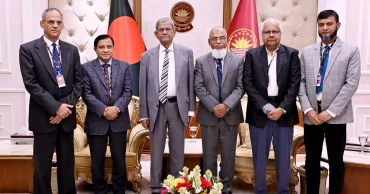
President asks accreditation council to strengthen quality assurance in higher education
President Mirza Fakhrul Islam Alamgir on Monday called on the Bangladesh Accreditation Council (BAC) to play a more effective role in ensuring the quality of higher education in the country and aligning it with international standards.
He made the call when a five-member delegation led by BAC Chairman Professor Dr Md Akhtar Hossain Khan met him at Bangabhaban.
During the meeting, the BAC chairman briefed the President on the council’s activities, future plans, the need for a permanent headquarters and measures to strengthen its institutional capacity.
He said the council’s accreditation certificates play a significant role in securing recognition and acceptance of Bangladesh’s higher education qualifications and improving employment opportunities abroad.
The President urged the council to take further initiatives to address its problems and assured the delegation of necessary cooperation.
Other members of the delegation were Md Emdadul Haque, Professor Dr Ahmed Abdullah Jamal, Professor Dr Md Shah Emran and Professor Dr Md Wakilur Rahman.
The President’s Secretary, Press Secretary, Assistant Military Secretary and Private Secretary were also present at the meeting.
2 days ago
School students visit Bangabhaban for first time, meet President
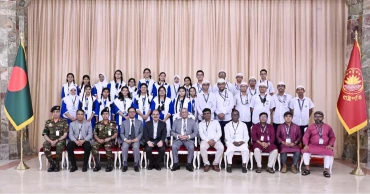
President Mirza Fakhrul Islam Alamgir on Monday met school students at Bangabhaban for the first time under a newly introduced policy, urging them to become well-educated and responsible citizens to lead the country in the future.
“You will lead Bangladesh in the future. We see a new Bangladesh and new dreams in you,” he said while meeting students of Motijheel Ideal School and College at the presidential palace in the morning.
A selected group of meritorious students from Classes VII to IX, accompanied by teachers and led by the institution's Principal Prof Lal Mohammad, made the visit under the Policy on Visits to Bangabhaban by Students of Educational Institutions, 2026.
The students toured various facilities at Bangabhaban before meeting the President at the Darbar Hall, where he addressed them and later took part in a photo session with them.
The initiative aims to familiarise the younger generation with the history and heritage of Bangabhaban and the state.
Addressing the students, Mirza Fakhrul emphasised the importance of respecting parents, teachers and elders and remembering the sacrifices parents make for their children.
He said becoming well-educated and responsible citizens will help them fulfil both their parents' dreams and the nation's expectations.
Turning to Bangabhaban, President said it is not just a building; it is a symbol of the state and a witness to history.
He said students from different educational institutions will be brought to Bangabhaban in phases to develop their interest in the institution, the state and future leadership.
In the age of information technology, Mirza Fakhrul also urged the students to develop their skills in science and technology and come forward with new innovations.
The President's secretary, press secretary and other senior Bangabhaban officials were present during the meeting.
2 days ago
BFSA declares all offices 100% tobacco, smoke-free
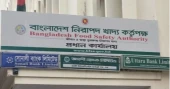
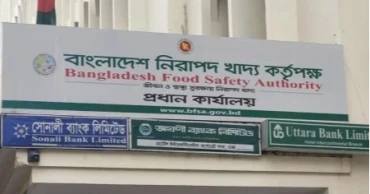
All offices of the Bangladesh Food Safety Authority (BFSA) have been declared 100% tobacco- and smoke-free to protect non-smokers from the harmful effects of secondhand smoke.
The authority will now conduct all its activities in line with national tobacco control guidelines to maintain a completely tobacco- and smoke-free environment across its offices.
BFSA Chairman Md. Shafiqul Islam, an additional secretary, made the announcement as the chief guest at an event titled “Declaration of All Offices of the Bangladesh Food Safety Authority as 100% Tobacco- and Smoke-Free” at the authority’s headquarters in the capital on Monday.
The event was jointly organised by Dhaka Ahsania Mission (DAM) and the BFSA.
He said the decision was taken to protect officers, employees and citizens visiting the authority for services from the harmful effects of secondhand smoke.
Presenting the keynote paper, Md. Shariful Islam, coordinator of the Tobacco Control Project at Dhaka Ahsania Mission, said tobacco smoke contains approximately 7,000 chemicals, around 250 of which are harmful to human health and can cause serious diseases and death.
He noted that tobacco use claims approximately 200,000 lives in Bangladesh every year.
Citing data from the Global Adult Tobacco Survey (GATS), he said 42.7% of non-smoking adults in enclosed workplaces and 21.6% of non-smoking adults in government offices are exposed to the health risks associated with secondhand smoke.
He also said approximately 37.8 million people in Bangladesh use tobacco products, including 19.2 million who smoke. In addition, nearly 40 million people are exposed to secondhand smoke despite not using tobacco themselves.
He emphasised that protecting people from the harmful effects of secondhand smoke requires ensuring 100% smoke-free environments in all public places, including workplaces.
Speakers at the event said the BFSA’s initiative could inspire other government institutions to establish completely smoke-free environments.
They also stressed the need to formulate rules under the amended tobacco control law without delay to provide clearer guidance for public and private institutions.
Calling for the swift formulation of rules under the Smoking and Tobacco Products Usage (Control) Act, 2026, the speakers said any delay would hinder the effective implementation of public health protection measures incorporated into the amended law and postpone the benefits for the public.
The discussion was moderated by Ferdous Arafat, legal officer of the BFSA.
Anwarul Islam Sarker, member of the BFSA; Kawsarul Islam Sikder, additional director of the authority; Dr Naila Parvin, assistant director of the Health and Nutrition Sector at Dhaka Ahsania Mission; members of the Ahsania Mission Youth Forum for Health and Wellbeing; and senior officials from the relevant organisations, among others, were present.
2 days ago