Bangladesh
No legal bar to Pabna-1, Pabna-2 elections on Feb 12:SC
The Appellate Division on Thursday cleared the way for holding the elections in Pabna-1 and Pabna-2 constituencies on February 12 in accordance with the boundaries specified in the Election Commission’s September 4 gazette.
An Appellate Division bench led by Chief Justice Zubayer Rahman Chowdhury passed the order.
As per the order, Sathia upazila will constitute Pabna-1 constituency while Sujanagar and Bera upazilas will form Pabna-2.
Acting Attorney General Arshadur Rouf Additional Attorney General Anik R Haque stood for the EC while Barrister Imran Abdullah Siddique and Barrister HM Shanjid Siddiaue represented Jamaat-e-Islami and BNP respectively.
On January 14, the High Court fixed January 15 for hearing on the leave-to-appeal petition filed challenging the validity of the gazette issued by the Election Commission (EC).
On January 10, the Election Commission (EC) suspended the election in Pabna-1 and Pabna-2 constituencies until further order from the court .
The decision was taken in line with an order issued by the Appellate Division of the Supreme Court on January 5 over a dispute regarding the demarcation of the two constituencies, the parliamentary constituencies No 68 (Pabna-1) and No 69 (Pabna-2).
According to an EC circular issued on January 6, the commission decided to keep the elections scheduled for February 12 in the two constituencies suspended until further directives from the court.
On September 4 last year, the Election Commission published a gazette on the delimitation of the country's 300 constituencies bringing changes to the boundaries of 46 constituencies, including Pabna-1 and Pabna-2.
As per the gazette, the Pabna-1 was formed with the entire Santhia upazila, while Pabna-2 comprised Sujanagar and Bera upazilas.
EC suspends Pabna-1, Pabna-2 elections until further court order
But the EC on December 24 last issued a revised gazette to restore the previous boundaries of the two constituencies in compliance with an order of the High Court.
Following the High Court order, the Pabna-1 (Constituency No. 68) was formed with Santhia Upazila and parts of Bera Upazila, including Bera Municipality and the unions of Haturia Nakalia, Natun Varenga, Chakla and Kaitola.
The Pabna-2 (Constituency No. 69) was again formed with Sujanagar Upazila and the remaining areas of Bera Upazila, excluding Bera Municipality and the four unions—Haturia Nakalia, Natun Varenga, Chakla and Kaitola.
Later, Jamaat-e-Islami candidate for Pabna-1 Mohammad Najibur Rahman and the Election Commission filed separate petitions with the Appellate Division, seeking a stay on the High Court verdict.
On January 5, the Appellate Division stayed the effectiveness of the Election Commission’s revised gazette until leave-to-appeal petitions would be filed.
9 months ago
People to emerge as frontline guardians of democracy: Debapriya
The people of Bangladesh will emerge as the frontline guardians of democracy in the days ahead, Citizen’s Platform Convener Debapriya Bhattacharya said on Thursday, citing the country’s evolving political and social transformation.
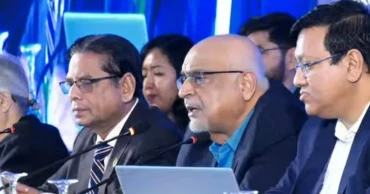
“The people of Bangladesh are far more aware and far more capable than before. In the days ahead, safeguarding democracy will not require anyone else, the people of this country will themselves act as the principal guardians of democracy,” Debapriya said at a press briefing.
The event titled ‘National Election 2026: Citizens’ Recommendations for the Next Government’, organised by the Citizen’s Platform at a city hotel.
Debapriya said sustainable development and positive change in the country cannot be achieved through policy frameworks alone.
1971, 1990 and 2024 share same spirit of dignity, not conflict: Debapriya
To that end, alongside policy recommendations, the Citizen’s Platform has now introduced a national programme to monitor policy implementation. Under this initiative, the extent to which the recommendations are implemented over time will be closely tracked.
“Policy advice alone does not ensure implementation; oversight is essential,” he said, adding that education, health, social protection, and broader economic and social policy frameworks developed by the platform will be monitored through a ‘Reform Tracker’.
Debapriya also said the Reform Tracker will not be limited to the Citizen’s Platform’s proposals alone, but will also monitor how far political parties fulfill their manifesto commitments related to citizens’ development after the election.
Noting that civil society is currently more conscious than at any previous time, Debapriya said citizens will play the most decisive role in the country’s democratic transition. With a focus on improving people’s living standards, the Citizen’s Platform has structured its policy recommendations accordingly.
Politicians also face growing security concerns alongside citizens: Debapriya
Later, CPD Distinguished Fellow Mustafizur Rahman presented 12 policy recommendations aimed at achieving inclusive development in Bangladesh’s future socio-economic and democratic transition, while CPD Additional Director (Research) Towfiqul Islam Khan announced a 10-point action plan to implement those recommendations.
9 months ago

Schoolgirl abducted in Khulna rescued from Sylhet; kidnapper held
Members of the Rapid Action Battalion (RAB), in a drive on Wednesday, rescued an eighth-grade schoolgirl who was abducted from Khulna on January 1, from Dakkhin Surma upazila of Sylhet.
The elite force also arrested Shohagh Mia, 29, son of Nur Islam of Chhatak upazila in Sunamganj district, from the spot.
According to RAB, the victim went to school on January 1 but did not return home, said KM Shahidul Islam, Additional Superintendent of Police (Media Officer) of RAB-9.
Read more: Child kidnapped using ’devil breath’ in Dhaka rescued: 3 held
Failing to trace the girl, her family later learned that three to four unidentified assailants had forcibly abducted her from the Phulbari Gate bus stand under Khanjahan Ali Police Station in Khulna and taken her away in a CNG-run auto-rickshaw.
Later, the victim’s father filed a case with Khanjahan Ali Police Station.
9 months ago

Haor, wetland encroachers to face jail, fine under new ordinance
The government has promulgated ‘Bangladesh Haor and Wetland Conservation Ordinance, 2026’ as part of its tough stance to protect the country’s ecological balance and conserve haors and wetlands.
The new ordinance strengthens the Haor and Wetland Development Directorate and introduces tough punishment, including imprisonment and heavy fines for encroachment, land filling and environmental damage in haor and wetland areas.
Under the law, the directorate has been given clearly defined responsibilities.
Based on lists prepared by deputy commissioners, the government will publish a final gazette of haors and wetlands.
A master plan will be prepared to ensure protection and integrated management of wetlands and obtaining the directorate’s opinion will now be mandatory before taking up any development project.
The ordinance also empowers the government to declare any haor or wetland a protected area if special conservation is required based on the opinions of the relevant authorities.
The law provides for strict punishment depending on the nature of the offence.
Anyone found illegally occupying haor or similar land, filling wetlands, carrying out unauthorised excavation, or constructing infrastructure that disrupts the natural flow of wetland water will face up to two years’ imprisonment or a fine of up to Tk 10 lakh or both.
The same punishment will apply to those who extract soil, sand, stone or any other natural resources without proper permission.
Read more: Govt promulgates ordinance with fines for illegal tree cutting
Besides, using banned nets, poison bait or electric shocks to catch fish, hunting migratory birds in haor areas, or destroying swamp forests will be punishable with up to two years’ jail and a fine of up to Tk 500,000.
If natural resources are extracted in a manner that disrupts fish breeding, the offender will face up to one year’s imprisonment or a fine of up to Tk 500,000.
To curb environmental pollution anyone whose actions pollute haor water or soil will be punished with up to two years’ imprisonment or a fine of up to Tk 200,000.
Violating any special protection order or directive issued by the directorate, or breaching restrictions in areas declared as protected will also face up to two years’ jail and a fine ranging from Tk 500,000 to Tk 10,0000.
If any individual or institution causes damage to the wetland ecosystem, the director general of the directorate will be able to assess the extent of the damage and order its recovery.
He will also be empowered to direct necessary measures to restore the affected area, which must be complied with.
9 months ago

Mild cold wave sweeps parts of Bangladesh: BMD
A mild cold wave is sweeping over parts of the country and it may continue in some places, Bangladesh Meteorological Department (BMD) said on Thursday.
According to the regular Met office bulletin, “Mild cold wave is sweeping over the districts of Dinajpur, Panchagarh, Kurigram and Chuadanga and it may continue and spread.
Light to moderate fog may occur at a few places over the country during late night to morning.
Panchagarh’s Tetulia recorded the country’s lowest temperature at 7.5 degrees Celsius on Thursday morning.
Night and day temperatures may fall slightly over the country.
Mild cold wave sweeps parts of Bangladesh: BMD
Weather may remain dry with temporary partly cloudy sky over the country.
9 months ago
Govt borrowing jumps 619%, raising private credit strain in Bangladesh
Bangladesh’s private sector risks a tightening credit environment as government borrowing from the banking system has surged to nearly Tk 60,000 crore in the first half of the current fiscal year, raising concerns about reduced lending capacity for businesses.
According to Bangladesh Bank data, the government’s net borrowing from banks reached Tk 59,756 crore between July 1 and January 4 of FY2025–26.
The amount accounts for more than 57 percent of the full-year borrowing target of Tk 1.04 lakh crore, surpassing the halfway mark well before the fiscal year’s midpoint.
The pace of borrowing marks a sharp escalation from a year earlier. In the same period of FY2024–25, the government’s net bank borrowing stood at Tk 8,312 crore, meaning the current figure represents an increase of 619 percent.
Read more: Govt exceeds IMF-set limit on external borrowing: Dr Salehuddin
Although the government initially repaid a small portion of its bank liabilities at the start of the fiscal year, borrowing accelerated rapidly amid mounting fiscal pressures.
Economists cite a combination of revenue shortfalls, declining foreign aid and rising expenditure commitments as key drivers behind the shift.
“The government is not meeting its revenue targets, and expected foreign loans are not arriving on time,” said Towfiqul Islam Khan, economist and additional research director at the Centre for Policy Dialogue (CPD).
"Consequently, the government is forced to lean on the domestic banking sector to cover the deficit," he said.
Bangladesh Bank data show the government’s total outstanding debt to the banking system has climbed to Tk 6.10 lakh crore.
Of the borrowing undertaken so far this fiscal year, Tk 35,750 crore has come from commercial banks, while Tk 24,006 crore has been taken from the central bank.
Read more: IMF limits Bangladesh’s foreign borrowing
Business leaders warn that heavy public-sector borrowing risks crowding out private investment by absorbing a significant share of available bank liquidity.
Reduced access to credit could delay investment decisions, constrain production capacity and slow job creation, they say.
Syed Mahbubur Rahman, managing director and chief executive officer of Mutual Trust Bank Limited, said the banking sector has been navigating a difficult period amid a broader erosion of confidence.
He noted that while the economy and banking system have stabilised, growth has slowed due to the impact of “severe mismanagement of the macroeconomic situation”.
“Excessive government borrowing reduces the capacity of banks to support the private sector,” said Abdul Haque, a prominent business leader and former director of the Federation of Bangladesh Chambers of Commerce and Industry (FBCCI).
“This hampers employment and has a negative ripple effect across the entire economy," he said.
Read more: NPL crisis chokes private credit growth, endangers Bangladesh's economic recovery: Experts
Analysts caution that unless revenue collection improves and public spending is managed more effectively, continued reliance on bank financing could undermine private-sector activity and weigh on Bangladesh’s longer-term economic growth.
9 months ago

Two motorcyclists killed in truck crash in Brahmanbaria
Two motorcyclists were killed after being hit by a truck in Ashuganj upazila of Brahmanbaria on Wednesday night.
The accident took place in the Sonarampur area of the upazila on the Dhaka-Sylhet highway.
The deceased were identified as Saimon, 20, son of Shahidul Islam of Lakshmipur village in Bhairab upazila of Kishoreganj district, and Abdur Rahman, 23, son of Makrul Molla of the same village.
Shafiqul Alam Chowdhury, Officer in Charge of Ashuganj Police Station, said the two youths were travelling from Bishwaroad in Sarail towards Ashuganj when their motorcycle collided with a truck coming from the opposite direction in the Sonarampur area.
Young man shot in Brahmanbaria
Both riders were seriously injured in the crash and were taken to the Ashuganj Upazila Health Complex by local people.
Doctors on duty declared them dead on arrival.
After receiving the news, family members went to the hospital and took the bodies home.
“Legal action in this connection is underway,” the OC added.
9 months ago
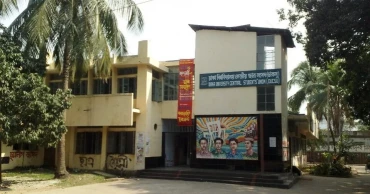
Referendum: DUCSU announces month-long programme to secure victory for ‘Yes’
Dhaka University Central Students’ Union (DUCSU) has announced a month-long programme comprising 15 events across the country to ensure the victory of the ‘Yes’ vote in the upcoming national referendum.
The initiatives aim to increase public awareness and participation in the referendum under the pro-reforms slogan, “Vote ‘Yes’, Choose a Safe Bangladesh.”
The programmes were announced on Wednesday at a press conference held in front of the DUCSU building. DUCSU Vice President (VP) Shadik Kayem outlined the month-long plan at the briefing.
According to the press conference, the 15 initiatives to build public support in favour of ‘Yes’ include nationwide door-to-door outreach, online campaigns, exhibition debates, seminars on state reforms, exchange meetings with civil society members and journalists, discussions with online activists, a discussion titled “Thoughts of the July Injured,” publication of songs, poems and documentaries, speech competitions, street plays and mime performances, dialogue with student and social organisations, and visits to educational institutions across the country to unite students.
In his written statement, Shadik Kayem said the core spirit of the July mass uprising was the reform of the existing state structure and the establishment of a discrimination-free society. He described the referendum as a historic pathway to implementing those reforms, adding that participating in the referendum and casting a ‘Yes’ vote is a responsibility to uphold the sacred legacy of the blood of the July martyrs.
Hadi shooting: DUCSU leaders march to Home Adviser’s office
He said a ‘Yes’ vote would pave the way for reforms such as limiting any individual from serving as prime minister for more than two terms, ensuring transparency in public sector recruitment, enabling public participation in major constitutional changes, increasing women’s representation, safeguarding the legitimate rights of people of all religions and ideologies, and recognising internet access as a fundamental right. At the same time, it would help end the culture of enforced disappearances, extrajudicial killings, secret detention centres, and other human rights violations.
At the press conference, DUCSU called upon all anti-fascist political parties including BNP, Jamaat, and NCP, along with student organisations, professional bodies, civil society members, and the wider student community and general public to unite and create a nationwide groundswell in favour of the ‘Yes’ vote in the referendum.
9 months ago

Two Rohingya women held with 14,000 yaba pills in Jashore
Two Rohingya women were arrested with 14,000 yaba pills in a special operation by the Department of Narcotics Control (DNC) in Jashore on Wednesday morning.
The operation took place around 7:20 am in the Rajarhat area under Kotwali Model Police Station.
Officials conducted the raid on the north side in front of B.K. City Hotel and Resort, located south of the Rajarhat crematorium on the Jashore-Khulna highway.
The arrested women were identified as Sokina Akter, 30, daughter of Shabbir Ahmed, and Shukutara, 20, daughter of Fazal Ahmed.
Both are from Kutupalong Registered Camp under Ukhiya Police Station in Cox’s Bazar District sheltering Rohingya refugees from Myanmar.
During the raid, authorities recovered a total of 14,000 yaba tablets, with one suspect carrying 6,000 and the other 8,000 tablets.
Two mobile phones used by the suspects were also seized.
BNP leader Alamgir murder case: fourth suspect arrested in Jashore
DNC Sub-Inspector M. Rafiza Khatun filed a regular case under the Narcotics Control Act against the suspects at Kotwali Model Police Station.
DNC Jashore Deputy Director Parveen Akhtar said anti-drug operations are ongoing and strict legal action will be taken against drug traffickers under a zero-tolerance policy.
9 months ago

APBN seize 680g gold from Umrah trip leader at Dhaka airport
Airport Armed Police Battalion (APBN) at Hazrat Shahjalal International Airport on Tuesday detained a man with 680 grams of gold, Tk 77,550, and foreign currency 16,125 Saudi riyals.
The suspect, identified as Gias Uddin, 46, was stopped around 11:15 am near Canopy Area 2 after his movements appeared suspicious.
He was taken to the APBN office for questioning and a body search.
Officers recovered 680 (six hundred eighty) grams of gold jewellery, 77,550 (seventy-seven thousand five hundred fifty) Bangladeshi taka, and 16,125 (sixteen thousand one hundred twenty-five) Saudi riyals from a bag around his neck and recorded in the seizure register.
The gold items are 21 carat.
During interrogation, Gias Uddin said he had returned from Saudi Arabia after performing Umrah as a group leader.
He admitted bringing the gold into Bangladesh illegally through different Umrah pilgrims, evading customs duties.
Officials said the suspect is involved with an active gold smuggling syndicate at the airport and worked as a receiver.
APBn detains man with Yaba at Dhaka airport
A case has been filed against him at the Airport Police Station under Section 25-B(1)(b) of the Special Powers Act, 1974 for conspiring with unknown passengers to smuggle gold and evade government revenue.
Airport APBN Operational Commander Superintendent of Police Mohammad Mozammel Haque said, “Gold smugglers take different forms to commit crimes. APBN remains vigilant to stop gold and drug smuggling. Our efforts to prevent any criminal activity at the airport will continue.”
9 months ago