Bangladesh

Couple killed by lightning strike in Kurigram
A couple was killed in a lightning strike at Saheber Alga village in Ulipur upazila of Kurigram district on Tuesday night.
The deceased were identified as Jahangir Hossain, 42, a farmer and his wife Rubi Begum, 35 of the village.
Quoting local people, Md Zillur Rahman, officer-in-charge of Ulipur Police Station, said a streak of thunderbolt struck on the couple around 7:30 pm when they were sitting on their house amid rain, leaving them dead on the spot.
A pall of gloom descended over the incident in the area.
10 months ago

Fenchuganj fire damages 3 dwelling houses
At least three dwelling houses were gutted in a fire in Fenchuganj upazila of Sylhet district early Wednesday.
Sayed Hasan Shuvo, station officer at Fenchuganj Fire Service said the fire erupted from one of the houses and engulfed two others fast in Konar Bari area around 1am.
Though locals initially tried to bring the flame under control, they failed and informed the Fire Service, he said.
Tongi Fire: Shop employee succumbs to burn injuries
Later, two firefighting units from the station rushed to the spot and managed to put out the fire after an hour of efforts, Shuvo said, suspecting that the fire originated from an electrical short circuit.
He, however, claimed that no one was injured in the incident.
The extent of damage caused by the fire will be known upon investigation, the fire service official added.
10 months ago

Maritime ports advised to hoist local cautionary signal No 3
Maritime ports of Chattogram, Cox’s Bazar, Mongla and Payra have been advised to hoist local cautionary signal No 3 as a low-pressure area has been formed over westcentral Bay and adjoining coastal areas of Bangladesh.
“Under the influence of the well-marked low over westcentral Bay and adjoining area, heavy to very heavy rain with gusty or squally wind may affect the maritime ports, North Bay and adjoining coastal areas of Bangladesh,” said a Met office special bulletin.
All fishing boats and trawlers over North Bay have been advised to come close to the coast and proceed with caution till further notice.
10 months ago

Fisherman loses life in terrifying crocodile attack in Sundarbans
A fisherman was killed after being attacked by a crocodile while fishing in the Sundarbans on Tuesday afternoon and his body was recovered nearly seven hours later.
The deceased was identified as Subrata Mondal, 32, son of Kumud Mondal, from Dhangmari area in Dakop upazila, Khulna.
According to Azad Kabir, officer-in-charge of Karamjal Wildlife Breeding and Tourism Centre, Subrata had entered the Sundarbans on Tuesday morning with several others, carrying a government-issued pass obtained from the Dhangmari station under Chandpai Range of the East Forest Division.
After collecting fish and crabs in the Jongra area, they were returning in the afternoon.
Around 3:30 pm, while crossing the Karamjal canal by swimming, a crocodile suddenly attacked Subrata, dragged him underwater, and disappeared into the canal. His companions tried desperately to rescue him but were unsuccessful.
Later, locals and forest officials launched a search operation.
Subrata’s body was recovered around 10:30 pm from the Gojalmari area of Karamjal canal, Azad Kabir said.
He said Subrata had entered the forest with official permission. As his death resulted from a crocodile attack, his family will receive compensation according to government rules.
10 months ago
Youth shot dead in Khulna while asleep
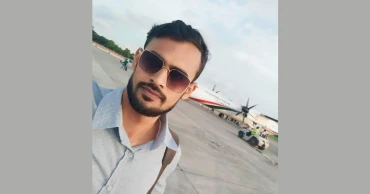
A 29-year-old youth was shot dead early Wednesday while asleep in his Maheshwar Pasha residence under Daulatpur Police Station of Khulna city, said police.
The deceased was identified as Tanvir Hasan Shuvo, general manager of an international marketing company. Shuvo was preparing to go abroad.
Quoting family members, officer-in-charge of Daulatpur Police Station Mohammad Rafiqul Islam said Tanvir fell asleep while playing games on his phone with headphones on.
RMG worker stabbed dead in Dhaka
Around 4:30am, family members rushed to his room after hearing the sound of a gunshot and found three bullet shells in the room, he said.
He was first rushed to Khulna Medical College Hospital (KMCH) around 5am where physicians suggested he be taken to Dhaka, the OC said. But he died at the hospital around 7:30am while preparations were underway to shift him.
10 months ago
Normalcy returns to Khagrachhari as blockade withdrawn after 4 days
Life in Khagrachhari has begun returning to normal since Tuesday night after a four-day disruption, as a road blockade enforced by a group was suspended until October 5.
Though long-distance transport services have not fully resumed, a few vehicles left the district on Wednesday morning. Passenger presence increased at bus counters while limited traffic was seen in the town and surrounding areas.
Business establishments, including shops reopened after remaining shut for four days.
The indefinite blockade was called by an organisation named ‘Jumma Chhatra-Janata’ in protest of the alleged rape of a schoolgirl.
On Tuesday night, the group announced on its Facebook page that the blockade would be suspended out of respect for the Durga Puja and in light of assurances from the administration to meet their eight-point demand.
Situation in Khagrachhari now normal: Home Adviser
But, Section 144, imposed by the district administration, remains in effect.
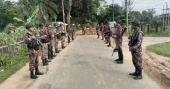
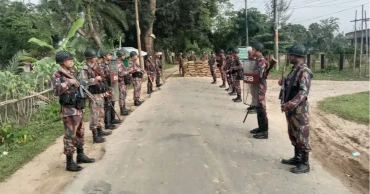
Despite the suspension, tension persists among locals as additional security measures continue in Khagrachhari and Guimara, with army patrols, BGB and police patrolling.
A five-member panel was formed to investigate the recent incidents.
Civil Surgeon Dr Mohammad Shaber said he could not confirm social media claims that medical tests found no evidence of rape, noting that the report would be submitted to court through police.
During the blockade on September 27 and 28, at least three people were killed and many injured in clashes. Several shops, homes, and offices in Guimara, including Ramsu Bazar, were set on fire.
Officer-in-charge of Khagrachhari Sadar Police Station Abdul Baten Mridha said normalcy is gradually being restored, with vehicles running and no fresh incidents reported.
10 months ago

UNOPS and Takeda partner to tackle Bangladesh's medical waste crisis
The United Nations Office for Project Services (UNOPS), in partnership with Takeda Pharmaceutical Company Limited (Takeda) has launched a transformative healthcare waste management initiative in Bangladesh.
The project aims to protect over 7.3 million people from infection risks linked to healthcare waste while boosting climate resilience in the public health system, said UNOPS said on Wednesday.
Supported by USD 7.1 million (JPY ¥1,023,546,180) from Takeda, it will establish a sustainable and replicable framework for medical waste management in underserved and climate-exposed regions.
In Bangladesh’s rural and disaster-prone districts, mismanaged medical waste poses an increasing threat to both public health and the environment.
Hospitals now generate around 3.4 kg of waste per bed per day, up from 2 kg in 2019, with this surge far outpacing the development of supporting infrastructure.
JICA wants to install Incinerator plants to dispose medical waste
Over 80% of municipalities still lack proper waste treatment facilities.
Seasonal floods and cyclones worsen the situation, spreading untreated, infectious waste into nearby communities and water systems, and heightening the risk of diseases such as HIV, hepatitis and bacterial infections.
To address this urgent challenge, the project will establish six modern, climate-resilient medical waste treatment facilities, serving thousands each day and reaching over 1.8 million people annually.
It will also train 1,400 healthcare professionals and waste workers while engaging 250 community elders and volunteers to promote safe handling and disposal practices.
By emphasising behavioural change and local capacity building, the initiative seeks to ensure long-term impact.
“Our partnership with Takeda is a powerful example of what we can achieve when we join forces to tackle complex challenges. Together, we’re helping build safer, more climate- resilient healthcare systems in Bangladesh addressing medical waste head-on while strengthening local capacity," said Sanjay Mathur, UNOPS Regional Director for Asia and the Pacific.
Sanjay said they are proud to continue their collaboration with Takeda across the region, showing how private sector partnerships can drive real, lasting impact in public health.
“This collaboration demonstrates our shared commitment to strengthening health systems for Bangladesh's most vulnerable populations," said Toshie Ando, Head of Global CSR & Partnership Strategy, Global Corporate Affairs, Takeda.
"By addressing medical waste management in climate-affected communities, we will advance the development of sustainable solutions that safeguard public health and enhance local capacity. Together with UNOPS, we aim to create a model that can be adapted to serve similar communities facing these pressing challenges worldwide," Ando said.
HC wants to know steps taken to manage medical wastes
Designed for scale and sustainability, the project integrates modern infrastructure, workforce training, recycling solutions, and close collaboration with local governments.
This evidence based model offers a blueprint for managing medical waste in other low resource, high risk settings worldwide linking infection control with climate resilience and stronger local governance.
10 months ago
Prof Yunus leaves New York for Dhaka
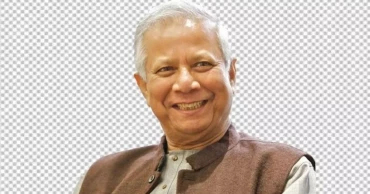
Chief Adviser Prof Muhammad Yunus left New York on Tuesday night (US time) for Dhaka, concluding a nine-day visit marked by extensive engagements during the 80th United Nations General Assembly (UNGA).
An Emirates Airlines commercial flight carrying the Chief Adviser and his small entourage took off from John F. Kennedy International Airport at 11:10 pm (US time).
Bangladesh Ambassador to the United States Tareq Md Ariful Islam and Bangladesh’s Permanent Representative to the United Nations Ambassador Salahuddin Noman Chowdhury saw him off at the airport, said Chief Adviser's Deputy Press Secretary Abul Kalam Azad Majumder.
The Chief Adviser is scheduled to arrive at Hazrat Shahjalal International Airport in Dhaka on the morning of October 2 (Bangladesh time), via Dubai.
Prof Yunus began his UNGA tour on September 22 and concluded it by attending the high-level conference on the “Situation of Rohingya Muslims and Other Minorities” held at the UN General Assembly Hall on Tuesday.
He delivered his address at the 80th UNGA on September 26 and held a series of meetings with world leaders on the sidelines of the session.
UNGA: Prof Yunus leaves for New York early Monday
BNP Secretary-General Mirza Fakhrul Islam Alamgir, BNP leader Humayun Kabir, Jamaat-e-Islami Nayeb-e-Ameer Syeed Abdullah Muhammad Taher, Jamaat’s US spokesperson Mohammad Nakibur Rahman, National Citizen Party member secretary Akhter Hossen, and first senior joint member secretary Dr Tasnim Jara joined the delegation at Prof Yunus’s invitation.
Speaking broadly at the UNGA, Prof Yunus warned, the “truth before us is frightening” and stressed that “extreme nationalism, geopolitics that thrive on the suffering of others, and indifference to human pain are destroying the progress humanity has built through decades of struggle”.
This tragedy is most visible in Gaza, he said, adding that the two-State solution must be implemented now.
Prof Yunus described three goals on which young people must be able to build the future: zero carbon, zero wealth concentration and zero unemployment. “Let the dream of a three-zero world be the dream of all nations.”
10 months ago
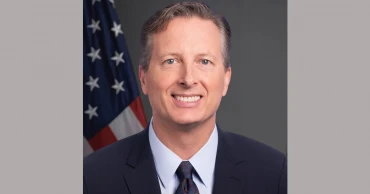
US pledges support for Myanmar, Rohingya
US Special Envoy for Best Future Generations Charles Harder has said the United States will continue to support the people of Myanmar, including Rohingya and other minorities, and urged other donors to join them in this effort.
"Increased contributions are vital to ensure dignity, safety, and hope for vulnerable populations. This is fundamentally not a responsibility of the U.S., and we will not be the primary provider of assistance while others sit by," said the Special Envoy.
Harder, while speaking at high-level conference on the 'Situation of Rohingya Muslims and Other Minorities in Myanmar' held at the UN General Assembly on September 30, said this is not a burden the United States will bear indefinitely; it is long past time for other governments and actors in the region to develop sustainable solutions for Rohingya.
All nations, organisations, and private donors must step forward and share the burden by increasing their contributions, said the Special Envoy.
The scale and complexity of this crisis make it clear that no single country or entity can do it alone.
To underscore the US commitment in saving lives and providing critical assistance where needed, Harder announced the intent to provide more than $60 million in assistance for Rohingya refugees in Bangladesh.
"With this, we expect meaningful policy changes by Bangladesh to allow livelihood opportunities and by aid organisations to increase cost efficiency," Harder said.
The United States expressed its support for Rohingya and other Myanmar minorities who have been victims of repression and violence.
"Survivors of that persecution are here with us today. I commend their bravery in speaking out," Harder said.
The US thanked the government of Bangladesh, as they have shown generosity and compassion in hosting Rohingya refugees, many of whom fled a campaign of genocide and crimes against humanity perpetrated by Myanmar’s military.
Rohingya Conf: US, UK announce fresh aid commitment of $96mn
"We also thank Thailand for its steadfast partnership, including its recent decision to grant Myanmar refugees permission to work," Harder said.
Unfortunately, the Special Envoy said, Myanmar’s military regime continues to escape accountability for their atrocities. "They continue to oppress minorities, bomb civilians, and use child soldiers."
Harder said they are deeply concerned about reports of ongoing atrocities and forced displacement, particularly in Rakhine State.
The US called on all armed actors, including the military regime and the Arakha Army, to protect civilians, allow humanitarian access, and adhere to international humanitarian law.
Despite ASEAN and UN efforts to create conditions for dialogue, violence and instability have only worsened, Harder said.
The regime is moving ahead with an election plan that excludes the most popular and representative political parties.
"This plan will not address the legitimate aspirations of Myanmar’s ethnic groups. We reject these elections under current conditions," Harder said.
"Our goal is a future in which all people of Myanmar can live in safety, dignity, and peace. Our focus now should be on a ceasefire, a genuine dialogue, which is critical to shape the country’s future," said the US Special Envoy.
Meanwhile, the United States has committed to taking international efforts to provide humanitarian assistance for Rohingya refugees.
"We must review assistance to eliminate overlap, inefficiencies, and redundancies. We must maximise local solutions and minimise expensive overhead costs," Harder said.
Rohingya Conference: Prospects for funding JRP next year grim, says Filippo Grandi
Burden-sharing and increasing efficiency are strategic necessities, said the US Special Envoy.
"By working together, the international community can strengthen collective efforts to address the root causes of displacement, support durable solutions, and prevent further instability in the region," Harder said.
10 months ago
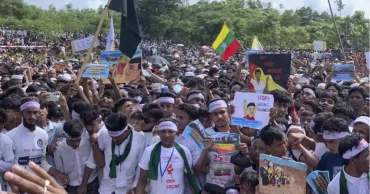
Rohingya Conf: US, UK announce fresh aid commitment of $96mn
The United States and the United Kingdom announced fresh aid commitment of 96 million dollars in the first ever high-level conference on the Rohingya and other Myanmar minorities at the UN headquarters on Tuesday, said Chief Adviser’s Press Secretary Shafiqul Alam.
The US announced a new donation of 60 million dollars and the UK 36 million dollars, he told UNB.
“Houses burned. Neighbours killed. Hope vanishing.” With those stark words, General Assembly President Annalena Baerbock opened the high-level UN conference, as alarm rises over the impact of Myanmar’s deepening crisis which threatens to destabilise the wider region.
Assembly President Baerbock underscored the scale of suffering.
“Over five million Rohingya men, women and children share some version of this story,” she said, noting that 800,000 children remain out of school in Bangladesh’s Cox’s Bazar camp alone.
Humanitarian funding is critically short, with the 2025 response plan just 12 per cent funded.
“This should put us to shame,” she declared, urging states to boost aid and pursue a political solution that would enable safe, voluntary and sustainable return.
At the heart of the emergency are the Rohingya Muslims, denied Burmese citizenship, driven from their homes and forced into camps or exile, according to the UN news.
More than a million now live as refugees in Bangladesh, while countless more remain displaced or trapped – alongside other minorities – inside Myanmar under conditions UN leaders described as “dire” and “unsustainable.”
The conference at UN Headquarters in New York, brought together top UN officials, heads of state and governments, to galvanise action alongside Rohingya activists.
Briefings and reports laid bare the daily realities since the February 2021 military coup: forced recruitment, sexual violence, airstrikes, starvation and mass displacement.
Devise roadmap for Rohingya repatriation, act together to stabilise Rakhine: Prof Yunus
Humanitarian agencies warn that resources are running out, leaving refugees malnourished and pushing more people into taking dangerous sea journeys.
Conditions inside Myanmar’s Rakhine state – ancestral home of the Rohingya – are described as the worst in decades, with civilians caught between junta forces and ethnic armed groups.
‘Human Rights Trampled’
The Secretary-General, in a statement read by his Chef de Cabinet Courtenay Rattray, said the crisis has “trampled on the human rights, dignity and safety of millions and threatens regional stability.”
He urged three immediate steps: protecting civilians in line with international law, guaranteeing humanitarian access, and reinvigorating investment to ease the strain on refugees and host communities.
“The solution to this crisis lies ultimately in Myanmar,” the message stressed, calling for an end to persecution and recognition that “the Rohingya belong – as full citizens.”
Humanitarian funding is critically short, with the 2025 response plan just 12 per cent funded.
“This should put us to shame,” she declared, urging states to boost aid and pursue a political solution that would enable safe, voluntary and sustainable return.
Demand for Accountability
For Rohingya activists, the conference was not another moment of awareness but a demand for justice.
Wai Wai Nu, founder of the Myanmar Women’s Peace Network, told delegates that the atrocities did not end in 2017, when over 750,000 Rohingya men, women and children fled violence described as a “textbook example of ethnic cleansing” by then UN High Commissioner for Human Rights, Zeid Ra’ad Al Hussein.
Rohingya Conference: Prospects for funding JRP next year grim, says Filippo Grandi
“It has worsened,” she said, pointing to killings, forced conscription, sexual violence and starvation inflicted by both the Myanmar military and ethnic armed groups fighting the junta.
“Without action, the Rohingya exodus will continue until there is no more Rohingya left in Myanmar,” she warned, urging cross-border humanitarian corridors, targeted sanctions and prosecutions for atrocity crimes.
‘A test for humanity’
Rofik Husson, founder of the Arakan Youth Peace Network, offered his own testimony of displacement and violence, recalling how the junta forced Rohingya men and boys into service, often as human shields. In one week alone, he said, at least 400 were killed.
He described village burnings and drone strikes, including a May 2024 massacre that displaced 200,000 people in a single day.
“Ending the crisis of insecurity for the Rohingya community is a test for this Assembly and a test for humanity itself,” he told delegates, calling for an internationally supervised safe zone in northern Rakhine.
No Agreed Pathway to Peace
Adding a wider lens, Special Envoy Julie Bishop stressed that Myanmar’s multifaceted crisis is inseparable from the political turmoil unleashed by the 2021 coup.
With no ceasefire in place and armed conflict spreading, she warned that planned elections later this year would fuel further violence rather than deliver legitimacy.
“There is no agreed pathway to peace,” she said, cautioning that international condemnation of the junta has ebbed even as abuses persist.
A Fragile Hope
Despite the grim accounts, speakers emphasised that solutions remain possible if political will can be summoned.
US pledges support for Myanmar, Rohingya
Baerbock closed her remarks by noting, “The Rohingya people have survived eight years of hardship, displacement and uncertainty. Their resilience is extraordinary. Our response must match it.”
For Rohingya activists, the message was equally clear: declarations are no longer enough.
“Justice is not optional…It is the only deterrent, the only path to peace,” Nu said.
10 months ago