Bangladesh

2 bodies in Atrai River: Cause of death yet to be known
Two young men whose bodies were recovered from the Atrai River in Chirirbandar upazila of Dinajpur on Monday have been identified but police are yet to determine whether they were murdered.
The deceased were identified as Mohammad Russell Mia, 25, son of Saidul Islam of Subhashahar Ward No. 7 near Phulbari bus stand and his friend Al Amin, 28, son of late Nur Mohammad of Nimnagar South Balubari Line area.
Police recovered the bodies as unidentified from near the Lakhitala Bridge over the Atrai River in Bhial Union’s Baniakhari Dolla village on Monday.
Inspector Ahsan Habib of Chirirbandar Police Station said a special team of the Criminal Investigation Department attempted to identify the bodies through fingerprint scanning, but the effort was unsuccessful.
Later in the afternoon, family members identified the bodies at Dinajpur Medical College Hospital morgue by the clothes they were wearing.
Quoting family members, the police officer said Russell and Al Amin used to go out together and return home after five to seven days.
They left their homes together around 9:30 pm on January 6 and did not return.
Their families had lost contact with them and were preparing to file a general diary at the police station.
After receiving information from the morgue staff, they went there and identified the bodies.
Police said the bodies had remained in the river for several days which made identification difficult.
An investigation is underway to determine the cause of the deaths, he said .
BNP leader’s death in custody sparks shock in Chuadanga
9 months ago

BNP leader’s death in custody sparks shock in Chuadanga
The death of a local BNP leader in army custody has sent shockwaves through Jibannagar, Chuadanga, raising questions about the circumstances surrounding his sudden demise and prompting protests across the town.
Shamsuzzaman Dablu, 50, general secretary of Chuadanga pouro BNP and a resident of Hospitalpara, died around midnight on Monday (January 12, 2026) after being taken into custody during an army operation near Jibannagar Upazila Health Complex.
According to reports, Dablu was at a medicine shop when army personnel approached him at around 10:30 pm. Within two hours of being taken, he had died.
Family members and BNP leaders allege that Dablu’s death was the result of torture, a claim that has intensified anger in the area.
Read more: Mirza Abbas alleges plot to destabilise country, vows not to fall into trap
“My brother has been murdered,” said Shariful Islam Kajol, Dablu’s brother.
Mahmud Hasan Khan, president of Chuadanga district BNP and candidate for Chuadanga-2, said, “BNP leaders and activists are being tortured under the pretext of operations. The intensity of the torture was so severe that Shamsuzzaman could not survive.”
The army, however, maintains that Dablu fell ill suddenly during questioning and died of a stroke.
A foreign pistol and four rounds of ammunition were reportedly recovered from him during the operation, which the army described as part of a routine effort to recover arms.
Chuadanga district Superintendent of Police Mohammad Monirul Islam said that Dablu was taken to the hospital after falling ill, where doctors declared him dead. “Lieutenant Colonel Imran of the army informed us of the details of the incident,” he said.
The postmortem was conducted on Tuesday morning (January 13, 2026) at the site by Jibannagar Upazila Executive Officer Md Al Amin, in the presence of police.
Read more: BNP gears up in Sylhet as Tarique Rahman set to launch election campaign
Meanwhile, protests by BNP leaders and activists continued in front of the Upazila Health Complex, prompting the deployment of additional police to maintain order.
9 months ago

Continued global assistance key to bolstering Bangladesh’s Rohingya response: UNHCR
Sustained international assistance from countries such as Sweden remain crucial to bolstering Bangladesh’s Rohingya response, as it continues to host refugees until a durable solution is achieved, said the UN Refugee Agency.
On behalf of UN partners, UNHCR reiterated its deep gratitude to the government of Sweden for its solidarity and long-standing commitment to refugees.
On behalf of the UN agencies participating in SAFE+2 (Safe Access to Fuel and Energy Plus, Phase 2), UNHCR, the UN Refugee Agency, welcomed the contribution of USD 2.9 million from the government of Sweden to support lifesaving achieves and promote green energy solution for Rohingya refugees in the Cox's Bazar camps.
With this latest contribution, Sweden’s total support to the SAFE+2 initiative and its predecessor SAFE+ reaches USD 23.5million, according to UNHCR.
SAFE+2 focuses on expanding access to clean cooking fuel, namely liquefied petroleum gas (LPG), as well as restoring degraded forest areas, and promoting green skills development among refugees and local communities.
The programme is jointly implemented by UNHCR, the Food and Agriculture Organization of the United Nations (FAO), the International Organization for Migration (IOM), and the United Nations World Food Programme (WFP), in close coordination with the Government of Bangladesh.
“Sweden’s generous support comes at a crucial time, as needs remain high while funding continues to fall,” said Ivo Freijsen, UNHCR Representative in Bangladesh.
“Eight years into the Rohingya refugee crisis, 1.17 million Rohingya still rely on humanitarian assistance to survive. Rohingya families often tell me how essential LPG is to their daily lives — how women and girls are safer as they no longer need to fetch firewood. This contribution helps sustain and protect them until conditions are in place for a voluntary, safe, dignified and sustainable return to Myanmar.”
Ambassador of Sweden to Bangladesh Nicolas Weeks said global humanitarian funds are shrinking, so we must focus on those in greatest need and prioritise saving lives, while upholding achievements made over the past few years.
This contribution allows refugees to continue cooking with cleaner fuel, preserving the forest and their health, the envoy said.
"Until they can return to Myanmar in a voluntary, safe, dignified and sustainable way, I am proud that Sweden stands in solidarity with Rohingya refugees and their Bangladeshi hosts, promoting human dignity and environmental stewardship, said the Ambassador.
9 months ago
1971, 1990 and 2024 share same spirit of dignity, not conflict: Debapriya
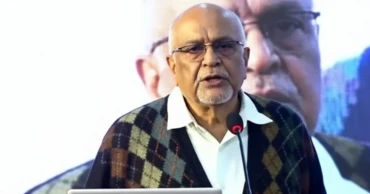
The Liberation War of 1971, the mass uprising against autocracy in 1990 and the student–people’s uprising of 2024 are all rooted in the same aspiration and are not contradictory to one another, said Debapriya Bhattacharya, Convener of the Citizen’s Platform, on Tuesday (January 13, 2026).
“According to the Proclamation of Independence of April 10, 1971, the goal was to establish a sovereign state ensuring equality, human dignity and social justice. The Liberation War was the principal means to build that state. The subsequent movements emerged from the same aspiration to realise those ideals,” Debapriya said.
He was speaking at a programme, titled ‘National Election 2026 and Citizens’ Expectations’, organised by the Citizen’s Platform in the city.
“The struggle for independence in 1971, the anti-autocracy movement in 1990 and the 2024 uprising were all driven by people’s quest for equality, dignity, justice and rights,” Debapriya said.
Read more: Politicians also face growing security concerns alongside citizens: Debapriya
After the Liberation War, he said people had hoped for dismantling the old structures and building a new Bangladesh, but that aspiration remained unfulfilled. “As a result, people united against autocracy in 1990.”
Referring to recent history, Debapriya said that over the past one and a half decades, freedom of expression has shrunk, power has become increasingly centralised, and corruption and misgovernance have intensified. “In protest against these developments and to establish a state based on equality and justice, students and ordinary people once again took to the streets, leading to the mass uprising of 2024.”
Emphasising that there is no conflict among the three historic moments, Debapriya said, “We believe there is no contradiction between 1971, 1990 and 2024. In all three periods, people stood up for their rights and dignity.”
He underscored that a credible national election is now the country’s most pressing need. “There are many questions, fears and uncertainties among people regarding the election and the post-election governance system.”
“The biggest question remains whether the election will be free and fair. Beyond that, another concern has now emerged— even if the election is fair, will it be meaningful at all, or will Bangladesh once again drift back to the old trajectory?” he added.
Debapriya said the Citizen’s Platform has reached out to people across all eight divisional cities, engaging them in dialogues to capture their hopes and aspirations. The platform has also conducted workshops at 15 universities to reflect young people’s perspectives on Bangladesh.
“Incorporating the views of marginalised and deprived communities along with collective national aspirations, we have prepared a citizens’ manifesto,” he said.
Calling it a non-flexible manifesto, Debapriya said the platform will not stop at drafting the document alone. “We have already launched a Reform Tracker. Through this, citizens will be able to monitor how much reform any government undertakes and to what extent citizens’ expectations are fulfilled.”
He said the manifesto was prepared through coordination with 150 national institutions and reflects the state vision of ordinary citizens and the younger generation.
Read more: Debapriya urges stronger govt, EC role to rebuild trust
“The manifesto is framed on the ethical foundation of the Proclamation of Independence of April 10, 1971. Our core objective is to amplify the voices of marginalised people, women and the disadvantaged—those whose voices do not usually reach the upper tiers of the state, namely the government and bureaucracy,” Debapriya said.
The Citizen’s Platform will prioritise programmes over rhetoric and work towards building an inclusive state to ensure the implementation of the manifesto, he said.
9 months ago

Van driver killed after being hit by truck in Jurain
A van driver was killed early Monday after being hit by a speeding truck while crossing the road in Balur Maidan area of Jurain under Shyampur Police Station in the capital.
The accident occurred around 3:00am, police said.
The deceased was identified as Md Ibrahim, 40, son of the late Anisul Mia of South Khashirhat village in Tajumuddin upazila of Bhola district. He had been living in Jurain with his family.
Ibrahim’s wife, Minara Begum, said her husband worked as a van driver and also did labour work in Nawabpur.
“Last night, while returning home after work, a speeding truck hit him in the Balur Maidan area of Jurain and fled the scene,” she said, adding, “He was critically injured and rushed to Dhaka Medical College Hospital, where doctors declared him dead.”
Inspector Md Faruk, in-charge of the police camp at Dhaka Medical College Hospital, the body was kept at the emergency department morgue and the matter had been informed to the concerned police station.
9 months ago
Upper house of legislature key to preventing autocracy: Ali Riaz
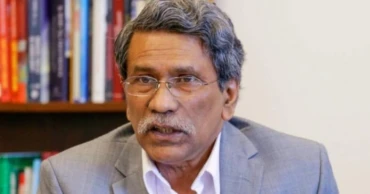
Professor Ali Riaz, special assistant to the Chief Adviser, has said establishing an upper house in the bicameral legislature is aimed at preventing the concentration of power in a single individual in the future.
Speaking at a discussion session held on Monday at Dr Kaiser Rahman Chowdhury Auditorium of Rajshahi Medical College to promote the upcoming referendum and encourage voter participation, Prof Riaz said Bangladesh’s current system has repeatedly allowed one person to accumulate power by exploiting institutional weaknesses.
“We must address this issue institutionally rather than rely on any single individual,” he said, adding that the July charter proposes the creation of an upper house in parliament, which would ensure representation of the people and all political parties, as well as reflect broad consensus in constitutional amendments.
Prof Riaz emphasised the vision of a state upholding equality, human dignity, and justice, noting that institutional decay over the past 54 years has repeatedly allowed personal or party interests to undermine governance.
Read more: Prof Yunus orders strict measures to prevent possible election fraud
He praised the role of the youth in creating opportunities through the 2024 popular uprising to prevent the rise of fascism in the future.
Monir Haider stressed that public approval of the July charter through the upcoming referendum is essential to safeguard the future of the next generation and warned that failure to pass the referendum could lead to a return of authoritarianism.
He assured officials that campaigning for ‘Yes’ or ‘No’ votes would face no restrictions, highlighting that the referendum is a collective agenda rather than a candidate election.
The session, chaired by Divisional Commissioner Dr ANM Bazlur Rashid, was attended by special assistant (consensus) Monir Haider, Rajshahi University of Engineering & Technology Vice-Chancellor Professor Dr SM Abdur Razzak, Rajshahi Range Police DIG Mohammad Shahjahan, and Rajshahi Police Commissioner Dr Mohammad Zillur Rahman.
Read more: Prof Yunus to focus on digital health, youth entrepreneurs, ‘Three Zeros’
Deputy Commissioners, police superintendents, other government officials, local journalists and civil society members from across Rajshahi division also participated.
Divisional Commissioner Dr Bazlur Rashid highlighted initiatives at divisional, district, and sub-district levels to raise awareness about the referendum and urged all officials to fulfill their responsibilities at this critical juncture.
9 months ago

Former Japanese first lady keen to collaborate with Bangladesh in preventing marine pollution
Former Japanese First Lady Akie Abe has expressed interest in collaborating with Bangladesh on efforts to prevent marine pollution.
“We have to prevent garbage from being dumped into the Bay of Bengal. We want to collaborate in these efforts. I hope we can do something in the future,” she said.
Akie Abe, during her recent meeting with Chief Adviser Prof Muhammad Yunus, also stressed the need for a large-scale public awareness campaign to educate people about the dangers of ocean pollution.
Prof Yunus called on Japanese investors to expand investment in Bangladesh and recruit more Bangladeshi workers for employment in Japan, the world’s fourth-largest economy.
Akie Abe and a delegation of Japanese entrepreneurs paid a courtesy call on him at the State Guest House Jamuna in Dhaka on Sunday.
Eyeing stronger ties with Dhaka to advance peace, prosperity: Ambassador Christensen
Akie Abe praised Prof Yunus’s leadership in restoring peace and stability in Bangladesh and guiding the country’s economic recovery, said Chief Adviser’s press wing on Monday.
During the meeting, the Chief Adviser and the former First Lady discussed potential cooperation in investment, marine research, and the recruitment of caregivers and nurses for Japan, which is facing rapid population ageing.
Prof Yunus informed the Japanese delegation that he plans to visit Tokyo in the third week of March, after stepping down as head of the interim government, to participate in a joint ocean research initiative with the prestigious Sasakawa Foundation.
At the invitation of the Chief Adviser, Sasakawa Foundation has also planned to sign an agreement with the newly constituted Maheshkhali-Matarbari Development Authority to establish three model fishing villages along the Chattogram coast.
The Chief Adviser said his government has intensified efforts to train thousands of nurses and caregivers for employment in Japan and has expanded Japanese language training programmes to support this initiative.
He said that Bangladesh has already signed agreements with Japanese investors to send at least 100,000 workers to Japan over the next five years and sought the support of Abe and the Japanese delegation to further increase worker recruitment.
Bangladesh, Pakistan discuss regional, global issues
Mitsuru Izumo, founder of leading biofuel producer Euglena, also addressed the meeting and expressed interest in supporting initiatives in Bangladesh, including social business ventures.
Prof Yunus said the interim government is fully prepared to hold free, fair, and peaceful elections on February 12, after which he will return to his previous work.
He reiterated that he has no intention of joining politics or holding any government or state position in the future.
Instead, Prof Yunus plans to focus on expanding quality healthcare, fostering entrepreneurship among young people, and promoting his vision of a “three-zero world” zero unemployment, zero net carbon emissions, and zero net wealth concentration.
SDGs Affairs Principal Coordinator and Senior Secretary Lamiya Morshed was also present at the meeting.
9 months ago

Ex-UP member killed in Nasirnagar clash, 30 injured
A former Union Parishad (UP) member was killed and at least 30 others were injured in a clash between two groups over a long-standing dispute in Nasirnagar upazila of Brahmanbaria on Monday.
The deceased was identified as Jitu Mia, 45, son of late Alai Mia of Dharmandal village under Dharmandal Union.
The incident occurred in Dharmandal village on Monday afternoon. Locals said there had been a long-standing rivalry between supporters of former UP member Jitu Mia and those of late UP member Miaz Uddin, with a related case currently pending in court.
Witnesses said an argument over the previous dispute escalated into a violent clash, during which both sides reportedly used country-made weapons. Jitu Mia died on the spot.
Around 30 people from both sides sustained injuries and were taken to Nasirnagar Upazila Health Complex and hospitals in Habiganj and Madhabpur for treatment.
Dharmandal Union Parishad Chairman Shafiqul Islam said the clash stemmed from a previous dispute.
On information, police rushed to the area and brought the situation under control, said Shahinul Islam, officer-in-charge (OC) of Nasirnagar Police Station.
Additional police and army personnel were deployed to prevent further unrest, he added.
9 months ago

Woman dies allegedly wrong blood transfusion in Bhola
A woman allegedly died after being administered the wrong blood group following a surgical operation at a private clinic in Bhola.
The deceased was identified as Lamia (19), wife of Md Sharif of Weather Office Road area under Bhola Municipality. She died on Monday evening at Sher-e-Bangla Medical College Hospital in Barishal.
According to family members, Lamia was admitted to Bandhan Healthcare in Bhola city on January 7 due to pregnancy complications. She delivered a baby boy through a caesarean section on Thursday afternoon.
The clinic authorities reportedly charged Tk 1,200 for determining the blood group and cross-matching. However, without proper cross-matching, she was allegedly given ‘B’ positive blood instead of her actual blood group ‘O’ positive.
Victim’s brother-in-law Md Rajib alleged that soon after the transfusion, Lamia developed convulsions and her condition rapidly deteriorated. She was later referred to Sher-e-Bangla Medical College Hospital, where she remained on life support in the ICU for four days before succumbing at around 5:00 pm on Monday.
He further claimed that the death certificate mentioned the cause of death as complications arising from the wrong blood transfusion.
Following the death, relatives of the victim vandalised the clinic and staged a protest demanding justice and exemplary punishment for those responsible. Police were deployed to bring the situation under control.
Inspector (Investigation) of Bhola Sadar Model Police Station Md Zia Uddin said tension erupted at Bandhan Healthcare after the death of the woman allegedly due to wrong treatment.
“Upon receiving information, police rushed to the spot and brought the situation under control. If the victim’s family files a complaint, an investigation will be conducted and legal action will be taken accordingly,” he said.
9 months ago

Protest erupts at SUST over EC's low bar, puts holds any elections ahead of national polls
A protest erupted at Shahjalal University of Science and Technology (SUST) on Monday night following the Election Commission's announcement banning elections of any organisation or association, including professional bodies, across the country ahead of the 13th parliamentary election scheduled for February 12.
Soon after the EC's declaration, students of SUST gathered in front of the university's IICT building around 11pm and staged a protest, causing unrest on the campus late at night.
Aggrieved students said the decision would further delay the student council elections, which have already been postponed for a long time citing national elections, and described the move as a violation of students' democratic rights.
Mujahidul Islam, a candidate for the post of general secretary of the Shibir-supported Durbar Sastian Oikya Panel, said the continued postponement of the student council polls was unacceptable.
"The student council elections have been delayed for a long time. Now they are being stopped again in the name of national elections. We want our representation. This is our fundamental right, and we will not accept this conspiracy," he said.
The protesters demanded immediate withdrawal of the EC's announcement and warned of stricter action if their demands were not met.
9 months ago