Bangladesh
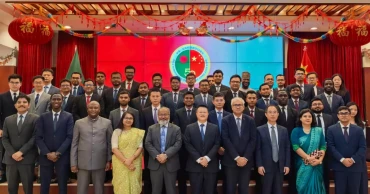
China hosts reception for Bangladeshi diplomats’ training programme
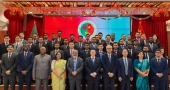
The Embassy of China in Bangladesh on Monday held a pre-departure reception for the second 2025 batch of Bangladeshi diplomats training program in China.
Secretary and Rector Dr Md. Nazrul Islam and Chinese Ambassador to Bangladesh Yao Wen attended the event.
Ambassador Yao said this programme marks the fourth batch of young Bangladeshi diplomats to participate in the training initiative jointly organised by the Chinese Embassy and the Ministry of Foreign Affairs of Bangladesh.
The upcoming journey is a “Trip of Mutual Learning” to decode China's development path, a “Trip of Practice” to experience Chinese modernization, and a “Trip of Dialogue” to deepen friendship, he said.
Ambassador Yao encouraged the young Bangladeshi diplomats to cherish the opportunity, engage in in-depth observation and exchanges, and strive to be inheritors of the China-Bangladesh friendship, as well as participants and contributors to the healthy development of bilateral relations.
Secretary Nazrul Islam expressed gratitude to the Chinese Embassy for providing the valuable training opportunity in China.
He stated Bangladesh’s willingness to further strengthen exchanges and cooperation with the Chinese Embassy to advance the Comprehensive Strategic Cooperative Partnership to new heights.
10 months ago
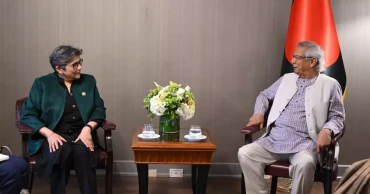
UN to support assessment on Bangladesh's LDC graduation readiness: Rabab Fatima
The United Nations (UN) has said it will support an 'independent readiness assessment' for Bangladesh's graduation from Least Developed Country (LDC) status, following a formal request from the country’s interim government.
"I have reaffirmed our full commitment to supporting Bangladesh in ensuring a smooth and sustainable graduation from the LDC category," said United Nations Under-Secretary-General Rabab Fatima on Monday, announcing that her office will support the independent readiness assessment.
She commended Bangladesh’s steadfast support to UNOHRLLS. "I am honoured to meet Chief Adviser Prof Yunus."
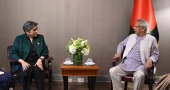
Fatima, who also serves as the UN High Representative for the Least Developed Countries, Landlocked Developing Countries, and Small Island Developing States, met the Chief Adviser at his hotel in New York on Monday (US time).
SDGs Affairs Principal Coordinator Lamiya Morshed, Foreign Secretary Asad Alam Siam, and Bangladesh’s Permanent Representative to the UN, Ambassador Salahuddin Noman Chowdhury were present at the meeting.
The readiness assessment is expected to begin within a month and be completed by mid-January, Chief Adviser’s Press Secretary Shafiqul Alam told UNB, adding that it will help make an informed decision.
He said it will be conducted jointly by an international consultant and a Bangladeshi expert to ensure a comprehensive and balanced evaluation.
The assessment will involve extensive consultations with key stakeholders, including government officials, business chambers, development experts, civil society leaders, donors, financial institutions, and political representatives, to determine whether Bangladesh is adequately prepared for the transition.
Chief Adviser Prof Yunus welcomed the initiative, emphasising the need for empirical evidence before proceeding with the graduation.
“It has become an emotional issue,” Prof Yunus said, highlighting the importance of objective data in informing policy decisions.
In response, Fatima noted that the UN's most recent economic data on Bangladesh is over two years old.
"A lot has changed since then," she said, underscoring the urgency of reassessing the country’s current economic landscape and for making an informed decision.
Prof Yunus also expressed concern over the future of Bangladesh’s pharmaceutical industry, which has significantly benefited from trade preferences tied to its LDC status.
He observed that graduation could put the sector at risk if adequate transition measures are not in place.
Prof Yunus seeks WTO support for Bangladesh’s smooth LDC graduation
10 months ago
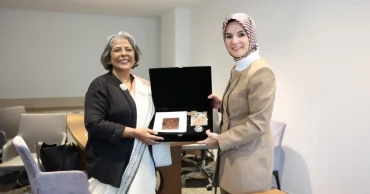
Bangladesh, Turkey to lead global conference on women in Islam
Bangladesh and Turkey have agreed to co-host a global conference early next year on Women in Islam, bringing together leading Muslim scholars and researchers and highlighting countries that showcase best practices in advancing women’s rights.
The decision was made during a meeting between Bangladesh’s Women and Children Affairs Adviser Sharmeen Murshid and Turkish Minister for Social Services Mahinur Ozdemir Gökta in New York on Monday (US time), Chief Adviser’s Deputy Press Secretary Abul Kalam Azad Majumder.
The two sides also agreed to strengthen cultural and technological exchanges between Bangladesh and Turkey, and to set higher standards of cooperation in the field of the care economy and social services.
Turkey further committed to providing training and capacity-building programmes to develop professional women caregivers for local, Turkish, and international markets, Murshid said. Murshid also holds the portfolio of social welfare.
Both countries, having ratified the Convention on the Elimination of All Forms of Discrimination against Women (CEDAW), agreed to share experiences, challenges, and achievements of women in Muslim societies.
10 months ago
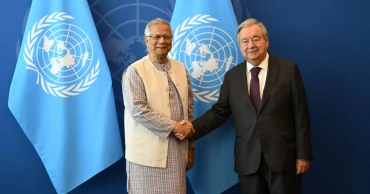
'Next few months crucial, need your support for election': Prof Yunus tells UN SG
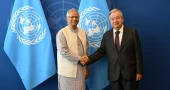
Chief Adviser Prof Muhammad Yunus has sought support from United Nations (UN) Secretary-General António Guterres, stressing that the next few months will be crucial as the country is heading towards the national election.
"We need your support for the election," Prof Yunus said, highlighting that the ousted regime and its allies are funding disinformation campaigns using stolen assets in a bid to destabilise the country ahead of the vote.
The UN Secretary-General expressed his full support and solidarity with Bangladesh’s ongoing democratic transition and reform initiatives.
He made the remarks during a meeting with the Chief Adviser at the UN Headquarters in New York on Monday (US time).
Prof Yunus led a high-level delegation that included Foreign Adviser Touhid Hossain and National Security Adviser Dr Khalilur Rahman, Principal Secretary Siraj Uddin Miah and SDGs Affairs Principal Coordinator Lamiya Morshed, said Chief Adviser’s Deputy Press Secretary Abul Kalam Azad Majumder.
During the meeting, the two sides discussed a wide range of issues, including political reforms, preparations for the upcoming general election scheduled for February, accountability for the atrocities committed during the July Uprising, global trade concerns surrounding protectionist tariff measures, and the upcoming International Rohingya Conference set for September 30.
One of India’s specialties right now is fake news: Prof Yunus
The Chief Adviser briefed the Secretary-General on the reform measures undertaken by the Interim Government and its commitment to ensuring a free, fair and peaceful election.
“They do not want an election in February. Certain international quarters are backing them,” he added.
In response, Secretary-General Guterres reaffirmed the UN's strong support for Bangladesh’s democratic transition and reform agenda.
Prof Yunus urges global rights defenders to monitor Bangladesh ahead of polls
10 months ago
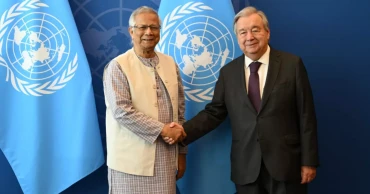
Prof Yunus, global leaders to meet at UN conf on Rohingyas, other minorities tonight
Chief Adviser Prof Muhammad Yunus is scheduled to attend the plenary meeting to address the crisis facing Rohingya Muslims and other minorities in Myanmar on the sidelines of the UNGA on Tuesday night, aiming to find ways for a sustainable solution to the Rohingya crisis addressing the funding gaps.
The high-level conference will be held at General Assembly Hall of the United Nations Headquarters from 8pm (Bangladesh time) on Tuesday.
Representatives from at least 75 countries and organisations, including heads of state and government, have confirmed their participation in the conference, Chief Adviser’s Deputy Press Secretary Abul Kalam Azad Majumder told UNB.
The meeting aims to sustain international attention, review the situation on the ground, and propose a concrete, time-bound plan for a sustainable resolution, including efforts to ensure the voluntary, safe, and dignified return of displaced communities.
The objectives of the UN-organised conference are to mobilise political support, sustain international attention on the crisis, review the overall situation, and address its root causes, including human rights issues.
The conference aims to review the crisis and exchange perspectives on the ground situation in order to propose a comprehensive, innovative, concrete and time-bound plan for a sustainable resolution.
Key priorities include ensuring the voluntary, safe, and dignified return of Rohingya Muslims to Myanmar.
Chief Adviser Prof Yunus will be among the speakers in the opening session.
Turkey will represent the Organization of Islamic Cooperation (OIC), while Kuwait will represent the Gulf Cooperation Council (GCC) at the conference.
Ahead of the meeting, Chief Adviser Prof Yunus held a meeting with UN Secretary-General António Guterres at the UN headquarters and discussed issues of mutual interest.
UN High Commissioner for Refugees Filippo Grandi and the UN Secretary-General’s Special Envoy on Myanmar, Julie Bishop, and Unicef Executive Director Katherine Russell held separate meetings with the Chief Adviser at his hotel on Monday and discussed issues related to the crisis.
Meanwhile, the UN refugee agency on Monday said voices from refugees must be at the heart of the conversation.
"Refugees have a dream: to go home to Myanmar—with dignity, safety and citizenship rights," said the UN agency.
Rohingya communities in Myanmar’s northern Rakhine State are facing forced labour, food and health crises, severe restrictions on movement and escalating armed conflict, Amnesty International said on Monday as it warned against dangerously premature decisions to repatriate refugees from Bangladesh.
The conference aims to formulate a plan under which the more than one million Rohingya refugees living in Bangladesh can return home to Myanmar after the majority were violently driven from the country by the military in 2016 and 2017.
Amnesty International conducted interviews with 15 Rohingya refugees who arrived in Bangladesh within the past year, as recently as July 2025.
The refugees came from both Maungdaw and Buthidaung Townships, which were both captured from the Myanmar military by the Arakan Army in 2024.
The organisation also spoke with UN agency staff, diplomats, researchers and international humanitarian organisations.
“Existing conditions in Myanmar’s northern Rakhine State are nowhere near ready for Rohingya to return safely,” Amnesty International’s Myanmar Researcher Joe Freeman said.
“The Arakan Army has, to many Rohingya, replaced the Myanmar military as their oppressor. The military are using Rohingya civilians as cannon fodder to fight against the Arakan Army, and Rohingya armed groups are launching new attacks into the territory. The dramatic reduction of US aid has further contributed to a humanitarian crisis in which supplies are scarce and prices are skyrocketing.
10 months ago
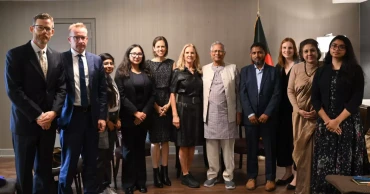
Prof Yunus urges global rights defenders to monitor Bangladesh ahead of polls
Chief Adviser Professor Muhammad Yunus on Monday called on international human rights defenders to continue visiting Bangladesh as the country approaches a “critical time” ahead of the planned election in February.
“The most important thing is that you keep visiting. Every time you visit, forgotten issues are brought to light. Ultimately, you are the voice of the people,” the Chief Adviser said while holding a meeting with a delegation of top human rights activists at his hotel in New York.
The group was led by Kerry Kennedy, President of Robert F. Kennedy Human Rights, and the meeting lasted nearly an hour.
Prof Yunus briefed the delegation on Bangladesh’s preparations for the upcoming election, ongoing reform initiatives in key sectors and steps taken to address human rights concerns.
“We started with a completely broken system. We invited the UN Human Rights Office to investigate the killings that took place last year, and their report revealed many things. Since then, we have initiated the process of setting up a UN rights mission—an important step forward," he said.
The Chief Adviser went on to say, "We also established a commission to investigate cases of enforced disappearance. People are coming forward with horrific stories—one case is bad enough. Terrible things happened for years. People were kept in Aynaghar ( mirror houses), sometimes without knowing why they were there. The commission has not submitted its full report yet, but we are receiving regular updates.”
EU plans to deploy 150 observers for Bangladesh election: EC Secretary
He said that 11 commissions were formed to suggest vital reforms in key sectors imcjuding. A national consensus building commussion is currently working on the reccommendations of the reform commissions.
10 months ago
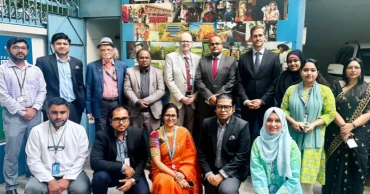
UNOPS Bangladesh convenes leaders to unlock AI for sustainable development
UNOPS Bangladesh on Monday hosted the 17th edition of its flagship SDG Café series, "Innovating with Purpose: Unlocking AI for Agenda 2030 Success."
The event convened key stakeholders to explore the transformative role of Artificial Intelligence in accelerating progress towards the Sustainable Development Goals (SDGs).
The United Nations Office for Project Services (UNOPS) supports the UN and partners worldwide in delivering peacebuilding, humanitarian, and development projects through expertise in infrastructure, procurement, human resources and project management.
Held at the UNOPS Bangladesh office in Gulshan, the forum featured a keynote address by Dr. Syed Muntasir Mamun, PhD, PGD (Oxon), Chief Innovation Officer & Director General of the Ministry of Foreign Affairs.
The session bridged the gap between AI theory and practical application, focusing on scalable solutions for challenges in climate resilience, agriculture, and healthcare in Bangladesh.
Sudhir Muralidharan, UNOPS Country Manager for Bangladesh, emphasized UNOPS's commitment to implementation with impact, leveraging innovation to build sustainable infrastructure and inclusive solutions for the nation.
Charles Callanan, UNOPS Director for South Asia, positioned UNOPS as a bridge-builder, fostering the multi-stakeholder collaborations necessary for the responsible and ethical deployment of AI. He called for translating dialogue into concrete pilot projects and partnerships that demonstrate tangible benefits for communities.
Bangladesh, UNOPS sign $1.6m funding deal to strengthen climate resilience in Bangladesh
The SDG Café brought together government officials, private sector leaders, tech innovators, academia, and development partners, fostering a collaborative ecosystem for AI-driven development in Bangladesh.
The event served as a catalyst for building a shared vision where AI acts as a powerful, ethical force for accelerating Agenda 2030.
10 months ago

Truck loses control on Fatullah overpass, rickshaw driver killed in chaos
In Fatullah of Narayanganj Sadar, a truck lost control on Monday and part of it fell from an overpass on the Narayanganj-Dhaka Link Road. A rickshaw driver, who was not involved in the accident, was killed.
The rickshaw driver was identified as Mohar Uddin, 35.
The accident occurred around noon at Bhui Ghar area in Sadar upazila. The truck driver and his assistant managed to flee the scene.
Several others who were under the bridge at the time sustained injuries and were rushed to different hospitals for treatment.
Eyewitnesses said that the empty truck was traveling from Chashara towards Signboard around 1:30pm during heavy rain.
Moving at high speed, the truck lost control near Bhui Ghar bus stand, hit the western side of the overbridge, and fell onto the road below.
Mohar Uddin, a rickshaw driver passing nearby, was struck by the broken railing falling off the overpass and seriously injured.
Narayanganj blast: 14-year-old girl dies, third victim in family
Locals took him to Dhaka Medical College Hospital, but doctors declared him dead around 3:30pm.
Faruk Ahmed, officer-in-charge of the DMC police post, confirmed Mohar Uddin’s death.
Md Hasinuzzaman , Additional Superintendent of Police of Narayanganj, said, “No other injuries have been reported so far. The truck has been removed from the road. Police are searching for the truck driver and his assistant, and an investigation is underway.”
10 months ago
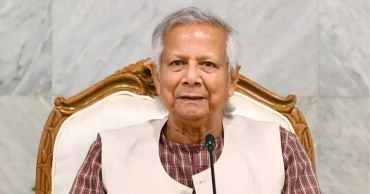
One of India’s specialties right now is fake news: Prof Yunus
Chief Adviser Prof Muhammad Yunus, who is attending the 80th United Nations General Assembly, has trashed the allegations of communal persecutions under his administration.
“One of the specialties of India right now is fake news,” the Nobel Laureate said in an interview with Zeteo's Mehdi Hasan on the sidelines of the UNGA in New York, before declaiming, “There’s no anti-Hindu violence.”
In November, around 30,000 Hindus in Bangladesh gathered to protest Yunus’ interim government, with Donald Trump even weighing in to call Bangladesh’s treatment of Hindus 'barbaric'.
Emphasising Bangladesh’s tradition of communal harmony, Prof Yunus recently said, "This country belongs to all of us and is a safe abode for everyone, regardless of caste or religion."
In a message on the occasion of Durga Puja, he urged all to unite beyond religious and caste differences to continue the progress initiated by the July mass uprising, aiming to build a prosperous, discrimination and corruption-free Bangladesh.
The five-day Durga Puja began on September 28 with Mahasashthi and conclude on October 2 with Vijaya Dashami.
"Bangladesh stands as a unique example of harmony among the people of diverse religions and communities. We all identify as Bangladeshis, regardless of race, religion, or caste," Prof Yunus said.
Prof Yunus expressed the hope that this year’s Durga Puja will be celebrated smoothly across the country, fostering communal harmony through enthusiasm and various cultural programmes.
Stressing the shared values of peace, friendship and equality inherent in all religions, he said, "The fundamental teaching of all faiths is human welfare. While practising our own religions faithfully, we must also nurture peace by maintaining mutual respect, honor and compassion."
The Chief Adviser urged all to uphold the spirit of anti-discrimination, strengthen communal bonds and work together to build a happy and harmonious Bangladesh.
Prof Yunus cites India’s tension over students, urges economic cooperation
On the sidelines of the United Nations General Assembly in New York, Mehdi sat down with Nobel Peace Prize-winning economist Prof Yunus, a year after student protesters in his country ousted the repressive former prime minister Sheikh Hasina.
“I was surprised,” Yunus says about his people’s decision to name him interim leader, which he reluctantly accepted.
“If you have sacrificed so much, I will change my mind,” he recalls telling the impassioned protestors at the time.
Hilsa export to India begins; 1,200mt approved for Durga Puja
But it has not all been smooth sailing since then. Robbery cases in the country have reached their highest point in six years, and dozens of police officers have been killed in the wake of Hasina’s departure, while others have completely abandoned their posts.
Mehdi pressed Prof Yunus on a number of topics in this wide-ranging interview with Bangladesh’s Chief Adviser.
Why do new elections have to wait until February of next year? What is Yunus’s plan for the 1.3 million Rohingya refugees from Myanmar currently residing in Bangladesh? And how can he justify effectively banning an entire political party, Hasina’s Awami League?
10 months ago
BGB issues statement refuting allegations levelled by Arakan Army; dismisses 'propaganda'
Border Guard Bangladesh (BGB) has refuted the allegations of the United League of Arakan (ULA), the political wing of the Arakan Army (AA), that the paramilitary border force of Bangladesh provides support to the Arakan Rohingya Salvation Army (ARSA) and the Rohingya Solidarity Organisation (RSO).
"These allegations are misleading, as BGB does not have any connection with ARSA/RSO. On the contrary, BGB has consistently taken firm steps to uproot their alleged activities inside Bangladesh," said BGB headquarters public relation officer Shariful Islam on Monday night.
He said that several members have been arrested, including top leader Ataullah Jununi, proving that BGB treats ARSA/RSO as a threat to stability rather than as an ally.
BGB has also taken strong steps to evict any unauthorized armed personnel and uproot their existence from bordering area, he added.
BGB’s mandate is clear: to secure the national border, maintain law and order, and manage the burden of hosting over a million Rohingya refugees.
Since the collapse of Myanmar’s ceasefire in late 2023, BGB has intensified patrols along the Naf River and frontier hills to prevent spill-over violence. At Ghundhum and across the Bandarban–Cox’s Bazar belt, soldiers are now posted everywhere, working in six-hour shifts to ensure round-the-clock vigilance.
Additional troops with arms and equipment, patrols demonstrate maximum preparedness. This is part of a deliberate effort to seal off the land border, leaving smugglers and militants fewer entry points.
BGB has reinforced its deployments, raised camp manpower and launched awareness drives in mine-affected areas, marking danger zones with red flags and supporting affected families with financial aid and medical camps. Such actions highlight Bangladesh’s seriousness in countering security threats.
While ULA points the finger at BGB, the AA itself is facing deepening crises in northern Maungdaw. Prolonged conflict has eroded morale within its ranks. Fighters are disillusioned by involvement in narcotics trade, disputes over looted resources and psychological fatigue. Many have deserted, leaving manpower gaps that AA tried to fill with recruits from other ethnic groups of Rakhine State. But language barriers, poor knowledge of terrain and reluctance to fight have reduced their effectiveness, creating new coordination problems.
Food shortages in nearby Buthidaung have worsened the situation, prompting Rohingya civilians to attempt crossing into Bangladesh.
In one striking case, an AA lieutenant reportedly defected and surrendered inside Bangladesh—an indicator of the group’s weakening cohesion. The Arakan Army’s abuses are not confined to the Rohingya population alone. Smaller ethnic minorities such as the Mro and the Tanchangya have also been subjected to persecution. Even members of the Rakhine community who refuse to pay extortion money to the AA face intimidation, violence, and harassment. Many among these groups, unable to endure the pressure, have fled across the frontier and taken shelter inside Bangladesh.
BGB provided pictures of the aforementioned incident to substantiate the phenomena.
The statement reiterated that BGB has consistently acted against ARSA/RSO, dismantling its extortion networks and preventing drug smuggling across the Naf. Intelligence confirms that militants infiltrate from Myanmar, not from Bangladeshi soil.
Moreover, landmines planted by the AA along the border make it implausible that ARSA operates freely from Bangladesh.
ICC should probe Arakan Army’s war crimes against Rohingya: Fortify Rights
BGB has always upheld the interest of the country, focusing instead on humanitarian protection, narcotics interdiction and border stability.
BGB firmly rejects the ULA’s propaganda of having connetion with ARSA and RSO. These claims aim to obscure the AA’s own record of abuses, discriminations and influence in northern Rakhine.
The international community must recognise these realities, hold perpetrators accountable and create conditions for safe, voluntary repatriation of Rohingya refugees deserve justice, dignity and the right to return home. BGB will continue to uphold its humanitarian responsibilities and secure its border, not through collusion with extremists but through vigilance, diplomacy and humanitarian action.
10 months ago