Bangladesh

Bangladesh wastes 21 million tonnes of food annually: Adviser Farida
Bangladesh loses more than 21 million tonnes of food annually across the supply chain, from farms to dining tables, Fisheries and Livestock Adviser Farida Akhter said on Monday.
She said the absence of proper storage facilities, poor price management and inadequate infrastructure are the main reasons behind such massive food losses, despite farmers’ hard work in production.
Farida was speaking at a seminar titled ‘Towards Zero Food Waste: Building a Sustainable Food Supply System in Bangladesh’ held at a city hotel.
The Centre for Policy Dialogue (CPD), the Royal Danish Embassy in Dhaka, the Food and Agriculture Organization (FAO), the World Bank, and the World Food Programme (WFP) jointly organised the event.
Dr Salehuddin warns against misinformation to safeguard economy
Citing World Bank and WFP assessments, she said about 15.5 to 16 million people in Bangladesh still suffer from acute food insecurity, a situation likely to persist until the end of 2025.
“The government is trying to increase and ensure safe food production, but at the same time, a massive amount of food is wasted — whether it is milk, eggs, meat or fish,” the adviser said.
She highlighted that indiscriminate fishing also contributes to waste. “When targeting hilsa and other species, fishing boats end up discarding nearly two-thirds of their catch back into the sea, causing serious damage to biodiversity and resources.”
Anders Karlsen, Chargé d’Affaires of the Danish Embassy in Bangladesh, said globally, one-third of all food produced is wasted.
“The land used to produce this wasted food is larger than China, and in the end, nobody eats it,” he said, stressing that along with food, agricultural land and greenhouse gases are also wasted in the process.
“The best time to take action was yesterday. If not, then it must be today,” Karlsen urged.
5 new products to be included in TCB sales from Nov: Commerce Adviser
FAO Deputy Representative Dia Sanou explained the local and global impacts of food waste.
“The world produces enough food to feed 1.5 times the global population, yet due to poor distribution, weak infrastructure and, most importantly, food waste, hunger and malnutrition persist. Despite having surpluses, the most vulnerable people still go without adequate food,” he said.
WFP Bangladesh Deputy Country Director Jesse Wood said studies reveal that 8–15% of paddy and 20–40% of fruits and vegetables are wasted after harvest, with an estimated financial loss of $2.4 billion annually.
He noted that despite being a major producer of vegetables, fish and other essentials, Bangladesh still imports these items due to inadequate storage and cold-chain facilities.
“This is a missed opportunity for both farmers and the economy,” he added.
CPD Executive Director Dr Fahmida Khatun pointed to the environmental costs, saying, “When we waste food, we also deplete scarce environmental resources. As one of the most climate-vulnerable countries, Bangladesh must prioritise reducing food waste.”
Government officials, private sector innovators, experts and development partners attended the seminar and stressed the need for having effective strategies to minimise food wastes in Bangladesh.
10 months ago
Dr Salehuddin warns against misinformation to safeguard economy
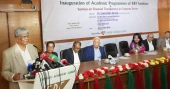
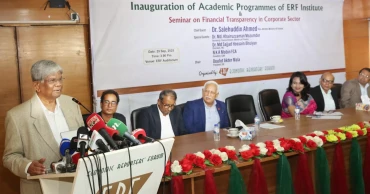
Finance Adviser Dr Salehuddin Ahmed on Monday warned against economic misinformation and stressed the need for greater transparency, stronger auditing and enhanced training for journalists and investigators to safeguard Bangladesh’s economic interests and bolster public trust.
Addressing the inauguration of academic programmes of ‘ERF Institute’ and a seminar on ‘Financial Transparency in Corporate Sector’ at the ERF auditorium in the capital, the adviser criticised what he termed ‘clever manoeuvres’ by certain actors to divert funds and siphon them abroad.
Dr Salehuddin said such practices underscore the need for robust oversight by Bangladesh Bank and other regulatory bodies, and for auditors to adopt more rigorous, evidence-based methods. “The problem is not only that money moves, but that it moves in ways that evade ordinary scrutiny.”
Finance Secretary Dr Md Khairuzzaman Mozumder, FRC Chairman Dr Md Sajjad Hossain Bhuiyan, and ICAB President NKA Mobin attended the event as guests of honour. The session was presided over by ERF President Doulot Akter Mala, with General Secretary Abul Kashem moderating.
The Adviser also urged specialised social auditors and investigative teams to look beyond books and statements and develop the intuition and methodology needed to follow the money. “Audit cannot be a paper exercise — it must verify where numbers come from and how they were generated.”
The adviser also criticised media coverage that, he said, sometimes amplifies narratives that weaken the government or empower fascist.
He called on journalists to be constructive and measured and present verified facts rather than one-day headlines that disappear quickly. “When we speak positively about what is working, that helps build confidence; reckless narratives do the opposite.”
Highlighting the importance of investigative journalism for accountability, the adviser recommended short, practical training programmes focused on verification, analytical methods and case studies.
He argued that journalism education should emphasise hands-on reporting — interviewing farmers, tracing supply chains, and validating statistics — so reporters can produce credible, long-lasting stories that matter to people on the ground.
Using agriculture as an example, he recalled a columnist’s field interviews with farmers and experts that revealed genuine contributions of agricultural initiatives — but also stressed that such reporting must connect numbers to their sources so readers can trust the findings. “If the numbers aren’t verifiable, the story loses credibility.”
The adviser praised the dedication and patriotism of many professionals working in the country’s public and private sectors and urged institutes and media organisations to build institutional discipline and stronger verification systems.
He urged leaders to foster an environment where accurate, constructive reporting and disciplined auditing go hand in hand to support national development.
Finance Secretary Dr Md Khairuzzaman Mazumder lauded the role of economists and financial analysts in shaping pragmatic fiscal policies, citing their constructive suggestions during the preparation of the national budget.
He recalled his longstanding relationship with the Institute of Chartered Accountants and other professional bodies, saying that expert opinions have often influenced key decisions in budget formulation.
He mentioned that last year, when the government was considering whether to adopt an expansionary or contractionary approach in the face of inflationary pressures, analytical reports and suggestions from economists played a decisive role.
“We had initially thought of going for a larger budget, but based on your recommendations, we opted for a more realistic and relatively smaller budget. This credit goes to you,” he said.
The secretary said the government values the contribution of economic professionals, even though direct interaction with them is not very frequent. He assured that their policy inputs will continue to be taken seriously in future fiscal planning.
Highlighting the establishment of a modern training institute as an example of joint progress, he said such initiatives reflect Bangladesh’s growing capacity and commitment to strengthening institutional frameworks.
He also expressed optimism that closer engagement with economic experts would further enrich the country’s economic governance and policymaking.
10 months ago

Two toddlers drown in Rajshahi’s Godagari
Two toddlers drowned in a pond in Mathabhanga village of Godagari upazila in Rajshahi on Monday.
The deceased were identified as Karima Khatun, 2, daughter of Ruhul Amin, and Md. Rafi, 2, son of Md. Rabbul—both residents of the same area.
Locals said the children accidentally fell into a pond near their homes while playing. They were later found floating and rushed to the emergency department of Rajshahi Medical College (RMC) Hospital, where doctors declared them dead.
Moazzem Hossain, inspector (Investigation) of Godagari Model Police Station, said the bodies have been sent to the RMC morgue.
A case is currently under process, and the bodies will be handed over to the families upon completion of legal procedures, he added.
10 months ago
9 in ten children in Bangladesh face abuse, physical punishment: Speakers
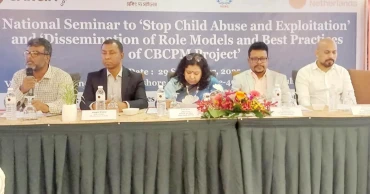
Nine out of every ten children aged between 1 and 14 years in Bangladesh face physical punishment or psychological abuse, often inflicted by parents, teachers or guardians, according to a report presented at a national seminar in the capital on Monday.
Citing data from UNICEF, the report also revealed that nearly 7 percent of children aged between 5 to17 are engaged in child labour, many in hazardous environments, said the speakers at a seminar titled ‘Community-Based Child Protection Mechanism for the Children of Garment Workers in Bangladesh’ held at a hotel in the capital.
Terre des Hommes Netherlands (TDH-NL) and Breaking the Silence (BTS) and Village Education Resource Centre (VERC) jointly organised the seminar.
Among the most vulnerable are the children of garment workers.
Nurul Kabir, programme coordinator of TDH-NL, presented the report, highlighting that millions of children in the country are deprived of their right to identity.
“Bangladesh has 102 child courts, over 23,000 cases involving children are still pending. Compared to last year, abuse against girl children has increased by 75 percent, and in the first seven months of 2025 alone, 306 children were victims of violence,” he said.
Kabir also raised concerns about the growing risks posed by the internet.
While online platforms provide children and adolescents with access to education and information, easy access to pornography and inappropriate content is having negative impacts on their mental and social development, he added.
The digital space, he said, is increasingly a source of temptation, harassment and danger, potentially causing long-term harm to young minds.
He further emphasised that children of garment workers face multiple vulnerabilities, as most are not covered by any formal or community-based child protection systems.
These children are often subjected to abuse, exploitation, and hazardous labour, are denied education, and may even be exposed to criminal activities such as theft, drug use, and sexual abuse, he said.
Government services for these children remain inadequate and local institutions, both public and private, often fail to prioritise their needs, leaving them deprived of basic rights, he observed.
The seminar concluded with several key recommendations including establishing a child-friendly protection framework for children in garment communities, creating specialised child protection units within law enforcement agencies, ensuring that rape cases are adjudicated within 90 days, and developing an integrated national child protection system.
Updates to laws and policies were also recommended to ensure a child-friendly justice system.
10 months ago

Court orders freezing of investments by Sikder's children in Thailand
A Dhaka court on Monday ordered the freezing of investments held in seven companies in Thailand under the names of three children of the late Zainul Haque Sikder, former chairman of National Bank.
Dhaka Metropolitan Senior Special Judge Sabbir Foyez issued the order in response to an application from the Anti-Corruption Commission (ACC) ACC's Public Relations Officer Aktarul Islam said.
ACC Assistant Director Md Ashikur Rahman submitted the application on behalf of the commission, where the amount worth 35.3 crore Baht will be equivalent to Tk133 crore.
The application mentioned that the late Zainul Sikder, chairman of the Board of Directors of National Bank Limited, and members of his family and associates are anonymously accused of corruption, arbitrariness, embezzlement of public funds, illegal lending in exchange for bribes, and money laundering.
Two children of Zainul are Ron Haque Sikder and Rick Haque Sikder, while Parveen Haque Sikder is the daughter.
According to court documents, their investments are spread across seven Thai companies: KOI Restaurant Company Limited, Sikder Group Limited, Sikder Holdings Limited, R&R Restaurant Group Limited, Zirara Company Limited, JR Architects International Company Limited, and Sikder & Garrett Development Company Limited.
The application stated that a joint investigation team consisting of seven members has been formed to complete the investigation and ordered to submit a report on the "Allegations related to the Sikder Group." During the inquiry, it is known to reliable sources that the accused is trying to transfer their immovable and movable properties. If they can transfer within the process, the inquiry will be in hazard, it also stated.
Such transfers could obstruct the investigation. In the interest of the government's authority to confiscate assets and ensure justice, it was necessary to seize the assets immediately, the ACC mentioned in the application.
10 months ago

Probe links government-corporate collusion to AL-era power deals
Top government officials, including former power and energy state minister Nasrul Hamid, reportedly colluded with several corporate entities in Bangladesh and India to secure controversial power deals under an indemnity law during the past Awami League regime.
The national committee, commissioned to review the controversial power deals of the AL era, reportedly gathered sufficient circumstantial evidence to prosecute the corporate companies and their collaborators in an international arbitration court.
The national committee comprising five members was formed in September last year, about three months before the controversial indemnity law—Quick Enhancement of Electricity and Energy Supply (Special Provision) Act 2010—was finally repealed 14 years after its promulgation.
After the repeal, the incumbent government, which replaced the past AL government in August last year following a student-led uprising, cancelled all solar projects approved under the now-defunct law but retained all fossil fuel-based projects.
A high official at the Bangladesh Power Development Board said that the government decided to file a case against Adani Power based on the findings of the national committee, which were not yet officially announced.
“At least a dozen top government officials, including the then energy adviser, power and energy state minister, and secretaries, worked in collusion with three corporate companies, particularly,” said an investigator who has complete knowledge of the probe.
“There is enough circumstantial evidence to establish collusion to secure controversial power deals,” the investor said on condition of anonymity.
The corporate companies, including SAlam and Adani, watched each other’s back and pulled strings in favor of each other to secure predatory power and energy tariffs, the investigator explained.
The investigation traced a pattern in the process of approving power and energy deals. International travels by top government officials preceded or succeeded the signing of such deals. The cost of such travels, which came with luxurious packages with stays in expensive hotels and gambling in casinos, was covered by the corporate companies, the investigator said.
The international trips often resulted in the top government officials travelling to multiple countries. Transactions of large sums of money occurred in third countries during the foreign trips, the investigator said.
The investigation, however, could not give an idea about how much money was transacted during the signing of the controversial power deals.
“This network of people was actually part of an international money laundering network,” the investigator said.
“We have proof that former PM Sheikh Hasina asked her close associates to smoothly facilitate the controversial deals,” said the investigator.
Sheikh Hasina was the power and energy minister between 2009 and 2024, when Bangladesh’s installed power generation capacity increased about sixfold to over 28,000MW through the construction of power plants without bidding. Over 100 power plants, mostly based on fossil fuels, were constructed.
The BPDB said that the AL government invested about $33 billion during its tenure in the power sector alone.
Speaking on a particular finding, the investigator said that Adani Power secured a predatory power tariff for its 1,496 MW coal-based Godda power plant in a negotiation brokered by the S Alam group, which owns its own controversial coal-based 1,224MW power plant in Banshkhali, Chattogram.
The construction of the Banshkhali power plant faced strong opposition from locals over its potential negative impacts on their livelihoods and the environment. At least four people were killed during protests that were suppressed by police and AL front-wing activists using excessive force.
Besides the power deals signed with Adani Power and S Alam group, the national committee also reviewed other power deals, such as the ones signed for setting up 1,320MW coal-based Payra power plant, the 335 MW dual fuel-based Meghnaghat power plant, the 583 MW dual fuel-based Meghnaghat power plant, and the 584 MW gas- or LNG-based Meghnaghat power plant.
In November last year, more than two months after the national committee came into being, a High Court bench had ordered the incumbent government to have all power and energy deals relating to Adani reviewed in 60 days.
The order apparently stayed unheeded, said M Abdul Qaium, whose writ petition drew the HC order.
The HC bench that had passed the order no longer exists.
Qaium approached two separate HC benches to look into the matter, but no bench would hear him. "This is frustrating,” said Qaium.
“The incumbents are using a lot of anti-India rhetoric while allowing a controversial Indian company to operate,” he said.
BPDB chairman Rezaul Karim said that the national committee had not yet submitted its report and that he knew nothing about its findings.
A message was sent, and calls were made over the phone to the energy adviser Muhammad Fouzul Kabir Khan for a comment on the matter. He did not respond.
Sheikh Hasina, many members of her cabinet, including Nasrul Hamid, and some former top government officials fled Bangladesh last year. Hasina's energy adviser, Tawfiq-e-Elahi Chowdhury, is currently behind bars.
Controversial Adani Power Deal
The power purchase agreement (PPA) signed with Adani Power allows the company to manipulate the coal price.
Adani uses coal with a calorific value of 4,600 kcal/kg, but Bangladesh pays for coal with a calorific value of 6,322 kcal/kg.
Quality differences could halve the coal price.
The unique PPA also allows Adani to blend Indonesian and Australian coal indexes to get an average price payable by Bangladesh. Australian coal is of very high quality and more expensive compared with Indonesian coal.
The PPA, which was never officially made public, also lacked the common discount provision that protects consumers against sudden fuel price inflation. The Payra power plant deal ensures up to a 40 per cent discount in the event of fuel price inflation. The discount provision applies if the coal price exceeds $115 a ton.
A report by the Bangladesh Working Group on Ecology and Development estimated that Adani would have its investment returned in a maximum of six years. Even if Adani produces no electricity during its lifetime of 25 years, it would have earned $12 billion in capacity charges.
Adani’s Godda investment was estimated to be $2 billion.
The absence of the price discount provision, the BPDB explained in an estimate, allowed the Indian corporate giant to earn between $1.5 million and $66 million every month.
The Washington Post had reported that the Adani power deal was the result of a direct favor of Sheikh Hasina to the Indian Prime Minister Narendra Modi.
In 2023, a US-based short-seller in a report accused the Adani group of ‘manipulation’ and ‘fraudulence.’ The group’s owner, Indian billionaire Gautam Adani, had also faced an arrest warrant issued by a US court for fraud and conspiracy.
10 months ago

National Pay Commission starts work on overhauling pay scale
The National Pay Commission has begun its work with the goal of formulating recommendations for a fair, transparent, and effective pay scale.
Four online questionnaires have been prepared to collect feedback from a wide range of stakeholders, said a statement issued by Md Farhad Siddique, member secretary of the Commission, on Monday
The questionnaires are tailored for different groups: One for employees, one for the general public, one for institutions, and one for associations.
Pay Commission formed to recommend fair salary for govt employees
All questionnaires are accessible via the commission’s official website: paycommission2025.gov.bd
Interested individuals, institutions, and associations are encouraged to submit their responses online by October 15, 2025.
Associations wishing to meet with the Commission are requested to complete the relevant questionnaire and express their interest accordingly.
10 months ago

Noor Ali, 13 others sued over manpower export fraud
Criminal Investigation Department (CID) has filed a case against 14 people including Noor Ali, owner of Unique Eastern (Pvt) Ltd, over allegations of organised fraud involving Tk 40.71 crore in manpower exports to Malaysia.
The case was filed with Gulshan Police Station under the Money Laundering Prevention Act on Sunday, said Jashim Uddin Khan, special superintendent of CID (media).
During investigation, CID found that the accused through Unique Eastern (Pvt) Ltd realised additional charges from workers seeking employment in Malaysia beyond the government-fixed migration fees.
From 2022 to 2024, the syndicate sent a total of 3,787 workers to Malaysia.
While the official fee was set at Tk 78,990 per worker the Noor Ali and his associates allegedly charged Tk 1.5 lakh from each.
CID officials said the accused collected extra money under the guise of expenses for passports, Covid-19 tests, medical check-ups and clothing fees.
10 months ago

Jewellery shops to remain closed Tuesday for Durga Puja
All jewellery outlets across the country will remain closed on Tuesday (Sept 30) on the occasion of Durga Puja, said Bangladesh Jewellers Association (BAJUS) on Monday.
In a press release, BAJUS said the shops will remain closed marking Maha Ashtami, one of the major days of the festival.
BAJUS General Secretary Badal Chandra Roy said jewellery stores are kept closed every year on Maha Ashtami and the same decision has been taken this time.
Gold trading will resume as usual from Wednesday.
10 months ago

India claiming Bangladesh’s GI products as its own: Industries Secretary
Industries Secretary Obaidur Rahman has said India has registered several of Bangladesh’s traditional Geographical Indication (GI) products in its own name, creating complications for Bangladesh in the international market.
Speaking at a seminar titled ‘FGD on Branding and Marketing Challenges for CMSMEs: Unblocking Export Potentials’ organised by the Dhaka Chamber of Commerce and Industry (DCCI) on Monday, the secretary said Bangladesh’s delay in registering GI products has allowed India to take the lead, which will cause trademark disputes in the global market.
“India has registered the Tangail Saree as ‘Tangail Saree of Bengal’. We have filed a case, which is now pending with the Madras High Court,” said Obaidur.
He said when India published a journal claiming ‘Tangail Saree’ as its own, Bangladesh did not register any protest. “As a result, we are now forced to take the difficult path of legal battles,” he added.
Pointing to the lack of institutional support, the secretary said, “There is no association in our country for GI product branding. As a result, the responsibility has to be handed over to the concerned ministries, whereas it should have been done by dedicated associations.”
Highlighting the government’s plans for small entrepreneurs, Obaidur said the SME policy-2019 is being revamped to make it more modern and inclusive. “We have proposed a 25% quota for women and small entrepreneurs in government tenders,” he said.
The ministry has also urged city corporations and the Local Government Ministry to simplify the process of issuing trade licenses for e-commerce entrepreneurs, he added.
“About 1.18 crore people are directly engaged in the SME sector, while nearly 3 crore are involved directly and indirectly. We have to think afresh about their future,” the secretary said.
He also informed that the Industrial Policy 2022 will be updated in line with the 2025 policy framework.
Expressing frustration over Bangladesh’s apparel sector, Obaidur said while ‘Made in Bangladesh’ garments are available abroad, there are no globally recognized Bangladeshi brands.
“For 54 years we have been preoccupied with politics and elections, but we could not brand Bangladesh,” he lamented.
He said SME entrepreneurs are struggling to survive against large corporations that dominate the market. “Big companies are marketing everything, leaving no space for small businesses.”
Going forward, the secretary said, all ministries, business leaders and the National Board of Revenue (NBR) will work together to strengthen Bangladesh’s SME sector.
10 months ago