Bangladesh
DSE terminates 17 employees as part of long-term restructuring, says exchange
The Dhaka Stock Exchange (DSE) on Sunday clarified its position on the recent termination of 17 employees, saying the move was part of a long-term organisational transformation process that has been underway since 2022, and not a sudden or punitive decision.
In a message signed by Deputy General Manager Shafiqur Rahman, the bourse said various discussions and comments had been circulating over the termination of some employees, prompting it to clarify facts to remove confusion.
The exchange said recruitment and termination of employees are both normal and legally recognised management processes followed by private organisations worldwide, including in Bangladesh, based on business realities, organisational restructuring, efficiency improvement, technological change or strategic needs.
Of DSE's total workforce of 350, only 17 employees, less than 5 percent, had their jobs terminated, the statement said, adding that the decision involved changes to certain positions as part of the ongoing transformation drive and was not based on any personal bias or discrimination.
The DSE said the entire process was carried out legally under Section 26 of the Bangladesh Labour Act, 2006, and its existing service rules, which allow an employer to terminate employment without assigning any reason, subject to notice or payment in lieu of notice.
It noted that this is a well-established labour law provision followed by private organisations in the country for years, comparable to an employee's right to resign without explanation by giving notice or compensation in lieu.
While the law requires compensation equivalent to four months' salary, the DSE said it went beyond the minimum legal obligation and paid an additional two months' salary on humanitarian grounds, ensuring departing employees have adequate time to seek new employment. As a result, each affected employee received compensation equivalent to six months' salary in total.
The exchange said every employee would also receive their full dues under final settlement, including provident fund, gratuity, encashment of unused leave and other benefits, which in many cases would amount to several months' salary.
It added that the company has already contacted the affected employees multiple times, urging them to collect their dues promptly.
The DSE said the dignity and respect of every employee were maintained throughout the process, with the highest level of professionalism, sensitivity and humane treatment, and that no employee faced any humiliating or disrespectful situation.
It said all affected employees would be issued experience certificates and the exchange would continue to assist them with legal dues and administrative support.
Expressing regret over certain statements being circulated after the terminations, often without complete information or context, the DSE said it respects every citizen's freedom of expression but stressed that verifying facts before making statements that could harm an institution's image or the interests of individuals concerned is a moral responsibility for all.
The exchange reaffirmed its commitment to the rule of law, good governance, transparency, accountability and humane values, wishing the departing employees success and well-being in their future careers.
It also assured stakeholders, investors, listed companies and the general public that DSE would continue to operate as a strong, responsible and forward-looking institution while upholding the law, policy and highest professional standards.
1 day ago
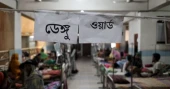
2 more die of dengue in 24 hrs, 423 hospitalised
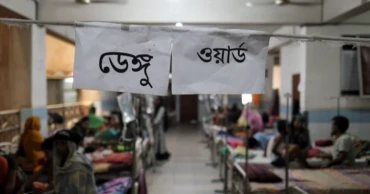
Two more people died of dengue and 423 new patients were admitted to hospitals across the country in 24 hours until 8 am on Sunday.
With the latest fatalities, the dengue death toll has risen to 56 in the country this year, according to the Directorate General of Health Services (DGHS).
The new deaths were reported in Barishal and Khulna divisions.
During the reporting period, 472 patients were discharged from hospitals after recovery.
Since January 1, a total of 16,104 dengue patients have been admitted to hospitals across the country. Of them, 14, 930 have recovered and been discharged, while 1118 patients are currently undergoing treatment.
1 day ago
Law firm hired in Dubai to challenge ex-IGP Benazir’s bail: Home Minister
The government has appointed a law firm in Dubai to challenge the conditional bail granted to former Inspector General of Police (IGP) Benazir Ahmed by a Dubai court, Home Minister Salahuddin Ahmed said on Sunday.
"We are trying to obtain a certified copy of the bail order. The Bangladesh government has appointed a law firm in Dubai to challenge the bail order," he added.
The minister made the remarks while talking to reporters after a view-exchange meeting with officials and members of Rajshahi Range Police and Rajshahi Metropolitan Police at Rajshahi Police Lines in the afternoon.
"We have heard that Benazir Ahmed has been granted conditional bail by a Dubai court. We have spoken to Bangladesh's Ambassador in Dubai regarding the matter," he said.
Salahuddin expressed hope that Benazir Ahmed could be brought back to Bangladesh soon through the legal process.
Senior police officials including the deputy inspector general of Rajshahi Range and the commissioner of Rajshahi Metropolitan Police were present at the meeting.
Former Inspector General of Police (IGP) Benazir Ahmed was arrested in Dubai by the United Arab Emirates (UAE) police in connection with a case filed by the Anti-Corruption Commission (ACC) in Bangladesh.
On June 14, Home Minister Salahuddin Ahmed disclosed the development in Parliament.
He said the UAE authorities informed the Bangladesh government of the arrest on June 12.
In April 2025, Interpol issued a red notice against the former police chief.
1 day ago
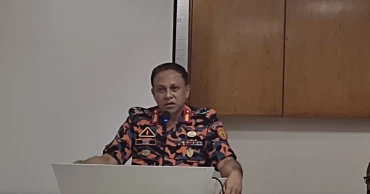
Fire Service itself may be affected if 7-magnitude quake hits Dhaka: DG
Fire Service and Civil Defence may itself suffer damage if a major earthquake measuring 7 or above hits Dhaka, making simultaneous rescue operations at multiple locations difficult, its Director General Brigadier General Muhammad Zahed Kamal said on Sunday.
Emphasising the role of the media in raising public awareness about earthquakes, the DG said regular campaigns are needed to inform people about safety measures during earthquakes, including where to take shelter, avoiding elevators, and keeping emergency kits containing essential medicines, flashlights and whistles.
He made the remarks while addressing a training programme on fire safety as the chief guest at the Fire Service and Civil Defence headquarters at Bangabazar in the capital.
He also stressed the importance of ensuring safety before entering earthquake-damaged buildings, saying rescue operations vary depending on the structure and condition of collapsed buildings.
"While reporting on such incidents, journalists must also give the highest priority to their own safety," he said.
The Fire Service chief said around 100 stations across the country have been brought under a specific plan to deal with possible disasters like major earthquakes.
"If a devastating earthquake occurs, manpower and equipment will be sent quickly to affected areas from these stations," he said.
As part of the preparedness plan, a dry exercise has already been conducted, he added, saying efforts are also underway to transport small rescue equipment and firefighters by helicopters if necessary.
1 day ago

Ex-husband held for burning woman to death
Police arrested a man for burning his ex-wife to death by pouring petrol on her at Bijora Sutarpara in Biral upazila of Dinajpur district on Saturday night.
The deceased was identified as Sumaiya Akter Shyamoli, 25, daughter of Sirajul Islam of the village.
Police arrested Mahbubur Rahman, son of Shafi Uddin of Sadar upazila in Rangpur district.
Abdul Halim, additional superintendent of Sadar (circle) Police Station, said Mahbubur married to Shyamoli four years ago. They have been blessed with two children.
The couple got divorced two years ago and since then Shyamoli used to live with her father.
On Saturday, Mahbubur swooped on the house of Shyamoli and the two had locked into a heated argument over family feud.
At one stage, Mahbubur stabbed Shyamoli with sharp weapon and set her on fire by pouring petrol around 10 pm.
Later, she was taken to Dinajpur Medical College and Hospital and died on way to Rangpur Medical College and Hospital.
Police later arrested Mahbubur from the upazila.
1 day ago
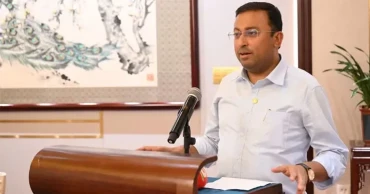
Joining Saudi-led alliance aimed at tackling Houthi challenges: Bangladesh
Bangladesh on Sunday described its relationship with the Kingdom of Saudi Arabia (KSA) as a "strategic" one and said its joining a Saudi-led alliance is aimed at tackling Houthi challenges.
"It is an alliance to tackle the activities of the Houthis. Whatever resources we have, we will extend," Prime Minister's Foreign Affairs Adviser Humaiun Kobir told reporters at the Ministry of Foreign Affairs when asked about the background of Bangladesh joining the Saudi-led maritime defense alliance.
Fourteen countries including Bangladesh have expressed their support for a multinational maritime defense alliance headed by Saudi Arabia and welcomed the consensus reached on its foundational arrangements.
Kobir said the relationship between Bangladesh and Saudi Arabia will be a strategic one and will become even stronger.
"We have a very special relationship with Saudi Arabia. The relationship with Saudi Arabia will not simply be limited to pilgrims performing Hajj and Umrah, nor is it just from a religious perspective," said the Foreign Affairs Adviser, noting that the Kingdom of Saudi Arabia is the Custodian of the Two Holy Mosques.
He said any cooperation in the security area, moral and ethical support, and tackling the Houthi challenge are all part of that special relationship.
The other signatories are Saudi Arabia, Kuwait, Bahrain, Qatar, Pakistan, Türkiye, Egypt, Jordan, Yemen, Nigeria, Sudan, Djibouti and Somalia.
Saudi Arabia and 13 other countries announced the creation of the maritime military coalition to safeguard freedom of navigation through the Bab al-Mandeb Strait, the Red Sea and the Gulf of Aden.
In a statement published on Thursday, Saudi Arabia's Ministry of Defence said the Multinational Maritime Defense Alliance was established as a framework to strengthen collective maritime defense cooperation.
The Saudi Ministry of Defense on Thursday hosted a meeting of chiefs of staff and representatives of friendly countries, as well as the Delegation of the European Union to Saudi Arabia, to discuss the Kingdom's initiative to establish a multinational maritime defense alliance.
As an outcome of the meeting, 14 participating countries issued a joint declaration, while other countries participating in the meeting also expressed support for the initiative and are in the process of completing their internal national procedures and approvals to join the joint declaration.
The declaration will remain open to those countries, as well as other interested states, once they complete their national procedures.
The meeting concluded with participants reaffirming their shared determination to complete the foundational procedures for establishing the multinational maritime defense alliance.
They underscored that the alliance would strengthen the collective ability to counter and deter threats to maritime security, protect international sea lanes, safeguard freedom of navigation and global trade, and promote regional and international security and stability.
The initiative forms part of efforts to strengthen maritime security, protect international sea lanes, and counter threats targeting maritime navigation and global trade.
The meeting saw broad participation from chiefs of staff and their representatives from 43 countries, alongside the EU delegation, out of 51 countries and organizations invited. Participants attended either in person or via videoconference.
The extensive participation reflects growing international interest in strengthening maritime defense cooperation and underscores the importance of unifying efforts to address shared threats to the security of international sea lanes within the alliance's designated area of responsibility.
Participants discussed the growing threats to maritime security, including attacks targeting commercial vessels, energy tankers and maritime infrastructure. Discussions highlighted the risks these threats pose to maritime navigation safety, global supply chain stability and the international economy.
They stressed the importance of enhancing multilateral defense cooperation to counter and deter these threats and to safeguard the security of international sea lanes.
The meeting also reviewed the draft charter of the multinational maritime defense alliance, along with its reference documents, organizational structure, command-and-control arrangements, operating mechanisms and future work plan.
These arrangements are intended to establish an effective institutional framework that strengthens maritime defense cooperation among participating countries and addresses shared maritime threats in the Bab al-Mandeb Strait, the Red Sea and the Gulf of Aden.
The meeting also discussed the foundational arrangements for the multinational maritime defense alliance initiative, foremost among them that Saudi Arabia would serve as the founding and leading state of the alliance and host its headquarters.
This reflects international confidence in the Kingdom's leadership role in promoting collective maritime security.
The participants agreed that military planners from countries wishing to join the alliance would continue their work during the next phase to complete the alliance's foundational procedures.
The work includes finalising the alliance's charter and reference documents, completing its organizational structure, command-and-control arrangements and operating mechanisms, and establishing the necessary technical groups and frameworks.
In parallel, countries wishing to join the alliance will complete their national procedures in preparation for signing the charter, launching the alliance and commencing its operations.
Saudi Arabia affirmed that the multinational maritime defense alliance is an open international initiative that welcomes all countries sharing its objectives and principles.
The Kingdom welcomed their accession to and participation in the alliance's efforts in accordance with their national procedures.
The Kingdom noted that the initiative aims to strengthen collective maritime security, safeguard freedom of navigation and global trade, and embody the principle of shared international responsibility in addressing common threats.
It stressed that the initiative is based on the firm conviction that the security of international sea lanes is a collective responsibility requiring an effective and sustainable international partnership.
1 day ago
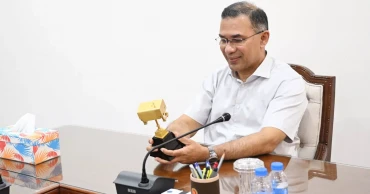
PM hails MIST world champions, pledges support for young innovators, startups
Prime Minister Tarique Rahman on Sunday congratulated the Military Institute of Science and Technology (MIST) team for winning the world title at the MATE ROV International Underwater Robot Competition 2026 and pledged full government support to promote research, technological innovation and startup ventures in Bangladesh.
"Youth innovators are the future of Bangladesh. To take the country further forward, innovators, researchers and technology entrepreneurs must come forward. The government will always stand beside them in their research, technological innovation and startup initiatives," he said during a meeting with the world champion team at his office in the Secretariat.
Tarique Rahman also emphasised the need to diversify Bangladesh's export basket beyond the readymade garments sector by developing high-potential industries such as semiconductors, pharmaceuticals, furniture and cosmetics, saying the government is committed to creating an ecosystem that encourages innovation and technology-driven entrepreneurship, said PM’s Deputy Press Secretary Sujauddoula (Sujon Mahmud).
The champion team, MIST MAVIROV, comprising students from the Department of Electrical, Electronic and Communication Engineering (EECE), paid a courtesy call on the Prime Minister in the afternoon following their historic victory at the international competition.
Congratulating the students on their achievement, Tarique Rahman described their success as a matter of national pride.
The students demonstrated their championship-winning underwater robot before the Prime Minister who took a keen interest in its design, technical capabilities and practical applications.
He discussed the project in detail with the team members and praised their engineering skills and innovation.
The Prime Minister said such achievements would help elevate Bangladesh's technological capability on the global stage.
He also assured the team of government support for the robot's further technological development, commercialisation and participation in future international competitions.
1 day ago

12-kg LPG price rises by Tk 70 for August
Bangladesh Energy Regulatory Commission (BERC) on Sunday raised the retail price of liquefied petroleum gas (LPG) for August by Tk 70, setting the price of a 12kg cylinder at Tk 1598, up from Tk 1,528.
The revised price will come into effect from Sunday evening, according to the energy regulator.
BERC also increased the price of auto gas (LPG used in vehicles) to Tk 73.67 per litre from Tk 70.40 per litre.
The commission revises LPG prices every month based on fluctuations in international benchmark prices as well as other applicable costs.
1 day ago
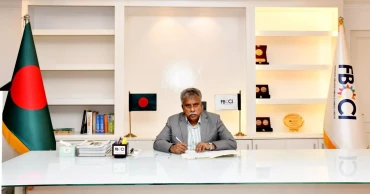
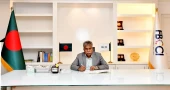
Fazlul Hoque takes charge as FBCCI administrator
Fazlul Hoque, former president of the Bangladesh Knitwear Manufacturers and Exporters Association (BKMEA) and former director of the Federation of Bangladesh Chambers of Commerce and Industry (FBCCI), on Sunday officially took charge as the administrator of the FBCCI, following his appointment by the Ministry of Commerce.
Fazlul, who is also the managing director of Plummy Fashions Ltd, was appointed to the post with the mandate to conduct a free and fair election within 120 days and hand over responsibilities to the newly elected body thereafter.
Soon after assuming charge, Fazlul convened an introductory session with officers and staff of the FBCCI Secretariat. Addressing the gathering, he sought the complete cooperation and wholehearted support of all personnel to ensure smooth execution of the electoral mandate within the stipulated timeframe.
Responding to the call, FBCCI Secretary General Md Alamgir pledged the secretariat's full backing, saying the team remains committed to maintaining integrity and upholding a neutral election process, while also continuing to advance the federation's broader agenda in trade facilitation and strategic policy advocacy.
1 day ago
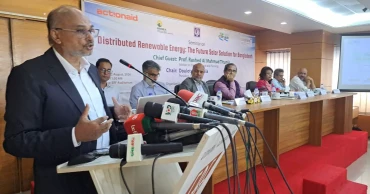
Oligarchic grip on energy system being dismantled through green innovation: Titumir
Prime Minister's Finance and Planning Adviser Dr Rashed Al Mahmud Titumir on Sunday said that the country's energy system was kept in the hands of a few oligarchs through a state-sponsored political economy during the 16 years of the “fascist government”.
He said the current government is working to establish an equality-based society by actively involving citizens in energy system innovations and fostering clean energy adoption, he said at a seminar and joint press briefing titled "Distributed Renewable Energy: The Future Solar Solution for Bangladesh" at ERF auditorium in the capital.
The event was organised by Economic Reporters' Forum (ERF) in collaboration with the Distributed Renewable Energy Platform (DREP).
Stressing the need for a nationwide social movement to expand clean energy use, Dr. Titumir highlighted three priority areas: building social awareness to protect the environment via clean energy, articulating public demand for renewables, and leveraging microfinance institutions to install small-scale solar panels in rural areas.
"If we can demonstrate the practical use of solar energy for cooking purposes, a large number of people will be encouraged to adopt solar setups," he said adding that animating renewable energy use requires affordable storage system innovations.
He assured that the government is providing privileges for setting up solar panel and storage battery manufacturing plants within Bangladesh to make solar power more affordable. Reiterating that the government is "for the people and by the people," he stressed that innovation and public inclusion are essential to resolving challenges in every sector.
Moderated by Dr. Khondaker Golam Moazzem, Coordinator of DREP, the event opened with remarks from ERF General Secretary Abul Kashem.
Several thematic presentations were delivered by platform partners including
‘Challenges Faced by EPCs and Industry Actors’ by A.S.M. Munir, Company Secretary of the Bangladesh Sustainable and Renewable Energy Association (BSREA);
Role of Awareness in Adoption and Retention of DRE Technologies by Hasan Mehedi, Chief Executive Officer of Coastal Livelihood and Environmental Action Network (CLEAN); Role of Storage in the Future of DRE by Ishtiaque Ahmeti, Director of Engineering & Innovation at SOLshare; and Financing Challenges and Priorities for DRE Expansion by Abul Azad, Manager – Just Energy Transition at ActionAid Bangladesh.
Md Mehadi Hasan Shamim, Research Associate at the Centre for Policy Dialogue (CPD), was also present as a presenter and discussant.
During the event, DREP officially launched a new public resource website titled "Renewables in Bangladesh". DREP, hosted under The Sunrise Project, a collaborative initiative comprising CPD, ActionAid Bangladesh, SOLshare, BSREA, and CLEAN, aimed at strengthening policies, acts, and institutional mechanisms for distributed renewables in the country.
Key recommendations placed at the seminar:
Residential Sector: Reforming Net Metering by simplifying eligibility, fast-tracking approvals, and launching a unified digital application platform across utilities, establishing dedicated green financing facilities with partial credit guarantees and pay-as-you-save models, rationalising duties on essential PV components, strengthening institutional coordination across SREDA, utilities, and BERC, and repowering legacy Solar Home Systems into hybrid grid-tied systems.
Industrial Sector: Building a RESCO collateral framework, recognising Power Purchase Agreements (PPAs) as bankable security to unlock OPEX lending, streamlining Bangladesh Bank's green, refinancing schemes into single-tier disbursements, and building commercial bank capacity for standardized DRE credit appraisals.
Solar Irrigation: Shifting Solar Irrigation Pumps (SIPs) toward shared ownership farmer cost-sharing models, expanding nationwide net metering for SIPs to sell surplus power, phasing out diesel subsidies while streamlining SIP licensing, bundling SIPs with agricultural equipment financing, and aligning irrigation awareness campaigns with daytime solar generation hours.
Adoption and Retention: Forming a SREDA-led national DRE coordination body to track technology retention rather than just initial installations, institutionalising user feedback loops and field audits, training local technicians for performance-based service contracts, and establishing centralised real-time DRE monitoring systems across all technologies.
1 day ago