bangladesh
Guardians confine education officer, staff over schoolgirl harassment in Rangpur
An assistant teacher of a government primary school in Gangachara upazila of Rangpur was suspended Wednesday following allegations of sexually harassing a fifth-grade student, triggering a tense seven-hour confinement of the local education officer and other school staff by outraged guardians and residents.
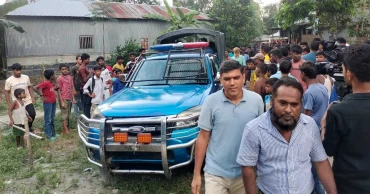
The confinement, which began at 10:30am and lasted until 5:30pm, ended after police rescued Upazila Education Officer Shaila Jasmin Sayeed, the school's headmaster and several other teachers.
According to locals, the accused teacher behaved inappropriately with the student during class on August 31. After the victim informed her parents, the teacher stayed away from school.
However, when he returned on Wednesday morning, guardians attempted to detain him, but he managed to flee.
The outraged crowd then locked the headmaster and other teachers inside the school's office room. Upon receiving the news, Upazila Education Officer Shaila rushed to the scene with teacher leaders but was also confined by the people.
During the standoff, the victim's father submitted a written complaint to the officer, who immediately issued a suspension order against the accused.
Other female students also accused the teacher of inappropriate behaviour in the past, alleging that they felt uncomfortable around him.
Furthermore, guardians alleged that the teacher faced similar sexual harassment accusations during his previous postings at two other schools.
District Primary Education Officer AM Shahjahan Siddik said the teacher has been suspended due to the situation, adding that departmental action will be taken after a formal investigation.
Officer-in-Charge of Gangachara Model Police Station Abdus Sabur said they deployed a police team to rescue the confined officials after receiving an emergency call from the upazila education office.
5 hours ago
JU student Ahsan Labib made acting president of Jatiya Chhatra Shakti
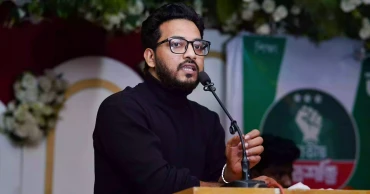
Jahangirnagar University (JU) student and senior vice president of Jatiya Chhatra Shakti Ahsan Labib has been named acting president of the organisation, following the sudden resignation of its central president Zahid Ahsan.
Zahid resigned citing personal reasons, said a statement signed by the organisation’s Office Secretary Mahfuzur Rahman on Wednesday night.
According to the statement, Zahid announced his resignation at the organisation’s fifth general meeting. Later, the members present at the meeting unanimously decided to assign the acting presidency to Labib, the organisation’s senior vice president.
Speaking after taking charge, Labib said he received the responsibility to ensure continuity in the organisation’s activities following Zahid’s resignation.
“We will announce a new full-fledged committee through a council following a democratic process very soon,” he added.
Labib is a student of the Department of Biotechnology and Genetic Engineering at JU. He previously served as a coordinator of the JU unit of the Anti-Discrimination Students’ Movement.
He also serves as the Social Welfare Secretary of the Jahangirnagar University Central Students’ Union (JUCSU) and an elected student representative to the JU Senate.
5 hours ago
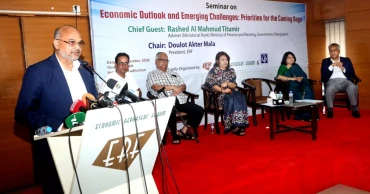
Past govt's flawed policy of import dependency to blame for power crisis: Finance and Planning Adviser
Prime Minister’s Finance and Planning Adviser Rashed Al Mahmud Titumir blamed the past (Awami League) government's flawed energy policies, including over-reliance on imports, alongside its failure to build national capacity, for the ongoing energy crisis in the country.
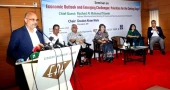
Speaking as the chief guest at a seminar titled "Economic Context and Emerging Challenges: Priorities for the Coming Days," organized jointly by the Economic Reporters' Forum (ERF) and the Centre for Policy Dialogue (CPD) in Dhaka on Wednesday, he stressed the need to clearly inform the public that the present government bears no responsibility for the current energy distress.
Power situation to improve within 15 days: Amit
"A major portion of the crisis is the result of past wrong policies and decisions. Allowing the public to recognize this distinction enables them to evaluate the effectiveness of an accountable government," Titumir said.
He noted that global energy price volatility and supply uncertainties stemming from Middle East tensions are impacting Bangladesh. LNG imports from Qatar currently cost around $11 per unit, whereas sufficient domestic gas exploration and production could have supplied energy at significantly lower costs.
"Past policies prioritized import dependency over national energy security," he stated, adding that inadequate domestic gas exploration and a lack of initiatives to meet renewable energy targets caused the present situation.
Titumir emphasized the urgency of assessing the 'cost of inaction' alongside the 'cost of wrongdoing,' money laundered abroad, and accumulated energy sector liabilities. He urged the Bangladesh Economic Association, universities, think tanks, and professional bodies to conduct comprehensive research covering these four interconnected areas to ensure governance and accountability.
He remarked that past crony patronage and import reliance created an oligarchic structure in the energy sector, damaging long-term energy security while wasting public funds.
Highlighting ongoing government interventions, Titumir stated that initiatives are underway to secure future energy needs, including a target to produce 4,000 megawatts of solar power. Under a recent notification, measures are being implemented to purchase electricity from solar power producers, transform consumers into producers through net metering, and provide VAT and advance income tax exemptions on solar equipment.
On healthcare, the adviser called for ensuring proper utilization of budgetary allocations while expanding sub-district level health infrastructure, including plans for 150-bed Upazila Health Complexes, district-level kidney dialysis centers, and coronary care units.
Regarding inflation, Titumir attributed past inflationary pressures to corruption, looting, and supply chain irregularities. He noted that inflation currently stands slightly above 8 percent, with a target to gradually bring it down to 6 percent.
He also announced that a Tk 60,000 crore package has been finalized to reopen closed industrial plants, with commercial banks signing agreements to commence financing starting September.
Furthermore, he highlighted record revenue collection at Chittagong Custom House during the last fiscal year and urged media outlets to evaluate government performance based on verified statistics. Detailed progress data following the government's first quarter will be presented in mid-October.
Titumir reiterated that the government aims to recover from past losses and build an accountable, effective, and sustainable state system across energy, revenue, education, health, and employment sectors.
Presided over by ERF President Doulot Akter Mala, the seminar was also attended by National Professor Dr. Mahbub Ullah, FBCCI Administrator Fazlul Haq, and CPD Distinguished Fellow Dr. Fahmida Khatun. as special guests.
6 hours ago
7 police officers dismissed for various breaches of govt service rules
Seven police officials, including a former joint commissioner of the Dhaka Metropolitan Police (DMP) Detective Branch (DB), have been dismissed from service on charges of misconduct, unauthorised absence and corruption.
The Ministry of Home Affairs issued separate notifications signed by Senior Secretary Manjur Morshed Chowdhury on Wednesday in this regard.
According to ministry sources, former DB Joint Commissioner Sanchit Kumar Roy has been absent from work since September 17, 2024. He was dismissed on charges of misconduct and absconding under sub-rules 3(b) and 3(c) of the Government Service Rules, 2018.
The other officials dismissed for prolonged absence are former DMP Deputy Commissioner Manas Kumar Poddar, former Rangpur Superintendent of Police Md Shahjahan, Additional Superintendent of Police Hafiz Al Faruk, former Assistant Superintendent of Police (ASP) of Police Staff College Habibullah Dalal and Additional Deputy Commissioner of Police of Barishal Metropolitan Police Rashedul Islam.
Manas Kumar Poddar has been absent since October 18, 2024, Md Shahjahan since January 9, 2025, Hafiz Al Faruk since February 1, 2025, and Habibullah Dalal and Rashedul Islam since March 9, 2025.
Meanwhile, Assistant Commissioner of Rajshahi Metropolitan Police Mohammad Rokonuzzaman was dismissed for corruption following an investigation into allegations that he took money by promising a police job.
According to the complaint, Rokonuzzaman allegedly demanded Tk 17 lakh from Md Kamruzzaman in exchange for arranging a job as a sub-inspector (SI). Kamruzzaman subsequently paid Tk 5,52,163 but did not get the promised job or his money back.
He later filed a written complaint with the Police Headquarters, which launched an investigation.
After a lengthy investigation, Rokonuzzaman was found guilty of corruption and dismissed from service.
6 hours ago
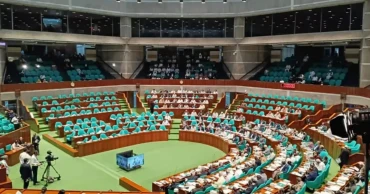
10 more parliamentary standing committees formed
Ten more parliamentary standing committees on different ministries have been formed, with senior BNP leaders and other lawmakers being appointed as chairmen.
The Agriculture Ministry-related Parliamentary Standing Committee will be headed by BNP leader Gayeshwar Chandra Roy.
Opposition demands committee chairmanships in proportion to strength in Parliament
Teacher leader Selim Bhuiyan has been made chairman of the Parliamentary Standing Committee on the Education Ministry, while Selima Rahman will head the committee on the Ministry of Women and Children Affairs.
Whip Rakibul Islam has been appointed chairman of the committee on the Road Transport and Bridges Ministry.
Abul Kalam Azad Siddique will chair the committee on the Ministry of Civil Aviation and Tourism, while Kalim Uddin Ahmed will head the Parliamentary Standing Committee on the Ministry of Posts, Telecommunications and Information Technology.
Amanullah Aman has been appointed chairman of the committee on the Ministry of Information and Broadcasting.
Whip GK Gause will head the committee on the Ministry of Environment, Forest and Climate Change, while Nasser Rahman will chair the committee on the Ministry of Land.
Rafiqul Islam Jamal has been appointed chairman of the Parliamentary Standing Committee on the Ministry of Religious Affairs.
The formation of the committees is part of the process of establishing the parliamentary oversight mechanism following the formation of the new parliament.
The Parliament has 50 standing committees in total. Of these, 39 are ministry-related committees, while 11 are related to parliamentary affairs.
So far, 25 of the 50 committees have been formed, including 19 committees related to different ministries.
Parliamentary standing committees play a key role in scrutinising the activities of ministries, examining bills and reviewing issues referred to them by the House.
The committees can also seek information from ministries and make recommendations on matters concerning their respective areas.
The remaining committees are expected to be formed in phases.
6 hours ago
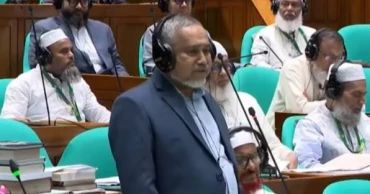
Opposition demands committee chairmanships in proportion to strength in Parliament
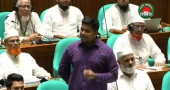
Opposition Deputy Leader Syed Mohammad Abdullah Mohammad Taher on Wednesday demanded that the opposition be given chairmanship of parliamentary standing committees in proportion to its representation in parliament, accusing the ruling party of ignoring its legitimate rights.
Speaking on a point of order in Parliament, he said the opposition earlier raised the issue of committee formation and later held discussions with the ruling party over the allocation of committee positions.
Parliament sees debate over reports on human rights, enforced disappearance bills
Taher said an understanding was reached that the opposition would get around 26 percent of the committee memberships based on its strength in Parliament, and the ruling party agreed to maintain that proportion.
“We expect that it is also our right to get 26 percent of the chairmanships. That is normal,” he said.
The Bangladesh Jamaat-e-Islami lawmaker noted that neither the Rules of Procedure nor the parliamentary privileges provisions specify any particular ratio for distributing committee chairmanships between the government and opposition.
He said the opposition was also told at one stage that it would be given 10 chairmanships and that the ruling side sought a list of preferred committees from them. “We submitted the list accordingly,” he said.
The opposition deputy leader alleged that the ruling party has become somewhat “reckless” because of its two-thirds majority in parliament and is seeking to impose decisions unilaterally.
“It is very indecent when the government says, ‘Come to this committee and you will be given this.’ We are not children who can be shown a lollipop and then dealt with differently elsewhere,” he said.
Taher said the opposition is demanding committee chairmanships as a matter of right and accused the government of ignoring that right.
“They cannot decide that they will take 100 percent of the chairmanships. Where is it written? Is it in the Constitution?” he asked.
The opposition lawmaker warned that allowing the will of the majority party to become the law and the decision of Parliament will amount to authoritarianism.
“We do not want to see this Parliament that way,” he said, urging the ruling party not to create discrimination inside or outside Parliament in the interest of democracy and national interests.
Taher also criticised the government for not allocating any chairmanship to the opposition and demanded that the decision be reconsidered.
Responding to Taher, Home Minister Salahuddin Ahmed said there is no provision requiring parliamentary committee chairmanships to be distributed among opposition members according to their numerical strength.
“There is no such provision, nor is there any obligation. There is no such precedent in history either,” he said.
Salahuddin also rejected Taher’s claim that there was an agreement to give the opposition 10 committee chairmanships, saying no formal discussion took place on the matter.
He, however, said the government remains committed to the principle agreed upon in the July National Charter.
The minister said the charter, which was signed as a political consensus document, contains a commitment that opposition members will get chairmanships of ministry-related parliamentary committees in proportion to their representation in Parliament. “We are still committed to that pledge,” he said.
He said the committees will be reconstituted after implementation of the July National Charter and the consequent constitutional amendments. “At that time, the opposition will get chairmanships in proportion to its strength,” he said.
Salahuddin, however, accused the opposition of not cooperating in the implementation of the July National Charter.
He urged opposition lawmakers to return to Parliament and participate in discussions instead of pursuing politics outside the House.
“If you are more comfortable calling constitutional amendment ‘reform’, then call it reform. But, in parliamentary language, the amendment has to be adopted as an amendment,” he said.
7 hours ago
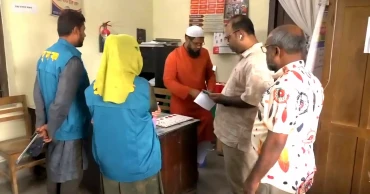
ACC sting operation uncovers widespread irregularities at Kushtia General Hospital
Anti-Corruption Commission (ACC) officials posing as patients conducted a surprise raid at the Kushtia 250-bed General Hospital on Wednesday, uncovering widespread irregularities including bribery for death certificates and patient harassment.
Led by ACC Deputy Assistant Director Suraiya Sultana, the secret enforcement team arrived at the hospital around 11:30 a.m. and spent nearly two hours monitoring various wards, the pathology and ultrasonography departments, and the kitchen. They departed around 2pm.
"We received numerous complaints regarding overall mismanagement, harassment of patients, and brokers taking bribes to move patients up the serial list," Sultana said. "But the most serious allegation we confirmed was the issuance of death certificates in exchange for money."
During the drive, two ACC members secretly observed the hospital's operations firsthand. Sultana said that ACC drives are strictly confidential; even the participating officers were unaware of their destination until they boarded their vehicle.
7 hours ago
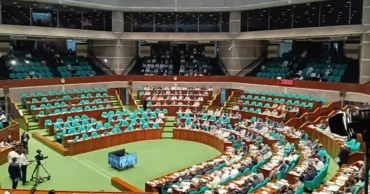
Parliament sees debate over reports on human rights, enforced disappearance bills
A debate erupted in Parliament on Wednesday night between treasury and opposition bench members over reports submitted by parliamentary standing committees on the National Human Rights Commission Bill and the Enforced Disappearance Prevention and Redress Bill, with the opposition objecting to references to its participation in the committee proceedings.
The relevant parliamentary standing committees submitted reports after scrutinising the two bills as well as the Transfer of Property (Amendment) Bill, with the committee on the Ministry of Law recommending several changes to the Human Rights Commission Bill.
The three bills were introduced separately in Parliament on August 27 and subsequently sent to the respective parliamentary committees for scrutiny.
Opposition members boycotted discussions on the enforced disappearance and human rights commission bills at the committee meetings.
Chairman of the Parliamentary Standing Committee on the Law Ministry Barrister Muhammad Nawshad Zamir placed the committee’s report on the Human Rights Commission Bill in the House.
At one point, opposition MP Nazibur Rahman objected to the motion for placing the report, saying the report contained contradictory references to their participation in the committee’s proceedings.
He said the opposition members explained in detail why they did not participate in the committee discussions and also submitted their views in writing.
However, those explanations were not reflected in the report, while another section said they actively participated in the scrutiny.
Committee Chairman Nawshad Zamir replied that the opposition members made statements before the committee but left the room before the detailed discussion began.
Law, Justice and Parliamentary Affairs Minister M Asaduzzaman said, “Inaction is also action,” arguing that the opposition members expressed their opposition to the bill by leaving the meeting.
Home Minister Salahuddin Ahmed said a walkout from a parliamentary standing committee meeting appeared to be unprecedented. He said if the opposition members submitted their views as a note of dissent, those views could have been included in the report.
Nazibur Rahman replied that “inaction is also action” was a matter for the courts, not Parliament.
He reiterated that they submitted their views in writing and demanded their inclusion in the report.
Opposition Deputy Leader Syed Abdullah Mohammad Taher also said the opposition members submitted their written views and read them out to the committee, and that the views should therefore be reflected in the report.
Salahuddin later told the Speaker that committee reports normally did not contain details of what individual members said during meetings. He suggested that the Speaker could remove the word “actively” from the report.
Deputy Speaker Kayser Kamal said members of both the treasury and opposition benches will have an opportunity to discuss the bill clause by clause before its passage.
Later, Chairman of the Parliamentary Standing Committee on the Home Ministry Zainul Abedin placed the report on the Enforced Disappearance Prevention and Redress Bill.
Jamaat MP Nurul Islam Bulbul, a member of the committee, objected, saying they explained at the committee meeting why they walked out and that the word “actively” used in the report was inappropriate.
The Speaker said the report mentioned the walkout and declared the report placed before the House.
Salahuddin later said the word “actively” was an expression used by the Parliament Secretariat and that the Speaker will decide whether it should remain. He said the opposition could raise its objections when the bill is taken up for passage.
Meanwhile, the Parliamentary Standing Committee on Law Ministry recommended several substantive changes to the National Human Rights Commission Bill.
Under the bill, the commission will be comprised of a chairperson and four commissioners, including at least one woman. The committee has recommended that, in addition to a woman, at least one member of an ethnic minority or disadvantaged community be included.
The committee also recommended including the President of the Jatiya Press Club, or a journalist nominated by him or her with experience in human rights journalism, in the selection committee responsible for recommending appointments to the commission.
Another significant recommendation concerns the commission’s investigative powers.
The bill states that during or after an investigation into an allegation of human rights violations, the commission may question any person and, with the approval of the appropriate authorities, inspect any place, office, court, lock-up or detention centre.
The parliamentary committee recommended deleting the words “with the approval of the appropriate authorities.”
If adopted, the amendment will mean that the commission will not require prior approval from the relevant authorities to inspect such places while conducting an investigation.
7 hours ago

Bus collision leaves 3 dead in Mymensingh
Three people were killed and at least eight others injured when two buses collided head-on in Mymensingh on Wednesday evening.
Two of the deceased were identified as Md Abdur Razzak, 60, of Dharapara village in Haluaghat upazila, and Md Tofazzol Hossain, 60, of Singherswar village in Phulpur upazila of the district.
The identity of another male passenger, aged around 50, could not be confirmed immediately.
The accident occurred around 6:30pm in the Alalpur area on the Mymensingh-Haluaghat road in Sadar upazila.
Police said a Shyamoli Bangla Paribahan bus was heading for Dhaka from Haluaghat when it collided head-on with a Haluaghat-bound Imam Paribahan bus coming from Dhaka, leaving Abdur Razzak dead and eight others injured.
Md Al Amin, in-charge of the hospital police camp, said six of the injured were taken to the hospital, where two succumbed to their injuries while undergoing treatment.
Mymensingh Kotwali Model Police Station Sub-Inspector Jalal Uddin said police seized both buses and restored traffic movement.
The drivers and helpers of both buses fled the scene, he said, adding that further legal proceedings are underway.
7 hours ago
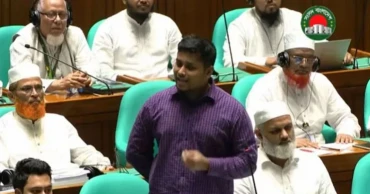
Hasnat alleges 109 ‘motivated reports’ published against him in 48 hours
National Citizen Party (NCP) MP Hasnat Abdullah on Wednesday alleged that 109 “motivated reports” were published against him within 48 hours after he made remarks in Parliament about a media organisation.
He also questioned whether the Press Council Act will be amended to bring online news reports under the jurisdiction of the Bangladesh Press Council, saying there is currently no scope of lodging complaints over misleading or false reports published on the online versions of newspapers.
Politics must be freed from rogues: Hasnat
Hasnat raised the issue during the question-answer session in Parliament while asking a supplementary question to State Minister for Information and Broadcasting Yasser Khan Choudhury.
He said the existing Press Council Act primarily provides a mechanism for lodging complaints against misinformation or misleading reports published in print media.
However, the lawmaker said, there is no similar opportunity to complain to the Press Council when a newspaper’s online edition personally attacks an individual or publishes misinformation about them.
He said he had made remarks in Parliament about East West Media Group PLC and 109 “motivated reports” were subsequently published about him within 48 hours.
“But as those reports were published online, I could not lodge complaints with the Press Council,” Hasnat said.
He asked what avenues are available for members of the opposition to seek redress when misinformation is disseminated against them online.
The lawmaker also asked whether the government plans to amend the existing law to bring online news reports within the jurisdiction of the Press Council.
In reply, the state minister said opposition lawmakers are not the only ones being targeted through online platforms.
He said women, members of the government, the Prime Minister and members of his family are also being subjected to attacks online.
Yasser said the government has taken an initiative to restructure the Press Council.
He said bringing online news reports under the Press Council’s jurisdiction is also under consideration.
The government is reviewing measures adopted by other countries to prevent misinformation and misleading information and holding discussions with relevant stakeholders on the issue, the state minister added.
8 hours ago