bangladesh

Durga Puja ends today
The five-day Durga Puja, the largest religious festival of the minority Hindu community, ends today with the immersion of the idol of Goddess Durga across Bangladesh, including the capital.
Devotees thronged puja mandaps on the last day of the festival, Bijoya Dashami, offering flowers to the goddess Durga and seeking her blessings.
Puja mandaps across the country were placed with beautiful idols, showcasing the goddess in all her glory.
Bijoya Dashami is a special ceremony of reaffirming peace and good relations among people.
10 months ago

Journalists boycott NCP press conference over assault allegation
Journalists boycotted a press conference of the National Citizen Party (NCP) at Hazrat Shahjalal International Airport on Thursday morning after some media personnel were allegedly assaulted by the party activists.
The incident took place at the airport’s VIP gate, witnesses said.
According to media workers, NCP Member-Secretary Akhter Hossen and Senior Joint Member-Secretary Tasnim Jara returned home after attending the United Nations General Assembly (UNGA) session.
Party leaders and activists gathered at the airport to welcome them.
NCP among 2 parties set to get registration: EC Secretary
As leaders of other political parties were speaking at the VIP gate, NCP activists started chanting slogans.
When journalists asked them to stop, the activists swooped on the media personnel, leaving several journalists assaulted.
Protesting the incident, journalists boycotted the press conference.
Three hours later, the NCP issued a press release, terming the incident “deplorable and regrettable.”
The party also said it would investigate the matter and take organisational action against those responsible.
10 months ago

Deep depression over Westcentral Bay likely to cross Odisha by Thursday night
The deep depression over Westcentral Bay and adjoining Northwest Bay likely to move north-northwestwards direction and may cross Odisha and adjoining Andhra Pradesh coasts between Gopalpur and Paradip around 09 pm on Thursday.
It is now lies over Northwest Bay and adjoining Westcentral Bay at no12 pm, said a special bulletin of Bangladesh Meteorological Department (BMD).
It was about 835 km southwest of Chattogram port, 810 km southwest of Cox's Bazar port, 665 km southwest of Mongla port and 685 km southwest of Payra port.
Under its influence, steep pressure gradient persists over North Bay. Gusty or squally weather may affect the maritime ports, the North Bay and adjoining coastal areas of Bangladesh.
Maximum sustained wind speed within 48 km of the depression centre is about 50 kph rising to 60 kph in gusts or squalls. Sea will remain rough near the Deep Depression centre.
Depression intensifies into ‘Deep Depression’ over Bay
Maritime ports of Chattogram, Cox's Bazar, Mongla and Payra have been advised to keep hoisted local cautionary signal No three.
All fishing boats and trawlers over North Bay have been advised to remain close to the coast and proceed with caution till further notice.
10 months ago
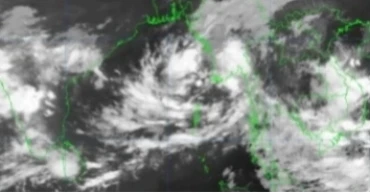
Depression intensifies into ‘Deep Depression’ over Bay
The Depression over Westcentral Bay and adjoining area moved northwestwards, intensified into a Deep Depression over Westcentral Bay and adjoining northwest Bay of Bengal (near lat. 16.9°N and long. 86.0°E), according to Bangladesh Meteorological Department (BMD) on Thursday.
It was centered at 6am on Thursday about 875 km southwest of Chattogram port, 830 km southwest of Cox's Bazar port, 735 km southwest of Mongla port and 740 km southwest of Payra port, according to third special weather bulletin of the met office.
It is likely to move north northwestwards direction further. Under its influence, steep pressure gradient persists over North Bay. Gusty or squally weather may affect the maritime ports, the North Bay and adjoining coastal areas of Bangladesh, reads the bulletin.
Maximum sustained wind speed within 48 km of the depression centre is about 50 kph rising to 60 kph in gusts or squalls. Sea will remain rough near the Deep Depression centre.
Depression weakens into well-marked low: BMD
Maritime ports of Chattogram, Cox's Bazar, Mongla and Payra have been advised to keep hoisted local cautionary signal No-3.
All fishing boats and trawlers over North Bay have been advised to remain close to the coast and proceed with caution till further notice, so that they can take shelter within a short notice.
10 months ago

Two women among three killed in Feni road crash
At least three people, including two women, were killed and 10 others injured when a speeding bus lost control and ploughed into a roadside shop in Daganbhuiyan upazila of Feni district on Thursday.
Two of the deceased were identified as Shamim Ara Begum, 50, wife of Shahidullah from Khushipur area, Md Shraban, 20, son of Abdul Matin from Dakshin Jaylaskar village of the upazila.
Officer-in-charge (OC) of Mohipal Highway Police Station Harunur Rashid said the accident occurred around 10:15am when the Noakhali-bound bus of ‘Sugandha Paribahan’ from Feni Sadar skidded and hit an electric pole before crashing into the shop on Feni-Noakhali regional road near the entrance of Lucky Road adjacent to Silonia Bazar.
The accident left at least 13 people injured, he said.
Businessman killed in Meherpur road crash
Locals rescued the injured and sent them to Feni General Hospital where physicians declared three of them dead on arrival, the OC said.
Of the injured, seven are receiving treatment at the hospital, one was shifted to Chittagong Medical College Hospital and two others were released after giving first aid, he said, adding that the bodies have been kept at the hospital morgue.
Blaming the reckless driving during rains, highway police officials said the bus was seized and legal action will be taken.
10 months ago

ADB signs $30m sustainability-linked loan with Envoy Textiles
The Asian Development Bank (ADB) has signed a $30 million sustainability-linked loan facility agreement with Envoy Textiles Limited, marking ADB’s first such loan in Bangladesh.
The financing will support the design and construction of a new automated, energy-efficient spinning unit at Envoy’s manufacturing plant in Jamirdia, Mymensingh, boosting the company’s annual yarn production capacity by 4,550 tons.
The loan will also finance the installation of 3.5 MWp rooftop solar panels and refinance short-term local working capital loans.
Sustainability-linked loans are performance-based debt instruments tied to predefined key performance indicators, assessed against sustainability performance targets.
For Envoy, these include rooftop solar generation capacity and greenhouse gas emission reductions.
ADB Country Director for Bangladesh Hoe Yun Jeong said that the ready-made garment industry is a key driver of Bangladesh’s economy, accounting for over 80% of the country’s total export earnings, and Envoy is the leading denim fabric manufacturer.
ADB projects 4% growth for Bangladesh in FY2025, 5% in FY2026
“ADB is pleased to support Envoy with its first sustainability-linked loan in Bangladesh. This partnership advances environmental sustainability and industrial modernization, setting a new standard for the garment sector,” he said.
Envoy Chairman Kutubuddin Ahmed said that This new loan will enable us to expand our production capacity, invest in renewable energy, and further reduce our environmental footprint.
Envoy Textiles is the world’s first denim manufacturer with a platinum Leadership in Energy and Environmental Design (LEED) certification from the US Green Building Council.
The company produces 54 million yards of denim annually—about 10% of Bangladesh’s total capacity.
10 months ago

Four of a family suffer burn injuries in Noakhali
Four members of a family, including two children, sustained burn injuries in a fire at their flat in Basurhat Municipality of Companiganj upazila, Noakhali, on Wednesday night.
One of the victims was later shifted to Dhaka.
Kumod Chandranath, father of the children and a pharmaceutical sales representative, told UNB that the fire broke out around 8pm at their rented flat in ward No-8 of the municipality.
According to him, the incident occurred when a family member lit a candle in the kitchen.
A sudden loud sound was heard, and the room instantly caught fire.
Hearing screams, three other family members rushed to the kitchen and sustained burns while trying to rescue each other, he said.
Kumod suspected that accumulated gas in the stove or pipeline ignited, triggering the fire and causing it to spread rapidly. Some household items were also damaged.
8 burned in hydraulic gas cylinder explosion in Ctg
Neighbours and locals rushed to the scene, helped evacuate the family, and took them to Companiganj Upazila Health Complex.
Resident Medical Officer Main Uddin said the injured were identified as Edirka, 8, Turya, 4, their father Kumod Chandranath, 43, and mother Savitabani Das, 32.
Of them, Edirka suffered 20 percent burns and was referred to the National Burn and Plastic Surgery Institute in Dhaka.
The others sustained minor injuries, the physician added.
10 months ago

Prof Yunus saddened at zoologist Dr Jane's death, says world will miss her
Chief Adviser Prof Muhammad Yunus has expressed deep shock at the death of his friend and world renowned zoologist, primatologist, anthropologist and conservationist Dr Jane Goodall.
"I am deeply saddened by the passing of my dear friend Dr Jane Goodall....May your soul rest in peace, Jane. The world will miss you," Prof Yunus said in a condolence message on Thursday.
A tireless activist till her last day, Jane dedicated her life to the cause of peace, sustainability, justice and the inter connectedness of all of them on the planet, said the Chief Adviser.
"The natural world has lost one of its greatest advocates and left us with a very heavy heart. Today, I salute and honor her achievements and accomplishments which will continue to have its impact beyond her earthly passing," Prof Yunus said.
'Muslim Ummah loses guiding voice', Prof Yunus on Saudi Grand Mufti’s death
A long time friend of Bangladesh, Jane took keen interest in ways Grameen Bank empowered women, visiting in the 1990s, and incorporated its principles in her own work in Africa and elsewhere.
"She remained a close friend of our nation. Jane always inspired me and appreciated our work mentioning about it in many of her speeches including one she conveyed just recently during the June 2025 the Social Business Day Conference," Prof Yunus said.
The Chief Adviser said he will be forever grateful for her support and the inspiration that she has been to him and millions around the world.
10 months ago
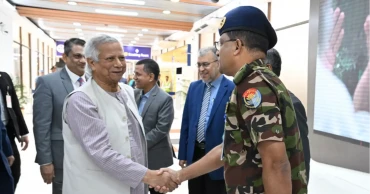
Prof Yunus returns home from USA
Chief Adviser Prof Muhammad Yunus returned home on Thursday morning, concluding a nine-day visit marked by extensive engagements during the 80th United Nations General Assembly (UNGA).
An Emirates Airlines commercial flight carrying the Chief Adviser and his small entourage landed at Hazrat Shahjalal International Airport at 9am.
Prof Yunus left New York on Tuesday night (US time) for Dhaka via Dubai.
Bangladesh Ambassador to the United States Tareq Md Ariful Islam and Bangladesh’s Permanent Representative to the United Nations Ambassador Salahuddin Noman Chowdhury saw him off at John F Kennedy International Airport, said Chief Adviser's Deputy Press Secretary Abul Kalam Azad Majumder.
Prof Yunus began his UNGA tour on September 22 and concluded it by attending the high-level conference on the “Situation of Rohingya Muslims and Other Minorities” held at the UN General Assembly Hall on Tuesday.
Prof Yunus to return home Thursday morning
He delivered his address at the 80th UNGA on September 26 and held a series of meetings with world leaders on the sidelines of the session.
BNP Secretary-General Mirza Fakhrul Islam Alamgir, BNP leader Humayun Kabir, Jamaat-e-Islami Nayeb-e-Ameer Syeed Abdullah Muhammad Taher, Jamaat’s US spokesperson Mohammad Nakibur Rahman, National Citizen Party member secretary Akhter Hossen, and first senior joint member secretary Dr Tasnim Jara joined the delegation at Prof Yunus’s invitation.
Speaking broadly at the UNGA, Prof Yunus warned, the “truth before us is frightening” and stressed that “extreme nationalism, geopolitics that thrive on the suffering of others, and indifference to human pain are destroying the progress humanity has built through decades of struggle”.
This tragedy is most visible in Gaza, he said, adding that the two-State solution must be implemented now.
Prof Yunus described three goals on which young people must be able to build the future: zero carbon, zero wealth concentration and zero unemployment. “Let the dream of a three-zero world be the dream of all nations.”
10 months ago
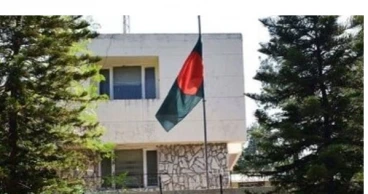
Bangladesh High Commission in Islamabad relocates
The Bangladesh High Commission in Islamabad has officially relocated to its own premises in the Diplomatic Enclave.
A rented house was previously used to accommodate the High Commission's office, which now has its own building.
The new office opened on October 1, according to a press release. It is located in Block-15 on Road 33 in the Diplomatic Enclave, Islamabad. The office can be contacted by phone at +92-51-2279267 or by email at [email protected]. Faxes can be sent to +92-51-2279266.
From now on, all services—including consular services—will be provided from the new location, according to the press release issued on Wednesday.
10 months ago