bangladesh

Measles: Seven more die in Bangladesh
Seven more children died with measles and measles-like symptoms in the 24 hours to 8:00am on Tuesday, bringing the country’s combined tally of confirmed and suspected measles-related deaths to 1,240 this year.
The Directorate General of Health Services (DGHS) has classified six latest fatalities as suspected measles deaths while another as confirmed measles death.
With these, the total number of suspected measles deaths has reached 1,135 while confirmed deaths from measles stood at 105.
A total of 1,232 new suspected measles cases were reported during the 24-hour period, bringing the cumulative number of suspected cases nationwide to 223,784.
Meanwhile, 63 new confirmed measles cases were recorded, bringing the total number of laboratory-confirmed infections to 23,541.
Since March 15 this year, a total of 199,127 patients with suspected measles have been hospitalised across the country, of whom 191,090 have recovered, according to DGHS data.
1 day ago
BNP won’t back extrajudicial killings: Zahed
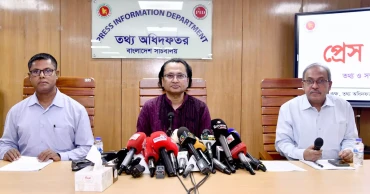
The BNP fought against enforced disappearances and extrajudicial killings over the past 17 years and will not backtrack on that position after forming the government, Prime Minister’s Information and Broadcasting Adviser Zahed Ur Rahman on Tuesday said, adding that the Prime Minister will take the final decision about the Inspector General of Police over his crossfire remarks.
“If a state or government kills someone extrajudicially, it ceases to function as a state and behaves like a thug,” Zahed said while speaking at a press briefing on the progress of various government activities at the Secretariat.
No democratic government can support extrajudicial killings, he said, stressing that the state must arrest criminals and hand them over to the judicial system for trial.
“Anyone can commit murder. A state becomes a state when it exercises the authority to deliver justice,” he added.
A death sentence can be imposed through judicial proceedings, but extrajudicial killing can never be an act of the state, the adviser said, adding that the state can arrest an accused person and hand them over to the judiciary exercising the executive authority and laws can be amended, if necessary, but there can be no scope for extrajudicial killings.
He said the government has no intention of remaining in power after its five-year term through night-time voting or dummy elections. “It will, therefore, avoid any action that can damage its credibility, as incidents such as extrajudicial killings will undermine public confidence in the government.”
Asked about IGP Md Ali Hossain Fakir’s remarks that crossfire operations could be carried out if the government gives permission, Zahed said he believed the police chief retreated from his earlier position in subsequent remarks. “He also stepped back from serious allegations he made about journalists in general,” he said, adding that he thought the issue should now be put to rest.
Asked whether the IGP should be allowed to remain in office even after clarifying his remarks, he said the matter is for journalists to assess.
The adviser said he felt the situation would have been problematic had the police chief continued to stand by his earlier statement.
He also stressed that government officials are not obliged to carry out illegal orders and public servants must perform their duties in accordance with the law.
Zahed also said Prime Minister Tarique Rahman will take the final decision about the IGP after returning from the Japan visit.
Responding to a question about the arrest of a woman entrepreneur in Bhaluka, Mymensingh, for regretting voting for the BNP on Facebook live, he said he did not consider the position taken by local BNP activists who protested against her remarks to be justified.
Police took the woman into custody following the protests and later sent her to court under Section 151 of the Code of Criminal Procedure.
Zahed said people have the right to express such views. “Many people in Bangladesh, including some who make offensive remarks about the Prime Minister, are expressing their opinions without facing similar action,” he said, adding that such remarks can certainly be made.
He, however, said the matter is now within the jurisdiction of the judiciary, expressing hope that investigators will not treat the woman’s remarks as a criminal offence.
Asked about the reported vandalism and looting of the homes of three Hindu families in Pirganj, Rangpur, the adviser said he heard that police were deployed and action was taken in this regard.
He said there was a tendency among some extremist groups in Bangladesh to act aggressively. “Such tendencies increased during the interim government’s tenure, and appropriate action was not taken against such incidents in many cases,” he added.
Zahed also assured that the current government will take action against such crimes. “You cannot expect to remain beyond the reach of justice under this government. I assure you of that,” he said.
Members of the Hindu community also want to live safely in a liberal democratic country, he said, adding that people have expectations from political parties entrusted with governing the country, and the BNP will have to fulfil those expectations.
1 day ago

Keraniganj factory fire death toll rises to 2 as another dies at Burn Institute
A 45-year-old man, who suffered burn injuries in a fire at a toy factory in Keraniganj on Monday, died at National Institute of Burn and Plastic Surgery (NIBPS) on Tuesday, raising the death toll from the incident to two.
The deceased was identified as Md Manik.
Dr Sultan Mahmud Shikder, resident medical officer of NIBPS, said Manik breathed his last around 12:30 am while undergoing treatment at the Intensive Care Unit (ICU) at the hospital.
Earlier on Monday, a man was killed and three others were injured in the fire incident.
1 day ago
Bangladesh, Malaysia begin FTA talks, target deal by 2027
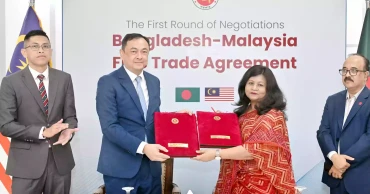
Bangladesh and Malaysia on Tuesday began formal negotiations on a free trade agreement (FTA), aiming to expand bilateral trade and investment and deepen economic partnership.
The three-day first round of talks began at a hotel in the capital and the two sides signed the Terms of Reference (ToR) at the opening session, outlining the framework and scope of the negotiations.
Both sides expressed their determination to finalise a modern, balanced and mutually beneficial deal by 2027.
Commerce Secretary Sharaf Uddin Ahmed Choudhury said Bangladesh-Malaysia ties have been strengthened by historical friendship and shared cultural and religious values.
Although bilateral trade is encouraging, he said, the vast potential for investment and trade diversification remains largely untapped.
He said Prime Minister Tarique Rahman and his Malaysian counterpart Anwar Ibrahim discussed concluding a sustainable and mutually beneficial FTA by 2027 during Rahman's visit to Malaysia in June.
"Today's first round of formal talks marks the start of the institutional process to deliver on that commitment," he added.
The secretary said the FTA is crucial for Bangladesh to tackle the challenges of graduating from the least developed country (LDC) category and to maintain its competitiveness in global markets.
As a meeting point of South and Southeast Asia, Bangladesh is a promising destination for Malaysian investors, he said, pointing to opportunities for joint investment in the halal industry, semiconductor skills development, digital trade, logistics and special economic zones.
He also thanked Malaysia for its support for Bangladesh's aspiration to join the Regional Comprehensive Economic Partnership (RCEP).
Rashidi Said, chief negotiator of Malaysia and head of its 31-member delegation, and Khadiza Nazneen, Bangladesh's chief negotiator and an additional secretary at the Commerce Ministry, were present, along with senior officials from both countries.
Rashidi Said said the proposed FTA is not merely a tariff-cutting deal but a strategic initiative to build a long-term and balanced economic partnership between the two countries.
Bilateral trade stood at around $2.84 billion in 2025, he said adding that the agreement would open up new opportunities for trade expansion, industrialisation and investment once in force.
He expressed hope that the negotiations would be completed by 2027 through mutual understanding, flexibility and a realistic work plan.
He also said the upcoming visit of the Malaysian Prime Minister to Bangladesh would give the process further momentum.
Khadiza Nazneen said the FTA would ease market access in both countries, reduce trade barriers and create new opportunities for investment and employment.
It would also make trade more transparent, simple and predictable, she added.
She said the talks are focusing on consensus, while safeguarding mutual interests, on key issues including trade in goods and services, rules of origin and customs procedures.
Delegates from both countries reaffirmed their commitment to reaching a balanced, effective and durable agreement through constructive dialogue, mutual respect and flexibility.
The first round of negotiations will continue until October 29.
1 day ago
PM visits Nittsu logistics hub in Japan
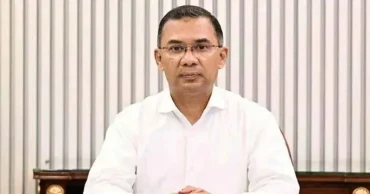
Prime Minister Tarique Rahman on Tuesday visited the Nittsu (Nippon Express) logistics hub in Ichikawa city of Japan’s Chiba Prefecture as part of his official visit to the country.
Accompanied by a delegation, the Prime Minister visited the facility at 4:45pm local time, said his Deputy Press Secretary Shahadat Hossain Shadhin.
The delegation included Finance and Planning Minister Amir Khosru Mahmud Chowdhury, Civil Aviation and Tourism Minister M Rashiduzzaman Millat, Prime Minister’s Adviser on Finance and Planning Rashed Al Mahmud Titumir, State Minister for Foreign Affairs Humaiun Kobir, State Minister for Power, Energy and Mineral Resources Aninda Islam Amit, and Prime Minister’s Adviser on Posts, Telecommunications, ICT and Science and Technology Rehan Asif Asad.
Invest Bangladesh Authority Chairman Ashik Chowdhury, Prime Minister’s Special Assistant for Overseas Employment in the Asia-Pacific Region Dr Shakirul Islam Khan, Bangladesh Bank Governor Md Mostaqur Rahman, Prime Minister’s Additional Press Secretary Atikur Rahman Rumon, PM’s Private Secretary-2 Mehedul Islam, Protocol Officer-2 Kamrul Islam and Research Officer Md Abdus Satter Patuary were also part of the delegation.
Foreign Secretary Asad Alam Siam, Economic Relations Division Secretary Shahriar Kader Siddiky and other senior officials concerned were present.
1 day ago
Govt targets 30% electricity generation from renewables by 2030: Minister
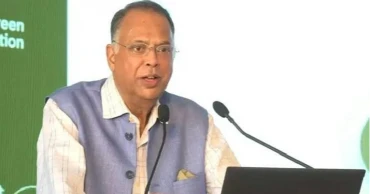
The government is taking various initiatives to address the energy crisis and aims to generate 30 percent of the country's electricity from renewable sources by 2030, Power, Energy and Mineral Resources Minister Iqbal Hassan Mahmood Tuku said on Tuesday.
"The government aims to generate 30 percent of the country's electricity from renewable sources by 2030. We have enacted a special energy law to achieve the target,” he said.
The minister made the remarks while inaugurating the Second Renewable Energy Fest 2026 at the Central Field of Bangladesh University of Engineering and Technology (BUET).
The event called for expanding renewable energy systems across the country to reduce carbon emissions.
The three-day festival, running from October 26 to 28, is jointly organised by ActionAid Bangladesh and BUET, in collaboration with Just Energy Transition Network Bangladesh (JETnet-BD) and BUET's Institute of Energy and Sustainable Development (IESD).
Tuku said the people of Bangladesh would have to bear the consequences of mismanagement in the energy sector over the past 17 years for a hundred years.
He also blamed an unplanned quick-rental power policy for contributing to the energy crisis.
“Under the previous government's irrational rules, power plants have to be paid capacity charges even when they do not generate electricity. Bangladesh bought LNG from the spot market at prices of up to US$30 per unit. The government has spent more than US$4 billion on the energy sector in just the past few months,” he said.
The minister also highlighted problems with electricity distribution in rural areas, saying the absence of fault detectors on rural electricity lines often makes it difficult to identify technical problems.
He said that although electricity lines were installed across villages to achieve 100 percent electrification, fault detectors were installed alongside them.
As a result, when a fault occurs, rural electricity workers have to travel to the affected areas and search for the problem manually, a process that can take two to three days in some cases.
In many villages, he said, even vehicles cannot enter, forcing workers to use vans to reach the sites.
He said such technical faults often leave consumers without electricity, but the resulting outages are blamed on the government as load-shedding.
“These are the practical problems I face every day, but there is no one to understand them. Because we come to power through people's votes, we are a soft target,” he said.
Referring to nuclear power, he said Bangladesh has repeatedly raised the issue of nuclear energy, but generating electricity alone would not be enough without the necessary downstream infrastructure to transmit it.
He said the Power Development Board (PDB) is not ready for that task.
He urged NGOs to help expand solar power systems in rural communities, saying the organisations could collect payments from households through meters and use the revenue to sustain the systems.
He requested NGOs to focus on installing solar panels on sheds, noting that he had seen solar-powered sheds in many places.
He said the government is working to improve the power system and urged stakeholders to pay greater attention to such initiatives.
Tuku noted that solar power generation fluctuates with changes in sunlight, making a modernised electricity grid necessary to manage such variations.
“Smart grids are not yet available in our country. We have to develop them, and we are trying to do so. But five years is a very short period,” he said.
First Counsellor and Head of Section for Green Economy and Public Sector Investments at the EU Delegation to Bangladesh Tobias Biermann, Second Secretary at the Australian High Commission in Bangladesh Jacob de Leon, and Country Director of ActionAid Bangladesh Farah Kabir attended the programme, among other distinguished guests.
Representatives from the European Union, Indonesia, Australia and Pakistan also participated in the renewable energy festival.
1 day ago

Maritime ports asked to hoist cautionary signal No 3
The maritime ports of Chattogram, Cox's Bazar, Mongla and Payra have been advised to keep hoisted local cautionary signal No. 3 as the very severe cyclonic storm "Arnab” over Westcentral Bay and adjoining area moved west-northwestwards.
It is now lies over the same area at 06 am on Tuesday about 1040 km southwest of Chattogram, 995 km southwest of Cox's Bazar, 895 km southwest of Mongla and 905 km southwest of Payra.
It is likely to move westnorthwestwards further and cross Andhra Pradesh coasts by noon on Wednesday.
Maximum sustained wind speed within 64 km of the severe cyclonic storm centre is about 120 kph rising to 140 kph in gusts or squalls.
Sea will remain very high near the very severe cyclonic storm.
All fishing boats and trawlers over North Bay have been advised to remain close to the coast and proceed with caution till further notice.
1 day ago
July atrocities: Verdict against Hanif, 3 others set for Oct 29
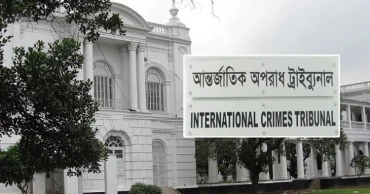
The International Crimes Tribunal (ICT) will deliver its verdict on October 29 in a case filed against four people, including Awami League Joint General Secretary Mahbubul Alam Hanif, over the killing of six people in Kushtia during the July 2024 uprising.
The three-member ICT-2, chaired by Justice Nozrul Islam Chowdhury, fixed the date on Tuesday.
Earlier on October 7, the ICT-2 completed the hearing on the law-point arguments in the case and kept the judgement reserved for a later date.
The three others accused are former Chairman of Kushtia Zila Parishad Sadar Uddin Khan, General Secretary of Kushita district Awami League Asgar Ali and General Secretary of Kushtia municipality Awami League. All of them are absconding.
Three charges were brought against them, including six murders in Kushtia, during the July uprising.
The charges include supporting statements and positions taken by Awami League General Secretary Obaidul Quader to suppress the movement, issuing orders to kill students and members of the public and participating in a conspiracy at a meeting held in Kushtia on July 29, 2024 and involvement in the killing of six people in Kushtia during the movement.
Hanif was also accused of instructing local police officials, public representatives and party activists over the telephone to carry out the killings.
The prosecution sought the maximum punishment for all four accused.
The prosecution formally filed charges against the four accused on October 5 last year. The following day, on October 6, the tribunal took cognisance of charges and issued arrest warrants for the accused.
On November 2 last year, the ICT framed charges against them, ordering the formal trial to begin.
1 day ago

Power supply disrupted in parts of Dhaka, Ctg over technical glitches
Power supply has been disrupted in parts of Dhaka and Chattogram due to technical glitches, the Power Division said on Tuesday.
In an urgent press release in the afternoon , it said restoration work is underway on an emergency basis and electricity has already been restored in most affected areas.
It expressed hope that power supply to the remaining areas would be restored shortly and apologised to consumers for the temporary inconvenience.
1 day ago
Tarique says Rohingya crisis can only be resolved in Myanmar
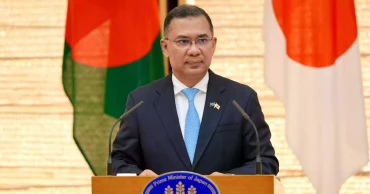
Prime Minister Tarique Rahman on Tuesday said a lasting solution to the Rohingya crisis lies in Myanmar, stressing that forcibly displaced Rohingyas must be able to return to their homeland voluntarily, safely, swiftly and with dignity.
“The lasting solution to the (Rohingya) crisis lies in Myanmar,” he said during a bilateral summit with Japanese Prime Minister Sanae Takaichi at the Japanese Prime Minister’s Office, known as the Kantei, in Tokyo.
Tarique expressed deep concerns over the deteriorating situation in Myanmar and the resulting displacement of Rohingya people, said PM’s Deputy Press Secretary Shahadat Hossain Shadhin.
He called for an end to all forms of violence, unhindered humanitarian assistance and dialogue among all parties concerned to resolve the crisis.
The Prime Minister appreciated Japan’s support for Bangladesh’s humanitarian efforts for Rohingyas, who were forcibly displaced from Myanmar’s Rakhine State and took shelter in Bangladesh.
He also urged Japan to remain actively engaged with all parties to help establish peace and stability in Rakhine.
During the summit, the two leaders emphasised strengthening long-standing Bangladesh-Japan relations, expanding trade and investment, and enhancing cooperation in energy security, technology, space research, infrastructure and regional and international affairs.
Tarique Rahman called for greater engagement by the Japanese government and private sector in Bangladesh’s economic development, technological advancement and industrialisation.
He also recalled the visits to Japan by his father, late President Ziaur Rahman, and the contributions of his mother, former Prime Minister Khaleda Zia, to strengthening bilateral ties, pledging to build on their legacy and take relations between the two countries to a new level.
The Prime Minister highlighted the two countries’ shared commitment to multilateralism, international peace and respect for international law.
He thanked Japan for supporting Bangladesh Foreign Minister Dr Khalilur Rahman’s election as president of the 81st session of the United Nations General Assembly.
Tarique expressed his desire to work closely with Japan to strengthen multilateral cooperation and address global challenges during the session.
Reaffirming their shared vision of a free, open, peaceful and inclusive Indo-Pacific, he stressed greater cooperation in regional connectivity, the free flow of trade and economic growth.
Outlining Bangladesh’s ambition to become a regional hub for the economy, technology and manufacturing, the Prime Minister said the country can become the world’s ninth-largest consumer economy by 2030, while its gross domestic product can exceed US$1 trillion by 2034.
He said Japan holds a special place in the hearts of the people of Bangladesh and recalled that it was among the first countries to recognise Bangladesh after its independence in 1971. Japan has since remained one of Bangladesh’s key development partners for more than five decades.
The bilateral summit between Prime Minister Tarique Rahman and Japanese Prime Minister Sanae Takaichi began at 11:45am local time at the Kantei.
The meeting followed a formal welcome at 11:30am, a guard of honour and the introduction of the two leaders’ respective delegations.
During the meeting, Tarique invited Takaichi to visit Bangladesh at a mutually convenient time, expressing hope that the long-standing friendship between the two countries will continue to deepen through mutual trust, cooperation and shared prosperity.
1 day ago