Politics
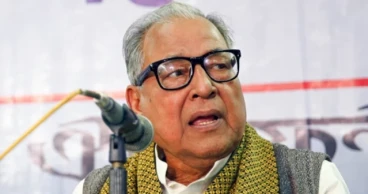
Nazrul Islam Khan discharged from Evercare Hospital after 7 days
Prime Minister's Adviser and BNP Standing Committee Member Nazrul Islam Khan has returned home after receiving treatment at a hospital.
The information was confirmed on Friday by BNP Media Cell member Sayrul Kabir Khan.
He said Nazrul Islam Khan was discharged from Evercare Hospital in the capital on Tuesday after undergoing treatment and returned home two days ago. He was admitted on June 30.
According to Sayrul, doctors have advised the senior BNP leader to remain on complete rest for the next two weeks.
He prayed for Nazrul Islam Khan's speedy recovery.
Nazrul Islam Khan returned to Dhaka from Singapore on June 25 and was admitted to Evercare Hospital on June 30 for treatment.
24 days ago

JCD issues 10-point emergency directive for leaders, activists to assist flood victims
Bangladesh Jatiyatabadi Chhatra Dal (JCD), ruling party BNP's student front, on Friday issued a 10-point emergency directive for its leaders and activists to strengthen rescue, relief and rehabilitation efforts for people affected by the ongoing floods in different parts of the country.
The directive was announced in a press release signed by JCD Office Secretary (with the status of Vice-President) Md. Jahangir Alam.
According to the statement, continuous rainfall and hill torrents from across the Indian border have created severe flooding in Chattogram, Khagrachhari, Rangamati, Bandarban, Cox's Bazar, Sylhet, Moulvibazar, Sunamganj and several other districts.
In response, the organisation instructed all its units to stand beside flood victims, continuing what it described as its longstanding tradition of humanitarian assistance.
The directive asked leaders and activists to extend maximum support in evacuating flood-affected people to safe shelters and to help move livestock to secure locations.
It also instructed every organisational unit to keep rescue teams ready, coordinate relief operations with local BNP leaders and ensure the availability of dry and cooked food, oral saline, water purification tablets, alum and essential medicines.
JCD also directed its units to coordinate with local residents to ensure the security of homes left vacant by families staying in shelters.
The organisation further instructed its leaders and activists to provide educational materials to students after the floods, prioritise assistance for women, children and elderly people, form medical teams to ensure healthcare in affected areas and actively participate in rehabilitation work, including the reconstruction of damaged embankments.
The statement warned that diseases such as typhoid, diarrhoea and dysentery could spread after the floodwaters recede. It therefore asked every unit to form medical teams and prepare to distribute medicines and other necessary medical supplies.
JCD President Rakibul Islam Rakib and General Secretary Nasir Uddin Nasir will oversee the overall flood response, the statement said.
It also instructed all organisational units to regularly submit updates on their humanitarian activities to the party's central office.
The organisation's central leaders said every leader and activist must fulfil their humanitarian responsibility by standing beside people in distress and ensuring maximum support during the disaster.
24 days ago

BNP Media Cell Convener Pavel hospitalised
BNP Media Cell Convener Prof Dr Moudud Hossain Alamgir Pavel, who fell ill on Thursday in Bogura, was taken to Continental Hospital in Dhaka on Friday.
He was admitted to the hospital at noon, according to BNP Media Cell member Sayrul Kabir Khan.
He said Pavel experienced intense chest pain at his residence in Bogura on Thursday and was immediately admitted to local TMS Hospital for treatment.
He was taken to Dhaka on Friday and admitted to Continental Hospital, Sayrul said, urging the country’s people to pray for his early and full recovery.
24 days ago

BMD forecasts heavy to very heavy rain, warns of landslides
The Bangladesh Meteorological Department (BMD) on Friday forecast heavy to very heavy rainfall in parts of the country over the next 24 hours, warning that the downpour could trigger landslides in the hilly areas of Chattogram division and cause temporary waterlogging in Dhaka and Chattogram metropolitan areas.
In a heavy rainfall warning issued in the morning, it said the rain is likely to affect parts of Rangpur, Rajshahi, Mymensingh, Dhaka, Khulna, Barishal, Chattogram and Sylhet divisions during the 24 hours commencing at 10:00am on Friday under the influence of an active monsoon.
According to the BMD, heavy rainfall refers to precipitation between 44 mm and 88 mm, while very heavy rainfall means more than 88 mm within the forecast period.
The country's highest rainfall in the 24 hours till 6:00am on Friday was recorded in Chattogram at 211 mm.
Day and night temperatures may remain nearly unchanged across the country, the BMD said.
The monsoon trough extends through Punjab, Haryana, the centre of the low-pressure area, Bihar, West Bengal and Assam, passing across central Bangladesh.
One of its associated troughs extends up to the North Bay.
The monsoon is active over Bangladesh and strong over the North Bay, the BMD added.
24 days ago
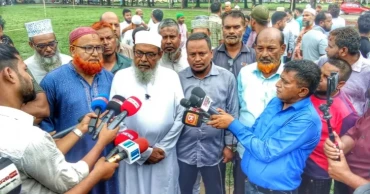
11-party alliance's Rangpur divisional rally Saturday
The 11-party alliance, led by Bangladesh Jamaat-e-Islami, will hold its Rangpur divisional rally on Saturday as part of its planned programme demanding implementation of the referendum verdict, effective measures for the Teesta Master Plan, an end to border killings and push-ins, and steps to reduce public suffering.
The rally will begin at 2:30pm at Rangpur District School Ground, said Dr AHM Hamidur Rahman Azad, coordinator of the 11-party alliance, in a statement issued on Friday.
Bangladesh Jamaat-e-Islami Ameer Dr Shafiqur Rahman will address the rally as the chief guest.
Leaders of the alliance components will also speak at the really with Opposition Chief Whip and National Citizen Party (NCP) Convener Nahid Islam in the chair.
24 days ago

Opposition leader visits flood-hit Chattogram, distributes relief
Leader of the Opposition and Ameer of Bangladesh Jamaat-e-Islami Dr Shafiqur Rahman on Friday visited flood-affected areas in Chattogram's Banshkhali upazila and distributed relief assistance among affected families.
After arriving in Chattogram by air from Dhaka in the morning, Shafiqur travelled directly to the flood-hit areas, where he inspected the damage caused by days of heavy rainfall and hill runoff, according to a press release.
During the visit, he spoke with flood-affected residents, inquired after their condition and assessed the overall situation.
Describing support for disaster-hit people as a humanitarian and moral responsibility, the opposition leader urged affluent individuals, social organisations, volunteer groups and people from all walks of life to come forward and assist those affected by the floods according to their capacity.
Following the inspection, he distributed dry food and provided financial assistance for affected families, while assuring them of continued support in dealing with the disaster.
24 days ago

Only the faces behind extortion and corruption have changed, not the system: Hasnat
National Citizen Party (NCP) South Region Chief Organizer Hasnat Abdullah on Thursday alleged that Bangladesh has not witnessed the desired political change, claiming that only the "faces of extortionists and corrupt individuals" have changed.
Speaking as the chief guest at a rally following the party's "July March" programme in Sonagazi municipality of Feni, Hasnat said extortion, drug trafficking and case trading had merely shifted from one group to another.
"We wanted an end to extortion, not just a change in extortionists. We wanted an end to corruption. Unfortunately, only the people involved have changed," he said.
The rally was organised to press for the implementation of a referendum, employment generation and stronger border security. It was chaired by Feni district NCP Convener Zahidul Islam Soikat.
Earlier, central party leaders joined a procession through Sonagazi Bazar as part of the programme.
Criticising the BNP-led government, Hasnat alleged that despite promises of improved governance, people were instead facing power shortages.
"The government promised electricity but has put hurricane lamps and candles in people's hands. Now electricity does not go out; it comes only occasionally," he said.
He also claimed that while the government had promised employment, drug abuse and gambling had expanded instead.
Rejecting allegations of corruption against his party, Hasnat challenged critics to produce evidence.
"If anyone can prove even one taka of corruption against us, bring the evidence. No one will be able to prove it. We entered politics to make corrupt politics difficult," he said.
Referring to the movement for public sector jobs that preceded last year's mass uprising, Hasnat said unemployment remained a major concern.
"We have yet to ensure jobs for the unemployed youths whose movement sparked the mass uprising. New recruitment circulars are not being issued because jobs are allegedly being reserved on partisan considerations," he said.
He also criticised the government for failing to fulfil its pledge of creating 10 million jobs.
"The Prime Minister promised 10 million jobs after coming to power. But in the last six months, not only has the target of 10 million remained unmet, not even one million jobs have been created. In fact, not a single new job has been ensured," he alleged.
Hasnat further criticised repeated assurances of action against drug trafficking after Eid festivals, saying the promised crackdown had yet to materialise.
"If it is not made clear after which Eid the operation will begin, students and people will again take to the streets as they did in 2024 and build resistance across the country," he said.
Addressing the rally, NCP Joint Convener Ali Ahsan Junaid said the party would continue its movement until the proposed referendum was implemented.
He expressed hope that the government would respond to public demands through effective measures and said the party would mobilise public support to press its demands.
During the programme, Hasnat introduced Sonagazi Upazila NCP Member Secretary Suza Uddoula as the party's candidate for chairman in the upcoming Sonagazi Upazila Parishad election.
Earlier in the day, NCP leaders visited the graves of two people described by the party as martyrs of the July 2024 uprising in Fulgazi and Sonagazi upazilas and met their family members.
The "July March-2026" programme marked the beginning of the party's campaign in southern Bangladesh under its "July Awakening to Build the Nation" initiative. Central and local NCP leaders and activists attended the events.
25 days ago

Shafiqur Rahman to visit flood, landslide-hit areas in Chattogram
Leader of the Opposition in Parliament and Ameer of Jamaat-e-Islami Dr. Shafiqur Rahman will visit flood- and landslide-affected areas in Chattogram on Friday morning.
The information was confirmed by Jamaat's Senior Assistant Secretary of the Central Publicity Department, Mujibul Alam.
According to him, continuous rainfall and hill torrents have triggered devastating landslides and flash floods in Chattogram and the surrounding hilly regions.
The natural disaster has claimed many lives in different parts of Chattogram district, while numerous families remain stranded by floodwaters and are living in severe hardship, he said.
He added that widespread damage has severely disrupted normal life in the affected areas.
During the visit, Dr. Shafiqur Rahman will meet affected families, exchange views with local administration officials, party leaders and activists, and other relevant persons.
He will also assess the overall situation of the ongoing rescue and relief operations.
25 days ago
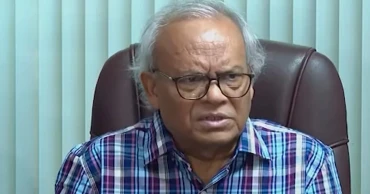
Rizvi says govt acting as ‘guardian of independence, democracy’; warns of plots
BNP Senior Joint Secretary General Ruhul Kabir Rizvi on Thursday said the current government is working as the guardian of the country's independence, sovereignty and democracy, alleging that various conspiracies are being hatched against it.
He made the remarks while speaking to reporters at the BNP's Nayapaltan central office.
Rizvi, also prime minister's political adviser, said defeated forces may resort to various conspiracies and attempts to tarnish the government's image, asking party leaders and activists to remain vigilant.
He said BNP Chairman and Prime Minister Tarique Rahman has directed party leaders and activists to act like "guards and protectors" alongside members of the Hindu community during the upcoming Rath Yatra.
The BNP leader said the party had adopted the same approach during previous Durga Puja celebrations, with party leaders visiting puja mandaps, speaking to devotees and working to ensure their security. “This time as well, BNP will stand beside them during Rath Yatra and Ulto Rath celebrations so that no one can create provocation or exploit the occasion for political purposes," he said.
Rizvi said people from the Muslim, Hindu, Buddhist, Christian and other ethnic communities now understand who had previously attempted to divide the nation.
He said the participation of people from all communities during the recent election and different religious festivals demonstrated that no anti-state force will be able to foil the country's "strong and united national harmony."
The BNP leader urged the public, leaders and activists of his party and other democratic political parties to remain alert so that "anti-state forces or their agents" cannot create obstacles through provocation.
Emphasising the role of field-level officials, he said government efforts will not achieve the desired results if local officials fail to provide accurate information on programme implementation.
Rizvi also described the government's school feeding programme for primary school students as a "noble and humanitarian initiative."
He, however, demanded accountability and disciplinary action against officials responsible in areas where students reportedly fell ill after consuming food supplied under the school feeding programme.
Among others, BNP Volunteer Affairs Secretary Mir Sarafat Ali Sapu, Assistant Publicity Secretary Asadul Karim Shaheen, Jatiyatabadi Swechchhasebak Dal Vice President Dr Zahidul Islam and Jatiyatabadi Chhatra Dal Vice President Dr Towhidur Rahman Awal were present.
25 days ago
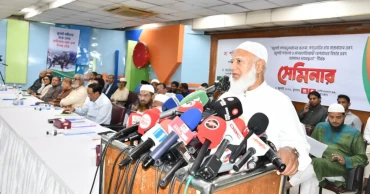
Jamaat Ameer alleges conspiracy involving interim govt to defeat 11 parties in last election
Opposition Leader and Ameer of Jamaat-e-Islami Dr. Shafiqur Rahman on Wednesday alleged that a conspiracy was orchestrated to defeat 11 political parties in the 13th Parliamentary election and claimed that the interim government was also involved in the process.
"We wanted an election. But we did not want a conspiracy in the name of an election," he said while addressing a seminar titled "Spirit of the Mass Uprising, Implementation of the Referendum Verdict and Trial of the July Genocide and Crimes Against Humanity" in capital's Kakrail.
Jamaat announces month-long programmes marking July Uprising anniversary
"There was a conspiracy. We condemn it. The interim government, whose identity was that of a neutral and non-partisan administration, was also part of this conspiracy. They themselves have admitted that 11 parties were defeated through a conspiracy," he alleged.
Referring to the election process, Shafiqur said there had been "many dramas" before the national election and that two elections were held on the same day under the same order.
26 days ago