Politics
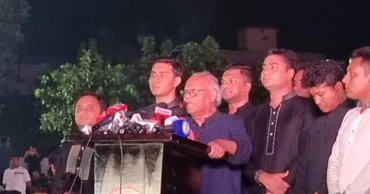
Rizvi recalls July uprising, urges youths to remain vigilant for democracy
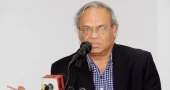
BNP Senior Joint Secretary General and Political Adviser to the Prime Minister Ruhul Kabir Rizvi on Wednesday paid tribute to the martyrs of the July-August mass uprising, describing their sacrifices as symbols of extraordinary courage and calling on young people to remain vigilant in defending democracy.
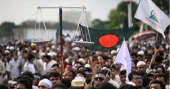
Speaking as the chief guest at a programme titled "Aloy Aloy Smriti Somujjol" at the Central Shaheed Minar, organised by Jatiyatabadi Chhatra Dal (JCD) at the first hour of July to honour the martyrs of the July-August uprising, Rizvi said the movement was unprecedented.
"The July mass uprising was an extraordinary movement. I have not seen the Great Wall of China, but I have seen Abu Sayed's chest. I witnessed how he stood like the Great Wall and faced bullets," he said.
Referring to another martyr, he added, "I have not seen the Himalayas, but I have seen Wasim Akram standing like the Himalayas, embracing blazing bullets with his chest."
Rizvi expressed gratitude to Jatiyatabadi Chhatra Dal for its role in the movement.
Recalling the grief of families who lost their loved ones, he said, "I have not seen the Pacific Ocean, but I have seen the tears of Ahnaf's mother. Those tears reminded me of the Pacific, though I believe even that ocean cannot equal a mother's tears."
The BNP leader urged people to keep alive the memories of the martyrs, saying the light of remembrance should not be limited to a single day but continue every day.
"We must keep all our windows open. The martyrs will return quietly in our memories, and they will inspire us so that no false dreams can take root in our minds," he said.
Rizvi also warned against any return of authoritarianism, saying no anti-democratic or autocratic force should be allowed to re-emerge.
Alleging corruption under the previous government, he said money had been looted from projects, including metro rail and flyovers, and claimed those funds had not entirely disappeared.
The BNP leader also alleged that elements of the previous regime still had the capacity to spread violence across the country, saying signs of such activities were visible at different times.
Addressing students and young activists, he said history shows that young people never sleep when democracy is under threat.
"They must remain prepared for more struggles, more movements and a more determined march toward democratic goals," Rizvi said.
1 month ago
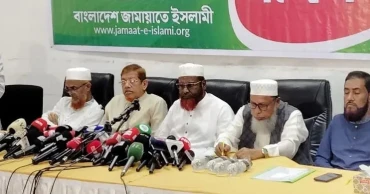
Jamaat parliamentary delegation to attend Khamenei's funeral in Iran
A parliamentary delegation of Bangladesh Jamaat-e-Islami will visit Iran to attend the funeral prayers and state mourning ceremonies of Iran's late Supreme Leader Ayatollah Ali Khamenei, scheduled to begin on July 4.
Senior Assistant Secretary of the party’s Central Publicity Department Mujibul Alam confirmed the matter on Tuesday.
Jamaat announces month-long programmes marking July Uprising anniversary
He said the delegation will leave Dhaka on July 3 at the invitation of the government of Iran to participate in the farewell, funeral prayers and state ceremonies for Ayatollah Khamenei. The delegation will remain in Iran until July 9.
The delegation will be led by Jamaat Nayeb-e-Ameer and Member of Parliament Prof Mujibur Rahman. Other members include Md Nurul Amin, MP, Dr Md Keramat Ali, MP, and Dr SM Khaliduzzaman.
According to Mujibul Alam, the delegation will attend the funeral and state ceremonies to convey Bangladesh Jamaat-e-Islami's deep condolences, sympathy and solidarity with the government and people of Iran following the death of Ayatollah Khamenei.
During the visit, the delegation is also scheduled to hold courtesy meetings with Iran's top leadership and relevant government authorities under the official programme.
Jamaat expressed hope that the visit will further strengthen the long-standing brotherly relations, mutual understanding and bilateral cooperation between the peoples of Bangladesh and Iran.
The state funeral and funeral prayers for Ayatollah Khamenei are scheduled to be held from July 4 to 9 in Tehran, Qom and Mashhad.
Speaker Hafiz Uddin Ahmad will attend the ceremonies on behalf of the Bangladesh government and Prime Minister Tarique Rahman. He is scheduled to leave Dhaka for Iran on July 2.
Ayatollah Khamenei was killed in a US-Israeli airstrike in late February.
Iranian authorities expect around 20 million people to attend the funeral and burial ceremonies, according to a report by Al Jazeera.
Iran's Mehr News Agency, quoting unnamed officials, reported that Khamenei will be laid to rest on July 9 in his birthplace of Mashhad in the country's northeastern region.
1 month ago
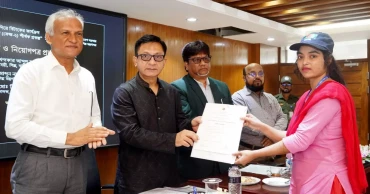
BITAC technical training a model for skills-based job creation: Minister
Commerce Minister Khondakar Abdul Muktadir said on Tuesday government investment proves its worth only when it delivers tangible results, and few programmes illustrate this better than the hands-on technical training run by the Bangladesh Industrial Technical Assistance Centre (BITAC).
The minister made the remarks while distributing certificates and appointment letters to the 20th batch of trainees under a BITAC project titled "Expansion of BITAC's Activities with Special Focus on Women in Hands-on Technical Training for Employment Generation and Poverty Alleviation (Phase-2)," at a function held at the BITAC conference room in Tejgaon.
Govt wants to cut business start-up time to 14 days: Muktadir
Unlike many state-funded initiatives of the past that failed to yield the desired outcomes, Muktadir said, this roughly Tk 123 crore project is converting a large number of young men and women into a skilled workforce at relatively low cost, with about 16,000 trainees benefiting from the scheme, a contribution he called significant to industrialisation and employment generation.
He noted that the three-month training builds not only technical competence but also discipline, a sense of responsibility and professionalism among trainees, qualities he said would have a lasting positive impact on their careers.
Stressing that the programme's momentum must not stall once the project period ends, the minister said BITAC's training activities will be expanded, either by extending the current project or launching a new one, to meet the growing demand for skilled manpower in the country's industrial sector.
He also disclosed plans to hold discussions with BITAC instructors next week on robotics, artificial intelligence and other modern technology-based training, alongside a planned visit to inspect trainees' housing, food and overall training environment.
In a notable highlight on women's employment, Muktadir pointed out that all 165 women trainees in the 20th batch have secured jobs – a full 100 percent placement rate that he described as strong evidence of the project's effectiveness.
Many male trainees, meanwhile, did not take up immediate job offers as they are weighing options to work abroad or become entrepreneurs, he said, calling this too a reflection of the high market value employers place on BITAC training.
The minister said BITAC's curriculum will be regularly updated in step with rapid technological change to ensure the workforce produced remains relevant to industry needs.
He also handed appointment letters directly to trainees recruited by various industrial groups.
A total of 344 trainees completed the three-month technical training under the 20th batch, of whom 255 have found jobs, the majority of them women. Under Phase-2 of the project overall, 8,465 of the 13,210 trainees trained so far have secured employment, a placement rate of nearly 64 percent.
The event was presided over by BITAC Director General Firoz Uddin, with senior officials from various government departments, industrial enterprises and BITAC in attendance.
1 month ago
Chhatra Dal announces month-long programmes marking July Uprising anniversary
Jatiyatabadi Chhatra Dal on Tuesday announced a month-long programme to mark the second anniversary of the July–August mass uprising.
In a press release, the organisation said the programme s have been announced to observe the historic July–August uprising, pay respect to the martyrs and injured, preserve historical memories, recognise contributions of all stakeholders, establish national unity against fascism, and commemorate the second anniversary of the people’s long struggle and victory against misrule.
20 young leaders from BNP, Jubo Dal, Chhatra Dal to visit China from June 4-14
It will organise a programme titled “Aloy Aloy Smriti Somujjol” (Memories Illuminated by Light) at the Central Shaheed Minar on July 1 at the first hour of the day.
The event will include the national anthem and candlelight vigils in honour of the martyrs of the July–August uprising.
1 month ago
Jamaat announces month-long programmes marking July Uprising anniversary
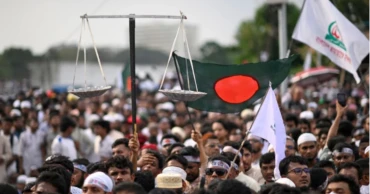
Bangladesh Jamaat-e-Islami on Tuesday announced a month-long programme to mark the second anniversary of the July Mass Uprising.
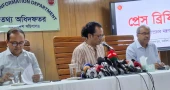
Party's Secretary General, Mia Golam Parwar, announced the progamme at a press conference held at the Jatiya Press Club in the capital.
Golam Parwar said Jamaat will hold meetings with the families of those martyred, injured and permanently disabled during the July Uprising in Dhaka from July 2 to 9 and across the country from July 18 to 31.
Ameer-e-Jamaat calls for 'humane, logical' steps over Ad-din Hospital
During the period, the party will also organise remembrance programmes, discussion meetings and special prayers at places associated with the July Uprising.
He said separate discussion meetings will be arranged by Jamaat's two Dhaka metropolitan units on July 16.
Outlining programmes for August, Golam Parwar said processions will be held in metropolitan cities, districts and upazilas across the country on August 1.
Special programmes will also be organised by different labour organisations from August 2 to 4.
On August 5, marking July Mass Uprising Day, the 11-party alliance will hold rallies and processions in the capital as well as district and upazila headquarters across the country.
He also said the party's leaders and activists will actively take part in programmes organised by its women's wing, student organisations and various forums of the July fighters.
Besides announcing the programmes, Jamaat placed three key demands: expediting the trial of those responsible for the July killings and crimes against humanity, ensuring justice for the killers of Sharif Osman Hadi, and convening a Reform Council session to implement the July Charter and the public mandate expressed through the referendum.
1 month ago
Adviser Zahed urges media to comply with court order on Hasina’s statements
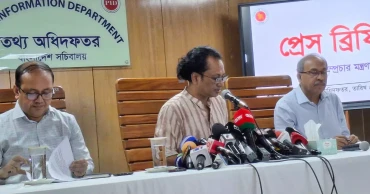
Information and Broadcasting Adviser Dr Zahed Ur Rahman on Tuesday said some media outlets are not complying with a court order prohibiting dissemination of statements by convicted former prime minister Sheikh Hasina.
"There is a direct court order prohibiting the dissemination of Sheikh Hasina's statements in Bangladesh. Yet some media outlets are continuing to publish them, which means they are not complying with the court's directive. That is a fact," he said while responding to a question at a press briefing at Secretariat.
Incident involving Dr Zahed unwanted, regrettable; Delhi’s explanation not satisfactory: Dhaka
Zahed said the government would formally remind media organisations under the jurisdiction of the Ministry of Information and Broadcasting to refrain from disseminating such content.
"We are not taking an extremely strict position at this stage but we want to remind them of the court order. I believe our media will respect the law and act responsibly by refraining from doing so," he said.
"We will make the request again, and at some point it may be appropriate to consider taking measures," he said.
Acknowledging the challenges of preventing access to Sheikh Hasina's remarks in the digital age, the adviser said many people can view interviews or statements carried by foreign media through online platforms.
"People can still access foreign media from Bangladesh, so there is also a discussion about whether such content can ultimately be prevented from reaching the public," he said.
However, the adviser stressed that unless the court withdraws its order, broadcasting Sheikh Hasina's statements remains inappropriate.
"I am not calling it a crime in this context, but it is inappropriate. I hope our media will play a responsible role," he added.
Referring to the display of flags bearing Kalema inscribed in Arabic at different places across the country, the adviser said the government is looking into it.
"The government has taken cognisance of the matter and is looking into it. There is no reason to believe that the government has any connection with it," he said in response to a question.
The government is examining why such flags are being displayed, as the issue could, in some cases, send the wrong message internationally, he said adding "We are aware of the possibility that this may create misunderstandings globally.”
He said the government intends to take necessary measures and added that he had personally drawn the attention of the Home Minister to the issue. "We hope this will not continue in this manner," he said.
Asked who might be behind the display of the flags, Zahed said the matter requires careful investigation.
"Some people are speaking about it on social media, but they may not necessarily be the main actors. Since this has occurred on such a widespread scale, there is likely to be a specific plan behind it. We are investigating the matter and hope to identify those responsible," he said.
1 month ago
EC starts preparations for local government polls: Fakhrul
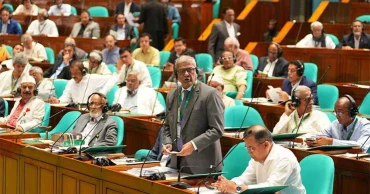
Local Government and Rural Development Minister Mirza Fakhrul Islam Alamgir on Tuesday said the Election Commission has already started preparations to hold the local government elections in a free and neutral manner.
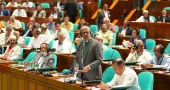
“In order to arrange the next local government polls in a free, fair and impartial manner, the Election Commission has already started necessary preparations,” Fakhrul, also the Minister in charge of the Election Commission (EC) Secretariat in Parliament, told Parliament, replying to a starred question from treasury bench member Sheikh Md Rejaul Islam (Naogaon-6).
Deputy Speaker Barrister Kayser Kamal tabled the question-answer session at the outset of the day’s business of the House.
Fakhrul said the EC has undertaken the necessary preparations to ensure that a credible and participatory local government election is held within the stipulated timeframe.
Replying to a question from NCP lawmaker Abul Hasnat, popularly known as Hasnat Abdullah (Cumilla-4), the minister said the EC introduced, for the first time, an IT-supported postal ballot registration system to facilitate voting by Bangladeshis living abroad.
He said the initiative will continue in the next national election and that the Election Commission is working to bring the maximum number of expatriate Bangladeshis under the postal balloting system to ensure their voting rights.
In response to a question from opposition Jamaat-e-Islami lawmaker Abdul Karim (Gaibandha-2) Fakhrul Islam said right now the government has no plan to increase the salaries and allowances of union parishad chairmen and members.
1 month ago
Youth detained in Feni over ‘offensive Facebook posts’ on Zaima Rahman
A young man was handed over to police by local activists of Jatiyatabadi Chhatra Dal (JCD) and residents in Feni's Daganbhuiyan upazila on Monday evening over allegations of posting offensive comments about Prime Minister Tarique Rahman's daughter, Barrister Zaima Rahman, on Facebook.
The detainee is Mosleh Uddin Jony, 23, son of late Mohammad Mostafa of East Joynarayanpur village under Rajapur union. He recently returned to Bangladesh from abroad.
According to local sources and police, Jony had allegedly been posting offensive
and abusive remarks about Zaima Rahman from his personal Facebook account for some time.
On Monday, he allegedly uploaded another controversial post, triggering outrage among local residents and JCD leaders and activists.
Acting on information that Jony was at his residence, local JCD leaders along with local residents detained him before informing police.
Later, a team from Daganbhuiyan Police Station, led by Officer-in-Charge Muhammad Faizul Azim Noman, arrived and took him into custody around 7:00pm.
OC Noman said they initiated legal action against the accused.
Police have also launched an investigation to determine whether anyone else instigated or assisted him in making the alleged posts, he added.
1 month ago
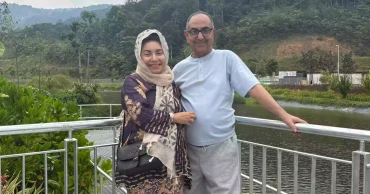
Mirza Abbas recovering steadily in Malaysia
BNP Standing Committee Member and Prime Minister's Adviser Mirza Abbas is recovering steadily while undergoing treatment in Malaysia, BNP Media Cell Member Sayrul Kabir Khan said on Monday.
According to Sayrul Kabir, Mirza Abbas completed a therapy session on Monday morning and, following doctors' advice, took a walk with his wife in an open area and performed light physical exercises.
He said the BNP leader is regularly receiving leg rehabilitation therapy at the Pusat Rehabilitasi Neuro-Robotics and Cybernics Kebangsaan PERKESO Centre in Malaysia.
Party sources said doctors have advised him to continue regular therapy, walking and physical exercise as part of his rehabilitation programme.
Sayrul Kabir expressed optimism that Mirza Abbas will recover soon and return to the people. He also sought prayers from the country’s people for the BNP leader's full and speedy recovery.
Mirza Abbas suddenly lost consciousness during iftar on March 11. As his condition did not improve, he was admitted to Evercare Hospital in Dhaka, where he underwent brain surgery.
On March 15, he was flown to Singapore by air ambulance for advanced treatment. His condition improved after receiving treatment there for about a month.
Following the recommendation of his physicians, the BNP leader was later taken to Prince Court Medical Centre in Malaysia for physiotherapy and rehabilitation.
1 month ago
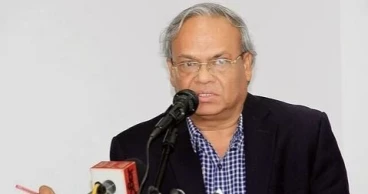
Agriculture sector deserves higher budgetary allocation to boost jobs, curb inflation: Rizvi
Prime Minister's Political Affairs Adviser and BNP Senior Joint Secretary General Ruhul Kabir Rizvi on Monday said the agriculture sector deserves a larger budgetary allocation considering its crucial role in ensuring food security, generating employment and controlling inflation.
Speaking at a seminar titled "Budget 2026-27: Roadmap for Agricultural Development and Implementation Challenges," organised by the Agriculturists Association of Bangladesh (AAB) at the Krishibid Institution Bangladesh in the capital, Rizvi said greater investment in agriculture is essential to achieve the government's development goals.
He described the government's target of providing Farmers’ Cards to 42.5 lakh farmers under the proposed budget as an important initiative, saying it will play a significant role in promoting rural financing and agricultural development.
Recalling his experience as a former chairman of Bangladesh Krishi Bank and Rajshahi Krishi Unnayan Bank, Rizvi said the rural agricultural credit programme was introduced during the tenure of martyred President Ziaur Rahman following the 1974 famine.
He said Tk 100 crore had been allocated for farmers at that time, which played a vital role in reviving the rural economy.
The BNP leader also credited Ziaur Rahman's government with introducing agricultural mechanisation, expanding the use of power tillers, excavating canals and initiating rice exports, saying those measures helped modernise the agriculture sector.
Although the allocation for agriculture has increased compared to the previous fiscal year, he said the rise is not significant when inflation is taken into account.
Rizvi said agriculture currently contributes around 5-6 percent to the national economy, but the country should aim to increase that contribution to 7-8 percent.
Since nearly 40 percent of total employment depends on agriculture, he said the sector deserves greater policy attention and investment.
The BNP leader noted that while the overall national budget has increased by 17.7 percent, the growth in agricultural allocation has not been proportionate, warning that without higher allocation and stronger monitoring, the government's agricultural transformation goals may not be achieved.
He stressed the need to introduce modern long-term preservation technologies for onions, mangoes and other fruits and vegetables alongside potatoes.
Rizvi also called for greater emphasis on agricultural research, saying Bangladesh can reduce dependence on imports by increasing the production of onions, ginger and garlic through expanded research and extension services.
Drawing examples from New Zealand and Denmark, he said Bangladesh has significant opportunities to expand agriculture-based industries. "If agriculture weakens, food security, employment and inflation control will all be adversely affected," he said.
The BNP leader urged the government to increase budgetary allocation for agriculture, strengthen research and produce more scientifically skilled human resources to achieve its declared development targets.
He also called for higher investment in all agricultural sub-sectors, including livestock and poultry, to ensure the successful implementation of the government's development agenda.
The seminar featured a keynote presentation by Dr Md Akhtaruzzaman Khan, chairman of the Department of Agricultural Finance and Banking at Bangladesh Agricultural University.
Agriculture Secretary Dr Rafiqul I Mohamed and Jatiyatabadi Chhatra Dal Vice-President Dr Towhidur Rahman Awal were also present at the event chaired by AAB Convener Agriculturist Dr Kamruzzaman Kayser and moderated by Member Secretary Agriculturist Shahadat Hossain Biplob.
1 month ago