Politics
Govt committed to taking effective Tobacco control measures: Ziauddin Hyder
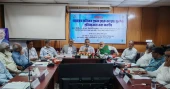
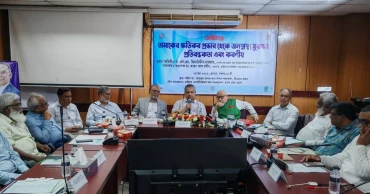
Special Assistant to the Prime Minister on Health Affairs Dr. S. M. Ziauddin Hyder on Wednesday said that Government is committed to taking effective Tobacco control measures, including increasing tobacco product prices in the budget to protect public health as it was one of the key commitments of the current government's election manifesto.
On the occasion of World No Tobacco Day, Prime Minister Tarique Rahman reaffirmed the government's strong commitment to protecting children, adolescents, and future generations from the harmful effects of tobacco and nicotine. He stated that the period leading up to the finalization of the FY 2026–27 national budget presents an important opportunity to take effective measures for protecting public health.
He made these remarks at a seminar titled “Protecting Public Health from the Harmful Effects of Tobacco: Challenges and Way Forward,” jointly organized by the Doctors Association of Bangladesh (DAB) and the Development Organisation of the Rural Poor (DORP) at the BMA Auditorium in Dhaka.
Presenting the keynote paper, Zeba Afroza said that public health and tobacco control experts had proposed reducing the existing four-tier cigarette price structure to three tiers in order to simplify tax administration. Since the prices of low- and medium-tier cigarettes are very similar, smokers can easily switch to a cheaper alternative when the price of one tier increases.He noted that if implemented, this proposal would make tobacco products less affordable, particularly for young people.
Dr. Shafiun Nahin, Director of the Institute of Health Economics at the University of Dhaka, said that the proposed budget includes only a marginal increase in cigarette prices. The price of a 10-stick pack of low-tier cigarettes has been increased from TK60 toTK 62, even though nearly 75 percent of all cigarettes sold in the market belong to this tier. As a result, an increase of only TK 2 per pack is insufficient to discourage tobacco use, especially when inflation remains above 9 percent.
He further explained that the retail price of a low-tier cigarette under the proposed budget is TK 6.2 per stick, whereas these cigarettes are already being sold at TK 7 per stick at retail outlets across the country. Consequently, tobacco companies stand to gain an additional profit of approximately TK 0.8 per stick, all of which would remain untaxed.
Dr. Nahin added that Bangladesh sold 68.89 billion low-tier cigarettes during FY 2023–24. Based on an additional profit of TK 0.8 per stick, tobacco companies could earn approximately TK 55.12 billion (BDT 5,512 crore) in extra profits. This means that the government would lose a substantial amount of potential tax revenue.
The speakers thanked the government for amending the tobacco control law and expressed optimism that, in line with the commitments outlined in the election manifesto, the government would take appropriate measures to strengthen tobacco control and protect future generations from the harms of tobacco use.
In his remarks as the lead discussant, Dr. Md. Zahirul Islam, Secretary General of DAB, stated that the proposed budget imposes taxes on nicotine pouches, nicotine granules, and Heated Tobacco Products (HTPs). However, taxing these products effectively legitimizes them in the market. This could facilitate the expansion of these new nicotine products and increase the risk of nicotine addiction, particularly among youth and adolescents.
Expressing DAB’s commitment to working with DORP on tobacco control initiatives in the long term, Professor Dr. Harun Al Rashid, President of DAB, urged the government to reconsider the tax and price structure of low-tier cigarettes and smokeless tobacco products in the FY 2026–27 national budget. He noted that if the recommendations of public health and tobacco control experts are implemented, the government could generate approximately TK 44 billion in additional revenue. At the same time, nearly 500,000 adult smokers would be encouraged to quit smoking, 372,000 young people would be prevented from initiating smoking, and nearly 400,000 premature deaths could be averted in the long term.
The seminar was welcomed by AHM Noman, Founder and CEO of DORP, and moderated by Mohammad Zobair Hasan, Deputy Executive Director of the organization. Among those present were Iqbal Masud, Director of the Health Sector of Dhaka Ahsania Mission; Professor Dr. Sohel Reza Choudhury, Head of the Epidemiology and Research Department at the National Heart Foundation Hospital and Research Institute; members of DAB; and youth representatives Ratri, Sandhi, and others.
1 month ago
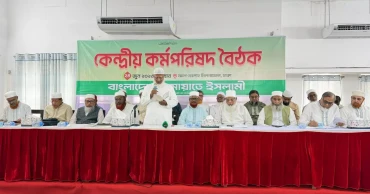
Govt’s ‘wrong decisions’ pushing economy towards collapse: Jamaat ameer
Leader of the Opposition in Parliament and Bangladesh Jamaat-e-Islami Ameer Dr Shafiqur Rahman on Wednesday alleged that some “wrong and shortsighted” decisions of the government have put the country’s economy at risk of collapse.
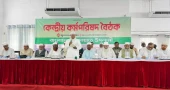
Speaking at a meeting of the party’s Central Working Committee, he particularly criticised the government’s decision regarding the banking sector.
“Some wrong and imprudent decisions of the government have brought the economy to the verge of collapse. When Islami Bank Bangladesh PLC, which had been devastated during the fascist era, was just beginning to recover, the government made a suicidal decision to hand over the bank back to the cohorts of fascism,” the Jamaat chief said.
“We believe this decision will destroy the country’s economy from the roots. The people expect the government to demonstrate wisdom and reconsider the matter immediately,” he added.
In his inaugural speech at the meeting, Shafiqur Rahman said Jamaat has pursued politics through democratic, constitutional and peaceful means since its inception and has played a “dignified role” in democratic movements in Bangladesh. “We played an important role in the anti-fascist movement of 2024.”
He, however, said it is extremely unfortunate that the current government is making a self-destructive and shortsighted attempt to make people forget the spirit of July 2024. “The Prime Minister campaigned for a ‘Yes’ vote in the referendum but later trampled on the referendum verdict, effectively betraying the nation. This decision will ultimately backfire on the government,” he said.
The opposition leader further alleged that extortion, tender manipulation and land grabbing by “ruling party activists” have reached alarming levels, while bribery and corruption continue unchecked.
He also alleged that political patronage has contributed to a rise in crimes such as murder and rape, leading to a severe deterioration in the country’s law-and-order situation.
The Jamaat leader further accused the government of “blatant politicisation” of education, economic institutions and the administration.
“Even in newly formed Parliament, there is visible discrimination. Opposition MPs are being deprived of fair allocations. Through such actions, the government is gradually moving towards a one-party rule, which is deeply disappointing for the nation,” he said.
In his concluding remarks, the Jamaat ameer, who chaired the meeting, said the overall situation in the country is becoming increasingly complex amid various national and international challenges.
“The fallen fascist forces and their allies will try to provoke us from both inside and outside the country. We must proceed with patience and caution and avoid falling into any traps,” he said.
Highlighting the importance of young people and religious scholars, Shafiqur Rahman said Bangladesh still has reason to remain hopeful.
The meeting, moderated by Jamaat Secretary General Mia Golam Porwar, reviewed the current political situation, law and order, border push-ins and other issues of public importance. Participants also discussed preparations for the party’s upcoming Central Majlis-e-Shura session scheduled for June 26, along with various organisational matters.
1 month ago

DMP arrests 26 leaders, activists of Awami League
Dhaka Metropolitan Police (DMP) has arrested 26 leaders and activists of Awami League( now facing ban on its activities) and its affiliated organisations during separate drives across the capital.
According to a DMP press release on Wednesday, they were arrested f over the past 24 hours through coordinated operations in different parts of Dhaka , said Niaz Mehedi, Additional Deputy Commissioner of Media and Public Relations Division of DMP.
They were arrested aimed at maintaining public safety and law and order in the capital, it added.
Such operations will continue to ensure stability in the city.
1 month ago

JCD condemns assault on journalists in Dhanmondi, demands action
Bangladesh Jatiyatabadi Chhatra Dal (JCD) on Tuesday strongly condemned and protested the assault and harassment of several journalists in the capital’s Dhanmondi-32 area, blaming activists of Jamaat-e-Islami for the incident.
In a joint statement, JCD President Rakibul Islam Rakib and General Secretary Nasir Uddin Nasir expressed deep concern over what they described as a “brutal attack” on media professionals while they were performing their professional duties.
According to the statement, those attacked included Daily Sokal multimedia reporter Mahfuzur Rahman Shishir, Jamuna Television senior reporter Rabbi Siddiqui and Kalbela journalist Abdur Rahman Ishan.
Citing reports published in various media outlets, the JCD leaders said that another 20 to 25 journalists present at the scene were also subjected to harassment during the incident.
The Chhatra Dal leaders said attacks on Journalists and attempts to silence the media are contrary to the principles of a free, democratic and civilised society.
They added that the incident demonstrated an intolerance towards differing views and warned against what they described as efforts to push the country towards an “extremist, intolerant and fascist structure.”
The statement further said that the incident reflected a lack of commitment to multiparty democracy, human rights and freedom of the press.
Reaffirming JCD’s support for democracy, freedom of expression and media freedom, the leaders said the organisation had consistently stood in favour of a free press and would continue to speak out against any form of extremism or authoritarianism.
They demanded that those responsible for the alleged attack on journalists in Dhanmondi-32 be identified and brought to exemplary punishment.
The JCD leaders also wished a speedy recovery for the injured journalists and called for proper medical treatment and stronger measures to ensure the safety and security of media professionals while carrying out their duties.
1 month ago
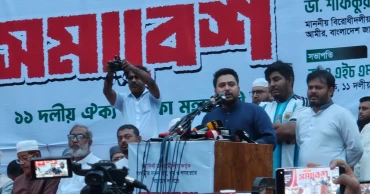
AL politics in Bangladesh buried on Aug 5: Nahid
National Citizen Party (NCP) Convener and Chief Whip of the Opposition in Parliament Nahid Islam on Tuesday described Awami League as a “fascist, killer and terrorist organisation” and an anti-independence and anti-sovereignty force, saying the opportunity for its politics in Bangladesh had ended on August 5, 2024.
He made the remarks while speaking at a rally organised by the Jamaat-led 11-party alliance at Bijoynagar in the capital, demanding justice for alleged enforced disappearances, killings and mass killings committed during the Awami League regime.
Leader of the Opposition in Parliament and Ameer of Bangladesh Jamaat-e-Islami Dr Shafiqur Rahman attended the event as the chief guest.
Nahid further alleged that those taking shelter in Delhi do so because the Awami League has roots there, adding that the party has turned into an “Indian party” and was also previously such a party. Therefore, he said, the opportunity for Awami League to return to or conduct politics in Bangladesh ended on August 5, 2024, referring to the mass uprising that toppled the fascist regime.
He also warned that those who are compromising with or dreaming of rehabilitating the Awami League in politics will face the same fate as the party itself.
The NCP leader alleged that space is being given in the media to “civil society aligned with the Awami League.”
He said the Awami League was brought to justice for alleged genocide, while the BNP is facing public scrutiny due to the failure in implementing reforms. “Both forces must now be opposed equally.”
He called for continued struggle inside and outside Parliament under the leadership of the 11-party alliance for reforms, justice and protection of Bangladesh’s sovereignty.
1 month ago
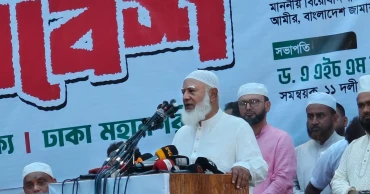
Jamaat chief warns of new ‘revolution,’ says will quit JS without space to speak
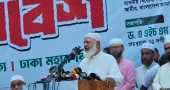
Leader of the Opposition and Bangladesh Jamaat-e-Islami Ameer Dr Shafiqur Rahman on Tuesday warned that his party will not remain in Parliament if it does not get scope to speak in the interest of the nation, while calling on supporters to prepare for what he termed a new “revolution.”
“As long as there is an environment to speak in Parliament and as long as it is necessary to speak in the nation’s interest, we will stay there. But the day we feel there is no benefit in speaking in Parliament anymore, we will leave,” he said.
Shafiqur Rahman was speaking at a rally organised by the Jamaat-led 11-party alliance in the capital's Bijoynagar area, demanding justice for alleged enforced disappearances, killings and mass killings committed during the Awami League regime.
The rally, which began around 5:30pm, coincided with the founding anniversary of Awami League, which faces a ban on its activities.
Addressing the gathering, Shafiqur Rahman alleged that more than 600 people have been killed since the BNP government assumed office, including over 200 BNP activists.
“If a party has no responsibility towards its own workers, how will it take responsibility of the 20 crore people? We see no signs of that responsibility. It is shameful,” he said.
The Jamaat ameer accused the government of moving towards “another one-party fascist rule” through partisan appointments in universities, colleges, administrative institutions and other sectors, warning that they will launch another “revolution” if needed to ensure justice.
He demanded justice over unresolved issues, including the October 28, 2006 violence, 2009 Pilkhana tragedy, enforced disappearances, political killings and the July-August uprising.
The opposition leader also alleged that the pace of trials over the July-August killings has slowed due to “political influence and appointments.”
He demanded investigations into other killings, including that of Inqilab Moncho Spokesperson Osman Bin Hadi and a Shibir leader reportedly killed in Gaibandha on June 21.
Shafiqur Rahman claimed corruption, extortion, “partisan rule and fascism” have become “viruses” in the country and said another revolution has become inevitable to free Bangladesh from those trends, urging people to get ready for it.
He announced that Jamaat will be the in the front line of any future movement and vowed to defend the country’s independence and sovereignty. “We will not allow anyone to cast a hostile eye on Bangladesh.”
The Jamaat leader reiterated that Jamaat will not make any compromise with injustice and will reject both “old and new fascism.”
National Citizen Party (NCP) Convener and Chief Whip of the Opposition Nahid Islam, Jamaat Assistant Secretary General Rafiqul Islam Khan, Dhaka South unit Ameer Nurul Islam Bulbul, Secretary Shafiqul Islam Masud, Dhaka North unit Ameer Md Selim Uddin, Labour Party Chairman Mostafizur Rahman Iran and other central leaders of the 11-party alliance spoke at the rally with Jamaat Assistant Secretary General and Coordinator of the 11-party alliance Dr AHM Hamidur Rahman Azad in the chair.
1 month ago

Jamaat expresses regret over attack on journalists
Bangladesh Jamaat-e-Islami on Tuesday expressed deep regret over the “unfortunate and undesirable” incident involving the attack on journalists during a political programme in the capital’s Dhanmondi-32 area.
In a statement issued on behalf of the party, Jamaat Central Publicity and Media Department Secretary Ahsanul Mahboob Zubair said the party was sincerely saddened by the incident.
“An unfortunate, undesirable and regrettable incident occurred involving journalists during a peaceful political programme at Dhanmondi-32 in Dhaka. We express our heartfelt regret over the matter,” he said.
Zubayer said Jamaat-e-Islami has always respected media freedom and the professional rights of journalists.
“The media is the fourth pillar of the state, and journalists play an indispensable role in building a democratic and accountable society. Any form of aggression or violence against journalists while performing their professional duties is unacceptable,” he said.
According to the statement, the party initially learned that the situation arose after the peaceful conclusion of the Dhanmondi zone’s protest programme due to the provocation of some overenthusiastic individuals or unexpected outsiders present at the scene.
He said Jamaat does not tolerate any breach of party discipline or extremist behaviour.
The party leader said Jamaat would conduct an internal review to determine who was actually involved in the incident and how the misunderstanding originated.
“If the involvement of any party activist at any level is proven, strict organisational action will be taken against them,” he added.
Zubair said maintaining cordial relations and cooperation between political parties and the media is essential at a time when the country is moving toward what he described as a “new Bangladesh free from fascism.”
He urged all concerned to remain vigilant so that no vested group could exploit the incident to create misunderstandings or divisions.
The Jamaat leader also expressed sympathy for Daily Sokal multimedia reporter Mahfuzur Rahman Shishir, who was injured while performing his professional duties, and wished him a speedy recovery.
He said Jamaat-e-Islami would act with greater caution and responsibility in the future to prevent the recurrence of such incidents and once again expressed regret over the episode.
1 month ago
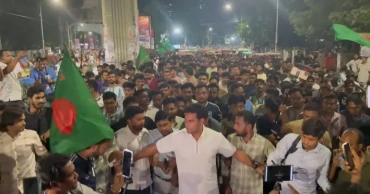
JCD stages protest at Shahbagh against 'BCL attempts to create unrest'
Leaders and activists of the Jatiyatabadi Chhatra Dal (JCD) staged a protest march at Shahbagh on Monday evening against what they described as attempts by the banned Bangladesh Chhatra League (BCL) to create unrest.
The procession, led by JCD Central Committee Vice-President Kazi Zia Uddin Basit, began in front of the National Museum and marched through the TSC area before returning to the museum premises.
During the march, participants chanted various slogans, including calls against the Awami League and its affiliated organisations.
Addressing the gathering after the procession, Basit said there was no precedent in Bangladesh’s history where a political force had to flee the country in the manner he said had occurred following the fall of the previous government.
He added that leaders and activists associated with the former ruling party had left the country after losing power and said the people of Bangladesh would not accept the return of former Prime Minister Sheikh Hasina to politics.
Basit also said Chhatra Dal had always stood by the people in their efforts to secure their rights and would continue to do so in the future.
Leaders and activists of Jatiyatabadi Chhatra Dal from various universities and colleges in Dhaka took part in the protest march.
1 month ago
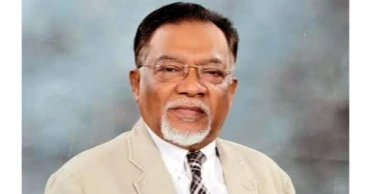
Ismail Zabiullah nominated to ICAPP Standing Committee as BNP representative
Prime Minister’s Adviser on the Ministry of Public Administration (with ministerial rank) Md. Ismail Zabiullah has been nominated as a member of the Standing Committee of the International Conference of Asian Political Parties, representing the Bangladesh Nationalist Party (BNP).
The information was conveyed by the ICAPP Secretary General through an email message on Monday.
According to a press release issued by the Ministry of Public Administration, BNP Secretary General and Minister for Local Government, Rural Development and Cooperatives Mirza Fakhrul Islam Alamgir had earlier proposed Zabiullah’s name for the ICAPP Standing Committee on behalf of the party.
The release said Zabiullah and BNP Joint Secretary General Habib Un Nabi Khan Sohel will participate as BNP representatives in the 45th Standing Committee Meeting of ICAPP, scheduled to be held in Ulaanbaatar, the capital of Mongolia, from June 25 to 28.
Representatives of political parties from across Asia are expected to exchange views at the meeting on regional cooperation, political dialogue, democracy, good governance, development and strengthening mutual understanding.
Previously, former BNP Vice Chairman Abdullah Al Noman served as a member of the ICAPP Standing Committee from 2004 to 2005, while current Information and Broadcasting Minister Zahir Uddin Swapon held the position from 2006 to 2009.
The nomination of Ismail Zabiullah is being viewed as a significant development in BNP’s international political engagement. It is also being regarded as an indication of the party’s growing diplomatic outreach and acceptance in international political forums.
Party leaders believe the nomination will further expand BNP’s opportunities for communication, cooperation and participation in multilateral dialogues with political parties across Asia.
Established in 2000, ICAPP is an international forum comprising political parties from various Asian countries. Its objective is to promote dialogue, cooperation, mutual understanding and confidence-building among political parties, while contributing to regional peace, stability and development.
1 month ago
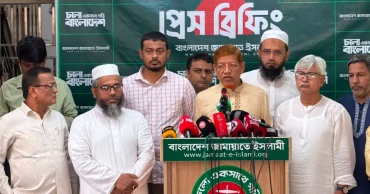
11-party alliance announces rally on AL’s founding anniversary, nationwide protests on July 4
The 11-party alliance led by Jamaat-e-Islami on Monday announced a rally in the capital on Tuesday demanding justice for all incidents of “enforced disappearance, killings and mass killings” committed by “fascist Awami League.”
The alliance also announced nationwide protest rallies and processions in all districts on July 4 in support of the same demand.
11-party alliance announces protest programmes to push July Charter reforms
The programmes were announced at a press conference organised by the liaison committee of the 11-party alliance at Jamaat-e-Islami’s central office at Moghbazar in the capital.
Speaking at the briefing, alliance coordinator and Jamaat-e-Islami Assistant Secretary General Dr Hamidur Rahman Azad said, “June 23 is a painful day in Bangladesh’s political history. The defeat at Plassey was not merely a military loss; it marked a tragic chapter of failure to protect independence, sovereignty and national interests,” he said.
Azad said history teaches that conspiracies against national interests, betrayal and public unawareness can bring disastrous consequences for a nation.
Azad said although the interim government accelerated the judicial process related to those incidents, the current government later slowed the process by appointing party loyalists, preventing visible progress in the trials.
He said a culture of impunity is creating frustration among the public and providing an opportunity for what he termed fascist forces to regroup.
As per the announced schedule, a rally will be held at Bijoynagar in Dhaka at 5pm on June 23 in the presence of the alliance’s top leaders.
The alliance will also organise protest rallies and processions in all districts across the country on July 4.
1 month ago