Politics
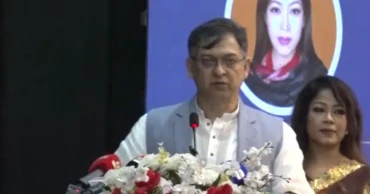
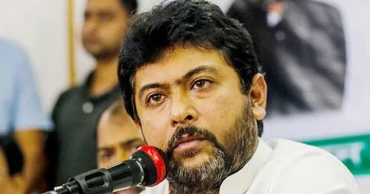
‘If confident of victory, why want to delay election,’ Salahuddin asks Jamaat
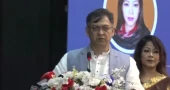
BNP senior leader Salahuddin Ahmed on Saturday questioned why Bangladesh Jamaat-e-Islami is trying to delay the next election through various ploys, including street agitation, if it is so confident about coming to power as its leaders claim.
Speaking at a youth dialogue in the capital, he also criticised Jamaat’s demand for banning Jatiya Party and members of the 14-party alliance while the party is now on the streets together with a party that contested the January 7, 2024 national election held under Sheikh Hasina’s rule.
“There were a few rallies of Jamaat and other parties across the country yesterday (Friday). Some newspapers carried headlines today saying that Jamaat leaders claimed they will form the government while BNP will sit in opposition. But who decides that? Is it you, or is it the people? If you are so confident, then why don’t you join the election instead of making excuses one after another to obstruct it?” the BNP leader said.
He also said BNP knows what Jamaat’s real purpose is—to derail the national election. “We will tell you (people) about it in a few days.”
Arpan Alok Sangha organised the Third Dialogue on Youth’s State of Thought, titled ‘Human Value-based Education and Campuses,’ at the Institution of Diploma Engineers, Bangladesh.
Salahuddin, a BNP Standing Committee member, also accused Jamaat of showing “double standards,” saying the people are noticing who Jamaat has joined in its simultaneous movement for various demands, including introducing a PR system and banning the 14-party alliance and Jatiya Party (JaPa).
“Among the seven parties (in Jamaat’s movement alliance), one is now your ally that took part in the sham election on January 7, 2024,” he said without mentioning the party’s name.
“If they become innocent just because they are with you, then what about the 28 others who took part in the dummy election with Awami League? Are they sinners? The idea that if someone joins you in the simultaneous movement their past wrongs are forgiven, but if they were with others they are sinners — this principle is not right,” Salahuddin said.
In an indirect reference to Islami Andolan Bangladesh, he said this party was also a partner of Awami League as it joined previous elections, except the 2024 national one, held under Sheikh Hasina.
Salahuddin said differences of opinion are part of democracy and any party can take to the streets to realise its demands by exercising democratic rights.
“But we have been saying that these issues are still awaiting settlement at the negotiating table. So, are you taking to the streets to apply extra pressure? If you do, we will also have to go to the streets to counter it. Is that what we want now? We want these matters resolved at the negotiating table,” he said.
Stating that Bangladesh’s democratic culture has changed a lot following last year’s mass uprising, the BNP leader said political parties should uphold it through practice.
Salahuddin said political parties need to remain united on national issues, including the country’s interests, independence, sovereignty and democracy.
“In democratic practice, there will be debates, differences of opinion and pluralism, but the settlement must come at the dialogue table. If both dialogue and street movement are carried out on the same issue, that is a contradiction,” he observed.
The BNP leader said some parties are talking about proportional representation (PR), but it is the people who will decide that.
He questioned whether some processions and rallies with a few thousand people would be enough to establish the PR system without public mandate.
The BNP leader urged political parties to include their demands in their election manifestos and contest the polls. “If the people give their verdict in your favour, you can implement them. That is the democratic way.”
Salahuddin said that people tend to blame the government first whenever there is a failure due to the anti-incumbency factor.
He said no one can be both in the government and the opposition at the same time. “Either the door is open or it is closed—you cannot have both.”
The BNP leader criticised the decision to place student leaders of the mass uprising in government positions.
“They could have acted as a guiding force for the nation as a pressure group… but that role is now in question. Even now, those serving in government as student representatives face daily responsibilities and liabilities. No party or organisation can survive by being two-faced towards the people,” he opined.
On implementing the July Charter, Salahuddin stressed the need for following the Supreme Court’s guidance to avoid confusion or constitutional conflict. “According to the Constitution, the decisions of the judiciary are final. Ignoring the judiciary’s verdict would create chaos. No political solution outside the court’s ruling can be sustainable.”
He also warned that forcing decisions on the nation is wrong, and reforms must happen gradually to strengthen democracy and build a fair, just and equal society.
Dhaka University Science Faculty Dean Professor Abdus Salam, National Citizen Party (NCP) Southern Region Chief Organiser Hasnat Abdullah, DU Chhatra Dal Joint General Secretary Abidul Islam Khan, and student leaders Tanvir Bari Hamim and Tanvir Al Hadi Mayed, also spoke at the programme highlighting the importance of youth participation and accountability in politics.
10 months ago
Nixon’s 'inflammatory' remarks behind breakdown in law and order in Bhanga: Police HQ
Former MP Mujibur Rahman Chowdhury, better known as Nixon Chowdhury, has been accused of disrupting law and order in Faridpur’s Bhanga, through a series of provocative video messages terming the current government and Election Commission “illegal,” police said on Friday night.
In a press release, police headquarters said Nixon’s statements on social media included anti-state remarks, instigating comments against law enforcement, and allegations of harassment of the public—actions that police claim were aimed at provoking people to continue agitation.
According to the release, following the gazette on the redrawing of parliamentary constituencies ahead of the 13th general election, Algi and Hamirdi unions of Bhanga upazila were separated from Faridpur-4 and merged with Faridpur-2. Protesting this decision, locals staged demonstrations, blockades and sit-ins on Dhaka-Khulna, Dhaka-Barishal, and Faridpur-Bhanga highways.
Police alleged that Nixon capitalized on the protests and circulated multiple “inciteful” messages that worsened the situation in Bhanga. In one such video, he called the interim government and the Election Commission “illegal” and instructed his followers to continue demonstrations, even blocking roads until their demands were met. His supporters widely shared the clips online, further fueling unrest.
On September 15, agitators—allegedly loyal to Nixon—attacked Bhanga Police Station, Bhanga Highway Police Station, the Upazila Nirbahi Officer’s (UNO) office, election office, and agriculture office. Government vehicles were vandalized and torched, causing extensive damage to public property. Legal action was later taken by Bhanga Police Station.
Police said Nixon again released another video on Saturday, repeating his claims that the government and EC were illegal, while lashing out at police on social media. He also alleged that ordinary people were being harassed through false cases, which police said was an attempt to incite further destructive protests.
Law enforcers urged citizens not to be misled by “provocative statements” and to maintain discipline. They assured that no innocent person would be harassed in legal proceedings and requested people to promptly report any attempts to spread rumors or inflammatory content.
Faridpur violence: Case filed against Nixon Chowdhury, 28 others
Earlier on September 15, Bhanga witnessed violent protests over constituency boundary changes, with attacks on police stations, the upazila complex, and municipal office. Motorcycles were set ablaze, while journalists covering the unrest were reportedly obstructed, and several police and media workers were injured.
The Election Commission had issued the gazette on September 4, redrawing Faridpur-4 by detaching Bhanga’s Algi and Hamirdi unions and attaching them to Faridpur-2 constituency.
10 months ago
Section 144 enforced in Dighalia to stop BNP faction clashes
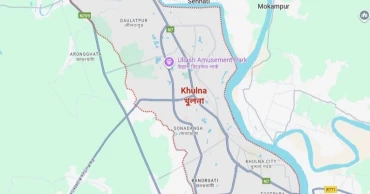
The administration imposed Section 144 on Friday in multiple areas of Dighalia, Khulna from 5pm to 10pm to prevent clashes between two rival BNP groups planning events at the same place.
Upazila Nirbahi Officer (UNO) and Executive Magistrate, Ariful Islam, said that the order was issued to maintain law and order.
He asked both groups not to hold any meetings, rallies or gatherings during this time and to leave the area.
Earlier, Dighalia BNP called a protest rally and meeting at Pather Bazar around 5pm to condemn a recent attack on district BNP member secretary Abu Hossain Babu’s house.
At the same time, senior joint secretary of US BNP, Md. Parvez Mallik, announced a public gathering at the same place without prior notice.
This ignited tension and anger among local BNP supporters.
To prevent any incidents, Police and Navy personnel were deployed and joint forces were assigned to patrol the area.
Section 144 imposed in Khulna’s Dighalia amid BNP rally tensions
UNO Ariful Islam said, “Section 144 will be in effect in Pother Bazar, Beleghat, Mokampur Bazar, Senhati Bazar, Nogorghat, Barakpur Bazar, Kamargati Bazar, Doulatpurgat, Chandni Mahal and nearby areas.
Additionally, he warned that anyone breaking the order could face legal action.
10 months ago
People don't want polls under PR: Amanullah Aman
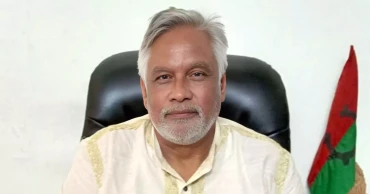
Former state minister and BNP chairperson's adviser, Amanullah Aman, has said that people do not want the proportional representation (PR) system for voting in the next election.
He was speaking at the prize-giving ceremony after the final match of the Arafat Rahman Koko Memorial Football Tournament at Panpara Government Primary School in Savar on Friday.
“Polls will be held under the current system in the first half of next February,” he added.
He also implied that demanding PR was just an attempt to create political tension.
“The government has already taken enough time. If you have demands, raise them in parliament after the election,” he stated.
Jamaat leader claims PR is "only way to ensure fair voting"
The event was organized by ward 1 Jubo Dal of Tetuljhara Union.
Several leaders spoke at the meeting, presided over by Tetuljhara Union BNP president Haji Mohiuddin Ahmed, including Dhaka District BNP Organizing Secretary Barrister Irfan Ibne Aman Ami, former Savar Upazila BNP president Haji Jamal Uddin Sarkar, former general secretary Kafil Uddin and Tetuljhara Union BNP general secretary Abdul Aziz.
10 months ago
Jamaat leader claims PR is "only way to ensure fair voting"
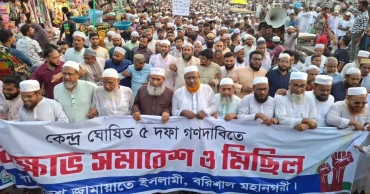
Professor Mujibur Rahman, central Nayeb e Amir of Jamaat-e-Islami and former MP, has said election under the Proportional Representation system is the only way to value every vote and protect people’s rights.
He spoke on Friday afternoon at a protest rally organized by Barishal city Jamaat on Fazlul Haque Avenue.
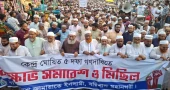
The rally demanded implementation of five points announced by the party’s central leadership.
Professor Mujibur Rahman proposed that public opinion could be tested through a referendum on the PR system if needed.
He also said that the election should be held after implementing the July charter and taking action against fascists and their supporters to ensure a fair process.
“Parties that helped fascists, including the Jatiya Party, should be punished and reforms must be done quickly”, he added.
The rally was led by Barishal city Jamaat Amir Principal Zahidur Rahman Mubar and conducted by Assistant Secretary Muhammad Atikullah.
Jamaat’s movement threat over PR part of plan to create chaos: Rizvi
Other speakers included Professor Mahmud Hossain Dulal, Maulana Matiur Rahman, Maulana Mahmudun Nabi Talukder and Master Mizanur Rahman.
After the program, Jamaat leaders and activists marched along the city’s main streets.
10 months ago
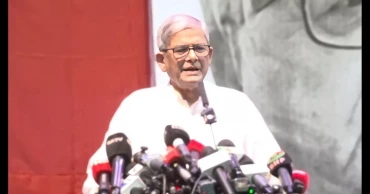
No revolution can succeed without a strong organisation: Fakhrul
BNP Secretary General Mirza Fakhrul Islam Alamgir on Friday said no revolution can succeed without a strong and well-organised organisation behind it.
“If there is no revolutionary organisation, a revolution cannot happen. In my personal view, a revolution succeeds only when there is a powerful organisation behind it,” he said.
The BNP leader made the remarks while speaking at a memorial meeting for Comrade Badruddin Umar at Bangla Academy’s Sahityabisharad Auditorium.
He said those who want to change society and improve the lives of ordinary people must build a strong and effective organisation and reach out to the people.
Fakhrul said the absence of revolutionary organisations is one of the main reasons behind the growing frustration in today’s society.
Referring to the late Badruddin Umar, he said the younger generation should learn from a leader like him who remained firm in his ideology and never compromised his values.
“He used to say that to bring a revolution, one must go directly to the people," Fakhrul noted.
He said Badruddin Umar has always held a place of great respect and honour. Until the very end of his life, he stayed true to his ideals.
“For those of us involved in politics today, he makes us feel small in comparison—because he never compromised on his principles,” the BNP leader said.
Speaking at the programme, Nagorik Oikya President Mahmudur Rahman Manna said Badruddin Umar proved that a brilliant student can also be involved in politics—something many didn’t believe before.
Fakhrul calls Islamic parties ‘undemocratic’, slams street programmes
“With his passing, we have lost a great deal. He had a remarkable understanding of mass uprisings. My deepest respects to him,” he observed.
The memorial event began with a minute of silence in honour of Badruddin Umar.
On September 7, Prominent writer, researcher and left-leaning intellectual Badruddin Umar passed away at the age of 94.
10 months ago
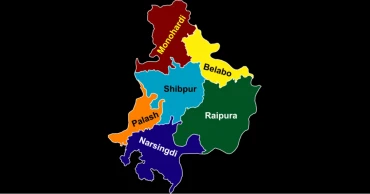
BNP factional clash: 2 killed in Narsingdi within 24 hours
Two people were killed in Alokbali of Narsingdi within 24 hours in separate incidents linked to political clashes between rival factions of the Bangladesh Nationalist Party (BNP).
According to the local sources, a long-standing conflict was going on between two BNP groups in the area - one led by Alokbali union BNP convener Shah Alam Chowdhury and the other by expelled member secretary Kaiyum Mia.
On Thursday morning, during a clash between the groups, Kaiyum supporter Idan Mia, 60, was shot dead and at least 10 others were injured.
1 killed in BNP factional clash in Narsingdi
The following day, while Friday prayers were underway, supporters of Kaiyum allegedly attacked Royes Ali’s house, killing Ferdousi Akter and injuring two others.
Narsingdi Additional Police Superintendent Sujan Chandra Sarker said, “Police are investigating the incidents. Extra forces have been deployed in the area to maintain security”.
10 months ago
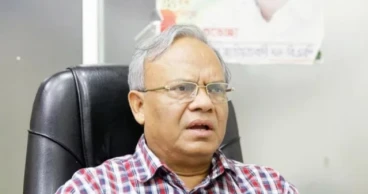
Rizvi urges BNP activists to stay alert, ensure peace during Puja
BNP Senior Joint Secretary General Ruhul Kabir Rizvi on Friday urged their party’s leaders and activists across the country to stay alert during the upcoming Durga Puja to ensure peace and communal harmony.
He made the call while speaking at a virtual meeting with BNP's district and got unit presidents or conveners, general secretaries or member secretaries, and divisional organising and assistant organising secretaries, said a press release.
During the meeting, Rizvi called for maintaining peace at puja venues, preventing any acts of sabotage or conspiracy, and staying cautious alongside the administration.
"Bangladesh is a country of communal harmony," he said, adding that ensuring security during the biggest religious festival of the Hindu community is not just the duty of the administration but also a moral, political, and social responsibility of BNP leaders.
BNP leader alleges global plot behind push for PR system
Rizvi warned that there are attempts to create chaos at puja venues in order to tarnish the country's image globally.
He urged the administration to act strictly and remain vigilant against such conspiracies.
Referring to previous years, the BNP leader reminded his party colleagues to stay watchful and responsible this year as well.
"You must assist in ensuring that the puja is held peacefully and smoothly. Stand by the Hindu community and make sure no opportunist can cause chaos or damage the country’s reputation,” Rizvi told the BNP leaders.
10 months ago
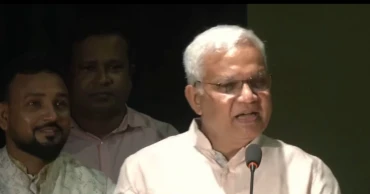
BNP leader alleges global plot behind push for PR system
BNP senior leader Professor Dr AZM Zahid Hossain on Friday alleged that some political parties are trying to create chaos as part of an international plot in the name of imposing the Proportional Representation (PR) system on the people.
“You are trying to create a chaotic situation in the country… What is your objective? To instigate disorder within the country. But remember, this is not the Bangladesh of the past. You cannot just create chaos at your will,” he said while addressing a discussion programme.
Zahid said those who are pushing for the PR system should go to the people and carry their agenda forward, and if people accept it, BNP will respect that agenda.
“But under no circumstances can you impose the agenda of your party, or any local or international conspiracy, in the name of the people or their opinion. You will not get away with it. Rest assured, the people of Bangladesh will not allow it,” he warned.
The Bangladesh Pharmaceutical Representatives Association organised the programme at the Bangladesh Medical Association (BMA) auditorium on Topkhana Road in the capital.
Zahid pointed out that there had been no demand for proportional representation (PR) before August 5 or in the past 16–17 years.
He said it is fine for individuals to express opinions in a democracy, but imposing such views forcefully is a sign of authoritarianism.
“When you say, ‘If you don’t listen to me, this will not be allowed, that will not be allowed,’ it sounds like authoritarianism. In other words, the language of autocrats is being heard here. Is this right? You must respect democracy – you have to put that in your election manifesto. If we come to power, if the people elect me, then I will move to this system in the future,” the BNP leader said.
He said as the election day draws closer and discussions on consensus continue, some parties have started taking to the streets with programmes.
“That’s good. Holding programmes is good, and raising public awareness is good. But that does not mean you can impose your opinion in an authoritarian way, using the people’s name without their permission. This can never be considered democratic behaviour,” Zahid said.
He questioned the purpose of such programmes – whether the intention was to delay the election process.
Referring to Nepal, he said Bangladesh should learn from its small neighbour, where the election date was announced on the very day a caretaker government took charge.
In contrast, the BNP leader mentioned that the interim government in Bangladesh has already completed 13 months, entering its 14th month, while the next election scheduled for mid-February is still months away. “Do you want to delay it even further?”
He said investment is not coming to Bangladesh despite large conferences because there is no elected government.
The BNP leader also argued that an unstable political environment prevents foreign investment, which affects employment opportunities, especially for the younger generation. “If we do not attract investment and create jobs, the youth, especially Generation Z, will have no future.”
Zahid said that whether investors are local or foreign, they want a stable, political, and people-supported elected government. “That should be our target, and it should be everyone’s target. If you don’t do that and keep delaying, then the dictators sitting in neighbouring countries will be the ones to benefit.”
Jamaat reiterates demand for elections under PR system
He said the movement for proportional representation is being pushed by those never elected to govern. “What does their own experience say? Look at Nepal – you can see what happens when you try to practise PR. Because of PR elections, Nepal has seen more than 14 prime ministers in just a few years. Is that a stable government?
“Do you want to see Israel? What is Israel doing? They are practising PR. Is this a good thing or a bad thing? If it were really so good, then why doesn’t Britain – the cradle of democracy – follow it? People always follow good examples. Do people ever follow bad ones?” the BNP leader added.
10 months ago
Three-way tug of crisis clouds prospects for fair polls: TIB chief
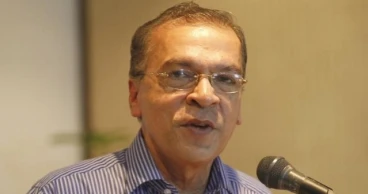
Transparency International Bangladesh (TIB) Executive Director and National Consensus Commission Member Dr Iftekharuzzaman on Friday said the upcoming national election faces a major challenge due to a three-way tug of crisis within the government’s administrative structure.
He noted that the bureaucracy currently comprises three types of officials—those loyal to the previous government, those long deprived of positions, and a handful of neutral officers—creating an institutional imbalance that could undermine prospects for a fair election.
“Free and impartial elections are impossible if political parties themselves are not committed to ensuring them. Apart from political will, the neutrality of election observers and the media is also crucial for a credible election,” he said.
He made the remarks while inaugurating an election training programme organized jointly by RFED, an election-focused journalists’ association, and TIB at the organisation’s Dhanmondi office.
Highlighting weaknesses in the administrative framework, Dr Iftekharuzzaman said, “Many officials loyal to the Awami League still hold their positions. The current interim government has to move toward the election while keeping these weaknesses in mind.”
He added that law enforcement agencies also reflect partisan bias, a structure that has evolved not just over the last 16 years but throughout the past 54 years.
“Those who were long deprived are now regaining ground, but even in that process, politicisation has been reinforced. Every institution has come under dual partisan influence, fueling professional conflicts. Only a handful of officers are genuinely trying to remain neutral,” he said.
The TIB chief said the administration is operating under the push and pull of these three forces, and it is neither possible to overhaul the structure overnight nor to completely reconstitute the bureaucracy.
However, he expressed hope that with stability and renewed professionalism, gradual changes could be achieved over time.
10 months ago