Politics
Fakhrul calls Islamic parties ‘undemocratic’, slams street programmes
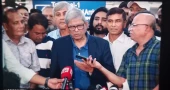
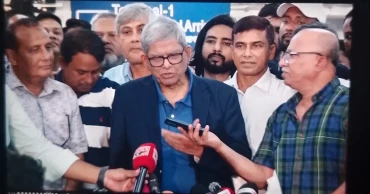
BNP Secretary General Mirza Fakhrul Islam Alamgir on Thursday said the joint street programmes announced by several Islamist parties, including Jamaat-e-Islami, to press for demands such as proportional representation in elections are ‘not good for democracy’.
“I think such programmes are unnecessary. The talks (with the Consensus Commission) have not ended yet. Talks are still going on… At a time when discussions are underway, calling such programmes only means creating unnecessary pressure,” he said.
Talking to reporters at Hazrat Shahjalal International Airport upon his return from Singapore, Fakhrul also said, “In my view, this (movement by Islamic parties) is neither good for democracy nor helpful for taking the right decisions.”
When his attention was drawn to Jamaat-e-Islami Secretary General Mia Golam Porwar’s remark that they have taken to the streets as problems are not being resolved at the discussion table, the BNP leader countered with a question about whether problems will be solved by coming to the streets. “My counter question is – will coming to the streets actually resolve anything?”
He said BNP is still the largest political party and, after the fall of the Awami League, it has not taken to the streets over any issue. “We are trying to resolve everything through discussions. We believe this will be settled through talks,” the BNP leader observed.
Fakhrul, who went to Singapore along with his wife for her treatment on September 10, returned home in the evening on a regular Biman Bangladesh Airlines flight.
Jamaat reiterates demand for elections under PR system
Reiterating BNP’s stance on the proportional representation (PR) system, he said the party is not in favour of such an electoral system. “We think there is no need for PR in Bangladesh. “Discussions are ongoing at the July Charter. We have agreed on several issues… and those matters can be addressed when the time comes.”
He said the most important requirement for any action is public support, which comes through elections and Parliament, as only Parliament has the authority to amend or change the constitution.
When asked about the possibility of banning the 14-party alliance, including the Jatiya Party, Fakhrul said BNP has clearly stated in the past and continues to maintain that it is not in favour of banning any political party.
Khosru warns of political consequences for attempts to destabilise country
Replying to another question, he also said that BNP Acting Chairman Tarique Rahman will return very soon.
Asked about his possible participation at the 80th UN General Assembly with Chief Adviser Professor Muhammad Yunus, Fakhrul said he did not yet know what his role would be.
“Because I have not discussed this matter with Dr Muhammad Yunus or other political leaders… I think the focus there will be on the progress of democracy in the country, as well as on the country’s development,” he said.
Responding to another question about whether decisions for the country are often made externally, the BNP leader said he does not think so. “We must take our decisions ourselves through coordinated and united efforts.”
He said Bangladesh has always made its decisions within the country and will continue to do so, with the people of the country taking those decisions. “I believe there is no need for any external intervention.”
10 months ago
Final voter lists to be published Nov 18
The Election Commission (EC) will publish the final voter lists on November 18 ahead of the upcoming 13th parliamentary election, incorporating the youths whose ages would turn 18 years by October 31 next.
The EC will publish the draft voter lists on November 1 to receive any objection and recommendation in this regard. Then the Commission will release the final electoral rolls on November 18 after settling claims and objections if any.
Draft law approved to intensify EC’s authority to punish negligence in election duty
According to a recent letter sent by the EC Secretariat to its field-level officials, the Commission will settle the claims, objections and appeal for correction, if any, over the draft voter lists, by November 17 and the final electoral rolls will be disclosed on November 18.
Now the country has 12,63,07,504 voters. Among them, 6,41,00,455 are men, 6,22,05,819 are women, and 1,230 are third-gender voters.
10 months ago
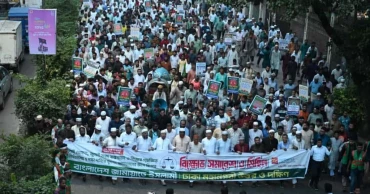
Jamaat reiterates demand for elections under PR system
Jamaat-e-Islami Secretary General Professor Mia Golam Porwar on Thursday called for holding elections under the Proportional Representation (PR) system based on the July Charter, creating a level playing field before the national election.
“We are ready to return to the negotiation table, but the election must be held under the PR system,” he said.
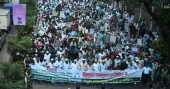
The jamaat leader made the remarks at a protest rally and procession organized by the Dhaka North and South City units of Bangladesh Jamaat-e-Islami at the south gate of the National Mosque on the first day of its three-day program.
He said that the government is under pressure and conspiracies are going on regarding the election. That is why we have taken to the streets; this is part of politics.
He said, “If the people accept it, you will also have to accept it. You are afraid, because if this happens, it will not be possible to establish fascism.”
Golam Porwar further said that the July Charter did not fulfill public aspirations. “It must be given a legal basis. Reforms must be made, and through a referendum, legal and constitutional legitimacy has to be established. This must be done before the elections, and elections must be held on the basis of the July Charter,” he added.
He warned that if elections are not held under the July Charter, “another fascism and another Sheikh Hasina will be born in the country,” which the people will not accept.
He also demanded justice for genocide perpetrators before the elections.
He said there will be more protest marches, adding: “The people’s aspiration for transparent elections is being pursued from all sides.”
“But one party is trying to obstruct the government. The national election must be held under the PR system and on the basis of the July Charter. Otherwise, it will go against the people’s aspirations,” he said.
Bangladesh Jamaat-e-Islami Assistant Secretary A.H.M. Hamidur Rahman Azad said, their party wants fair elections but the reforms that were promised for elections have not yet been made.
Stating that without a legal basis for the July Charter there is no foundation for reforms, he warned, “If effective steps are not taken, the people will remain on the streets and will not return home until the demands are met.”
Jamaat’s Central Assistant Secretary General Maulana Rafiqul Islam Khan said the current government is not a partisan government, but it is trying to side with one party.
“The people will not accept this. It will be resisted like fascism,” he added.
He further said law and order has not improved in the country. At Jahangirnagar University, there was a conspiracy to sabotage the central student union and hall elections. Why did it take so long to count the votes? The 13th National Parliament election will be held in February, but the people of this country will not accept another Awami League–style election.”
PR system possible if only law is amended: CEC Nasir
Earlier, on September 15, the party had announced a three-day program with a five-point demand at a press conference held at the Al Falah Auditorium near Jamaat’s central office.
The five demands of Jamaat are: 1. Hold the next national election in February based on the July National Charter 2. Introduce the PR system in both houses of parliament in the upcoming election 3. Ensure a level playing field (equal opportunity for all) for free, fair, and acceptable elections. 4. Ensure visible justice for all atrocities, killings, and corruption committed by the fascist government 5. Ban the activities of the autocrat’s ally Jatiya Party and the 14-party alliance.
On the same demands, Jamaat will hold protest processions in all divisional cities tomorrow (September 19), and in all districts or upazilas on September 26.
10 months ago
BNP suspends new committee formation, focuses on polls candidates, disputes
BNP has decided to halt the formation of new committees of its different units and associate bodies, except in the areas where no committee exists, ahead of the national election, as the party shifts its full attention to finalising candidates and settling intra-party disputes.
In recent Skype meetings with divisional organising secretaries and BNP Vice-Chairmen in charge of different divisions, the party’s Acting Chairman Tarique Rahman gave this instruction, a number of senior BNP leaders told UNB on Thursday.
“Our acting chairman made it clear that no new committees should be formed at this stage. Instead, he directed us to concentrate on preparing candidates and ensuring the party is united for the polls,” said a BNP Vice-Chairman, wishing anonymity.
Referring to the recent results of the DUCSU and JUCSU elections, he said Tarique now believes the party should fully focus on the national election and strengthen public engagement across the country to maintain its popularity.
Singapore envoy meets BNP leaders, discusses election
“Tarique Rahman told us clearly that the priority now is announcing candidates and addressing internal problems. Forming committees in different areas may only fuel more infighting, and that will weaken us before the election,” the BNP leader said.
He explained that organisational conflict has already caused difficulties for the party in recent months. “We saw what happened during the student union elections. Internal divisions harmed our performance. That is why the leadership now feels there is no scope to waste time on organisational matters. The election is approaching fast, and our full focus must be on fielding the right candidates and winning people’s support.”
The BNP leader believes this approach will help reduce internal tensions and prevent new conflicts ahead of the polls. “By declaring candidates early and ensuring unity, the party hopes to enter the election field with better preparation and stronger grassroots mobilisation.”
A BNP organising secretary, who attended such a meeting, said Tarique asked them to ensure that, in every constituency, party leaders and workers stand together to secure the victory of whoever gets the nomination.
Khosru warns of political consequences for attempts to destabilise country
He said the Acting Chairman is personally monitoring the candidate selection process. “He has been gathering information from across the country, reviewing reports, surveys and local feedback about possible contenders.”
Based on these, the BNP leader said the party is expected to announce the names of around 200 candidates within the next two to three weeks.
He also said efforts are underway to resolve rivalries at the grassroots level and unite leaders and workers for a strong, collective campaign to bring the party to power.
“Tarique Rahman himself is talking to local leaders. Wherever there are disputes, he is asking everyone to sit together and build unity. His message is simple – whoever the party nominates must get full support from all. This is not the time for division,” the BNP organising secretary said.
He added that organising secretaries have already begun meeting possible candidates in different constituencies, conveying Tarique’s message that whoever receives the nomination must work for the party’s chosen candidate.
He said Tarique also told them that committees may be formed later, but only if absolutely necessary, and only after the candidates are declared. “Once nominations are announced, if in any area a committee is required to strengthen the campaign, it will be formed. But right now, all committee activities are on hold.”
BNP must rebuild public trust, woo young voters: Tarique
The BNP leader said Tarique further instructed them to reach people directly through extensive door-to-door campaigns, aiming to build trust, counter propaganda and create a strong presence in the election field.
“BNP leadership has realised, especially after the Ducsu elections, that certain mistakes were made. Our campaign is meant to acknowledge those shortcomings before the people and rebuild confidence,” he said.
The BNP organising secretary added that the door-to-door campaign will also counter ‘negative propaganda’ spread on social media regarding the BNP’s stance on the Liberation War, India and other sensitive issues.
Contacted, BNP Vice-Chairman Abdul Awal Mintoo said Tarique Rahman held a virtual meeting with him and the leaders of Barishal division on Wednesday, where he instructed them not to form new committees, except in areas where no district or thana committee exists.
He said the BNP Acting Chairman also held a similar meeting with leaders of Rajshahi division and gave the same directive. “At this stage, if we form new committees, it may create division in the party, as those who do not get posts may feel upset. So, we have decided not to go for new committees, except where none currently exist.”
Mintoo said Tarique also directed the party’s organising secretaries to work in their respective divisions to resolve rivalries and unite leaders and workers behind the candidates to be nominated by the party. “They are working on this, and we hope we will not face intra-party problems during the election.”
Fakhrul urges vigil to safeguard communal harmony during Durga Puja
BNP’s Chattogram divisional organising secretary Mahbubur Rahman Shamim said Tarique gave them various instructions to keep the party united ahead of the election.
He, however, declined to share details of the meeting with the Acting Chairman.
Shamim said he had a meeting with possible party candidates of the Noakhali-5 constituency and instructed them to work in unity and remove any kind of division within the party’s local units.
10 months ago
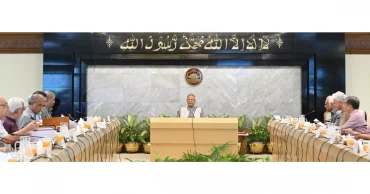
Draft law approved to intensify EC’s authority to punish negligence in election duty
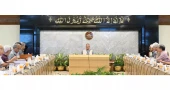
The Council of Advisers on Thursday approved the draft of the Election Officials (Special Provision) (Amendment) Ordinance 2025 in a bid to empower the Election Commission (EC) with stronger authority to take punitive actions against election officials in cases of irregularities and negligence in polls duty.
Besides, the Council also approved the draft of Election Commission Secretariat (Amendment) Ordinance, 2025 with a view to establishing an ‘Election Commission Service’ for recruiting officials for the EC Secretariat and expanding their functions.
The approval came from the Council’s meeting chaired by Chief Adviser Prof Muhammad Yunus at the Chief Adviser’s Office in the capital.
“Due to the two proposed laws, the works of the Election Commission will speed up ahead of the election. And they (EC) will be able to take many measures very quickly,” Chief Adviser’s Press Secretary Shafiqul Alam said while briefing reporters at the Foreign Service Academy after the meeting.
10 months ago
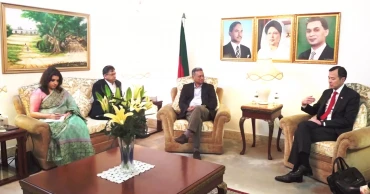
Singapore envoy meets BNP leaders, discusses election
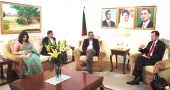
Singapore’s Non-Resident High Commissioner to Bangladesh Derek Loh on Thursday met a BNP delegation and discussed various issues related to bilateral ties and the upcoming election.
The meeting, which lasted for more than an hour, began around 4pm at the BNP chairperson's Gulshan office, said BNP Media Cell member Sayrul Kabir Khan.
BNP Standing Committee member Amir Khosru Mahmud Chowdhury led the three-member delegation at the meeting. The other members were BNP Standing Committee member Salahuddin Ahmed and Organising Secretary Shama Obaed.
Derek Loh was accompanied by the Singapore High Commission’s Chargé d’Affaires Mitchel Lee and Tai Dai Ern, Country Director for South Asia.
Sayrul said the meeting was held in a cordial atmosphere, where they discussed the current political situation, the next election and bilateral issues between the two countries.
10 months ago
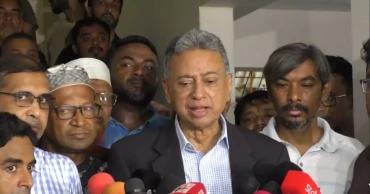
Khosru warns of political consequences for attempts to destabilise country
BNP senior leader Amir Khosru Mahmud Chowdhury on Thursday warned that anyone trying to create instability in the country ahead of the upcoming national election with various demands must face political consequences.
“The country is now heading towards an election, and we have all made sacrifices together over the past 15 or 16 years for this. Whatever demands any party may have--that is their right--but those demands have no connection with the election process,” he said.
Talking to reporters after visiting injured Gono Odhikar Parishad President Nurul Haque Nur, the BNP leader said political parties can take their demands to the people and come to Parliament with the people’s mandate to implement their proposals.
“But these demands are not linked to the election process. If anyone tries to create instability at this stage, they will have to pay a political price for it,” he added.
Khosru, a BNP Standing Committee member, met Nur at his residence in the capital’s Rampura Mahanagar area and enquired about his treatment and health condition.
He said Nur is set to go to Singapore for advanced treatment as he received serious injuries.
The BNP leader said the people want a stable environment and everyone wishes to see Bangladesh gradually return to a democratic order where stability ensures the safety and security of people’s lives.
“What Nur said is true — the sooner we can have a democratic government through an election, one that has the people’s support and is politically strong, the better,” he said.
Khosru said the recent attack on Nur has shown that without an elected government, there is no accountability. “A government’s strength comes from the people. Without that, incidents like these will keep happening… and may increase in the days ahead.”
He said restoring political stability in the country is only possible through an elected government backed by the people’s support.
BNP must rebuild public trust, woo young voters: Tarique
Amir Khosru said the sooner the nation moves towards elections and restores a proper political atmosphere, the sooner the country will have an elected government supported by the people--one under which all state organs can be properly controlled under political authority. “This is not possible without an elected government. Without it, untoward incidents will continue and instability will remain.”
The BNP leader said there is clearly a crisis of accountability in the country as there is no functioning Parliament or elected government. “We cannot deny that a lack of accountability already exists, but blaming anyone will not help.”
Khosru said there is nothing wrong with demanding a proportional representation (PR) election system or other political reforms, as different parties have different ideologies, views and principles.
“We cannot expect all parties to be in full agreement, as each one has its own views. But any demand or political agenda must be pursued through democratic means. There’s nothing wrong with making such demands. But those demands must be taken to the people… they have to be fulfilled through elections with the people’s mandate — and that is what democracy is,” he observed.
BNP leaders meet EU team; discuss election, democratic transition
The BNP leader said those who believe in democracy must have faith in the people, and any party that wants to bring change in the future must go to the people, gain their mandate, come to Parliament, engage in discussion and debate, and then pass laws.
“That is what democracy means, and people must believe in this process. If we don’t, stability will not come to the country. It will only open the door for a defeated force, and we will create space for them,” he said.
On the night of 29 August, a clash broke out in Bijoynagar between leaders and activists of the Jatiya Party and Gono Odhikar Parishad. Law enforcement later intervened to disperse both sides.
At least 50 people, including Nurul Haque Nur and the party’s General Secretary Rashed Khan, were injured during the incident.
Due to serious injuries, Nur was initially admitted to Islami Bank Hospital and later transferred to Dhaka Medical College Hospital on doctors’ advice. After 18 days of treatment, he returned home on Monday.
10 months ago
70pc locally-procured election materials already in hand: EC Secretary
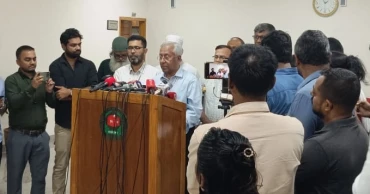
Senior Secretary of the Election Commission (EC) Akhtar Ahmed on Thursday said they have already received 70 percent of locally-procured election materials and will get the remaining items by this month.
“So, there was no reason for concern about supply lines or election material shortages. Rather we can say we’re going to get all necessary items within the given time of September,” he said while talking to reporters at Nirbachan Bhaban in the capital.
The EC Secretary said two out of 10 types of election materials – stamp pads and indelible ink pens – will be provided by the UNDP, while the remaining eight items are being procured locally.
“We have asked UNDP to deliver the two items by October 15. As for the rest, nearly 70 percent of the materials have already been received, and the remaining will arrive by September,” he said.
The eight items being locally procured are locks of transparent ballot boxes, gala (glue), official seals, marking seals, brass seals, large hessian bags, small hessian bags and gunny bags.
Talking about the EC’s planned dialogues with stakeholders later this month, Akhtar Ahmed said the matter will be placed in next week’s commission meeting to finalise the invitees, schedule and other related issues.
EC awaits court rulings on 14 writs over constituency delimitation: Secretary
Replying to a question if the Jatiya Party would be invited, he said it was too early for him to comment as the decision rests with the Election Commission.
New Party Registration
The Election Commission is set to make a final decision next week on granting registration to new political parties ahead of the parliamentary election scheduled for early February 2026.
“We are most likely to finalise the matter in a commission meeting on Sunday or Monday, and will then inform the media,” said Akhtar Ahmed.
He said the commission has already collected field-level information (related to registration conditions) of 22 political parties who sought registration.
“The activities of these 22 parties have been largely scrunised,” the EC Secretary added.
Since the Chief Election Commissioner returned to Dhaka this (Thursday) morning (from Canada), they expect that the final decision will be made on Sunday or Monday.
A total of 144 political parties applied for registration early this year and then the EC initially shortlisted 22 parties following the initial scrutiny.
Awaiting Court Decisions
Talking about the delimitation of constituencies, the EC Secretary said since 14 writ petitions were filed with the higher courts, challenging the delimitation of parliamentary constituencies, the commission is waiting for the court’s decisions.
Bangladesh Election: Decision on new party registration next week
“Many of you are curious about the matter of constituency boundaries. As far as I have learnt, 14 writs have been filed from different places over the issue. Since the matter is now under the jurisdiction of the court, I think it is sub-judice to comment further,” he said.
The EC on September 04 issued a gazette notification finalising the delimitation, which brought changes to the boundaries of 46 constituencies across 16 districts as well as raised the number of constituencies by one in Gazipur district and declined the number by one in Bagerhat district, ahead of the national election, scheduled for early February 2026.
People in several areas, including Bagerhat, Faridpur and Brahmanbaria, protested the new boundaries.
The EC secretary said both the petitioners and the Election Commission itself have full confidence in the judiciary. “We’ll have to wait until the court’s decisions,” he added.
When his attention is drawn to the legal provision in this regard, he said although the law states under its section 7 that such issues are not acceptable in court, the writ petitions were accepted by the High Court as anyone has fundamental rights to file writ petition. “So, I don’t think it is within my authority to provide any legal interpretation now,” he said.
The Article 7 of the Delimitation of Constituencies Ordinance, 1976 states the validity of the delimitation or formation of any constituency, or of any proceedings taken or anything done by or under the authority of the Commission, under this Ordinance shall not be called in question in or before any Court or other authority.
Replying to a question about protests and vandalism centering on constituency boundary changes, the senior secretary said violence is unexpected under any circumstances.
Constituency demarcation: Protesters besiege election office for 3rd straight day in Bagerhat
He reiterated that since the matter is pending before the court, the Election Commission will abide by whatever decision comes from the judiciary.
The current commission headed by Chief Election Commissioner AMM Nasir Uddin re-demarcated 46 constituencies: Panchagarh-1 and 2, Rangpur-1 and 3, Sirajganj-1 and 2, Pabna-1 and 2, Bagerhat-1, 2 and 3, Satkhira-2, 3 and 4, Manikganj-2 and 3, Dhaka-2, 4, 5, 7, 10 and 14, Gazipur-1, 2, 3, 5 and 6, Narayanganj-3, 4 and 5, Faridpur-2 and 4, Shariatpur-2 and 3, Brahmanbaria-2 and 3, Cumilla-1, 2, 6 and 10, Noakhali-1, 2, 4 and 5, and Chattogram-7 and 8.
In the final delimitation, the number of constituencies in Gazipur rose from five to six, while Bagerhat’s fell from four to three.
Earlier, on July 30, the EC had published a draft delimitation of the 300 constituencies, proposing boundary changes in 39 constituencies across 14 districts. In the draft delimitation, six constituencies were also proposed for Gazipur district, reducing the number of parliamentary seats to 3 in Bagerhat.
Following the draft publication, the commission received some 1,893 applications containing claims, complaints and suggestions over 84 constituencies.
Then the Election Commission arranged a four-day hearing on the claims, objections and recommendations regarding the re-demarcation of parliamentary constituencies on August 24-27.
The previous Election Commission, headed by Kazi Habibul Awal, re-demarcated 10 constituencies ahead of the 12th national election, while the KM Nurul Huda-led commission changed the boundaries of 25 constituencies ahead of the 2018 general election and Kazi Rakibuddin Ahmad-headed commission redrew the boundaries of 87 constituencies ahead of 10th parliamentary election.
In 2008, the ATM Shamsul Huda-led commission made massive changes in the 133 constituencies before the 9th general election.
10 months ago
BNP must rebuild public trust, woo young voters: Tarique
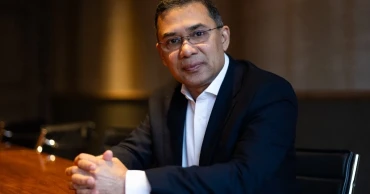
BNP Acting Chairman Tarique Rahman has said ahead of the upcoming national election, one of his party’s key responsibilities is to restore public trust, especially among the younger generation.
In a post on his verified Facebook page on Thursday, he said, “With the upcoming national election scheduled for February, one of our key responsibilities is to ensure the trust of every voter in the country.”
To that end, as a democratic political party, the BNP leader said the party is reaching out to people from all walks of life, especially to reflect the hopes and aspirations of today’s and tomorrow’s youth.
“From the grassroots to the centre, the party is working to further strengthen its organisational structure. Through a united effort, we aim to ensure transparency and accountability in our politics,” he said.
The BNP leader also mentioned that, based on various complaints, organisational action has already been taken against over 7,000 party members.
The BNP leader said disciplinary measures, including expulsion and removal from positions, were enforced for charges such as corruption, extortion, and misconduct.
Tarique calls for vigilance to prevent troubles during Puja
“Amid widespread propaganda and misinformation, taking such decisions was not easy but given the reality, they were absolutely necessary. Discipline is not a weakness; rather, it is our strength. By holding our own members accountable, we have once again proven that BNP is sincere about integrity. We demand certain standards from those in power, and we hold ourselves to those very same standards,” he observed.
Tarique said this was how they aimed to rebuild the trust of the people, especially the youth, who, he said, do not view politics merely as a game of power, but rather as a noble platform shaped by inclusive participation.
He said that BNP has always modernised itself to meet the demands and challenges of the time and has prioritised direct connection and communication with the people.
The BNP leader also noted that their policies are being shaped around a 31-point programme focused on commitments to education, healthcare, youth employment, climate change, and digital innovation.
He said BNP is prioritising inclusivity by ensuring greater participation of women, young leaders, and professionals so that the nation can move forward and politics remains in the service of the people.
World must act now to stop Israeli genocide against Palestinians: Tarique
Tarique said they want BNP to be known as a symbol of service, justice, and competence — not of division or privilege.
He said that Bangladesh is facing a unique set of challenges, and therefore, their actions need to be driven by fresh thinking.
The BNP Acting Chairman, however, made it clear that they do not reject history — rather, they intend to move forward based on its foundation.
Tarique recalled how the late President Ziaur Rahman reintroduced multi-party democracy and empowered the people, while former Prime Minister Khaleda Zia led an uncompromising struggle against authoritarianism to protect democratic rights.
“We are now moving forward into a new era with their aspirations in mind, an era where honesty, youth leadership, and the ability to compete globally will be the key foundations of nation-building,” he said.
Referring to the party’s legacy, he said that BNP is moving forward with discipline, vision, and a commitment to building a modern Bangladesh.
“We know that the youth want real opportunities — not empty promises. The people want stability — not chaos. And the world wants to see Bangladesh as a credible and respected democratic state. We are firmly committed to fulfilling these expectations,” the BNP leader said.
Tarique urged BNP leaders and activists to remain united, disciplined, and committed to public service.
“Just as I trust each of you, you should trust me. Only then will the path of democracy shine brighter. Together, we will prove that it is indeed possible to build a Bangladesh with accountable governance, stable institutions, and a future that reflects the people’s aspirations, Insha’Allah,” he said.
10 months ago
A New Era in Bangladesh Student Politics: Why Shibir's Strategy is a Wake-Up Call for Other Parties
In the wake of Shibir's decisive victory in the DUCSU election 2025, other parties have received a wake-up call, as the win signals a major shift in student politics. According to a social media sentiment analysis by SharedToday, Shibir's success can be attributed to a positive campaign focused on service and discipline, a strategy other parties may need to adopt.
The New Face of Campus Politics
The old labels and abstract political narratives are losing their grip on students. Shibir reframed the election around present-day issues such as discipline, order, and practical services. This approach resonated overwhelmingly with students. While the "anti-independence" narrative did see a jump in engagement late in the DUCSU election, it ultimately failed to stop Shibir's momentum. Students chose to interact with content about "present-tense" capacity and discipline, rather than history.
A Wake-Up Call from the DUCSU and RUCSU Elections
In the recent DUCSU polls, Shibir's victory was a result of a well-executed strategy of timing, simple promises, and strong organization. Shibir's VP candidate, Sadiq, dominated online engagement in the final days, with his share jumping from 53.09% to 88.97%, creating a perception of "inevitability" that rivals couldn't counter. In the General Secretary race, Farhad held his lead from the beginning, while his rivals' engagement shares collapsed.
Read more: From DUCSU to JUCSU: Shibir’s winning streak rolls on
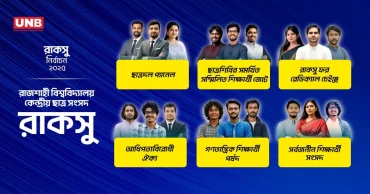
This trend appears to be continuing in the RUCSU election. According to a SharedToday inception report on September 16, Shibir's Sammilito Jote panel is dominating social media engagement with 92.6% of the share. In the VP race, Shibir's Mostakur Rahman has a commanding 66.2% share of engagement. While JCD and Oikya's campaigns are smaller, they are leaning more positive.
For instance, JCD's AGS candidate Zahin Biswas Esha has the strongest individual footprint online, with a 61.3% engagement share in her position. However, the overall data indicates that Shibir's powerful, service-oriented narrative is what is resonating most, capturing over 93% of all panel-level engagement in the early stages of the RUCSU campaign.
Lessons for Other Parties
The success of Shibir provides a clear lesson for other parties. The fragmented "July Bloc" (including Independent and Odhikar) saw its online engagement share collapse from 4.97% to 0.31% in the final stretch of the DUCSU election, largely due to a drop in presence and lack of "last-mile amplification". JCD, while holding its base in DUCSU, failed to excite voters, and its VP candidate's engagement collapsed from 30.33% to 9.08%.
Read more: JUCSU: Newly-elected VP Zitu vows to end sycophantic student politics
Shibir's strategy of disciplined organization, a focus on tangible services, and a positive message of moral leadership stands in stark contrast. As other parties look to compete, they may need to move away from old slogans and embrace a more positive, service-oriented approach to win over a pragmatic student body.
10 months ago