Politics

3 pro-BNP teachers quit from JUCSU election duties over alleged irregularities
Three teachers reportedly aligned with BNP have stepped aside from their duties in the Jahangirnagar University Central Students' Union (JUCSU) and hall union elections, citing widespread irregularities.
They are Prof Shamima Sultana, Nazrul Islam and Nahrin Khan.
"We have been witnessing various irregularities since morning. Extra ballot papers were supplied to each centre. We protested, but no action was taken. The officials in charge simply told us to tear up the extra ballots," Prof Shamima said while talking to reporters.
She alleged that voters are supposed to have their fingers marked with indelible ink after casting their votes, but the markers provided are ineffective.
“Under the circumstances, we feel we cannot continue to be part of this election," she said.
However, long queues of eager students remained outside several polling centres even after the official voting hours at 5pm.
As of 5:20pm, more than 200 students were still seen waiting in the line outside the Kazi Nazrul Islam Hall polling centre.
Meanwhile, the Jatiyatabadi Chhatra Dal (JCD)-backed panel announced a boycott of the elections, alleging vote rigging and irregularities.
10 months ago
Salahuddin warns of election challenges for lack of consensus
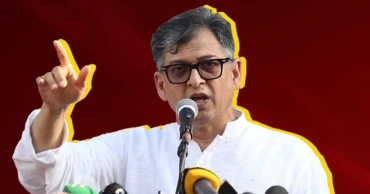
BNP senior leader Salahuddin Ahmed on Thursday expressed concern that the country still faces a challenge in holding the upcoming national election as political parties are yet to reach a consensus on the democratic transition.
“At present, there is a challenge. What is that challenge? Although we are now free from fascism, we have perhaps not yet reached a consensus among ourselves on the democratic transition process. There is still time and I hope we will be able to do so through discussions,” he said.
He made the remarks at a roundtable discussion titled ‘Expectations and Challenges for a Free and Fair Election: The Role of Government, Political Parties and Civil Society’ organised by citizens’ platform Nagorik Coalition at Cirdap Auditorium in the capital.
Leaders from different political parties and civil society representatives joined the discussion.
Salahuddin, a BNP Standing Committee member, said an independent Election Commission, an independent judiciary, a caretaker government system and a free press are the real safeguards for free, fair and impartial elections. “If these are ensured, there will be no challenge in holding fair elections in the future.”
BNP’s Zahid Hossain alleges conspiracies against democracy
He said people expect the next national election to be held in a free, fair and festive atmosphere. “Now, challenges are being discussed in terms of arranging the election and the role of civil society. Under the constitution, the Election Commission has the authority to conduct elections independently and all authorities, including the government, are obliged to extend full cooperation.”
The BNP leader said the Election Commission in the past could not exercise this authority because the executive branch had too much control.
“That situation does not exist now. Although the caretaker system has not yet been fully restored, the interim government is working in the spirit of that system. Once the caretaker system is formally established, future elections will be held within the stipulated timeframe under it,” he said.
He said the interim government has already announced the election schedule and the Election Commission has published its roadmap. “So far, election-related activities are progressing within that timeframe. In fact, the delimitation gazette has already been issued ahead of time. All election work and preparations will be completed as scheduled.”
BNP leader Salahuddin congratulates DUCSU election winners
The BNP leader also said there is no disagreement among political parties about holding the elections in early February next year.
Salahuddin said the biggest question before the nation is now whether reform, trial and elections are interdependent issues.
He explained that these three are not dependent on each other. “Some reforms can be implemented immediately through executive orders and ordinances. Those that cannot be implemented right away should at least be initiated. If this government cannot complete them, the next government will.”
On the proposal of constitutional amendments, Salahuddin said the national parliament is the only legitimate forum to approve such proposals. “There are discussions in the consensus commission on whether there is any other valid process. If the commission finds one, we will agree. But we do not want any example to be created that may later be challenged in court and put decisions into question.”
Speaking about the trial of those involved in mass killings during the mass uprising and democratic movement, Salahuddin said there can be no time limit for justice. “Judicial proceedings must run independently. Whichever government comes, it has to carry forward the process.”
Expressing BNP’s commitment to implementing the July Charter, he said no political party in Bangladesh will be able to do politics in the future without doing so.
Stay vigilant to restore democracy, foil conspiracies: Tarique to BNP followers
The BNP leader also said the 31-point reform proposals, agreed upon by all parties after months of work, are a political and national commitment of their party.
Salahuddin said even if there are differing opinions on some points, all parties must work together to implement the reforms for the sake of democracy and free, fair election
He said the interim government has both achievements and failures, but warned that none of its achievements will matter if it fails to hold a fair election.
Revolutionary Workers Party General Secretary Saiful Haque, Ganosamhati Andolon Chief Coordinator Zonayed Saki, NCP Chief Organiser (South) Hasnat Abdullah, Gono Odhikar Parishad General Secretary Rashed Khan, BNP Organising Secretary Shama Obaed and Jamaat-e-Islami Dhaka South City Secretary Dr Shafiqul Islam Masud, among others, also spoke at the programme.
10 months ago
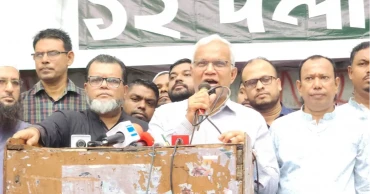
BNP’s Zahid Hossain alleges conspiracies against democracy
BNP senior leader Professor AZM Zahid Hossain on Thursday alleged that both local and foreign quarters are plotting to obstruct the restoration of democracy in Bangladesh.
“The plots against the restoration of democracy in our country are being carried out by both local and foreign conspirators,” he said while addressing a rally.
The BNP leader urged pro-democratic parties, which waged the simultaneous movement against the ‘fascist regime’ of Sheikh Hasina, to unite and foil all such plots.
"We will strengthen our unity. Together, we will fight against all conspiracies against the country and its independence. We want to take an oath to confront these conspiracies with united efforts,” he said.
The 12-Party Alliance, a political ally of BNP, arranged the programme titled ‘Stop the Rehabilitation of Awami Fascism and Resist the Conspiracy to Foil the Election’ in front of the Jatiya Press Club.
BNP leader Salahuddin congratulates DUCSU election winners
Zahid, a BNP Standing Committee member, said the 12-party alliance leaders stood by BNP in past movements to restore democracy and are still with them. “We hope you will continue to remain with us in the future as we move towards building a better Bangladesh under the leadership of Tarique Rahman.”
Explaining what the future Bangladesh would look like, he said it would involve questions such as how the health system would function, what the state of the rule of law would be, how agriculture and public administration would be managed, and above all, how people’s basic needs such as food, clothing and shelter would be met.
The BNP leader said all these issues have been addressed in their party’s 31-point state-overhauling programme. "This is the framework for the future Bangladesh, where the government will be run by the people and for the people."
He said such a government would ensure good governance and the rule of law while maintaining people’s trust.
Zahid said the BNP and the 12-party alliance have long been fighting for a system where no innocent person will be punished and no offender will be spared. "We have been fighting for a social order where the government will be accountable to the people and ensure good governance.”
He said their party wants to build a steel-strong unity by standing together with people on the streets so that fascism can never return, nor its collaborators find any chance to take hold in Bangladesh. “We will stand united on the streets to thwart all conspiracies."
10 months ago
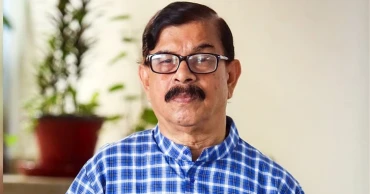
Students’ anti-extortion stance helped Shibir win DUCSU elections: Manna
Nagorik Oikya President Mahmudur Rahman Manna on Wednesday said students’ strong stance against extortion, grabbing and dominance, along with their desire for new politics, helped Islami Chhatra Shibir panel win the DUCSU elections.
Speaking at a discussion, he, however, said the DUCSU polls do not reflect the national vote and will neither influence national politics.
“This generation, after a year, feels that we do not want to see this criminalised politics, the lies, the extortion, the politics of capture and domination. They do not want to see such behaviour in politics. They want to do something new,” he said.
Ganatantra Mancha organised the programme titled ‘Democratic Transition in Bangladesh: The Path to Reform’ at Dhaka Reporters’ Unity (DRU).
Manna, a former DUCSU Vice President, warned that if politics is only about lies, extortion and the struggle for power, it will not be sustainable.
About the DUCSU polls’ impact on national politics, he said, “I have been DUCSU Vice President twice. I was very popular among students, but I did not have a political party. I did not come to power, and my party could not come to power either. Winning in DUCSU does not mean they will achieve something huge in national politics.”
About Chhatra Shibir’s victory in the DUCSU elections, Manna said, “Thirty or 40 years ago, some political parties could not openly participate and faced danger if anyone noticed them. Now, they are standing tall before us. Even big parties are being challenged.”
Manna added that the DUCSU election has shown that fair voting is possible, even though many found the results hard to believe.
He thanked the student community, saying they showed courage that previous generations could not.
BNP leader Salahuddin congratulates DUCSU election winners
The Nagorik Oikya leader said that independent candidates are now willing to run, signalling a shift. “Politics is no longer about large rallies but about digital campaigns and the ideas of the new generation. This generation has rejected old traditions like greeting seniors, following rigid protocols, and domination politics. They understand that politics requires sincerity, struggle, and commitment, not shortcuts to power.”
He said while political parties have become opportunistic, students have set a different example. “For fair elections in the future, unity and reforms are essential. For this, as much firmness is needed as flexibility when necessary.”
Manna suggested that Supreme Court decisions could provide acceptable solutions during crises and must be respected by all parties.
The Nagorik Oikya president said that politics is not something to take lightly; it is a struggle connected to people’s lives. “So, everyone has a responsibility to build honest, inclusive, and reform-oriented politics. Only then can good elections and a stronger political culture be ensured for the future.”
10 months ago
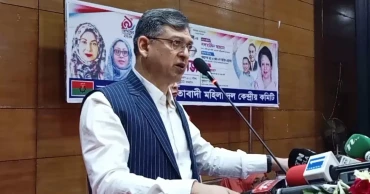
BNP leader Salahuddin congratulates DUCSU election winners
BNP Standing Committee member Salahuddin Ahmed on Wednesday congratulated the winners of Dhaka University Central Students’ Union (DUCSU) elections.
“I would like to personally congratulate those who have won in the Ducsu elections, as this is the norm of democracy. Since the elections were held after many years, there were some flaws,” he said while addressing the 47th founding anniversary of Jatiyatabadi Mohila Dal at the Institution of Diploma Engineers, Bangladesh.
Referring to media reports, Salahuddin said it has been reported that a Shibir-backed panel has won the Ducsu polls. “I want to tell my journalist friends that, to my knowledge, Bangladesh Islami Chhatra Shibir did not take part in this Ducsu election and no panel contested under its name or banner. Then why is it being reported this way in newspapers and other media? That is the question.”
The BNP leader said their student wing Jatiyatabadi Chhatra Dal contested the Ducsu election under its own name and banner.
He said other parties, including Islami Andolon Bangladesh, also took part under their names, while some groups contested as Independent Student Unity, Integrated Student Union, Students Against Discrimination Union, Unbeaten ’71, and Undaunted ’24.
He said those who chose not to contest under their own names must have had their own motives. “The panel that has won is ‘Oikyoboddho Shikkharthi Jote’. I would once again like to personally congratulate those who were victorious under that banner.”
For the first time in the history of Dhaka University Central Students’ Union (Ducsu) elections, the Islami Chhatra Shibir-backed ‘Oikyoboddho Shikkharthi Jote’ (United Students’ Alliance) won, securing 23 out of 28 posts.
Panels of Chhatra Dal and Ganatantrik Chhatra Sangsad did not win a single post. Shibir-backed candidate Shadik Kayem was elected VP with 14,042 votes, while his nearest rival, Chhatra Dal’s Abidul Islam Khan, polled 5,708 votes.
Salahuddin said the biggest movement since the 2024 mass uprising has been the struggle to change Bangladesh’s political culture in its new journey.
He stressed that this struggle must continue so that a new political culture can be established.
“What is that culture? A democratic culture, a culture of tolerance, a culture of empathy. Through tolerance and empathy, we will engage in political competition and practise politics,” he said.
He warned that if the nation does not want the return of fascism, the rise of individual or party-based authoritarianism, parliamentary autocracy, or a one-party state, then political parties must uphold, practise, and nurture a new democratic culture.
“It is only through practising democratic political culture that we can remove the fascist, undemocratic, and corrupt political bad culture of the past. Through good practices, we can overcome destructive politics — and that is the political path we must follow,” Salahuddin said.
Conspirators active to resist polls, destroy communal harmony: Salahuddin
He said while there will always be competition and rivalry in politics, it must end with mutual respect. “At the end of the day, through democratic processes, we will congratulate one another — that should be our guiding principle.”
Salahuddin also said student union elections like Ducsu and others have always influenced national politics.
Recalling his own student days in the late 1970s and 1980s, the BNP leader said he had seen many leaders rise through these platforms, some reaching Parliament while others faded away.
He said Bangladesh’s major political and social changes had come through student politics, and universities must remain centres of political practice as national leadership grows from there.
“Those who are against student politics or call for its abolition — I stand against them. Because the practice of politics is part of education; the university is its classroom. From there, leadership for national politics emerges through continuous development,” the BNP leader said.
Salahuddin said political learning should begin with student politics, but not the kind of politics seen during fascist regimes.
He called for a politics based on accountability, good governance, equality, morality and human dignity, urging all to struggle for such a political culture and state system.
The BNP leader also advised Jatiyatabadi Mohila Dal to strengthen their organisational capacity and activities at the grassroots ahead of the national election.
10 months ago
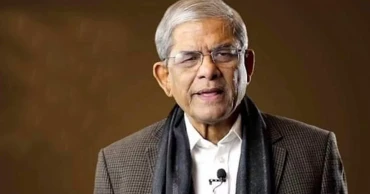
Fakhrul off to Singapore with wife
BNP Secretary General Mirza Fakhrul Islam Alamgir left Dhaka for Singapore on Tuesday morning, along with his wife Rahat Ara Begum, who is set to undergo medical treatment there.
They departed on a flight of Biman Bangladesh Airlines at 8:10am, said BNP media cell member Sayrul Kabir Khan.
He said Rahat Ara Begum had a pre-scheduled appointment with her physician at Mount Elizabeth Hospital, Singapore.
Mirza Fakhrul discharged from hospital
Sayrul, however, did not say how long the couple is expected to stay abroad for the treatment.
He said Fakhrul is expected to return once his wife’s medical arrangements are settled.
Rahat Ara Begum has been suffering from various health problems, including cancer, over the past few months, Sayrul said.
10 months ago

DUCSU: Shadik enjoys commanding lead in race for VP as Shibir set to sweep top three posts
In a political earthquake that has been rumbling underneath the surface of post-Uprising Bangladesh, the Islami Chhatra Shibir-backed panel’s candidates look set to sweep all the top posts in this year’s DUCSU election, with its Vice President (VP) candidate Shadik Kayem in particular opening up a commanding lead in the overnight vote count.
Voting was held Tuesday in a festive atmosphere across campus for the Dhaka University Central Students Union. Turnout clocked a dizzying 78.3% in the end, of the 39,000-strong electorate. The entire campaign period too was notably free of any violence or untoward incidents, except some instances of mostly online harassment.
With 5 of the 8 centres covering 18 halls reporting their results till 5am Wednesday, Shadik had racked up an impressive 7,516 votes.
His nearest rival, Jatiyatabadi Chhatra Dal-backed panel’s Abidul Islam Khan, popularly known as Abid, trailed far behind on just 3,653 votes.
With three centres left to report their results, it leaves Abid with a statistical mountain to climb, if he is to overhaul Shadik, that hardly looks likely. Shadik has so far handily beaten Aid in every single hall that has announced its results, except Jagannath Hall, DU’s only dedicated hall for students from minority backgrounds. That includes two women’s halls - Begum Rokeya Hall and Poet Sufia Kamal Hall - where Shadik scored big, unexpected wins.
Among others in the VP race, Umama Fatema, arguably the most well-known face from last year’s Uprising among all the candidates, garnered 2,355 standing from an independent panel, while independent candidate Shamim Hossain, who tended to attract the more liberal voters, tallied 2,409.
The five polling centres included in the count so far were Curzon Hall, Physical Education Center, TSC, Geology Department Center, and University Laboratory School and College.
The remaining three centres from which results were still pending are the Senate Building, Udayan School and College, and Dhaka University Club.
The Shibir-backed panel's candidates for General Secretary and Assistant General Secretary, S.M. Farhad and Mohiuddin Khan respectively, also worked up handy leads that are unlikely to be eclipsed in the results from the remaining three centres.
JCD's Abid secures big win in Jagannath Hall
It remains to be seen whether JCD will concede the election. Abid, and his senior leaders in JCD started complaining about irregularities in the counting process last evening, and in a Facebook post around 2:30am (Wednesday morning), he wrote, “I guessed this result right after noon. Just put numbers as you like. I reject this staged drama.”
In contrast, his panel's GS candidate, Sheikh Tanvir Bari Hamim, seemed to gracefully accept the result, even as he referred to some irregularities.
In a status on his verified Facebook page around the same time, Hamim said: "If the students of Dhaka University think that this is their verdict, then I respect this verdict. I am waiting for the students' reaction."
Earlier, Chief Returning Officer Professor Dr Md Jasim Uddin told reporters that voting in the DUCSU and hall union elections concluded with no major incidents reported throughout the day.
Students cast their vote spontaneously and the overall atmosphere at polling centres was peaceful, he said. A total of 471 candidates contested for 28 positions in this year’s Ducsu election.
Among the candidates, 48 vied for the post of Vice President (VP), 19 for General Secretary (GS), and 25 for Assistant General Secretary (AGS).
10 months ago
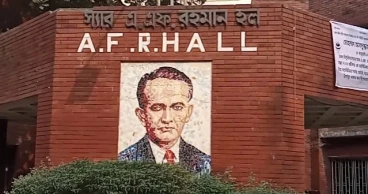
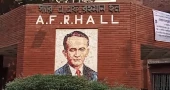
Shadik wins big again, this time at Sir A.F. Rahman Hall
Shibir-backed candidate Sadik Kayem has won the Vice President (VP) race at Sir A.F. Rahman Hall in the DUCSU election, securing 602 votes.
His closest rival Abidul Islam got 186, Umama Fatema 79, Abdul Kader 91, and Shamim Hossain 122 votes from this hall.
For the General Secretary (GS) post, SM Farhad led with 588 votes.
Another female dorm comes up trumps for Shibir, this time Ruqayyah Hall
Other candidates got: Meghmallar Bosu 157, Abu Baker Mojumdar 54, and Tanvir Bari Hamim 245 votes.
Students from Sir A.F. Rahman Hall cast their votes at the Senate Building polling center during the election.
10 months ago
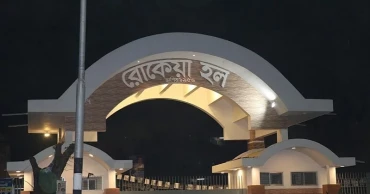
Another female dorm comes up trumps for Shibir, this time Ruqayyah Hall
At Ruqayyah Hall, Vice President candidate Shadik Kayem secured the highest number of votes in the DUCSU election.
Shadik, from the Shibir-backed panel, received 1,472 votes, while Shamim Hossain got 684, Umama Fatema 614, and Abidul Islam Khan 575.
The win for Shadik by nearly 900 votes over his closest rival Abid of the JCD-backedpanel restored his big lead in the race for VP, after Abid ate into the bulk of it with a huge 1200+ margin of victory in Jagannath Hall.
For the General Secretary (GS) post, Shadik's running mate SM Farhad topped the race with 1,120 votes.
JCD's Abid secures big win in Jagannath Hall
Meghmallar Bosu received 780 votes, Arafat Chowdhury 664, Tanvir Bari Hamim 447, and Abu Baker Mojumdar 241.
Students from Ruqayyah Hall cast their ballots at the TSC polling centre.
10 months ago
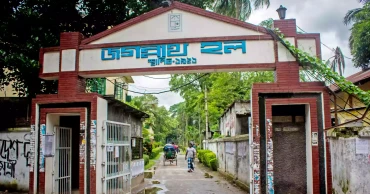
JCD's Abid secures big win in Jagannath Hall
In the Dhaka University Central Students’ Union (DUCSU) election, Jatiyatabadi Chhatra Dal (JCD)-backed Vice President candidate Md Abidul Islam Khan secured a big win at Jagannath Hall.
Khan received 1,276 votes for the VP post, while Shibir-backed candidate Shadik Kayem managed only 10 votes.
Other candidates got the following votes: Umama Fatema 278, Abdul Kader 21, Bin Yamin Molla 5, Shamim Hossain 171, and Tasnim Afroze Emi 11.
For the General Secretary (GS) post, Meghmallar Bosu received the highest 1,170 votes.
JCD's top candidates give contrasting reactions, appear to concede defeat
SM Farhad bagged 5 votes, Tanvir Bari Hamim 398, Arafat Chowdhury 169, and Abu Baker Mojumdar 27 votes.
In the DUCSU polls, students of Jagannath Hall, DU's only hall dedicated to minorities,cast their ballots at the Physical Education Center, one of the designated polling stations.
10 months ago