Politics

Jubo Dal expels N'ganj leader Khairul Islam Sajib over misconduct allegations
The central committee of Jatiyatabadi Jubo Dal on Sunday expelled Narayanganj district unit Senior Joint Convener Khairul Islam Sajib from the party, including his primary membership, over what it described as clear allegations of various irregularities.
A press release said the decision was implemented by Jubo Dal President Abdul Monayem Munna and General Secretary Mohammad Nurul Islam Nayon.
The release also said the party would not take responsibility for any misconduct committed by the expelled leader and instructed leaders and activists at all levels to refrain from maintaining organisational ties with him.
Khairul Islam Sajib is the son of Narayanganj-3 lawmaker Azharul Islam Mannan.
According to another press release issued by the Narayanganj District Detective Branch (DB) Police Superintendent’s Office, Sajib, 36, was taken to the Narayanganj DB office for preliminary questioning over allegations brought against him.
Later, a team from the Dhaka Metropolitan Detective Police took him from the Narayanganj DB office to the Dhaka Metropolitan DB headquarters for further interrogation.
Police said necessary legal action would be taken after completion of the questioning process.
1 month ago
Zahid for integrated prevention measures to keep youth away from drugs
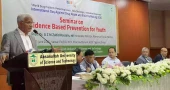
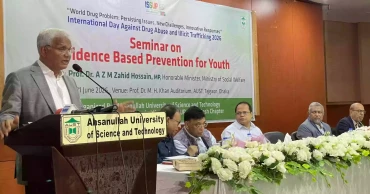
Social Welfare, and Women and Children Affairs Minister AZM Zahid Hossain on Sunday called for integrated and evidence-based preventive initiatives to protect young people from the harmful effects of drugs.
He said drug control efforts should not be confined to law enforcement or fear-based campaigns alone, stressing that effective prevention requires evidence-based, integrated and long-term measures.
The minister made the remarks while addressing a seminar titled “Evidence-Based Initiatives for Youth Drug Prevention” as the chief guest at Ahsanullah University of Science and Technology (AUST) in the capital, marking International Day against Drug Abuse and Illicit Trafficking 2026.
The seminar was organised jointly by AUST, Dhaka Ahsania Mission and the International Society of Substance Use Professionals (ISSUP) Bangladesh Chapter.
Highlighting the coordinated role of the government, educational institutions, families and social organisations in building a drug-free society, Zahid Hossain said, “To free the country from the scourge of drugs, we must build a social movement involving all sections of society. Only then we can establish a humane and welfare-oriented Bangladesh.”
He said various initiatives have been undertaken by the Ministry of Social Welfare and the Ministry of Women and Children Affairs to enhance the skills and capacities of young people through education, training and practical skill development.
The minister also noted that the national budget has placed the highest priority to poverty reduction and improving the quality of healthcare services.
Presenting the keynote paper, Iqbal Masud, director of the health sector at Dhaka Ahsania Mission and general secretary of the ISSUP Bangladesh Chapter, underscored the importance of workplace- and school-based prevention programmes in line with the United Nations International Standards on Drug Use Prevention, the Oviedo Convention and science-based behaviour change models.
He said replacing punitive approaches with rehabilitation and recovery-oriented services for drug-dependent or at-risk young people has become an urgent necessity, calling for a scientific review and evaluation of the existing prevention activities of the Department of Narcotics Control.
Speaking as special guest, Director General of the Department of Narcotics Control Md Hasan Maruf said law enforcement alone is insufficient to address the drug problem.
He said the department is placing considerable emphasis on scientific research to assess the effectiveness of preventive interventions and stressed the need for active participation of non-governmental organisations and educational institutions alongside government initiatives to protect young people from drug-related risks.
In his speech, Dr MA Mohit Kamal, chairman of the ISSUP Bangladesh Chapter, highlighted the importance of identifying adverse childhood experiences in shaping the mental health of young people.
Dr SM Khalilur Rahman, vice president of Dhaka Ahsania Mission, urged young people to stay away from drugs, saying the issue is not merely a law-and-order concern but also a public health challenge. He called for piloting international programmes through public-private partnerships.
AUST Vice-Chancellor Prof Dr Md Ashraful Haque, who presided over the programme, called for collective efforts to build a drug-free campus and a healthy society.
Representatives from various government and on-government organisations, public health experts, researchers and students attended the seminar.
1 month ago
Mirza Abbas recovering steadily: State Minister Habib
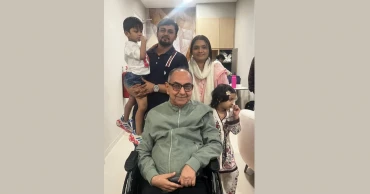
State Minister for Railways, and Road Transport and Highways Habibur Rashid Habib on Sunday said BNP Standing Committee Member Mirza Abbas is now in much better condition.
He shared the update in a post on his official Facebook page.
According to the post, Mirza Abbas, who is an MP from Dhaka-8 and political adviser to the Prime Minister, has shown significant improvement in his health and is recovering steadily.
He has expressed his sincere gratitude to all those who prayed for his recovery, Habib said.
The state minister expressed hope that the BNP leader will soon make a full recovery and return to normal life to continue his responsibilities and activities for the welfare of the country and its people.
1 month ago
Late President Ziaur Rahman established freedom of speech through multi-party democracy: Tuku
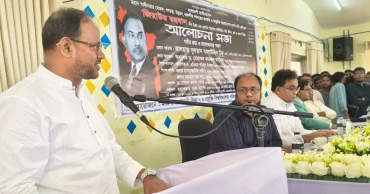
Fisheries and Livestock State Minister Sultan Salauddin Tuku on Saturday said that Shaheed President Ziaur Rahman established freedom of speech in Bangladesh by introducing a multi-party democratic system.
“Under his leadership, the country returned to a democratic path, creating opportunities for the political participation of the masses,” he said.
The state minister was speaking at a discussion titled ‘His Life, Work, and Ideals,’ organised by Mawlana Bhashani Science and Technology University (MBSTU) to mark the 45th death anniversary of Shaheed President Ziaur Rahman, Bir Uttam.
‘At a time of political crisis, Ziaur Rahman led the Liberation War by proclaiming independence. In the post-war era, he played a vital role in rebuilding the nation, achieving food self-sufficiency, and establishing the political rights of the people,’ the state minister said.
Tuku emphasised that democracy was the core spirit of the Liberation War, and Ziaur Rahman introduced multi-party politics precisely to strengthen that democracy. Ensuring freedom of expression and political liberty was the cornerstone of his political philosophy, he added.
He further noted that the current government is serving after being elected by the people's vote, and the public will evaluate its performance in the future. He urged all quarters to maintain unity and solidarity in the national interest, moving past political division and discord. He also called upon everyone to remain united by upholding the spirit of the anti-fascist movement to ensure that authoritarian or repressive political cultures never return to the country.
Chaired by Dr. Mostafa Kamal Nasir of MBSTU, the discussion was addressed by Jahangirnagar University Vice-Chancellor Professor Dr. Mohammad Kamrul Ahsan as the keynote speaker.
MBSTU Vice-Chancellor Professor Dr. A B M Shahidul Islam spoke as the special discussion leader, while former member secretary of Tangail District BNP, Mahmudul Haque Sanu, attended as a special guest. University teachers, students, and leaders of BNP and its affiliate organizations were also present.
1 month ago
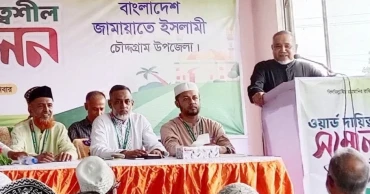
Jamaat nayeb-e-ameer outlines primary responsibilities of party MPs
Dr Syed Abdullah Mohammed Taher, Deputy Leader of the Opposition in Parliament, said on Saturday that Jamaat leaders and activists must dedicate themselves to the welfare of society.
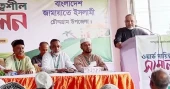
“Everyone must remain steadfast in fulfilling their responsibilities with courage, trustworthiness, sacrifice and organisational discipline,” he said while addressing the Upazila Jamaat ward responsible conference at Dolly Resort in Chauddagram Upazila.
Dr Taher said that seeking Allah (SWT)'s satisfaction and working for the welfare of people are the primary responsibilities of an Islamic worker. He urged Jamaat leaders and activists to play a more active role in social development and public welfare.
He also said that necessary steps would be taken to develop various infrastructures in Chauddagram, construct new buildings for educational institutions, improve the quality of education, build and renovate roads, construct new Union Parishad buildings and improve the law and order situation.
He called on all concerned to remain vigilant and vocal against drug abuse and teen gangs to help build a safe and prosperous Chauddagram.
The conference was presided over by Chauddagram Upazila Jamaat Ameer Mahfuzur Rahman.
1 month ago
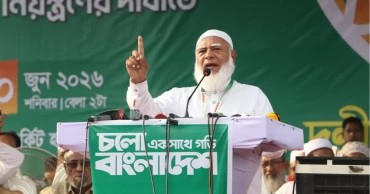
Prepare for another ‘inevitable revolution’ if needed: Ameer-e-Jamaat
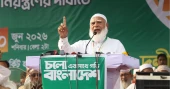
Bangladesh Jamaat-e-Islami Ameer and Leader of the Opposition in Parliament Dr Shafiqur Rahman on Saturday said the verdict of the people’s referendum and the July Charter must be implemented.
He said if a solution is not reached in parliament on the issue, they will go to people across the country and present their position.
“Where we do not need the Speaker’s permission to speak, we will speak with the people. A mass awakening will take place across the country,” he said.
The Jamaat chief made the remarks while addressing a divisional rally organised by the 11-party alliance at Khulna Circuit House ground on Saturday afternoon.
Calling upon the youth, Shafiqur Rahman said, “You removed fascism through the July Revolution. Now, if necessary, be prepared for another inevitable revolution to remove neo-fascism.”
Student’s movement was not aimed at putting any individual, family or group in power, but at building an independent, sovereign, accountable and humane Bangladesh, he added.
“We do not want any chaos in the country. But we will not bow down to injustice, corruption, extortion, occupation or domination,” Amir said.
The rally was organised demanding implementation of the referendum verdict, removal of public sufferings and control of commodity prices. Jamaat Secretary General Mia Golam Parwar chaired the event, while former Colonel Dr Oli Ahmed and Maulana Mamunul Haque addressed it as special guests.
1 month ago

Teesta master plan likely to get ECNEC approval at next meeting: Minister
Water Resources Minister Shahiduddin Chowdhury Anee on Friday said the Teesta Master Plan is expected to receive approval at the next meeting of the Executive Committee of the National Economic Council (ECNEC), with implementation work to begin after completion of assessments by an expert team.
“The Prime Minister has taken the project as a priority initiative. Therefore, residents along the Teesta basin have nothing to worry about anymore,” Annie meanwhile told reporters after visiting the Teesta Bridge area in Kaunia, Rangpur, on Friday evening.
Another barrage on Teesta River under consideration: PM
He said Prime Minister Tarique Rahman has undertaken a mega project centering on the Teesta River, which will be implemented in the shortest possible time through full domestic financing alongside local and foreign technical assistance.
According to the minister, the project will require an estimated Tk 13,000–14,000 crore and will be implemented under a special financing arrangement. He added that the Prime Minister is personally overseeing the overall progress of the initiative.
“If we can construct embankments in a planned manner and carry out systematic dredging, we will, Insha Allah, be able to protect the people of this region,” he said.
Annie described the Teesta Master Plan as an urgent necessity, saying the river’s challenges affect not only the people of Rangpur and Lalmonirhat but the entire country.
“Once the project becomes visible and is completed, whether it takes two to four years or even six to seven years, the benefits will be enjoyed by the people of this region and the national economy will be strengthened,” he said.
He added that the project would help develop agricultural infrastructure and agro-based economic zones, transforming the longstanding hardships of people in the five Teesta basin districts into prosperity.
He also said preliminary surveys and feasibility assessments have already been completed, while a nine-member team of expert engineers is currently working on the project design.
“The formal journey of the master plan will begin within the next one to two months,” he said.
1 month ago
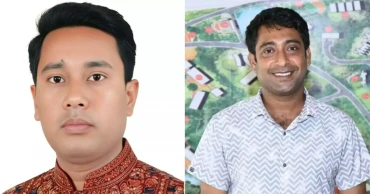
Comilla University JCD gets new 12-member convening committee
Bangladesh Jatiotabadi Chatradal (JCD), the student wing of BNP, has announced a new 12-member convening committee for its Comilla University unit after a gap of five years.
In the newly formed committee, Mostafizur Rahman Shuvo, a student of the English Department from the 2008–09 academic session, has been made convener, while Abul Bashar, a student of the Anthropology Department from the 2012–13 academic session, has been appointed member secretary.
JCD holds protest march against Shibir concocting 'false narratives' around Jisan
The committee was announced through a press release signed by JCD Central President Md Rakibul Islam Rakib and General Secretary Nasir Uddin Nasir on June 18.
The newly formed committee also includes Atikur Rahman as senior joint convener, while Md Saiful Islam, Sagar Ahmed, Riaz Uddin Antor, Safayet Hossain Sajal, Motasim Billah Rifat, Ashraf Uddin Munna, Mahfuzur Rahman Arif, Tarikul Islam and Md Saidul Islam Shawon have been made joint conveners.
Convener Mostafizur Rahman Shuvo said the committee was formed after a long struggle and expressed gratitude to the central leadership of JCD as well as BNP Chairman Tarique Rahman for placing confidence in them.
According to the press release, the committee has been instructed to form a full-fledged convening committee within 10 days and arrange a council to elect a new committee within one month.
1 month ago
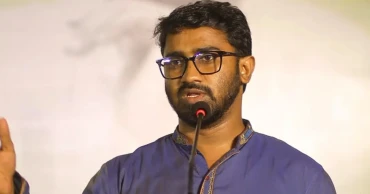
Jamaat’s downfall imminent: Rashed Khan
BNP leader Rashed Khan on Friday said Bangladesh Jamaat-e-Islami would soon face political decline as an opposition party, adding that its own leaders and activists would be responsible for their downfall.
In a post on his verified Facebook account, Rashed made the remarks while alleging that he is regularly subjected to abusive language for making what he described as “reasonable criticism.”
As an example, he shared a screenshot in the same Facebook post.
Rashed Khan said some people believe that using abusive language against him and his family would force him to remain silent. He claimed that insults have become their primary tool to stop him from speaking.
He further said those engaged in such activities do not realise that a difficult outcome awaits them, adding that the bell was already ringing to signal their downfall.
According to Rashed, who switched to BNP from Nurul Huq Nur's Gono Odhikar Party just prior to the February election in order to avail the party's famed electoral symbol of paddy sheaf, Jamaat's shortcomings and incompetence are becoming visible in parliament. He also thinks the more its leaders speak, the more their mistakes and weaknesses will be exposed.
Rashed Khan also claimed that Jamaat would soon face what he termed a “harsh downfall” and alleged that the party’s own “ignorant activists” would be responsible for it.
1 month ago
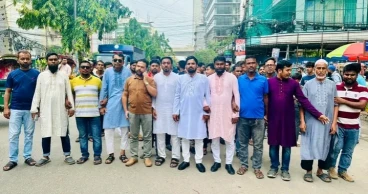
Swecchasebak Dal stage protest demanding justice for slain leader
Leaders and activists of Swecchasebak Dal staged a protest march in the capital on Friday demanding justice for the killing of former convener of Ramna Thana Swecchasebak Dal, Billal Hossain Talukdar.
The procession began in front of the BNP central office in Nayapaltan in the afternoon and marched through Kakrail and Paltan intersections before ending in front of the National Press Club.
The programme was led by Dhaka Metropolitan Swecchasebak Dal General Secretary Saad Morshed Pappa Sikder. Leaders and activists from different units of Dhaka Metropolitan also joined the protest.
The protesters demanded that those responsible for the killing be brought under the law and given exemplary punishment.
Billal Talukdar was stabbed to death by miscreants in front of Anarkali Market in Mouchak at around 8pm on June 8.
According to reports, the killing stemmed from disputes over collecting electricity bills and waste management fees from market shops, as well as conflicts surrounding control of footpaths and extortion activities. Supporters of the deceased blamed a rival group for the incident.
Meanwhile, the victim’s wife, Ambia Khatun, filed a murder case with Ramna Police Station, naming 21 individuals as accused.
Police have already arrested several of the accused in connection with the case.
1 month ago