politics
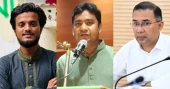
Abdul Kader says Nasir linked him with Tarique Rahman before one-point demand
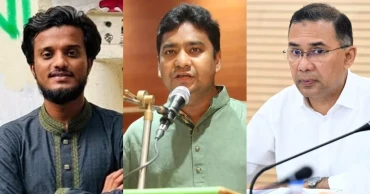
Former coordinator of the Anti-Discrimination Student Movement Abdul Kader on Monday claimed that contact was established with BNP's then Acting Chairman and current Prime Minister Tarique Rahman through Jatiyatabadi Chhatra Dal General Secretary Nasir Uddin Nasir before the announcement of the one-point demand during the July Uprising.
Kader made the claim in a lengthy Facebook post titled "The Untold History Behind the Historic One-Point Demand."
In the post, he described various developments leading up to the announcement, saying he held discussions with different stakeholders before deciding to announce the one-point demand. As part of that process, he said, he contacted Chhatra Dal leaders Rakibul Islam Rakib and Nasir Uddin Nasir.
According to Kader, after being informed about the proposed one-point demand, Nasir told him, "Then let me discuss this matter with Chairman Sir (Tarique Rahman)."
Kader further claimed that later that night, Nasir informed him: "The situation has become suitable for announcing the one-point demand, and Chairman Sir has also said so. You may take the decision."
He also claimed that representatives of Chhatra Dal and Islami Chhatra Shibir discussed the matter within their respective organizations and conveyed positive responses. Following that, work proceeded on preparing and finalizing the declaration.
In his post, Kader said he supported making the one-point announcement quickly, considering the situation on the ground, the ongoing violence, and the possibility of further loss of life.
He also wrote that there had been discussions and differences of opinion among the coordinators before the announcement, but his objective was to reach a prompt decision in light of the evolving circumstances.
Kader further claimed that although discussions were held with various individuals and political groups regarding the one-point demand, the decision was not taken under pressure or instruction from any specific political party.
However, these statements were made by Abdul Kader in his Facebook post and remain his personal claims.
11 hours ago
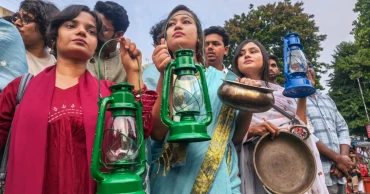
Chhatra Shakti protests against commodity price hike, gas-electricity crisis
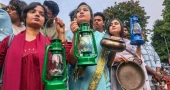
Dhaka University unit of Jatiya Chhatra Shakti, the student wing of National Citizens’ Party (NCP), held a demonstration today protesting the ongoing crisis of gas, electricity across the country and the increasing price of daily commodities.
The program was held in front of DU’s Raju sculpture around 6pm, showing hurricane lamps, cooking pots and pans making the event dramatic.
During the demonstration the protesters are heard chanting slogans such as ‘Bah ajob Tarique Bhai, Khamba ache current nai’, ‘Chula ache gas nai, Bah ajob Tarique bhai’, among others.
The country has gone back to the time of 2002-2004 where the pillars of electricity exist without electricity, claimed DU unit president of Chhatra Shakti Tahmid Al Mudassir Chowdhury.
12 hours ago
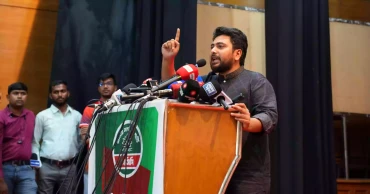
Hasina will be taken straight from airport to gallows upon return: Nahid
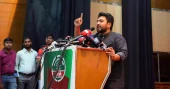
National Citizen Party (NCP) Convener and Opposition Chief Whip Nahid Islam on Monday said whenever ousted Prime Minister Sheikh Hasina returns to Bangladesh from India, students and the public will take her directly from the airport to the gallows.
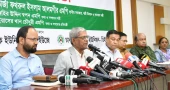
“Sheikh Hasina will be taken straight from the airport to the gallows. If Tarique Rahman [Prime Minister] strikes a deal with Delhi to arrange her return, we are ready to carry out Hasina's execution,” he said while addressing a discussion titled “One-Point Demand in the Voice of Martyrs’ Families and the Injured”, organised by the NCP at the Institution of Diploma Engineers, Bangladesh auditorium in Kakrail.
Nahid said families of 1,400 martyrs and 30,000 injured fighters of the July uprising will take to the streets and remain there until Hasina's execution is carried out, if she returns to Bangladesh.
Accusing the BNP government of shielding its own wrongdoing in the same manner as the Awami League once did, he said BNP leaders themselves have admitted that nothing has changed in the past five months, with bribery and corruption continuing as before.
The NCP leader alleged that a narrative is being pushed portraying Prime Minister Tarique Rahman as good while blaming others, similar to the propaganda once used to defend Hasina.
He alleged that the public continues to suffer due to gas shortages in households and lack of electricity, while politicisation persists across institutions, including the police.
Nahid alleged widespread extortion and corruption, claiming the only change over the past two years is that Tarique Rahman returned from London to become prime minister.
Expressing disappointment over the lack of government initiatives for the families of martyrs, he said BNP has yet to take any steps for the martyrs and the injured, stressing that martyrs’ families are a national asset who gave their lives for the liberation of the people, not to install anyone in power.
“We did not launch this movement to attain power. We declared the abolition of the fascist system. We will not allow this country to become a haven for autocracy, corruption and extortion again,” the opposition chief whip said.
Among others, NCP Member Secretary Akhter Hossen, Chief Organiser for Chief Coordinator Nasiruddin Patwary, Northern Region Sarjis Alam, Jatiya Nari Shakti Member Secretary Mahmuda Mitu, its Chief Organiser Nusrat Tabassum, and members of martyrs’ families were present at the discussion.
12 hours ago
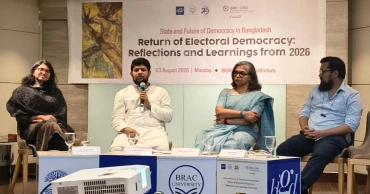
NCP didn't turn out the way people hoped after uprising: Mahfuj
Former adviser to the interim government Mahfuj Alam on Monday said the National Citizen Party (NCP) failed to live up to the expectations people had of it in the aftermath of the July uprising.
“The Jatiya Nagorik Committee was formed bringing together people from both the right and the left. But later, when it took the shape of the NCP, the party moved away from that inclusive space,” Mahfuj said while speaking at a seminar titled ‘Return of Electoral Democracy: Reflections and Learning from 2026,’ organised by the BRAC Institute of Governance and Development (BIGD) at the BRAC Centre in Mohakhali.
Mahfuj said the party ended up favouring or excluding members based on which political camp, right or left, they belonged to. “A boy is affiliated with a right-leaning party and gets special benefits from NCP because of that. Or take another case where someone is deprived within NCP for the same reason. Neither of these was supposed to happen. But that is exactly what happened.”
He noted that before NCP emerged as a political party, the Jatiya Nagorik Committee had even included popular figures such as YouTuber Salman Muktadir. “We wanted to move forward with everyone who was inspired by the spirit of July. But that did not happen, and eventually I too had to step aside.”
Speaking on the same panel, former NCP leader Tasnim Jara, who contested as an independent candidate from Dhaka-9 in the February 2026 national election, said she did not leave the party out of any grievance. “People think I left NCP in a huff. To tell the truth, the party itself did not stay true to its position. I have remained firm in mine.”
Another former NCP woman leader, Tajnuva Jabeen, said those who once embodied the spirit of a discrimination-free Bangladesh and took to the streets in the 2024 movement that ousted the previous government are no longer organised as a force.
“A major reason the July Charter, built on the spirit of July, could not be implemented is that those who once carried that spirit have drifted away from their original position. I myself resigned from NCP the day before submitting my nomination papers ahead of the election,” Jabeen said.
Speakers at the event also observed a significant gap in women's participation in Bangladesh's politics, along with visible violations of the code of conduct during election campaigning and instances of elected representatives losing sight of their original goals after taking office.
15 hours ago
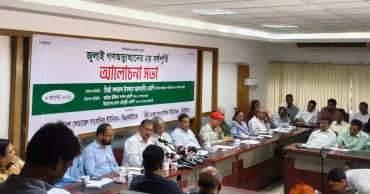
Govt committed to implementing every provision of July Charter: Swapon
Information and Broadcasting Minister Zahir Uddin Swapon on Monday said the government is committed to implementing every provision of the July Charter, describing it as a document written with the blood of the martyrs of the July mass uprising.
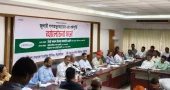
"We signed the July Charter, and the blood of the martyrs is intertwined with that signature. Our government wants to implement every single word of the July Charter," he said while speaking as a special guest at a discussion organised by the Bangladesh Federal Union of Journalists (BFUJ) and the Dhaka Union of Journalists (DUJ) at the Jatiya Press Club to mark the 2nd anniversary of the July uprising.
No conspiracy based on religion, race to succeed in Bangladesh: Swapon
Local Government, Rural Development and Co-operatives Minister Mirza Fakhrul Islam Alamgir attended the programme as the chief guest.
Swapon said the government has repeatedly stated that the objectives of the July Charter will be achieved through constitutional means. "There is no constitutional or lawful platform other than the people's elected Parliament to realise these goals," he said.
He underscored the need for strengthening democratic culture, saying, "This is not something a single political party can achieve. It requires the collective efforts of all political parties that consistently remained involved in the movement and struggle," he said.
The minister said the sacrifices of the July martyrs will only be honoured if the political forces claiming ownership of the movement truly understand and uphold the ideals for which the martyrs gave away their lives.
Referring to Mirza Fakhrul, he said the veteran leader's sacrifices and perseverance over the past 17 years reflected the guidance of former Prime Minister Khaleda Zia and Prime Minister Tarique Rahman.
The minister said the government now bears the responsibility of governing the country, activating Parliament, strengthening the judiciary, safeguarding Bangladesh's sovereignty, enhancing the country's standing in the international arena and creating employment opportunities for the country's growing number of educated unemployed people.
He also said they now want to ensure good governance. "If we can do that, only then the sacrifices of the martyrs truly be honoured," he said.
Swapon said the government will continue efforts to keep all democratic forces united until the very end.
However, he warned that if any political forces cross limits through misinformation, indecency or by knowingly or unknowingly serving the interests of conspirators under the guise of ideology, the government will have to fulfil its responsibility in the interest of establishing good governance.
16 hours ago
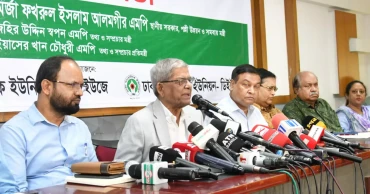
Hasina-like rhetoric now coming from opposition leaders: Fakhrul
Local Government, Rural Development and Cooperatives Minister Mirza Fakhrul Islam Alamgir on Monday said opposition leaders have started using the same language once used by former prime minister Sheikh Hasina, warning that such rhetoric could undermine democratic politics.
"The language some of our respected opposition leaders are now using outside Parliament—saying they will not allow the government to complete its five-year term—is the same language Sheikh Hasina once used," Fakhrul said.
A quarter trying to create division in the name of religion: Mirza Fakhrul
He made the remarks at a discussion organised by the Bangladesh Federal Union of Journalists (BFUJ) and the Dhaka Union of Journalists (DUJ) at the Tofazzal Hossain Manik Mia Hall of the Jatiya Press Club in the morning as the chief guest, marking the second anniversary of the July mass uprising,
"Hasina used to say after going into opposition in 1991 and 1996 that they would not allow the government to remain in peace even for a day. Today, our opposition leaders have started speaking in the same language," he added.
Fakhrul said the government respects the opposition and believes a strong opposition is essential for institutionalising democracy.
"We have the highest respect for them. If democracy is to be institutionalised and made effective, the opposition has the biggest role to play. They must criticise the government, oppose its policies and point out its mistakes," he said.
He stressed that such criticism should primarily take place in Parliament.
"When these issues are addressed inside Parliament, the democratic environment remains healthy. Unfortunately, we have again returned to the old culture of taking to the streets and trying to create confrontations. There is nothing wrong with democratic protests, but they should never reach a level that leads to conflict," he said.
He said nearly 60 lakhs BNP leaders and activists were implicated in around 125,000 "false cases" during the previous AL regime.
Fakhrul also said that around 1,700 BNP leaders and activists, including former MP Ilias Ali, were subjected to enforced disappearance, while more than 2,000 party leaders and activists were killed.
He recalled that then-BNP Chairperson Begum Khaleda Zia remained imprisoned until August 5, while Prime Minister Tarique Rahman spent nearly 18 years in exile.
"We always need to remember these realities because they remind us why our movement began and what kind of democratic state we wanted to build," he said.
He said the interim government was formed with the support of democratic forces and worked to create a democratic environment while preparing the July Charter and reform proposals.
Rejecting allegations that BNP is unwilling to implement the July Charter, Fakhrul described such claims as "completely misleading."
"I strongly protest against the propaganda that BNP does not want to implement the July Charter. BNP has always advanced reforms," he said."Whenever the state, politics or the economy has been destroyed, BNP has rebuilt them."
Addressing debates over the July Charter, he said the document itself recognises that political parties may implement their own election manifestos if they are elected to govern on issues where consensus does not exist.
"Please open the document and read it. It clearly states that where there is no consensus, the elected government will implement its own manifesto. So why is it being portrayed as if BNP is abandoning the July Charter?" he asked.
He said disagreements mainly arose over the proposed referendum, particularly one question that was included without consultation with political parties or the Constitution Reform Commission.
"I said at that time that the nation has been deceived. We never accepted that provision," he said.
Fakhrul said BNP contested the election with its own manifesto, received the people's mandate and is now implementing the July Charter within that democratic framework.
He said work has already begun through a parliamentary constitutional amendment committee.
"Now the debate is whether it should be called reform or constitutional amendment. Fine, let’s discuss it in Parliament. If there is disagreement after discussion, then so be it, but let Parliament decide," he said.
"There is no government interference in the media today. Ownership and business interests control most media organisations, and the government has no authority over those matters," he said.
At the same time, Fakhrul said divisions among journalists themselves have contributed to many of the sector's problems.
He assured journalists that the government would raise issues discussed at the programme with the Prime Minister including the rehabilitation of unemployed journalists and support for the families of journalists and others who were killed during the anti-fascist movement.
Fakhrul urged all stakeholders to avoid confrontation and support the government's efforts to strengthen democracy. "The country belongs to all of us. If we remain trapped in endless conflict, Bangladesh will never move forward," he said.
Drawing a comparison with China's post-independence development, Fakhrul said Bangladesh has lagged behind because of persistent divisions.
"The world has changed. We need patience, tolerance and cooperation. The government has been in office for only about five months. It is impossible to solve every problem overnight. Give the government time and help create a positive environment," he said.
16 hours ago
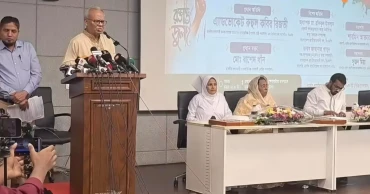
Political divisions will pave way for Hasina's return: Rizvi
Prime Minister's Political Adviser Ruhul Kabir Rizvi on Monday criticised Bangladesh Jamaat-e-Islami for what he described as fostering divisions in politics, warning that continued discord could pave the way for the return of deposed Prime Minister Sheikh Hasina.
"Why are you (Jamaat) following Sheikh Hasina's path? If you follow her path, we will remain trapped in that same darkness. If this division and discord continue, Sheikh Hasina will clap in satisfaction and try to return to Bangladesh by parachute," he said.
No one will be safe if defeated forces return, warns Rizvi
Rizvi, also BNP senior joint secretary general, made the remarks while speaking as the chief guest at a discussion titled "Contribution of Nurses to Bloodstained July" and a documentary screening at the Bangladesh Medical University auditorium in the capital.
He said the July uprising has a profound philosophic foundation that guarantees citizens' freedom, the right to speak and the right to live without fear.
The BNP leader said the July uprising was the culmination of 17 years of bloodshed and continuous democratic struggle. "Hundreds of leaders and activists of BNP, Jatiyatabadi Chhatra Dal and other associate bodies sacrificed their lives during this movement," he added.
He said Sheikh Hasina had used state institutions "in a disgraceful manner" to suppress political dissent and citizens' rights.
"Those who are entering politics today must develop a healthier political culture. The politics of hatred and division must stop. Otherwise, the fall of authoritarianism will lose its significance," Rizvi said.
Highlighting the role of nurses during the July uprising, he said they set a remarkable example of humanity by standing beside injured students and protesters on the streets.
"Nurses are the frontline soldiers of humanity. It is impossible to improve the country's overall healthcare system while neglecting this vital sector," the BNP leader said.
He alleged that the previous authoritarian government had pushed the health sector towards destruction, while the current government is working to reform it.
BNP Health Affairs Secretary Prof Dr Rafiqul Islam and Prime Minister's Political Assistant Md Rashed Khan attended the programme as special guests.
17 hours ago

Jamaat voices concern over LPG price hike
Bangladesh Jamaat-e-Islami on Sunday expressed deep concern over the increase in the price of liquefied petroleum gas (LPG) amid rising prices of essential commodities in the country.
In a statement, the party’s Secretary General Mia Golam Porwar said, “People are already struggling due to the rising prices of daily necessities. At this time, increasing the prices of LPG and autogas used by households and vehicles has added further financial pressure on consumers, which is very worrying. I condemn such an anti-people decision of the government.”
He said the government has increased the prices of oil, gas and electricity in phases, which has led to a continuous rise in the prices of various essential goods.
“Although the incomes of people from different sections, including lower- and middle-income groups, have not increased, their expenses have continued to rise, disrupting normal life,” he said, urging the government to immediately withdraw the increased gas prices.
Porwar said the Bangladesh Energy Regulatory Commission (BERC) on Sunday increased the consumer-level price of a 12-kg LPG cylinder, widely used for household purposes, by Tk 70.
Following the hike, the price of a 12-kg LPG cylinder has been fixed at Tk 1,598, up from Tk 1,528. The price of autogas has also increased to Tk 73.67 per litre, he added.
The Jamaat leader warned that the LPG price hike could affect all sectors, including production, and urged the government to take necessary steps to import liquefied natural gas (LNG) to meet the country’s demand.
He also called for withdrawing the increased LPG price and restoring relief for consumers.
1 day ago
Muktijoddha Dal protests NCP remarks targeting PM Tarique Rahman
Bangladesh Jatiyatabadi Muktijoddha Dal on Sunday protested what it described as "offensive" remarks made by National Citizen Party (NCP) leaders against Prime Minister Tarique Rahman, alleging that such statements reflect the politics of anti-independence forces.
In a press release, the organisation's President Ishtiaq Aziz Ulfat and other senior leaders said the comments made by NCP leaders about the prime minister amounted to behaviour inconsistent with the spirit of the July 2024 mass uprising.
According to the statement, NCP leaders recently made what it termed "indecent remarks" about Tarique Rahman and his family at a rally in Habiganj, triggering protests by local students and members of the public.
The organisation alleged that NCP leaders have since continued what it called a series of conspiratorial activities against Tarique Rahman and the BNP through public rallies and political programmes.
The Muktijoddha Dal leaders claimed these activities are aimed at facilitating the rehabilitation of the banned Awami League led by former Prime Minister Sheikh Hasina.
They also alleged that NCP has involved Awami League activists in its programmes in an attempt to disrupt the country's democratic progress and create instability.
The organisation further claimed that the NCP's political activities are weakening the country's position in the face of what it described as conspiracies involving Sheikh Hasina and Indian aggression.
The leaders warned that if anyone attempts to undermine the political environment or the achievements of the July uprising through what they termed immature, offensive and provocative statements, patriotic citizens, participants in the July movement and the people of the country would resist such efforts in a united manner.
1 day ago
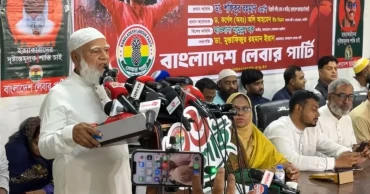
BNP showing ‘photocopy’ of past fascist practices, alleges Jamaat chief
Leader of the Opposition in Parliament and Bangladesh Jamaat-e-Islami Ameer Dr Shafiqur Rahman on Sunday accused the BNP of resorting to the same authoritarian practices that opposition parties had faced during the fascist Awami League regime, urging the party to respect the people's mandate and democratic values.
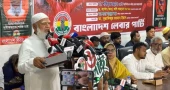
Addressing a discussion, titled “Jan Debo, July Debo Na”, organised by the Bangladesh Labour Party at the Jatiya Press Club, he said both Jamaat and BNP had endured over 17 years of repression before the political change brought by the July movement.
“After the bloodstained movement that brought change, we are now seeing a photocopy of what the fascists used to do,” Shafiqur said, alleging that BNP has embraced the same “tactics of suppressing dissent through propaganda, conspiracy and the use of force.”
He also questioned BNP's stance on the referendum, further alleging that the party is ignoring the will of the people despite previously supporting the process.
The Jamaat chief said Bangladesh's Liberation War in 1971 was against discrimination and the denial of people's voting rights, warning that repeating such mistakes will have serious consequences.
He criticised what he described as increasing politicisation in public administration and alleged partisan appointments to key government positions.
Shafiqur also called for a non-partisan election-time administration to ensure credible polls and urged the government to hold elections that genuinely reflect the people's mandate.
He further alleged that opposition activists are facing politically motivated cases and criticised incidents of violence against protesters, saying such actions contradict the aspirations of the July movement.
Among others, National Citizen Party (NCP) Chief Coordinator Nasiruddin Patwary, Liberal Democratic Party (LDP) President Col (retd) Oli Ahmad and Labour Party Chairman Mostafizur Rahman Iran addressed the programme.
1 day ago