politics
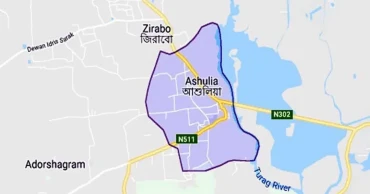
BNP factional clash leaves six injured in Ashulia
At least six people were reportedly injured in a clash between two rival factions of the BNP in Savar's Ashulia on Wednesday evening, police said.
Eyewitnesses said the clash took place in the Mozarmil area near the British American Tobacco factory.
The clash erupted over the filling of a low-lying area with sand near the factory.
The two groups involved were led by Jahangir Mandal, former joint general secretary of Dhaka District Jubo Dal, and Zahir, former assistant organising secretary of Dhamsona Union BNP.
The injured were taken to a local hospital, but their identities could not be confirmed immediately.
AL-BNP clash leaves over 50 injured in Habiganj
Locals said that during the incident, the office of Amzad Dewan, general secretary of Ward-4 of Dhamsona Union Awami League, was vandalised.
Shahinoor Kabir, additional superintendent of police of Savar Circle, said that action will be taken following an investigation.
10 months ago
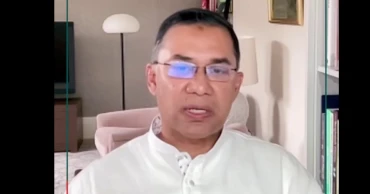
Tarique calls for vigilance to prevent troubles during Puja
BNP Acting Chairman Tarique Rahman on Tuesday stressed the need for maximum caution and preparedness to prevent any attempts to destabilise the country during the Durga Puja celebrations.
“Although autocracy has fallen, we have seen clear examples that their conspiracies have not ended. So, ahead of this year’s Durga Puja, we must remain the highest alert and prepared to resist any such attempts,” he said in a statement issued ahead of the festival.
Tarique urged all BNP units and affiliated organisations to provide full support, working with people at all levels, to ensure that the Durga Puja festival of the Hindu community is celebrated smoothly.
“We respect the religious rights of every citizen in this country. We are committed to maintaining religious harmony in Bangladesh, and our stand against any attempt to destroy it is firm and clear,” he observed.
BNP leaders meet EU team; discuss election, democratic transition
The BNP leader also extended his heartfelt greetings to all members of the Hindu community, saying, “The largest religious festival of the Hindu community, Durga Puja, is approaching. I convey my sincere best wishes to all my brothers and sisters observing this festival.”
Traditionally, he said, Durga Puja has been celebrated peacefully with the cooperation of all communities, setting a unique example of religious harmony in Bangladesh.
Tarique warned that in recent times, some beneficiaries of the previous autocratic regime had tried to disrupt this long-established communal harmony, creating tension and conflict during Durga Puja through wrongful acts for unethical political purposes.
Fakhrul urges vigil to safeguard communal harmony during Durga Puja
He reaffirmed his party’s commitment to protecting religious rights and resisting any efforts to undermine them.
Durga Puja, the largest religious festival of the Hindu community, will formally begin across the country on September 28.
10 months ago
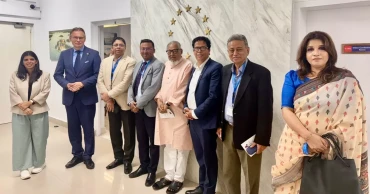
BNP leaders meet EU team; discuss election, democratic transition
A five-member BNP delegation on Wednesday held a meeting with representatives of the European Parliament at the European Union (EU) office and discussed various issues related to the next national election and the democratic transition in Bangladesh.
BNP Standing Committee member Nazrul Islam Khan led the delegation during the hour-long meeting, which began at 4:30 pm at the EU Embassy in the capital’s Gulshan area.
The other members of the BNP delegation included its Standing Committee member Amir Khosru Mahmud Chowdhury, BNP Acting Chairman’s Adviser on Foreign Affairs Humayun Kabir, BNP International Affairs Secretary Barrister Nasir Uddin Asim, and Organising Secretary Shama Obaed.
Mounir Satouri (Greens/EFA, France) led the European Parliamentary delegation. The other members of the delegation were Isabel Wiseler-Lima (EPP, Luxembourg), Arkadiusz Mularczyk (ECR, Poland), Urmas Paet (Renew Europe, Estonia), and Catarina Vieira (Greens/EFA, Netherlands).
Talking to reporters after the meeting, BNP Standing Committee member Nazrul Islam Khan said the discussions mainly focused on Bangladesh’s upcoming national election, due in February next year, and the country’s democratic transition.
“The European Parliament delegation expressed hope that Bangladesh will soon return to a democratic order through a free and fair election. They want to see democracy restored here as quickly as possible, and we also want that,” he said.
The BNP leader said they urged the EU to continue its support in strengthening democracy in Bangladesh as well as to boost trade and economic ties.
“We have always received the support of the European Union in both Bangladesh’s development and the establishment of democracy. They have continued this support,” he said.
Nazrul said they requested the EU to expand its cooperation in trade alongside supporting the consolidation of democracy, and the EU leaders agreed and expressed interest in doing so.
“We hope that the aspirations for democracy — for which the people of Bangladesh have struggled for the past 16 years, facing enforced disappearances, killings, and various forms of repression, especially the extreme oppression during July and August — will soon be realised,” he said.
The BNP leader said they believe the election would be held in February as per the announcement of the interim government, and through that election, the people’s long-cherished dream of restoring democracy would finally come true.
Amir Khosru echoed Nazrul, saying the European Union expects Bangladesh to return to democracy as quickly as possible.
“The European Union and the European Parliament are satisfied that Bangladesh is moving towards the polls. They want Bangladesh to follow the path of democracy very soon and to return through a transitional process to a democratic system… we discussed this matter,” he said.
The BNP leader said their talks also covered the steps BNP would take in the coming days, the role the EU might play, and the role of other political parties.
Khosru also said people worldwide who believe in democracy, including the European Union--wish for Bangladesh to return to a democratic order without delay. “For that reason, the EU wants to work, and if we all work together to achieve this soon, it will be good for the country and good for democracy.”
Replying to a question on proportional representation (PR) system raised by Jamaat-e-Islami, Nazrul said the matter was not discussed in detail during the meeting.
“There is no question of specifically discussing these issues. Proportional representation is not a subject of discussion now because, even if you agree, this election will not be held under PR. That can only happen after a constitutional amendment. So, our discussion was about the upcoming election. What will happen after this election or in future elections is not on the table for discussion,” he said.
On the question of PR, Amir Khosru said the EU leaders understood through the discussion that even if anyone wanted PR, it would have to be passed in parliament with the people’s mandate.
He said a few political parties sitting around the discussion table cannot make this decision on behalf of the people. “It can only happen after the next election if the people want it. If they don’t, it won’t happen. This is something for the future.”
Steps of Hope: BNP to go door to door for hearts and votes
Asked about some political parties’ street programmes demanding PR, Nazrul said that as they long waged movements together, they don’t want to speak against each other.
He, however, said raising such a new demand just before the election was unnecessary and hoped those involved with it would understand what to do and cooperate to ensure a fair upcoming election.
Khosru said the people of Bangladesh did not ask any political party to decide on this matter. “If any political party wished to pursue PR, they would have to take it to the people in the next election and then come to parliament with their mandate.”
10 months ago
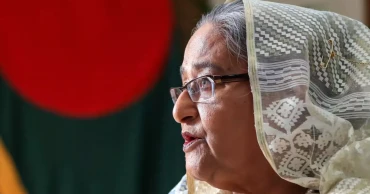
NBR seizes two more lockers of Hasina at Agrani Bank
The Central Intelligence Cell (CIC) of the National Board of Revenue (NBR) on Wednesday seized two more lockers of former Prime Minister Sheikh Hasina at Agrani Bank’s Dilkusha head office branch.
Acting on information, the CIC officials sealed locker numbers 751 and 753 to verify whether there had been any cases of tax evasion, said NBR sources.
Earlier, on September 10, the CIC seized another locker belonging to Sheikh Hasina at Pubali Bank’s Motijheel corporate branch.
With Wednesday’s operation, a total of three lockers owned by Hasina have so far been sealed.
ACC asks EC to take legal action against Sheikh Hasina over false affidavit
NBR officials also found two bank accounts under Hasina’s name at the same Pubali Bank branch. One account contained a fixed deposit receipt (FDR) worth Tk 12 lakh while the other Tk 44 lakh.
Both accounts have been frozen, with cash withdrawals prohibited.
A senior official at the CIC told UNB that the lockers and accounts were seized for further investigation.
10 months ago
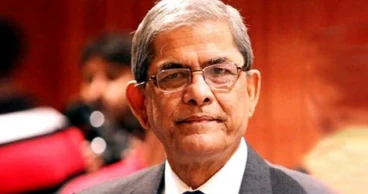
Fakhrul urges vigil to safeguard communal harmony during Durga Puja
BNP Secretary General Mirza Fakhrul Islam Alamgir on Wednesday urged the people of all faiths and political beliefs to remain alert against any attempt to disrupt communal harmony and the peaceful and smooth celebration of the upcoming Durga Puja.
In a statement issued on the occasion of Durga Puja, the biggest religious festival of the Hindu community, he also called upon the leaders and activists of BNP, its associate bodies and like-minded parties across the country to act as vigilant guards to help ensure security at all Puja mandaps.
“Throughout the ages, Bangladesh has upheld a proud tradition of communal harmony. We must protect that legacy with strong determination,” the BNP leader said.
In just a few days, he said, the Hindu community will celebrate their most important religious festival, Durga Puja and that preparations for the successful celebration are already being completed by members of the Hindu community.
Fakhrul, who is currently in Singapore for his wife’s treatment, also said that religious festivals of any community bring joy and a spirit of goodwill among people of all backgrounds.
Stating that Durga Puja has been celebrated for generations with dignity and respect in Bangladesh, he warned that some vested groups often try to weaken the foundation of trust and harmony among different communities in the country to serve their own narrow political interests.
Fakhrul said through far-reaching conspiracies, they try to create communal division and unrest in the country, and attempt to gain unethical political benefit by planting the poisonous seeds of mistrust and suspicion.
Sabotage case: Fakhrul among 77 relieved from charges
“On the occasion of the upcoming Durga Puja, I urge all people, regardless of religion or ethnicity, to stay alert and united to thwart any ill-intentioned attempts to create chaos,” he said.
The BNP leader also called upon members of other religious communities in Bangladesh, as well as all BNP leaders and activists, to extend their support so that members of the Hindu community can celebrate the Puja with equal comfort, joy, and a sense of safety.
Fakhrul also extended his warm and heartfelt greetings to members of the Hindu community on the occasion of Durga Puja.
10 months ago
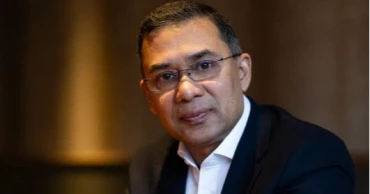
World must act now to stop Israeli genocide against Palestinians: Tarique
BNP Acting Chairman Tarique Rahman has called upon the international community to take immediate and decisive action against what he terms Israeli genocide against Palestinians in Gaza.
“The world must now take immediate action to take genuine steps enshrined in international law and human morality against Israeli genocide,” he said in a statement on his verified Facebook page early Wednesday.
The BNP leader also urged the international community to use all economic, political and diplomatic avenues to ensure there is an immediate and lasting ceasefire and allow humanitarian aid into Gaza.
Citing the United Nations Convention on the Prevention and Punishment of the Crime of Genocide (1948), he pointed to the definition of genocide as "the intent to destroy, in whole or in part, a national, ethnical, racial, or religious group," emphasising that Israel's actions meet this criteria.
Reject cruelty, embrace humanity: Tarique Rahman
Tarique said a new UN commission report has been detailed and direct in concluding that Israel is responsible for this crime against Palestinians in Gaza.
“No more excuses or hiding behind propaganda can continue. History teaches us many lessons about acting morally and bravely, even when it may not be the easiest path. We cannot stand by when the very existence of Palestinians is at risk,” he said.
Tarique called upon Bangladeshis around the world, whether at home or abroad, to use their collective voice and ensure their leaders stand with Palestine in the face of brutal destruction by Israel.
"States have the tools to make a difference. They always do" he said, emphasising that this is a moment where global leadership is needed more than ever.
10 months ago
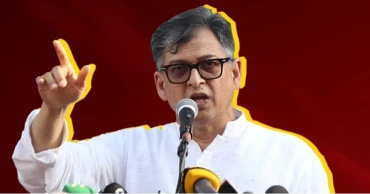
Banning parties through executive order ‘dangerous’: Salahuddin
BNP senior leader Salahuddin Ahmed on Tuesday said banning any political party through an executive order would be a ‘dangerous practice’ and stressed that such matters must only be decided by courts.
“We do not support banning any party or its activities by executive order. If there are allegations against any political organisation—such as genocide, crimes against humanity or war crimes—these must be brought to court,” he said while talking to reporters at his Gulshan residence.
Salahuddin, a BNP standing committee member, said only through a judicial process can the fate of a party be determined, and the Election Commission would then be obliged to accept the court verdict.
He said the law has been amended to allow charges to be brought against a political party as an organisation, in line with constitutional provisions. “Earlier the law did not exist; now it has been amended. So, if anyone wants to bring charges against a party, they can place it before the court.”
Referring to demands by Jamaat-e-Islami and some other Islamist parties to ban the Jatiya Party and the 14-party alliance, Salahuddin said such calls should also be addressed through a legal process.
“If their allegations are genuine, let them raise them in court. Seeking to ban political parties through any other process, by executive order, would be a dangerous practice,” he warned.
Salahuddin sees security risks if polls miss February deadline
The BNP leader also reminded that in the January 7, 2024 election, around 28 registered parties, including many smaller ones, participated. “If bans are sought in the name of fascism or dictatorship, then all 28 parties would need to be banned. Then with whom will the election be held?”
“In this country, those who are now demanding a ban on political parties—if they later say that they too will not take part in the election, then will there be any election at all? Their purpose behind such demands may be different. Perhaps they want to gain extra advantage by calling for more parties to be banned,” he said.
Salahuddin said the case of the Awami League was completely different, as the party was responsible for genocide, crimes against humanity and destroying the country’s democratic system.
He alleged that charges had already been brought in court against the fascist government, including the then prime minister, ministers, MPs and their associates, for genocide, crimes against humanity and destroying democracy.
“We demanded first that the Awami League, as a political party, should be brought to trial. The court will decide whether they can continue in politics or not,” Salahuddin said.
On the issue of constitutional reform, he said BNP will not support any “special constitutional order” or “extra-constitutional order” that bypasses Parliament. “That would create a bad example for the future. Only the Jatiya Sangsad is the proper forum to bring in necessary constitutional amendments.”
Salahuddin, however, said their party is open to any lawful and constitutional process agreed through discussions.
The BNP leader also warned of a constitutional vacuum if political stability and an elected government are not ensured within the set timeframe. “That vacuum could destroy national unity, open the door to fascism, and even draw in regional or global powers. We cannot take the country in that direction.”
Salahuddin warns of election challenges for lack of consensus
Replaying to a question on the joint movement by Jamaat-e-Islami and some other Islamic parties demanding proportional representation and other reforms, Salahuddin made it clear that their party is deadly against PR system.
“We are against PR everywhere (both the lower and upper house). If any party wants it, they should put it in their manifesto and seek a mandate from the people. If the people support it, only then can they legislate,” he said.
The BNP leader also described the three-day protest programmes announced by Islamist parties as a possible attempt to derail the polls. “People have sacrificed too much for the right to vote and for democracy…. Any attempt to delay or obstruct the election for narrow political gain will be rejected by the people.”
10 months ago

Steps of Hope: BNP to go door to door for hearts and votes
With the next national election only a few months away, BNP has decided to reach people directly through extensive door-to-door campaigns, aiming to build trust, counter propaganda and create a strong presence in the election field.
The party has also planned to immediately inform the grassroots about its candidates in over 150 constituencies to reduce internal conflicts and make its supporters more election-focused ones.
The decisions were taken at a BNP standing committee meeting on Monday night after reviewing the latest political situation, said a policymaker who attended the meeting, requesting anonymity.
He said their door-to-door campaign will particularly focus on mobilising women and youths from all walks of life, aiming to rebuild public trust that the party lost due to missteps and controversial activities of some leaders over the past year.
The BNP leader said poor results in recent student union polls at two universities and concerns over Islamic parties’ street programmes aimed at disrupting the February national election have prompted party policymakers to intensify grassroots engagement and mass contact through direct campaigns across the country.
“BNP leadership has realised, especially after the DUCSU elections, that certain mistakes were made. Our campaign is meant to acknowledge those shortcomings before the people and reestablish confidence,” he said.
The policymaker said they will explain to the people that unlike the government, BNP does not have state power to act against wrongdoers, but the party has shown its seriousness through organisational measures.
He said the door-to-door campaign will also seek to counter ‘negative propaganda’ spread on social media regarding BNP’s stance on the Liberation War, India and other sensitive issues.
Another BNP Standing Committee member said their meeting reviewed the current political situation, including the programmes announced by Jamaat-e-Islami and several other parties, who will begin protests from Thursday to press for proportional representation and other demands.
He said they see these moves as part of wider political bargaining, and they believe their own campaign must focus on connecting with ordinary people.
Salahuddin sees security risks if polls miss February deadline
The BNP leader said the campaign will not only involve male activists but also ensure strong participation of women leaders and workers. “We will explain to people why the election must be held in February.”
He said the party will also announce its candidates in over half of the total constituencies, aiming to field one candidate per seat in the next election. “Possible contenders are already carrying out local campaigns. The central leadership has instructed them to avoid internal conflicts or grouping and to work together in line with party discipline.”
The BNP leader said while Jamaat-e-Islami has recently announced fresh programmes to press for the July Charter and proportional representation, BNP does not want to engage in confrontational politics.
Tarique for urgent steps to tackle post-LDC graduation challenges
“Instead of taking a counter-street programme, BNP is adopting a mass-oriented strategy, going to every household to explain its position and vision for the upcoming election,” he said.
The standing committee member said they believe this campaign will help BNP address misperceptions and clarify why certain organisational decisions were taken.
Contacted, BNP Standing Committee member Khandaker Mosharraf Hossain said their party has decided to go to the people and carry out an election-focused campaign to present their views directly.
“Our campaign will focus on the election. We will engage with the people through our campaign to share our political views and thoughts, rather than directly counter any parties’ street programme,” he said.
Asked when they may start the campaign, the BNP leader said they have decided to carry out such a programme considering the overall political situation. “We’ll now work out our programmes and then announce our plans.”
Replying to a question, Mosharraf said they are not going to counter any party’s political programme through their campaign.
“Jamaat and other parties have announced their programmes making certain demands to the interim government and now it’s the government’s responsibility to respond. Any party can make demands, but the government should say whether it can accept those or not,” he said.
Jamaat’s movement threat over PR part of plan to create chaos: Rizvi
Responding to another question, the BNP leader said they thoroughly assessed the DUCSU election and its outcome at their party forum.
He, however, downplayed the significance of student union election results, such as DUCSU and JUCSU polls, on national election outcomes, citing historical precedents where student leaders did not turn campus success into parliamentary gains for their parties.
BNP Standing Committee member Salahuddin said any political party can go to the people or take to the streets with their demands and statements, exercising their democratic rights.
“We don’t consider any party as our opponent. During the election we may contest against each other, but we are not political enemies. We consider all democratic parties as our political friends and companions. We want to do politics in a cordial and friendly atmosphere, as per the desire of the people,” he said.
He said Jamaat and some Islamist parties have announced to take to the streets with their demands. “We’ll also go to people with our messages, statements and opinions and people will judge them.”
The BNP leader said there are various methods of public engagement such as rallies, processions, mass contact, campaigns and leaflet distribution. “The main thing is we’ll inform people about our position and drum up their support.”
10 months ago
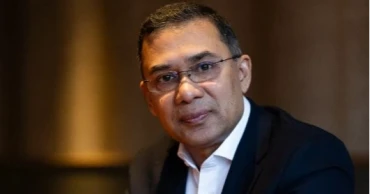
Tarique for urgent steps to tackle post-LDC graduation challenges
BNP Acting Chairman Tarique Rahman on Tuesday said Bangladesh’s graduation from the UN’s Least Developed Country (LDC) category in November 2026 is a milestone, but warned that the accompanying risks and challenges to the economy and people must be addressed urgently to reap its benefits.
“Graduation is not just a milestone, but it comes with risks and challenges which we need to be honest about, directly affecting our economy and people,” he said in a statement on his verified Facebook page.
Tarique said Bangladesh is on the path to graduate from the UN’s Least Developed Country (LDC) category in November 2026. “What does this mean for the resilience of our businesses, the engines of growth in our communities?”
He said the BNP is concerned about a multitude of issues if Bangladesh does not proceed with caution.
The BNP leader said loss of trade preferences may hurt the country’s garments exports and reduce competitiveness; access to concessional loans and aid will shrink, increasing financial pressure at a time when reserves and debts are already under stress; trade privileges afforded by the World Trade Organization (WTO), including flexibility on subsidies and medicine patents, will no longer apply, raising the cost of essential medicines; and export dependency on one sector makes Bangladesh vulnerable if competitive erodes.
Bangladesh better cuts reliance on LDC-specefic facilities: Anisuzzaman
“We must take urgent steps now to ensure our home grown businesses are not left vulnerable,” he said, stressing the importance of immediate preparations for the post-graduation period.
The BNP leader proposed a set of measures to mitigate the risks, including diversifying exports base beyond garments into ICT, pharmaceuticals and other value-added industries; strengthening public institutions to have better financial discipline to avoid a debt trap; investing in productivity, trade logistics and modern infrastructure to stay competitive globally; and actualising foreign commitments on trade facilities and green financing to support the transition.
Bangladesh’s LDC graduation: Call for stronger trade negotiation capacity
“Let us not leave our workers, farmers and youth behind in a vulnerable place. Bangladesh needs real, tangible progress and opportunities for its citizens before it can reap the benefits of graduating,” said Tarique Rahman.
10 months ago
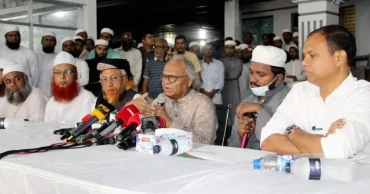
Jamaat’s movement threat over PR part of plan to create chaos: Rizvi
BNP Senior Joint Secretary General Ruhul Kabir Rizvi on Monday said Jamaat-e-Islami’s threat to launch a strong movement if their demand for proportional representation is not met is part of a plan to harm the nation by creating a disastrous situation.
“An Islamic party (Jamaat) has said in a press conference that it will launch a vigorous movement if their demand for proportional representation (PR) is not met. This, we believe, is a well-planned master plan that will benefit no one,” he said.
The BNP leader made the remarks after meeting cancer-affected Hifazat-e-Islam leader Maulana Enamul Hasan Faruqi and providing him with financial assistance at Jamia Madania Madrasa in Baridhara, Dhaka.
BNP believes in building inclusive Bangladesh: Khosru
Over the past 16–17 years, he said BNP and many other political parties, including all Islamic political parties, have fought for democracy, but they did not raise the issue of the PR system at that time.
The BNP leader questioned the motive behind Jamaat and other Islamist parties’ sudden insistence on holding elections under the PR system, warning that it could mislead people.
He said if local people are unfamiliar with their representatives in advance, confusion will arise, and voters may not be able to decide who to support.
Rizvi argued that bringing this issue so prominently into the spotlight appears to be part of an evil plan. “This will bring no benefit to anyone.”
Salahuddin sees security risks if polls miss February deadline
The BNP leader also accused Jamaat of forming an entente with the defeated force Awami League for political gain, warning that it could create a disastrous situation in the country.
He said in the elections to DUCSU and JUCSU, they observed in some cases that supporters of defeated forces voted for certain student organisations that were elected. “Why this is happening is a concern, and the signs are not positive. If these defeated forces manage to return in any way, it would be regrettable for everyone.”
Rizvi said those who are secretly colluding with defeated forces for short-term political gain will bring no benefit to anyone. “Behind these defeated forces, there is a big power that does not tolerate Islam or want Bangladesh to exist as an independent Muslim country.”
He also warned that if the Awami League returns, it will bring no benefit and could instead create a risky situation.
The BNP leader said that local people in Sitakunda, Chattogram, captured a cohort of the defeated force Awami League, but Jamaat leaders reportedly tried to secure his release. “This is not a good sign.”
Rizvi warns of rising ‘dangerous forces’ endangering democracy
Rizvi voiced concern that such incidents will erode people’s trust in political parties. “When people’s trust and sentiment are manipulated in this way, serious negative consequences can follow.”
He said everyone has the right to express their political opinion as part of democratic practice. “All parties fight together for it. But if someone tries to trap others politically, they must remember that they may fall into the same trap themselves.”
On behalf of ‘Amar BNP Poribar’, a BNP delegation led by Rizvi visited Faruqi as per the instruction of party Acting Chairman Tarique Rahman. During the visit, they provided financial assistance to support his treatment. Rizvi reaffirmed the party’s commitment to stand by religious scholars, as it has in the past.
Earlier in the day, Bangladesh Jamaat-e-Islami announced a three-day programme to press home their five-point demand including implementation of the July Charter and holding the national election under the proportional representation (PR) system.
Gayeshwar warns of rising communal forces after fall of ‘fascism’
As part of the programme, Jamaat will hold protest rallies in Dhaka on September 18, rallies in all divisional cities on September 19 and marches in all districts and upazilas on September 26.
Jamaat Nayeb-e-Ameer ex-MP Syed Abdullah Muhammad Taher announced the programme at a press conference at Al Falah auditorium at Moghbazar in the capital.
10 months ago