politics
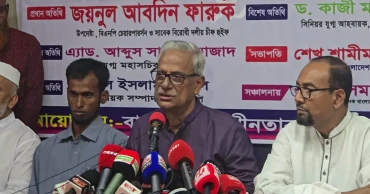
BNP leader urges Jamaat to apologise for past mistakes, join polls
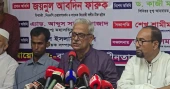
BNP Chairperson’s Advisory Council member Zainul Abedin Farroque on Friday called upon Bangladesh Jamaat-e-Islami to apologise to the nation for its past mistakes and take part in the upcoming national election.
“I saw in a newspaper that they (Jamaat) said PR is not needed if people don’t want it. May Almighty Allah guide them on this holy Jumma day. I urge them to gradually change their political strategy, apologise to the people if there are mistakes in the past history, and join the election,” he said.
Speaking at a discussion, the BNP leader also said Jamaat is making various demands to delay the election while at the same time preparing for the polls and seeking votes from the people by using religious sentiment.
“On the one hand, they say they won’t join the election without PR or a referendum. On the other, they’ve already declared 300 candidates and started campaigning from mosques, even going door to door telling people they will go to heaven if they vote for the election symbol Scale. These are not my words, these are the words of people in my constituency,” he said.
Derailing election only to benefit AL, India: BNP leader
Farroque, a former Opposition Chief Whip in parliament, said they are not concerned about Jamaat’s election campaign. “I told my people, don’t worry. Put your trust in Allah. The nation knows that the party of Shaheed Zia, Begum Khaleda Zia, and Tarique Rahman has never betrayed the people while in power.”
He also said no power on earth can defeat the people if the interim government ensures a fair election as BNP is truly the party of the masses in Bangladesh.
Bangladesh Swadhinata Ghoshok Parishad arranged the discussion at the Jatiya Press Club, with its President Sheikh Shamim Hasan Onik in the chair.
He said BNP Acting Chairman Tarique Rahman made the July-August anti-discrimination student movement a success with the wholehearted support of the country’s 18 crore people.
Amir Khosru calls for inclusive, democratised economy in Bangladesh
“Now, attempts are being made to create confusion over the national election under the Prof Yunus-led government by inventing various methods, tactics and debates such as PR and other issues. This is nothing but a ploy to thwart the election,” Farroque said.
He also alleged that conspiracies are still ongoing to derail the election and destabilise the country by Awami League leaders who are now staying in Delhi.
Farroque said some people in Bangladesh are colluding with Awami League under Delhi’s provocation to foil the election under interim government’s Chief Adviser Prof Muhammad Yunus.
The BNP leader warned that the country’s people will resist any such conspiracy.
He said many attempts were made to erase the name of Ziaur Rahman during the 16 years of Awami League’s rule.
“But they could not remove Shaheed Zia’s name from people’s hearts. You can break a picture by throwing stones at it, but you cannot erase a name from the heart," he added.
10 months ago
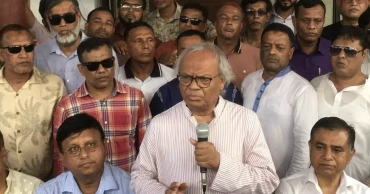
Don’t want to return to Hasina’s 'barbaric era': Rizvi
BNP Senior Joint Secretary General Ruhul Kabir Rizvi has said that the people of Bangladesh do not want to return to the ‘dark ages’ after emerging from the ‘barbaric era of Sheikh Hasina’s autocracy.’
He made the remarks on Thursday afternoon while addressing a gathering at the residence of the district BNP president in Puniaot area of the district town.
Rizvi claimed that during the BNP’s tenure, full student panels won university elections, while under Sheikh Hasina's government, no student representative elections have been held in any university.
He urged party leaders and activists to unite under the banner of nationalist forces in order to save the country and protect its independence and sovereignty.
Derailing election only to benefit AL, India: BNP leader
“Vote for the paddy sheaf symbol in the February elections,” he said, calling on supporters to encourage their children to back nationalist forces in future DUCSU elections.
He further alleged that under Sheikh Hasina’s rule, rivers, canals, and other water bodies have been leased to neighboring countries, and that national interests were compromised to satisfy India.
“The country has suffered greatly,” Rizvi said, “but free and fair elections are essential for restoring normalcy.”
As an encouragement to young innovators in science and information technology, Rizvi also provided financial assistance on behalf of BNP acting chairman Tarique Rahman to three young scientists — Ahnaf bin Ashraf Nabil, Labib Islam, and Aryan Islam Aryan — who are set to participate in an international science fair in Malaysia next month.
Amir Khosru calls for inclusive, democratised economy in Bangladesh
Among others, BNP Central Economic Affairs Secretary and District BNP President Engineer Khaled Hossain Mahbub Shyamal, Senior Vice President Zahirul Haque Khokon, Vice Presidents ABM Mominul Haque and Jasim Uddin Ripon, General Secretary Md. Sirajul Islam, and former district president and ex-mayor Hafizur Rahman Molla Kochi, were also present at the event.
10 months ago
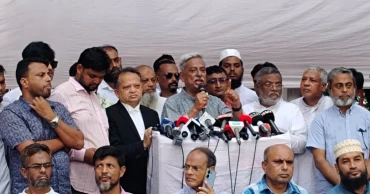
Derailing election only to benefit AL, India: BNP leader
BNP Chairperson’s Advisory Council member Zainul Abedin Farroque on Thursday accused Bangladesh Jamaat-e-Islami of plotting to derail the national election, warning that such a move would only benefit the Awami League and India.
“After the July-August uprising, with the wholehearted support of Tarique Rahman, a path has opened for establishing democracy in Bangladesh. Now you (Jamaat) have started conspiring to block that path. But such plots will bring you no benefit. The only ones who will gain are Delhi and Sheikh Hasina,” he said.
Speaking at a rally in front of the Jatiya Press Club, he urged political parties seeking to delay the election to step back. “In the past, you have played many games, but now it is the people’s game that has begun.”
Ganatantra Forum arranged the programme in front of the Jatiya Press Club in protest against conspiracies targeting the upcoming parliamentary election.
Farroque, also a former opposition chief whip in parliament, said that after the interim government announced the election for February, many rumours began to spread while Gono Odhikar Parishad leader Nurul Haque Nur came under attack. “We’re also hearing about PR and conspiracies regarding the election.”
In an oblique reference to Jamaat, he said although the party killed many people in 1971, BNP founder Ziaur Rahman forgave it and Khaleda Zia later made its leaders ministers.
73 BNP men sued over sand extraction from Feni river
But he alleged that just as Prof Muhammad Yunus is preparing to hold an election similar to that of Justice Shahabuddin Ahmed’s time, Jamaat has begun a new conspiracy. “This conspiracy is not yours, but rather in tune with the plot orchestrated by Sheikh Hasina from Delhi.”
The BNP leader said those claiming the election would not be allowed to hold are making a mistake. “No matter how many attempts you make to create law and order problems, it will bring no benefit. The people will be the ones to gain, as they had been unable to vote for the past 16 years. The people of the country have entrusted Dr Yunus with the responsibility of running the government through their support.”
Farroque said this time there would be no rigging, no voting at night instead of during the day, and no repeat of the polls in 2014, 2018 or 2024. “This time, it is the people’s game, and in that game the Election Commission will emerge victorious.”
The BNP leader urged all political parties to put the nation’s independence and constitution above party conflicts. “We may have our differences, but on the question of Bangladesh’s independence and sovereignty, we must all remain united. There can be no further debate about the Constitution of Bangladesh. The next election must be held in line with the Constitution and under this interim government.”
Farroque also welcomed the Appellate Division’s decision upholding the High Court’s verdict that acquitted BNP Acting Chairman Tarique Rahman and Lutfozzaman Babar, among others, in the 21 August grenade attack case.
10 months ago
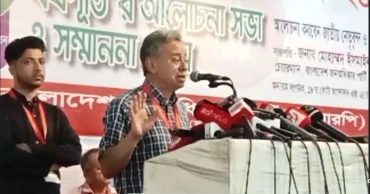
Amir Khosru calls for inclusive, democratised economy in Bangladesh
BNP senior leader Amir Khosru Mahmud Chowdhury on Thursday stressed the need for democratising the economy in Bangladesh to ensure that every citizen has an equal opportunity to take part in economic and development activities.
“Democracy should not be limited to politics alone. We have to democratise the economy as well, where every citizen, regardless of their background, has a stake in the country’s economy,” he said.
Khosru, a BNP Standing Committee member, made the remarks while speaking at a discussion organised by the Bangladesh Jano Odhikar Party at the Jatiya Press Club.
Highlighting BNP’s vision of economic democracy, he called for collective efforts to build an inclusive economy that benefits all citizens and helps create a brighter future for Bangladesh.
The BNP leader said economic democracy means creating a level playing field where all citizens—from rural artisans to educated professionals—can contribute to and benefit from the nation’s economic progress.
“We cannot run the economy by favouring a particular group. The economy must belong to everyone. From blacksmiths, weavers, and women to retired persons, everyone must have the opportunity to take part in economic activities,” the BNP leader said.
He said BNP is planning initiatives to involve people of all genders and social positions in economic activities, ensuring their skills and abilities are properly used. “Even those who have retired at 60 or 65 still have the ability to contribute. We are working on plans to engage them effectively.”
Khosru said increasing people’s participation in the economy will help improve their income and standard of living, which in turn will make them more responsible citizens.
He said when people earn more and their quality of life improves, they become aware of their rights and duties.
“They will pay taxes, and in return, they will demand accountability for how their tax money is spent. They will have the right to say, ‘This cannot be done with my tax money,’ or ‘My taxes must be used for the people of the country,” Khosru added.
Calling for unity among all political parties, Khosru said the focus should be on building a prosperous, democratic, and inclusive Bangladesh. “While every political party has its own agenda, we must find common ground when it comes to the country’s progress. Free thinking and open discussions must be encouraged to face the challenges ahead.”
Bangladesh sliding backward for lack of democratic progress: Khosru
He said the people of the country must come together to restore democracy and rebuild institutions so they serve the people, not the political interests of any party.
“We have to restore people’s ownership of the country. We have to break these barriers and I have one thing to say to Bangladesh... We have to build an inclusive Bangladesh with people from all walks of life. But that doesn’t mean all parties will hold the same ideals and thoughts. Democracy means every party has its own thoughts, philosophy, ideology, and future work plans,” the BNP leader said.
10 months ago
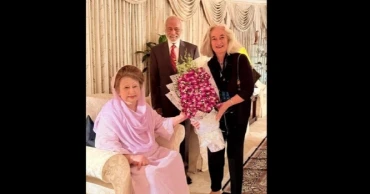
Outgoing French envoy meets Khaleda
Outgoing French Ambassador to Bangladesh Marie Masdupuy paid a farewell call on BNP Chairperson Begum Khaleda Zia on Wednesday night.
The French envoy went to the BNP Chairperson’s Gulshan office around 8:30pm and exchanged pleasantries with her, said BNP media cell member Sayrul Kabir Khan.
He said Khaleda greeted Marie Masdupuy by presenting a bouquet.
The French envoy enquired about her health and spent some time with her, Sayrul said.
BNP Standing Committee members Dr Abdul Moyeen Khan and AZM Zahid Hossain were present during the meeting.
Khaleda undergoes health checkups at Evercare, returns home
11 months ago
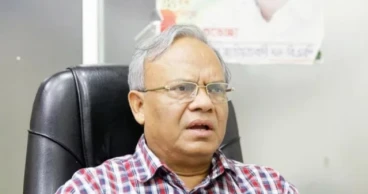
JCD to win DUCSU polls, if fair: Rizvi
BNP Senior Joint Secretary General Advocate Ruhul Kabir Rizvi on Wednesday expressed the hope that the Jatiyatabadi Chhatra Dal (JCD) panel will win the Dhaka University Central Students’ Union (DUCSU) election if it is held in a free and fair manner.
“Chhatra Dal is a student body of struggle, movement and ideals. If Dhaka University students can cast their votes fairly and freely, the JCD panel will surely come out victorious,” he said.
Rizvi made the remarks while speaking at a rally in Dohar organised by Dhaka district BNP to mark the party’s 47th founding anniversary.
He hoped that the Dhaka University authorities will take all necessary steps to ensure the election is held in a credible way.
Turning to the national election, Rizvi said a vested quarter is trying to disrupt the polls scheduled for early February next year.
“Suddenly some political parties are talking a lot about the PR (proportional representation) system. But what is this PR system? Can any ordinary person understand it?” he said.
The BNP leader said the people of the country do not want the PR system to be introduced as they have never practised it.
Addressing party leaders and activists at the rally, he asked, “Do you want elections under the PR system?” — to which the activists loudly replied “no, no”.
Rizvi said the people of Bangladesh want only the direct voting system which they have practised for long.
He urged BNP leaders and activists to stay alert and resist any attempts to derail the election and the democratic process.
No alternative to holding DUCSU election on Sept 9: SC
Dhaka district BNP President Khondoker Abu Ashfaq presided over the discussion, while General Secretary Nipun Roy conducted it.
Later, leaders and workers of the party’s Dohar upazila unit brought out a rally to mark the BNP’s founding anniversary.
11 months ago
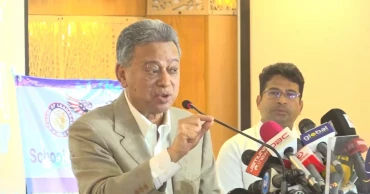
Bangladesh sliding backward for lack of democratic progress: Khosru
BNP senior leader Amir Khosru Mahmud Chowdhury on Wednesday said Bangladesh is going downhill gradually as it could not move to democratic order even after one year of the mass uprising.
"One year is actually a long time. The country should have transitioned to a democratic order through the electoral process long ago. Because of this delay, Bangladesh is going downhill day by day," he said while speaking at a seminar.
Historically, Khosru said, countries that quickly established a democratic system through elections after a revolution or mass uprising tended to fare better.
In contrast, the BNP leader said, those countries that failed to do so often faced economic collapse, social unrest and in some cases, civil war.
"The countries that created trouble after their uprisings, making various demands and excuses, lost their democracy and destroyed their economies. These countries also experienced civil wars, and society became deeply divided. This is why elections must be held without further delay," he explained.
Khosru, a member of the BNP Standing Committee, said the situation is becoming increasingly difficult due to the absence of democracy and an elected government in Bangladesh.
He highlighted the growing gap between the interim government and people, pointing out that there is no bridge between the two.
"This gap is causing law enforcement agencies and government officials to fail in their duties. We are witnessing a collapse in law and order, lack of security, and a business environment that’s simply not viable. Factories are not receiving new investments because no one is willing to invest their time, money, or resources in this uncertainty,” the BNP leader said.
The seminar, titled ‘Post-July Political Thoughts: Which Direction Bangladesh is Walking?’ was organised by the School of Leadership USA (Bangladesh Chapter) at a city hotel.
Khosru warned that the country has already lost over a year without a proper democratic process, which is pushing Bangladesh deeper into political and economic instability.
Despite hosting international summits and discussions, he pointed out that the country has failed to attract real investment.
"At a recent summit, no new investments were made, even though many current investors attended. However, now, with the announcement of the election, we are starting to see some signs of hope. It is clear that investors are waiting for the elections to make their decisions. They are closely watching the situation and preparing to invest after the election," the BNP leader said.
Khosru urged all political parties to recognise the shift in the people's mindset following the mass uprising.
"After Sheikh Hasina's authoritarian rule ended, there has been a huge change in the mindset of the people of Bangladesh. Their expectations and aspirations are sky-high, but if we fail to understand and acknowledge these changes, political leaders and parties will have no future. If we don't recognise this, then the future of the party, mine, and the country itself will be at risk. No one’s future will be secure," he said.
The BNP leader stressed that political parties must stop claiming credit for the mass uprising as a tool for their future politics.
"If we continue to fight over credit for the movement, Bangladesh has no future. The credit belongs to the people, to those who made sacrifices for the country, not to individuals," he said.
Khosru mentioned that true freedom fighters returned to their lives and work after the Liberation War of 1971.
"Those who fought on the front lines returned to their roles. Teachers went back to their schools, and students returned to their colleges. We need to move beyond the idea of using the freedom struggle for personal gain. It’s time to focus on building the future of our country,” he said.
11 months ago
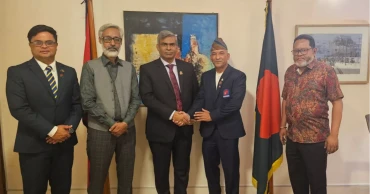
Visiting Bangladeshi photojournalists meet Ambassador in Nepal
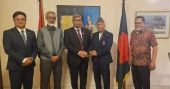
Two Bangladeshi photojournalists, Moinuddin Ahmed and Moshiur Rahman Sumon, who received the prestigious Asian Professional Achievement Award-2025 in Nepal, met Bangladesh Ambassador to Nepal Md Shafiqur Rahman in the Embassy on Tuesday.
Moinuddin Ahmed, chief photojournalist of The New Nation, was honored with the Outstanding Photojournalism Award, and Moshiur Rahman Sumon, Senior Vice President of the Bangladesh Photojournalists Association, received the Excellence in Photography and Hospitality Award for their exceptional contributions to the respective fields.
July Uprising a collective will of Bangladesh's people for democracy: Nepal
During the meeting, the Ambassador lauded the recipients on their remarkable achievements, noting that their works capture powerful stories of the time and serve as an inspiration for others.
The Ambassador also commended Moshiur Rahman Sumon for his initiative in operating a certified Hospitality Management Training Institute in Dhaka, which has been playing a role in empowering unskilled youth in Bangladesh.
11 months ago

Section 144 imposed in Godagari after factional clash within BNP
The local administration imposed Section 144 for two days in Godagari upazila of Rajshahi following a clash between two groups of BNP over the party’s founding anniversary celebrations.
Upazila Nirbahi Officer (UNO) Faisal Ahmed issued the notification on Tuesday afternoon which banned all meetings, gatherings, and processions in the municipality from 5pm on Tuesday to 12am on Wednesday.
The party activists said that the group led by retired Major General Sharif Uddin, planned to hold a program at Mahishal Bari in Kakonhat municipality on Wednesday, where Sharif Uddin, adviser to the BNP chairperson, himself was expected to attend as the chief guest.
Meanwhile, the Godagari upazila BNP announced a separate event in front of the party office on Wednesday afternoon and nomination seeker Advocate Sultan Islam Tarek was scheduled to attend this program.
Eyewitnesses said the clash occurred Tuesday afternoon when Sharif Uddin’s supporters blocked preparations at the upazila BNP office.
Later, police arrived and controlled the situation.
Abdus Salam Shawal, president of Godagari upazila BNP, said that they had received prior permission from administration to celebrate its anniversary.
“Sharif Uddin’s supporters unfairly deterred our program, although two venues are almost 1 kilometer apart,” he added.
Ziaul Haque Sorkar, president of Kakonhat municipality BNP, said, “Now that Section 144 is imposed, we will decide on the program after discussing with our leader (Sharif Uddin),” he added.
Jamaat activist killed in Jamaat-BNP clash in Kushtia
OC Ruhul Amin of Godagari Model Police Station said that police controlled the situation after receiving reports of the clash.
UNO Faisal Ahmed said both groups had informed the administration about their events in advance.
“As they clashed before the events, Section 144 has now been imposed to maintain law and order,” he added.
11 months ago
Deposed AL spreading rumours to create confusion: Fakhrul
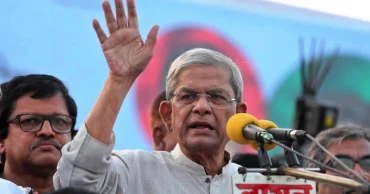
BNP Secretary General Mirza Fakhrul Islam Alamgir on Tuesday said the ousted fascist Awami League is spreading rumours from India through social media in a bid to create confusion among the people of Bangladesh.
“Rumours are nothing but rumours. Awami League is spreading rumours from India through social media to confuse our people,” he said while inaugurating a canal cleaning campaign at Uttara Sector-12 in the capital in the afternoon.
The BNP Secretary General asked people to stay alert amid many rumours. “Many rumours are circulating around… aren’t they? But we should not pay heed to rumours,” he said.
“Let me make it clear that there is no division among us. We are united and with this unity we will achieve victory, InshAllah,” he added.
The Dhaka North city BNP unit organised the cleanup drive in Uttara area, while the Dhaka South city BNP unit carried out a similar canal-cleaning programme in Maniknagar.
About the cleaning campaign, Fakhrul said this should not be a show-off. “Leaders should not just come, pose for five minutes and leave. We want to see canals truly cleaned by our leaders and activists,” he said.
He said it will not be okay if leaders come here wearing suits and coats. “Can you clean the canals wearing suits? No, you will have to wear pajamas, half-pants and join the cleanup drive with everyone."
Noting that some women leaders arrived from the parlors in their suits, he said this programme is not for show rather they should walk and reach out to the people and spread the messages of BNP.
Fakhrul asked the leaders and activists of BNP’s associate bodies, including Chhatra Dal, Jubo Dal and Swecchasebak Dal, to play responsible roles to prevent chaos particularly during student union elections in different universities.
“Student Dal, Jubo Dal and Swechchhasebak Dal must take the lead. No chaos should occur anywhere, especially during the student union elections at different universities…. No blame of disorder should come upon BNP. You are a big party, so you bear greater responsibility,” he reminded.
Citing that police members have lost morale due to their past misdeeds, the BNP Secretary General asked them to correct themselves and stand with the people. “If you do so, all will love you,” he said.
Dhaka North City BNP Convener Aminul Haque and Member Secretary Mostafa Zaman among others were present.
In a separate event, BNP Standing Committee member Gayeshwar Chandra Roy on Tuesday inaugurated a week-long canal-cleaning campaign arranged by Dhaka South city BNP unit in Old Dhaka.
Dhaka South City BNP Convener Rafiqul Alam Majnu and member secretary Tanvir Ahmed Robin were, among others, present.
11 months ago