politics
People eagerly waiting to cast votes: Amir Khosru
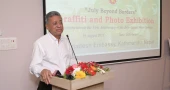
BNP Standing Committee Member Amir Khosru Mahmud Chowdhury on Tuesday said the people of the country, who had been deprived of exercising their voting rights in previous elections, are eagerly waiting to cast their votes to elect their representatives and form a government that will be accountable to its citizens.
"We are just waiting for the day. People could not cast their votes in the last three-four elections. So, they are now waiting to cast their votes and elect their representatives," he said.
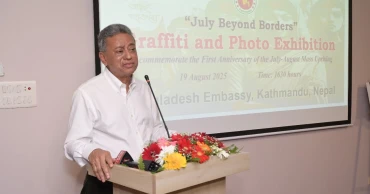
Khosru, a former commerce minister, made the remarks while speaking at a graffiti and photo exhibition titled "July Beyond the Borders", marking the first anniversary of the July–August Mass Uprising.
The exhibition was organised by the Bangladesh Embassy in Kathmandu at its premises.
Chattogram Hill Tracts Affairs Adviser Supradip Chakma, Bangladesh Ambassador Md Shafiqur Rahman, National Citizen Party’s first senior joint member secretary Dr Tasnim Jara, joint member secretary Mir Arshadul Hoque, Secretary-General of the South Asian Association for Regional Cooperation (SAARC) Md Golam Sarwar and foreign diplomats stationed in Kathmandu joined the event.
Adviser Supradip briefly discussed the next national election, scheduled to be held in February next year, and expressed optimism that it would be a fair and enjoyable election with the involvement of all voters.
Khosru said the July Uprising was the culmination of a long struggle spanning over a decade and a half.
Arrest warrant issued against BNP leader Aslam, his wife for loan default
He said many people had sacrificed their lives over the years; many became crippled, lost their families, jobs, and businesses; some died in police custody; and many were deprived of treatment while in jail.
"I witnessed this when I was in jail," said the BNP leader.
11 months ago
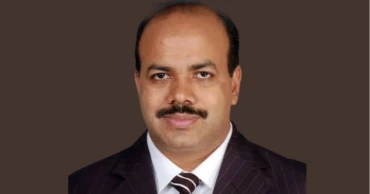
Arrest warrant issued against BNP leader Aslam, his wife for loan default
A Chattogram court on Tuesday issued an arrest warrant against BNP leader Aslam Chowdhury and his wife in a case filed over defaulted loans of Tk 260.77 crore.
Judge Md Helal Uddin of the Chattogram Money Loan Court-1 passed the order.
According to the case statement, the total amount of defaulted loans against BNP leader Aslam and his wife Najnin Mowla, was Tk 260,77,79,000.
As they failed to pay the loan of the bank of Pahartoli Branch of Standard Bank, the court issued the arrest warrant.
BNP against PR system, says Fakhrul
Aslam served in jail for eight years in different cases and he was released on August 20, last year.
He was an accused in 76 different cases.
Police arrested Aslam from the capital’s Khilkhet area on May 15, 2016.
On May 26, 2016, a sedition case was filed against Aslam with Gulshan Police Station
11 months ago
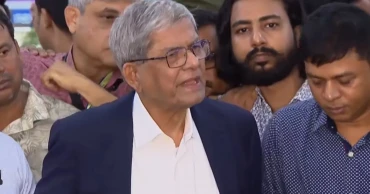
BNP against PR system, says Fakhrul
BNP Secretary General Mirza Fakhrul Islam Alamgir on Tuesday said their party will not accept the proportional representation (PR) system of election as the people of the country are not familiar with it.
“We have clearly said we will never accept the PR system because the people of this country are not used to it. They also do not know or understand it,” he said.
Fakhrul made the remarks while talking to reporters at Hazrat Shahjalal International Airport after returning home from Thailand.
BNP urges EC to cancel politically-motivated polling stations
He said Electronic Voting Machines (EVMs) were cancelled after being used for some time while people also have no idea about the PR system. “So, there is no question of accepting it.”
Fakhrul said the PR system prevents voters from electing their representatives through direct voting.
“The people of Bangladesh want elections as it is the only way to overcome the political and economic crises the country is facing,” he said.
The BNP leader said their party is in fabour of a free and fair election i as per the traditional system.
In the PR system, Fakhrul said, voters do not know for whom they are casting their votes. “That cannot be acceptable.”
Regarding Ducsu elections, the BNP Secretary General said they hope the polls will be held fairly and properly with the participation of everyone.
Earlier, on August 13, Fakhrul along with his wife Rahat Ara Begum went to Bangkok, Thailand, for follow-up eye treatment.
The BNP Secretary General earlier went to Bangkok on May 13 for emergency eye surgery.
11 months ago
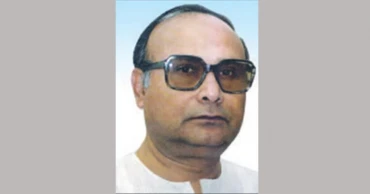
Salam Talukder’s 26th death anniversary Wednesday
The 26th death anniversary of former BNP Secretary General Barrister Abdus Salam Talukder will be observed on Wednesday.
BNP and Barrister Abdus Salam Talukder Smrity Sangsad have chalked out various programmes, including discussions and milad mahfil, to observe the day with due respect.
As part of the programmes, a discussion meeting in memory of the late BNP leader was held at the Institution of Diploma Engineers, Bangladesh arranged by Barrister Abdus Salam Talukder Smriti Sangsad on Tuesday.
Local BNP and Abdus Salam’s family members will arrange doa and milad mahfil in different areas of Jamalpur, including Sharishabari, and cooked food will be distributed among the destitute.
BNP issued a message recalling its former secretary general’s outstanding contributions to making the party a stronger political organisation.
In the message, party secretary general Mirza Fakhrul Islam Alamgir said, "We pay our deep respect to his departed soul on his 20th death anniversary.”
BNP leader warns party followers to avoid unruly behaviour
He said Salam Talukder had played a significant role in the anti-Ershad movement in the 80s and in establishing democracy and people’s rights in Bangladesh.
On August 20, 1999, Salam Talukder died on the way to Singapore for medical treatment.
Salam Talukder was elected MP from Sarishabari in Jamalpur in 1979 and 1991.
11 months ago
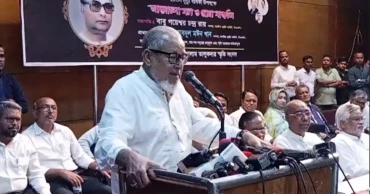
BNP leader warns party followers to avoid unruly behaviour
BNP senior leader Nazrul Islam Khan on Tuesday warned party leaders and workers that an undesirable situation may arise if they do not avoid bad practices and unruly behaviour that could make people unhappy ahead of the upcoming election.
“In the coming election, we must reach out to people. If people are unhappy with the behaviour of any leader or activist at any level, or if they feel threatened, the entire party will suffer,” he said.
Speaking at a discussion, the BNP leader said if the whole party is affected, its founder Ziaur Rahman, Chairperson Khaleda Zia and Acting Chairman Tarique Rahman will be disrespected.
“I sincerely request you not to do such things yourselves, and if anyone else does, please stop them. Otherwise, an unwanted situation may arise,” he cautioned BNP leaders and workers.
Barrister Abdus Salam Talukder Smrity Sangsad arranged the programme at the Institution of Diploma Engineers, Bangladesh, to mark the 26th death anniversary of former BNP Secretary General Barrister Abdus Salam Talukder.
Nazrul, a BNP Standing Committee member, alleged that some people are trying to delay the upcoming election. “An election is ahead, and some may be trying to push it back. But we must go to the people for the election. We have to make our party respectable. Only then can we work for the welfare of individuals,” he said.
Referring to the changed situation in Bangladesh after last year’s mass uprising, the BNP leader urged leaders and workers to work more honestly, more sincerely and with greater seriousness.
“Only then will we be able to play a role in changing the political history of Bangladesh in the days to come,” Nazrul said.
He also called upon party leaders and activists to follow the example of Ziaur Rahman and Khaleda Zia in their dealings with people.
Nazrul said individuals are important because it is individuals who build a party, and only a strong party can work for the welfare of the state.
The BNP leader also said in personal life everyone should do only what is necessary and avoid anything inappropriate or harmful to the party or the country. “BNP must work for the welfare of the country and its people in the coming days.”
He reminded everyone that those who are alive have a responsibility towards those who sacrificed their lives over the past 16 years and earlier—those who were killed or became victims of enforced disappearance and extrajudicial killings. “If they had not given their lives, BNP could not have continued its struggle.”
Speaking at the programme, another BNP Standing Committee member, Dr Abdul Moyeen Khan, recalled former party Secretary General Barrister Abdus Salam Talukder’s contributions to the country, the democratic movement, and in making BNP a stronger party.
BNP leader warns party followers to avoid unruly behaviour
He said Salam Talukder had risked his life to stand beside Begum Khaleda Zia in the struggle to restore democracy during the movement that forced HM Ershad to step down.
“Salam Talukder’s contribution will always be remembered in the history of Bangladesh democracy,” Dr Moyeen said.
In BNP’s history, he said, Salam Talukder was not only an organiser but also a frontline fighter for democracy.
11 months ago
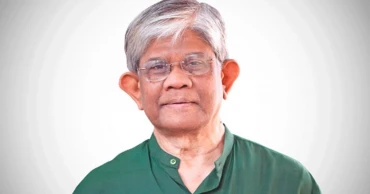
Had pressure on govt to raise energy price: Dr Salehuddin
Finance Adviser Dr Salehuddin Ahmed on Tuesday said there was a pressure on the government to raise the price of energy like gas every month or two.
“But we did not hike the price following various calculations by the Energy and Mineral Resources Division and it’s a good thing,” he said after presiding over two separate meetings of the Advisers Council Committee on Economic Affairs and the Advisers Council Committee on Government Purchase at Bangladesh Secretariat here.
He, however, did not say anything from which organisation or country the pressure was on them.
Salehuddin said the aim of the government is to ensure necessary supply of LNG so that no such pressure is created on them to raise the energy price. “Such a rise affects the consumers as well as the industries,” he said.
Rajshahi suicide over debt needs to be investigated: Finance Adviser
The Adviser mentioned that the government is focusing on enhancing the supply side of LNG alongside reducing pressure on them. “But, it is hard to predict what will happen in the future,” he said.
The Finance Adviser said that the interim government is purchasing LNG at a relatively reasonable price from the international market.
In April last, the Bangladesh Energy Regulatory Commission (BERC) raised gas tariffs for new industrial and captive power consumers by 33 percent. At the same time, the government has been revising electricity prices, with reports suggesting a series of consecutive hikes within a short span.
11 months ago
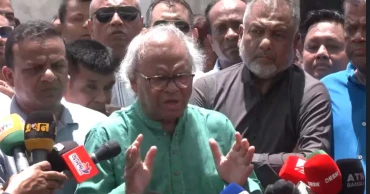
BNP urges EC to cancel politically-motivated polling stations
BNP leader Ruhul Kabir Rizvi on Tuesday called on the Election Commission to cancel polling stations that were created for political reasons during the Awami League’s rule.
“Polling centres that were set up for political purposes must be cancelled. The Election Commission should announce new polling stations based on the actual distribution of the population. This is our expectation and our demand,” he said while talking to reporters after paying homage to BNP founder Ziaur Rahman.
Rizvi alleged that during the ‘fascist regime’ of Sheikh Hasina, many polling stations were created to serve political interests of Awami League.
“There have been three major elections – one held without voters, another in the middle of the night, and the last one was a dummy election. People have not forgotten these polls,” he said.
The BNP leader said people may move on from these elections only if the Election Commission and the interim government ensure a free and fair election in February.
Election in February, reaffirms Adviser Asif Nazrul
Rizvi stressed that a neutral and acceptable election is essential to restore public trust in the electoral process. “If the Election Commission acts on the demands of the people and democratic political parties, voters will feel confident to go to polling centres safely after nearly 16 to 17 years.”
He urged the Election Commission to create an environment where voters can take part in the election freely and without fear or favour.
Rizvi, along with leaders and workers of the Jatiyatabadi Swechchhasebak Dal, placed a floral wreath at the grave of Ziaur Rahman in Sher-e-Bangla Nagar, marking the 45th founding anniversary of the BNP’s voluntary affairs wing.
They also offered fateha there and prayed for the salvation of Ziaur Rahman’s soul.
Speaking about the Dhaka University Central Students’ Union (Ducsu) election, Rizvi alleged that a mob was created to prevent BNP’s student wing, Chhatra Dal, from buying nomination forms.
“Why is there a mob in every area when Prof Dr Muhammad Yunus’ government is in power? Why is mob culture being allowed to grow in every locality, in villages and districts? Lawlessness is rising and some unruly people are taking the law into their own hands,” he said.
The BNP leader claimed that mob culture is putting people’s lives at risk as the law is not functioning properly citing two recent incidents in Taraganj, Rangpur. “We do not accept such a situation under the interim government.”
Credible election not possible with AL loyalists in police, admin: Rizvi
Rizvi also criticised the government for allowing loan defaulters to reschedule and renew loans. “During Sheikh Hasina’s rule, defaulters were allowed to reschedule Tk 3.5 lakh crore worth of loans. Even under the current government, around Tk 1.5 lakh crore in bad loans have been rescheduled and renewed.”
He said those who looted public money and became loan defaulters should not be rewarded in this way.
Rizvi also demanded the arrest of those who looted money from banks. “People like Mahiuddin Khan Alamgir looted crores of taka through Farmers Bank, and Nafiz Sarafat did the same with Padma Bank. These corrupt individuals must be arrested and brought to justice.”
He also called upon the government to take strong and effective steps to recover the looted public money.
11 months ago
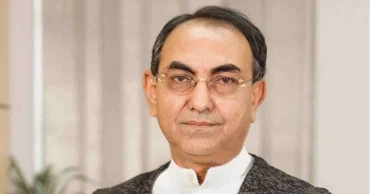
Mirza Abbas off to Bangkok for eye treatment
BNP Standing Committee member Mirza Abbas left Dhaka for Bangkok, Thailand on Tuesday to undergo eye treatment.
He was accompanied by his wife Afroza Abbas and son Mirza Yasir Abbas, said Abba’s personal assistant Mizanur Rahman Sohel.
Sohel said Abbas departed Hazrat Shahjalal International Airport at 11:15am on a flight of Biman Bangladesh Airlines.
“Sir has gone to Bangkok for eye treatment. An appointment at Ruttonin Eye Hospital has been scheduled for today (Tuesday),” he said.
Sohel said the BNP leader is due to have eye surgery two days later.
He said Mirza Abbas’ family has requested all to pray for his speedy recovery.
Fakhrul off to Bangkok for medical treatment
Earlier, on August 13, BNP Secretary General Mirza Fakhrul Islam Alamgir also travelled to Bangkok for follow-up eye treatment at Ruttonin Eye Hospital. He is scheduled to return home this evening.
Fakhrul had previously undergone a successful surgery on his left eye for a retinal problem at the same hospital on May 14.
11 months ago
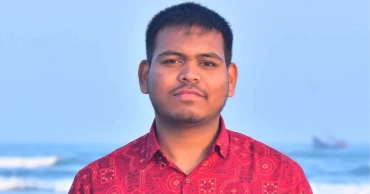
NCP expels Joint Member Secretary Mahin Sarkar for breaching party discipline
The National Citizen Party (NCP) has expelled its Joint Member Secretary, Mahin Sarkar, on charges of violating party discipline.
The decision was taken at the directive of the party’s Convener Nahid Islam and Member Secretary Akhtar Hossain, said an NCP press release issued on Monday.
According to the release, the expulsion order takes immediate effect and will remain in force until further notice.
Party insiders said Mahin Sarkar had announced his candidacy for the post of General Secretary (GS) in the upcoming Dhaka University Central Students’ Union (DUCSU) election under the panel led by Jamaluddin Muhammad Khalid, convener of the Swadhin Bangladesh Chhatra Sangsad.
The NCP leadership described his move as a serious breach of organizational discipline and took prompt action against him.
11 months ago

BNP forms committee to celebrate 47th founding anniversary
BNP has formed a 16-member ‘national celebration committee’ to celebrate the party’s 47th founding anniversary on September 1.
BNP National Standing Committee member Nazrul Islam Khan has been made convenor of the committee while Senior Joint Secretary General Ruhul Kabir Rizvi will serve as its member secretary, said a press release on Monday.
Other members of the committee include Joint Secretaries General Khairul Kabir Khokon, Habib-Un-Nabi Khan Sohel, Shahiduddin Chowdhury Annie, Abdus Salam Azad, Syed Emran Saleh Prince and Organising Secretaries Sayedul Alam Babul, Mahbuber Rahman Shamim, Shahid Shawkat, Anindya Islam Amit, Asadul Habib Dulu, GK Gaus, Principal Selim Bhuiyan, Shariful Alam and Shama Obaed.
BNP will observe its 47th founding anniversary on September 1 with various programmes.
On September 1, 1978, late President Ziaur Rahman founded the party with a 19-point programme to build a self-reliant Bangladesh.
11 months ago