politics
Police block Habiganj-bound NCP convoy in Moulvibazar amid security concerns
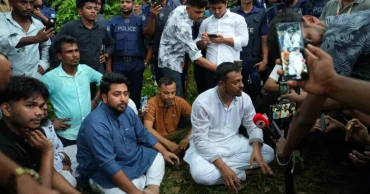
Police on Wednesday afternoon stopped a convoy of National Citizen Party (NCP) leaders travelling from Moulvibazar to Habiganj following the imposition of Section 144 in Habiganj municipality.
The convoy, carrying NCP Convener Nahid Islam, Chief Coordinator Nasiruddin Patwary, Chief Organiser (South) Hasnat Abdullah and Chief Organiser (North) Sarjis Alam, left the Moulvibazar Circuit House around 4:30pm but was halted in the Cha Kanya area of Sreemangal around 5:00pm.
Officer-in-Charge (OC) of Sreemangal Police Station Abdur Razzak said the NCP leaders were informed of the restrictions in Habiganj and were requested not to proceed there.
"Despite being informed, they attempted to continue their journey towards Habiganj. They were stopped due to the enforcement of Section 144 and to prevent any untoward incident," he said.
The OC added that law enforcers were working to keep the overall situation under control.
NCP leaders and activists remained seated on the road, engaged in arguments with police amid till filing of this report at 7:00pm.
Earlier, the Habiganj district administration imposed Section 144 across the municipal area after the NCP and BNP's associate bodies – Jatiyatabadi Chhatra Dal, Jubo Dal and Swechchhasebak Dal – announced separate protest rallies on the Town Hall premises at 3:00pm.
The restrictions came amid heightened tension following violence in the district on Tuesday evening.
The NCP alleged that its leaders Sarjis and Nasiruddin were attacked while leaving the venue after addressing a programme marking the July mass uprising near the Court Mosque.
Police later escorted the two leaders to the Circuit House for security.
Sarjis blamed activists of Chhatra Dal and Jubo Dal for the attack.
5 days ago
Freedom of speech not a licence for unrestricted remarks, says Zahid
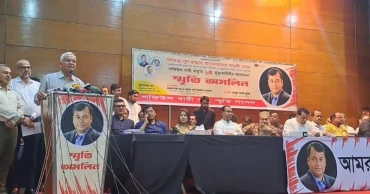
Women and Children Affairs, and Social Welfare Minister Prof Dr AZM Zahid Hossain on Wednesday said freedom of speech does not give anyone unrestricted liberty to say whatever they want, warning that provocative remarks could create instability and help rehabilitate fascism.
He made the remarks while addressing a discussion marking the death anniversary of former Jatiyatabadi Swechchhasebak Dal President Shafiul Bari Babu at the Institution of Diploma Engineers, Bangladesh (IDEB) in the capital.
Zahid for integrated prevention measures to keep youth away from drugs
"A certain group is trying to create unnecessary tension to pave the way for the rehabilitation of fascism. However, people will not remain silent if offensive language is used. BNP will also respond to them on the streets," Zahid said.
He said the party has learned important lessons through its long political struggle and its leaders and activists must ensure that none of their actions provides an opportunity to question the party.
The minister said while freedom of speech is guaranteed, people should exercise restraint in both language and expression.
"Freedom of speech does not mean unlimited freedom. One cannot malign others, use insulting language or damage someone's reputation. Democracy does not teach that," he said.
Zahid, also a BNP Standing Committee member, criticised the use of abusive language in politics, saying such behaviour only invites public anger.
"You cannot expect ordinary people to remain silent if political speeches are filled with abuse. Those who are trying to create unrest and open the door for the return of authoritarianism through provocation will not succeed as long as BNP and its leaders and activists are alive," he said.
The minister said BNP's politics is free from hypocrisy and compromise and is dedicated to serving the country, protecting its sovereignty, ensuring public welfare, overall development and good governance.
He said though BNP has repeatedly been the target of conspiracies, the party has always bounced back with the support of the people.
Zahid warned those attempting to rehabilitate the "fallen fascist," saying BNP's history is one of resisting authoritarianism, not compromise or retreat.
5 days ago
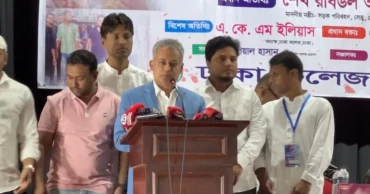
Elected govt working to build a more prosperous state: Minister Rabiul
Road Transport, Bridges, Railways and Shipping Minister Shaikh Rabiul Alam on Wednesday said that after the fall of ‘fascism’ and the establishment of a people's government, the next task is to build a more prosperous state for people.
"The people's elected government is working towards that goal under the leadership of Tarique Rahman," he said while addressing a special discussion titled "Shashwata July" organised by Dhaka College unit of Jatiyatabadi Chhatra Dal at the Bir Muktijoddha Shaheed A N M Nazir Uddin Khan Khurram Auditorium of Dhaka College.
The minister said the fall of ‘fascism’ has been ensured and a people's government has been established to achieve the country's desired prosperity.
Rabiul said the July movement taught the nation to renew itself, reform itself and become a more prosperous nation. "It also taught us how to ensure the fall of a fascist government."
He said the movement brought about a qualitative transformation in student politics, describing the change as inevitable.
The minister said the movement also underscored the need to improve the quality of educational institutions and develop them as centres for nurturing the country's future leadership.
Highlighting the legacy of Dhaka College, Robiul said many of its former students are now serving in the civil administration, police, various government departments, ministries and the armed forces.
He recalled that admission to Dhaka College had once been a dream for students from across Bangladesh.
The programme was attended by the convener of the Dhaka College unit of Jatiyatabadi Chhatra Dal, the college's former teachers, former student leaders, leaders and activists of the Dhaka College Chhatra Dal, and general students.
5 days ago

Jamaat asks EC to allow MPO teachers in local elections; seeks removal of additional secretary
Bangladesh Jamaat-e-Islami on Wednesday demanded the Election Commission to withdraw its proposed provision barring MPO-listed teachers from contesting local government elections and cancel the contractual appointment of an additional secretary over “political affiliation”.
A six-member Jamaat delegation, led by its Secretary General Mia Golam Parwar, sat in a meeting with Chief Election Commissioner AMM Nasir Uddin at the Nirbachan Bhaban in the city's Agargaon and submitted a letter to the CEC.
Election Commissioners Abdur Rahmanel Masud and Tahmida Ahmad, along with EC Senior Secretary Akhtar Ahmed, were also present at the meeting in the morning.
According to a letter submitted to the CEC, Jamaat also demanded consideration of its previous opinions regarding the local government election code of conduct which were placed before the Election Commission on June 30 last.
In the letter, Jamaat said the EC has sent a proposal to the Ministry of Local Government declaring MPO-affiliated teachers ineligible to contest in local government elections.
If the proposed provision is implemented, several lakhs of teachers and employees of more than 30,000 MPO-affiliated educational institutions in the country will be deprived of the opportunity to participate in local government elections, which is inconsistent with the principles of equality and non-discrimination enshrined in Articles 27 and 28 of the Constitution, it added.
“So, we believe that the proposed provision needs to be reconsidered and withdrawn or amended so that the constitutional right of eligible citizens to political participation remains intact,” it said.
Jamaat also demanded the immediate cancellation of the recent contractual appointment of 67-year-old Md Shamsul Alam as an additional secretary to the EC Secretariat, alleging that he had links with a political party.
The party claimed that media reports regarding his alleged political affiliation have raised questions among people about the neutrality of the Election Commission.
Briefing reporters after the meeting, Mia Golam Parwar said the delegation discussed four demands with the Commission. "We met the Election Commission to discuss our demands aimed at ensuring the upcoming local government elections are fair, neutral, transparent and credible," he said.
Raising the fourth demand, he said they asked the EC to make the administrators appointed to local government bodies on political considerations ineligible to contest local government elections.
Regarding Shamsul Alam's appointment, Parwar alleged that appointing a politically affiliated person to a constitutional body like the Election Commission would undermine its neutrality as he had served as a member of the BNP's electoral constituency delimitation committee.
The Jamaat leader alleged that the appointment was intended to influence the upcoming local government elections in favour of the ruling party.
The EC told the delegation that it had not been aware of Shamsul Alam's alleged political affiliation and that the contractual appointment had been made by the government. “But the EC could have objected to the appointment,” he said.
Parwar criticised ministers for making differing statements about the possible timing of local government elections.
He also criticised the EC over the publication of the gazette notification declaring BNP leader Sarwar Alamgir elected from Chattogram-2 on the same day the Supreme Court delivered its verdict.
He alleged that the Commission had acted under political pressure by issuing the gazette without waiting for the signed copy of the court order. “Their body language reflected that they did it under pressure,” he added.
Responding to a question, Parwar said they did not discuss the parliamentary membership of its expelled Satkhira-4 lawmaker Gazi Nazrul Islam in the meeting.
"We have already written to both the Speaker and the Election Commission. Expulsion from the party is the highest disciplinary action we can take. The issue of parliamentary membership is constitutional and falls under the jurisdiction of the Speaker and the Election Commission," he said.
The Jamaat delegation also included Assistant Secretaries General Dr AHM Hamidur Rahman Azad, Ahsanul Mahboob Zubair and Moazzem Hossain Helal, members of its central working committee Jasim Uddin Sarkar and Shishir Mohammad Monir.
5 days ago
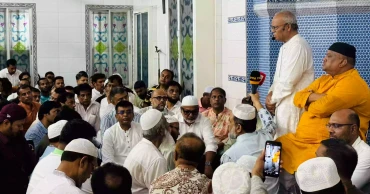
Milad, doa held for late Swechchhasebak Dal chief Babu
A milad and doa mahfil was held in the capital on Tuesday, seeking the eternal peace for late Jatiyatabadi Swechchhasebak Dal President Shafiul Bari Babu.
The programme was held at the Jame Mosque in capital's Nayapaltan area at 5:00pm.
BNP Senior Joint Secretary General Ruhul Kabir Rizvi attended the event as the chief guest.
The mahfil was presided over by Swechchhasebak Dal President SM Jilani.
Prayers were offered for the eternal peace of the departed soul of Babu and for the well-being of his family members.
Among others present were BNP Joint Secretary General Advocate Abdus Salam, BNP Volunteer Affairs Secretary and former Swechchhasebak Dal General Secretary Mir Sarafat Hossain Sapu, Senior Vice-President Yasin Ali, Organising Secretary Nazmul Hasan, and leaders from different levels of the metropolitan and central committees.
6 days ago

Jamaat holds protest march in Jashore over attack on MP's house
Leaders and activists of Bangladesh Jamaat-e-Islami held a march in Jashore town on Tuesday evening protesting the alleged attack and vandalism at the residence of Jashore-4 MP and district Jamaat Ameer Md Golam Rasul.
The procession started from the Court intersection and ended at the same spot after parading through major roads.
During the march, protesters chanted slogans demanding the arrest of those involved in the alleged attack.
Earlier, at a brief rally before the procession, Jamaat leaders alleged that the house of the district Jamaat chief and lawmaker was attacked over a "minor incident."
They claimed that the attackers remained in front of the house all day, but law enforcement agencies took no action against them.
The speakers demanded the immediate arrest of those responsible and warned of further programmes if their demands are not met.
District unit Jamaat Secretary Abu Jafar Siddiqui, Assistant Secretary Prof Golam Quddus and Publicity Secretary Shahabuddin Biswas addressed the rally.
Earlier in a statement, Jamaat condemned the alleged attack and vandalism, saying such an incident over the behaviour of his "mentally ill" daughter is unacceptable.
Party Secretary General Mia Golam Porwar alleged that BNP leaders and activists were involved in instigating the alleged attack and called for those responsible to be identified and brought to justice immediately.
6 days ago
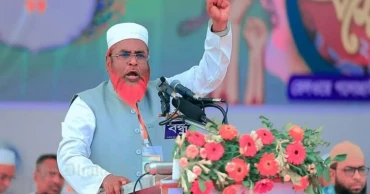
‘Attack’ on MP’s house over ‘mentally ill’ daughter’s conduct unacceptable: Jamaat
Bangladesh Jamaat-e-Islami on Tuesday condemned the alleged attack and vandalism at the residence of Jashore-4 MP Md Golam Rasul, saying such an incident over the behaviour of his "mentally ill" daughter is unacceptable.
In a statement, Jamaat Secretary General Mia Golam Porwar alleged that BNP leaders and activists were involved in instigating the alleged attack and called for those responsible to be identified and brought to justice immediately.
He said a group of people carried out a "planned and intentional" attack and vandalism at the MP’s residence in the Nilganj area of Jashore town around 11:00am on Tuesday.
In the statement, Porwar claimed that one of Golam Rasul’s daughters is "mentally ill" and has been receiving treatment in different places, including India.
According to him, the incident occurred over an act of the daughter, which had already been settled, and such an attack is "in no way acceptable."
The Jamaat leader claimed that even after the MP explained the matter, there was a "special motive" behind inciting a mob.
He said such an attack on the residence of a lawmaker could worsen the law and order in the country, demanding immediate identification of those involved in the attack and the instigators, and bringing them to justice.
6 days ago
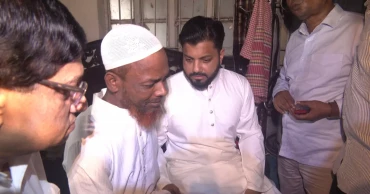
Fraudulent 'July martyr' gazette applicants to face up to Tk10 lakh fine: Ishraque Hossain
State Minister for Liberation War Affairs Ishraque Hossain on Tuesday said anyone attempting to secure gazette status for July uprising martyrs through fraudulent means would face up to five years' imprisonment and a fine of up to Tk 10 lakh.
He also said the government is taking steps to quickly gazette all July uprising martyrs who have not yet been officially recognised, while initiatives will be implemented to permanently preserve and develop their graves.
Speaking to reporters after meeting the families of July uprising martyrs in the Jatrabari area of the capital, Ishraque warned that anyone attempting to obtain gazette status fraudulently would face legal action under existing laws.
"If anyone tries to deceive the state to get enlisted, strict legal action will be taken against them," he said.
The state minister said the concerns raised by the families had been noted and necessary measures would be taken to address them.
Ishraque said the issue had also been discussed in parliament.
Ishraque alleged that the previous interim government had failed to discharge its responsibilities properly.
"Had it performed its duties properly, we would not have faced such difficulties in determining the number of martyrs even two years later, nor would the current situation have arisen," he said.
6 days ago
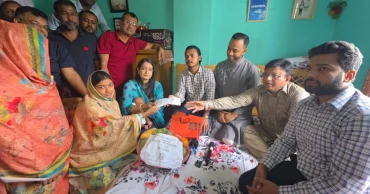
PM Tarique sends gifts for newborn daughter of injured July uprising activist
Prime Minister and BNP Chairman Tarique Rahman on Tuesday sent gifts for the newborn daughter of Md Sujon, who was injured during the July mass uprising.
A delegation of Amra BNP Poribar led by its Adviser and Narsingdi-5 MP Engineer Ashraf Uddin visited Sujon's residence in Keraniganj at noon.
6 days ago
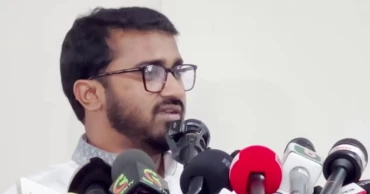
Jamaat's downfall already underway: Rashed Khan
Prime Minister's Political Assistant Rashed Khan on Tuesday said that the downfall of the opposition Jamaat-e-Islami has already begun, as the party is struggling to prevent divisions within its own alliance.
"Your downfall has already started," he said, referring to Jamaat.
Speaking at a discussion titled "Unity, Not Division, for Building a Just and Discrimination-Free Society" at the National Press Club in the capital, Rashed questioned the existence of the Jamaat-led electoral alliance.
"They are holding divisional rallies under the banner of an 11-party alliance. But does that 11-party alliance even exist anymore? Now it is a nine-party alliance. You cannot even stop your own alliance from breaking apart. Your downfall has already begun," he said.
Water Resources Minister Shahid Uddin Chowdhury Anny attended the programme as the chief guest.
The event was organised by an organisation called Amra Bangladeshi.
Rashed added that those who "did not support Bangladesh's independence or accept its map" have now become the parliamentary opposition.
"Those who did not believe in Bangladesh's existence, who did not want independence and who did not want this map, have now become the opposition in Bangladesh. It is a matter of great shame for the nation," he said.
He questioned whether such forces could safeguard the country's sovereignty.
"They are doing politics in Bangladesh and have got the opportunity to do so for various reasons. But can the country's sovereignty be safe in the hands of those who never believed in the birth of Bangladesh? It can never be safe," he said.
Responding to what he described as Jamaat's ambition to topple the BNP-led government, Rashed said the party should first focus on its own problems.
"They say they will bring down the BNP government. I would say, stop your own downfall first. The people have already understood your propaganda," he said.
He also criticised the performance of Jamaat lawmakers in parliament, alleging that their conduct had revealed what the party would do if it came to power.
Addressing the audience, he questioned whether Jamaat would be capable of governing the country if the BNP government were to fall.
"If the BNP government falls, who will come to power? Jamaat-e-Islami? Can they run the state? Haven't you seen the performance of their MPs?" he said.
Without naming individuals, he said that some opposition lawmakers had been involved in inappropriate behaviour, including one case involving a minor, and added such conduct raised serious questions about the party's fitness to govern.
"Can Bangladesh be safe in the hands of such hypocrites? Yet they dream of running the state," he said.
He said BNP believes in unity, unlike Jamaat.
Rashed also said he respects Nobel laureate Dr Muhammad Yunus, but alleged that Yunus had once pursued a "minus formula" aimed at excluding BNP from politics.
He further alleged that Jamaat had wanted to install the National Citizen Party (NCP) in power and therefore did not support holding elections in February.
"The election was secured through public demand," he said.
He criticised the opposition for threatening another uprising, saying such a move was unrealistic.
6 days ago