politics
Jamaat Ameer demands reforms, says people will resist any new 'fascism'
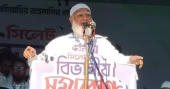
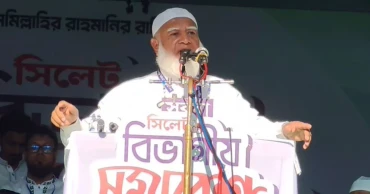
Jamaat-e-Islami Ameer and Leader of the Opposition Dr. Shafiqur Rahman on Saturday accused the current government of following what he described as the path of the former Awami League administration, warning that the people would reject any attempt to establish authoritarian rule.
Addressing a divisional rally in Sylhet, Dr. Shafiqur alleged that the government was promoting partisan appointments and institutionalizing corruption.
BNP will break its promise to the nation if it fails to implement July Charter: Golam Parwar
"We ousted Hasina. If you establish fascism, the people will also drive you out," he said.
The rally was organized to press for implementation of the referendum verdict, constitutional reforms, and the trial of former Prime Minister Sheikh Hasina and her associates.
Dr. Shafiqur said the movement would continue until what he described as fascism, extortion, corruption and misrule were eradicated from the country.
"We will not stop until these are eliminated. The people of Sylhet should remain prepared for the struggle. Whenever the call comes, everyone must respond," he said.
Claiming that around 70 percent of voters had supported change and reform in the referendum, he said his party would not allow the referendum verdict to be disregarded.
"We will not let the referendum be dishonoured. Our movement will reach its goal through the implementation of the people's verdict," he said.
Highlighting what he described as Sylhet's long-standing regional neglect, the Jamaat chief said the people of Sylhet had fought in the Liberation War under the leadership of General M.A.G. Osmani, yet many of the region's legitimate demands had remained unfulfilled for decades.
He said that despite being home to a large expatriate population, Sylhet still lacked a fully operational international airport.
"From this rally, I demand that MAG Osmani Airport be upgraded into a full-fledged international airport without delay," he said.
He also criticized the condition of the Dhaka-Sylhet highway, saying travelers could experience "waves like the sea" simply by using the road, and called for its immediate completion.
The Jamaat chief further demanded the establishment of an engineering university in Sylhet and the full implementation of the proposed medical university, saying both projects had remained incomplete for years.
"We will not betray our martyrs, the July fighters or the country's 18 crore people. We will keep our promise, even if it requires the ultimate sacrifice," he said.
The rally, chaired by Liberal Democratic Party (LDP) Chairman and former minister Col. (retd.) Oli Ahmad Bir Bikram, was also addressed by Opposition Chief Whip Nahid Islam, Bangladesh Khelafat Majlis Ameer Maulana Mamunul Haque and other leaders of the 11-party alliance.
Large numbers of supporters from Sylhet division's four districts attended the gathering.
9 days ago
Political narratives must align with social values to promote inclusive change
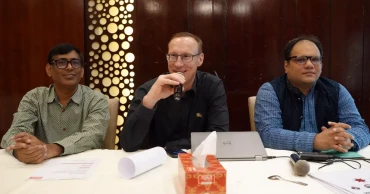
Political narratives must resonate with social values and create opportunities for inclusive political change, speakers said at a workshop in Dhaka on Saturday.
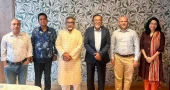
The workshop, titled "Transformative Change-making and Political Strategy Making," was organised by the Centre for Governance Studies (CGS) with support from Friedrich-Ebert-Stiftung (FES) Bangladesh at a hotel in the capital.
Young women political activists representing different political parties and student organisations joined the programme as part of this ongoing initiative to strengthen women's political leadership and democratic participation.
The workshop focused on understanding transformative political change, strategy making, collective action, and narrative building within democratic politics.
Through interactive discussions and participatory exercises, participants explored how political actors can build inclusive movements capable of addressing structural challenges and strengthening women's meaningful participation in politics.
In his opening remarks, CGS Executive Director Parvez Karim Abbasi emphasised the importance of strengthening women's involvement in electoral politics and ensuring their rightful place within democratic institutions.
He said that this initiative seeks to enhance the leadership capacity of young women political activists by equipping them with conceptual knowledge and practical political skills.
He further stressed that meaningful political inclusion requires not only greater quantitative representation but also stronger involvement in decision-making processes and democratic leadership.
Shadhan Kumar Das, Programme Adviser of Friedrich-Ebert-Stiftung (FES) Bangladesh, introduced the activities and democratic values of Friedrich-Ebert-Stiftung to the participants.
He explained that FES, as a German political foundation, has been working in Bangladesh for more than a decade on issues relating to democratization, political participation and social inclusion. Beyond Bangladesh, the organization continues to engage globally on subjects including geopolitics, geoeconomics, climate change, labour rights and democratic governance, while supporting locally grounded strategies for political and social transformation.
9 days ago

Khelafat Majlis quits Jamaat-led 11-party alliance
Khelafat Majlis on Saturday officially announced its withdrawal from Bangladesh Jamaat-e-Islami-led 11-party alliance.
The decision was taken at the party's third general meeting of its Central Majlis-e-Shura at the Institution of Diploma Engineers, Bangladesh (IDEB) auditorium in the capital.
Khelafat Majlis will abstain from all future programmes and activities of the 11-party alliance, the party said in a press release signed by the party's Central Publicity Secretary Engineer Abdul Hafiz Khasru.
Young Jamaat leader quits party, stages symbolic milk bath over allegations against MP Nazrul
.However, the party noted that it would consider participating in the future if the need arises to build a broader coalition.
Party sources revealed that following the 11-party divisional rally in Chattogram on June 13, Khelafat Majlis officially asked the alliance not to use the party’s name or its leaders' names on banners or promotional materials for any future events.
Later, when the party’s name was used at a rally in Rangpur it was withdrawn following objections from Khelafat Majlis.
Since then, the party's name has not been used in any alliance programmes.
Addressing their stance, party leaders noted that while they were part of the initial understanding and maintained a slight presence in some post-election programmes of the 11-party alliance, they have refrained from participating in alliance activities for several days.
9 days ago
BNP high command to decide on next President, says Rizvi
Prime Minister's Political Adviser and BNP Senior Joint Secretary General Ruhul Kabir Rizvi on Saturday said the party's top leadership will decide who will be the country's next President.
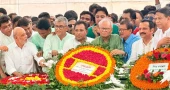
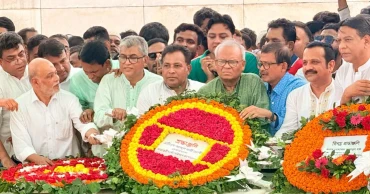
He made the remarks after paying tributes at the graves of martyred president Ziaur Rahman and former prime minister Khaleda Zia at Zia Udyan in the capital along with the newly appointed chairmen of 12 state-owned institutions.
Responding to a question about the next President, Rizvi said the matter would be decided by the party's high command.
Democracy could again be endangered without consensus on key national issues: Rizvi
He also said the demand raised by various political parties for the trial of the resigned President is a matter of party policy.
Rizvi expressed hope that the newly appointed chairmen of the state-owned institutions would discharge their responsibilities with honesty and dedication.
He also added that Prime Minister Tarique Rahman is evaluating and rewarding party leaders and activists who made sacrifices at different levels.
During this period, Shahabuddin administered the oath of office to three heads of government, an exceptional occurrence in the country's history for a sitting president.
9 days ago
People are the source of government's power: Mahdi Amin
Prime Minister's Adviser and spokesperson Mahdi Amin on Friday said the government's authority is derived from the people and that protecting human rights, the rule of law and freedom of expression under the leadership of Prime Minister Tarique Rahman remains its foremost priority.
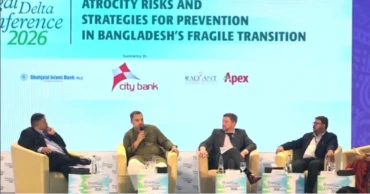
Speaking at the Bengal Delta Conference-2026 at Hotel InterContinental in the capital, Mahdi said the current government assumed office through a free, fair and credible election and is committed to strengthening democratic institutions and safeguarding citizens' rights.
Govt to build skilled workforce around youth aspirations: Mahdi Amin
The conference was organised by the Dhaka Institute of Research and Analytics (DIRA).
Mahdi alleged that the BNP was the principal victim of political repression during the previous 16 years of what he described as authoritarian rule, citing enforced disappearances, extrajudicial killings, custodial deaths and politically motivated cases.
However, he said the crackdown was not limited to a single political party, claiming that all pro-democracy political forces and many citizens from different walks of life who spoke out against the then government were subjected to repression.
Referring to enforced disappearances, Mahdi said not only political leaders but also individuals with no political affiliation had fallen victim to such incidents. While some victims eventually returned, he noted that many others remain missing.
He claimed that thousands of people had been killed in alleged extrajudicial incidents or died in custody over the years, adding that more than 700 victims of enforced disappearance have yet to return.
Mahdi said the government recognises the suffering of families who lost loved ones and is committed to ensuring justice for victims.
He also referred to the personal experiences of Prime Minister Tarique Rahman, saying his family had endured political persecution and human rights violations, which, according to him, gives the prime minister a deep understanding of the pain experienced by victims' families.
The adviser further claimed that the current Home Minister and many members of the cabinet, lawmakers and political activists had themselves experienced enforced disappearance, arbitrary detention or politically motivated legal cases.
According to Mahdi, the present administration represents a major departure from the governance system of the past decade and a half, arguing that state institutions previously functioned to sustain an authoritarian regime rather than protect citizens' rights.
He said the government had effectively pressed a "reset button" following the political transition and adopted a clear reform agenda centred on empowering citizens, restoring the rule of law, protecting human rights and ensuring freedom of expression.
Mahdi asserted that during the government's first five months in office, there had been no incidents of human rights violations, political repression, custodial deaths or enforced disappearances to the best of the government's knowledge, expressing hope that this record would continue.
He said the government seeks to end the culture of political vengeance while ensuring accountability for those responsible for serious human rights violations committed under the previous administration.
"Our objective is clear—no perpetrator should escape justice, while no innocent person should be deprived of the right to live freely in a democratic country," he said.
Mahdi also said the government is pursuing a policy of reconciliation and social harmony following the fall of the previous administration, recalling that democratic political parties led by the BNP had worked to maintain peace and order during the period when the country remained without a government from August 5 to August 8.
Looking ahead, he said the government under Prime Minister Tarique Rahman's leadership will continue to prioritise the protection of human rights, the rule of law and freedom of expression, alongside efforts to empower women and young people and promote inclusive and balanced development that benefits all citizens.
10 days ago
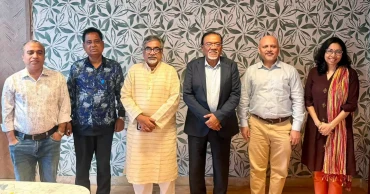
BNP, Democracy International review progress on organisational strengthening
A review meeting between a Bangladesh Nationalist Party (BNP) delegation and Democracy International (DI) was held in the Capital on Friday to assess progress on activities aimed at strengthening the party's organisational capacity and internal democratic practices.
The meeting reviewed the progress of initiatives related to enhancing the party's organisational capabilities and internal democracy, while participants also discussed future plans in detail.
BNP submits annual financial report to EC; reports Tk 6.93 crore surplus
At the outset, Democracy International presented an update on the implementation of the BNP's central strategic action plan formulated in April 2023, as well as the outcomes of strategic plans implemented in 20 local organisational units.
According to DI, significant progress has been achieved in institutionalising training programmes, increasing women's participation in party committees, resolving internal conflicts and expanding public engagement activities.
The participants held an open discussion and reached a conceptual consensus on future priorities, including conducting a needs assessment, updating the existing strategic action plan and ensuring its effective implementation.
The BNP delegation was led by Prime Minister's Adviser on Public Administration (with the status of a minister) Md Ismail Zabiullah.
Other members of the delegation included Mymensingh Zila Parishad Administrator and BNP National Executive Committee Joint Secretary General Syed Emran Saleh Prince, and the party's Training Affairs Secretary ABM Mosharraf Hossain, MP.
Representing Democracy International at the meeting were Chief of Party Aminul Ehsan, Senior Director Lipika Biswas and Senior Manager Md Rabiul Islam.
Democracy International has been providing technical assistance to strengthen democratic practices and the organisational capacity of democratic institutions in Bangladesh with support from the UK Foreign, Commonwealth and Development Office (FCDO).
10 days ago
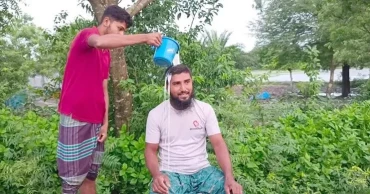
Young Jamaat leader quits party, stages symbolic milk bath over allegations against MP Nazrul
A local Jamaat leader in Satkhira's Shyamnagar upazila has announced his resignation from the party, staging a symbolic milk bath in protest over allegations involving Satkhira-4 lawmaker Gazi Nazrul Islam.
Delwar Hossain made the announcement through a video message after taking the milk bath at around 6pm on Thursday.
Delwar, son of Monsur Sardar of Harinagari village under Nurnagar union, said he had been serving as Baitul Mal secretary of Ward No. 8 and secretary of the union's Youth Jamaat unit.
In the video message, he said he was quitting politics and would no longer support any political party, claiming that his decision was prompted by the alleged misconduct of MP Gazi Nazrul Islam.
"I am resigning from the party because of the alleged actions of Satkhira-4 MP Gazi Nazrul Islam. I will no longer engage in politics or support any political party. That is why I am taking a milk bath," he said.
However, Nurnagar Union Ward Jamaat Ameer Abdur Razzak said Delwar had not submitted any written resignation to the party.
"I have heard that he took a milk bath and declared he would no longer remain with the party. He has been a dedicated Jamaat activist," Abdur Razzak said.
11 days ago
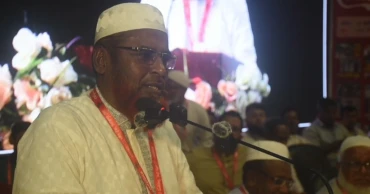
BNP will break its promise to the nation if it fails to implement July Charter: Golam Parwar
Bangladesh Jamaat-e-Islami Secretary General Prof Mia Golam Parwar on Thursday said the BNP would be seen as a party that had broken its promise to the nation if it failed to implement the July Charter in full.
Speaking as the chief guest at a seminar titled "July National Charter and Referendum: Government's Responsibility and Our Course of Action in Realising Public Aspirations" at the Dinajpur Shilpakala Academy auditorium, Parwar alleged that the BNP had retreated from its earlier commitment to constitutional reforms.
He said the BNP had earlier pledged to form a constitutional reform commission if it came to power, but was now talking about constitutional amendments instead of reforms.
"They had promised constitutional reform, but now they are speaking of amendments. That means they have failed to honour their commitment to the nation," he said.
Parwar also alleged that although the BNP now claims it will implement the July Charter "to the letter," the party had already registered a note of dissent on parts of the proposed charter.
"If the sections covered by the note of dissent are excluded, there will be little left of the historic July Charter," he said.
He further argued that if the charter were passed only through Parliament, it could later be struck down by the courts. Stressing the need for a referendum, he said the entire outcome of such a vote must be implemented.
Parwar also compared separating the issues of a national election and a referendum to "saving one of two twin children while killing the other."
The seminar was chaired by Dinajpur district Jamaat Ameer Principal Anisur Rahman.
Among others, Jamaat Assistant Secretary General Maulana Abdul Halim, Golam Rabbani MP, Prof Mahbubur Rahman Belal MP, Barrister Najibur Rahman MP, JAGPA Chairman Rashed Prodhan, former Islami Chhatra Shibir central president Rajibur Rahman Palash, former upazila chairman Aftab Uddin Molla, Advocate Mainul Alam, Dinajpur Journalists' Union President Sadakat Ali Khan, NCP Dinajpur Convener Shamsul Moktadir, Jamaat's city Ameer Sirajus Salehin, and others addressed the programme. The keynote paper was presented by Muhaddis Dr Enamul Haque.
11 days ago
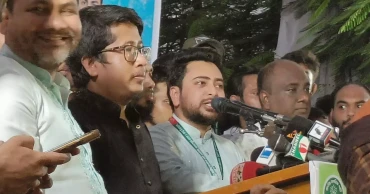
NCP Convener Nahid demands President Shahabuddin's resignation, arrest and trial
National Citizen Party (NCP) Convener Nahid Islam on Thursday demanded the resignation, arrest and trial of President Mohammed Shahabuddin, alleging that he had played a role in the killings during the July uprising.
Speaking at a roadside rally at Foujdari intersection in Jamalpur after a party procession, Nahid alleged that President Shahabuddin, whom he described as "an ally of the fascist regime," should not only resign but also be brought under legal proceedings.
He claimed the President had indirectly contributed to the killings of students and protesters during the July mass uprising and therefore should face justice.
Nahid also called for the appointment of "an honest, neutral and widely acceptable person" as the next president following Shahabuddin's resignation.
He said accountability must be ensured for everyone involved in killings and human rights violations if the spirit of the July-August uprising is to be upheld.
"No individual or institution is above the law," he said, urging the authorities to take necessary steps to end the culture of impunity.
Addressing the rally, NCP Northern Region Chief Coordinator Sarjis Alam said that if the referendum is ultimately declared unconstitutional or illegal, a BNP-led government would also be considered illegitimate.
Among others, NCP Joint Member Secretary Lutfor Rahman, National Jubo Shakti Vice-President Hifzur Rahman Bakul, district Member Secretary Dr Mosharraf Hossain and Advocate Shamim Ahmed also spoke at the programme.
11 days ago
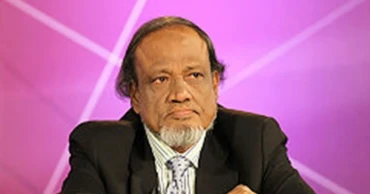
BNP leader Rafiqul Islam Miah on life support
BNP Standing Committee member and former minister Rafiqul Islam Miah was placed on life support at Evercare Hospital Dhaka on Thursday evening after his condition deteriorated.
He was put on life support at 7:20pm, his Personal Secretary Muksedur Rahman Abir said.
He said the BNP leader’s kidneys are no longer functioning, and doctors detected blood infection. "He has been suffering from neurological problems for a long time and is now facing multiple complications," he added.
Rafiqul Islam was admitted to Evercare Hospital on July 21 and had been receiving treatment in a cabin equipped with ICU facilities. However, his condition began to worsen from around noon on Thursday, his personal secretary said.
He is currently under the care of specialist physician Dr Farid Hossain at the hospital.
Abir said the family has sought prayers from people across the country for Rafiqul Islam's recovery.
11 days ago