Business

Scrap Bangla QR service charge to build cashless Bangladesh: BMPCA
Bangladesh Mobile Phone Consumers’ Association (BMPCA) on Sunday demanded withdrawal of the existing service charge on Bangla QR transactions, saying the fee is discouraging small and medium merchants from adopting digital payments and undermining the government's cashless Bangladesh initiative.
In a statement, the association said Bangla QR is a key vehicle for achieving the government's declared goal of building a cashless and smart Bangladesh, but the existing Merchant Discount Rate (MDR) is proving a major barrier for small and medium businesses, many of whom remain reluctant to accept QR payments as a result.
BMPCA said Bangladesh currently charges around 1 percent, including VAT, as merchant fee on Bangla QR transactions.
Although the charge is nominally levied on merchants, the association said its cost is often passed on to consumers through higher prices for goods and services.
Small traders, kitchen markets, hawkers, transport operators, pharmacies, educational institutions and rural entrepreneurs bear the brunt of this additional cost, it said.
Citing international practice, the association said many countries have kept QR-based payment fees extremely low or at zero to popularise digital transactions.
It noted that India's UPI charges no MDR on most common merchant transactions, while Thailand's PromptPay, Singapore's PayNow and Malaysia's DuitNow QR all keep fees at zero or minimal levels for small merchants.
Indonesia's QRIS also charges lower fees than Bangladesh, the statement said, adding that such supportive policies have driven rapid growth in digital transactions and a significant decline in cash usage in these countries.
BMPCA placed a five-point set of demands before the government- full withdrawal of the existing service charge (MDR) on Bangla QR transactions, or reduce it to a maximum of 0.25 percent, exemption of small and medium businesses from any Bangla QR charge for at least five years, providing tax incentives and financial support to merchants accepting digital payments, making interbank and mobile financial service QR transactions faster, more seamless and more secure, launching a coordinated national awareness campaign involving the government, Bangladesh Bank, banks, mobile financial service providers and payment operators to expand Bangla QR usage nationwide.
BMPCA President Mohiuddin Ahmed said a cashless economy is not a luxury but essential infrastructure for running a modern state.
“Imposing extra charges on digital transactions can never wean people off cash,” he said, adding that the experience of successful countries shows that lower costs drive higher digital transaction volumes.
Mohiuddin said there is no alternative to immediately withdrawing or minimising the Bangla QR service charge if Bangladesh is serious about building a cashless economy.
22 days ago
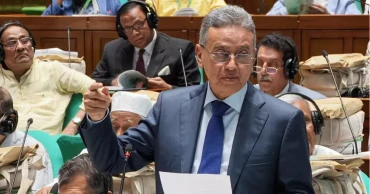
Finance Minister briefs JS on state banks' NPL situation, govt's debts
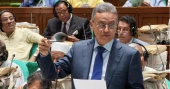
Finance Minister Amir Khosru Mahmud Chowdhury on Sunday informed Parliament that the total amount of default loans in nine state-owned banks stood at Tk 188,701.75 crore as of May 31 this year.
Replying to a question from reserved seat Jamaat-e-Islami MP Sabikun Nahar during the question-answer session, the minister said the figure was based on data submitted by the banks to the Credit Information Bureau (CIB) database of Bangladesh Bank.
The minister said the nine state-owned banks are Agrani Bank, Janata Bank, Rupali Bank, Sonali Bank, BASIC Bank, Bangladesh Development Bank, Bangladesh Krishi Bank, Rajshahi Krishi Unnayan Bank and Probashi Kallyan Bank.
He said reducing the high level of default loans is essential to restoring discipline in the country's banking sector.
Responding to a question from Jamaat MP Golam Rasul, the finance minister said the government's total outstanding debt stood at Tk 2,206,462 crore as of December 31. Of the total, external debt amounted to Tk 959,311 crore, while domestic debt stood at Tk 1,247,151 crore.
Answering another question from Jamaat MP Shahjahan Chowdhury, Amir Khosru said the government repaid foreign loans worth US$4.65 billion during the 2025-26 fiscal year. Of the total, US$3 billion was repaid as principal and US$1.65 billion as interest.
In reply to a question from Jamaat MP Mahbubul Alam, the minister said Bangladesh Bank has taken several initiatives to provide easier access to loans for young entrepreneurs.
He said the central bank has increased the refinancing fund for new entrepreneurs in the cottage, micro and small enterprise sector from Tk 100 crore to Tk 500 crore.
Under the scheme, new entrepreneurs can obtain collateral-free loans of up to Tk 10 lakh at a maximum interest rate of 7 percent, while loans of up to Tk 35 lakh are available against collateral.
Replying to a question from reserved seat MP Nilufar Chowdhury Moni, the minister said outstanding customs duties and taxes on imported goods collected by various customs houses under the National Board of Revenue over the past five years amounted to Tk 25,504.3 crore.
He added that out of Tk 3,912 crore payable by Bangladesh Petroleum Corporation, Chattogram Custom House had recovered Tk 590 crore by June this year.
Responding to a question from Dhaka-18 MP SM Jahangir Hossain, the finance minister said the government had decided to waive agricultural loans of up to Tk 10,000, including interest, for farmers across the country covering crops, livestock, fisheries and other agricultural activities.
Under the programme, banks had received Tk 1,352.74 crore from the government by July 2 to settle dues for 1,434,482 farmers, he said.
In reply to Nilphamari-4 MP Abdul Muntakim, the minister said Bangladesh Bank's regulations stipulate that a bank's fixed assets cannot exceed 30 percent of its paid-up capital.
As Sonali Bank's fixed assets are already significantly higher than the prescribed limit, the bank is currently unable to purchase additional fixed assets or construct new buildings, he added.
Answering a question from Cumilla-9 MP Abul Kalam, the finance minister said discussions between the Economic Relations Division and the World Bank are underway to prepare the financing pipeline for the 2026-27 fiscal year.
He said budget support remains one of the World Bank's financing instruments for Bangladesh, and the government's requirement and target for such support in FY2026-27 will be determined following consultations with the relevant stakeholders. The government will decide the sectors in which any budget support funds will be utilised based on national priorities.
22 days ago

Remittance inflow registers 11.6% growth, reaches $1.15 billion in July's first 11 days
Bangladesh's inward remittance recorded a robust double-digit growth at the start of the new fiscal year 2026–27, with US$1.15 billion in the first 11 days of July, according to the latest data released by Bangladesh Bank.
This marks a significant 11.6 percent monthly growth compared to the corresponding period of the previous fiscal year, when the country received $1.03 billion between July 1 and July 11, 2025.
The central bank's detailed breakdown indicates that the flow of foreign currency picked up pace significantly toward the end of the first week of July. In just a three-day window between July 9 and July 11, 2026, Bangladeshi expatriates sent$191 million through banking channels.
Financial analysts and central bank officials attribute this strong upward trajectory to the recent stabilization of the interbank foreign exchange market and competitive exchange rates offered by commercial banks. The steady use of banking channels instead of informal networks (like Hundi) has significantly buoyed the state's incoming foreign currency receipts.
The sustained surge in remittance inflows brings a much-needed sigh of relief for macroeconomic policymakers.
This steady influx is expected to provide a crucial buffer to Bangladesh's gross foreign exchange reserves and help ease the ongoing balance of payment pressures during the first quarter of the current fiscal year.
22 days ago
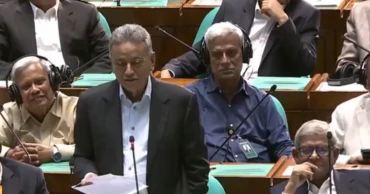
New BSEC appointments made transparently: Finance Minister
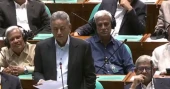
Finance Minister Amir Khosru Mahmud Chowdhury on Sunday told Parliament that investigations are underway against the former leadership of the Bangladesh Securities and Exchange Commission (BSEC) while the newly reconstituted commission has been formed through a transparent and professional selection process.
The Minister made the remarks while responding to a supplementary question from Jamaat-e-Islami MP Md Quamrul Hassan, elected from Mymensingh-6.
The MP alleged that during the Awami League government's tenure, politically biased and dishonest people were appointed to the BSEC and said there was allegation that some commission members had colluded in irregularities and manipulation in the stock market.
He wanted to know whether the government would ensure that only competent and non-partisan individuals are appointed to the commission in the future and whether action would be taken against officials who served during the previous AL government.
In reply, Amir Khosru said legal proceedings and investigations against the former BSEC chairman and others are already in progress.
He told the House that the commission has been reconstituted with a chairman and three members, while the process of appointing another member is continuing."None of them has been appointed on political considerations."
He added that the recruitment process was so transparent that even as Finance Minister he did not personally know the appointees beforehand.
"They are all professionals with exposure to the stock market and international capital markets. We have no reason to question their integrity," he said.
The Minister said the stock market has shown a sustained upward trend since the appointment of the new commission, gaining significant points over the past two months.
He claimed the market had recorded stronger gains during this period than it had over the previous five years, attributing the improvement to restored transparency and renewed investor confidence.
Amir Khosru also said the government has introduced, and will continue to introduce, major reforms in the capital market to strengthen its governance and credibility.
He said fund managers from major financial centres including Hong Kong, New York and London have already begun visiting Bangladesh and expressing interest in participating in the country's capital market.
The Minister expressed optimism that Bangladesh's capital market would develop into a globally recognised, transparent and trustworthy market, saying recent investor confidence and the upward movement in share prices indicate that the reform process is already producing results.
22 days ago
BSEC clarifies Chairman’s remarks, denies delisting decision on closed companies
The Bangladesh Securities and Exchange Commission (BSEC) on Sunday clarified that it has not taken any decision to delist closed companies from the stock market, terming recent media reports on the matter “misleading” and “baseless.”
In a press release, the securities regulator said the confusion stemmed from remarks made by BSEC Chairman Masud Khan during an exchange of views meeting with journalists at the Capital Market Journalists' Forum (CMJF) office on July 9.
BSEC to permanently halt trading of closed companies: BSEC Chairman
The commission said one of the Chairman's statements was presented out of context and misrepresented, following which several newspapers, online portals and electronic media outlets reported that BSEC had decided to delist closed companies.
The BSEC said such reports do not correctly reflect what the Chairman actually said.
According to the press release, the Chairman told journalists that in most capital markets around the world, companies that remain inactive or closed for a long time are not kept indefinitely on the listed status.
He noted that Bangladesh is an exception in this regard, where some companies continue to remain listed despite being closed for extended periods, putting general and small investors at particular risk.
The Chairman further said that as the frontline regulator, the concerned stock exchange bears the primary responsibility for such companies.
He noted that the Dhaka Stock Exchange (DSE) has been reviewing the issue and has taken the initiative to formulate a rational and sound process in this regard.
As part of the discussions, inactive companies may be given a specific timeframe, such as one year to resume operations, failing which further action could be considered in line with existing laws, rules, listing regulations and prescribed procedures, the BSEC said.
However, keeping investors' interests and welfare in mind, the commission said investors should exercise greater caution before investing in shares of companies that have remained closed or inactive for a long time, are going concerns, do not hold regular annual general meetings (AGMs), or do not pay dividends.
22 days ago
High-level IMF delegation arriving in Dhaka on 5-day visit to discuss new loan program
A high-level delegation from the International Monetary Fund (IMF) is scheduled to arrive in Dhaka tomorrow (July 12) on a crucial five-day visit.
The visit will focus on the feasibility and size of a new financial assistance package and evaluating vital macroeconomic structural reforms proposed by the government.
The mission comes at a critical juncture as the newly formed government has practically moved away from the previous IMF facility and requested a fresh three-year loan program tailored to current macroeconomic realities. The primary goal of the tour is not to finalize a credit arrangement immediately, but rather to evaluate the current macroeconomic conditions, the government's policy priorities, and its capacity to execute necessary reforms.
According to Ministry of Finance sources, the IMF delegation will hold a series of meetings with the Ministry of Finance, Bangladesh Bank, the National Revenue Board (NRB), and other relevant stakeholders.
The team will review a broad spectrum of the economy, including the current status of Bangladesh's macroeconomic indicators. the roadmap for rebuilding the banking sector and curbing non-performing loans, progress in revenue collection and tax administration reforms, the position of the country's foreign exchange reserves and public debt management, and the structure and volume of the proposed new loan program.
Dr. Ahsan H. Mansur, former IMF official and former Governor of Bangladesh Bank, stated that the principal objective of this five-day visit is to physically evaluate the government’s sincerity and commitment toward implementing deep economic overhauls.
He noted that several crucial reforms under the previous program stalled as they were left unimplemented. Consequently, if Bangladesh intends to secure a fresh IMF facility, the delegation will place utmost emphasis on the new strategic roadmap designed by the administration.
Dr. Mansur highlighted that the overhauling of the NBR, eliminating vulnerabilities in the banking sector, and fully materializing a market-driven foreign exchange rate will dominate the discussions.
Furthermore, following the announcement of the national budget, the delegation will hold detailed talks on the financial viability and funding sources of the proposed 9th National Pay Scale.
Ultimately, the IMF mission intends to gauge both the administrative and political readiness of the state to handle structural adjustive measures in the days ahead.
23 days ago
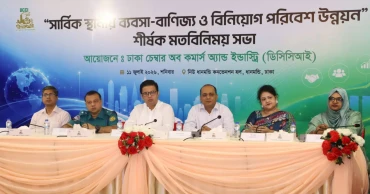
Businessmen seek lower business costs, simplified LC process at DCCI meet
Businessmen from Dhaka’s Dhanmondi-Mohammadpur area on Saturday called for reducing the cost of doing business, automating trade licence and other government services, lowering bank interest rates, simplifying the letter of credit (LC) opening process, and improving the overall law-and-order situation to help the economy withstand global trade volatility and domestic challenges.
The demands came at an exchange of views meeting titled ‘Improving Overall Local Business and Investment Environment,’ organised by the Dhaka Chamber of Commerce and Industry (DCCI) at its New Dhanmondi Convention Hall to identify problems faced by businesses in the area and chart a way forward. Leaders of 15 associations and representatives of around 100 business organisations from the locality attended.
DCCI flags policy rate-budget mismatch, calls for fiscal-monetary coordination
In his welcome address, DCCI President Taskeen Ahmed said businessmen make a huge contribution to the economy, yet administrative complexities, ambiguity over tax and VAT, and the law-and-order situation remain major obstacles for them.
He added that rising transport costs due to the energy and power crisis, along with the decision to keep shopping malls and shops closed after 7pm, are alarmingly reducing traders' sales and turnover, hurting overall business.
Taskeen noted that the recently announced national budget carries positive signals for businesses, including treating source tax as advance tax, reducing source tax on industrial raw material imports, allocating Tk 500 crore for the CMSME sector, and announcing a stable tax structure for five years.
However, he said the large revenue collection target and the government's reliance on bank borrowing to meet the budget deficit are squeezing credit flow to the private sector, which he described as a concern for the investment climate.
Dhaka South City Corporation’s Chief Revenue Officer Jonayed Kabir Sohag said a zero-tolerance policy has been adopted to reduce public harassment in obtaining trade licences and other city corporation services, which will cut waste of both time and money.
He said, based on a DCCI proposal, the city corporation plans to soon organise a trade licence renewal week at the chamber to make business operations easier for entrepreneurs, while urging city dwellers to pay holding tax and other corporation fees on time.
Dhaka Metropolitan Police (DMP) Deputy Commissioner Md Tareq Zubair said entrepreneurs are working tirelessly to keep the wheels of the economy turning, and this momentum must not be allowed to break.
He said police are continuing to arrest identified extortionists to prevent harassment through extortion. He also said the use of artificial intelligence technology on several city roads to ease traffic congestion has brought relief to residents, and police are actively considering a “Smart Policing-Smart City” project to expand such technology across Dhaka.
Customs, Excise and VAT Commissionerate Dhaka (West) Additional Commissioner Nirjhar Ahmed said global supply chain instability and gaps in local entrepreneurs' capacity have somewhat slowed business and investment in the country, but the initiative to allow VAT returns every three months will help businesses build up capital.
He urged entrepreneurs to adopt advanced technology.
NBR Second Secretary (Tax Policy) Nusrat Farzana said both tax collection and tax incentives are equally important for the government, and the NBR is working continuously to balance the two while easing business operations.
She said the recently passed Finance Act 2026 includes several measures to simplify business processes, the benefits of which entrepreneurs will soon enjoy. She added that a recent NBR circular has granted conditional tax exemption to the renewable energy generation sector until 2035, and urged entrepreneurs to invest in the sector.
Bangladesh Bank Director (Foreign Exchange Investment Policy Department) Mahmudun Nabi said the US dollar and reserve crisis is prolonging the LC completion process for local businessmen, while the high rate of defaulted loans is preventing a reduction in bank lending rates, raising businesses' operating costs.
He proposed effective negotiations with international shipping companies to help cut import costs.
During the open discussion, businessmen called for policies to ease import of equipment used in the eyewear sector, lower tax rates on signing money in the real estate sector, and formulate policies for freelance promoters and digital marketing.
They also sought regular transport of container wagons from the port to Dhaka ICD with faster clearance, a simplified and cooperative LC opening process for new entrepreneurs, easier incentives for women entrepreneurs, and a simplified trade licence process with the renewal period extended from one year to five years.
At the end of the programme, 39 organisations were granted DCCI membership, with DCCI President Taskeen Ahmed handing over membership certificates to their representatives.
23 days ago
Bangladesh Bank alerts banks to sudden forex audits continuing
In a major move to curb irregularities in foreign exchange operations and stamp out illicit financial flows, Bangladesh Bank (BB) has launched a comprehensive special inspection targeting some commercial banks, central bank sources revealed.
The central bank has formed six separate inspection teams to intensely scrutinize the treasury and information technology (IT) divisions of the selected commercial institutions. The banks currently under oversight are state-owned Sonali Bank, Janata Bank, and Agrani Bank, alongside private sector lenders BRAC Bank, Prime Bank, and HSBC Bangladesh.
The regulatory intervention follows recent allegations of foreign payment discrepancies at a state-owned commercial bank. Central bank investigators discovered instances where foreign currency payments were dispatched to clients through overseas "Nostra accounts," but the corresponding domestic liabilities or loans were suspiciously omitted from the banks' internal ledger records.
To ascertain the depth of this systemic vulnerability, Bangladesh Bank is auditing Nostra account balances, transactional deposits, foreign outbound transmissions, and swift settlements. Investigators are cross-checking all suspicious high-value international transactions to see if standard protocols were bypassed to harbor covert loan facilities.
Moving forward, Bangladesh Bank has affirmed that it will aggressively continue unexpected, sudden visits to the Nostra accounts and monitor the foreign currency transmission frameworks of commercial banks. The central bank views these unannounced, real-time interventions as critical to tightening corporate governance and detecting trade-based money laundering or capital flight before the funds disappear into foreign jurisdictions.
Commenting on the development, a senior executive from a private bank under inspection noted that while the central bank possesses full authority to conduct sudden audits at any given time, the lack of immediate loan creation following a Nostra account payout is highly irregular under standard operating practices, warranting a deeper and strict administrative probe.
23 days ago
Bangladesh to experience highest inflation in South Asia in 2026-27, forecasts ADB
Bangladesh is projected to face the highest average inflation rate among South Asian nations in the current fiscal year, according to the Asian Development Bank (ADB).
In its latest Asian Development Outlook (ADO) July update, the Manila-based multilateral lender predicted that Bangladesh's average inflation could hit 8.8 percent, outpacing regional peers including India, Pakistan, and Sri Lanka.
ADB projects Bangladesh’s GDP growth at 4.5 percent in FY2027 amid high inflation
According to the ADB, the stubborn inflationary pressure in Bangladesh is heavily linked to the domestic tariff revisions of energy resources. The report pointed out that recent price adjustments of petroleum, gas, and electricity continue to exert a ripple effect across transport networks, utility services, and volatile consumer goods prices. Consequently, these structural adjustments are significantly slowing down the pace of cooling inflation in the country.
While neighboring South Asian countries like India, Pakistan, and Sri Lanka successfully managed to rein in the historic inflation spikes triggered by the Russia-Ukraine war, Bangladesh has struggled to replicate that downward trajectory.
The ADB's grim forecast aligns with the latest domestic data. According to the Bangladesh Bureau of Statistics (BBS), consumer inflation has remained stubbornly locked above the 9 percent threshold for three consecutive months.
June 2026:Consumer inflation ticked down slightly to 9.16 percent.
May 2026: Inflation stood at 9.42 percent, registering the highest peak in 16 months since February 2025.
Economists note that the persistent high inflation continues to squeeze the purchasing power of low- and fixed-income groups, underscoring the urgent need for robust monetary interventions and market monitoring to stabilize commodity prices.
23 days ago
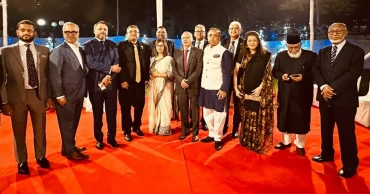
Masud Jamil Khan elected Treasurer of Consular Corps in Bangladesh
Masud Jamil Khan, Honorary Consul of Ireland in Bangladesh, has been elected Treasurer of the Consular Corps in Bangladesh (CCB) for the 2026–2027 term at the organisation’s Annual General Meeting (AGM) in Dhaka.
The AGM took place recently at the Lamda Hall of Gulshan Club where members elected a new Executive Committee to lead the organisation over the next year, according to a media release.
The government of Ireland appointed Masud, Cosmos Group deputy managing director, as its honorary consul with jurisdiction for the People's Republic of Bangladesh in December, 2023.
Masud is also a director of United News of Bangladesh (UNB), the country's largest private news agency, and Dhaka Courier, an independent news magazine.
24 days ago