Business
‘Bangladesh must accelerate reforms to strengthen competitiveness lying ahead’
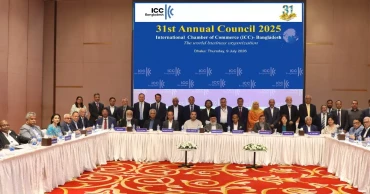
International Chamber of Commerce (ICC) Bangladesh President Mahbubur Rahman on Thursday said Bangladesh must accelerate structural reforms, strengthen macroeconomic stability and enhance public-private collaboration to successfully navigate the post-LDC graduation era and sustain long-term economic growth.
He called for stronger public-private partnership to build a more resilient, competitive and sustainable economy, expressing confidence that Bangladesh can emerge as one of Asia's leading economic success stories through bold reforms, sound policies and continued collaboration among all stakeholders.
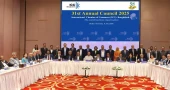
The ICC Bangladesh chief was addressing the 31st annual council of the chamber. On behalf of the Executive Board, he presented a comprehensive review of the global and Bangladesh economic outlook, highlighting the key challenges, emerging opportunities and policy priorities for sustaining the country's long-term growth and competitiveness.
Addressing business leaders, members of the diplomatic community and development partners, he said the country enters 2026 at a defining moment of its economic journey.
Although Bangladesh has demonstrated remarkable resilience through robust remittance inflows, steady export performance and continued infrastructure development, it also faces significant structural and external challenges that require bold and timely policy actions, Mahbubur Rahman said.
He noted that Bangladesh's economy expanded by around 3.7 percent in 2025, reflecting weaker industrial activity, tighter macroeconomic policies, energy shortages and subdued private investment.
Despite these headwinds, export performance remained resilient, while remittance inflows reached a record US$32.8 billion, strengthening the external sector and supporting domestic demand, the ICC Bangladesh chief said.
The agriculture and services sectors also continued to play an important role in maintaining economic stability, he said.
Looking ahead, Mahbubur Rahman expressed cautious optimism about Bangladesh's economic prospects, noting that the International Monetary Fund (IMF) projects growth of around 4.7 percent in 2026, with medium-term growth expected to recover further if macroeconomic stability is maintained and structural reforms continue.
He emphasised that Bangladesh's strategic location, large domestic market, expanding infrastructure and vibrant entrepreneurial community provide a strong foundation for future growth.
Emerging sectors such as the blue economy, renewable energy, green infrastructure, the digital economy and tourism also offer significant opportunities for diversification and investment, ICC Bangladesh president said.
However, he stressed that realising this potential will require decisive reforms. Controlling inflation, strengthening the banking and financial sector, ensuring long-term energy security, mobilising domestic revenue, improving debt management and restoring private-sector confidence must remain national priorities.
Mahbubur Rahman also underscored the importance of concluding Economic Partnership Agreements (EPAs) and Free Trade Agreements (FTAs) to preserve Bangladesh's export competitiveness following graduation from the Least Developed Country (LDC) category.
Highlighting infrastructure as a key driver of competitiveness, he proposed the construction of a modern elevated expressway between Dhaka and Chattogram, describing it as a transformational project that could substantially improve logistics efficiency, reduce transport costs, strengthen export competitiveness and attract greater domestic and foreign investment. He also encouraged the Asian Development Bank (ADB) to consider supporting the project through financing and technical assistance.
Referring to the global economic environment, the ICC Bangladesh president observed that geopolitical tensions, supply-chain disruptions, rising protectionism and policy uncertainty continue to weigh on global trade and investment.
These developments reinforce the need for Bangladesh to strengthen competitiveness, diversify exports and build greater resilience against external shocks, he said.
Mahbubur Rahman said Bangladesh has repeatedly demonstrated its resilience in overcoming adversity and expressed confidence that, with prudent macroeconomic management, improved governance, stronger institutions and closer collaboration between the Government and the private sector, the country can successfully transform today's challenges into tomorrow's opportunities.
The council meeting was attended, among others, by Prime Minister’s Adviser on Education, Primary and Mass Education, Expatriates’ Welfare and Overseas Employment, and Labour and Employment Mahdi Amin.
25 days ago
Revenue target for FY27 achievable: Khosru
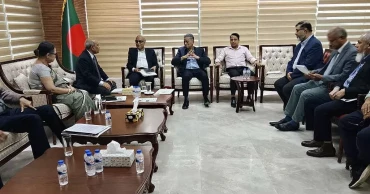
Finance Minister Amir Khosru Mahmud Chowdhury on Thursday expressed confidence that the National Board of Revenue (NBR) will be able to achieve its revenue collection target of Tk 6,04,000 crore set for the 2026-27 fiscal year.
"All the work of NBR is progressing well. Everyone here is working with enthusiasm. We hope there will be no difficulty in meeting the revenue collection target," he said while talking to reporters after separate meetings with the leaders of the Bangladesh Textile Mills Association (BTMA) and the Saudi Arabia-Bangladesh Chamber at the NBR office in Agargaon.
Responding to a query from journalists, the minister said it will be up to the people of the country to judge how the new fiscal year's budget has turned out, adding that the way NBR is functioning, revenue collection this time will not be difficult.
Referring to discussions with businesspeople on industrial development, he said the government will continue holding regular discussions with entrepreneurs to strengthen the country's industrial sector. "The economy cannot be strong unless industries perform well. That is why industry-related problems are being identified and resolved in phases."
On the meeting with BTMA, Khosru said the association raised various problems and demands, some of which were resolved during the discussion itself, while the rest will be considered by the government.
Regarding the Saudi-Bangladesh Chamber meeting, he said efforts will begin, through the chamber, to train unskilled Bangladeshi workers in Saudi Arabia, adding that discussions were also held on what financial support the Bangladesh government could extend to Bangladeshi businesses operating there.
On the country's future economic outlook, the minister said future growth and employment will largely depend on the industrial sector, stressing the need for continued dialogue with businesspeople to address their concerns and work toward solutions.
25 days ago
BSEC to permanently halt trading of closed companies: BSEC Chairman
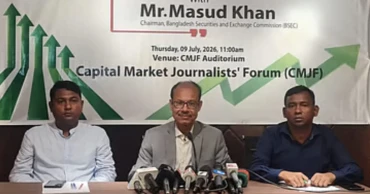
The Bangladesh Securities and Exchange Commission (BSEC) will take steps to permanently halt the trading of shares belonging to companies whose production or business operations have been shut down for a long time, BSEC Chairman Masud Khan announced today (Thursday).
"In no mature stock market around the world do shares of closed companies trade abnormally like they do in our country. Therefore, necessary measures will be taken to stop the trading of such companies' shares in the interest of investors," Masud Khan said.
The BSEC chief made these remarks while speaking as the chief guest at the "CMJF Talk," an event organized by the Capital Market Journalists' Forum (CMJF) at its office in the capital's Bijoynagar on Thursday. CMJF President Monir Hossain and General Secretary Ahsan Habib Russell, among others, were present at the event.
Highlighting regulatory updates, the BSEC Chairman noted that the Dhaka Stock Exchange (DSE) serves as the primary regulator for market monitoring.
However, previously, even if there was an abnormal fluctuation in share prices, the DSE had to wait for BSEC approval before taking any action, allowing irregularities to continue in the interim.
To change this dynamic, the DSE has now been granted the authority to take immediate, real-time action against market anomalies. Furthermore, the power to determine and adjust circuit breakers has also been handed over to the stock exchanges. "Such regulations are critically important for the market's greater interest," the Chairman added.
Masud Khan was appointed as the new chairman of the capital market regulator on June 4. He has stated his objective is to modernise the capital market, vowing to reduce bureaucratic hurdles and swiftly address market manipulation.
Reflecting on his appointment, Masud Khan admitted his initial hesitation to take up the mantle at the regulatory body. This is an institution where almost everyone who has joined has faced criticism in one way or another, he acknowledged.
“That is why I was initially reluctant to take up the responsibility. However, when I saw the government’s sincerity regarding stock market reforms and was assured of full independence, I decided to accept the role after consulting my family," he said.
Drawing from his extensive experience in multinational corporations, Khan emphasized a plan-driven management approach. "We spend 80 percent of our time planning and 20 percent on implementation. Before joining BSEC, I spent three months studying and planning for the country's stock market," he disclosed.
Identifying key growth areas, the BSEC Chairman stressed that the mutual fund sector will be prioritized to deepen the market. He noted that market depth cannot increase unless the mutual fund segment expands.
Acknowledging that the majority of general investors lack the technical capacity to analyze and select fundamentally strong companies, Masud Khan announced that BSEC is taking steps to introduce a "Financial Advisor" certification program in Bangladesh, in alignment with international best practices.
25 days ago
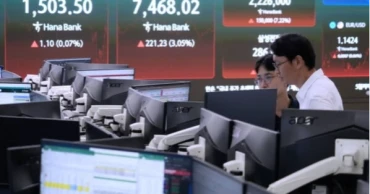
Asian stocks mixed, oil prices fall as Iran-US tensions intensify
Asian stock markets showed mixed performance on Thursday, while oil prices fell as tensions in the Middle East deepened following fresh military strikes by Iran and the United States.
US stock futures moved higher.
The US carried out additional airstrikes on Iran, while Iran responded by launching attacks targeting Bahrain, Kuwait and Qatar. The latest escalation came a day after US President Donald Trump declared that the temporary ceasefire between the two sides was "over."
Despite the renewed fighting, efforts to revive an interim agreement aimed at ending the conflict were continuing through high-level diplomatic talks, according to a regional intelligence official involved in the mediation process who spoke anonymously because of the sensitive nature of the negotiations.
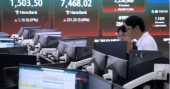
Japan's Nikkei 225 index rebounded, rising 1.4 percent to 67,743.85 after earlier losses this week, supported mainly by technology stocks. Chip equipment maker Tokyo Electron jumped 5.5 percent, while AI-focused investment firm SoftBank Group slipped 0.1 percent.
South Korea's Kospi index gained 0.6 percent to 7,291.91 after fluctuating during the session. The index had dropped 5.4 percent on Wednesday. Samsung Electronics added 0.2 percent, while memory chip manufacturer SK Hynix surged 5.3 percent.
In China, the Shanghai Composite Index climbed 1.7 percent to 4,036.59, even after data showed producer prices rose 4.1 percent in June from a year earlier, compared with a 3.9 percent increase in May. Some economists linked the faster inflation to higher costs resulting from the Iran conflict.
Hong Kong's Hang Seng Index fell 0.7 percent to 24,027.97. Apple supplier Luxshare lost 2.5 percent during its Hong Kong market debut, while Chinese artificial intelligence company Zhipu, also known as Z.ai, jumped 9.3 percent after announcing plans to raise about $4 billion through a share sale.
Australia's S&P/ASX 200 slipped 0.3 percent to 8,762.50. Taiwan's Taiex fell 0.8 percent, while India's Sensex advanced 0.7 percent.
Oil prices eased after rising sharply the previous day. Brent crude, the international benchmark, fell $1 to $77 a barrel after briefly climbing above $80 on Wednesday. Before the Iran conflict began, Brent crude had been trading near $72 a barrel. Earlier hopes for an interim peace deal had briefly pushed prices back to pre-war levels.
US benchmark crude oil also declined, falling 83 cents to $72.69 a barrel.
On Wall Street, the S&P 500 closed 0.3 percent lower at 7,482.71 on Wednesday after dropping as much as 1.1 percent following Trump's remarks on the ceasefire.
The Dow Jones Industrial Average fell 1.1 percent to 52,348.39, while the technology-heavy Nasdaq Composite edged up 0.2 percent to 25,870.65 after recovering from earlier losses.
Broadcom shares rose 4.8 percent after Apple announced a multi-year partnership with the US chipmaker.
In currency trading, the US dollar slipped to 162.37 Japanese yen from 162.59 yen, while the euro strengthened to $1.1438 from $1.1417.
25 days ago

BRAC Enterprises opens Greenpak factory for eco-friendly packaging solutions
BRAC Enterprises has opened its Greenpak factory in the Tongi Industrial Area of Gazipur, marking a significant step towards advancing environment-friendly and sustainable packaging solutions in Bangladesh.
The facility, which was inaugurated on Tuesday, has the capacity to produce 300–350 tonnes of eco-friendly, biodegradable packaging annually. Unlike conventional plastic, the biodegradable products manufactured at the factory naturally decompose within six months.
BRAC Bank celebrates silver jubilee with exclusive offers for customers
The Greenpak factory was formally inaugurated by Tamara Hasan Abed, managing director of BRAC Enterprises.
At the event, it was shared that the Greenpak factory is currently producing between 12 and 15 tonnes of eco-friendly packaging each month. Once operating at full capacity, the facility will be able to produce 300-350 tonnes annually.
This production capacity will replace an equivalent volume of conventional plastic packaging each year, significantly reducing the amount of plastic waste entering the environment.
The event also highlighted the growing global challenge of plastic pollution. More than 400 million tonnes of plastic are produced worldwide each year, around 40 per cent of which is used for packaging.
While conventional plastic can take between 200 and 500 years to decompose, Greenpak's biodegradable products naturally break down within just six months, making them an effective and sustainable alternative to conventional plastic packaging.
26 days ago
Bangladesh's stock of FDI close to touching $20 billion
Bangladesh’s foreign direct investment (FDI) landscape registered a powerful rebound in 2025, with inflows scaling a multi-year high of US$ 1.78 billion, according to the UNCTAD World Investment Report 2026.
The report also highlights that infrastructural developments, and the expansion of the manufacturing sector, Bangladesh’s FDI figure skyrocketed to $ 19.63 billion in 2025 from $2.16 billion in 2000—reflecting a massive expansion in foreign asset accumulation.
The report shows a substantial year-on-year jump, positive policy liberalizations, and growing long-term investment stocks, positioning Bangladesh as a top destination for greenfield ventures among Least Developed Countries (LDCs).
The core highlight of the UNCTAD report is the phenomenal growth of Bangladesh's long-term investment ecosystem over the last 25 years.
Outward Investment Footprint: While remaining comparatively modest, Bangladesh’s outward FDI stock (investments made by domestic companies abroad) also saw progressive movement. It rose from just $ 68 million in 2000 to $ 314 million by 2025, showing a slow but steady integration of local businesses into global value chains.
2025 Inflows Hit 5-Year High
In the short-term window, the country saw a notable recovery following recent global shocks. FDI inflows to Bangladesh reached $ 1.78 billion in 2025, marking a sharp year-on-year increase from the US$ 1.23 billion recorded in 2024. The 2025 figure represents the single highest annual influx of foreign capital during the 2020–2025 monitoring period.
Furthermore, UNCTAD pointed out that greenfield project activity—the setup of entirely new corporate and industrial operations—remains heavily concentrated in Bangladesh, cementing its status as a preferred hub among LDCs even as foreign investments shrink globally.
This continuous rise in investment is heavily tied to recent policy liberalizations. In 2025, Dhaka enacted critical reforms aimed at easing the investment climate, most notably through the relaxation of foreign exchange restrictions to assist multinational operations.
Additionally, Bangladesh became one of a select group of nations to conclude an ‘Agreement on Reciprocal Trade’ with the United States.
Under this framework, Bangladesh has agreed to consider the establishment of an investment screening mechanism, while paving the way for advanced bilateral cooperation, information sharing, and mutual economic security regarding inbound capital.
Emerging Legal Challenges:
Despite the historic upswing, the UNCTAD report flags newly emerging legal complexities. In 2025, Bangladesh was identified as one of seven LDCs—alongside nations like Angola, Myanmar, and Senegal—to face new Investor–State Dispute Settlement (ISDS) legal cases brought forward by foreign investors. Managing these legal arbitrations transparently will be crucial for the country as it aims to protect its hard-earned reputation as a safe, lucrative destination for international capital in the decades ahead.
26 days ago
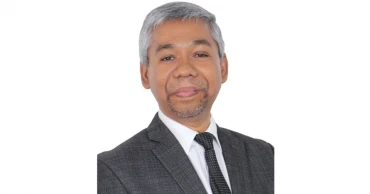
Abdur Rahman likely to be made Bangladesh's next alternate executive director at WB
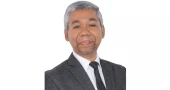
Abdur Rahman Khan, immediate past chairman of the National Revenue Board (NBR), is likely to become the next alternate executive director representing Bangladesh at the World Bank headquarters in Washington, DC.
The official process is currently underway, and the official gazette notification is likely to be issued soon, according to an official of the Ministry of Finance.
Abdur Rahman will succeed Sharifa Khan, the former senior secretary of the Economic Relations Division (ERD), who is currently serving in the position.
Sharifa Khan was appointed to the post for a three-year term in March 2024.
A highly accomplished civil servant, Abdur Rahman recently concluded his tenure as the head of the country's revenue administration. Known for his extensive experience in financial administration, public policy, and macroeconomic management, his transition to the global financial institution is seen as a strategic move to strengthen Bangladesh's representation and partnership with international lending bodies.
As the alternate executive director, he will work out of the World Bank's main headquarters, looking after the interests of the constituency that includes Bangladesh. The position is vital for steering multilateral development funds, policy dialogues, and structural assistance programs tailored to Bangladesh's macroeconomic goals.
26 days ago
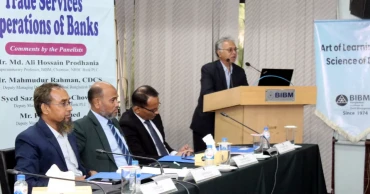
Trade finance NPLs hit up to 80 percent at vulnerable banks: BIBM study
Modernizing trade finance operations and improving asset quality are essential to ensuring sustainable banking in Bangladesh, experts said at a workshop held at Bangladesh Institute of Bank Management (BIBM) on Wednesday.
According to the BIBM study, the NPL rate specifically related to trade finance in troubled banks currently hovers between 40 and 50 percent. More alarmingly, in banks that already suffer from high overall NPLs alongside substantial trade exposure, the trade-specific default loan rate exceeds 80 percent.
Islami Bank customer forum announces fresh protests demanding restoration of previous ownership
Senior bankers, policymakers, regulatory officials, and researchers noted that trade finance portfolios face visible asset-quality pressures, with specific segments experiencing alarmingly high non-performing loans (NPLs).
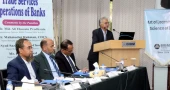
The observations were made during a review workshop titled "Trade Services Operations of Banks" organized by the BIBM at its campus in Mirpur, Dhaka.
Presenting the keynote paper on behalf of the research team, Dr. Shah Md. Ahsan Habib, Professor (Selection Grade) at BIBM, revealed that the pressure on asset quality in trade-related loan portfolios is now starkly visible, particularly among banks with significant trade exposures.
The study highlighted that the forced conversion of non-funded liabilities into funded loans is a primary driver behind this spike in trade defaults. This trend is most prominent in import finances involving capital machinery, raw materials like cotton, essential commodities such as sugar and fertilizer, fuel, and scrap vessel imports.
The research paper also identified critical structural vulnerabilities in export financing. A survey conducted among industry professionals showed an overwhelming consensus among bankers that the misuse of back-to-back Letters of Credit (LCs) without legally enforceable sales contracts is directly fueling default loans in export finance.
"Back-to-back LCs are meant to secure raw materials against confirmed export orders," the study noted.
"However, if the underlying contract is weak, disputed, or legally unenforceable, the entire financing process falls into jeopardy. When export proceeds are delayed or unrealized, the self-liquidating nature of trade finance breaks down, turning these exposures into forced loans and multi-folding the credit risk for banks."
Presiding over the workshop, BIBM Director General Dr. Md. Ezazul Islam stressed the urgent need to establish a modern legal and digital infrastructure for electronic trade documents to facilitate faster, secure, and paperless international trade.
He also called for more stringent measures to combat trade-based money laundering (TBML) and terrorism financing without compromising the quality of customer service.
"We need to expand trade finance opportunities for small and medium enterprises (SMEs) through innovative financial products and risk-sharing mechanisms," Dr. Islam said.
He further emphasized the need to strengthen product-specific data collection, risk management, and rigorous asset-quality monitoring through closer coordination among Bangladesh Bank, scheduled banks, customs authorities, and all relevant stakeholders.
The comprehensive research paper was jointly prepared by a team comprising BIBM faculty members Dr. Shah Md. Ahsan Habib, Tofayel Ahmed, Rahat Banu, and Rajib Kumar Das, alongside Mohammad Arafat Ali, Additional Director of the Foreign Exchange Policy Department-1 at Bangladesh Bank, and ATM Nesarul Hoque, Executive Vice President of Mutual Trust Bank PLC.
The workshop also featured expert discussions from Md. Ali Hossain Pradhania, Supernumerary Professor at BIBM and Chairman of NRBC Bank PLC; Mahmudur Rahman, Deputy Managing Director of Islamic Bank Bangladesh PLC; Syed Sajjad Haider Chowdhury, Deputy Managing Director of Prime Bank PLC; and Faruk Ahmed, Deputy Managing Director of City Bank PLC.
26 days ago
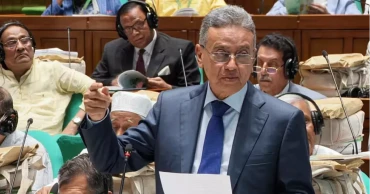
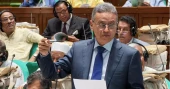
No haircut, depositors of five troubled banks to get back full money with interest: Khosru
Finance Minister Amir Khosru Mahmud Chowdhury on Wednesday assured that depositors of the country's troubled five banks will receive their money back in full, along with interest, and categorically ruled out any "haircut" on deposits.
Responding to a notice from BNP reserved-seat MP Rahana Akter Ranu, he acknowledged the hardship faced by millions of depositors, describing the banking crisis as "a heartbreaking situation" inherited by the government.
"I have already said in Parliament that all depositors will get their deposits back with interest, Insha-Allah. However, they will have to be a little patient," the minister said.
He said the affected banks are operating at heavy losses, making it difficult to repay depositors immediately while also paying interest. "These banks are all running at a loss, and those losses are increasing every day. You have to understand how difficult it is for a loss-making bank that cannot even return deposits to also pay interest. Even so, an elected government is committed to protecting the interests of the people," he told the House.
Khosru gave an unequivocal assurance that depositors will not face any reduction in the value of their savings. "There will be no haircut. The question of a haircut does not arise," he said, responding to concerns raised by the BNP lawmaker.
He acknowledged the severe human suffering caused by the crisis, noting that many depositors are unable to pay for medical treatment or arrange family necessities because their savings remain inaccessible.
"I know people cannot afford to wait. Some are dying without treatment, while others cannot arrange their daughters' marriages. I face these problems every day," the minister said.
He, however, cautioned that resolving the crisis will require a medium- to long-term approach. "It will take some time, but I can assure you that depositors will receive their money back with interest," he added.
Khosru outlined the government's banking sector recovery strategy, saying a comprehensive resolution framework has been established under the Bank Resolution Act, 2026 to restore stability in the financial sector.
Under the framework, five troubled Islamic banks – Export Import Bank of Bangladesh (EXIM Bank), First Security Islami Bank, Global Islami Bank, Social Islami Bank and Union Bank – have been merged into a new entity named Combined Islami Bank PLC, which he described as the most significant resolution measure undertaken so far.
The minister said the merger has protected the interests and claims of all depositors of the five banks.
He also noted that the Deposit Protection Act, 2026 has doubled the insured deposit limit from Tk 100,000 to Tk 200,000 and extended deposit protection to finance companies, which were previously outside the scheme.
According to Khosru, depositors of banks under resolution are already receiving their money in phases in line with Bangladesh Bank's resolution scheme.
He said special forensic audits are underway to identify those responsible for loan irregularities in the five banks, with asset recovery measures to follow based on the audit findings.
The minister added that Section 57 of the Bank Resolution Act empowers Bangladesh Bank to seize and control assets, income and property acquired through misappropriated bank funds, enabling authorities to recover money through asset sales and auctions.
He also said the government has launched civil as well as criminal proceedings to recover defaulted loans and repatriate funds allegedly laundered abroad.
Around 30 affected banks have initiated the process of appointing nine international legal firms on a "no win, no fee" basis after signing non-disclosure agreements to pursue recovery of overseas assets, Khosru said.
Among 11 priority cases, civil proceedings have already begun against business groups and individuals, including S Alam, Beximco, Sikder Group, Nassa Group and Orient Group, he added.
During the debate, Rahana Akter Ranu welcomed the government's commitment but expressed concern that auctioning domestic assets alone will not be sufficient, claiming those responsible had siphoned off amounts many times greater than the value of their assets in Bangladesh.
She also urged the government to formally withdraw any proposal for a "haircut" on deposits, arguing that the burden of bank fraud should not fall on innocent depositors who had trusted the banking system with their savings.
The BNP lawmaker referred to demonstrations by depositors outside the finance minister's residence in Chattogram and said about 75 lakh customers were anxiously waiting for the return of their money.
She demanded that those responsible for looting banks be brought back to Bangladesh and compelled to repay the stolen funds.
26 days ago
Oil prices jump after US strikes Iran, wiping out earlier decline
Oil prices climbed sharply on Wednesday after fresh military action by the United States against Iran reignited concerns over supply disruptions, erasing the recent decline that had returned crude prices to pre-conflict levels.
Brent crude, the global benchmark, gained as much as 3 percent, with September futures reaching $76.07 a barrel by 04:00 GMT, their highest level since June 23.
The rally followed US airstrikes on Iran and Washington's decision to revoke a temporary sanctions waiver that had allowed limited Iranian oil sales. The moves came after three commercial vessels were attacked in the Strait of Hormuz.
The United States, Qatar and Saudi Arabia accused Iran of carrying out the attacks.
US Central Command said on X that it had begun “launching a series of powerful strikes against Iran to impose heavy costs for targeting and attacking commercial shipping crewed by innocent civilians in an international waterway”.
Although Tehran has denied direct involvement in the vessel attacks, it has repeatedly warned ships against using routes through the strategic waterway that it has not approved.
Iranian Deputy Foreign Minister Kazem Gharibabadi said Tehran would take “decisive actions to safeguard its national interests and security” following the US decision to cancel the sanctions waiver, calling it a “blatant violation” of the memorandum of understanding (MoU) signed between Washington and Tehran on June 17.
According to Sycamore, the longstanding disagreement between Washington and Tehran over whether the Strait of Hormuz is an international waterway or partly within Iran's territorial waters remains unresolved.
“It remains to be seen whether this morning’s US strikes bring a swift end to the latest escalation or Iran elects to continue flexing its leverage over the Strait with actions that fall short of triggering a broader conflict,” Sycamore said in a note to clients on Wednesday.
“At the very least, it will keep markets on edge and does suggest crude oil prices have based for now.”
The military action followed a separate announcement by the US Treasury Department late Tuesday ending its 60-day waiver on sanctions related to Iranian oil exports.
Last month, the Treasury had permitted Iranian oil sales until August 21 as part of wider negotiations with Tehran. However, under the new directive, all such transactions must cease after 12:01am EDT (04:01 GMT) on July 17, according to a statement posted on the department's website.
The order also cancels authorisation for any new transactions, including oil purchases or cargo loading, after Tuesday.
Saul Kavonic, head of energy research at MST Marquee, said oil prices are likely to remain elevated as security risks continue in the Strait of Hormuz and emergency oil stockpiles begin to diminish.
“Iran fully intends to cement its control over the Strait of Hormuz in the coming weeks, which is unacceptable to the US, many Gulf states and global customers, and could result in passage through the strait remaining below 50 percent of pre-war levels for many months with periodic flare-ups in hostilities,” Kavonic told Al Jazeera.
26 days ago