Business
JICA chief completes tour of Bangladesh, reaffirms commitment to sustainable and inclusive development
President of the Japan International Cooperation Agency (JICA), Dr Tanaka Akihiko, has concluded a five-day official visit to Bangladesh, reaffirming the enduring Japan-Bangladesh Strategic Partnership and JICA's commitment to supporting the country's sustainable and inclusive development.
During his July 1-5 visit, Dr Tanaka attended the 10th memorial ceremony honouring the seven Japanese nationals killed in the 2016 Holey Artisan Bakery terrorist attack, paying tribute to the victims and reaffirming the shared commitment of Japan and Bangladesh to peace, resilience and cooperation.
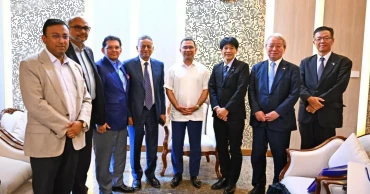
Dr Tanaka also held a high-level meeting with Chief Adviser Tarique Rahman, during which both sides reaffirmed the strength of bilateral ties and discussed ongoing and future areas of cooperation.
According to JICA, the discussions focused on major Japanese-supported development projects, including the Dhaka Metro Rail, the expansion of Hazrat Shahjalal International Airport (HSIA), the Moheshkhali-Matarbari Integrated Infrastructure Development Initiative (MIDI) and the Bangladesh Special Economic Zone (BSEZ).
They also highlighted the significance of Japan's emergency support package of JPY 50 billion under the POWERR Asia initiative to strengthen regional energy security.
Throughout the visit, Dr Tanaka met senior members of the Bangladesh government, including Foreign Minister Dr Khalilur Rahman, State Minister for Foreign Affairs Shama Obaed Islam, Local Government, Rural Development and Cooperatives Minister Mirza Fakhrul Islam Alamgir, Finance and Planning Minister Amir Khosru Mahmud Chowdhury, Power, Energy and Mineral Resources Minister Iqbal Hassan Mahmood, and Roads, Transport and Bridges Minister Shaikh Rabiul Alam, who also oversees the shipping and railways portfolios.
The meetings reaffirmed shared priorities in infrastructure, industrial development, capacity building and regional connectivity, JICA said.
As part of his visit, Dr Tanaka toured several major projects supported by JICA and the Government of Japan.
On July 1, he visited Terminal 3 of Hazrat Shahjalal International Airport, one of Bangladesh's flagship infrastructure projects financed through JICA's concessional loans. Once operational, the terminal is expected to significantly improve passenger services while boosting trade, tourism and investment.
On July 3, he visited key sites under the Moheshkhali-Matarbari Integrated Infrastructure Development Initiative, including the power plant and deep seaport, which are expected to strengthen Bangladesh's energy security and trade connectivity. JICA said the projects also align with Japan's vision for an updated Free and Open Indo-Pacific.
During a visit to Cox's Bazar on July 4, Dr Tanaka observed humanitarian operations in the Rohingya camps, visiting a World Food Programme (WFP) e-voucher outlet, a UNHCR vocational training centre, an International Organization for Migration (IOM) clinic and JICA-supported livelihood initiatives. He also met the Refugee Relief and Repatriation Commissioner (RRRC) to discuss the humanitarian situation and ongoing assistance.
The same day, he visited the construction site of the Fish Landing Centre in Cox's Bazar, being built with JICA grant assistance to improve post-harvest handling and quality management. He also toured the Fisheries Livelihood Enhancement Project along the Bay of Bengal coast, where JICA is supporting seafood processing technologies, alternative income-generating activities and nutrition awareness programmes.
On the final day of his visit, Dr Tanaka visited a JICA-supported solid waste management initiative and observed the Japanese private-sector technological solution, J-Drum, being introduced for Dhaka North City Corporation (DNCC), highlighting JICA's broad-based development cooperation in Bangladesh.
Concluding the visit, Dr Tanaka reaffirmed JICA's long-term commitment to Bangladesh's development.
"Our partnership with Bangladesh is very strong. We would like to continue this course in the years ahead," he said.
28 days ago
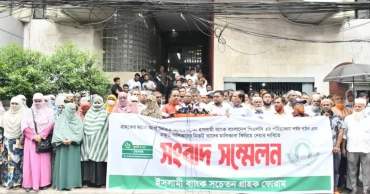
Islami Bank customer forum announces fresh protests demanding restoration of previous ownership
The 'Islami Bank Sachetan Grahak Forum' (Islami Bank Conscious Customers Forum) on Monday announced a fresh series of protest programs demanding the restoration of the bank's ownership to its original owners, and the formation of a new board of directors comprising honest and professional individuals.
The forum also demanded the recovery of looted funds from Islami Bank Bangladesh PLC, trial of those responsible, and full security for depositors' money.
Leaders of the forum raised the demands at a press conference held at the Islami Bank Tower premises in the capital's Dilkusha on Monday afternoon, where the forum's convener, Professor Nurunnabi Manik, read out a written statement.
Professor Manik highlighted that Islami Bank is not just a financial institution but the country’s first Shariah-based bank and a symbol of trust for millions of customers. "It handles a major portion of the country's remittance inflow, SME financing, and public savings. Therefore, its stability is vital for the national economy," he said.
He noted that since May 24, customers have been continuously protesting through human chains, memorandums, press conferences, and meetings with the Bangladesh Bank Governor to ensure good governance and depositor security. The forum also reiterated its demand to reinstate former Managing Director Omar Faruk Khan.
While acknowledging that Bangladesh Bank has removed former Chairman Khurshid Alam and that central bank liquidity support has brought some relief to depositors, the forum leaders noted that structural changes are still lagging.
They highlighted that a previous announcement to repeal Section 18/A of the Bank Company Act has not yet been formally codified into law.
The customer forum outlined a 7-point charter of demands, which include forming an honest and professional board, returning ownership to genuine stakeholders, setting up a special tribunal to try bank looters, recovering stolen assets, an confiscating the wealth of the corrupt.
To press home their demands, the forum announced a fresh agitation schedule:
July 9: A protest march from Islami Bank Tower to the National Press Club.
July 14: Sit-in programs in front of various bank branches across district towns.
July 18: A grand rally of depositors in front of the National Museum in the capital's Shahbagh.
Forum Member Secretary Motasim Billah and a large number of bank customers were present at the press conference.
28 days ago
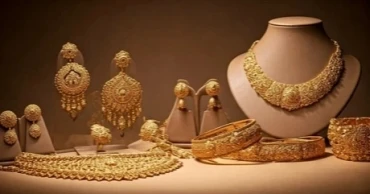
Gold prices drop as Bajus revises rates
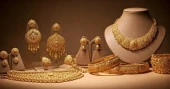
The Bangladesh Jewellers Association on Monday reduced the price of 22-carat gold by Tk 3,266 per bhori (11.664 grams), following a decline in the local market price of pure gold.
In a statement issued on Monday, BAJUS said the new prices, inclusive of VAT, took effect from 12:15pm after reviewing the overall market situation and the fall in the price of tejabi gold (pure gold) in the domestic market.
Under the revised rates, the price of 22-carat gold has been fixed at Tk 225,290 per bhori, including VAT.
The price of 21-carat gold has been set at Tk 215,142 per bhori, while 18-carat gold will cost Tk 184,758 per bhori. Gold produced under the traditional method has been priced at Tk 150,932 per bhori.
BAJUS said the new rates will remain effective at all jewellery outlets across the country until further notice. However, making charges will vary depending on the design of the jewellery.
The association also said customers cannot be charged VAT separately, as VAT is already included in the retail price of gold and silver ornaments.
Existing BAJUS rules regarding jewellery exchange and buyback, excluding specified VAT, making charges and the value of gemstones, will remain unchanged.
The latest revision comes just three days after BAJUS raised gold prices on July 3, increasing the price of 22-carat gold by Tk 4,374 per bhori to Tk 228,556, including VAT.
With the latest adjustment, gold prices have been revised 87 times in Bangladesh so far in 2026. Of those, prices were increased on 43 occasions, reduced 43 times, while one adjustment was made to reflect changes in VAT.
Despite the reduction in gold prices, silver prices remain unchanged.
Currently, 22-carat silver is selling at Tk 4,899 per bhori, while 21-carat silver is priced at Tk 4,666 per bhori. The price of 18-carat silver stands at Tk 4,024 per bhori, and traditionally manufactured silver is selling at Tk 3,033 per bhori.
28 days ago
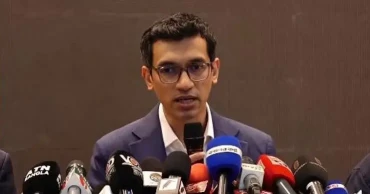
BIDA chief invites local and foreign investments to revive state-owned enterprises
Chowdhury Ashik Mahmud Bin Harun, Executive Chairman of the Bangladesh Investment Development Authority (BIDA), on Sunday invited both local and foreign investors to come forward to revive state-owned industrial enterprises through private investment.
Stressing that the private sector is best suited for running commercial entities, he noted that the government's primary role should be to facilitate private investment rather than competing with it.
In a post shared on his official LinkedIn account on Sunday, the BIDA chief highlighted that this initiative would provide investors with quick business expansion opportunities via ready infrastructure or "plug-and-play" facilities. At the same time, it will relieve fiscal pressure on the government and generate new employment opportunities, making it a win-win scenario for both parties.
According to the BIDA Chairman, a total of 44 investable opportunities has already been identified across various state agencies. These opportunities span sectors including steel, textiles, chemicals, sugar, food, and jute, covering an aggregate land area of over 10,000 acres.
Ashik emphasized that these industrial assets are strategically located within critical industrial zones across the country rather than being isolated properties. In most cases, these sites already boast essential infrastructure—such as electricity, gas, and transportation links—alongside an established industry-oriented workforce and community.
Discussions are currently underway with domestic and international investors regarding the productive reuse of these assets. While some enterprises may be restarted within their original sectors, other assets could be repurposed for new industries aimed at reducing import dependency or boosting export capabilities.
To facilitate this transition, the BIDA Chief assured investors of a transparent framework, fast-tracked approvals, and integrated assistance during the asset acquisition process.
Interested investors can access the comprehensive list and detailed information on the investable assets through the designated online portal.
29 days ago
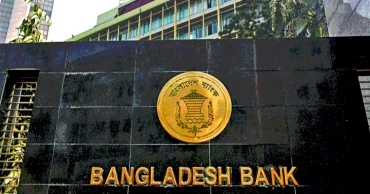
BB issues new directives on appointing audit firms for cash incentives
Bangladesh Bank (BB) on Sunday issued fresh directives regarding the appointment of audit firms to examine applications for alternative cash assistance and export subsidies in customs bonds and duty draw-backs for export-oriented domestic textile and other applicable sectors.
According to a circular issued by the Foreign Exchange Policy Department-1 (FEPD-1) of the central bank, banks can now appoint audit firms to scrutinize cash incentive applications for exports made in FY2026-27, subject to a 'No Objection Certificate' (NOC) from the FEPD-1.
BB announces export incentives for 43 sectors for Fy26-27
The circular, signed by FEPD-1 Director Md. Harun-Ar-Rashid, stated that banks may engage an equal number of audit firms as those currently employed for their regular bank accounting audits.
However, if any bank requires additional audit firms beyond that number, it must submit a formal application to Bangladesh Bank for approval.
The central bank specified that such applications must clearly outline the justification for appointing extra firms, the previous history of those firms working with the bank, the volume of cash assistance/export subsidy cases, and other necessary data.
The central bank noted that all other previous instructions regarding audit procedures—including those detailed in FE Circular Letter No. 10 (dated July 08, 2024) and FE Circular No. 20 (dated December 03, 2023)—will remain unchanged.
All Authorized Dealer (AD) banks have been instructed to immediately inform the relevant stakeholders about the new guidelines.
29 days ago
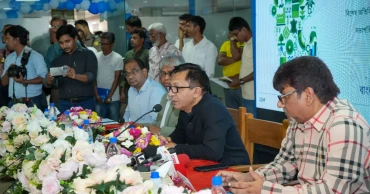
BSCIC firms pledge to raise contribution to at least 60 percent of national economy
Industries Minister Khandaker Abdul Muktadir said on Sunday said the government is working to raise the contribution of the cottage, micro, small and medium enterprise (CMSME) sector to at least 60 percent of the national economy.
He also directed officials of the Bangladesh Small and Cottage Industries Corporation (BSCIC) to submit specific proposals within the next seven days to help accelerate the implementation of ongoing and new industrial projects.
The directives came while addressing a daylong workshop titled "Contribution of BSCIC Industrial Estates to the National Economy and Measures to Overcome Existing Challenges" at the BSCIC headquarters in Tejgaon, Dhaka.
The workshop brought together officials from BSCIC industrial estates across the country to discuss the organisation's achievements over the past 69 years, as well as the challenges and future prospects of the sector.
29 days ago
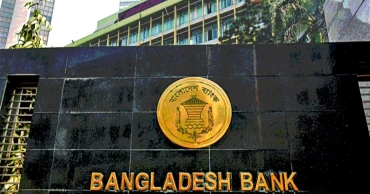
BB announces export incentives for 43 sectors for Fy26-27
Bangladesh Bank (BB) on Sunday announced export incentives and cash assistance rates for 43 sectors for the fiscal year FY2026-2027, aimed at encouraging the export trade.
The new rates will be applicable to products shipped between July 1, 2026, and June 30, 2027, according to a circular issued by the Foreign Exchange Policy Department (FEPD) of the central bank.
Bangla QR records Tk 22.02 crore transactions in 48 hours: Bangladesh Bank
The highest incentives have been allocated for frozen shrimp, furniture, diversified jute products, agro-processed products, potato, leather goods, light engineering products and halal product exports.
According to the circular signed by BB Director Md. Harun-Ar-Rashid, cash assistance applications submitted by exporters must undergo periodic audits by external audit firms in compliance with the central bank’s guidelines.
All other existing conditions regarding foreign exchange circulars will remain effective.
As per the newly issued matrix, the highest incentive rate of 10 percent has been set for several high-priority sectors. These include diversified jute products, leather goods, agricultural and agro-processed products, potatoes, light engineering products, 100 percent halal meat and processed meat products, and accumulator batteries.
Meanwhile, the readymade garments (RMG) and textile sectors will continue to receive tailored assistance.
Alternative cash assistance for the export-oriented domestic textile sector in lieu of customs bond and duty drawback has been fixed at 1.50 percent.
Exporters of textiles to the Eurozone will receive additional special assistance of 0.50 percent.
Small and Medium Enterprises (SMEs) within the export-oriented RMG sector (knitwear, woven, and sweaters) will enjoy an extra benefit of 3.0 percent. Special cash assistance of 0.30 percent has also been designated for the overall RMG sector.
For new products or expansion into new markets (excluding the USA, Canada, EU, and UK), the textile sector will receive a 2.0 percent incentive.
Among other major sectors, an 8.0 percent incentive has been allocated for furniture, carbon made from jute sticks, jute particle boards, seeds of crops and vegetables, agar and attar, and frozen shrimp (with up to 20 percent ice capping).
Software, hardware, and IT-Enabled Services (ITES) exports will receive a 6.0 percent incentive, while individual-level freelancers exporting software and ITES will get 2.50 percent.
Active Pharmaceuticals Ingredients (API) will receive 5.0 percent, and pharmaceutical products will enjoy a 6.0 percent cash incentive.
The circular also specified fixed subsidy rates for companies located in Specialized Zones, including BEZA, BEPZA, and Hi-Tech Parks.
Processing agricultural products under Type-A and Type-B enterprises in these zones will receive a 2.0 percent subsidy, while other designated sectors will receive incentives ranging from 0.30 percent to 2.0 percent.
29 days ago

Bangladesh stocks post solid gains on first trading day of the week
The country's stock markets witnessed a broad-based rally on the first trading day of the week, with share prices of most listed companies rising and overall turnover increasing on both bourses.
At the end of the day's trading on Sunday, the Dhaka Stock Exchange's (DSE) benchmark index DSEX rose 43 points. The Shariah-based index DSES gained 9 points, while the blue-chip index DS30 advanced 29 points.
Of the issues traded, 177 companies saw their share prices rise, 153 declined, and 59 remained unchanged.
Turnover on the DSE stood at Tk 1,530 crore in shares and units. In the block market, shares worth Tk 48 crore of 53 companies changed hands.
Unique Hotel and Resorts PLC topped the gainers' list, posting nearly a 10 percent rise, while Familytex (BD) Limited was the worst performer, losing around 8 percent.
The Chittagong Stock Exchange (CSE) also closed higher, with its overall index CASPI adding 8 points. Of the traded companies, 141 advanced, 96 declined, and 19 remained unchanged.
Total turnover on the CSE stood at Tk 66 crore, up from Tk 60 crore in the previous session.
Phoenix Finance 1st Mutual Fund, Eastern Cables Limited, and IFIL Islamic Mutual Fund-1 led the gainers, each rising about 10 percent, while Meghna Life Insurance PLC was the top loser, shedding nearly 10 percent.
29 days ago
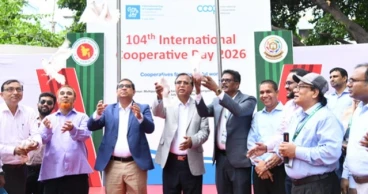
LGRD State Minister calls for promoting export of products made by cooperatives
State Minister for Local Government, Rural Development and Cooperatives, Mir Shahe Alam, MP, has called for effective initiatives to modernise products manufactured by cooperatives and expand their exports to both domestic and international markets.
He made the call while addressing a discussion meeting marking the 104th International Day of Cooperatives, at the Multipurpose Hall of the Department of Cooperatives in Agargaon on Saturday. This year’s theme was “Cooperatives for a Peaceful World.”
He said Bangladesh’s cooperative movement requires improving the quality, efficiency and institutional capacity of existing cooperative societies rather than merely increasing their number.
The programme began with the hoisting of the national flag. The State Minister formally inaugurated the event by releasing balloons and doves, symbols of peace. He also visited exhibition stalls showcasing products made by cooperatives.
During the event, the State Minister held an interactive session with officials of the Department of Cooperatives from divisional, district and upazila levels and was briefed on various field-level challenges. He emphasised greater caution in assigning responsibilities and stressed the importance of placing the right people in the right positions.
He also instructed the authorities to take necessary measures to strengthen district offices removing all bureaucratic blockades.
Mir Shahe Alam said the government of Prime Minister Tarique Rahman attaches special importance to the cooperative sector. He noted that the International Day of Cooperatives is not merely an occasion for celebration but also an opportunity to reaffirm the ideals, values and contributions of the cooperative movement.
Speaking as a special guest, Abdus Salam, President of the Bangladesh National Cooperative Union and Administrator of the Dhaka South City Corporation, said the Department of Cooperatives has made significant contributions over the years to economic inclusion in rural areas, women’s empowerment and employment generation. He said cooperatives have the potential to make an even greater contribution to improving people’s livelihoods and called for the expansion of training programmes, low-interest loans, incentive packages and necessary legal reforms to make the sector more people-friendly.
With registrar and director general of the Department of Cooperatives Md Selim Fakir in the chair, the function was also addressed, among others, by Rural Development and Cooperatives Division secretary Shaukat Rashid Chowdhur, and Additional Registrar of the Department of Cooperatives Md Nabirul Islam.
30 days ago

Gold price raised for 2nd straight day; each bhori now costs Tk 228,556
The Bangladesh Jeweller’s Association (BAJUS) raised the price of gold for the second consecutive day on Friday, pushing up the rate of 22-carat gold by 4,374 per bhori.
The organisation announced the new price through a notice in the morning.
According to the new rate, each bhori (11.664 grams) of 22-carat gold will now cost Tk 228,556 in the domestic market, including VAT.
BAJUS also fixed the price of 21-carat gold at Tk 218,292 per bhori, 18-carat gold at Tk 187,440 per bhori, and traditional gold at Tk 153,148 per bhori.
The association last revised the gold price on July 2, raising it by Tk 2,216 per bhori to set the price of 22-carat gold at Tk 224,182, including VAT.
It said the new price will remain effective at all jewellery outlets across the country until further notice, though making charges will apply depending on the design of the ornaments.
Since VAT is included in the sale price of gold and silver ornaments, jewellers cannot charge VAT separately from customers. The association's existing rules will continue to be applicable to exchange and purchase of ornaments, excluding specified VAT, making charges and the cost of stones.
So far, the price of gold has been adjusted 86 times in the domestic market this year, with 43 hikes, 42 cuts, and one VAT adjustment.
Alongside gold, the price of silver has also been increased. The price of 22-carat silver has been set at Tk 4,899 per bhori, up by Tk 117.
The price of 21-carat silver has been fixed at Tk 4,666 per bhori, 18-carat at Tk 4,024 per bhori, and traditional silver at Tk 3,033 per bhori.
The price of silver has been adjusted 53 times so far this year, with 27 hikes and 26 cuts.
1 month ago