Business
World shares rise as Dow hits fresh record and AI stocks recover
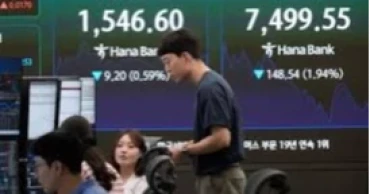
Stock markets across Europe and Asia moved higher on Friday after the Dow Jones Industrial Average closed at another record high, helped by gains in several major artificial intelligence (AI)-related companies, although some chipmakers continued to face selling pressure.
Futures for the S&P 500 rose 0.4%, while Dow futures gained 0.2%. US financial markets remained closed on Friday for the Independence Day holiday.
In early European trading, Germany's DAX climbed 0.7% to 52,643.30, France's CAC 40 added 0.3% to 8,497.30, and Britain's FTSE 100 advanced 0.4% to 10,689.77.
Asian markets also posted solid gains. South Korea's Kospi rebounded 5.8% to 8,088.34 after falling nearly 8% a day earlier. Samsung Electronics rose 8.2%, while chipmaker SK Hynix jumped 10.9%.
Japan's Nikkei 225 gained 1.5% to 69,744.07. Chip equipment maker Tokyo Electron edged up 0.4%, while memory chip producer Kioxia surged 9.2%.
Hong Kong's Hang Seng index rose 1.3% to 23,345.28, while China's Shanghai Composite added 0.4% to 4,043.64. Taiwan's Taiex increased 0.1%, India's Sensex gained 0.7%, and Australia's S&P/ASX 200 advanced 1.4% to 8,844.40.
Stephen Innes of SPI Asset Management said Asian markets regained some stability after two difficult sessions led by losses in technology stocks, with South Korea staging a strong rebound.
On Thursday, the Dow Jones Industrial Average rose 1.1% to a record close of 52,900.07.
The broader S&P 500 ended almost unchanged, adding less than 0.1% to close at 7,483.24, even though about 70% of its listed companies gained. The tech-heavy Nasdaq Composite fell 0.8% to 25,382.67, weighed down by losses in major chipmakers.
Investor sentiment was supported by a US jobs report showing employers added 57,000 jobs in June, below economists' forecast of 100,000 and slower than May's hiring pace.
The weaker-than-expected jobs data eased concerns that inflation could remain high. Oil prices, which had surged during the Iran conflict, have now fallen below pre-war levels, raising hopes that inflation may cool in the coming months.
If inflation continues to slow, the US Federal Reserve may face less pressure to raise interest rates repeatedly this year. Lower interest rates generally support economic growth by reducing borrowing costs for households and businesses and often boost stock prices.
Cryptocurrency-related shares also advanced as bitcoin recovered after recent losses. Robinhood Markets gained 3.8% and Coinbase Global rose 3.9%. Bitcoin was up 0.5% early Friday after climbing about 2% the previous day.
Despite the broader market gains, several leading AI-related chip companies remained under pressure as investors questioned whether their rapid share price increases and heavy spending on AI infrastructure would generate the expected profits.
Micron Technology reversed early gains to end down 5.5%, following a 10.6% drop the previous day. Nvidia fell 1.4%, while Lam Research slid 10.2%, making them among the biggest drags on the S&P 500. Nvidia remains the largest company in the index with a market value of nearly $4.7 trillion.
In commodity trading, Brent crude oil rose 0.6% to $72.26 per barrel, while US benchmark crude gained 0.5% to $69.05 per barrel.
In currency markets, the US dollar slipped to 160.97 Japanese yen from 161.11 yen, while the euro strengthened to $1.1450 from $1.1431.
1 month ago

Bangla QR records Tk 22.02 crore transactions in 48 hours: Bangladesh Bank
Highlighting a significant momentum in the country’s push toward a cashless society, the nationwide mandatory rollout of the unified "Bangla QR" payment standard recorded 77,165 transactions amounting to Tk22.02 crore over a span of just two days, central bank data showed.
The transactions were registered on June 30 and July 1, 2026, marking the official eve and day of the central bank's deadline for financial institutions to fully transition to the standardized system.
According to Bangladesh Bank, the introduction of the standardized, interoperable Quick Response (QR) code aims to fundamentally restructure retail payment infrastructure, phase out cash dependencies, and foster a more efficient digital financial ecosystem.
Unified Payment Standard for Small and Large Merchants:
Developed by the central bank under the National Payment Switch Bangladesh (NPSB) platform, Bangla QR serves as a single "one country, one QR" payment mechanism. The primary technological advantage is its low-cost infrastructure. Instead of expensive Point of Sale (POS) card terminals, merchants—ranging from large retail malls to roadside micro-vendors and street hawkers—only require a printed QR code sticker to receive digital payments.
Previously, merchants had to display multiple QR codes issued by individual banks or Mobile Financial Service (MFS) providers. The new mandatory guidelines ensure complete interoperability, allowing a customer using any participating bank app or MFS wallet (such as bKash or Nagad) to scan a single universal code.
Cost Caps and Consumer Security:
To further incentivize the digital transition and promote affordable access, Bangladesh Bank issued a fresh circular on July 1, capping the maximum Merchant Discount Rate (MDR) at percent (including VAT) for transactions channelled via Bangla QR. This fixed rate applies across bank accounts, debit, credit, or prepaid cards, and MFS platforms.
Addressing social media speculation regarding additional operational expenses, Bangladesh Bank spokesperson Arif Hossain Khan clarified that the payment service is entirely free for consumers.
"Consumers can make purchases through Bangla QR without paying any charge. The transaction fee applies strictly to merchants and cannot be legally passed down to the customers," the spokesperson stated, adding that asking buyers to pay extra violates official payment guidelines.
The central bank expects that moving retail trade into recorded digital channels will gradually reduce the informal footprint of the economy, improve financial transparency, mitigate risks associated with physical cash handling or card cloning, and significantly boost the country's tax-to-GDP ratio.
1 month ago
BRAC Bank celebrates silver jubilee with exclusive offers for customers
BRAC Bank has unveiled a range of exclusive offers for the valued customers, marking its 25th anniversary, celebrating the trust and loyalty of the millions of customers who have been part of the bank’s long journey.
As part of its silver jubilee celebrations, the bank is offering a 25% waiver on SME loan processing fees for all eligible SME loan applications submitted throughout July 2026.
Selected debit and cardholders will also enjoy a premium dining campaign featuring an exclusive “Buy 1, Get 3 Free” buffet dinner offer at leading hotels, including Crowne Plaza Dhaka Airport, InterContinental Dhaka, Radisson Blu Chattogram Bay View, Sheraton Dhaka and The Westin Dhaka.
The offer will be available from 3 July to 5 July 2026 on selected BRAC Bank cards.
The anniversary initiatives have been designed to thank customers by creating meaningful value while celebrating a significant milestone in the bank’s journey, according to a press release.
Managing Director and CEO of BRAC Bank Tareq Refat Ullah Khan described the silver jubilee as a celebration of the trust customers have placed in them over the past 25 years. “These special offers are a small token of our appreciation for their enduring partnership as we continue our journey of delivering innovative, inclusive, and customer-centric banking.”
1 month ago
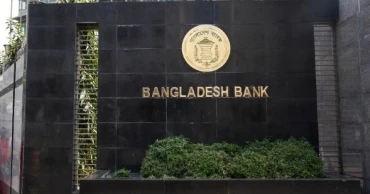
BB approves FRAs to shield importers from interest rate volatility
Bangladesh Bank (BB) has approved the introduction of Forward Rate Agreements (FRAs) in import trade to protect local importers from international interest rate fluctuations, particularly involving the Secured Overnight Financing Rate (SOFR).
The central bank issued a circular on Thursday allowing Authorised Dealer (AD) banks to sign these agreements with local buyers and borrowers tapping into supplier and buyer credits for usance imports.
A Forward Rate Agreement is a financial contract that allows parties to lock in an interest rate for a specific future period, offering an effective shield against future interest rate uncertainty. Usance imports allow businesses to defer their payments for a specified timeframe after receiving the imported goods.
Central bank regulations specify that these contracts can only be used for risk-mitigation purposes directly linked to actual import transactions. The guidelines explicitly prohibit any form of speculation or maintaining unprotected financial positions through these derivative contracts. Settlements will be executed based on the difference between the pre-agreed contract rate and the prevailing benchmark rate.
To ensure systemic stability and prevent individual banks from carrying excessive market risk, the central bank has imposed strict risk-management guidelines. AD banks must fully offset any contract-related risks through parallel, same-day matching transactions, ensuring they do not hold volatile market risks on their own books.
Furthermore, the central bank capped the banks' maximum pricing margin at 10 basis points. The total volume of FRAs executed by an individual bank cannot exceed 25 percent of its average monthly foreign exchange inflows recorded over the past 12 months.
The circular emphasises compliance with international contract frameworks, daily mark-to-market valuations, and robust internal risk assessments. In the event of early termination, contracts must be settled based on existing market rates, with meticulous document preservation made mandatory.
1 month ago

June exports surge by 25.91%, FY26 earnings hold steady at $48 billion: EPB
Bangladesh's merchandise exports posted a robust 25.91 percent year-on-year growth in June 2026, closing out fiscal year 2025-26 with renewed momentum despite persistent global economic and geopolitical headwinds, according to provisional data released by the Export Promotion Bureau (EPB) on Thursday.
The country earned US$ 4,202.69 million from merchandise exports in June 2026, up from $ 3,337.92 million in the same month last year, with broad-based growth recorded across ready-made garments (RMG), leather and leather products, jute and jute goods, home textiles, engineering products, and agricultural products.
Total export earnings for the entire fiscal year 2025-26 (July-June) stood at $ 48,001.91 million, remaining largely stable compared to $ 48,283.93 million in the previous fiscal year.
The EPB noted that maintaining earnings near the previous year's level, amid geopolitical tensions, global inflationary pressures, supply chain disruptions, energy market volatility, and subdued consumer demand in key markets, reflects the underlying strength and adaptability of the export sector.
The RMG sector, the mainstay of Bangladesh's export economy, registered 21.52 percent year-on-year growth in June, earning $ 3,387.71 million against $ 2,787.78 million a year earlier. Knitwear exports grew by 19.49 percent while woven garments rose 24.02 percent during the month. The sector contributed $ 38,701.15 million to overall export earnings in FY26.
Several other sectors also posted strong gains. Leather and leather products exports rose 47.68 percent in June and 7.09 percent for the fiscal year, reaching $ 1.23 billion. Jute and jute goods recorded a 76.60 percent jump in June and 7.75 percent growth for the year, totalling $ 883.69 million.
Home textiles grew 59.95 percent in June and 6.52 percent for FY26, while engineering products posted 44.74 percent growth in June and 21.77 percent for the fiscal year. Agricultural products exports rose 46.77 percent in June, reflecting sustained international demand for Bangladeshi agro-based goods.
On the destination front, the United States remained Bangladesh's largest single-country export market, with earnings of $ 9,048.05 million in FY26, up 4.09 percent year on year, and strong growth recorded in June as well.
Germany and the United Kingdom retained their positions as the second and third largest export destinations, respectively, both showing continued positive momentum.
The EPB data further showed that all of Bangladesh's top 20 export destinations recorded positive year-on-year growth in June 2026, pointing to a broad-based recovery in external demand and strengthening market diversification.
The EPB expressed optimism that the positive momentum seen in June, along with continued product and market diversification, will provide a strong foundation for export growth in FY 2026-27 and support the country's sustainable economic development.
1 month ago

BB launches ‘Bangla QR’ to drive cashless economy
Bangladesh Bank Governor Md Mostaqur Rahman on Wednesday officially inaugurated transactions using Bangla QR, marking a unified step toward a cashless society and a fully interoperable digital payment ecosystem.
He launched the initiative by completing a transaction via the unified QR code at a bKash merchant outlet in Motijheel, the capital's commercial hub.
Starting on Wednesday, the central bank has made the implementation of “Bangla QR” mandatory for all businesses across the country.
CSE delegation meets BB chief, discusses strengthening capital market
The unified code eliminates the prevailing complexity where merchants have to display multiple separate QR codes for different Mobile Financial Services (MFS) like bKash, Nagad, Rocket, and various commercial banks.
Under the new interoperable system, a single QR code sticker at a merchant point will allow customers to scan and pay using any bank, MFS, or Payment Service Provider (PSP) application of their choice.
Central bank officials described the move as the largest milestone yet in achieving financial interoperability, specifically aimed at bringing small and marginal traders – such as street-side tea stalls, grocery stores, and kitchen market vendors – into the formal financial fold without the need for expensive Point of Sale (POS) machines.
According to Bangladesh Bank, the maximum transaction charge under this new uniform setup has been capped at Tk 11.50 per Tk 1,000, making it highly competitive with existing digital transaction channels.
Economists and central bank officials expect that driving a cashless economy will significantly cut down the massive costs associated with printing, transporting, and managing paper currency, which currently drains approximately Tk 20,000 crore annually from the state coffer. The move is also expected to curb tax evasion, formalise informal cash economies, and reduce financial fraud since transactions take place directly through secure banking apps.
Earlier on April 1, the central bank issued a directive instructing all banks, MFS providers, and Payment System Operators (PSOs) to replace their individual merchant QR codes with “Bangla QR” by June 30. The central bank has warned that non-compliant institutions face penalties of up to Tk 30 lakh for failing to adhere to the directive.
While field-level implementation faced a slow start on day 1 due to a lack of awareness and missing field training among some retail merchants, Bangladesh Bank officials stated that digital payment dynamics will rapidly transform as awareness campaigns and regulatory monitoring intensify.
1 month ago

BSEC holds financial literacy training for capital market investors, students
The Bangladesh Securities and Exchange Commission (BSEC) on Wednesday organised a day-long training programme on “Primary Investment Education (Financial Literacy)” for investors and potential investors in the capital market.
The programme was held at the multipurpose hall of the BSEC Building in the capital's Agargaon area, with around 100 teachers and students from the Department of Finance and Banking of Dhaka Commerce College taking part, according to a press release.
BSEC Executive Director Mir Mosharraf Hossain Chowdhury inaugurated the event.
BSEC Director Sheikh Mahbub Ur Rahman spoke on “Fundamentals of Financial Literacy”, while Additional Director Sk. Md Lutful Kabir discussed “Investment Risk and Investor's Protection.” BSEC Commissioner Nafeez Al Tarik delivered a detailed presentation on “Financial Planning.”
The training covered basic concepts of capital market investment, investment accounts and risk management, investor rights and protection, personal financial planning, long-term investment strategies, and informed investment decision-making, both from theoretical and practical perspectives.
Participants took part actively in the question-and-answer session and exchanged views on various real-life issues related to investment.
At the closing session, Commissioner Nafeez Al Tarik delivered concluding remarks. Certificates were distributed among the participating teachers and students at the end of the programme.
BSEC said it will continue organising such investment education programmes for educational institutions, investors, and potential investors across the country in the future.
1 month ago
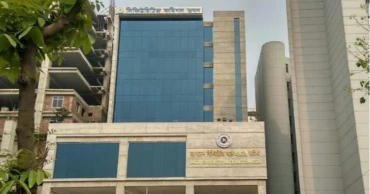
BSEC hands stock exchanges power to set circuit breaker limits, eases mutual fund reinvestment rules
The Bangladesh Securities and Exchange Commission (BSEC) has decided to allow the Dhaka Stock Exchange (DSE) and the Chittagong Stock Exchange (CSE) to independently determine and implement market control parametres, including circuit breaker limits, in line with relevant regulations, policies and operational requirements.
The decision was taken at the commission's 1018th meeting held on Wednesday, chaired by BSEC Chairman Masud Khan.
As the stock exchanges have the regulatory authority to fix and enforce such market control parametres under their respective regulations, the commission decided to direct DSE and CSE to independently set and implement these standards.
In line with the decision, the commission repealed its earlier order, issued on June 17, 2021 on the matter.
In another decision, the commission said asset management companies may, upon proposal, be allowed to reinvest the income earned by close-ended mutual funds at the end of a fiscal year without distributing it as dividends, if such a move serves the interest of investors and the capital market.
The decisions were taken considering the operational efficiency of the stock exchanges and the interests of investors and the capital market, according to a press release said.
1 month ago
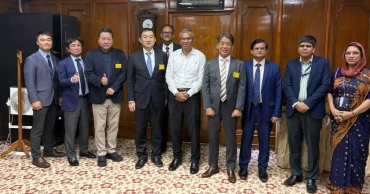
Mitsui & Co delegation meets BB governor
A high-level delegation from Japan’s Mitsui & Co held a courtesy meeting with Bangladesh Bank (BB) Governor Md Mostaqur Rahman on Wednesday and discussed investment opportunities and financial sector cooperation.
Senior representatives from Mitsui & Co’s Tokyo and Dhaka offices, along with high-ranking officials of the central bank, participated in the meeting, according to a press release.
During the meeting, both sides exchanged views on recent policy advancement in Bangladesh’s financial sector, the prevailing investment climate, and the ease of doing business.
The discussions focused heavily on the profit repatriation process for foreign entities, digital banking frameworks, payment infrastructure, and the growing potential of technology-driven financial services in Bangladesh.
The central bank management assured the delegation that timely and effective regulatory support will be extended to foreign investments and innovative financial initiatives under the existing legal framework.
Governor Mostaqur Rahman emphasised that Bangladesh Bank will continue to play a proactive and supportive role in expanding safe, transparent, and inclusive digital financial services across the country.
He noted that any constructive proposals or initiatives from Mitsui & Co will be positively considered, subject to compliance with standard regulatory procedures.
Both sides agreed to maintain regular communication and explore potential avenues for future cooperation to strengthen economic ties, the statement added.
1 month ago

BUILD urges BB to align monetary policy with expansionary budget
Business Initiative Leading Development (BUILD) has urged Bangladesh Bank to better align its monetary policy with the government’s expansionary fiscal policy, warning that the current contractionary stance could undermine investment, employment generation and industrial growth.
In a statement issued on Wednesday, BUILD appreciated the central bank’s continued commitment to restoring macroeconomic stability and containing inflation through the Monetary Policy Statement (MPS) for fiscal year 2026-27.
However, it argued that the existing policy mix risks slowing private sector activity at a time when the national budget relies heavily on private investment to drive economic growth.
According to BUILD, the budget aims to create 25 lakh new jobs during FY27 through increased private investment and industrial expansion. With one of Bangladesh’s principal economic drivers, exports, experiencing negative growth, maintaining a highly restrictive monetary policy could further discourage business expansion and weaken investor confidence.
The business organisation expressed concern over the central bank’s projection of 6.5 percent growth in private sector credit compared with 21.8 percent for public sector credit, saying the disparity could intensify the crowding-out effect by limiting credit availability for private enterprises.
It noted that the problem is being compounded by the fragile financial condition of several large banks, while the government’s continued dependence on bank borrowing to finance its fiscal deficit is placing additional pressure on credit availability for businesses.
BUILD also pointed out that government securities offering returns around one percentage point higher than the policy rate are encouraging banks to invest in risk-free government instruments instead of extending loans to productive private sector activities.
To achieve the budget’s long-term target of raising total investment to 40 percent of GDP by FY31, the organisation said private sector credit growth will need to gradually increase to at least 15 percent over the period.
The organisation also expressed concern over the prevailing high interest rate environment, noting that the policy rate of 10 percent, the Standing Lending Facility rate of 11.5 percent and the Standing Deposit Facility rate of 7.5 percent have resulted in commercial lending rates ranging between 14 and 17 percent.
Combined with an interest rate spread of 5.72 percent, BUILD said the high borrowing costs are discouraging fresh investment and reducing the competitiveness of domestic industries.
It further argued that inflationary pressures in Bangladesh are largely driven by supply-side factors, including disruptions in agricultural supply chains, market inefficiencies, exchange rate movements and structural bottlenecks, rather than excessive domestic demand.
Although overall inflation has moderated, food inflation remains above 8 percent, suggesting that tighter monetary policy alone is unlikely to significantly reduce inflation while imposing additional financing costs on businesses, BUILD said.
It added that the national budget also acknowledged structural factors as major contributors to inflation.
The organisation also questioned the MPS target of 13 percent broad money (M2) growth, saying it remains relatively high and could limit efforts to control inflation while the faster expansion of public sector credit risks crowding out productive private investment.
To address these challenges, BUILD recommended that Bangladesh Bank gradually recalibrate its monetary policy as inflation eases.
It suggested progressively reducing the interest rate spread from the current 5.72 percent to around 2.5 percent, increasing credit availability for Cottage, Micro, Small and Medium Enterprises (CMSMEs), exporters and manufacturing industries, and ensuring that financial resources are directed towards productive investments rather than non-productive uses.
The organisation also proposed that at least 20 percent of total bank lending should be allocated to CMSMEs, up from the current level of around 15 percent.
It welcomed the government’s recently announced Tk 60,000 crore refinance scheme, including Tk 5,000 crore earmarked for CMSMEs at a maximum interest rate of 9 percent.
BUILD said the scheme should be implemented transparently, with priority given to cottage and micro enterprises facing the greatest financing constraints. It also suggested that the interest rate could be reduced further on a temporary basis to support existing entrepreneurs during the current economic slowdown.
In addition, BUILD called for clearly defined and publicly available eligibility criteria for industries seeking assistance under the government’s Tk 20,000 crore allocation for sick industries to ensure transparency and accountability.
It also urged the government to formulate a comprehensive policy framework for the Tk 500 crore allocation for the creative economy, clearly specifying eligible sectors, beneficiaries and implementation mechanisms.
BUILD stressed that stronger coordination between fiscal and monetary policies is essential to restore investor confidence, stimulate private sector investment, create employment and place Bangladesh back on a sustainable path of inclusive economic growth.
1 month ago