Business
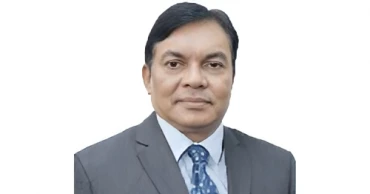
Sarwar Hossain appointed BB deputy governor
The government has appointed Md Sarwar Hossain, executive director of Bangladesh Bank, as the new deputy governor of the central bank on a contractual basis for three years.
The Financial Institutions Division of the Ministry of Finance issued a gazette notification on Tuesday in this regard.
According to the notification, the appointment has been made under Article 10(4) of the Bangladesh Bank Order, 1972.
The contractual appointment will take effect from the date of his joining and will remain valid for a duration of three years.
As per the criteria of the appointment, Sarwar Hossain has voluntarily retired from his current post as BB executive director and suspended his Post Retirement Leave (PRL) to assume the new role.
1 month ago

BCCCI, OCAIB leaders exchange views on promoting Dhaka-Beijing trade, investment
Leaders of Bangladesh China Chamber of Commerce and Industry (BCCCI) and Overseas Chinese Association in Bangladesh (OCAIB) on Tuesday exchanged views on promoting bilateral trade, facilitating greater Chinese investment, and fostering a more conducive business environment to further deepen Bangladesh-China economic relations.
BCCCI President Mohd Khorshed Alam, leading a high-level business delegation, met OCAIB President Felix Chang Y.C. at the OCAIB office in Gulshan and discussed the issues.
During the meeting, the two sides held constructive discussions on further strengthening institutional collaboration and enhancing mutual cooperation to better serve the interests of the Chinese business community in Bangladesh, said the BCCCI.
The BCCCI delegation comprised A Z M Azizur Rahman, Senior Vice President; Chao Chongchong (James Chao), Vice President; Khandaker Atiqur Rahman, Vice President; Masud Ali Khan, Vice President; Mohammed Sazzad Un Newaz, Director (Industry and Commerce); Mohammad Amanur Rahman, Director; Md. Kamruzzaman Ibne Amin, Director; Asif Haque Rupo, Director; and Md. Abu Taher, Executive Director.
The meeting was also attended by the Executive Vice President, Vice Presidents, Deputy Secretary Generals, and Executive Director of OCAIB.
1 month ago
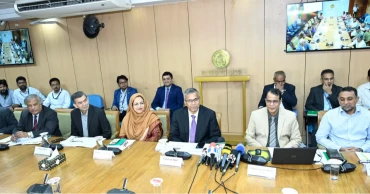
BB chief urges all to refrain from speculation about Islami Bank
Bangladesh Bank (BB) Governor Md Mostaqur Rahman on Tuesday urged all to refrain from speculation and rumours surrounding Islami Bank Bangladesh PLC.
He warned that excessive speculation and assumption-based discussions could further complicate the situation, requesting everyone to observe the circumstances with patience.
The BB governor made the remarks while responding to questions from journalists at a press conference organised at the central bank headquarters to announce the new monetary policy for the July-December 2026 period.
"It seems to me that there is excessive speculation regarding Islami Bank. I would request everyone to please have some patience, observe the situation, and avoid unnecessary discussions," he said.
Highlighting the central bank's liquidity support to the banking sector, Mostaqur Rahman said, "During the Awami League government's tenure, a total of Tk 17,250 crore in liquidity support was provided for various banks. Under the interim government, that support package escalated to Tk 51,000 crore."
After the new government assumed office, there was no need to provide liquidity support for any bank during the first four months, he said, describing this as a positive development. “However, in the case of Islami Bank, Tk 13,000 crore in liquidity support has already been provided," he said.
The BB chief assured that the central bank is closely monitoring the situation and taking necessary steps, emphasising that no decision will be made going beyond the framework of the law. "Islami Bank is a banking company, and it is regulated by the Bank Company Act. We will not do anything outside the law," he said.
1 month ago
Bangladesh Bank keeps policy rate at 10pc, reaffirms flexible exchange rate
Bangladesh Bank on Tuesday unveiled its monetary policy for the July-December period, retaining the policy rate at 10 percent while seeking to curb inflation.
Governor Mostaqur Rahman announced the monetary policy for the first half of the new fiscal year at a press conference held at the central bank.
Bangladesh Bank (BB) will firmly stick to its flexible, market-determined exchange rate regime to protect the country's external sector from international shocks, expand exports, and optimize remittance inflows, official sources said.
Unveiling the new Monetary Policy Statement (MPS) for the July–December period of the fiscal year FY2026-27, Mostaqur Rahman reiterated that the market-driven exchange mechanism remains a vital strategic pillar for the country's macroeconomic stability.
1 month ago
Bangladesh Bank set to unveil monetary policy; policy rate likely to remain unchanged at 10%
Bangladesh Bank (BB) is likely to keep its key policy interest rate unchanged at 10 percent shelving an earlier plan to lower the rate amid growing global economic uncertainty triggered by the recent geopolitical tensions in the Middle East.
The central bank is scheduled to announce the monetary policy on Tuesday afternoon at a press conference.
The governor initially convened a meeting of the Monetary Policy Committee (MPC) with a proposal to reduce the policy rate in an effort to lower borrowing costs, encourage private sector investment and support employment generation, according to Bangladesh Bank sources.
However, the central bank later dropped the plan after the sudden escalation of tensions in the Middle East raised fresh concerns over global economic stability and the risk of renewed inflationary pressures, the sources said.
The decision comes despite private sector credit growth falling to a record low.
In its monetary policy for FY2025-26, Bangladesh Bank projected private sector credit growth to reach 8.50 percent by June. However, official data showed that credit growth stood at only 4.75 percent at the end of April, the lowest level on record.
1 month ago
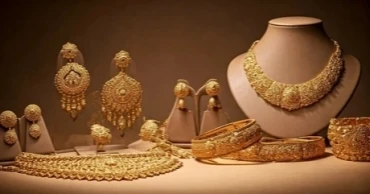
Bajus cuts gold price for second straight day
The Bangladesh Jewellers Association (Bajus) has again cut the price of gold in the local market, reducing the rate of 22-carat gold by Tk 3,324 per bhori within 24 hours.
In a notice issued on Tuesday morning, Bajus said the new price, inclusive of VAT, has been set considering the overall situation following a fall in the price of pure gold in the local market.
According to the new price, 22-carat gold will now cost Tk 2,21,966 per bhori (11.664 grams) including VAT.
The price of 21-carat gold has been fixed at Tk 2,11,993 per bhori, 18-carat gold at Tk 1,82,075 per bhori, and traditional gold atTk 1,48,774 per bhori.
Bajus said the new rate will remain effective at all jewellery shops across the country until further notice, though making charges will apply depending on the design of ornaments.
Since VAT is already included in the sale price of gold ornaments, customers cannot be charged VAT separately, the association said.
It added that its existing rules on exchange and purchase of ornaments, excluding specified VAT, making charges and stone prices will remain unchanged. A decision on VAT for silver ornaments will be announced soon, Bajus said.
Bajus last adjusted gold prices on the morning of June 29, when the price of 22-carat gold was cut by Taka 3,266 per bhori to Tk 2,25,290, inclusive of VAT.
So far in 2026, gold prices have been revised 84 times in the local market, with 41 upward adjustments, 42 downward adjustments, and one VAT adjustment.
Along with gold, the price of silver has also been reduced. The price of 22-carat silver has been cut by Taka 175 per bhori to Tk 4,491.
The price of 21-carat silver has been set atTk 4,257 per bhori, 18-carat silver at Tk 3,674 per bhori, and traditional silver at Tk 2,741 per bhori.
Silver prices have been adjusted 51 times so far in 2026, with 25 upward revisions and 26 downward revisions.
1 month ago
BB caps loan-deposit interest spread at 4%
Bangladesh Bank (BB) has instructed banks to maintain the average gap between loan and deposit interest rates within a specific limit, setting the maximum interest rate spread at 4 percent.
The newly imposed ceiling will be applicable to all types of loans, except for credit cards and consumer credit.
The Banking Regulation and Policy Department (BRPD-1) of the central bank issued a circular in this regard on Monday, sending it to the managing directors and chief executive officers of all banks for immediate execution.
CSE delegation meets BB chief, discusses strengthening capital market
According to the circular, the previous directives regarding the interest rate spread were withdrawn on November 29, 2023, following the introduction of the SMART (Six-Month Moving Average Rate of Treasury Bill) and margin-based interest rate system.
Later, on May 8, 2024, a fully market-driven interest rate mechanism was launched without any regulatory ceiling on the intermediation spread.
However, the central bank noted that several banks have recently been setting interest rates on loans significantly higher than their deposit rates, leading to an abnormal expansion of the weighted average interest rate spread.
This trend has escalated the cost of borrowing for trade, industry, and production sectors, creating a negative impact on overall economic activities and investment.
Against this backdrop, BB issued the new directive to keep borrowing costs logical across various sectors. However, the 4 percent limit will not be applicable to credit card loans and consumer credit.
1 month ago
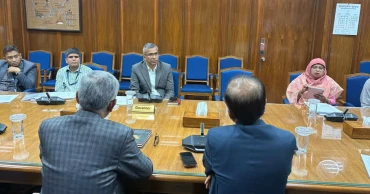
CSE delegation meets BB chief, discusses strengthening capital market
A delegation from the Chittagong Stock Exchange PLC (CSE) held a meeting with Bangladesh Bank (BB) Governor Md Mostaqur Rahman on Monday to discuss strengthening the capital market to support private sector financing and sustainable economic growth.
CSE Chairman AKM Habibur Rahman led the delegation at the meeting that took place at the central bank headquarters in the afternoon.
No politics to be allowed over Islami Bank: Bangladesh Bank
During the meeting, the BB governor emphasised that private sector credit and investment growth need to gradually rise to 10 percent to achieve the country's desired economic growth.
To attain this goal, he highlighted the critical importance of building a strong, deep, and dynamic capital market alongside the banking sector.
"An expanded capital market will enhance long-term equity financing opportunities for entrepreneurs, reduce excessive dependence on bank loans, and create an effective alternative source to meet the growing financing demands of the private sector," Mostaqur Rahman said.
He expressed optimism that if the capital market can increase its market capitalisation by at least Tk20,000 crore in the fiscal year 2026-27, Tk25,000 crore in FY28, and Tk 30,000 crore in FY29 with the trend continuing in subsequent years, it will evolve into a powerful source of private sector financing.
The BB governor said this expansion will alleviate pressure on bank loans, broaden long-term investment avenues, and facilitate sustainable economic growth through targeted credit expansion.
Addressing foreign investment, he noted that Bangladesh Bank recently amended the regulations regarding Non-Resident Investor's Taka Accounts (NITA) to ease the repatriation process of sale proceeds from shares and securities for foreign portfolio investors.
According to the revised guidelines, sale proceeds will now be deposited directly into the respective NITA accounts, and authorised dealer banks will ensure the deduction and deposit of applicable capital gains tax into the government treasury.
This policy update aims to make the process smoother, faster, and more cost-effective for foreign investors.
The CSE delegation also included Managing Director M Shaifur Rahman Mazumdar, and General Managers Md Mortuza Alam and Mohammad Monirul Haque.
1 month ago
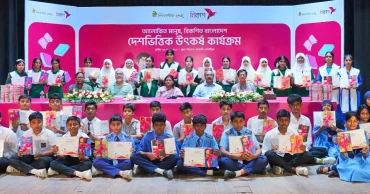
bKash & Bishwo Shahitto Kendro expand book reading programme in Faridpur and Madaripur
In a continuous effort to foster reading habits and enlightened thinking among the students, Bishwo Shahitto Kendro in association with bKash, has expanded its nationwide book reading programme in Faridpur and Madaripur districts. This year, the programme will distribute 40,000 books to different educational institutions across the country.
As part of this effort, books were handed over to the students from various schools during two separate events held at Faridpur Shishu Academy and Shilpakala Academy, Madaripur recently.
bKash tops Digital Marketing Award with 22 recognitions
The schools included Halima Girls’ High School, Ishan Girls’ High School, Police Lines High School, Hitaishi High School, Faridpur High School, and Tarar Mela School in Faridpur district, as well as Alhaj Aminuddin High School, BIAM Laboratory School, Madaripur, Zila Proshason School and College, Julio Kurie High School, and Donovan Government Girls’ High School in Madaripur.
Mazharul Islam, Deputy Commissioner and District Magistrate of Faridpur; and Marzina Akter, Deputy Commissioner and District Magistrate of Madaripur attended the respective events and handed over books to the students. Khandakar Md Asaduzzaman, Executive Director of Bishwo Shahitto Kendro, Humayun Kabir, EVP and Head of Regulatory and Corporate Affairs Department of bKash, among others, were also present on the occasion.
To make the book-reading programme more popular, a quiz competition on contemporary topics was organised for students in grades 6 to 10. At the end of the event, prizes were handed over to quiz winners.
With the aim to inculcate book reading habits and nurture human values among the students, Bishwo Shahitto Kendro has been conducting this Nationwide Enrichment programme for long. To further expand and implement this objective, country’s largest MFS provider bKash has been associated with this programme since 2014. So far, more than 400,000 books have been distributed till now, benefiting over 3.4 million readers in nearly 3,000 educational institutions across the country.
1 month ago

Gold price drops by Tk 3,266 per bhori as BAJUS revises rates
The Bangladesh Jewellers Association (BAJUS) has reduced gold prices by Tk 3,266 per bhori, setting the new price of 22-carat gold at Tk 225,290 per bhori, including VAT, effective from 10am on Monday.
In a statement issued in the morning, BAJUS said the price adjustment was made following a decline in the price of pure gold (tejabi gold) in the local market.=
Under the revised rates, a bhori (11.664 grams) of 22-carat gold will now cost Tk 225,290, including VAT.
The price of 21-carat gold has been fixed at Tk 215,142 per bhori, while 18-carat gold will be sold at Tk 184,758 per bhori. Gold of the traditional method has been priced at Tk 150,932 per bhori.
BAJUS said the new rates will remain in effect at all jewellery stores until further notice. However, making charges will vary depending on the design of the jewellery.
As VAT is already included in the retail price of gold ornaments, jewellers will not be allowed to charge VAT separately from customers, the association said.
It also said the existing rules for exchanging and purchasing gold ornaments, excluding specific VAT, making charges and the value of stones, will remain unchanged. A decision regarding VAT on silver ornaments will be announced soon.
The latest revision comes just two days after BAJUS raised gold prices on June 27 by Tk 5,482 per bhori, taking the price of 22-carat gold to Tk 228,556 per bhori, including VAT.
So far in 2026, BAJUS has adjusted gold prices 83 times. Of those, prices were increased on 41 occasions, reduced 41 times, while one adjustment involved VAT.
Despite the latest cut in gold prices, silver rates remain unchanged.
A bhori of 22-carat silver is currently selling for Tk 4,666, while 21-carat silver is priced at Tk 4,432 per bhori, 18-carat silver at Tk 3,791 per bhori, and traditional-method silver at Tk 2,858 per bhori.
1 month ago