Business
Tk 10,000 crore agri-refinancing scheme, Bangladesh Bank revises its policy
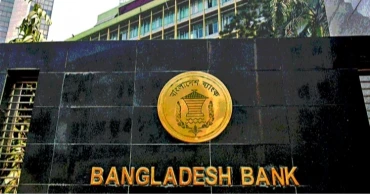
Bangladesh Bank (BB) has formally launched a Tk 10,000 crore special refinancing scheme to boost agricultural production and ensure food security, while revising key provisions from its initial proposal.
The new directive replaces the plan to use foreign currency reserves with domestic bank surplus liquidity and reduces the scheme's duration from five years to three.
Through an Agriculture Credit Department (ACD) circular, issued today (Sunday) and sent to the Managing Directors/Chief Executives Officers of all banks, the central bank provided a comprehensive set of revised operating guidelines for the scheme. This follow-up circular replaces critical parameters previously outlined in the June 8, 2026.
A fundamental shift in policy has occurred regarding the source of funding. According to today's circular, the Tk 10,000 crore scheme is no longer dependent on using foreign currency reserves. Instead, it will be constituted from the surplus liquidity of scheduled banks operating under the management of Bangladesh Bank. This change ensures the program operates strictly with domestic funds, preserving external reserves.
The duration of the scheme has also been adjusted. The central bank specified that the new refinancing tenor is now fixed at three (3) years from the date of the new circular issuance, down from the original five-year proposal.
All other instructions and provisions of the June 8, 2026, circular that were not specifically amended remain unchanged. Bangladesh Bank stated that these new guidelines are effective immediately.
This revised approach by the central bank appears intended to streamline the refinancing process by leveraging domestic banking liquidity while supporting the crucial agriculture sector—responsible for rural employment and national food security—in a sustainable and less reserve-dependent manner.
1 month ago
BSEC trains 208 merchant bank, portfolio manager staff on capital market laws
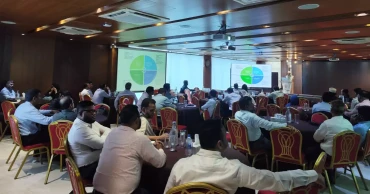
The Bangladesh Securities and Exchange Commission (BSEC) on Sunday concluded a four-day training programme for employees of merchant banks and portfolio management firms operating in the capital market, aimed at enhancing their understanding of the commission's existing laws, rules and regulations.
A total of 208 participants from various merchant banks and portfolio manager institutions attended the training across four batches held on June 21, 23, 25 and 28, organised under the initiative of the BSEC.
The sessions were conducted at the Multipurpose Hall on the third floor of the BSEC building, covering a range of regulatory topics including the Securities and Exchange Ordinance, 1969; the Bangladesh Securities and Exchange Commission Act, 1993; the Securities and Exchange Commission (Merchant Banker and Portfolio Manager) Regulations, 1996; the Bangladesh Securities and Exchange Commission (Public Offer of Equity Securities) Rules, 2025; and the Bangladesh Securities and Exchange Commission (Debt Securities) Rules, 2021, among other subjects.
The objective was to ensure that participants gained a thorough understanding of the commission's current legal framework.
The Financial Literacy Division of the commission regularly organises such training programmes.
1 month ago
CAB calls for small-packet edible oil to tackle Vitamin A deficiency among low-income people
Consumer rights experts and advocates on Sunday called for introducing small-packet edible oil in the market to address Vitamin A deficiency among low-income people.
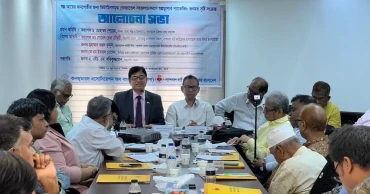
The call came at a joint seminar organised by the Consumers Association of Bangladesh (CAB) and the National Heart Foundation at the CAB office in Segunbagicha.
It also urged the government to enforce the existing laws banning the sale of open loose oil.
Experts at the event said a large portion of the population still uses open loose oil which diminishes the efficacy of Vitamin A and exposes the oil to dust and other contaminants.
They said introducing pouches, mini-packs or sachets with a capacity of 100 to 500 millilitres would allow low-income consumers to buy safe, vitamin-enriched oil at affordable prices. Smaller packaging would also ensure quicker use, reducing the risk of nutritional degradation.
However, experts acknowledged challenges including plastic waste management, packet leakage and low consumer awareness.
They recommended high-quality packaging, introduction of return-and-sell or cash-back systems, and public awareness campaigns to address these concerns.
Speakers said a coordinated effort involving policymakers, edible oil producers, the packaging industry, consumer rights organisations and the media could help introduce affordable safe packaging while simultaneously improving public health and reducing Vitamin A deficiency.
Presenting the keynote paper, Mushtak Ahmed Mohammad Iftikhar, founder chairman of Bangladesh Safe Food Authority and adviser to the National Heart Foundation, outlined the nutritional and public health risks associated with open oil consumption.
Professor Dr Sohel Reza Choudhury, head of the epidemiology department at National Heart Foundation Hospital and Research Institute, speaking as special guest, said open oil must be avoided for a healthy body and that overall oil consumption should also be reduced, as even healthy oil in excessive quantities can cause fat-related ailments.
Professor Dr Mohammad Shoyeb, a member of Bangladesh Safe Food Authority, speaking as chief guest, said CAB has long been working to ensure food safety for consumers and that collaborative efforts to protect consumer rights would continue.
CAB President AHM Shafiquzzaman, presiding over the event, said bottled healthy oil must replace open oil on public health grounds, noting that while the government has clear directives on the matter, enforcement remains absent. He said the initiative with the National Heart Foundation would be expanded across the country to compel effective action.
CAB Vice President Nazer Hossain said the interim government had suppressed an existing law banning the sale of open oil, and demanded its proper enforcement.
Also present were Director of the National Consumer Rights Protection Directorate Masum Arefin, BSTI Assistant Director Engineer Shashikanta Das, Jessore University of Science and Technology Assistant Professor Dr Rashida Parvin, and representatives from various NGOs and government and non-government institutions.
1 month ago
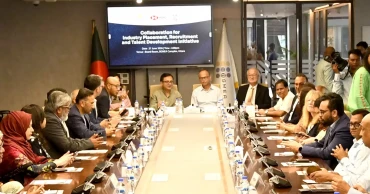
BGMEA, AUW host joint talent development event to boost female leadership in RMG sector
The Bangladesh Garment Manufacturers and Exporters Association (BGMEA) and the ‘HSBC-AUW School of Apparel’ at the Asian University for Women (AUW) on Saturday jointly organized a special event titled "Industry Placement, Recruitment, and Talent Development."
The initiative aimed to develop highly skilled human resources for the ready-made garment (RMG) sector, promote leadership roles for women, and strengthen critical industry-academia collaborations.
Commerce Minister Khondker Abdul Muktadir attended the function as the chief guest. Presided over by BGMEA President Mahmud Hasan Khan, the event was addressed by AUW Vice-Chancellor and former BGMEA President Dr. Rubana Huq as a special guest.
The distinguished guest list included Youngone Corporation Chairman Kihak Sung, AUW Founder Kamal Ahmad, former BGMEA President Kutubuddin Ahmed, and senior representatives from HSBC Bangladesh, including its Head of Sustainability Syeda Afzalun Nesa.
Among the BGMEA leadership, First Vice President Selim Rahman, Senior Vice President Enamul Haq Khan, Vice President Md. Rezwan Selim, Vice President (Finance) Mijanur Rahman, and Vice President Md. Shihab Uddoja Chowdhury were present, alongside various directors and standing committee chairmen. Top local apparel entrepreneurs, international brand representatives, and AUW faculty and students also participated in the session.
The ‘HSBC-AUW School of Apparel’ was established at AUW to create a steady pipeline of highly qualified female professionals for Bangladesh's multi-billion dollar apparel sector. Saturday's event featured productive discussions centered on structured student internships, graduate recruitment, and long-term talent development strategies.
Speaking as the chief guest, Commerce Minister Khondker Abdul Muktadir welcomed the collaborative initiative, noting that the RMG sector drives nearly 85 percent of the nation's export earnings—a threshold no other sector can match in the short term.
To transform Bangladesh into an attractive global investment hub, the minister highlighted that the government is aggressively executing fast-track reforms in business startup logistics, licensing, port management, and energy infrastructure.
"The government has undertaken initiatives to provide initial regulatory approvals within just 14 days of company registration," Muktadir announced. Following successful models from Singapore and Malaysia, the state is migrating all regulatory processing online via an integrated One-Stop Service (OSS), launching unified factory inspections, and modernizing port operations. To resolve industrial energy challenges, plans are also underway to set up an additional floating LNG terminal to guarantee uninterrupted power supply.
AUW Vice-Chancellor Dr. Rubana Huq stressed the critical need for enhancing female participation in upper-management roles. She strongly urged BGMEA member factories to sponsor female apparel workers for higher education under AUW's "Master of Science in Apparel and Retail Management" program. She noted that such partnerships will create a robust pipeline of female executives specialized in supply chain management, sustainability, and industrial engineering.
BGMEA President Mahmud Hasan Khan reaffirmed the association's long-term commitment to enhancing the industry’s global competitive edge through human resource development. He stated that BGMEA positively evaluates AUW's sponsorship model and will actively encourage its member factories to participate in the initiative to cultivate the next generation of apparel leaders.
1 month ago
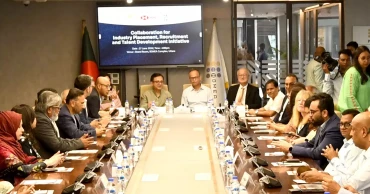
Govt implementing rapid reforms to create investment-friendly environment: Commerce Minister
Commerce Minister Khandaker Abdul Muktadir on Saturday said the government is implementing fast-track reforms in business registration, licensing, port management and the energy sector to boost investment, expand industrialisation, create employment and strengthen the country's export capacity.
Speaking as the chief guest at a discussion titled "Collaboration on Employment Generation and Skill Development Initiatives in the Industrial Sector" at the BGMEA Complex in Uttara, the minister said the government is committed to creating a modern and investment-friendly business environment.
He noted that nearly 85 percent of Bangladesh's export earnings come from the readymade garment (RMG) sector and described the Bangladesh Garment Manufacturers and Exporters Association (BGMEA) as one of the country's strongest and most organised business bodies.
Although sectors such as leather, jute, light engineering and shipbuilding hold considerable potential, none of them are likely to match the scale of the RMG industry in the short term, he said, underscoring the sector's critical role in the national economy.
The minister said the government has been working since assuming office to transform Bangladesh into an attractive global investment destination. At present, it takes an average of 355 days to start a business and obtain the required licences, but the government is taking steps to significantly reduce that timeframe.
Under the planned reforms, entrepreneurs will be able to obtain Import Registration Certificates (IRC) and other primary approvals within 14 days of company registration, enabling them to import machinery and set up industries more quickly.
Muqtadir also announced plans to introduce an integrated inspection system in place of separate inspections by multiple agencies, which would reduce harassment and shorten the time required to establish industries.
In addition, all services, including trade licences, company registration, share transfers and company dissolution, will be made available online through a one-stop service platform, following successful models adopted by Singapore and Malaysia.
On port management, the minister said the involvement of international operators would improve cargo handling efficiency, reduce vessel waiting times and lower transportation costs, making Bangladeshi exporters and importers more competitive in the global market.
Addressing challenges in the energy sector, he said the government plans to install another Floating Storage and Regasification Unit (FSRU), which is expected to add an additional 550 to 600 million cubic feet of gas to the national grid.
He said many industrial units have been unable to begin production due to the gas crisis, making uninterrupted energy supply one of the government's top priorities to support industrial output, employment and export growth.
The commerce minister reiterated the government's commitment to working in partnership with business leaders and industrial entrepreneurs to build an efficient and investment-friendly environment and position Bangladesh as one of the world's most attractive destinations for investment and trade.
The event was chaired by BGMEA President Mahmud Hasan Khan, while Asian University for Women Vice-Chancellor Dr Rubana Huq delivered the welcome speech.
Among others, Asian University for Women founder Kamal Ahmad, Youngone Corporation Chairman Kihak Sung and HSBC Bank Head of Sustainability Syeda Afzalun Nessa also spoke at the event.
Former BGMEA President Engineer Kutubuddin Ahmed and former BGMEA Vice-President and Urmi Group Managing Director Asif Ashraf were also present.
1 month ago
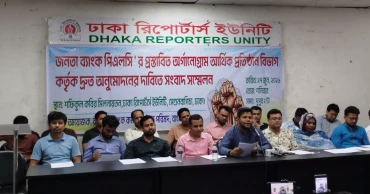
Janata Bank officials allege discrimination as promotion freeze continues
The State-Owned Bank Officials Unity Council (SOBOUC), Bangladesh, on Saturday demanded the immediate approval of the proposed 2025 organizational structure (organogram) for Janata Bank PLC, warning that prolonged delays have stalled regular promotions and left thousands of officials deprived.
The council raised the demand during a press conference held at the Dhaka Reporters Unit (DRU) in the capital, where its convener, Motahar Hossain, presented a written statement.
According to the written statement, the promotion process has been severely disrupted by successive circulars from the Financial Institutions Division (FID). Following a July 7, 2025 directive instructing state-owned banks to restructure and amend their organograms, the FID on October 14 ordered a halt to all regular promotions until previously granted "supernumerary" (ex-cadre) promotions were fully adjusted.
The council noted that in 2019, Janata Bank promoted 1,926 officials to the post of Senior Officer on a supernumerary basis. Despite a subsequent freeze on such advancements issued on November 21, 2022, state-owned banks continued the practice, elevating an additional 7,218 officials across the sector until August 2024—including 579 officials of various grades at Janata Bank.
While Janata Bank submitted its proposed organogram to the FID on December 11, 2025, to resolve the deadlock, it has yet to receive government approval.
In contrast, other major state-owned lenders—including Sonali, Agrani, and Rupali banks—have already secured approvals for their updated organograms and processed regular promotions using December 31, 2024, as the cut-off date. This discrepancy has left Janata Bank officials facing severe discrimination and professional stagnation, speakers alleged at the press conference.
The council highlighted a rapidly worsening administrative crisis, stating that the number of officials eligible for promotion stood at 5,802 at the end of 2024, but surged to 7,268 by the end of 2025. Without the creation of new posts under a revised organogram, this backlog will continue to swell.
Under the proposed 2025 organogram, Janata Bank’s total sanctioned manpower would increase from 18,373 to 21,817. The council argued that this expansion is essential to restore balance to human resource management, clear the promotion backlog, and inject dynamism into critical operations such as customer service, digital banking, SME and CMSME activities, risk management, and default loan recovery.
The organizational body estimated that implementing the new organogram would incur an additional expenditure of approximately Tk 13.82 crore over a three-year period—an amount they described as minimal compared to the bank's overall financial capacity.
The SOBOUC urged the government to intervene immediately to approve the pending structure and resolve the long-standing promotion impasse to protect the interests of the bank's workforce.
1 month ago
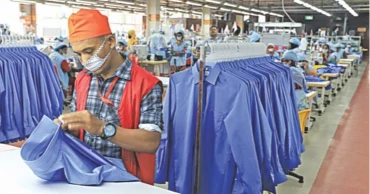
Apparel exports to EU drop 19.33% in Jan-Apr amid dual hit to volume, price
Bangladesh’s apparel exports to European Union (EU) took a severe hit in the first four months of 2026, recording the steepest decline among major global suppliers amid a broader market contraction, according to the latest Eurostat data.
Bangladesh underperformed compared to its key competitors, suffering from a dual blow of eroding export volumes and falling unit prices, said Mohiuddin Rubel, Former Director of the Bangladesh Garment Manufacturers and Exporters Association (BGMEA) and Additional Managing Director of Denim Expert Ltd
According to data presented in the document "EU export document", total EU apparel imports from across the globe dropped by 10.42 percent year-on-year during the January–April 2026 period, falling to €27.77 billion from €31.00 billion in the corresponding period of 2025.
During this timeframe, Bangladesh's exports to the EU plummeted by 19.33 percent, dropping to €6.09 billion from €7.54 billion.
Industry experts pointed out that unlike other major competitors who managed to hold ground on either price or volume, Bangladesh lost on both fronts simultaneously. The country's export volume fell by 9.91 percent to 435.97 million kg, while its average unit price slid sharply by 10.45 percent to €13.96 per kg.
The single-month data for April 2026 painted an even bleaker picture for the country, showing a sharp 19.53 percent year-on-year drop in value, alongside a 14.63 percent decline in volume and a 5.74 percent dip in unit prices.
Mixed Fortunes for Global Competitors
While the overall European market slowed down due to a 5.48 percent drop in global import volumes and a 5.22 percent decline in average unit prices, Bangladesh's rival manufacturing hubs showed highly varied strategies and outcomes:
China: The top clothing supplier posted the mildest value decline of just 4.70 percent (€7.95 billion) and emerged as the only major exporter to increase its shipping volume, which grew 3.25 percent to 408.91 million kg. This was achieved through aggressive pricing, with its unit price dropping 7.70 percent to €19.44 per kg.
Vietnam: Exhibited remarkable resilience, with its export value dipping a marginal 0.70 percent to €1.37 billion. Despite a 7.11 percent contraction in shipment volume, Vietnam managed to defend its market position through premium pricing, securing a 6.90 percent increase in unit prices to €29.43 per kg.
Turkey and India: Turkey saw a volume-led export value decline of 16.60 percent to €2.42 billion, even as its unit prices rose marginally by 1.49 percent. India registered a 12.10 percent contraction in value to €1.64 billion, hit by drops in both volume (-7.70 percent) and price (-4.76 percent).
Pakistan: Recorded an unusual market dynamic where its export volume actually rose by 5.86 percent (108.53 million kg), but its overall earnings plummeted by 17.94 percent to €1.09 billion due to a massive 22.49 percent collapse in unit prices—the steepest price drop among all monitored nations.
The Eurostat data highlighted that Bangladesh's double-digit decline represents a distinct vulnerability in the European market. While China opted for volume growth via price cuts and Vietnam successfully prioritized value over volume, Bangladesh was uniquely caught in a downward spiral on both metrics.
Local industry insiders stressed that the dual erosion of price and volume on a comparable scale was not observed in any other major garment-exporting nation, signaling an urgent need for Bangladeshi exporters to re-evaluate pricing strategies, boost competitiveness, and diversify into higher-value apparel segments.
1 month ago

World Bank approves $1.1 billion for food security, emergency response in Bangladesh
World Bank on Saturday approved $1.1 billion for two projects to help Bangladesh mitigate the price and supply volatility in the global fertiliser and fuel markets, sustain food security, and enable rapid response.
The Emergency Support for Food Security Project ($300 million) will provide time-bound financing to help Bangladesh import fertilisers critical for the Aman and Boro seasons in July–October 2026 and October 2026–April 2027, respectively.
The project will finance imports of 600,000 metric tons of critical fertilisers, half of which would be Urea, covering 1,400,000 hectares of rice production cultivated by smallholder farmers, the World Bank said in a press release.
“Rising food, fertiliser, and fuel prices stemming from the Middle East conflict, along with tighter fiscal space have deeply impacted Bangladesh’s economy, hitting smallholder farmers as well as poor and vulnerable people the hardest,” said Jean Pesme, World Bank Division Director for Bangladesh and Bhutan.
“The World Bank has stepped up with immediate support to help Bangladesh mitigate this impact to ensure fertilizer supply for rice production, protect households, jobs and livelihoods and continue with essential services.”
“Bangladesh’s food security depends on Aman and Boro rice seasons, which together account for about 90% of the country’s total rice production. Further, about half the population is employed in agriculture sector. So, any disruption in fertilizer supply would not only threaten food security, it would deepen poverty and cost jobs,” said Souleymane Coulibaly, World Bank Lead Economist and Task Team Leader for the project.
The Contingent Emergency Response Project ($713 million) will support quick-disbursing emergency expenditures, including cash transfers and livelihood assistance for affected households and micro, small, and medium enterprises, helping stabilize incomes and preserve jobs during crises.
It will also finance fuel and energy supplies to continue essential services, including food, medicines and medical equipment, energy, and water. The project will disburse by June 30, 2026.
“This project will provide Bangladesh immediate access to funds through the World Bank’s crisis preparedness and response toolkit by repurposing unutilized financing from existing projects, directing resources where they are most needed and protecting people, businesses, and jobs from the impact of shocks,” said Lesley Jeanne Yu Cordero, World Bank Lead Disaster Risk Management Specialist and Task Team Leader for the project.
1 month ago

DBA intervention saves BEXIMCO Pharma GDR from London delisting
Trading in the Global Depository Receipts (GDRs) of BEXIMCO Pharmaceuticals PLC on the London Stock Exchange (LSE) has resumed from June 26, after the bourse lifted its trading suspension following coordinated intervention by the DSE Brokers Association of Bangladesh (DBA).
BEXIMCO Pharmaceuticals PLC is the only Bangladeshi company listed on the LSE, having secured its listing in 2004. The company's GDR trading was suspended from January 2, 2026, after it failed to publish its audited financial statements for the year ended June 30, 2025, and subsequent financial disclosures within the required timeframe.
Under LSE listing rules, any security suspended continuously for six months without resolution of the suspension ground is liable to delisting, a deadline that fell on July 2, 2026.
Against this backdrop, foreign institutional and individual investors wrote to the Bangladesh Securities and Exchange Commission (BSEC) Chairman requesting necessary measures to prevent the GDR from being delisted and sought the cooperation of the DSE Brokers Association of Bangladesh (DBA) in the matter.
Recognising the urgency, DBA President Saiful Islam led swift coordination between BSEC and BEXIMCO Pharmaceuticals' management to urge the necessary steps in the wider interests of investors.
Acting on DBA's initiative, BSEC granted the company permission to hold a special board meeting, enabling approval and publication of the third-quarter financial statements for fiscal year 2024-25, the audited annual financial report, and the first, second and third-quarter reports for fiscal year 2025-26.
This resolved the company's reporting backlog, prompting LSE to lift the trading suspension and approve the resumption of GDR trading with effect from June 26, 2026.
DBA believes the development will reinforce Bangladesh's international capital market image and credibility, strengthen foreign investor confidence, and consolidate the country's position in global markets.
DBA President Saiful Islam expressed sincere gratitude to Finance and Planning Minister Amir Khosru Mahmud Chowdhury, Prime Minister's Special Assistant for Investment and Capital Markets Tanvir Sani, BSEC Chairman Masud Khan, BSEC commissioners and officials, the board and management of BEXIMCO Pharmaceuticals PLC, and the print and electronic media for their cooperation and effective support.
DBA hopes the government will continue to prioritise attracting greater foreign investment into Bangladesh's capital market and will sustain investor-friendly policies, effective reforms, and timely measures to build international investor confidence.
1 month ago

Gold prices rise after two consecutive cuts
Bangladesh Jewellers Association (Bajus) on Saturday raised the price of gold in the domestic market by Tk 5,482 per bhori, ending a brief two-round decline and fixed the new retail price of 22-carat gold at Tk 2,28,556 per bhori.
The new price came into effect from 10:00am.
In a morning circular, Bajus said the revision was made in light of rising prices of pure (tejabi) gold in the local market.
Under the new rates, 21-carat gold has been priced at Tk 2,18,292 per bhori, an increase of Tk 5,249 while 18-carat gold has gone up by Tk 4,490 to Tk 1,87,440 per bhori. Traditional-method (sanatan) gold has been set at Tk 1,53,148 per bhori, up by Tk 3,674.
The new prices will remain in effect at all jewellery establishments across the country until further notice, Bajus said, adding that making charges will apply separately depending on design. As VAT is already included in the selling price, jewellers will not be permitted to collect it additionally from customers.
Bajus also said its earlier rules on jewellery exchange and purchase, excluding specific VAT, making charges and stones will remain unchanged, and a decision on VAT applicable to silver ornaments will be announced shortly.
The last adjustment had come on June 25, when Bajus cut 22-carat gold prices by Tk 2,216 per bhori to Tk 2,23,074.
Saturday's hike marks the 82nd price adjustment this year in the domestic gold market, comprising 41 upward revisions, 40 downward revisions, and one VAT adjustment.
Silver prices were also raised on Saturday, with 22-carat silver going up by Tk 175 to Tk 4,666 per bhori.
Prices of 21-carat, 18-carat and sanatan-method silver have been fixed at Tk 4,432, Tk 3,791 and Tk 2,858 per bhori, respectively.
Silver has seen 50 price adjustments so far in 2026, 25 upward and 25 downward.
1 month ago