Business
Case withdrawal mandatory to receive policy support, incentives: BB
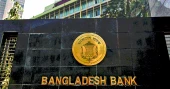
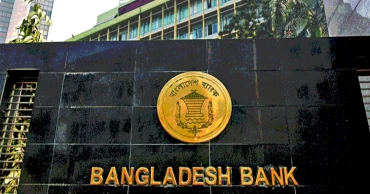
Bangladesh Bank (BB) has made it mandatory for applicants to withdraw all pending lawsuits filed against the government, the central bank, or the respective bank to qualify for any government-announced incentive packages or special policy support.
In a circular issued to the chief executives of all scheduled banks, the central bank stated that the new directive comes into force with immediate effect.
BB launches Tk 2,000cr pre-finance scheme for leather sector
Under the new instructions, applicants will not only have to withdraw all existing cases but must also submit a complete list of the withdrawn lawsuits alongside their applications.
Furthermore, applicants must furnish a formal declaration through an affidavit executed on a non-judicial stamp, confirming that no lawsuits filed by them against the government, Bangladesh Bank, or the bank concerned remain pending or under trial.
The BB noted that it has long been providing various policy supports and incentive packages aimed at generating employment, boosting credit flow to productive sectors, and building a private investment-led economy.
These measures include assistance for reopening closed export-oriented factories, providing credit facilities to entrepreneurs in the agricultural, cottage, micro, small, and medium enterprise (CMSME) sectors, and supporting other productive industries.
However, central bank observations revealed that certain clients were enjoying government incentives and policy benefits while simultaneously pursuing writ petitions and other legal suits against the government, Bangladesh Bank, or the lending banks. Central bank authorities noted that this dual position has created unnecessary legal complications within the banking sector and posed significant hurdles to implementing policy support smoothly.
Central bank officials expect the new directive to reduce unnecessary case backlogs and minimize legal uncertainties surrounding the implementation of government incentive packages. They added that the process will become more transparent and accountable for genuine entrepreneurs seeking to revive their businesses, expand production, and create jobs.
Bankers pointed out that, in the past, several institutions continued legal battles in court while simultaneously availing themselves of incentive schemes. This resulted in delays in policy execution and forced banks into prolonged litigation. The new policy is designed to discourage such dual stances.
Meanwhile, a section of legal experts emphasized that, while executing the directive, it will be crucial to maintain a balance between an applicant's right to seek constitutional remedies and the conditions attached to government policy support. They advised banks to strictly adhere to the provisions of the circular during implementation.
The BB expressed hope that the policy will ensure incentives reach actual entrepreneurs more effectively, lower legal friction, and invigorate national economic activities through increased investment, production, and employment generation.
4 days ago

BB launches Tk 2,000cr pre-finance scheme for leather sector
Bangladesh Bank (BB) has formed a revolving pre-finance scheme worth Tk 2,000 crore to foster the development, sustainability and international competitiveness of the country’s leather and leather goods sector.
The central bank issued a circular, signed by Director of its Banking Regulation and Policy Department (BRPD) Gazi Md Mahfuzul Islam, on Thursday, outlining the operational policy guidelines for all scheduled banks.
The main objective of the fund – financed entirely from BB’s own resources – is to meet domestic demand, expand export earnings, promote eco-friendly production, ensure international quality standards, and generate employment opportunities in the leather industry.
Under the guidelines, the fund will operate as a revolving scheme for a tenure of three years, managed and monitored by the SME & Special Programme Department at the central bank’s head office.
All scheduled banks in Bangladesh are eligible to participate in the scheme upon signing a Participation Agreement with the SME & Special Programmes Department. Interested banks must apply to the central bank within 15 working days of approving loans for clients.
At the customer level, the maximum interest rate for loans disbursed under this scheme will be 7 percent per annum. Participating banks will receive pre-finance facilities from Bangladesh Bank at an interest rate of 4 percent. Banks are strictly prohibited from charging any fees beyond the central bank's prescribed schedule of charges.
For setting up new tanneries, installing effluent treatment plants (ETP), and constructing cold storage for raw hide processing, institutions can receive project term loans up to a maximum of Tk 30 crore with a tenure of up to seven years (including a maximum grace period of two years).
For existing tanneries, existing leather product factories, or setting up new leather product units, term loans ranging from Tk 10 crore to Tk 20 crore will be available.
Additionally, working capital loans up to Tk 30 crore can be disbursed to cover operational expenses such as raw material purchases, salaries, and utility bills for up to three years through annual renewals. Ancillary component manufacturers for the leather industry can receive working capital loans up to Tk 5 crore.
Eligibility & Environmental Obligations
The circular prioritises raw hide processors and raw leather processing institutions. However, institutions that currently enjoy loan facilities under other government or central bank funds such as the Export Development Fund (EDF), Export Facilitation Pre-finance Fund (EFPF), or Green Transformation Fund (GTF) will not be eligible to receive loans under this scheme for the same sector. Identified loan defaulters under the Bank Company Act, 1991 are also strictly excluded.
To ensure environmental and compliance targets, the central bank has imposed several special conditions.
Leather processing entities receiving funds must present proof of obtaining Leather Working Group (LWG) certification within two years.
Beneficiary units must meet at least 10 percent of their electricity demand from solar power sources within two years.
Factories must ensure health and safety risk mitigation for workers.
Failure to fulfil these special conditions will disqualify the entity from receiving future loan facilities under this or any other Bangladesh Bank scheme.
4 days ago
BRAC Bank rolls out Bangla QR at BRAC University to create cashless campus
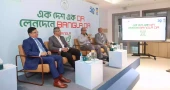
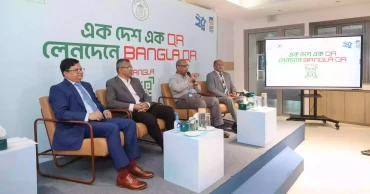
BRAC Bank has rolled out 'Bangla QR' payment services at BRAC University to facilitate cashless transactions across the campus, marking a major step toward supporting Bangladesh Bank's 'Cashless Bangladesh' initiative.
Md. Mostaqur Rahman FCMA, Governor of Bangladesh Bank, inaugurated the initiative as the chief guest at a ceremony held at the university on Thursday (July 30).
Under this initiative, financial transactions on the BRAC University campus—including tuition and academic fees, cafeteria and retail payments, and other day-to-day transactions—can now be completed digitally using Bangla QR and other digital banking channels.
Bangla QR serves as the country's interoperable QR payment platform, allowing customers of various banks and mobile financial service (MFS) providers to make instant payments using a single QR code, regardless of their service provider.
Following the inauguration, the central bank governor conducted an interactive session with students, addressing questions regarding Bangla QR, digital payments, and Bangladesh Bank's national initiatives to build a cashless economy.
Speaking at the event, Tareq Refat Ullah Khan, Managing Director and CEO of BRAC Bank, said, “This initiative demonstrates how technology can make everyday transactions simpler, faster, and more secure. We are delighted to partner with BRAC University in launching Bangladesh's first cashless campus and remain committed to supporting Bangladesh Bank's vision of a Cashless Bangladesh through innovative and inclusive digital payment solutions.”
Professor Syed Ferhat Anwar, PhD, Vice-Chancellor of BRAC University, termed Bangla QR a bold step toward a digitally inclusive society.
"However, we have to ensure the mass population’s access to connectivity and smart devices, which are the two other major pillars of the overall digital ecosystem, to ensure an inclusive society," he noted.
The event was organized with the support of students from the Finance and Accounting Club of BRAC University (FINACT).
A.N.M. Moinul Kabir, Director of Payment Department-1 and Md. Sharafat Ullah Khan, Director of Payment Systems Department-2 of Bangladesh Bank, along with BRAC University faculty members and students, were present at the ceremony.
4 days ago
BB withdraws administrator from EXIM Bank
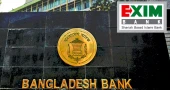
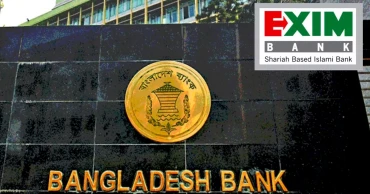
Bangladesh Bank has withdrawn its administrator and oversight team from EXIM Bank, one of the five Shariah-based lenders merged into Sammilito Islami Bank PLC.
Following the withdrawal, EXIM Bank's operations will now be managed under the direct supervision of the Board of Directors and the managing director of Sammilito Islami Bank.
Merged bank depositors can now withdraw up to Tk 10 lakh: BB
The central bank issued an official letter on Thursday directing the removal of the administrator and his team, implementing a decision made during a BB Board of Directors meeting held on Wednesday.
During the previous interim government's tenure, EXIM Bank, Social Islami Bank, First Security Islami Bank, Union Bank and Global Islami Bank were merged to form Sammilito Islami Bank PLC. At the time of the merger, the boards of directors of the respective banks were dissolved, managing directors were removed, and Bangladesh Bank appointed administrators to oversee daily operations.
In June, the government appointed Quazi Shairul Hasan as chairman of the Board of Directors of Sammilito Islami Bank and Abedur Rahman Sikder as its MD.
Following the assumption of duties by the new board and management authority, the central bank decided to phase out administrators from the merged banks.
In line with that decision, Administrator Sawkatul Alam and his representatives were withdrawn from EXIM Bank on Thursday.
Central bank officials indicated that administrators from the remaining four merged banks will also be withdrawn in phases by August.
4 days ago

Fuel prices to remain unchanged in August
The government has decided to keep retail prices of petroleum fuel unchanged for August, meaning consumers will continue to pay the existing rates for the next month too.
According to a notification issued by the Energy and Mineral Resources Division on Thursday, the prices fixed earlier will remain in force throughout August with the approval of the competent authorities.
Under the existing rates, diesel will continue to be sold at Tk 115 per litre, octane at Tk 145 per litre, petrol at Tk 140 per litre and kerosene at Tk 135 per litre.
CCGP clears Tk 16,088cr fuel import plan under G2G deals
The current prices were originally set through a gazette notification issued by the Energy and Mineral Resources Division on May 31, 2026, and will remain effective for August without any revision.
The government reviews domestic fuel prices periodically in line with its pricing mechanism, taking into account developments in the international oil market and other relevant factors.
4 days ago

Consumers will continue to face low gas pressure, says Titas
Consumers in areas served by Titas Gas Transmission and Distribution Company Limited will continue to face severely low gas pressure following a sharp decline in the supply due to technical glitches at an LNG terminal in Cox’s Bazar, said the company.
In a press release issued on Thursday, it said technical problems at the Moheshkhali LNG terminal have reduced the gas supply to the national grid by around 550 million cubic feet per day (mmcfd).
Titas to suspend gas supply in parts of Gazipur, Tangail for 16 hours Tuesday
As a result, consumers across all categories under the Titas distribution network, including residential, industrial, commercial, power generation and CNG sectors, will experience severely low gas pressure until the situation improves, the company said.
It said the temporary disruption in gas supply may continue until normal supply is restored and expressed sincere regret to consumers for the inconvenience.
The ongoing gas crisis was triggered by a fire at a floating storage and regasification unit (FSRU) in Moheshkhali on July 21.
The accident has reduced the country's total gas supply to below 2,150 mmcfd, down from an average of around 2,700 mmcfd that had been maintained over the past year, despite the national daily demand standing at nearly 3,800 mmcfd.
The fire at the FSRU operated by Excelerate Energy damaged one of its two boilers, forcing it to suspend operations, further plummeting the gas supply.
The government said international expert teams have been working at the terminal to fix the problems.
The severe supply shortfall has hit domestic kitchens the hardest, with gas pressure dropping to near zero or flickering feebly in many parts of the capital.
Residents in areas such as Mohammadpur, Kalabagan, Kafrul, Kazipara, West Tejturi Bazar, Mirpur, Rampura and Badda reported that stoves have remained unlit or unusable for days.
Beyond domestic kitchens, the shortage has severely impacted other sectors.
According to Petrobangla, gas-fired electricity generation has fallen by approximately 1,500 megawatts, raising concerns over widespread power cuts.
Long queues of vehicles have formed at CNG filling stations across the city, while industrial production has slowed down due to low gas pressure.
4 days ago
Multiple intermediaries widen farm-retail price gap, says CPD
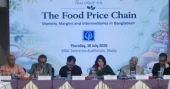
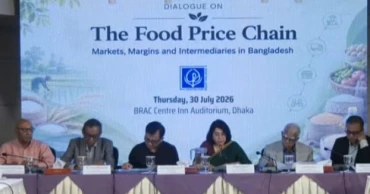
Multiple layers of intermediaries and heavy dependence on urban wholesalers are major factors behind the wide gap between farm gate and retail prices of essential food commodities in Bangladesh, a study by the Centre for Policy Dialogue (CPD) revealed on Thursday.
The findings were presented at a seminar titled ‘The Food Price Chain: Markets, Margins and Intermediaries in Bangladesh,’ held at the BRAC Centre in the capital with CPD Executive Director Fahmida Khatun in the chair.
Foqoruddin Al Kabir, Senior Research Associate of CPD, presented the keynote paper, which traced the supply chains of 10 essential food commodities: rice, lentil, onion, potato, green chilli, brinjal, egg, beef, fish and chicken, from retail markets back to producers, covering 10 markets in Dhaka Division and 820 market agents.
The study found that prices rose between 10 percent and 116 percent from farm gate to retail depending on the commodity, with green chilli recording the steepest escalation at 116 percent, followed by onion at 87 percent and rice at 100 percent.
Commodities with shorter supply chains, such as eggs, chicken, beef and Rui fish, showed comparatively lower price margins, while those with longer chains, involving middlemen (farias, beparis, aratdars), millers and wholesalers before reaching retailers, saw larger price increases.
According to the study, urban wholesalers emerged as the primary procurement source for six of the 10 commodities surveyed: onion, potato, green chilli, brinjal, egg and Rui fish, a concentration that the researchers said could heighten bargaining power imbalances and price volatility, particularly if disruptions, hoarding or collusion occur at that level.
The paper further noted that supply shortages, trader collusion and hoarding were cited most frequently as causes of high prices, while commission payments were evident across market agents for onion, brinjal, green chilli, fish and beef.
In the case of chicken and beef, farmers recorded negative net marketing margins, driven largely by high feed costs, the study said.
Speaking at the event, Fahmida said low-income households in Bangladesh are spending nearly all of their savings just to keep food on the table amid soaring prices of essential items, warning that this is taking a heavy toll on overall living standards.
She said persistent inflation is severely undercutting savings, healthcare access, essential services and the quality of life for lower-income families.
Fahmida described the market dynamics behind rising food prices, spanning production, supply chain bottlenecks and demand, as caught in a vicious cycle, pointing to the steep gap between the prices farmers receive at the farm gate and what consumers ultimately pay at retail.
She said food inflation has been the primary driver of the country's elevated overall inflation over the past four to five years, and cautioned that unless it is brought down to a manageable level, it will cripple the economy and hit ordinary citizens hardest.
The CPD study recommended reducing unnecessary layers between farmers and consumers, increasing competition in wholesale markets, expanding market choices for farmers and retailers through cooperatives and direct linkages, and improving transparency of prices and market information.
It also called for stronger monitoring against collusion and hoarding, investment in storage and cold-chain infrastructure, and measures to ease production cost pressures faced by farmers, particularly for feed and veterinary services.
4 days ago

Qingfeng Zhang appointed ADB Country Director in Bangladesh
Asian Development Bank (ADB) has appointed Qingfeng Zhang as its new Country Director for Bangladesh.
Zhang will oversee ADB’s operations in Bangladesh—one of its largest country programmes—further strengthen the bank’s long-standing partnership with the Government of Bangladesh, lead strategic policy dialogue with stakeholders, and guide the preparation of ADB’s next country partnership strategy, said a press release.
Zhang said that it is a privilege to serve as ADB Country Director for Bangladesh at an important stage in the country’s development.“Bangladesh has demonstrated remarkable resilience and economic progress over past decades.”
He also said that ADB remains committed to working closely with the government and development partners to create quality jobs, strengthen resilience, accelerate private sector-led growth, and deepen regional cooperation through innovative financing, knowledge solutions, and high-quality investments.
Zhang brings more than 30 years of professional experience in sustainable development, including over 20 years with ADB.
Throughout his career, he has led transformative programs and strategic initiatives in agriculture, food systems, water resources, environment, natural capital, and rural development. He has also built strong partnerships with governments, development institutions, academia, and the private sector.
Prior to this appointment, Zhang served as Senior Director of ADB’s Agriculture, Food, Nature, and Rural Development Sector Office, where he guided the bank’s strategic and operational engagement in advancing sustainable and resilient development across the region.
Zhang is a national of the People’s Republic of China.
He holds a doctorate in environmental engineering from Tsinghua University, a master’s degree in water resources management, and a bachelor’s degree in hydrology from Sichuan University. He also completed executive education at Harvard Business School.
5 days ago
Oil prices fall, Asian shares mostly lower as chip stocks retreat
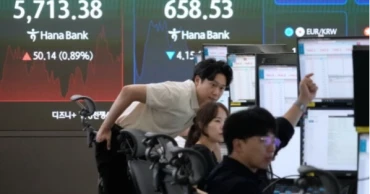
Oil prices fell and most Asian stocks traded lower Thursday as investors sold shares of major chipmakers, while South Korea’s benchmark Kospi extended its sharp losses.
Oil markets remained volatile after the United States said it had carried out a “heavy wave” of strikes against Iran in response to an attack on a US military base.
US stock futures edged higher after Wall Street ended lower on Wednesday.
In South Korea, the Kospi has come under heavy pressure following a sharp rally driven by the global artificial intelligence boom. Some analysts say the recent sell-off reflects growing concerns about the huge amounts technology companies are spending to expand AI-related capacity.
The Kospi was down 1.3% at 5,587.82 on Thursday after plunging 10.8% Tuesday and nearly 6% Wednesday. It has fallen more than 35% from its record high of above 9,000 reached in June, although it remains about 30% higher so far this year.
Samsung Electronics rose 2.4% after the technology giant reported record operating profit for the latest quarter, broadly matching market expectations.
Chipmaker SK Hynix fell 4% after dropping more than 9% Wednesday. The company reported a record quarterly operating profit that nearly increased sixfold, but the result fell short of analysts’ expectations, prompting investors to sell its shares.
Japan’s Nikkei 225 gained 0.6% to 61,778.02. SoftBank Group, which has invested in OpenAI, dropped 2.7%, while Tokyo Electron, a maker of chip production equipment, climbed 4.4%. Memory chipmaker Kioxia Holdings gained 7.5%.
Taiwan’s Taiex, another major beneficiary of the AI boom, advanced 0.8%, while leading chipmaker TSMC rose 1.8%.
Hong Kong’s Hang Seng index slipped less than 0.1% to 25,779.70, while the Shanghai Composite fell 1.2% to 3,784.55.
Australia’s S&P/ASX 200 declined 0.9% to 8,959.90, while India’s Sensex edged up less than 0.1%.
Oil prices remain volatileOil prices fell Thursday despite renewed exchanges of attacks between the US and Iran.
US President Donald Trump said Washington would hit Iran “very hard” after Iranian forces attacked a US base in Jordan.
Shipping through the Strait of Hormuz, a key route for global oil supplies, remains limited, raising concerns about disruptions to international energy markets.
Brent crude, the international benchmark, fell 1% to $87.18 a barrel after rising sharply the previous day. It was trading at around $72 a barrel in late February, before the war began.
US benchmark crude fell 0.9% to $83.74 a barrel.
US stocks end lowerOn Wall Street, the S&P 500 dropped 1.5% to 7,316.15 on Wednesday. The Dow Jones Industrial Average fell 2.2% to 51,594.14, while the tech-heavy Nasdaq composite declined 1.7% to 24,442.94.
Major chipmakers also suffered losses. Nvidia fell 3.6%, Advanced Micro Devices dropped 5.5% and Broadcom declined 2.8%.
US stocks were also pressured after the Federal Reserve kept interest rates unchanged, although some members of its policy committee had favored raising rates.
Fed Chairman Kevin Warsh reaffirmed his commitment to bringing inflation back to the 2% target. At the same time, he maintained his approach of providing financial markets with limited guidance about the central bank’s next interest-rate moves.
With fewer signals from the Fed, investors could face more volatile trading as uncertainty over the direction of interest rates continues.
“Did the Fed take an explicit change in its policy rate today?” Warsh asked at a news conference after the decision. “No, but I think that's the beginning of the story.”
In the bond market, the yield on the 10-year US Treasury note rose to 4.70% from 4.61% late Tuesday.
In early Thursday trading, the US dollar rose to 163.49 Japanese yen from 163.41 yen. The euro fell to $1.1454 from $1.1467.
5 days ago
Merged bank depositors can now withdraw up to Tk 10 lakh: BB
Depositors of five merged Shariah-based (Sammilito Islami Bank) banks can now withdraw up to Tk 10 lakh from their accounts not only for personal medical treatment but also for other urgent needs, including medical expenses for immediate family members.
The decision was taken at a meeting of the Bangladesh Bank Board of Directors, chaired by its Governor Md Mostaqur Rahman, on Wednesday.
BB Governor visits Nila Market to promote 'Bangla QR', pays via QR code
Under the revised facility, the withdrawal option has been extended to cover medical treatment for parents, children, siblings, and spouses, as well as other pressing emergency requirements.
Previously, account holders were restricted to withdrawing funds solely for their own medical treatment.
The facility applies to depositors of First Security Islami Bank, Social Islami Bank, Union Bank, Global Islami Bank and Exim Bank.
Sources familiar with the meeting said the amendment was made to the previously announced depositor reimbursement scheme to address unforeseen financial needs.
A central bank official explained that many customers face sudden financial burdens beyond personal healthcare, such as medical costs for family members or other urgent family expenses. The scheme was updated to incorporate these crucial needs, which were missing in the original framework.
Last year, the then interim government merged the five troubled Shariah-compliant lenders to establish Sammilito Islami Bank. The newly formed entity was set up with an authorised paid-up capital of Tk 35,000 crore, of which the government provided Tk 20,000 crore, while the remaining Tk 15,000 crore is being allocated as shares to depositors against their holdings.
Additionally, a reimbursement programme utilising Tk 12,000 crore allocated from the Deposit Insurance Fund is currently underway to pay out individual deposits of up to Tk 2 lakh. According to Bangladesh Bank data, a total of Tk 3,887 crore has been paid out to 822,000 depositors so far. Among them, 350,000 customers of First Security Islami Bank alone have received Tk 1,600 crore.
Central bank figures show that as of December last year, total outstanding loans across the five banks stood at Tk 1,95,000 crore against collateral worth Tk 47,900 crore – covering just 24.56 percent of total loans. Non-performing loans (NPLs) across these institutions have reached Tk 1,70,500 crore, accounting for 87.43 percent of their total loan portfolio.
5 days ago