Business
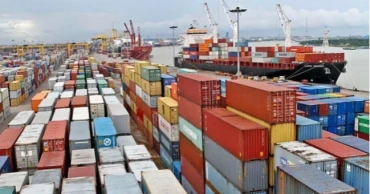
Bangladesh sets $63.4b export target for FY27, eyes 15pc growth
The government has set an export target of $63.4 billion for the 2026-27 fiscal year, aiming for 15 percent growth in both goods and services exports, Commerce Minister Khondakar Abdul Muktadir announced on Sunday.
“Of the total target, goods are expected to fetch $55.2 billion while services are targeted to bring in $8.2 billion, with both segments carrying the same 15 percent growth ambition,” the minister said, while addressing a press briefing at the conference room of the commerce ministry.
Muktadir said Bangladesh's export sector has a real chance of a turnaround despite global economic uncertainty, ongoing geopolitical tensions and challenges in international markets, crediting a business-friendly environment, simplified investment procedures and streamlined government services for the renewed momentum.
He said free trade agreement (FTA) negotiations with South Korea and the United Arab Emirates are in their final stages, with the government also aiming to conclude FTAs with several other countries within the current year. “Formal talks on an FTA with the European Union are expected to begin soon.”
Stressing the need for export diversification, the minister noted that ready-made garments currently account for nearly 85 percent of the country's total exports.
To reduce this dependence, he said the government is giving special priority to leather and leather goods, footwear, shipbuilding, ship recycling, light engineering and information technology, with specific action plans for these sectors to be rolled out soon.
On US tariff policy, Muktadir said there has been no substantive change in the effective tariff structure applicable to Bangladesh, with the earlier 10 percent tariff continuing under the new legal framework.
As such, he said, no fresh negative impact on the country's exports is anticipated.
Referring to the energy crisis, the minister said gas supply constraints continue to prevent industries from fully utilising their production capacity, adding that the government is working to improve the situation by installing additional Floating Storage and Regasification Units (FSRUs) for LNG.
He expressed confidence that the export target for the coming fiscal year is achievable, citing the elected government's policy stability, business-friendly reforms, new free trade agreements and growing buyer confidence in Bangladesh in international markets.
“A new window of opportunity has opened up for Bangladesh,” the minister said, adding that a combined push on ease of doing business, market access and export diversification is aimed at ushering in a new phase of growth for the country's export sector.
Commerce Secretary Md Ataur Rahman Khan and Export Promotion Bureau (EPB) Vice Chairman Mohammad Hasan Arif were present at the briefing.
8 days ago

BCIA submits 11-point recommendations to BSEC for market stability
A delegation of Bangladesh Capital Market Investors Association (BCIA) met Bangladesh Securities and Exchange Commission (BSEC) Chairman Masud Khan at the commission's office on Sunday and placed an 11-point recommendation aimed at stabilising the capital market and restoring the confidence of local and foreign investors.
Handing over a letter to the BSEC Chairman, BCIA President Kazi Mohammad Nazrul said the country's capital market has been passing through an acute crisis due to what he said 15 years of plunder and mismanagement under the previous Awami League government along the incompetence of the Khondoker Rashed Maqsood-led commission formed during the interim government's tenure.
He expressed confidence that under Masud Khan's leadership, the newly constituted commission would be able to steer the market towards stability and open a new chapter for the economy.
On the draft margin rules recently published by the commission, the BCIA said the proposed framework creates disparity in the distribution of loans against different shares, and demanded that the margin loan amount be made uniform across all listed securities.
The association also called for listing state-owned enterprises and multinational companies on the bourses within the next three months, with 80 percent of IPO shares reserved for general investors, application amounts capped at Tk 5,000, and the lottery-based allotment system reinstated.
Referring to Dhaka Stock Exchange's recent move placing 62 companies under its "red zone" and issuing cautionary notices to investors, the BCIA said that before any of these companies are delisted, they should first be given two years to restructure.
It further recommended that directors of such companies be required to buy back all shares held by general investors at either the market price or the issue price, whichever is higher, before delisting proceeds.
The association pointed out that unlike most global bourses which are institution-driven, Bangladesh's market is dominated by retail investors, who account for roughly 80 percent of participation.
It therefore urged that investor representatives be given a greater say in market governance, with coordination meetings between the commission and general investors' representatives held four times a year.
Among other demands, the BCIA sought the introduction of a real-time monitoring system to instantly detect abnormal transactions and manipulative trading, along with punitive action against offenders.
It also proposed a special Tk 10,000 crore fund at 3 percent interest to boost market liquidity, to be channelled through ICB and various brokerage houses so that general investors can access loans at 5 percent interest for investment.
The association further demanded that mutual funds, described as the "lifeblood" of the market, be made to remain active, with each fund required to invest at least 80 percent of its assets in the market. Rather than extending the tenure of closed-end funds, it recommended converting them into open-end funds.
On corporate governance, the BCIA said listed companies frequently resort to irregularities and malpractice in their financial reporting, and called for implementation of the Financial Reporting Act, 2015 to ensure a transparent and accountable market.
It also pressed for the long-pending buy-back law to finally be enforced, noting that successive governments and commissions had promised but failed to implement it.
The association additionally proposed scrapping the existing categorisation of listed companies into A, B, N and Z categories, arguing that the classification creates unfair distinctions among shares.
Instead, it suggested introducing a rating-based system, such as A1, A2, A3 and A4, to help investors gauge the relative strength of companies.
BCIA said most investors in Bangladesh's capital market lack adequate knowledge about the market and often fall victim to misinformation and rumours, resulting in financial losses.
It called for arrangements to introduce internationally recognised certification for financial advisers to guide general investors.
“We hope the chairman will look favourably on implementing our 11-point recommendations to build a developed and prosperous capital market,” the BCIA president said.
8 days ago
bKash wins SDG awards for sustainable finance and community development
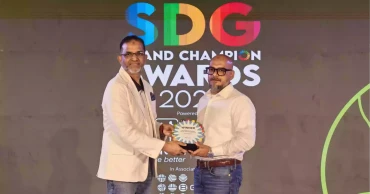
bKash has won awards in two categories at the ‘SDG Brand Champion Awards 2026’ for its significant contribution to achieving the United Nations Sustainable Development Goals. This year, in the fourth edition of this award, organised by Bangladesh Innovation Conclave, bKash was honoured as the ‘Winner’ in both the ‘Most Sustainable Financial Institution of the Year in MFS’ and ‘SDG Brand Champion in Sustainable Community’ categories.
These accolades were presented to organisations making meaningful contributions toward sustainable development goals at a ceremony held recently at a hotel in the capital. Ishtiaque Shahriar, Head of Digital Assets and Communications at bKash, received the awards on behalf of the company.
bKash won the award in ‘Most Sustainable Financial Institution of the Year in MFS’ category for its initiatives in integrating sustainability in overall strategies, operational methods, and fostering stakeholder relationships.
Additionally, bKash has created digital transaction opportunities for the honey collectors (Mowals) of the Sundarbans, eliminating the risks of carrying cash over waterways and ending exploitation of middlemen. A documentary titled ‘Sahosei bikash’, which captures this unique story of safeguarding their livelihood, earned bKash the ‘SDG Brand Champion’ award in the ‘Sustainable Community’ category.
9 days ago

BB Governor visits Nila Market to promote 'Bangla QR', pays via QR code
Bangladesh Bank Governor Md. Mustakur Rahman, visited Nila Market in Purbachal New Town on Saturday as part of an ongoing campaign to promote the 'Bangla QR' digital payment system.
Senior officials from the central bank, alongside representatives from relevant commercial banks and payment service providers (PSPs), accompanied the Governor during the visit.
During his tour of various shops in the market, the Governor interacted with local traders and shoppers, highlighting the benefits of digital transactions.
He urged everyone to adopt Bangla QR as a safe, fast, and convenient payment method for daily purchases.
To demonstrate the system firsthand, Governor Rahman personally bought several items from market vendors and settled the bills using Bangla QR.
He expressed optimism that the initiative would boost enthusiasm and raise awareness among both business owners and the general public to adopt Bangla QR in their everyday transactions.
9 days ago
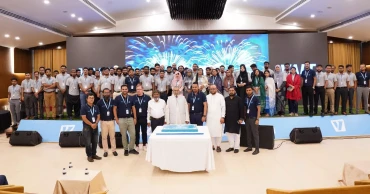
British Fintech ‘VALT’ launches operations in Bangladesh
British fintech company VALT has officially commenced operations in Bangladesh. The inauguration ceremony was held in Sylhet on Saturday (25 July), where Khaled Ahmed, Executive Director of Bangladesh Bank, formally launched the company's local operations. Senior officials from commercial banks and members of the local business community attended the event.
Speaking at the event, company representatives said that VALT, a wholly owned subsidiary of UK-based VALT Holdings Limited, provides payment solutions and Point-of-Sale (POS) services to the hospitality industry in the United Kingdom. Over the past decade, the company's technology development and operational infrastructure have been built and managed by Sylhet-based IT company Yo Tech.
The company said its entry into the Bangladeshi market will introduce digital payment and fintech solutions to the country's hospitality sector by leveraging its experience in the UK. Bangladesh-based technology teams will also continue to support VALT's global operations.
Addressing the launch, Bangladesh Bank Executive Director Khaled Ahmed said the initiative reflects the growing capabilities of Sylhet's technology sector. He said Bangladesh Bank is working to expand financial inclusion, adding that applying the UK's transaction processing experience to support local merchants' digital transformation will contribute to the country's digital economy.
Speaking at the event, Asad Zaman, Co-Founder and CPO of VALT Holdings and Chief Executive Officer (CEO) of VALT, said engineers in Sylhet have been developing software for international markets for the past decade. He said that experience has now been used to build a comprehensive fintech platform for Bangladesh.
"Through this ecosystem, local businesses will be able to move beyond cash-based transactions and adopt data-driven digital operations and integrated management tools, enabling more technology-based decision-making and business management," he said.
9 days ago

BGMEA, ASSET project review EBT progress; certificates awarded to 2,328 RMG trainees
The Bangladesh Garment Manufacturers and Exporters Association (BGMEA) and the World Bank-funded 'ASSET' project jointly organized a review workshop on Enterprise Based Training (EBT) progress and a certificate distribution ceremony on Saturday at the BGMEA Complex in Uttara.
Under the initiative, certificates were awarded to 2,328 trainees across 97 batches from the second and third cycles of the training program. To date, the BGMEA-EBT program has enrolled 4,632 trainees across 193 batches in three completed cycles, while a fourth cycle comprising 96 batches is currently ongoing.
BGMEA, GRI sign strategic partnership to boost sustainability reporting in RMG sector
Attending the event as the chief guest, Technical and Madrasah Education Division (TMED) Secretary Md. Dawood Miah emphasized that building a skilled workforce is indispensable for achieving national economic targets.
He noted that as the nation's largest employment-generating sector, upgrading RMG workers' skill levels to Level 3 and Level 4 is essential to remain competitive in global markets.
He added that although the current project period ends in December 2026, government skill development initiatives will continue. He requested BGMEA to provide strategic inputs to help strengthen industry-academia linkages and align training programs with market demands.
Presiding over the ceremony, BGMEA President Mahmud Hasan Khan stated that the apparel sector must continually enhance efficiency and adopt modern practices to adapt to global market competition and technological evolution.
Dawood Miah highlighted that BGMEA's current leadership prioritizes product value addition through human capital development rather than simply raising export volumes, noting that suitable policy support would further boost job creation.
The 'Accelerating and Strengthening Skills for Economic Transformation' (ASSET) project is being implemented by the Directorate of Technical Education (DTE) under the Ministry of Education to promote industry-led, demand-based training and enhance manufacturing productivity.
Director General of DTE Abul Khair Md. Akkas Ali, Additional Secretary of TMED Samsur Rahman Khan, ASSET Project Director Mir Zahid Hasan, and Pro-Vice Chancellor of BGMEA University of Fashion and Technology (BUFT) Prof. Dr. Engr. Ayub Nabi Khan attended the event as special guests, alongside BGMEA Director Nafis-Ud-Doula and Skill Development Standing Committee Chairman Jabed Hossain Bhuiyan.
9 days ago
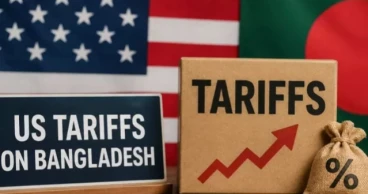
New US tariff regime gives Bangladesh 2.5 percentage point edge over RMG rivals
Bangladesh has been placed in the lower 10 percent tariff tier under the newly finalized U.S. Section 301 regime that took effect on July 24, granting local ready-made garment (RMG) exporters a 2.5 percentage point advantage over major global competitors like China, Vietnam, and Thailand.
According to an analysis by Mohiuddin Rubel, Founder and CEO of Bangladesh Apparel Voice, the new tariff structure formalizes temporary measures into a permanent legal framework. Following the U.S. Supreme Court’s February 2026 ruling that struck down "reciprocal" tariffs, the U.S. administration utilized Section 122 authority to impose a temporary 10 percent universal tariff for up to 150 days. The Section 301 forced-labor investigation was scheduled to seamlessly replace the expiring Section 122 tariffs on July 24 without any gap in coverage.
Covering 60 economies, the U.S. Trade Representative's (USTR) forced-labor action placed Bangladesh among 17 economies in the lower 10 percent tier, while China, Vietnam, Thailand, and 35 other nations were assigned a higher 12.5 percent rate. Bangladesh secured the lower rate due to its February 2026 Agreement on Reciprocal Trade (ART) with the U.S., which committed the nation to a forced-labor import ban. By contrast, economies like India, Sri Lanka, and Trinidad and Tobago entered the lower tier by adopting forced-labor bans between June and July, whereas Cambodia held both an ART commitment and adopted an interim ban.
Under the new rules, the USTR has been directed to establish two three-year Tariff Rate Quotas (TRQs)—one for general U.S. textile imports and another specifically for U.S. cotton—when feasible. These TRQs will allow a defined volume of Bangladesh's textile and apparel exports to enter the U.S. duty-free.
Only four economies—Bangladesh, Cambodia, Indonesia, and Malaysia—qualify for these TRQs, while key competitors such as Vietnam, China, and India have been excluded. However, the TRQ mechanism is not yet operational, as USTR has not set an activation date, keeping the flat 10 percent rate applicable to all shipments in the interim.
While Bangladesh holds a tangible tariff edge and an exclusive TRQ opportunity over key rivals, Rubel emphasized that tariff changes alone will not lower overall costs in the U.S. market. To fully capitalize on this positioning amidst intense global competition, Bangladesh must focus on improving productivity, diversifying its product basket, increasing value addition, and investing in innovation.
9 days ago
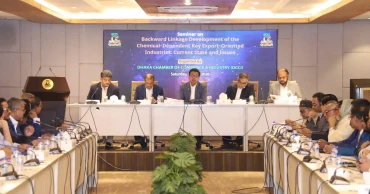
Roadmap to strengthen chemical backward linkage industry a strategic necessity: DCCI President
DCCI President Taskeen Ahmed on Saturday said developing a comprehensive roadmap to strengthen the country's chemical backward linkage industry is "no longer optional but a strategic necessity" to safeguard the future of Bangladesh's export sector.
"The export competitiveness of Bangladesh's RMG, textiles, leather and pharmaceutical industries depends significantly on a competitive supply chain of chemical products," Taskeen said at a seminar on ‘Backward Linkage Development of the Chemical-Dependent Key Export-Oriented Industries: Current State and Issues,’ organised by the Dhaka Chamber of Commerce & Industry (DCCI) at its auditorium.
DCCI seminar seeks reforms to cut Bangladesh's chemical import dependency
He said the country's industrial growth continues to be hampered by heavy reliance on imported dyes, chemicals and specialised industrial raw materials, along with tariff complexities, lengthy environmental clearance procedures and logistical bottlenecks.
Md. Salim Ullah, Director General of the Bangladesh Institute of Management (BIM), said the government is currently reforming the National Industrial Policy and suggested the private sector decide whether the chemical backward linkage industry needs a separate policy or a dedicated chapter within the existing one.
He called for stronger public-private collaboration to build a skilled workforce.
Abul Fatah Md. Baligur Rahman, Member (Development) of the Bangladesh Council of Scientific and Industrial Research (BCSIR), stressed the need to bridge the gap between industry and academia, urging entrepreneurs to make greater use of BCSIR's research outputs.
Citing the light engineering sector, worth around Tk 5,000 crore, he said realising its full potential would require uninterrupted power supply and appropriate policy support.
During the discussion, Sheikh H M Mustafiz, Director of BGMEA, said uninterrupted energy supply, supportive policy measures, adherence to international quality standards and dedicated industrial zones are essential for the sector's growth.
Md. Shaheen Ahamed, Chairman of the Bangladesh Tanners Association, said the leather sector remains heavily dependent on imported chemicals and urged a cut in import-stage duties.
Suraiya Sultana, Second Secretary (Customs: Export & Bond) at the National Board of Revenue, said tariff rates are being gradually reduced to encourage local chemical production and that bonded warehouse licensing has been fully digitised to ease difficulties for entrepreneurs.
DCCI Senior Vice President Razeev H Chowdhury, Vice President Md. Salem Sulaiman, and representatives from relevant public and private sector organisations were also present.
9 days ago

DCCI seminar seeks reforms to cut Bangladesh's chemical import dependency
Speakers at a seminar organised by the Dhaka Chamber of Commerce and Industry (DCCI) on Saturday called for urgent policy reforms and infrastructure development to reduce Bangladesh's heavy dependence on imported industrial chemicals that underpin the country's key export-oriented sectors.
The seminar, styled "Backward Linkage Development of Chemical-Dependent Key Export-Oriented Industries: Current State & Issues," was held at the DCCI office in Motijheel with its President Taskeen Ahmed in the chair.
DCCI urges NBR to avoid harassment of businesses in source tax monitoring drive
Asif Rabbani, Managing Director of SR Chemical Industries Ltd and SR Group Ltd, presented the keynote paper, describing chemicals as the invisible foundation of Bangladesh's major export sectors, including readymade garments (RMG), pharmaceuticals, leather, construction, agriculture and plastics.
According to the presentation, Bangladesh's chemical industry has a domestic market size of $6-8 billion, growing at 10-15 percent annually. Chemical imports stood at
$ 6.2 billion in FY2025, registering 17.8 percent growth and accounting for roughly 10 percent of the country's total national imports.
The keynote highlighted a stark imbalance, noting that chemical imports are more than 15 times higher than chemical exports.
The presentation identified three sectors most exposed to this dependency.
The RMG industry uses more than 2,500 chemicals in production, with local dyes and auxiliaries representing largely untapped potential.
In pharmaceuticals, which export to over 150 countries, about 90 percent of active pharmaceutical ingredients (APIs) are imported, costing the sector roughly $ 1.3 billion annually.
The leather industry, valued at around $ 200 million and growing 5-7 percent a year, remains reliant on imported tanning chemicals.
Rabbani pointed to three structural barriers holding the sector back: an inverted tariff structure that taxes raw materials higher than finished products, inconsistent HS code classification causing delays and disputes, and leakage of duty-free chemicals from bonded warehouses into the domestic market, creating unfair competition for local manufacturers.
The keynote also flagged critical infrastructure gaps, including the absence of dedicated dangerous goods (DG) warehouses, ageing chemical clusters in Old Dhaka in need of relocation, unreliable gas and power supply, and insufficient testing laboratories for export compliance.
A modern Chemical Special Economic Zone (SEZ) with shared utilities could cut costs for local manufacturers by 20-30 percent, the presentation noted.
Rabbani proposed a four-point roadmap toward chemical self-sufficiency: policy reform to correct tariffs, harmonise HS codes and stop bonded warehouse leakage; infrastructure development including DG warehouses, a Chemical SEZ, testing labs and utility support; regulatory simplification through single window licensing and a National Chemical Policy; and capability building through API research, green chemistry and university collaboration.
The seminar set a target of achieving 60 percent chemical backward linkage, which speakers said would help save billions in foreign exchange annually, lower input costs and strengthen export competitiveness, create thousands of skilled technical jobs, and build a more resilient industrial ecosystem.
The way forward, according to the presentation, requires coordinated action from government through policy commitment and incentives, the private sector through investment and modernisation, research institutions through innovation and green chemistry, and infrastructure development through SEZs, laboratories and utilities.
9 days ago
Oil tops $100 on Middle East tensions as Tesla, Alphabet weigh on Wall Street
Global oil prices climbed above $100 a barrel on Thursday as escalating tensions in the Middle East raised concerns over disruptions to crude supplies, while sharp losses in technology giants Tesla and Alphabet pushed US stocks lower.
Brent crude, the international benchmark, surged 7.2 percent to $100.88 per barrel after attacks on two Saudi oil tankers in the Red Sea heightened fears over the security of key shipping routes for global energy supplies.
The latest attacks added to concerns surrounding the Strait of Hormuz, a critical passage for oil exports from the Middle East. In response, US President Donald Trump warned of "major military punishment" against Iran-backed Houthi rebels if attacks on commercial shipping continue.
Rising oil prices weighed heavily on financial markets as investors worried that higher energy costs could fuel inflation, increase business expenses and reduce consumer spending.
The benchmark S&P 500 fell 1.2 percent in late morning trading, while the Dow Jones Industrial Average dropped 477 points, or 0.9 percent. The technology-heavy Nasdaq Composite declined 2.4 percent.
Market analysts said the sharp increase in crude prices has renewed concerns that central banks may delay interest rate cuts or even tighten monetary policy further if inflation accelerates.
The European Central Bank left its key interest rates unchanged on Thursday. However, traders significantly increased expectations that the US Federal Reserve could raise interest rates at its meeting next week, reflecting growing concerns over inflationary pressure from higher energy prices.
The yield on the benchmark 10-year US Treasury note rose to 4.70 percent, continuing an upward trend that has already pushed long-term mortgage rates to their highest level in nearly a year.
Airline stocks came under pressure as investors anticipated higher fuel costs. American Airlines fell 7.4 percent despite reporting quarterly earnings that exceeded analysts' expectations, while Southwest Airlines lost 3.9 percent even after posting stronger-than-expected profit and revenue.
Technology shares also weighed heavily on Wall Street.
Tesla tumbled 13.6 percent after reporting quarterly earnings that missed market expectations, making it one of the biggest drags on the S&P 500.
Alphabet, Google's parent company, declined 7.3 percent despite posting better-than-expected revenue and profit. Investors instead focused on the company's plans to significantly increase spending on artificial intelligence infrastructure after capital investment nearly doubled from a year earlier.
Chief Executive Sundar Pichai said AI-driven demand helped accelerate Google Cloud's revenue growth during the latest quarter, but investors remained cautious about whether the company's massive AI investments would generate sufficient long-term returns.
European markets also ended lower as oil prices surged, with France's CAC 40 among the major indexes posting notable declines. In contrast, Asian markets closed mostly higher earlier in the day, led by South Korea's Kospi, which gained 4.4 percent.
11 days ago