Business

Government approves purchase of 3 LNG cargoes to boost energy security
The government on Wednesday approved a proposal for purchasing three LNG cargoes from the international spot market for delivery in early April aiming to ensuring energy security in the country.
The approval came from the 8th meeting of the Cabinet Committee on Government Purchase, 1st such meeting of the new government chaired virtually by Finance Minister Amir Khosru Mahmud Chowdhury.
Gas, oil prices surge, global shares drop amid Middle East tensions
Cabinet Division officials said the Energy and Mineral Resources Division proposed the procurement through the international quotation method.
According to the proposal, Total Energies Gas & Power Ltd., UK, will supply one cargo LNG at US$21.58 per MMBtu, while Posco International Corporation of South Korea will supply two cargoes LNG at US$ 20.76 per MMBtu each.
The estimated costs for the LNG cargoes are Tk 907.84 crore, Tk 873.34 crore and Tk 873.34 crore respectively.
The committee approved LNG procurement proposals to ensure uninterrupted gas supply for power generation and industrial activities in the country.
Officials said the government continues to procure LNG from the spot market to meet growing domestic demand and maintain stability in the national energy supply system.
4 months ago

Stocks edge up at DSE, CSE as most shares gain
Stocks closed higher at both the country’s bourses on Wednesday, with the majority of listed companies posting gains, though trading turnover declined compared with the previous session.
The benchmark DSEX of the Dhaka Stock Exchange (DSE) rose by 2 points. The Shariah-based DSES gained 3 points, while the blue-chip DS30 remained unchanged.
Of the traded issues, 236 advanced, 98 declined and 57 remained unchanged on the DSE trading floor.
Turnover at the DSE fell to Tk 523 crore from Tk 593 crore in the previous session.
In the block market, shares worth Tk 35 crore from 28 companies were traded, with Orion Infusion PLC leading the list with shares worth Tk 14 crore changing hands.
Vanguard AML Rupali Bank Balanced Fund topped the gainers’ chart on the DSE with a price surge of nearly 9.5 percent, while National Bank PLC became the worst loser, shedding about 5.5 percent.
Meanwhile, the Chittagong Stock Exchange (CSE) also ended higher, with its benchmark CASPI advancing by 48 points.
Among the traded issues at the CSE, 81 gained, 44 declined and 25 remained unchanged.
Turnover at the port city bourse dropped to Tk 39 crore, down from Tk 47 crore in the previous session.
Prime Finance & Investment Limited emerged as the top gainer at the CSE with a 10 percent price rise, while Sonali Life Insurance Company Limited ended at the bottom of the losers’ list, losing around 8 percent.
4 months ago

DCCI urges govt to adopt proactive policy measures to safeguard economy amid Middle East tension
The Dhaka Chamber of Commerce & Industry (DCCI) on Wednesday urged the government to adopt proactive policy measures to safeguard the economy amid geopolitical tensions and conflict involving the US, Israel and Iran.
It said the crisis could significantly affect Bangladesh’s economy through rising energy prices, disrupted trade routes and financial volatility.
In a statement, the chamber said Bangladesh, being a highly import-dependent economy, remains particularly vulnerable to external shocks stemming from such global conflicts.
DCCI’s recommendations include building strategic fuel reserves, diversifying energy import sources, ensuring smooth supply chain logistics and strengthening coordination among government agencies, financial institutions and the business community.
The conflict has already begun to destabilise global energy markets and maritime commerce, with international oil prices reportedly crossing $100 per barrel amid supply disruptions in the Middle East, a region that accounts for a substantial share of global oil and LNG exports.
DCCI noted that a sustained rise in oil prices could place considerable pressure on Bangladesh’s external sector.
According to estimates, every $10 increase in global oil prices could raise the country’s monthly import bill by about $70–80 million, potentially widening the trade deficit.
The chamber also pointed to disruptions in major shipping routes, particularly the Strait of Hormuz through which nearly 20 percent of global oil and gas supplies pass.
Any prolonged disruption there could significantly increase freight costs, insurance premiums and delivery times for Bangladesh’s imports and exports, it said.
Export-oriented industries, especially the ready-made garments (RMG) sector, may face higher logistics costs, supply chain delays and increased shipping risks, the DCCI said.
It also noted that Bangladesh’s exports have already been under pressure for the past seven months due to domestic political and economic challenges.
However, the chamber said there has been some short-term relief in the country’s energy supply situation as more than 10 vessels carrying LNG, LPG, diesel and other fuels have recently arrived at Chittagong Port, helping stabilise the immediate supply.
Despite that, DCCI cautioned that the overall situation remains highly unpredictable.
If the conflict escalates further, Bangladesh could face a range of macroeconomic challenges, including higher fuel and electricity generation costs, rising inflation driven by increased transportation and production expenses, pressure on foreign exchange reserves and possible disruptions to remittance inflows from the Middle East.
DCCI also stressed the importance of diplomatic efforts to promote global peace and stability, noting that prolonged geopolitical conflicts could pose serious risks to global trade and the economic stability of developing countries like Bangladesh.
4 months ago
Asian shares rise as investors watch for signs of Iran war ending
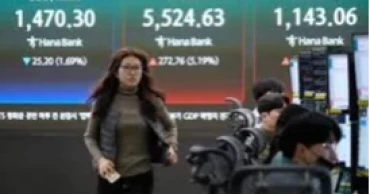
Asian shares rose on Wednesday, though some benchmarks trimmed earlier gains, as investors closely monitored developments in the war with Iran. U.S. stock futures climbed while oil prices showed mixed movements.
Tokyo’s Nikkei 225 added 1.3% to 54,926.50, and South Korea’s Kospi rose 0.6% to 5,562.40, after surging more than 3% earlier. Australia’s S&P/ASX 200 gained 0.6% to 8,743.50. Taiwan’s benchmark index jumped 4.1%, while Bangkok’s SET rose 1.3%. In contrast, Hong Kong’s Hang Seng slipped 0.2% to 25,921.02, and India’s Sensex fell 1.1%.
Oil prices remained well below Monday’s peaks, which had rattled global markets due to fears that the conflict could block the flow of oil and gas. Brent crude dipped slightly to $87.78 per barrel, while U.S.
crude rose to $83.98. Prices had plunged from nearly $120 per barrel after U.S. President Donald Trump suggested the war could end soon, raising hopes of a return to normal energy flows.
Despite optimism, tensions remain high. The U.S. targeted Iranian minelaying vessels, while Iran threatened to block oil exports. Trump warned that any attempt to close the Strait of Hormuz would face a “twenty times harder” response from the United States.
In the U.S., the S&P 500 fell 0.2% to 6,781.48, the Dow dipped slightly, and the Nasdaq edged up. Oracle shares surged 12% in premarket trading after reporting stronger-than-expected earnings and revenue growth.
Analysts say markets often rebound quickly from conflicts if oil prices remain steady. But prolonged high oil prices could strain household budgets and raise business costs, increasing the risk of “stagflation,” where economic growth slows while inflation stays high.
Currency movements were modest, with the dollar rising to 158.08 Japanese yen, and the euro trading at $1.1638.
4 months ago

Gold price rises again in Bangladesh
Gold prices in Bangladesh have increased again within a day as the Bangladesh Jewellers Association (Bajus) on Wednesday raised the price of 22-carat gold by Tk 2,216 per bhori.
With the latest adjustment, the price of 22-carat gold has been set at Tk 270,430 per bhori (11.664 grams), according to a Bajus notification issued in the morning.
The association said the price of tejabi gold (pure gold) has increased in the local market, prompting the revision of gold prices. The new rates have taken immediate effect across the country.
Under the revised pricing, 21-carat gold will cost Tk 258,124 per bhori, while 18-carat gold has been fixed at Tk 221,266 per bhori. The price of gold produced through the traditional method has been set at Tk 180,617 per bhori.
Just a day earlier, on Tuesday, Bajus had increased the price of 22-carat gold by Tk 3,266 per bhori, setting it at Tk 268,214.
So far in 2026, gold prices have been adjusted 40 times in the country, including 26 hikes and 14 reductions.
Alongside gold, the price of silver has also been increased. Bajus raised the price of 22-carat silver by Tk 175 per bhori, setting it at Tk 6,707.
The price of 21-carat silver has been fixed at Tk 6,415 per bhori, while 18-carat silver will cost Tk 5,482 per bhori. Silver produced through the traditional method has been priced at Tk 4,082 per bhori.
This year so far, silver prices have been revised 25 times, including 16 increases and nine decreases.
4 months ago

Middle East crisis pushes dollar rate to Tk 123 for import LCs
The ongoing crisis in the Middle East has begun to impact Bangladesh's foreign exchange market, driving up the price of the US dollar for both remittance procurement and import payments.
On Tuesday, commercial banks were seen purchasing remittance at a maximum rate of Tk 122.90 per dollar. Consequently, the exchange rate for settlement of import letters of credit (LCs) has climbed to Tk 123, according to banking sources.
Just a week ago, the dollar rate for imports stood at approximately Tk 122.50. The recent jump of nearly 50 paisa per dollar has sparked concerns among businesses.
"Banks are capitalizing on the war situation in the Middle East," an importer told the media on Tuesday.
"The sudden hike in the dollar rate is increasing our import costs, the impact of which will eventually be felt by consumers,’ he said.
Banking officials noted that uncertainty caused by the conflict has led foreign remittance houses to demand higher rates. While remittance dollars were previously available at Tk 122, the rate has now neared Tk 123 per dollar.
Bangladesh Bank’s latest exchange rate report reflects this upward trend. The average price of the dollar, which was Tk 122.33 on March 3, has now risen to Tk 122.58.
A top official of a private commercial bank stated that the central bank has issued an informal message to banks to ensure the rate does not cross the Tk 123 threshold for now.
"However, if the pressure of import liabilities increases and supply remains tight, the price may rise further," the official said, adding that the central bank might need to provide dollar support from the national reserves to stabilize the market.
Industry experts emphasized that moving toward a fully market-based exchange rate is crucial to increasing the supply of greenbacks in the local market.
4 months ago

Stocks surge at DSE, CSE for second straight day
Indices posted a strong rebound for the second consecutive day at the country’s stock markets on Tuesday, with major indices rose at both the Dhaka and Chattogram bourses, and most listed companies recorded price gains.
At the Dhaka Stock Exchange (DSE), the benchmark DSEX index advanced by 148 points. The Shariah-based DSES index gained 23 points, while the blue-chip DS30 index rose 62 points.
Most stocks closed higher: prices of 339 companies increased, compared with declines in 13 issues, while 37 remained unchanged.
Turnover also improved significantly. Shares and units worth nearly Tk 600 crore traded during the session, up from Tk 416 crore in the previous trading day.
In the block market, shares of 31 companies worth about Tk 76 crore changed hands. Olympic Industries PLC led the chart with block trades worth Tk 49 crore.
Pragati Life Insurance PLC topped the gainers’ list on the DSE with a nearly 10 percent price rise, while Metro Spinning Limited was the day’s worst performer with a decline of about 2 percent.
The Chittagong Stock Exchange (CSE) also witnessed a sharp rise, with the overall CASPI index climbing 323 points.
Most companies posted gains there as well: 131 issues advanced against 32 decliners, while prices of 10 companies remained unchanged.
However, turnover slightly decreased at the port city bourse. Shares and units worth Tk 47 crore traded, down from Tk 48 crore in the previous session.
At the CSE, NRBC Bank PLC emerged as the top gainer with nearly a 10 percent price increase, while Sonargaon Textiles Limited ended at the bottom of the list with a decline of around 10 percent.
4 months ago
Banks to remain closed on March 18 for Eid; services to continue in industrial areas
Bangladesh Bank on Tuesday announced that all scheduled banks will remain closed on March 18 as the government declared the day a public holiday through an executive order on the occasion of Eid-ul-Fitr.
However, some bank branches in key industrial areas will remain open on a limited scale on March 18 and 19 to facilitate the payment of salaries, bonuses and allowances for garment workers.
The central bank’s Supervisory Data Management and Analytics Department (SDAD) issued a circular in this regard.
It said bank branches related to the garment industry in several industrial hubs will operate under a special schedule.
The areas include Dhaka metropolitan area, Ashulia, Tongi, Gazipur, Savar, Bhaluka, Narayanganj and Chattogram.
In these branches, office hours will be from 10:00am to 2:00pm while banking transactions will take place from 10:00am to 1:00pm.
The central bank also directed banks to keep branches, sub-branches or booths located in seaports, land ports and airports operational to facilitate import and export activities.
Bangladesh Bank announces banking timings for Ramadan
These branches may continue limited operations from March 17 to March 23, excluding the day of Eid, during public and weekly holidays in coordination with the local administration and customs authorities.
The circular, signed by SDAD Director Md Abdul Mannan, said officials and employees working during the holidays will receive allowances in accordance with existing rules.
4 months ago
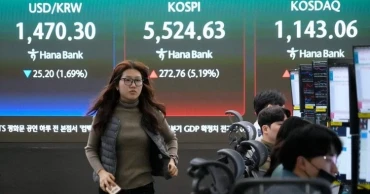
Asian stocks rebound as oil prices fall back to $90
Asian markets bounced back Tuesday after steep losses the previous day, as investors bet the war with Iran might be short-lived.
Tokyo’s Nikkei 225 surged 2.9% to 54,248.39 following revised economic data showing Japan’s economy grew 1.3% annually in the last quarter of 2025, stronger than the initial 0.2% estimate. Analysts said solid business investment helped lift the economy.
“Positive comments from President Trump overnight are giving markets hope that the conflict could ease,” said Neil Newman, managing director at Astris Advisory Japan.
Australia’s S&P/ASX 200 rose 1.1% to 8,692.60, South Korea’s Kospi jumped 5.4% to 5,532.59, Hong Kong’s Hang Seng climbed 2.1% to 25,937.59, and Shanghai’s Composite index gained 0.6% to 4,120.45.
The rebound followed a steep drop in oil prices, which had spiked near $120 per barrel amid Middle East tensions before falling to about $90. Benchmark U.S. crude dropped $5.78 to $88.99 a barrel, while Brent crude slipped $5.79 to $93.17.
In the U.S., markets recovered from early losses. The S&P 500 rose 0.8% to 6,795.99, the Dow Jones added 239 points to 47,740.80, and the Nasdaq gained 1.4% to 22,695.95.
Investors remain wary of prolonged oil price surges, which could strain household budgets and corporate costs, raising fears of global stagflation. Concerns center on the Strait of Hormuz, through which a fifth of the world’s oil passes. President Trump said he was considering “taking it over” if Iran disrupts the flow.
In bonds, the 10-year U.S. Treasury yield fell to 4.10% from 4.15%, while currency markets saw the dollar edge slightly higher against the yen at 157.48.
4 months ago
Bangladesh Bank appoints observers to 4 private banks to curb irregularities
Amid ongoing concerns over governance and allegations against independent directors, Bangladesh Bank has appointed observers to four private commercial banks.
The banks are National Bank, Premier Bank, IFIC Bank, and Al-Arafah Islami Bank.
The central bank issued formal letters last week appointing four officials of director rank to monitor the operations of these banks. The move follows the dissolution of the banks' previous boards shortly after the fall of the Awami League government, which was triggered by widespread reports of corruption and financial anomalies.
Although independent and shareholder directors were subsequently appointed by the central bank to manage these banks, officials noted that the situation has not seen significant improvement. Sources within Bangladesh Bank indicated that the observers were specifically deployed following allegations against some of the current independent directors.
The newly appointed observers will attend all meetings of the Board of Directors, Executive Committees, and Audit Committees to provide rigorous oversight.
According to central bank sources, the appointees are Munir Ahmed Chowdhury, Director of Bank Supervision Department-12 appointed at National Bank.
Mohammad Anisur Rahman, Director of Islamic Banking Regulation and Policy Department of the central bank to Al-Arafah Islami Bank. ANM Moinul Kabir, Director of the Payment Systems Department to Premier Bank: and AKM Kamruzzaman, Director of Forex Reserve and Treasury Management Department-1 to IFIC Bank.
The four banks were previously under the control of influential groups and individuals closely linked to the former administration. National Bank was operated by the Sikdar Group, while Premier Bank was led by HBM Iqbal’s Premier Group. IFIC Bank was under the chairmanship of Salman F. Rahman, former advisor to the ousted Prime Minister, and Al-Arafah Islami Bank was overseen by Abdus Samad, Vice Chairman of the S. Alam Group.
The dual presence of both independent directors and central bank observers has raised questions within the banking sector regarding the specific message the regulator intends to send regarding the stability and integrity of these institutions.
4 months ago